Search results
Search for "vacancies" in Full Text gives 248 result(s) in Beilstein Journal of Nanotechnology. Showing first 200.
Influence of synthesis conditions on microstructure and phase transformations of annealed Sr2FeMoO6−x nanopowders formed by the citrate–gel method
Beilstein J. Nanotechnol. 2016, 7, 1202–1207, doi:10.3762/bjnano.7.111
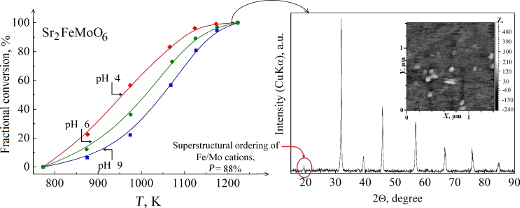
- atmosphere with predetermined anionic and cationic defectiveness, is problematic [9]. This is due to several factors: the phase purity within the sample, cation and anion vacancies, sample microstructure, chemical composition and thickness of the grain boundaries [10][11][12][13]. Sol–gel technology is a



Reasons and remedies for the agglomeration of multilayered graphene and carbon nanotubes in polymers
Beilstein J. Nanotechnol. 2016, 7, 1174–1196, doi:10.3762/bjnano.7.109
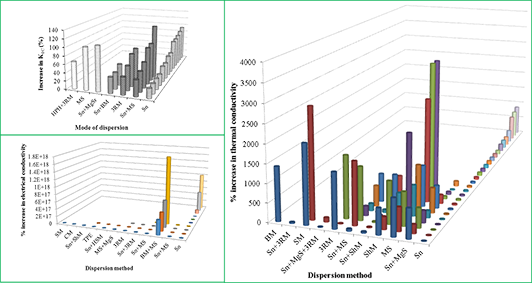
- into vacancies thereby self-repairing holes in the graphene sheet. Faber and Evans, using crack deflection modeling, showed that, among all other nano-reinforcements, maximum enhancement in fracture toughness can be attained by employing graphene as reinforcement. This improvement in fracture toughness


Photocurrent generation in carbon nanotube/cubic-phase HfO2 nanoparticle hybrid nanocomposites
Beilstein J. Nanotechnol. 2016, 7, 1075–1085, doi:10.3762/bjnano.7.101
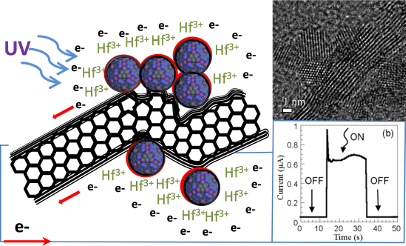
- surface-located intrinsic and extrinsic defects arising from Hf3+ and O2− vacancies. The small diameter of the nanoparticles in the present study, 2.6 nm on average, implies a very high surface-to-volume ratio, and consequently, enhanced surface-defect-related luminescence. Furthermore, for the cubic
- -phase HfO2 nanoparticles, oxygen vacancies acting as luminescence trap states are present in large amounts [22]. In the variety of different techniques used to decorate CNTs, the first step is usually the dispersion of the CNTs in a liquid solution as they exist in the form of bundled ropes [23]. Acid
- nanoparticles in the process of CNT decoration. In fact, acid treatment creates defects (vacancies and holes in the side walls) on the CNT surfaces along with carboxyl groups in the case of carboxylic acid treatment [24]. The bond with these carboxyl groups is then created via hydroxyl groups present on the


NO gas sensing at room temperature using single titanium oxide nanodot sensors created by atomic force microscopy nanolithography
Beilstein J. Nanotechnol. 2016, 7, 1044–1051, doi:10.3762/bjnano.7.97
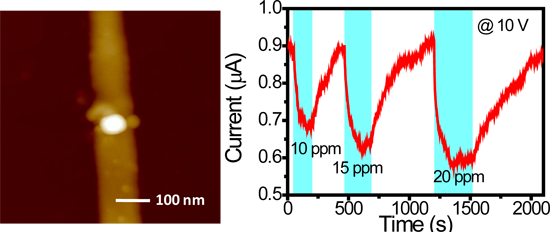
- Figure S1 in Supporting Information File 1.) We discussed the electrical properties of the sensors in our previous report [32]. A TiOx ND behaves like an n-type semiconductor due to oxygen vacancies. When NO molecules (or O2 molecules under ambient environment) adsorb on the ND surface, they become


Microscopic characterization of Fe nanoparticles formed on SrTiO3(001) and SrTiO3(110) surfaces
Beilstein J. Nanotechnol. 2016, 7, 817–824, doi:10.3762/bjnano.7.73
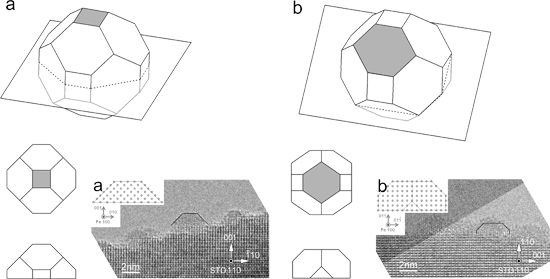
- surface is sputter-cleaned, it becomes severely disordered, forming oxygen vacancies in the uppermost layers [28]. Subsequent annealing induces oxygen diffusion and surface recrystallization at the same time, making various superstructures possible to appear. In our experiments, TEM STO(001) substrates
- , especially the presence of oxygen vacancies formed during UHV annealing. Our previous studies found that surfaces of both STO(001) and STO(110) have oxygen-depleted (1 × 1) structures [25]. Surface energies for these may differ from those of fully oxidized ones and may alter above values. Still, the present


Microwave solvothermal synthesis and characterization of manganese-doped ZnO nanoparticles
Beilstein J. Nanotechnol. 2016, 7, 721–732, doi:10.3762/bjnano.7.64
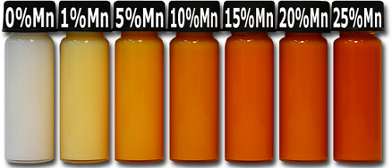
- ., formation of clusters [31]), the precipitation of foreign phases [33][34], the stoichiometry; the presence of oxygen vacancies [35][36], and defects of the crystalline lattice. When the synthesis or calcination of Zn1−xMnxO was carried out in an oxidising environment and the absence of foreign phases was
- ]. But when a reducing environment was selected for sample calcination, also precipitations of ZnMnO3 and ZnMn2O4 phase emerged in Zn1−xMnxO and the material displayed only ferromagnetic properties [36]. Ferromagnetic properties of Zn1−xMnxO are explained by the presence of oxygen vacancies, manganese in
- properties in the case of Zn1−xMnxO is the lack of control over the doping impact on the formation of oxygen vacancies, crystalline lattice defects and dopant clusters [48]. It is presumed that there are several competitive chemical reactions in the reaction of Zn1−xMnxO synthesis, such as the oxidisation of


Orientation of FePt nanoparticles on top of a-SiO2/Si(001), MgO(001) and sapphire(0001): effect of thermal treatments and influence of substrate and particle size
Beilstein J. Nanotechnol. 2016, 7, 591–604, doi:10.3762/bjnano.7.52
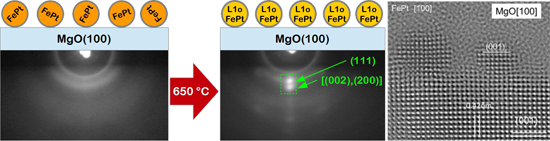
- leading to an atomically smooth surface for nanoparticle and film deposition. Since charging of the MgO substrate turned out to deteriorate the RHEED pattern, we further annealed the bare substrate under hydrogen atmosphere at 5·10−6 mbar to create oxygen vacancies, leading to a sufficient surface


Bacteriorhodopsin–ZnO hybrid as a potential sensing element for low-temperature detection of ethanol vapour
Beilstein J. Nanotechnol. 2016, 7, 501–510, doi:10.3762/bjnano.7.44
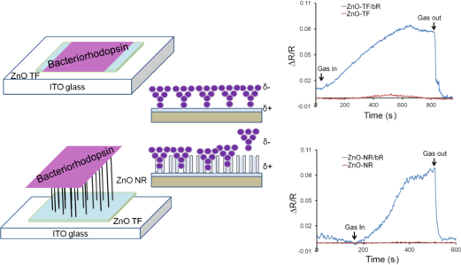
- crystallization and less oxygen vacancies [53]. As observed from Figure 4, the PL intensity increases with increasing excitation wavelength (i.e., 280 nm and 320 nm), which may be attributed to electron–hole plasma recombination shift by band renormalization [54]. Figure 5 shows the Raman spectra for all the


Plasticity-mediated collapse and recrystallization in hollow copper nanowires: a molecular dynamics simulation
Beilstein J. Nanotechnol. 2016, 7, 228–235, doi:10.3762/bjnano.7.21
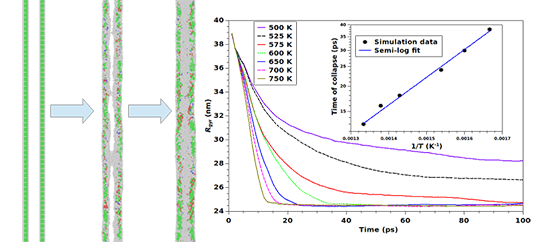
- scales associated with different stages of the evolution process. Our findings suggest a plasticity-mediated mechanism of collapse and recrystallization. This contradicts the prevailing notion of diffusion driven transport of vacancies from the interior to outer surface being responsible for collapse
- with hollow core is thermodynamically unstable due to the internal free surface, and shows the tendency to collapse. The kinetics of the collapse has been assumed to proceed through the slow diffusive route, where the migration of vacancies from the hollow core to the outer surface is considered to be
- the dominating mechanism. Accordingly, analytical theories and Monte Carlo simulations based on the process of thermally activated diffusion process have been developed and carried out [12]. However, the proposed mechanism of collapse via migration of vacancies from the inner core to the outer surface


Fabrication of hybrid graphene oxide/polyelectrolyte capsules by means of layer-by-layer assembly on erythrocyte cell templates
Beilstein J. Nanotechnol. 2015, 6, 2310–2318, doi:10.3762/bjnano.6.237
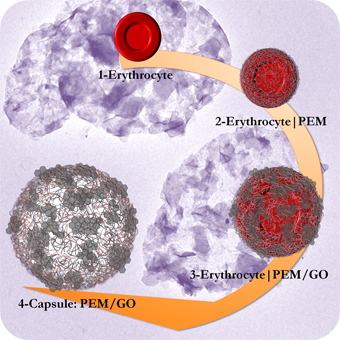
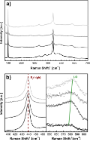
- ratio of 0.8. The D resonance corresponds to the vibration of sp2 carbon while G corresponds to sp3 carbon and defects associated with vacancies and grain boundaries [28]. The peaks at higher wavenumbers are also characteristic of graphene oxide. XRD results (Figure 1d) indicate the absence of graphite


Plasma fluorination of vertically aligned carbon nanotubes: functionalization and thermal stability
Beilstein J. Nanotechnol. 2015, 6, 2263–2271, doi:10.3762/bjnano.6.232
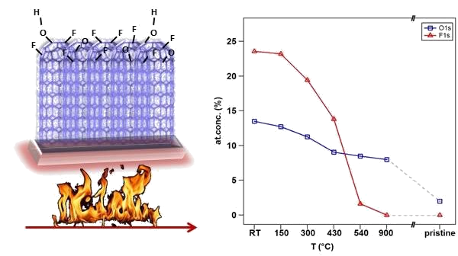
- on the surface attracts water adsorption, in contrast to the case of pure fluorinated carbon systems that show strong hydrophobicity [20]. In addition to the presence of oxygen atoms grafted during plasma treatment, we must consider that defects such as vacancies created during the process are
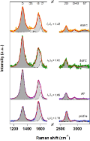
- associated to the A1g-mode breathing vibrations of six-membered sp2 carbon rings. It becomes Raman active after neighboring sp2 carbons are converted to sp3 hybridization in graphitic materials. This can be due to the presence of in-plane substitutional heteroatom vacancies, grain boundaries, or other


A single-source precursor route to anisotropic halogen-doped zinc oxide particles as a promising candidate for new transparent conducting oxide materials
Beilstein J. Nanotechnol. 2015, 6, 2161–2172, doi:10.3762/bjnano.6.222
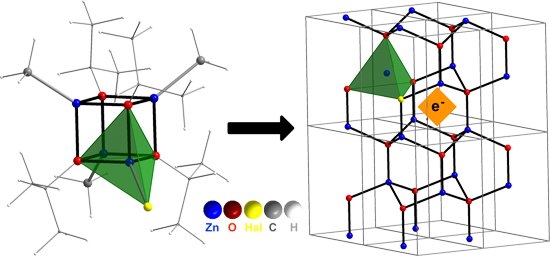
- recorded at room temperature (Figure 4c). Furthermore, Cl doping strongly affects the so-called green luminescence, which is associated with electrons trapped at oxygen vacancies (VO•• in Kröger–Vink notation) present in many different types of ZnO materials [63]. It can be seen that the intensity of the



High Ion/Ioff current ratio graphene field effect transistor: the role of line defect
Beilstein J. Nanotechnol. 2015, 6, 2062–2068, doi:10.3762/bjnano.6.210
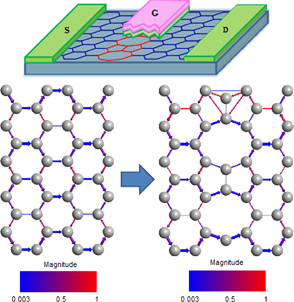
- transistor devices [5][6]. The electronic properties of graphene are the result of its particular structure. In order to modify the transport behavior, the physical structure of graphene needs to be changed. Consequently, topological defects such as vacancies, impurities, adatoms and Stone–Wales defects are


Nitrogen-doped graphene films from chemical vapor deposition of pyridine: influence of process parameters on the electrical and optical properties
Beilstein J. Nanotechnol. 2015, 6, 2028–2038, doi:10.3762/bjnano.6.206
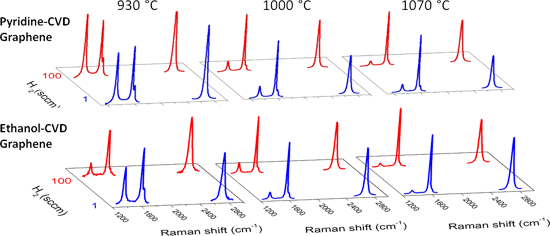
- [17]. Besides, the electron mobility itself can be greatly affected by the presence of substitutional atoms (which are a kind of lattice defects, such as vacancies, and grain boundaries) [18]. Graphene can be doped through surface proximity by layering it with other materials (such as metals [19


Distribution of Pd clusters on ultrathin, epitaxial TiOx films on Pt3Ti(111)
Beilstein J. Nanotechnol. 2015, 6, 2007–2014, doi:10.3762/bjnano.6.204
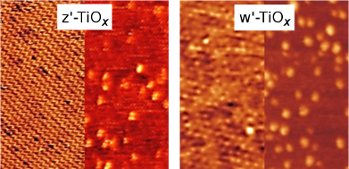
- (i.e., oxygen vacancies) in this structure are confined to these trenches and act as nucleation sites. Therefore, the Pd clusters are mostly arranged in unidirectional rows along the trenches, creating a template effect. The second phase, w'-TiOx, exhibits a hexagonal, long range, (7 × 7)R21.8°, Moiré
- ) standard surface science techniques can be applied due to the high conductivity of these films compared to the respective bulk oxides, (b) the films can be prepared with a very high degree of structural preciseness, and (c) the influence of bulk effects such as subsurface oxygen vacancies is excluded. In


Possibilities and limitations of advanced transmission electron microscopy for carbon-based nanomaterials
Beilstein J. Nanotechnol. 2015, 6, 1541–1557, doi:10.3762/bjnano.6.158
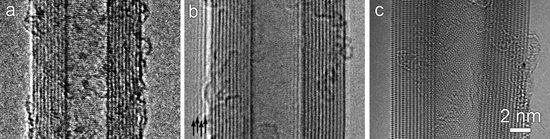
- subsequent reconstruction of large even-number vacancies takes place, as discussed in detail in [43]. One example is shown in Figure 4a,b. When carbon atoms in CNTs are displaced by electron irradiation, single vacancies (SV), divacancies (DV), and even tetravacancies can be created; a schematic illustration
- is presented in Figure 4a,b. Displaced carbon atoms may form adatoms (A) on the lattice. Atomistic computer simulations predict that the reconstruction of the atomic network near vacancies and adatoms is very likely to happen, resulting in an agglomeration of 5- to 8-membered rings [44][45]. As shown
- thus provide a HRTEM image with an acceptable signal to noise ratio with only limited damage to the sample. The introduction of a high-speed detector may also have an impact on increasing the time resolution. In a molecular dynamics simulations on the reconstruction of vacancies, the time scale is


Transformations of PTCDA structures on rutile TiO2 induced by thermal annealing and intermolecular forces
Beilstein J. Nanotechnol. 2015, 6, 1498–1507, doi:10.3762/bjnano.6.155
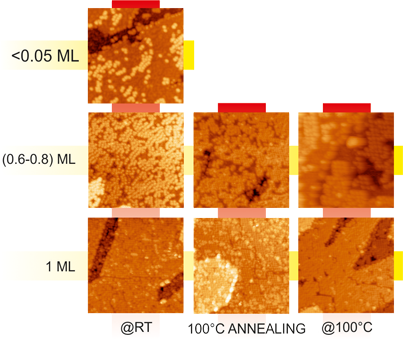
- located in between. The overall STM appearance is much different from the surface topography. Additional bright spots recorded within dark oxygen rows are attributed to oxygen vacancies (fainter spots) or single and double surface hydroxy groups (brighter spots). The oxygen vacancies are created during
- the preparation procedure, leading to a slight reduction of the sample and decreasing the intrinsic band gap from approximately 3.0 eV to 1.5–2.5 eV. Hydroxy groups are created as a result of atomic hydrogen adsorption and dissociative adsorption of water at oxygen vacancies. The surface is very
- sensitive to the presence of water among residual gases and therefore the maintenance of the high vacuum level during sample preparation plays a crucial role. The adopted experimental procedure enables us to obtain clean surfaces with several oxygen vacancies and some hydroxy groups after final annealing


Enhanced fullerene–Au(111) coupling in (2√3 × 2√3)R30° superstructures with intermolecular interactions
Beilstein J. Nanotechnol. 2015, 6, 1421–1431, doi:10.3762/bjnano.6.147
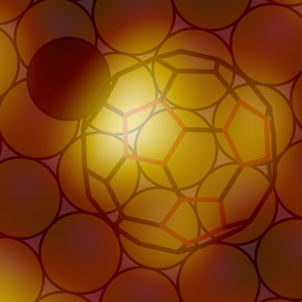
- ” C60 [8][16], are observed in different structural domains. In a systematic study Gardener et al. [16] proposed, that the reason for the dim C60 are nanopits, also called vacancies, which are formed at the C60–Au interface. Dim C60 molecules adsorbed at vacancies are lower in height than the bright C60
- reconstruction [16] or the forming of a new surface arrangement at the C60–Au interface depending on the thermal treatment [24][25]. The number and the distribution of dim C60 molecules adsorbed on vacancies differ in the respective superstructures on Au(111). While very few dim C60 molecules are randomly
- is commonly called “disordered”. Interestingly, this (2√3 × 2√3)R30° superstructure shows a dynamic bright–dim flipping near room temperature, which points to highly mobile vacancies at the C60–Au(111) interface [16][26]. Recently, also a uniform (2√3 × 2√3)R30° structure with all C60 molecules



The Kirkendall effect and nanoscience: hollow nanospheres and nanotubes
Beilstein J. Nanotechnol. 2015, 6, 1348–1361, doi:10.3762/bjnano.6.139
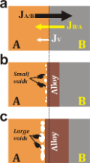
- , the position of the initial interface changes during the annealing process since the atomic diffusion coefficients of atom A in metal B and of atom B in metal A are different. As a consequence of the unbalanced diffusion rates between the two stacked metals, vacancies will be injected at the interface
- region will be more extended within metal B and vacancies will be injected at the interface region within metal A (Figure 2b). The coalescence of excess of vacancies leads to the formation of small voids distributed all along the interface. As the annealing process progresses in time, vacancies will be
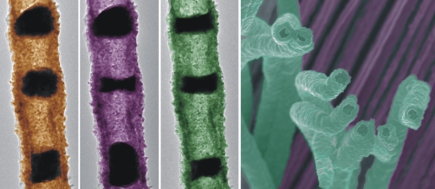
- , vacancies are created and injected at the Co(core)/CoSe(shell) interface. The migration and agglomeration of vacancies result in the formation and merging of the initial voids located at the interface and extended along the Co core (Figure 4a). The increase in size of these voids was found to lead to the



High photocatalytic activity of V-doped SrTiO3 porous nanofibers produced from a combined electrospinning and thermal diffusion process
Beilstein J. Nanotechnol. 2015, 6, 1281–1286, doi:10.3762/bjnano.6.132
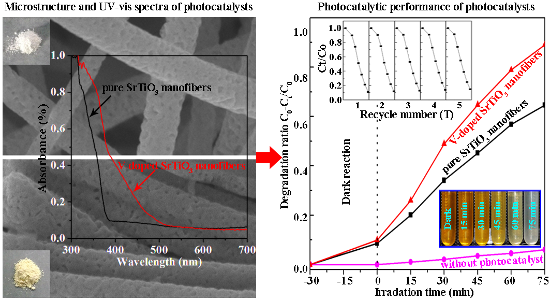
- above room temperature in air, generally, the oxygen vacancy is one of the most important defects that can be easily introduced [31]. The crystal cell is then distorted and the cell volume or lattice constant is reduced. However, if a few Ti4+ ions are substituted by V5+ ions, some oxygen vacancies will


Characterization of nanostructured ZnO thin films deposited through vacuum evaporation
Beilstein J. Nanotechnol. 2015, 6, 971–975, doi:10.3762/bjnano.6.100
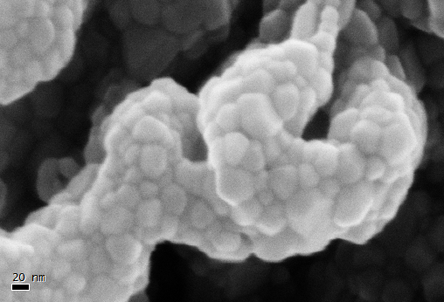
- . There are a lot of emission lines related to the characteristics of the deposited thin films, as the annealing temperature and the intrinsic defects (VZn, VO). One of the emissions is in the blue region, which is close to 2.6 and 2.5 eV, and refers to the Zn vacancies. The emission close to 1.6 eV (red
- region) corresponds to oxygen vacancies (VO). The emission intensities are similar intensity for the thin films annealed at 400 and 25 °C. They change drastically when we have the nanostructures deposited as thin film where the main emission line attributed to VZn is related to the form of the


Graphene on SiC(0001) inspected by dynamic atomic force microscopy at room temperature
Beilstein J. Nanotechnol. 2015, 6, 901–906, doi:10.3762/bjnano.6.93
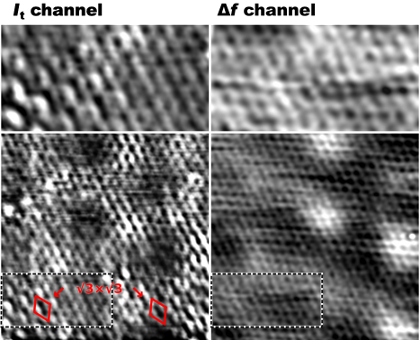
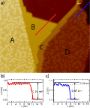
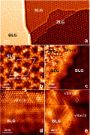
- SLG and BLG graphene, (e) 6.4 × 6.4 nm2, Vbias = −0.2 V, I = 0.16 nA; × near to vacancies created by ion etching.
(Color online) (a) Spectroscopy curves of average tunneling current
, Δf and force F vs the tip–sample distance on graphene/SiC(0001), taken with a bias voltage of 100 mV, just before


![[Graphic 1]](/bjnano/content/inline/2190-4286-6-93-i1.png?max-width=637&scale=1.18182) × 6
× 6Transformation of hydrogen titanate nanoribbons to TiO2 nanoribbons and the influence of the transformation strategies on the photocatalytic performance
Beilstein J. Nanotechnol. 2015, 6, 831–844, doi:10.3762/bjnano.6.86
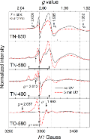
- vacancies [35][41]. In addition to this resonance, in the samples that were treated in reductive atmosphere, i.e., in TN-400, TN-580 and TN-650, exhibit another intense line at g ≈ 1.988, which is assigned to the Ti3+ centers in the bulk. Moreover, as the reaction temperature increases the intensity of this
- ., TO-580, TN-400 and TN-580, both resonances that were observed at room temperature (Figure 8) increase, i.e., the number of oxygen vacancies and the Ti3+ ions increases. Moreover, the former are most likely responsible also for the resonances appearing at g values [35][41] of approx. 2.012, and approx
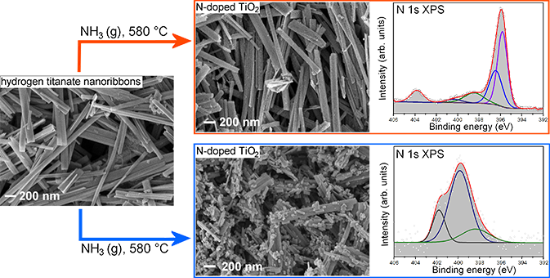
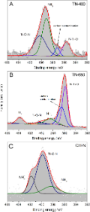
- within the band-gap states created by substitutional and interstitional N-doping [23][36] and to creation of an additional localized state due to oxygen vacancies below the conduction band [36]. Assessment of the photocatalytic performance of the TiO2 NRs The photocatalytic performance (PP) of the




Tm-doped TiO2 and Tm2Ti2O7 pyrochlore nanoparticles: enhancing the photocatalytic activity of rutile with a pyrochlore phase
Beilstein J. Nanotechnol. 2015, 6, 605–616, doi:10.3762/bjnano.6.62
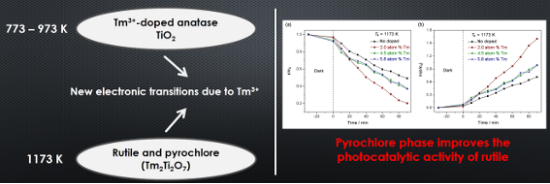
- , respectively, confirming the presence of Tm(III) in an oxide matrix. Thus, considering that the predominant cations in the TiO2 lattice of the doped samples are Ti4+ and Tm3+, and that the doping is substitutional, oxygen vacancies are generated to maintain the local neutrality of the lattice. The presence of
- oxygen vacancies is interesting for photocatalytic applications because, for example, an increase in oxygen vacancies generates more surface defects on the synthesized nanoparticles. This can be studied from the O 1s XPS spectra. Figure 2c (bottom) shows the different contributions in the O 1s spectrum
- demonstrates how the amount of O in the adsorbed species increases with the Tm concentration. This is due to the increase in oxygen vacancies produced, and thus in the number of adsorption centers available. The adsorption of hydroxy groups onto the surface is of interest in photocatalytic applications


Novel ZnO:Ag nanocomposites induce significant oxidative stress in human fibroblast malignant melanoma (Ht144) cells
Beilstein J. Nanotechnol. 2015, 6, 570–582, doi:10.3762/bjnano.6.59
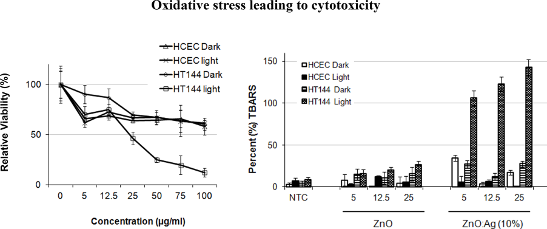
- possible presence of the ZnO2 structure. The minor variation in oxygen amount is, however, due to oxygen vacancies created by the Fermi gas we used in our annealing procedure. These oxygen vacancies gradually obtained some atmospheric oxygen when samples were stored under normal atmospheric conditions. The