


Search results
Search for "atomic layer deposition" in Full Text gives 100 result(s) in Beilstein Journal of Nanotechnology.
Advancing nanolithography: a comprehensive review of materials for local anodic oxidation with AFM
Beilstein J. Nanotechnol. 2026, 17, 275–291, doi:10.3762/bjnano.17.19
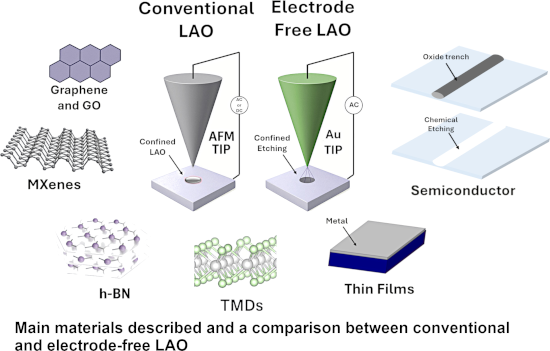
- layers as thin as sub-nanometer for SiO2 [37] and extending to tens of nanometers for materials such as SiOxCy [34], TiOx, and MoOx [38]. In contrast, atomic layer deposition (ALD) provides exceptional conformality and atomic-scale thickness control, typically depositing films at 0.1–0.2 nm per cycle [39


Multilayered hyperbolic Au/TiO2 nanostructures for enhancing the nonlinear response around the epsilon-near-zero point
Beilstein J. Nanotechnol. 2026, 17, 251–261, doi:10.3762/bjnano.17.17
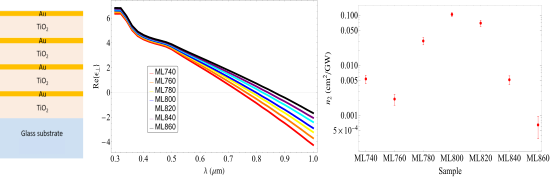
- the nonlinear response of a Ru/TiO2 multilayered structure as reported in [22]. This sample was designed to have an ENZ point at 800 nm and was fabricated using atomic layer deposition. During the linear characterization of the optical properties, spectral ellipsometry showed that the ENZ point


Evaluating metal-organic precursors for focused ion beam-induced deposition through solid-layer decomposition analysis
Beilstein J. Nanotechnol. 2025, 16, 1942–1951, doi:10.3762/bjnano.16.135
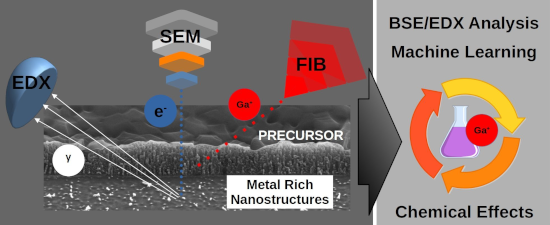
- -dispersive X-ray spectroscopy (EDX); focused ion beam (FIB); focused ion beam-induced deposition (FIBID); machine learning; scanning electron microscopy (SEM); Introduction A variety of nanomanufacturing techniques, such as optical and electron-beam lithography, nanoimprint lithography, atomic layer
- deposition, chemical mechanical polishing, and laser nanopatterning, enable the creation of nanostructures and nanoscale devices. However, a major limitation of these methods is their inability to effectively produce high-resolution three-dimensional nanostructures [1][2][3][4]. In contrast, focused electron


Ambient pressure XPS at MAX IV
Beilstein J. Nanotechnol. 2025, 16, 1677–1694, doi:10.3762/bjnano.16.118
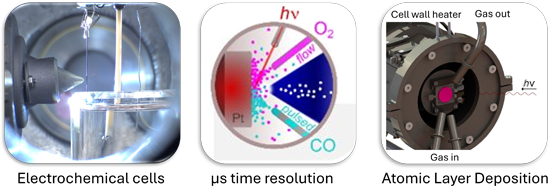
- representative studies at MAX IV, including investigations of single-atom catalysts, confined catalysis, time-resolved catalysis, atomic layer deposition, and electrochemical interfaces, showcasing the role of APXPS in advancing material and surface science. Keywords: 2D materials; atomic layer deposition
- environment, atomic layer deposition (ALD) is another field particularly developed at MAX IV. Also, the ultrahigh brightness of MAX IV ring, joined with in-house developments, make feasible in the soft X-ray regime, experiments accessing liquid layers and their interfaces with solids, opening up to completely
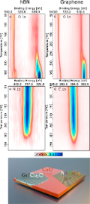
- -atom catalysts and progressing to confined catalysis, time-resolved measurements, photocatalysis, and atomic layer deposition. Single-atom catalysts Single-atom catalysts (SACs) have emerged as a frontier in (electro)catalysis, combining exceptional catalytic activity with optimal utilization of





Transient electronics for sustainability: Emerging technologies and future directions
Beilstein J. Nanotechnol. 2025, 16, 1545–1556, doi:10.3762/bjnano.16.109

- such as repeated stacking of SiOx/SiNx layers via plasma-enhanced chemical vapor deposition or high-density conformal coatings using atomic layer deposition (ALD) (Figure 2e) [88]. Notably, both SiO2 and Si3N4 are bioresorbable materials [23][88][89][90], and efforts have been made to adopt these


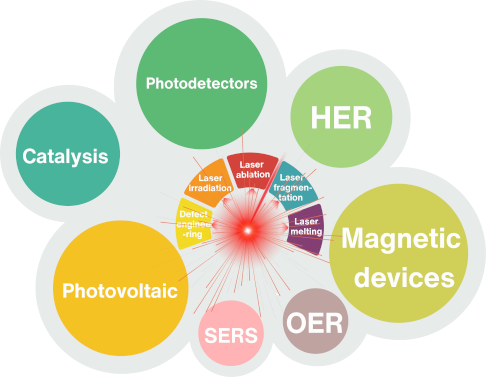
Laser processing in liquids: insights into nanocolloid generation and thin film integration for energy, photonic, and sensing applications
Beilstein J. Nanotechnol. 2025, 16, 1428–1498, doi:10.3762/bjnano.16.104






Focused ion and electron beams for synthesis and characterization of nanomaterials
Beilstein J. Nanotechnol. 2025, 16, 613–616, doi:10.3762/bjnano.16.47
- the fundamental mechanisms underlying precursor fragmentation by low-energy electrons, which remains an ongoing focus of study in the field, see Figure 1. Within the widely studied group of acetylacetonate complexes, which also play a crucial role in chemical vapor deposition and atomic layer
- deposition techniques, this thematic issue includes studies on low-energy electron interactions with metal(II) bis(acetylacetonate) complexes [5]. Another molecule investigated for its gas-phase fragmentation mechanism via dissociative ionization and dissociative electron attachment is [Au(CH3)2Cl]2. Studies

Ion-induced surface reactions and deposition from Pt(CO)2Cl2 and Pt(CO)2Br2
Beilstein J. Nanotechnol. 2024, 15, 1427–1439, doi:10.3762/bjnano.15.115

- techniques, they do not require the use of organic solvents present in traditional lithography. Indeed, FEBID/FIBID can be considered as alternatives to commonly used methods such as chemical vapor deposition (CVD) and atomic layer deposition (ALD), particularly for area-selective, as opposed to conformal



Photocatalytic methane oxidation over a TiO2/SiNWs p–n junction catalyst at room temperature
Beilstein J. Nanotechnol. 2024, 15, 1132–1141, doi:10.3762/bjnano.15.92
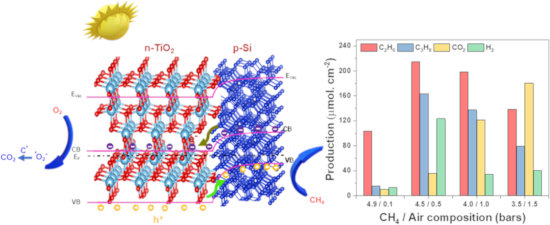
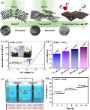
- recombination of charge carriers in semiconductors is a main drawback for photocatalytic oxidative coupling of methane (OCM) reactions. Herein, we propose a novel catalyst by developing a p–n junction titania–silicon nanowires (TiO2/SiNWs) heterostructure. The structure is fabricated by atomic layer deposition
- tools is extremely essential and important [37][38][39]. Herein, we constructed a robust p–n junction catalyst by atomic layer deposition (ALD) of TiO2 thin films on a p-type SiNW substrate for enhancing the photocatalytic efficiency in CH4 oxidation. Pristine p-Si wafers have limited surface area and


Direct electron beam writing of silver using a β-diketonate precursor: first insights
Beilstein J. Nanotechnol. 2024, 15, 1117–1124, doi:10.3762/bjnano.15.90

- . “Experimental” section) for focused electron beam-induced deposition (FEBID). (hfac)AgPMe3 is a white to light yellow solid, which was used before for chemical vapor deposition [32] and for growing silver nanoparticles by atomic layer deposition [33]. Like for other silver precursors, a pronounced halo and a


Effect of wavelength and liquid on formation of Ag, Au, Ag/Au nanoparticles via picosecond laser ablation and SERS-based detection of DMMP
Beilstein J. Nanotechnol. 2024, 15, 1054–1069, doi:10.3762/bjnano.15.86

- used across various scientific and technological fields due to their distinctive optical, physical, and chemical properties. Over the past few decades, different methods have been developed for NP synthesis, including chemical reduction, electrochemistry, atomic layer deposition, laser ablation


Bolometric IR photoresponse based on a 3D micro-nano integrated CNT architecture
Beilstein J. Nanotechnol. 2024, 15, 1030–1040, doi:10.3762/bjnano.15.84
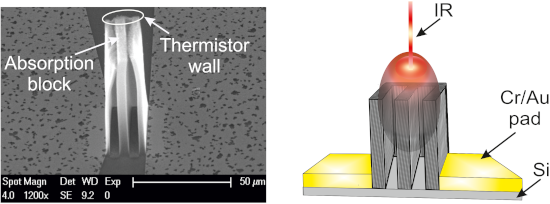
- was deposited by atomic layer deposition to support the elongated growth of CNTs (Figure 1a). The contact pad regions were opened by an optical lithography process prior to the evaporation of Cr/Au (20 nm, e-beam/100 nm, thermal) (Figure 1b). The overall M-shape for the CNT growth as shown in Figure


Water-assisted purification during electron beam-induced deposition of platinum and gold
Beilstein J. Nanotechnol. 2024, 15, 884–896, doi:10.3762/bjnano.15.73
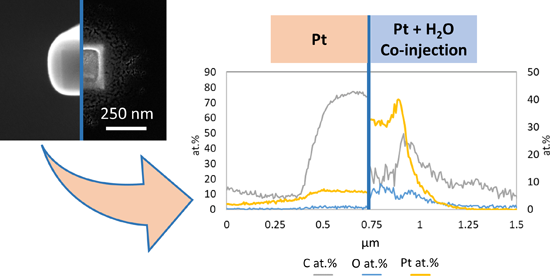
- especially PtOx species, on SiOx substrates, as demonstrated during atomic layer deposition (ALD) experiments, although at elevated temperatures [58][59]. It has been postulated that the growth of Pt nanoparticles through ALD (using MeCpPtMe3 as the precursor molecule) is determined rather by the adsorption






Effect of repeating hydrothermal growth processes and rapid thermal annealing on CuO thin film properties
Beilstein J. Nanotechnol. 2024, 15, 743–754, doi:10.3762/bjnano.15.62
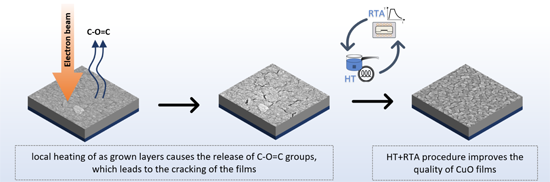
- literature. These encompass methods such as molecular beam epitaxy [17][18][19], direct current magnetron sputtering [4][20][21], and pulsed laser deposition [22][23][24]. Alternative approaches involve techniques such as chemical vapor deposition [25][26][27] and atomic layer deposition [28][29][30]. CuO




Aero-ZnS prepared by physical vapor transport on three-dimensional networks of sacrificial ZnO microtetrapods
Beilstein J. Nanotechnol. 2024, 15, 490–499, doi:10.3762/bjnano.15.44
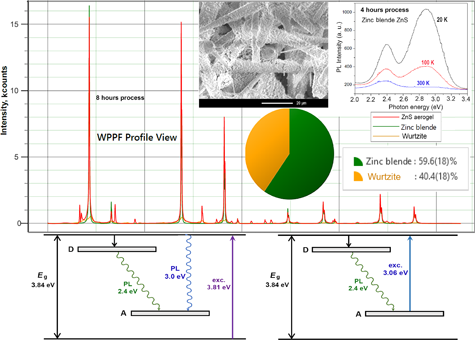
- oxide nanotube networks, by atomic layer deposition [20]. Another aeromaterial, so called aerographite, has been produced by a one-step chemical vapor deposition process with a simultaneous and complete removal of the template material consisting of highly porous 3D networks built from interconnected



Determining by Raman spectroscopy the average thickness and N-layer-specific surface coverages of MoS2 thin films with domains much smaller than the laser spot size
Beilstein J. Nanotechnol. 2024, 15, 279–296, doi:10.3762/bjnano.15.26
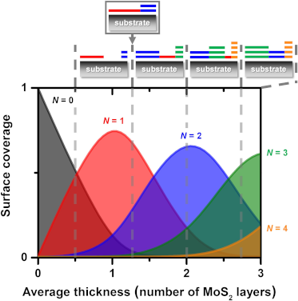
- fall off the reference curve. Indeed, data obtained on poorly crystalline MoS2 films synthesized by DLI atomic layer deposition (not shown) are found systematically and significantly below the corresponding reference curve. Concerning the DLI-PP-CVD samples presented in Figure 7, the A(A1g)/A(Si111) vs


In situ optical sub-wavelength thickness control of porous anodic aluminum oxide
Beilstein J. Nanotechnol. 2024, 15, 126–133, doi:10.3762/bjnano.15.12
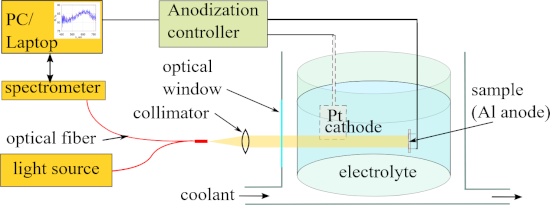
- of templates, including evaporation masks [8][9][10], molds for nanowire array production using the supercritical fluid method [11], electrochemical deposition [12], atomic layer deposition [13], or traps for colloidal nanoparticle assembly [14]. Several applications, for example, color filtering [15


Properties of tin oxide films grown by atomic layer deposition from tin tetraiodide and ozone
Beilstein J. Nanotechnol. 2023, 14, 1085–1092, doi:10.3762/bjnano.14.89
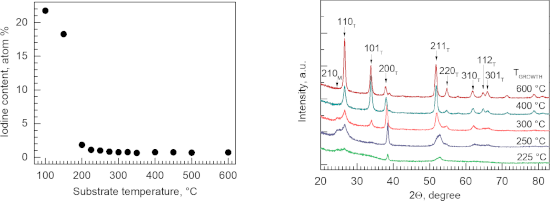
- Kristjan Kalam Peeter Ritslaid Tanel Kaambre Aile Tamm Kaupo Kukli Institute of Physics, University of Tartu, W. Ostwaldi 1, 50411 Tartu, Estonia 10.3762/bjnano.14.89 Abstract Polycrystalline SnO2 thin films were grown by atomic layer deposition (ALD) on SiO2/Si(100) substrates from SnI4 and O3
- implied the formation of single-phase oxide in the films grown at temperatures above 300 °C. Appropriateness of the mentioned precursor system to the preparation of SnO2 films was established. Keywords: atomic layer deposition; tin oxide; tin tetraiodide; Introduction Atomic layer-deposited SnO2 films
- precursor combinations for obtaining SnO2 in atomic layer deposition (ALD) processes [9]. Two of these processes have employed SnI4 as the metal precursor with either O2 [10][11][12][13][14] or H2O2 [10][11][15] as oxidizer. Of these two oxygen sources, O2 would be more desirable because with it a hydrogen


Low temperature atomic layer deposition of cobalt using dicobalt hexacarbonyl-1-heptyne as precursor
Beilstein J. Nanotechnol. 2023, 14, 951–963, doi:10.3762/bjnano.14.78
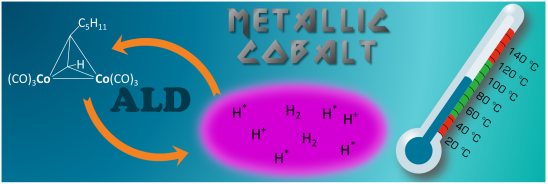
- , Clemens-Winkler-Str. 6c, 09116 Chemnitz, Germany FAP Forschungs- und Applikationslabor Plasmatechnik GmbH, Gostritzer Str. 67B, 01217 Dresden, Germany 10.3762/bjnano.14.78 Abstract In this work, we present the development of an atomic layer deposition (ALD) process for metallic cobalt. The process
- saturation behaviour of the process was investigated. X-ray photoelectron spectroscopy measurements could show that the deposited cobalt is in the metallic state. The finally established process in ALD mode shows a homogeneous coating at the wafer level. Keywords: atomic layer deposition (ALD); cobalt; low
- -temperature ALD; PEALD; plasma-enhanced ALD; XPS; Introduction The atomic layer deposition (ALD) of cobalt films is an ongoing topic of interest [1]. Cobalt thin and ultrathin films play an important role in current generations of integrated circuits [2]. Compared to copper, the metal offers a greater


Role of titanium and organic precursors in molecular layer deposition of “titanicone” hybrid materials
Beilstein J. Nanotechnol. 2022, 13, 1240–1255, doi:10.3762/bjnano.13.103
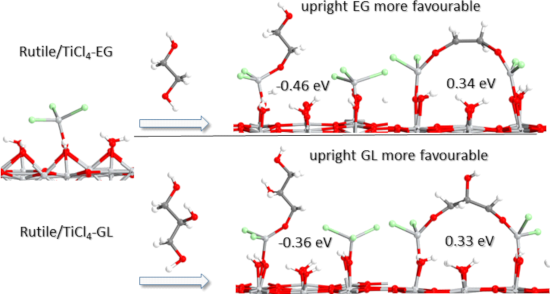
- (MLD) allows the deposition of these hybrid films using sequential, self-limiting reactions, similar to atomic layer deposition (ALD). In this paper, we use first principles density functional theory (DFT) to investigate the growth mechanism of titanium-containing hybrid organic–inorganic MLD films
- organic–inorganic hybrid films for applications in several technological application areas, including packaging/encapsulation, electronics, batteries and biomedical applications [1][2][3][4]. MLD is very similar to the widely used atomic layer deposition (ALD) technique, which involves the fabrication of


Design of surface nanostructures for chirality sensing based on quartz crystal microbalance
Beilstein J. Nanotechnol. 2022, 13, 1201–1219, doi:10.3762/bjnano.13.100
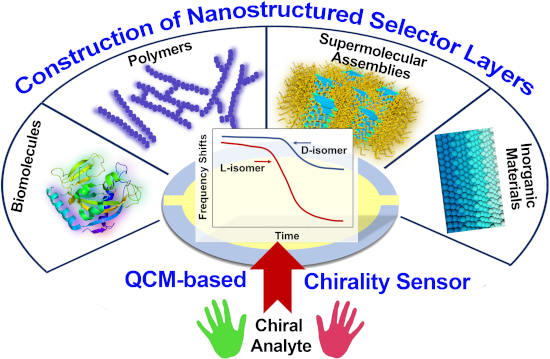
- (CH3)2}4] on SAMs of chiral molecules by using the atomic layer deposition (ALD) technique [120]. The specific selection effect was verified by QCM measurements using valine (Val) as the target analyte. The TiO2-SAMs films were shown to preferentially adsorb ᴅ-Val, suggesting a reliable chiral selector


Theoretical investigations of oxygen vacancy effects in nickel-doped zirconia from ab initio XANES spectroscopy at the oxygen K-edge
Beilstein J. Nanotechnol. 2022, 13, 975–985, doi:10.3762/bjnano.13.85
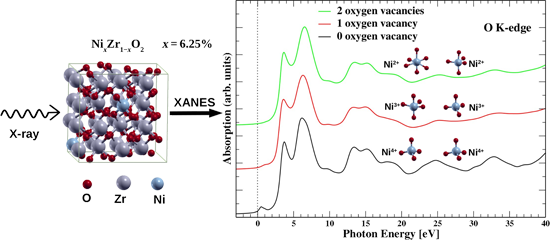
- that of the monoclinic structure) [35]. Thus, our structural phase of reference in this work is cubic distorted fluorite zirconia since we are doping it and also due to the fact that actual experiments involving atomic layer deposition of TM-doped zirconia thin films revealed the cubic phase [26]. In


Zinc oxide nanostructures for fluorescence and Raman signal enhancement: a review
Beilstein J. Nanotechnol. 2022, 13, 472–490, doi:10.3762/bjnano.13.40
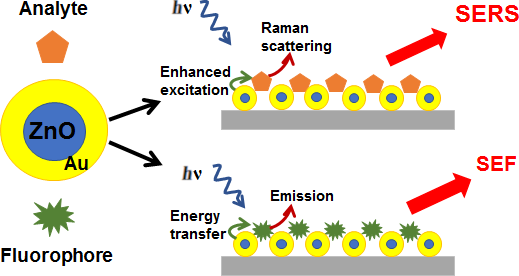
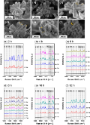
- needed to develop efficient SERS substrates. The combination of several methods including nanosphere lithography, atomic layer deposition, electrodeposition, and electron-beam evaporation resulted in Au-covered hollow urchin-like ZnO structures (Figure 2e–k) [16]. The ZnO layer was deposited on a
- substrate covered with polystyrene spheres by atomic layer deposition, followed by electrodeposition, which was used to grow ZnO nanowires onto the surface. The Au layer was deposited after burning off the polystyrene spheres by electron beam evaporation while monitoring its thickness. Considering the
- their surface. In contrast, ZnO NRs with horizontal (100) and (101) orientations were observed to promote the growth of Au NPs and their homogenous distribution, resulting in the formation of “hot spots” necessary for enhancing the Raman signal [38]. Also, ZnO nanoarrays obtained using atomic layer




Engineered titania nanomaterials in advanced clinical applications
Beilstein J. Nanotechnol. 2022, 13, 201–218, doi:10.3762/bjnano.13.15
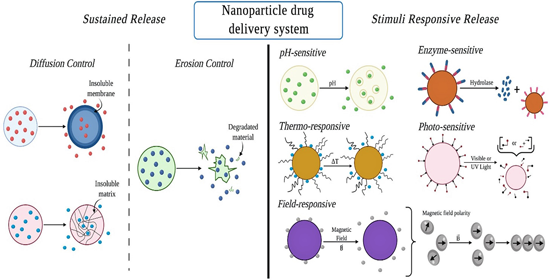
- standard glass surface [82]. Another recent study stated that hollow, calcined TiO2 nanospheres (CSTiO2), synthesized by the combination of electrospinning and atomic layer deposition, have high antimicrobial activity against multidrug-resistant bacteria such as S. aureus strains compared to commercial


Plasmon-enhanced photoluminescence from TiO2 and TeO2 thin films doped by Eu3+ for optoelectronic applications
Beilstein J. Nanotechnol. 2021, 12, 1271–1278, doi:10.3762/bjnano.12.94
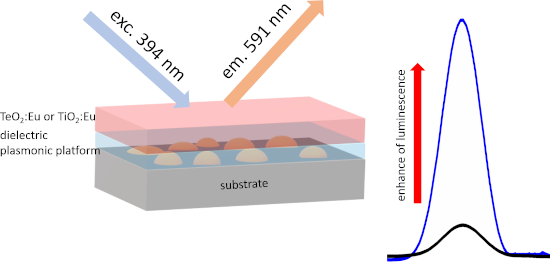
- thicknesses in a range of 2 to 8 nm was deposited by atomic layer deposition (ALD) using a Beneq TFS 200 ALD system. This method provides precise control over the thickness with atomic accuracy. Trimethylaluminum (Sigma-Aldrich) and purified water were used as precursors. The deposition of the atomic layers





