


Search results
Search for "detection" in Full Text gives 834 result(s) in Beilstein Journal of Nanotechnology. Showing first 200.
Nanocarrier strategies to overcome P-glycoprotein-mediated drug resistance in cancer therapy
Beilstein J. Nanotechnol. 2026, 17, 882–921, doi:10.3762/bjnano.17.64
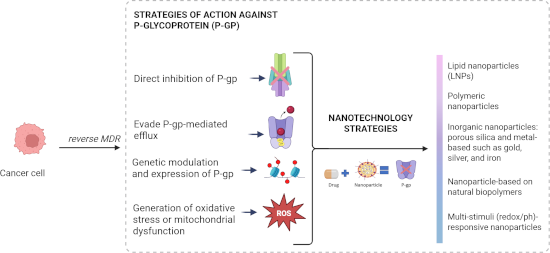
- diagnosed annually. Among the most prevalent and clinically challenging malignancies are breast, colorectal, gastric, prostate, and lung cancers, particularly non-small cell lung cancer (NSCLC). Despite advances in early detection and treatment, the long-term effectiveness of chemotherapy is frequently
- BCRP are noted as parallel mechanisms that fall outside the scope. 1.1.3 Gastric cancer. Gastric cancer remains one of the most lethal malignancies, particularly prevalent in East Asia and Latin America. Although early-stage detection can lead to curative outcomes, advanced gastric cancer is frequently


Nanoparticle delivery systems for HIV pre-exposure prophylaxis (PrEP): advances and challenges
Beilstein J. Nanotechnol. 2026, 17, 839–853, doi:10.3762/bjnano.17.60
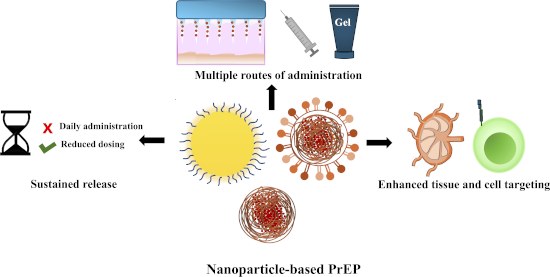
- adherence declined over time. Only ≈21% achieved high adherence during the first six months, and drug detection further declined by month 12. Considering these challenges, there is significant interest in long-acting (LA) ARV systems as a strategy to mitigate adherence problems in HIV PrEP [7][10][11][12


Cross-scale design of chemosensor arrays: from molecular self-assembly in water to paper-based devices for metal ion detection
Beilstein J. Nanotechnol. 2026, 17, 828–838, doi:10.3762/bjnano.17.59
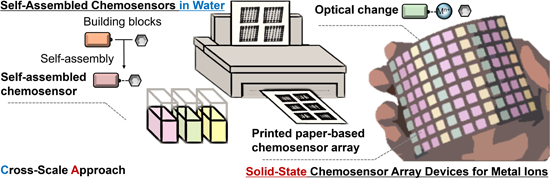
- optical signals. In particular, coordination with metal ions enables cross-reactive sensing, allowing for simultaneous detection of multiple analytes based on pattern recognition. This perspective summarizes advances in self-assembled chemosensor systems for metal ion detection and further developments to
- synthetic effort. Furthermore, integration of these self-assembled chemosensors into paper substrates enables portable detection platforms for on-site analysis without using stationary laboratory instruments. This cross-scale design strategy provides a promising approach for simultaneous detection of metal
- have been widely applied to metal ion detection [6][7][8][9][10][11]. The detection principle of chemosensors relies on ion and molecular recognition chemistry [3]. Target metal ions have various sizes and valencies; thus, simultaneous detection of multiple metal ions is desired [1][2]. In this regard


Sustainable fabrication of 2D-based devices through reuse of substrates with microfabricated electrodes
Beilstein J. Nanotechnol. 2026, 17, 818–827, doi:10.3762/bjnano.17.58
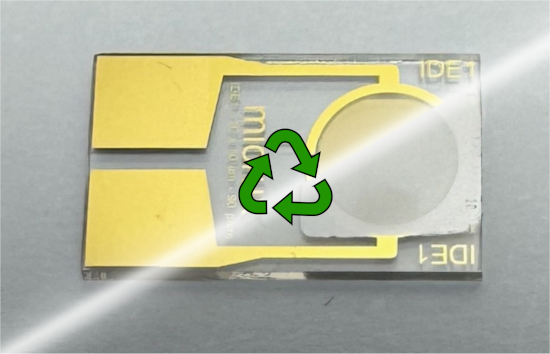
- , shown in Figure 4g, display the same trend, with clear MoS2-related features observed after transfer and the signal suppressed to the background level after cleaning. These results suggest that, within the detection limit of the Raman mapping used here, no clear MoS2 residue remains in the analyzed


Glycerol photoelectrochemical oxidation reaction at carbon nitrides/BiVO4 materials
Beilstein J. Nanotechnol. 2026, 17, 806–817, doi:10.3762/bjnano.17.57
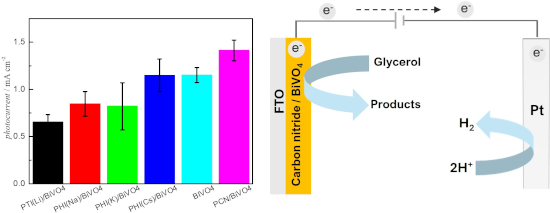
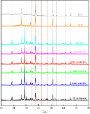
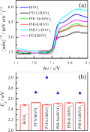
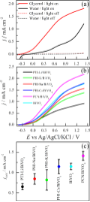
- images indicate that the analysis is near the detection limit of the instrument; therefore, the data should be qualitatively interpreted. Figure 5 shows the Tauc plots derived from the diffuse reflectance spectra collected for the CN/BiVO4 materials, assuming an indirect allowed transition. The bandgap




Restorative potential of laser-synthesized silver nanoparticles with Salvia officinalis for periodontal disease treatment: an in vitro study
Beilstein J. Nanotechnol. 2026, 17, 781–795, doi:10.3762/bjnano.17.55
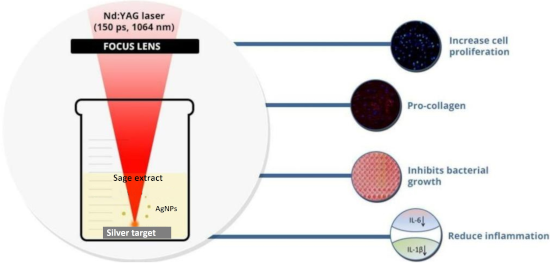
- mg·L−1 ± SD. The hydrodynamic diameters (dH) of the obtained nanoparticles were analyzed by using the dynamic light scattering (DLS) technique using a Zetasizer NanoZS90 (Malvern Panalytical, UK) with a 633 nm He–Ne laser source and 90° detection optics. The measurements were performed in disposable
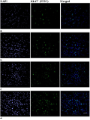
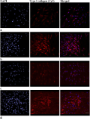
- 1000 cells per treatment were analyzed. Assessment of collagen production The collagen production rate was monitored by immunofluorescent staining of type-I collagen and colorimetric detection of the total collagen content (TCC). Type-I collagen immunofluorescent staining was performed on the GFCs
- , rosmarinic acid was the most abundant (41.1 ± 0.8 mg·g−1) and caffeic acid was found at a concentration of 410 ± 20 µg·g−1, while ferulic and vanillic acids were below the detection limit. AgNP synthesis and characterization Four types of AgNPs were synthesized by silver target ablation in deionized water or



Substrate-dependent pore formation in molybdenum disulfide monolayers under ion irradiation
Beilstein J. Nanotechnol. 2026, 17, 769–780, doi:10.3762/bjnano.17.54
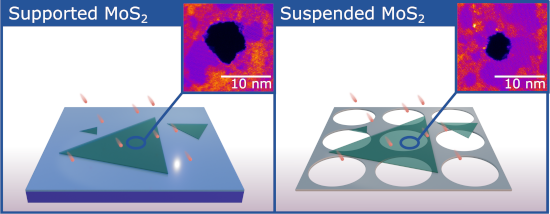
- variations can make purely threshold-based edge detection unreliable. To ensure comparability with the suspended-layer reference data, which originate from our previous work, the same general procedure regarding sample preparation, STEM imaging, and image analysis was applied. Raman and PL spectroscopy Raman


Superconducting artificial neural networks and quantum circuits
Beilstein J. Nanotechnol. 2026, 17, 744–747, doi:10.3762/bjnano.17.51

- - and video-based traffic violation detection systems or face recognition in crowds [2]. Hardware neural networks, in contrast, are implemented as specialised physical devices such as chips or processors [3]. The development of such systems represents a complex physical and engineering challenge
Environmental applications of silver nanoparticles: state-of-the-art review and emerging trends
Beilstein J. Nanotechnol. 2026, 17, 697–736, doi:10.3762/bjnano.17.49
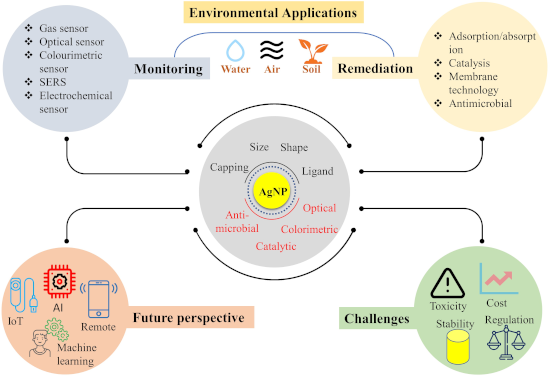
- develop LSPR-based nanosensors that detect different metal ions [7]. A surface coating of ʟ-carnosine on nanosilver enables size tuning and the detection of metal ions such as As3+, Cr3+, Cd2+, and Pb2+, while cetyltrimethylammonium bromide (CTAB) coating provides selectivity against Hg2+ and Cu2+ [8][9
- using standard techniques before their practical use. Furthermore, surface modification with a suitable ligand or surface capping enables targeted interaction with the analyte via the exposed functional group, thus enabling selective detection. Surface capping enhances the stability of nanoparticles and
- prevent aggregation [36]. The capping agents can be polymers, surfactants, and small and large biomolecules, providing colloidal nanoregime stability [37]. The size-controlled synthesis of AgNPs capped with ʟ-carnosine was developed for metal ion detection and nitrophenol removal [8]. Another study


Cellulose as a photocatalyst support material: extraction, structural features, and environmental applications
Beilstein J. Nanotechnol. 2026, 17, 635–652, doi:10.3762/bjnano.17.44
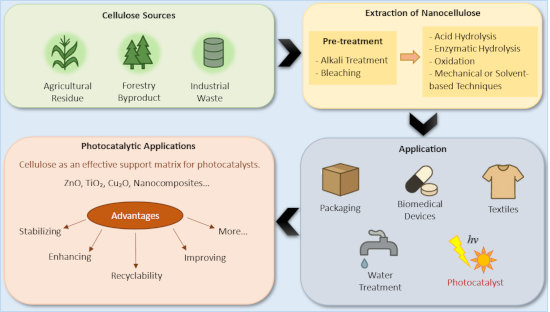
- biosensors using cellulose nanocrystals combined with magnetite to create (x-CNC)-Fe3O4 systems, which demonstrate excellent biocompatibility and are tailored for glucose detection. These biosensors are often fabricated as thin-film strips that can be applied directly onto the skin or tongue, where they


Impacts of annealing on structural and photophysical properties of zinc phthalocyanine adsorbed on graphene
Beilstein J. Nanotechnol. 2026, 17, 576–585, doi:10.3762/bjnano.17.39
- an inverted optical microscope (IX71, Olympus) equipped with an objective lens (Nikon, 60×, 0.8 N.A.). The detection chain was made of an imaging spectrometer (Kymera 193i, Andor) equipped with a blazed grating (SR2-GRT-0150-0500, Andor) and a CMOS camera (Zyla 5.5, Andor). An automated slit was
- ) as the input illumination. The reference was acquired on a clean glass cover plate. The transmitted signal was collected through the objective lens and sent to the detection chain to construct a 1D hyperspectral image reported either in dark-background-corrected absorption (100 × (1 − T/Treference


Laser–material interactions in liquids for the synthesis of nanomaterials: current status and perspectives
Beilstein J. Nanotechnol. 2026, 17, 571–575, doi:10.3762/bjnano.17.38
- processing parameters has enabled a wide range of applications [53]. These include catalysis [54] (e.g., for oxygen [55] and hydrogen evolution reactions [56] in hydrogen production), sensing (e.g., surface-enhanced Raman spectroscopy [51] for detection of pollutants and optical sensing of glucose [57
Electrochemical determination of ciprofloxacin using a MIL-101/reduced graphene oxide-modified electrode
Beilstein J. Nanotechnol. 2026, 17, 541–554, doi:10.3762/bjnano.17.35
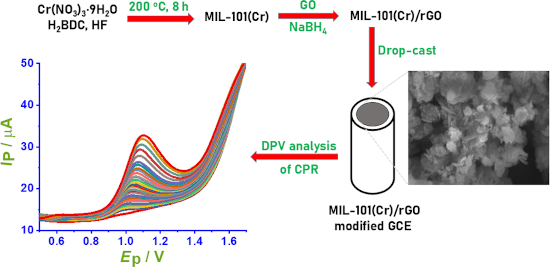
- response over 0.25–9.41 µM and a detection limit of 0.11 µM for CPR determination. The sensor also demonstrated good selectivity, satisfactory repeatability, and long-term stability. Furthermore, the method’s practical applicability was validated by the determination of CPR in pharmaceutical samples
- metronidazole and the anodic stripping detection of Cd2+ and Pb2+, demonstrating a strong synergistic effect between MIL-101 and rGO in electrochemical sensing [16]. In this work, a MIL-101/rGO hybrid was successfully synthesized and used as a modifier for a glassy carbon electrode to develop a sensitive
- electrochemical sensor for CPR detection. The electrochemical behavior of CPR on the MIL-101/rGO-modified electrode was examined. The proposed sensor demonstrated enhanced electrocatalytic activity, high sensitivity, and a low detection limit for CPR. Additionally, the practical utility of the sensor was


Fractional shot noise of an SU(N) Kondo system
Beilstein J. Nanotechnol. 2026, 17, 515–540, doi:10.3762/bjnano.17.34
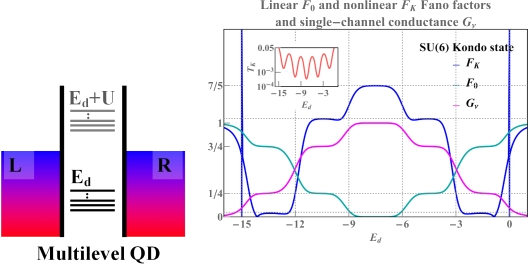
- both fundamental physics and potential quantum information applications, detection, and sensing [1][2][3][4]. To achieve these goals, the increasing ability to manipulate quantum states is crucial. As electrons are confined in fewer dimensions and as the size of the dot decreases, the charging energy


![[Graphic 127]](/bjnano/content/inline/2190-4286-17-34-i187.svg?max-width=637&scale=1.18182)

Upcycling agroindustrial waste into graphene oxide supports for gold nanoparticles: toward sustainable nanomaterials
Beilstein J. Nanotechnol. 2026, 17, 489–504, doi:10.3762/bjnano.17.32
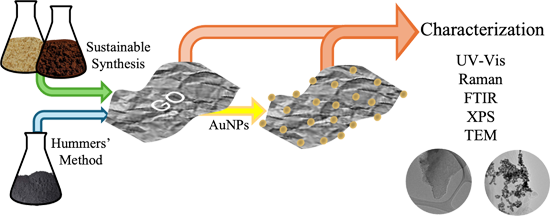
- platforms have shown promise in electrochemical and colorimetric sensing of environmental contaminants, allowing for sensitive and rapid detection of toxic species in water [60][61][62]. Beyond catalysis and sensing, the well-documented antibacterial activity of AuNPs, combined with the large surface area
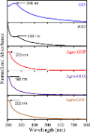
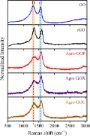
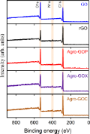

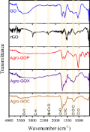
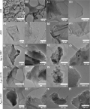
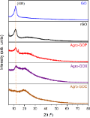


Defects and defect-mediated engineering of two-dimensional materials: challenges and open questions
Beilstein J. Nanotechnol. 2026, 17, 454–488, doi:10.3762/bjnano.17.31
- detection of the inelastic contribution. On the one hand, the small energy scale of at most a few millielectronvolts requires very low temperatures; on the other hand, the change in conductance depends on the excitation efficiency and the density of states at the Fermi level. Hence, detection of magnetic





Nanocarrier-integrated multilayer films produced by 3D printing for improved skin adhesion and curcumin photostability
Beilstein J. Nanotechnol. 2026, 17, 440–453, doi:10.3762/bjnano.17.30
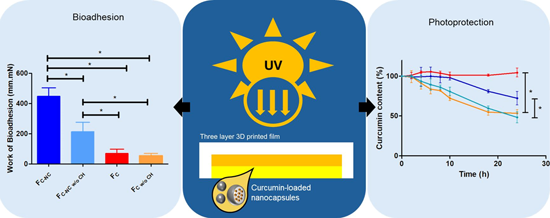
- detection (HPLC-UV) [26]. The chromatographic system consisted of a Shimadzu LC-20A chromatograph (Tokyo, Japan), using a C18 reversed-phase column (250 × 4.60 mm, 5 µm, 100 Å; Zorbax Eclipse Plus, Agilent). The mobile phase was composed of acetonitrile and trifluoroacetic acid (0.1%) (60:40, v/v), and the
- = 0.9994), with intra-day variability lower than 2% and limits of detection and quantification of 0.2 and 0.7 µg/mL, respectively. Method specificity was confirmed by comparing chromatograms of the samples with those obtained from the placebo formulation. The curcumin content was determined after


Interconnection morphology effects on the radio frequency response of carbon nanotube sponges
Beilstein J. Nanotechnol. 2026, 17, 343–351, doi:10.3762/bjnano.17.23
- Information File 40: Additional details on CNS preparation, XPS analysis, and antenna characterization. Funding MS would like to acknowledge the INFN (Istituto Nazionale di Fisica Nucleare) MANIFOLD (Multidimensional nANodevice archItectures For lOw-perturbation singLe-ion Detection) grant.



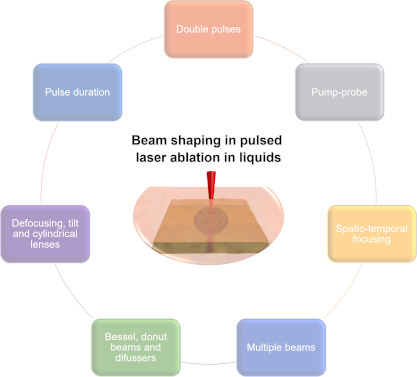
Beam shaping techniques for pulsed laser ablation in liquids: Unlocking tunable control of nanoparticle synthesis in liquids
Beilstein J. Nanotechnol. 2026, 17, 309–342, doi:10.3762/bjnano.17.22
- ][77] and colorimetric sensors [78][79], surface-enhanced Raman spectroscopy detection [71][80][81], nanofluids for thermal applications [82][83][84], additive manufacturing [85][86][87], or catalysis [88][89]. The previously mentioned applications of PLAL-derived NPs can be grouped into four major







Calculation of the dynamic stiffness of a cantilever under torsional oscillation
Beilstein J. Nanotechnol. 2026, 17, 303–308, doi:10.3762/bjnano.17.21
- as it can electrically detect energy dissipations [8]. Lateral force microscopy with quartz tuning fork AFM, using a CO-terminated tip, enabled the detection of energy dissipation over the chemical bonds of a PTCDA (3,4,9,10-perylenetetracarboxylic dianhydride) molecule, with a vertical decay length

Durable antimicrobial activity of fabrics functionalized with zeolite ion-exchanged nanomaterials against Staphylococcus aureus and Escherichia coli
Beilstein J. Nanotechnol. 2026, 17, 262–274, doi:10.3762/bjnano.17.18
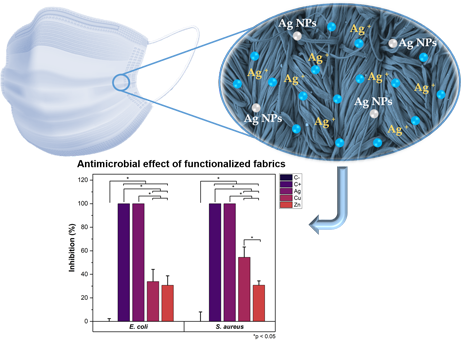
- Ag, Cu, and Zn concentrations after three and five washing cycles might be below the detection limit of EDS (i.e., the phenomenon is related to the relatively low amount of nanomaterials used for fabric functionalization rather than to the complete removal of the nanomaterials). According to the




Gold nanoparticle-decorated reduced graphene oxide as a highly effective catalyst for the selective α,β-dehydrogenation of N-alkyl-4-piperidones
Beilstein J. Nanotechnol. 2026, 17, 218–238, doi:10.3762/bjnano.17.15
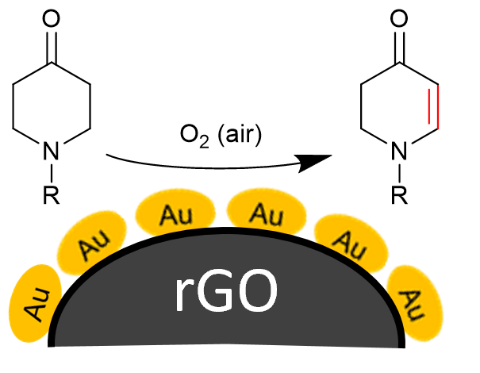
- AuNPs and carbon layers. Similar behavior has been reported in other Au–polyoxometalate systems where the W signal dominates and the Si 2p peak is below detection limits [45]. Collectively, these XPS results confirm that gold is predominantly metallic (Au0) and the rGO support contains functional groups


Micro- and nanoscale effects in biological and bioinspired materials and surfaces
Beilstein J. Nanotechnol. 2026, 17, 214–217, doi:10.3762/bjnano.17.14
- detection of vitamin B12. The reviewed approaches, with a particular focus on bioinspired and nanomaterial-based platforms, address the needs for fast, reliable, and noninvasive detection of specific nutrients in food industry and pharmaceutics. This thematic issue offers a distinctive set of new concepts
Time of flight secondary ion mass spectrometry imaging of contaminant species in chemical vapour deposited graphene on copper
Beilstein J. Nanotechnol. 2026, 17, 200–213, doi:10.3762/bjnano.17.13
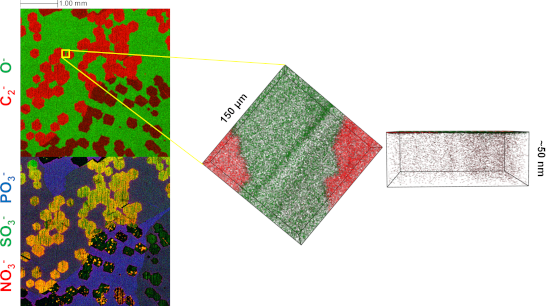
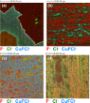
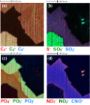
- surface sensitivity (<1 nm depth), low detection limits (ppm and better), high mass resolution to aid identification of chemical species in both molecular and elemental forms [28][29][34], combined with below 30 nm lateral resolution possible under optimal conditions [35]. We investigate a range of
- F 1s core level was very close to the detection limits of XPS for both samples, and it was not possible to resolve a signal from the P 2p core level spectra, despite F- and P-containing ion species being easily detected by ToF-SIMS from the same samples, highlighting the enhanced sensitivity of ToF





Safe and sustainable by design with ML/AI: A transformative approach to advancing nanotechnology
Beilstein J. Nanotechnol. 2026, 17, 176–185, doi:10.3762/bjnano.17.11
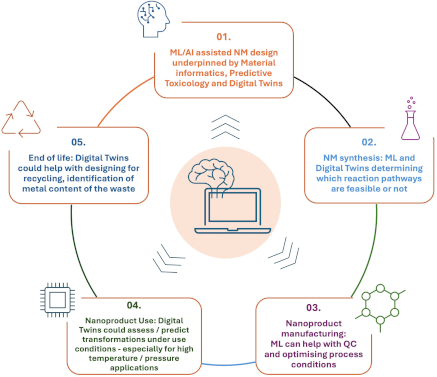
- into the SSbD framework, offering proactive detection of potentially hazardous materials or formulations at the earliest stages of research and development. By providing rapid, data-driven feedback on the probable safety profile of a material, predictive toxicology ensures that corrective measures





