Search results
Search for "feedback loop" in Full Text gives 92 result(s) in Beilstein Journal of Nanotechnology.
Safe and sustainable by design with ML/AI: A transformative approach to advancing nanotechnology
Beilstein J. Nanotechnol. 2026, 17, 176–185, doi:10.3762/bjnano.17.11
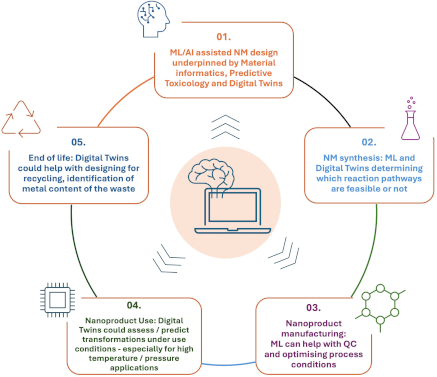
- physics-based to data-driven models), these digital counterparts evolve in real time as new data and conditions are introduced. This continuous feedback loop not only reduces the need for extensive lab testing, but also accelerates design iterations by highlighting, early on, the potential interactions


Multifrequency AFM integrating PeakForce tapping and higher eigenmodes for heterogeneous surface characterization
Beilstein J. Nanotechnol. 2025, 16, 2077–2085, doi:10.3762/bjnano.16.142
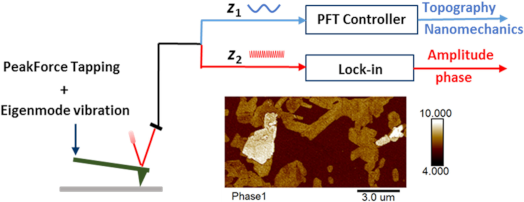
- processes [6][26], complementing the absolute force measurements obtained from the quasi-static PeakForce feedback loop. This dual-mechanism approach enables the detection of a broad range of near-surface properties, including elastic modulus, viscoelasticity, and dissipation, greatly enhancing material


Automated collection and categorisation of STM images and STS spectra with and without machine learning
Beilstein J. Nanotechnol. 2025, 16, 1367–1379, doi:10.3762/bjnano.16.99
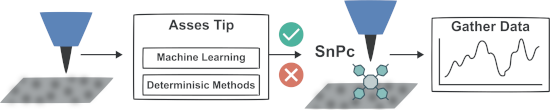
- ” sites of the herringbone structure. An STS spectrum (differential conductance) can be obtained in practice using one of two methods. Both begin by positioning the STM tip at a desired lateral position on the surface whilst scanning in STM feedback. At this point, the feedback loop is disabled, keeping




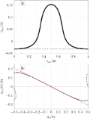
Transfer function of an asymmetric superconducting Gauss neuron
Beilstein J. Nanotechnol. 2025, 16, 1160–1170, doi:10.3762/bjnano.16.85
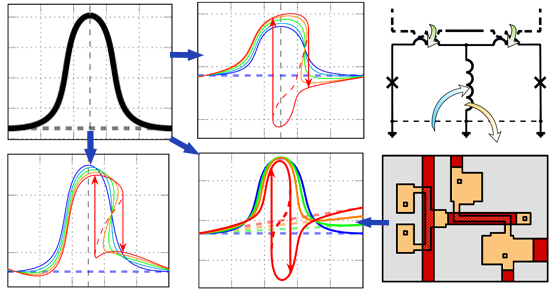
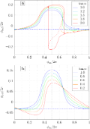
- consists of an inductive element Lsq, closed onto a superconducting screen through JJs JJI,II (an asymmetric two-junction SQUID, Figure 6b). The output signal is the current in the feedback loop of the SQUID Ifb that compensates the change in the output flux while sweeping Φin. In other words, the current



Shape, membrane morphology, and morphodynamic response of metabolically active human mitochondria revealed by scanning ion conductance microscopy
Beilstein J. Nanotechnol. 2025, 16, 951–967, doi:10.3762/bjnano.16.73
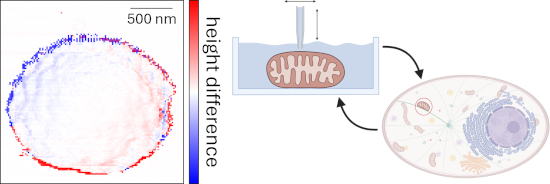
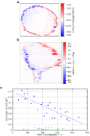
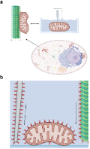
- as quantity to be measured by a feedback loop. This current is generated by applying a voltage between two Ag/AgCl electrodes, one located in an electrolyte bath containing the non-conductive sample and the other within the nanopipette (Supporting Information File 1, Section S7, Figure S20). When the
- nanopipette is gently approached vertically towards the sample, within immediate distance to its surface, the ion current decreases as the ion delivering volume between the nanopipette opening and the sample surface is reduced. This current drop is used by the feedback loop, which regulates the pipette’s



Tendency in tip polarity changes in non-contact atomic force microscopy imaging on a fluorite surface
Beilstein J. Nanotechnol. 2025, 16, 944–950, doi:10.3762/bjnano.16.72
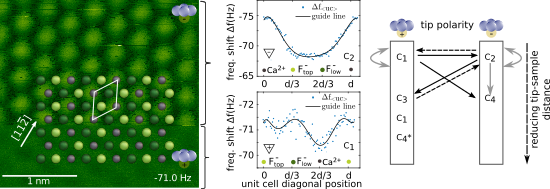
- was used. The NC-AFM was operated in the frequency-modulation mode with an oscillation amplitude of 7.4 nm, and images shown herein were acquired in the quasi constant-height mode [18]. Frequency shift values printed in the respective images correspond to the setpoint of the feedback loop. LT


The impact of tris(pentafluorophenyl)borane hole transport layer doping on interfacial charge extraction and recombination
Beilstein J. Nanotechnol. 2025, 16, 678–689, doi:10.3762/bjnano.16.52
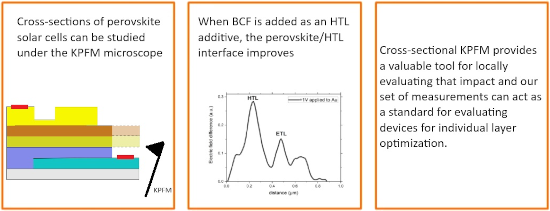
- generates a sideband signal at frequency f2, which is used as input for the KPFM feedback loop. For the extraction of the electric field and photocarrier density profiles from the surface potential data, we applied the definitional voltage equation for a conservative electric field and the Poisson equation


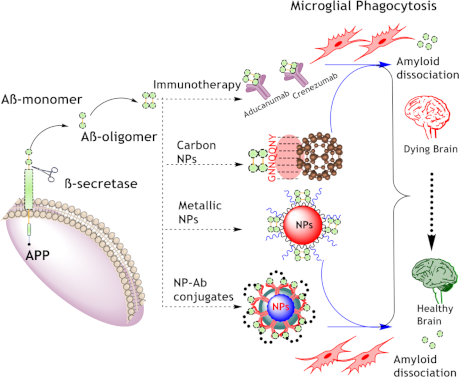
Nanomaterials in targeting amyloid-β oligomers: current advances and future directions for Alzheimer's disease diagnosis and therapy
Beilstein J. Nanotechnol. 2025, 16, 561–580, doi:10.3762/bjnano.16.44


ReactorAFM/STM – dynamic reactions on surfaces at elevated temperature and atmospheric pressure
Beilstein J. Nanotechnol. 2025, 16, 397–406, doi:10.3762/bjnano.16.30
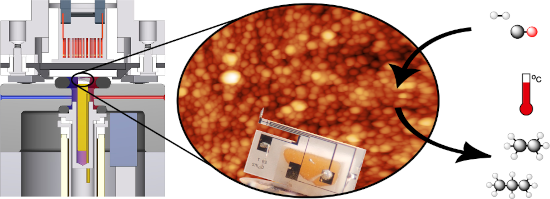
- signal analyzer. The tip motion and the feedback loop are controlled by electronics from RHK technology. A phase-locked loop is employed for locking the phase between the AC drive signal to the QTF and the signal input. When the phase is locked, the resonance frequency of the tuning fork will shift as


Unveiling the nature of atomic defects in graphene on a metal surface
Beilstein J. Nanotechnol. 2024, 15, 416–425, doi:10.3762/bjnano.15.37
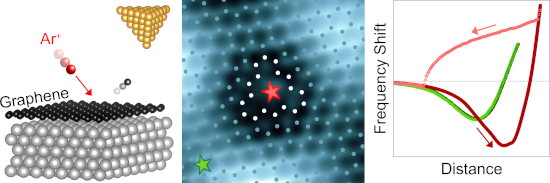
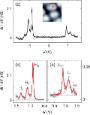
- (c). The STS data for defects 1 and 2 were acquired with the same tip. The spectra are shifted vertically by 0.02 nS. Feedback loop parameters prior to spectroscopy: 500 mV, 50 pA. Atomic force and scanning tunneling microscopy of defect types 1 and 2 in graphene on Ir(111). (a) Constant-height AFM
- tip excursion used for the constant-height Δf current maps in (a–d). Displacement Δz = 0 defines the tip–sample distance at which the feedback loop was deactivated above pristine graphene (10 mV, 50 pA). Vertical probe–surface distance dependence of AFM topographies of defect 1. (a–c) Constant-height
- is defined by the feedback loop parameters 10 mV and 50 pA above intact graphene. The same tip–surface distance prior to data acquisition above the defect is ensured by taking the apparent height difference at the feedback loop parameters into account. Total vertical force F as a function of tip


Enhanced feedback performance in off-resonance AFM modes through pulse train sampling
Beilstein J. Nanotechnol. 2024, 15, 134–143, doi:10.3762/bjnano.15.13
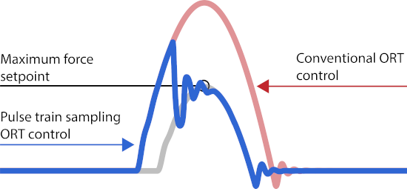
- vertical force changes during a defined time window of the tip–sample interaction. Through this, we use multiple samples in the proximity of the maximum force for the feedback loop, rather than only one sample at the maximum force instant. This method leads to improved topography tracking at a given ORT


Nanotechnology – a robust tool for fighting the challenges of drug resistance in non-small cell lung cancer
Beilstein J. Nanotechnol. 2023, 14, 240–261, doi:10.3762/bjnano.14.23


Comparing the performance of single and multifrequency Kelvin probe force microscopy techniques in air and water
Beilstein J. Nanotechnol. 2022, 13, 922–943, doi:10.3762/bjnano.13.82
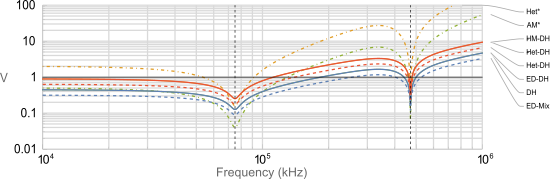
- capable of atomic-scale spatial resolution and nanosecond time resolution under specific conditions. KPFM-based techniques can largely be classified as either “open loop” (OL) or “closed loop” (CL). CL techniques employ a feedback loop to apply a bias to compensate for the electrostatic force (or force
- currents and unwanted electrochemical reactions) [9][33][34][35]. OL techniques avoid the limitations and artefacts that can arise when using a feedback loop, for example, bandwidth limitations due to the time constant of the feedback loop [29], increased noise [36][37], and electrical crosstalk [38][39
- ]. The regulation of tip–sample distance in KPFM imaging is generally performed by employing a feedback loop that maintains the mechanical oscillation amplitude of the cantilever at the fundamental eigenmode, ω1, at a fixed value. This precludes simultaneous measurement of electrostatic forces on this
Self-assembly of C60 on a ZnTPP/Fe(001)–p(1 × 1)O substrate: observation of a quasi-freestanding C60 monolayer
Beilstein J. Nanotechnol. 2022, 13, 857–864, doi:10.3762/bjnano.13.76
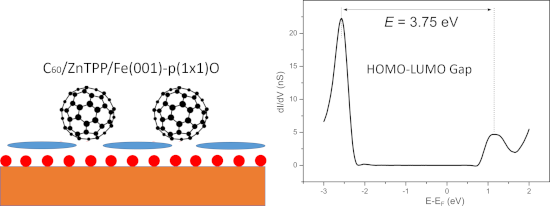
- “Ph2”) and from C60 (“a”–“e”) are labeled and their evolution is indicated with dotted lines. Scanning tunneling spectrum acquired at constant tip–surface separation (open feedback loop) on the C60/ZnTPP/Fe(001)–p(1 × 1)O system (black) and on the ZnTPP/Fe(001)–p(1 × 1)O surface (red). The black curves


Temperature and chemical effects on the interfacial energy between a Ga–In–Sn eutectic liquid alloy and nanoscopic asperities
Beilstein J. Nanotechnol. 2022, 13, 817–827, doi:10.3762/bjnano.13.72
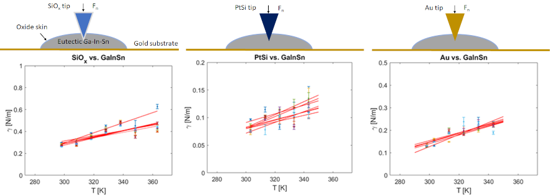
- plotted for both forward and backward directions as presented in Figure 3. There, the normal force plots show the normal force signal as controlled by the feedback loop in red color, while the normal force traces in blue and orange colors were calculated from the height traces in, respectively, the



Two dynamic modes to streamline challenging atomic force microscopy measurements
Beilstein J. Nanotechnol. 2021, 12, 1226–1236, doi:10.3762/bjnano.12.90
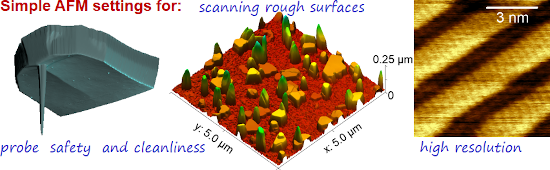
- resonant frequency (usually 40–400 kHz). As the distance between the probe and the sample decreases, the oscillation amplitude A also decreases. A certain amplitude value is selected as a set point Asp (a reference level). A feedback loop compares the current amplitude value with Asp and, moving the Z
- significantly simplified if the dissipation mode (DM) is used for scanning [5]. In the DM, the probe excitation frequency is maintained equal to its instant resonant frequency (as in FM-AFM), while the signal fed to the Z-scanner feedback loop is the oscillation amplitude (as in AM-AFM). The possibilities of
- microscope manufactured by AIST-NT (currently produced by HORIBA Scientific) under the control of a modified imaging software that allows for the programming of new procedures and controls. The operation of modern AFMs is based on a digital feedback loop, which provides greater flexibility in the development


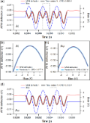
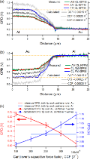
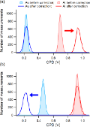
Open-loop amplitude-modulation Kelvin probe force microscopy operated in single-pass PeakForce tapping mode
Beilstein J. Nanotechnol. 2021, 12, 1115–1126, doi:10.3762/bjnano.12.83
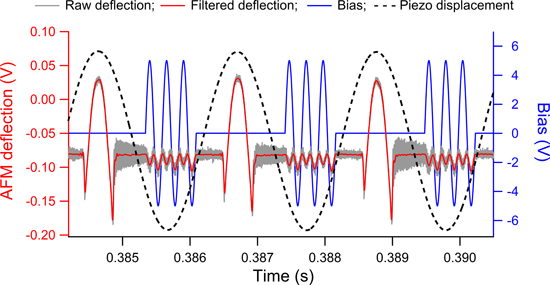
- measurements. The observed difference in the CPD measured by these two CL KPFM modes is well documented [36][50][51][58] and is related to the physical quantity on which each mode operates. On one hand, the feedback loop of the CL AM-KPFM tries to nullify the magnitude of the electrostatic force developed
- measurements are made and most likely access to the raw response of the probe under an electrostatic interaction with the sample. These requirements are very hard to be fulfilled by a CL KPFM method, where the momentarily reported CPD is the result of a feedback loop algorithm. However, the data are fully
- methods. One of the main motivations for OL KPFM is the full access to the raw data, uncorrected by any measurement procedure such as the feedback loop of a real-time operation. Moreover, the limited speed response of the feedback loop can also become a great impediment in observing ultrafast phenomena at





The nanomorphology of cell surfaces of adhered osteoblasts
Beilstein J. Nanotechnol. 2021, 12, 242–256, doi:10.3762/bjnano.12.20
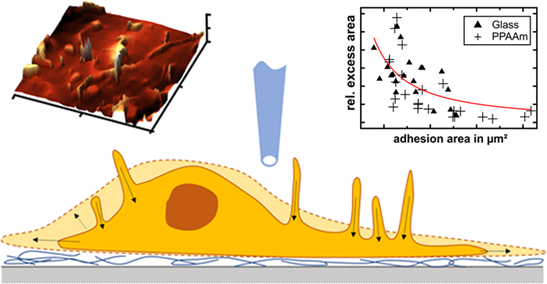
- microscopy is an option to study the membrane surface nanoscopically without dye labeling or laser light exposure. In scanning probe microscopy a nanoprobe is kept at a constant distance from the sample surface by maintaining a local interaction signal constant via a feedback loop [16]. If the interaction
- surface and cell migration happen rather slowly, they should only contribute to low-frequency fluctuations. To investigate the frequency behavior we focus on measuring the height with activated feedback loop in the frequency range of 0.2 to 500 Hz. Most systems exhibit an f−m spectral power density (SPD
- nanopipette was kept at constant lateral position over the cell and either temporal height variations with activated feedback loop or current variations at deactivated feedback loop were acquired. Temporal current and height spectra were evaluated using the Igor Pro software (WaveMetrics, Inc.). As main


Scanning transmission imaging in the helium ion microscope using a microchannel plate with a delay line detector
Beilstein J. Nanotechnol. 2020, 11, 1854–1864, doi:10.3762/bjnano.11.167
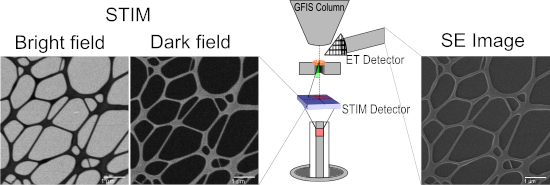
- controlled by a motion controller (Nanomotion XCDX) using a closed feedback loop with optically encoded linear rails (Schneeberger Miniscale Plus). This construction is compatible with the high-vacuum requirements, is self-locking, requires no mechanical feedthroughs nor lubricants, and provides high


Growth of a self-assembled monolayer decoupled from the substrate: nucleation on-command using buffer layers
Beilstein J. Nanotechnol. 2020, 11, 1291–1302, doi:10.3762/bjnano.11.113
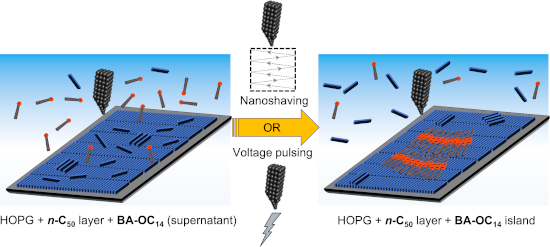
- retracting the STM tip at a certain distance (around 1 nm) from the surface. The feedback loop was turned off to maintain the separation between the tip and the sample during the period of voltage pulse in order to avoid the tip crash onto the surface. The software used for STM imaging does not log the


Scanning tunneling microscopy and spectroscopy of rubrene on clean and graphene-covered metal surfaces
Beilstein J. Nanotechnol. 2020, 11, 1157–1167, doi:10.3762/bjnano.11.100
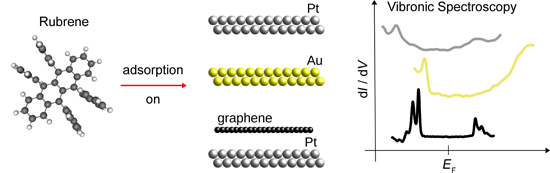
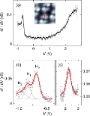
- reveal the two rotational senses. Spectra of dI/dV (dots) recorded above the different lobes of C42H28 on Pt(111) (feedback loop parameters prior to spectroscopy: 2.5 V, 100 pA). The solid lines represent smoothed data. The bottom (top) spectrum was acquired atop the left (right) lobe of the molecule as
- appearing at approx. −0.67 V (feedback loop parameters: −1 V, 50 pA). The solid line represents smoothed data. Inset: STM image of a single C42H28 molecule on Au(111) (−0.65 V, 100 nA, 2 × 2 nm2) with the asterisk marking the position of spectroscopy. (b) Close-up view of the HOMO (H0) vibronic fine
- structure (feedback loop parameters: −1 V, 50 pA). The presented data (dots) are normalized [38]. Vibronic side bands are labeled H1 and H2. The thick solid line represents a fit of three Lorentzian line shapes (thin gray lines) and a constant background to the data. (c) Normalized dI/dV data (dots) showing



Revealing the local crystallinity of single silicon core–shell nanowires using tip-enhanced Raman spectroscopy
Beilstein J. Nanotechnol. 2020, 11, 1147–1156, doi:10.3762/bjnano.11.99
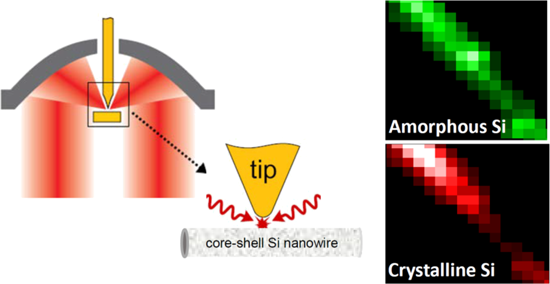
- feedback loop that maintains a constant distance to the sample. The scanned SiNW perimeter is indicated in Figure 5a. Along the white arrow, there is about 250 nm height difference between the SiNW and the underlying substrate. The white square shown in the optical image in Figure 5b highlights the SiNW


Thermophoretic tweezers for single nanoparticle manipulation
Beilstein J. Nanotechnol. 2020, 11, 1126–1133, doi:10.3762/bjnano.11.97
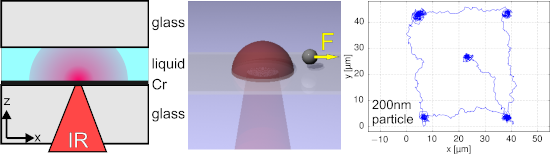
- the sample (as shown in Figure 1). The feedback loop comprises two steps. Firstly, the position of the trapped object is acquired by video-microscopy, and secondly, the heating laser is focused to such a position that the induced thermal gradient in the sample pushes the object towards the desired
- center of the trap. The simplicity of the design enables mostly software-based modification of an existing optical tweezers system. i.e., the video feedback loop has to be modified and a sample cell has to be constructed with an appropriate absorbing material on the substrate. Further experimental
- constant force potential at larger distances, which is due to the feedback loop methodology. From the fit of parabolic function U(x) = kx2 we obtained the trap stiffness coefficient k = 1.47kBT/µm2 = 6.0 fN/µm. Larger particles are even easier to trap due to their lower diffusion and higher Soret


Measurement of electrostatic tip–sample interactions by time-domain Kelvin probe force microscopy
Beilstein J. Nanotechnol. 2020, 11, 911–921, doi:10.3762/bjnano.11.76
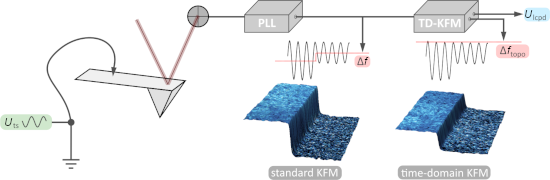
- conventional frequency-modulated (FM-) KFM, the contributions at ωm and 2ωm are detected via lock-in techniques, either at the Δf output of a phase-locked loop (PLL) [12] or by detecting the sidebands of the cantilever oscillation [13]. In closed-loop FM-KFM, a feedback loop is employed to nullify the
- properties of tip and sample, e.g., the dielectric properties of a sample or the quantum capacitance [14]. Furthermore, this signal can be used to adjust the sensitivity of the KFM feedback loop [15]. Open-loop KFM techniques exploit the relationship of the contributions at ωm and 2ωm. Namely, Ulcpd can be
- response of the cantilever at the modulation frequency ωm (not visible in Figure 1 since Udc ≈ Ulcpd) and at 2ωm [13][26][27]. A feedback loop is used to adjust Udc in order to nullify the component at ωm. If this is achieved, the resulting Δfmean, which is used for the topography control, is independent


Implementation of data-cube pump–probe KPFM on organic solar cells
Beilstein J. Nanotechnol. 2020, 11, 323–337, doi:10.3762/bjnano.11.24
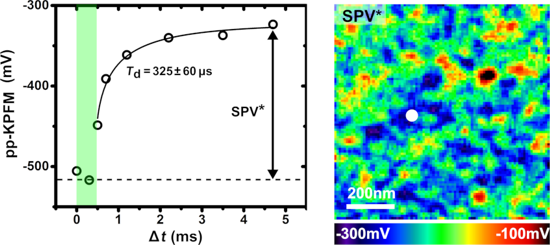
- [4][5], conventional KPFM relies on a closed feedback loop that compensates the tip–sample contact potential difference (CPD). It is thus inherently a rather “slow technique”. Kelvin controllers typically operate with time constants of a few to tens of ms. To implement time-resolved KPFM, a first
- are detected by demodulating the modulated component (ωmod) of the frequency-shift signal (Δf) with the LIA. The reference bias modulation voltage (Vmod, ωmod) and the compensation voltage generated by the KPFM feedback loop (VKPFM) are internally summed by the SPM unit. To generate the modulated bias
- , it is crucial to set a suitable time constant for the KPFM feedback loop and an adequate integration time per pixel. The signal-to-noise (S/N) ratio dramatically decreases when switching from KPFM to pp-KPFM due to a reduction of the bandwidth [22]. This effect demands a reduction of the loop gain