Search results
Search for "removal efficiency" in Full Text gives 29 result(s) in Beilstein Journal of Nanotechnology.
Environmental applications of silver nanoparticles: state-of-the-art review and emerging trends
Beilstein J. Nanotechnol. 2026, 17, 697–736, doi:10.3762/bjnano.17.49
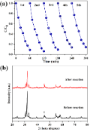
- antibacterial activity. The membrane removed 99.25% of PM2.5 and inhibited 98.7% of E. coli growth. The membrane showed 95% removal efficiency after five cycles [152]. A recent study developed air filter paper using hardwood pulp and glass fibre, incorporating AgNPs to inhibit the growth of E. coli and S


Cellulose as a photocatalyst support material: extraction, structural features, and environmental applications
Beilstein J. Nanotechnol. 2026, 17, 635–652, doi:10.3762/bjnano.17.44


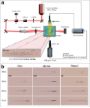
Beam shaping techniques for pulsed laser ablation in liquids: Unlocking tunable control of nanoparticle synthesis in liquids
Beilstein J. Nanotechnol. 2026, 17, 309–342, doi:10.3762/bjnano.17.22







Current status of using adsorbent nanomaterials for removing microplastics from water supply systems: a mini review
Beilstein J. Nanotechnol. 2025, 16, 1837–1850, doi:10.3762/bjnano.16.127
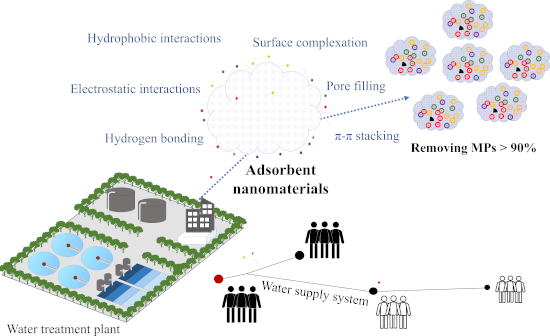
- 100% removal of MPs from suspensions with an initial concentration of 1 g·L−1 [63]. In the study of Modak et al., a chromium-based metal-organic framework (Cr-MOF/MIL-101) was synthesized and achieved a significant PSNP removal efficiency of 96% from suspensions with initial concentrations of 5 and 70
- et al. demonstrated an adsorption efficiency above 80% over 20 adsorption cycles, attributed to electrostatic attraction and hydrogen bonding [71]. Recently, an eco-friendly lily bulb-derived polysaccharide aerogel was developed, demonstrating a significant removal efficiency of 93.68% for PS. The
- material also maintained a stable removal efficiency of over 90% during a 3 month evaluation period [72]. Based on the conducted studies, aerogels and sponge-based adsorbents, with their high adsorption efficiency and defined mechanisms, show great promise for the removal of MPs. The continued development


Nanotechnology-based approaches for the removal of microplastics from wastewater: a comprehensive review
Beilstein J. Nanotechnol. 2025, 16, 1607–1632, doi:10.3762/bjnano.16.114
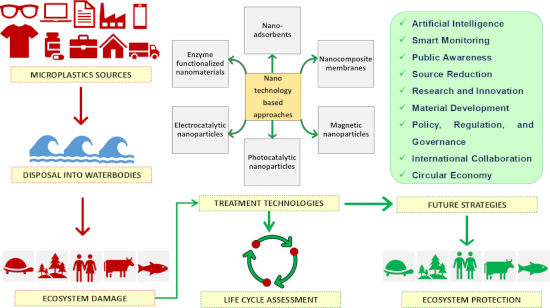
- capabilities. By combining the principles of water treatment technologies and nanoscience, this study highlights innovative pathways for improved removal efficiency, selective pollutant targeting, and sustainable application. As the global concern over plastic pollution is a rising concern, this review sets
- nanoparticles, minimizing the used of hazardous chemicals [17]. Together, these techniques offer versatile strategies for developing nanomaterials that can be fine-tuned to optimize microplastic removal efficiency while adhering to sustainable practices. In the field of water treatment, nanotechnology has been
- results in a large specific surface area, which in turn offers the potential to control membrane pore size and enhance the removal efficiency of nanoparticles and MPs. Membranes developed using MOF-based nanomaterials offer scalable control over surface charge and pore size, enabling high separation


Photocatalytic degradation of ofloxacin in water assisted by TiO2 nanowires on carbon cloth: contributions of H2O2 addition and substrate absorbability
Beilstein J. Nanotechnol. 2025, 16, 1567–1579, doi:10.3762/bjnano.16.111
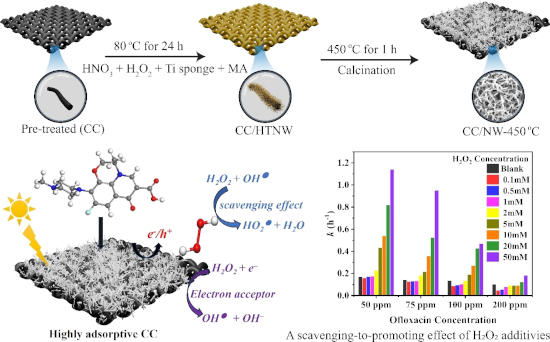
- lower OFL concentrations is attributed to the more efficient utilization of active sites and better light penetration in the solution. The TOC removal efficiency of the carbon cloth-supported TiO2 nanowires (CC/NW-450 °C) was also evaluated, as shown in Figure 5c. The TOC values decreased over time for
- experiments, 10 mM n-butanol was added to serve as an •OH scavenger to evaluate the role of hydroxyl radicals in the degradation process. The results demonstrate a clear concentration-dependent effect of H2O2 on OFL removal efficiency. At low H2O2 concentrations (5 mM), OFL degradation was comparable to the


Dendrimer-modified carbon nanotubes for the removal and recovery of heavy metal ions from water
Beilstein J. Nanotechnol. 2025, 16, 1522–1532, doi:10.3762/bjnano.16.107

- Abstract Effective removal of trace heavy metal ions from aqueous bodies is a pressing problem and requires significant improvement in the area of absorbent material in terms of removal efficiency and sustainability. We propose an efficient strategy to enhance the adsorption efficiency of carbon nanotubes
- suitability for the long-term application to reduce the cost of the adsorption process. The recycling performance of CNTs-G5 has been presented in the form of removal efficiency in five consecutive cycles (Supporting Information File 1, Figure S3). It is evident from the results that CNTs-G5 performed well as
- of CNTs, CNTs-MA, CNTs-G0, CNTs-G1, CNTs-G2, CNTs-G3, and CNTs-G5; and (d) TGA curves of CNTs, CNTs-G0, CNTs-G1, CNTs-G2, CNTs-G3, and CNTs-G5. SEM images of (a) CNTs, (b) CNTs-G1, (c) CNTs-G3, and (d) CNTs-G5. Effect of (a, b) adsorbents dosage, (c) solution pH, and (d) contact time on the removal


The role of biochar in combating microplastic pollution: a bibliometric analysis in environmental contexts
Beilstein J. Nanotechnol. 2025, 16, 1401–1416, doi:10.3762/bjnano.16.102
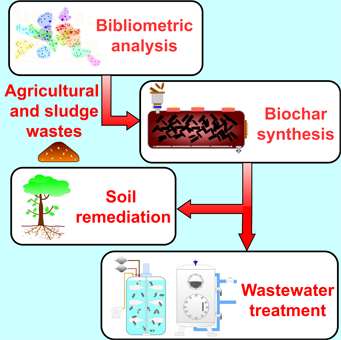
- such as Subgroup 10, Bacillus, and Pseudomonas. In aquatic systems, biochar serves as an efficient adsorbent, particularly for MPs larger than 10 µm, including polystyrene. Studies suggest that fixed-column models achieve superior removal efficiency (95.31% ± 5.26%) compared to batch systems (93.36
- . Additionally, three-dimensional graphene oxide has shown adsorption capacities of up to 617.28 mg·g−1 for polystyrene MPs of 5 µm in size [13][14]. The integration of adsorbents with appropriate treatment models has further enhanced removal efficiency. For instance, coal gasification slag-based adsorbents
- combined with fluidized bed treatment achieved 99.2% MP removal, while granular activated carbon coupled with a fixed-column system attained 95.2% removal efficiency [15][16]. Biochar (BC) has emerged as a promising material for environmental remediation, offering benefits such as pollutant adsorption



Synthesis of a multicomponent cellulose-based adsorbent for tetracycline removal from aquaculture water
Beilstein J. Nanotechnol. 2025, 16, 728–739, doi:10.3762/bjnano.16.56
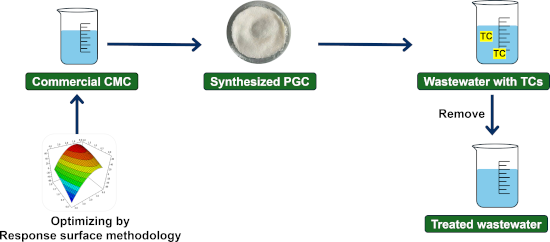
- , hydrogen bonding, and CH–π interactions, with surface complexation between Ca2+ and TCs being dominant. Batch adsorption experiments conducted to examine the factors influencing adsorption capacity revealed that PGC achieved up to 70% TC removal efficiency at an adsorbent dosage of 40 mg and an initial TC
- effective adsorbent for the removal of average 70% TC antibiotic residues, particularly oxytetracycline, chlortetracycline, TC, and doxycycline. Keywords: adsorption; aquaculture water; removal efficiency; response surface methodology; tetracycline antibiotic; Introduction The aquaculture industry plays a
- optimal operating parameters. A response surface plot (Figure 1) was used to visualize variable interactions and determine optimal process parameters. As depicted in Figure 1a, the TC removal efficiency of the adsorbent decreases when both CMC mass (X1) and PVA mass (X2) increase simultaneously. This


Electron beam-based direct writing of nanostructures using a palladium β-ketoesterate complex
Beilstein J. Nanotechnol. 2025, 16, 530–539, doi:10.3762/bjnano.16.41
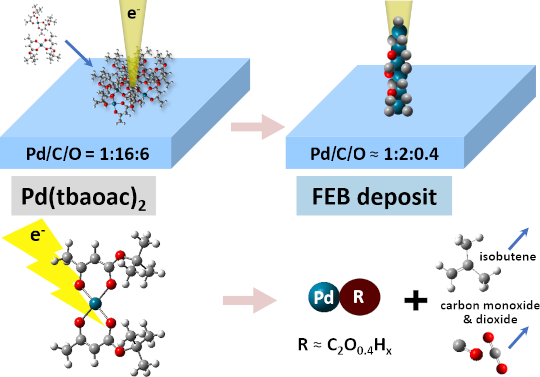
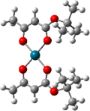
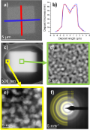
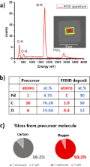
- ligands and only about 5 atom % palladium in the pristine molecule, yet the obtained palladium content in the deposits amounts to around 30 atom %. This translates to an exceptional removal efficiency of about 90% for the ligand-constituting elements carbon and oxygen through electron-induced dissociation
- substrates were held at room temperature for [Pd(η5-Cp)(η3-allyl)] and [Pd(hfac)2], which may explain the lower carbon removal efficiency due to residual gas contamination or less effective thermal desorption processes. Comparison with [Cu(tbaoac)2] When comparing [Cu(tbaoac)2] and [Pd(tbaoac)2], the highest
- precursors. The substrate and GIS temperatures (T) are indicated. Note the highest ligand removal efficiency for the β-ketoesterate complex [Pd(tbaoac)2]. The arrows represent the reduction of atoms in the pristine molecule with respect to the number of atoms in the FEBID deposit composition. RT stands for


Emerging strategies in the sustainable removal of antibiotics using semiconductor-based photocatalysts
Beilstein J. Nanotechnol. 2025, 16, 264–285, doi:10.3762/bjnano.16.21
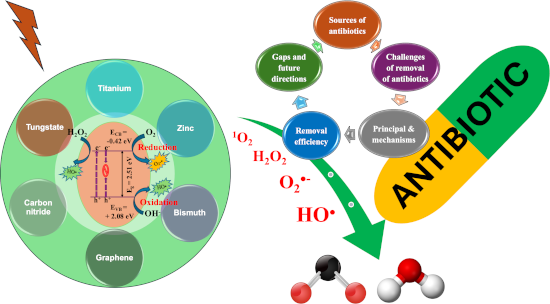
- ]. Hunge and coworkers [76] synthesized MoS2/ZnO (MZ) composites with a smaller bandgap (2.81 eV), which showed higher ciprofloxacin (CIP) removal efficiency than their single constituents (ZnO = 43% and MoS2 = 50%). A similar approach was also observed for the removal of erythromycin (ERY), spiramycin (SP
- -containing biochar (ZnO/NOC), which showed a TC removal efficiency of 97.08%. The photocatalytic activities of ZnO/NOC were 5.4 and 7.7 times higher than that of pure ZnO for TC (30 mg/L) under ultraviolet and visible light, respectively. The excellent performance was ascribed to large surface area, proper
- @rGO-ZnO photocatalyst exhibited exceptional performance compared to pristine ZnO, resulting in a five-fold increase in CIP and SMX removal efficiency. After three hours of treatment, it removed more than 95% of the antibiotics. The most recent research on the use of ZnO- or Zn-based compounds as



Functional morphology of cleaning devices in the damselfly Ischnura elegans (Odonata, Coenagrionidae)
Beilstein J. Nanotechnol. 2024, 15, 1260–1272, doi:10.3762/bjnano.15.102

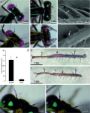
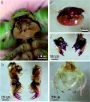
- particle removal efficiency in intact insects and in insects with ablated grooming devices. The grooming devices are constituted of long setae from which a concave cuticular lamina develops towards the medial side of the leg. Each seta shows a material gradient of resilin from its basal to the distal
- confocal laser scanning microscopy (CLSM). The eye and antennal grooming behavior of the damselfly Ischnura elegans (Vander Linden, 1820) adults (Odonata, Coenagrionidae) was observed and analyzed to evaluate the particle removal efficiency in intact and ablated insects. Material and Methods Insects
- %), followed by drying in an oven at 40 °C for three days. Foretibiae of intact and ablated insects used to evaluate the particle removal efficiency were carefully dissected under a stereomicroscope and then dried in an oven at 40 °C for three days. They were not fixed to avoid removing the talc powder present


Non-stoichiometric magnetite as catalyst for the photocatalytic degradation of phenol and 2,6-dibromo-4-methylphenol – a new approach in water treatment
Beilstein J. Nanotechnol. 2022, 13, 1531–1540, doi:10.3762/bjnano.13.126
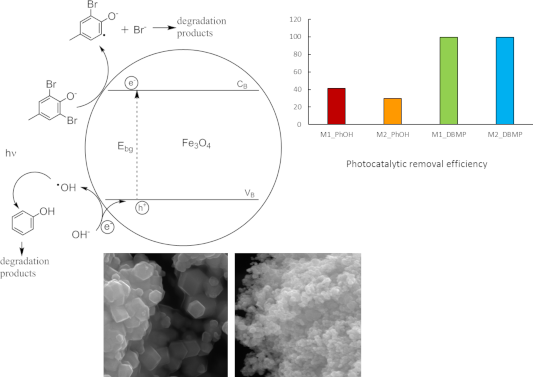
- ); (d) plot of ln(Ct/C0) vs irradiation time for DBMP. Bromide ion production as a function of the time (circles – M1, crosses – M2, triangles – ozonation, squares – photolysis). Substrate removal efficiency of PhOH/O3 (dark blue), PhOH/M1 (red), PhOH/M2 (orange), PhOH/photolysis (black), DBMP/O3


Rapid fabrication of MgO@g-C3N4 heterojunctions for photocatalytic nitric oxide removal
Beilstein J. Nanotechnol. 2022, 13, 1141–1154, doi:10.3762/bjnano.13.96
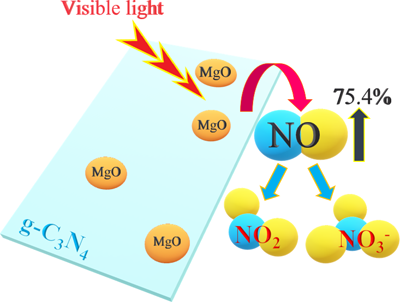
- heterojunction photocatalysts were synthesized by one-step pyrolysis of MgO and urea at 550 °C for two hours. The photocatalytic NO removal efficiency of the MgO@g-C3N4 heterojunctions was significantly improved and reached a maximum value of 75.4% under visible light irradiation. Differential reflectance
- is the reflectance value. Results and Discussion Photocatalytic performance The photocatalytic NO removal efficiency of the materials is shown in Figure 2a. The efficiency gradually increased during the first 5 min of the photocatalytic reaction and remains stable until the end of the photocatalytic
- reaction. The photocatalytic NO removal efficiency values are 0.6%, 62.8%, 16.8%, 68.4%, 75.4%, and 72.1% for the blank sample, g-C3N4, MgO, 1% MgO@g-C3N4, 3% MgO@g-C3N4, and 5% MgO@g-C3N4, respectively. The photocatalytic NO removal efficiency is increased by combining MgO with g-C3N4. The results




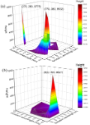

A comprehensive review on electrospun nanohybrid membranes for wastewater treatment
Beilstein J. Nanotechnol. 2022, 13, 137–159, doi:10.3762/bjnano.13.10
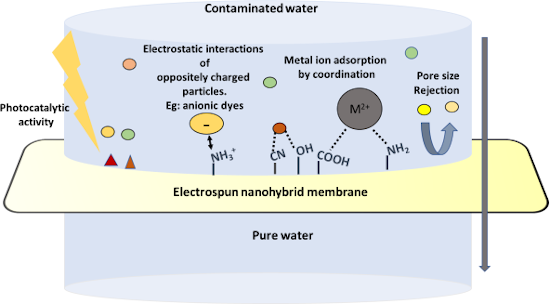
- nanohybrid membrane by incorporating montmorillonite (Mt) into CS and PVA mixed nanofibers to be used as affinity membranes for dye removal with ultrafast permeating adsorption. With 2 wt % of Mt, a high water flux of 1765 LMH under 0.4 bar operating pressure and a dye removal efficiency of 95% of BB 41 was
- hydrophobic PVDF membrane to a hydrophilic membrane with a water contact angle of 22.72°. The nanohybrid membrane showed a dye removal efficiency of 88.9% and an adsorption capacity of 72.6 mg/g for IC [78]. Huong et al. developed a waste protein-immobilized cationic dye removal membrane from PAN. In this
- 50% glycerol. 97% of the dye removal efficiency of the membrane was maintained even after five consecutive adsorption/desorption cycles [79]. Hou et al. added the photoactivity of TiO2 into a hybrid membrane of PVA, PAA, and carboxyl-functionalized GO to degrade organic dyes by photocatalytic




Nanocasting synthesis of BiFeO3 nanoparticles with enhanced visible-light photocatalytic activity
Beilstein J. Nanotechnol. 2020, 11, 1822–1833, doi:10.3762/bjnano.11.164
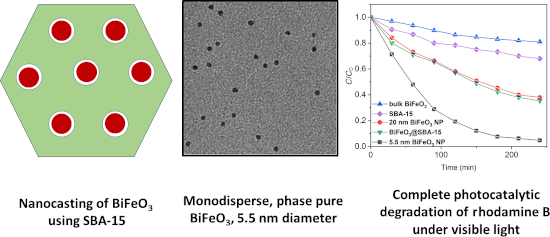
- removal efficiency of 32%. It should be noted that all dye can be desorbed still undegraded from SBA-15 by a 2-methoxyethanol/H2O mixture [57][58]. In order to study the effects of the catalyst concentration on the degradation reactions, a series of catalytic experiments were performed in which the


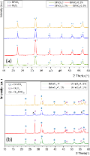


Transient coating of γ-Fe2O3 nanoparticles with glutamate for its delivery to and removal from brain nerve terminals
Beilstein J. Nanotechnol. 2020, 11, 1381–1393, doi:10.3762/bjnano.11.122
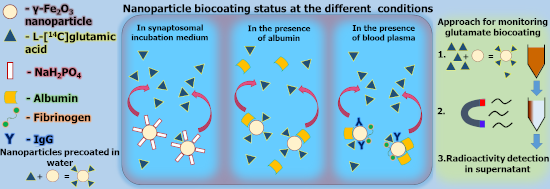
- nanoparticles can be used (but with lower effectiveness) for glutamate adsorption in the organism followed by its consequent removal using magnetic fields. Glutamate adsorption at the nanoparticle surface and its removal efficiency in blood plasma is only 15% of that in water. It is well-established that high


Effect of Ag loading position on the photocatalytic performance of TiO2 nanocolumn arrays
Beilstein J. Nanotechnol. 2020, 11, 717–728, doi:10.3762/bjnano.11.59
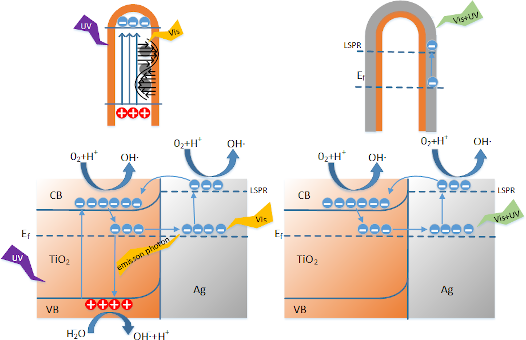
- deposition (ALD) and vacuum evaporation. The effects of the Ag loading position and deposition thickness, and the morphology, structure and composition of Ag-deposited TNC arrays on its optical and photocatalytic properties were studied. The Ag-filled TiO2 (AFT) nanocolumn arrays exhibited higher removal
- efficiency of methylene blue (MB) compared with Ag-coated TiO2 (ACT) nanocolumn arrays and pure TiO2 nanocolumns arrays. Both experimental and theoretical simulation results demonstrated that the enhanced photocatalytic performance of AFT nanocolumn arrays was attributed to the surface plasmon resonance (SPR


Removal of toxic heavy metals from river water samples using a porous silica surface modified with a new β-ketoenolic host
Beilstein J. Nanotechnol. 2019, 10, 262–273, doi:10.3762/bjnano.10.25
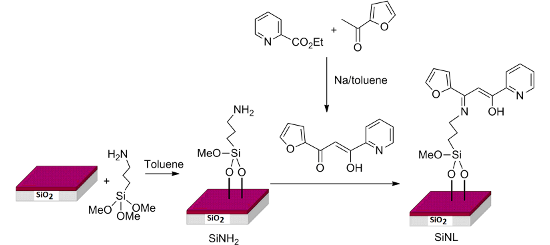
- indeed explained by the different binding affinity towards the adsorbent [57][58]. Effect of contact time and adsorption kinetics. The effect of contact time on the removal efficiency of Zn(II), Pb(II), Cd(II) and Cu(II) using SiNL was investigated (Figure 6). The adsorbed amount of metal increases
- SiNL for the sorption of heavy metal was studied by using the batch method by a mixture of 10 mg of adsorbent with 10 mL of river water and 0.5 mL of 1% HNO3 at room temperature for 60 min. The removal efficiency was investigated under optimal conditions. As shown in Table 5, Zn(II) and Cd(II) were


Nanocellulose: Recent advances and its prospects in environmental remediation
Beilstein J. Nanotechnol. 2018, 9, 2479–2498, doi:10.3762/bjnano.9.232
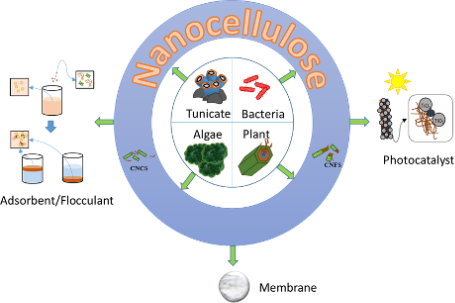
- quantum size effects [106]. The improvement in adsorption removal efficiency of nanocellulose could be due to the increased surface area, crystalline nature, and number of available functional moieties. Taleb et al. [98] reported that the introduction of amino-terminal functionalities on MFC and


Hierarchical heterostructures of Bi2MoO6 microflowers decorated with Ag2CO3 nanoparticles for efficient visible-light-driven photocatalytic removal of toxic pollutants
Beilstein J. Nanotechnol. 2018, 9, 2297–2305, doi:10.3762/bjnano.9.214
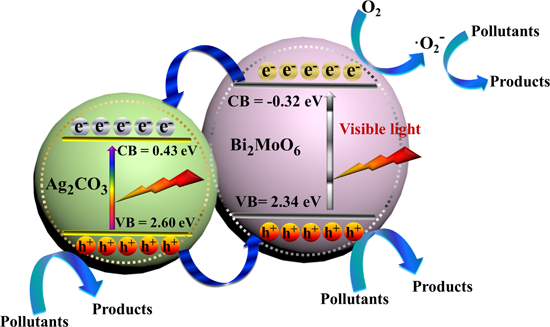
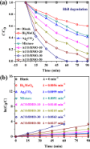
- ) was measured during the RhB degradation, and the result is presented in Figure S4 (Supporting Information File 1). Apparently, the TOC removal efficiency gradually goes up with the increase of reaction time and the final TOC removal efficiency is as high as 80.6% after 5 h of reaction. Hence, ACO/BMO




Synthesis of a MnO2/Fe3O4/diatomite nanocomposite as an efficient heterogeneous Fenton-like catalyst for methylene blue degradation
Beilstein J. Nanotechnol. 2018, 9, 1940–1950, doi:10.3762/bjnano.9.185
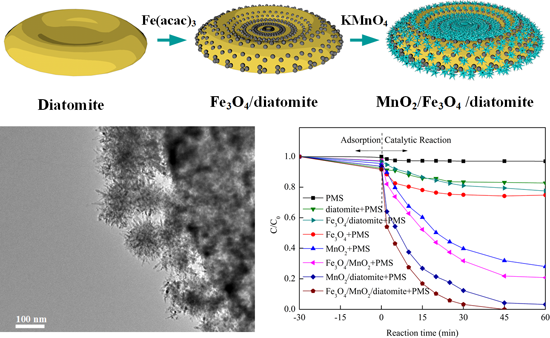
- considered as the most promising method because of the high removal efficiency and wide application scopes [6][7]. Iron-based homogeneous and heterogeneous Fenton or Fenton-like catalysts with the activation of H2O2 can effectively generate hydroxyl radicals (•OH, the main reactive species for the


Uniform cobalt nanoparticles embedded in hexagonal mesoporous nanoplates as a magnetically separable, recyclable adsorbent
Beilstein J. Nanotechnol. 2018, 9, 1770–1781, doi:10.3762/bjnano.9.168
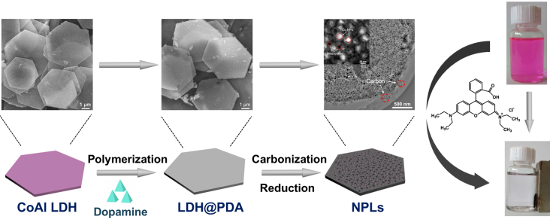
- . The volume of ethanol is 10 mL for 10 mg adsorbent each time. After the desorption process, the NPL samples are used for the removal of RhB from aqueous solutions for five cycles (Figure 9). It was found that the NPLs-2.5-800 adsorbent possesses the best adsorption capacity, where removal efficiency
- for RhB reaches 99.8% at first and decreases to 92.8% after five cycles. All samples have a small decrease of adsorption capacity after five cycles. The small loss of removal efficiency is likely due to the slightly reduced specific surface area and pore volume as shown in Figure S8 (Supporting


Cr(VI) remediation from aqueous environment through modified-TiO2-mediated photocatalytic reduction
Beilstein J. Nanotechnol. 2018, 9, 1448–1470, doi:10.3762/bjnano.9.137


Ag2WO4 nanorods decorated with AgI nanoparticles: Novel and efficient visible-light-driven photocatalysts for the degradation of water pollutants
Beilstein J. Nanotechnol. 2018, 9, 1308–1316, doi:10.3762/bjnano.9.123
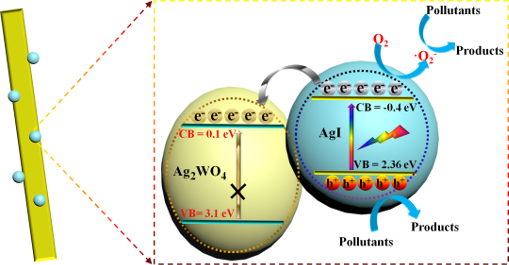
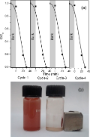
- still achieves the highest apparent rate constant (0.0292 min−1 for MO degradation and 0.0129 min−1 for 4-CP degradation) among all these samples. The mineralization of organic pollutants is crucial for pollutant treatment [46]. Thus, the total organic carbon (TOC) removal efficiency of RhB over 0.3AgI
- /Ag2WO4 was examined (Figure 7). After 360 min of reaction, the TOC removal efficiency reached 67.2%, signifying that 0.3AgI/Ag2WO4 can effectively mineralize RhB. The operational lifetime of the photocatalysts is crucial for practical application [47]. To reveal the durability of 0.3AgI/Ag2WO4, the