Search results
Search for "temperature dependent" in Full Text gives 133 result(s) in Beilstein Journal of Nanotechnology.
Protein-based custom-designed molecular nanotraps for biomedical applications
Beilstein J. Nanotechnol. 2026, 17, 683–687, doi:10.3762/bjnano.17.47

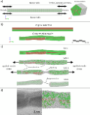
- rich in glycine, proline, and hydroxyproline, gelatin is a denatured and fragmented form of collagen produced through partial acidic or basic hydrolysis [13]. Gelatin is a water-soluble polymer that typically undergoes a temperature-dependent gelation, with the transition from a liquid to a hydrogel

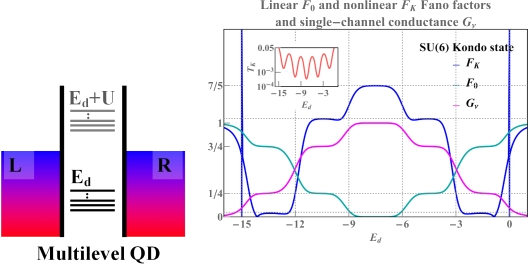
Fractional shot noise of an SU(N) Kondo system
Beilstein J. Nanotechnol. 2026, 17, 515–540, doi:10.3762/bjnano.17.34


![[Graphic 127]](/bjnano/content/inline/2190-4286-17-34-i187.svg?max-width=637&scale=1.18182)

Fast vortex dynamics and relaxation times in NbRe-based heterostructures
Beilstein J. Nanotechnol. 2026, 17, 292–302, doi:10.3762/bjnano.17.20
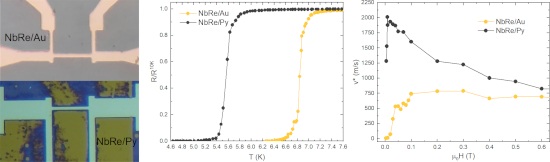
- variations in the quasiparticle distribution function, f(E). During vortex motion, quasiparticles inside the vortex core are accelerated by the electric field associated with flux flow and undergo successive Andreev reflections at the core boundaries [35]. As their energy approaches the temperature-dependent


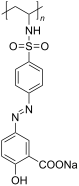
Structure-dependent thermochromism of PAZO thin films: theory and experiment
Beilstein J. Nanotechnol. 2026, 17, 186–199, doi:10.3762/bjnano.17.12
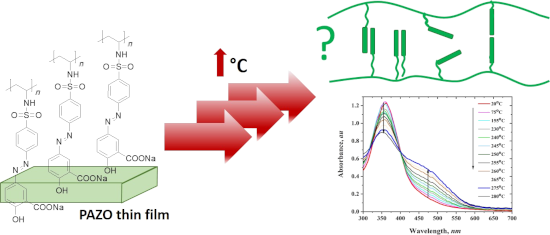
- calculations further support these findings, indicating that temperature-dependent intermolecular interactions and conformational changes play a significant role in shaping the optical behavior of the films. These results provide new insights into the structure–property relationships underlying thermochromism


Internal 3D temperature mapping in biological systems using ratiometric light-sheet imaging and lipid-coated upconversion nanothermometers
Beilstein J. Nanotechnol. 2025, 16, 2306–2316, doi:10.3762/bjnano.16.159
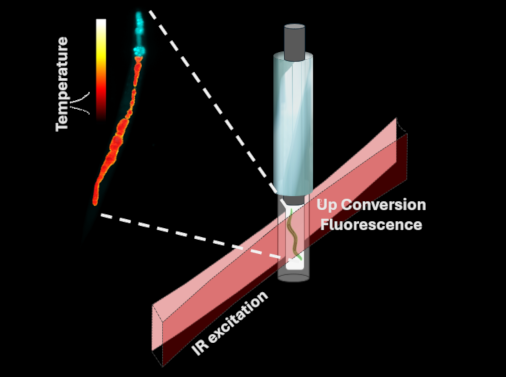
- agarose gel. A corresponding volumetric image was also acquired at the 525 nm band (not shown) to compute the FIR. Pairs of these images were taken at different temperatures to establish the temperature-dependent FIR calibration. For each sample, approximately 25 macroliposomes were analyzed. Although the
- C. elegans and to evaluate the method’s sensitivity in detecting subtle temperature variations relevant to biological processes. The resulting temperature-dependent FIR response is illustrated in Figure 4b, covering the 25–33 °C range, with measurements taken at 2 °C intervals. This temperature
- observed at 25 °C, with a decreasing trend as the temperature increased. It is important to note that the relative sensitivity remained above the 0.5%·C−1 threshold, a benchmark for high-performance nanothermometry applications [55]. This confirms previous studies showing that the temperature-dependent


Hartree–Fock interaction in superconducting condensate fractals
Beilstein J. Nanotechnol. 2025, 16, 2177–2182, doi:10.3762/bjnano.16.150
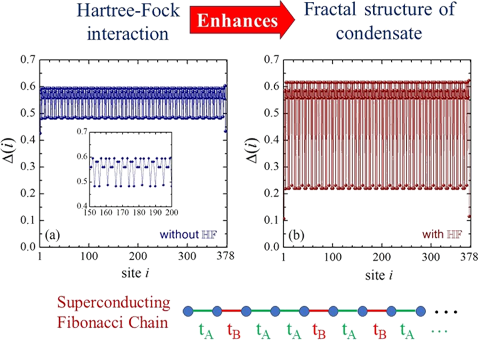
- Δ(0)/Tc = 1.76. Finally, using the temperature-dependent data from Figure 1c, we calculate the critical exponent β of the order parameter near the critical temperature: where τ = 1 − T/Tc (or Tc,HF for the chain with the HF interaction). Our analysis shows that β = 0.86 without the HF field, while


Electron transport through nanoscale multilayer graphene and hexagonal boron nitride junctions
Beilstein J. Nanotechnol. 2025, 16, 2132–2143, doi:10.3762/bjnano.16.147
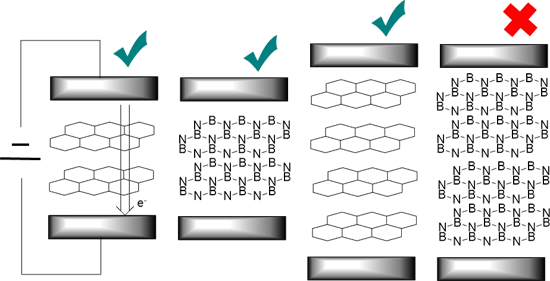
- defects are results of C–C bond rotation in the graphene plane, which isomerizes a 6–6 ring structure to a 7–5 ring structure. Stone–Wales defects are commonly observed in multilayer graphene, graphite, graphene oxide, and their occurrence is temperature-dependent [15][16]. Hexagonal boron nitride (h-BN


Stereodiscrimination of guests in chiral organosilica aerogels studied by ESR spectroscopy
Beilstein J. Nanotechnol. 2025, 16, 2034–2054, doi:10.3762/bjnano.16.140
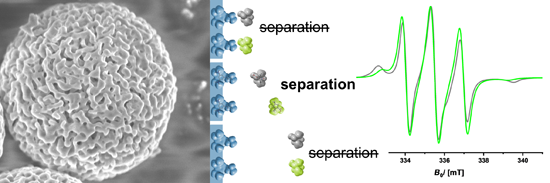
- . This also means that the interaction with the surfaces of the porous host must not be too strong because both enantiomers would be immobilized then. Temperature-dependent measurements have reflected that the stereodifferentiation in the interaction should be around 1.5 kJ·mol−1. We report cases in




Laser ablation in liquids for shape-tailored synthesis of nanomaterials: status and challenges
Beilstein J. Nanotechnol. 2025, 16, 1963–1997, doi:10.3762/bjnano.16.137
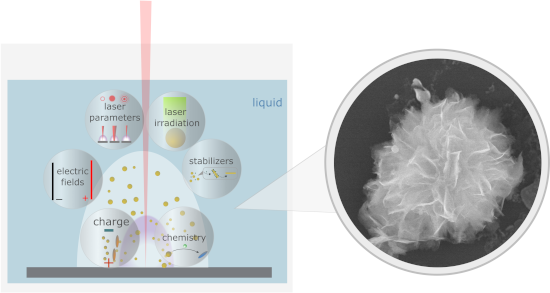
- and superlattice structures [45]. This can be achieved, for example, by varying the temperature of the surrounding liquid. The dynamics and parameters of the plasma and cavitation bubble are also temperature dependent. The demonstration of the influence of the liquid temperature was provided in a


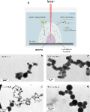
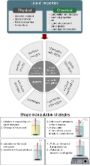


Further insights into the thermodynamics of linear carbon chains for temperatures ranging from 13 to 300 K
Beilstein J. Nanotechnol. 2025, 16, 1818–1825, doi:10.3762/bjnano.16.125
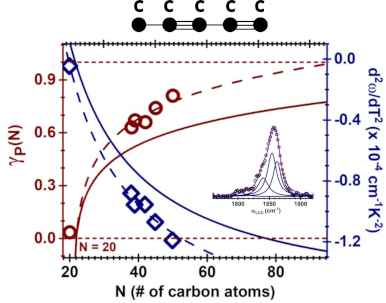
- (T) and its first and second derivatives with relation to T, dωLCC/dT, and d2ωLCC/dT2. The C-band is a Raman spectroscopic signature for LCC, which is not only temperature-dependent but also dependent on the number of carbon atoms (N) constituting the LCC. In this present study, we extend these
- acquired at low temperatures ranging from 13 to 293 K. Figure 1 shows representative spectra at 13 K and at 293 K, where temperature-dependent frequency shifts are clearly observed for both G- and C-bands (G-band comes from MWCNT). The LCC C-band was fitted with four Lorentzian curves for the spectra


![[Graphic 23]](/bjnano/content/inline/2190-4286-16-125-i25.svg?max-width=637&scale=1.18182)
Time-resolved probing of laser-induced nanostructuring processes in liquids
Beilstein J. Nanotechnol. 2025, 16, 968–1002, doi:10.3762/bjnano.16.74
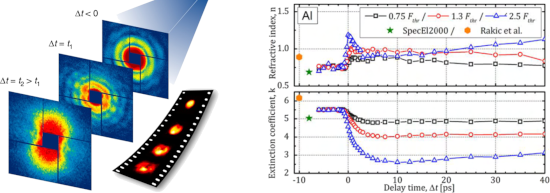
- heat capacity is temperature-dependent in simple metals [28] (and the scattering cross section decreases with temperature), the cooling of the electron gas tends to slow down with increasing excitation density [107]. A well-known case is gold with exceptionally weak electron–phonon coupling, such that


Synthesis and magnetic transitions of rare-earth-free Fe–Mn–Ni–Si-based compositionally complex alloys at bulk and nanoscale
Beilstein J. Nanotechnol. 2025, 16, 823–836, doi:10.3762/bjnano.16.62
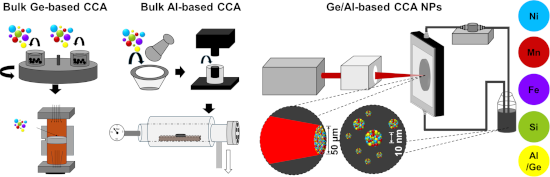
- from the Al-based CCA target. High-resolution TEM images and diffractograms of PLAL-generated CCA NPs. (a) Ge-based CCA NP and (b) Al-based CCA NP. (a) ZFC-FC temperature-dependent magnetization (M–T curve) of the bulk Ge-based CCA. (b) Field-dependent magnetization curve at 5 and 300 K for the Ge
- -based CCA. (c) ZFC-FC temperature-dependent magnetization (M–T curve) of the bulk Al-based CCA. (d) Field-dependent magnetization curve at 5 and 300 K for the Al-based CCA. (a) ZFC-FC temperature-dependent magnetization (M–T) curves of NPs generated from PLAL of the Ge-based CCA target. (b) Field
- -dependent magnetization curves (M–H) curves of NPs generated from PLAL of the Ge-based CCA target at 5 and 300 K. (c) ZFC-FC temperature-dependent magnetization (M–T curve) for NPs generated from PLAL of the Al-based CCA target. (d) Field-dependent magnetization curves (M–H) curves of NPs generated from


N2+-implantation-induced tailoring of structural, morphological, optical, and electrical characteristics of sputtered molybdenum thin films
Beilstein J. Nanotechnol. 2025, 16, 495–509, doi:10.3762/bjnano.16.38
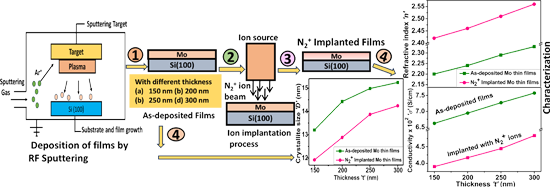
- accelerating voltage. At grazing incidence, the observed stress is either minimal or slightly tensile and is mostly unaffected by the accelerating voltage. Tripathi et al. [18] examined the temperature-dependent surface alterations in Mo films induced by He+ ion irradiation within the 773–1073 K range as a


ReactorAFM/STM – dynamic reactions on surfaces at elevated temperature and atmospheric pressure
Beilstein J. Nanotechnol. 2025, 16, 397–406, doi:10.3762/bjnano.16.30
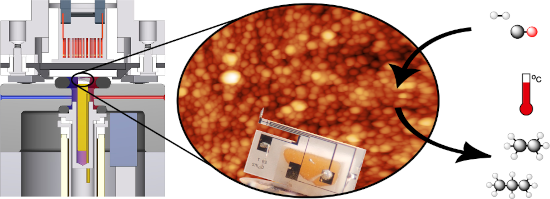
- , at T0), c refers to the parabolic temperature coefficient, T is the temperature, and T0 refers to the maximum where the tuning fork is designed to be the least temperature-dependent. Since tuning forks have originally been mass-produced for time keeping in watches, T0 is designed to be at room


Tailoring of physical properties of RF-sputtered ZnTe films: role of substrate temperature
Beilstein J. Nanotechnol. 2025, 16, 333–348, doi:10.3762/bjnano.16.25
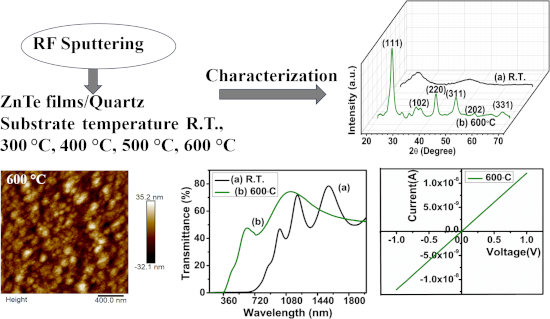
- ] carried out studies on the structure and temperature-dependent optical properties of magnetron-sputtered ZnTe films. Bacaksiz et al. [15] reported the effect of substrate temperature (−123 and 27 °C) on structural, morphological, optical, and electrical properties of ZnTe films deposited by evaporation




Effect of radiation-induced vacancy saturation on the first-order phase transformation in nanoparticles: insights from a model
Beilstein J. Nanotechnol. 2024, 15, 1453–1472, doi:10.3762/bjnano.15.117

- %. Generalization of nucleation energy and phase transformation criteria The results can be generalized for different particle sizes, allowing for the creation of a size- and temperature-dependent diagram depicting the stability of the α phase. This diagram, referred to as the temperature–size α-phase stability
- particle sizes, allowing for the presentation of a size- and temperature-dependent diagram for the stability of the β phase (Figure 9). The diagram illustrates three areas (or four subareas) for the transformation of β-phase nanoparticles under irradiation. Area I – radiation tolerance and stability of the


Bolometric IR photoresponse based on a 3D micro-nano integrated CNT architecture
Beilstein J. Nanotechnol. 2024, 15, 1030–1040, doi:10.3762/bjnano.15.84
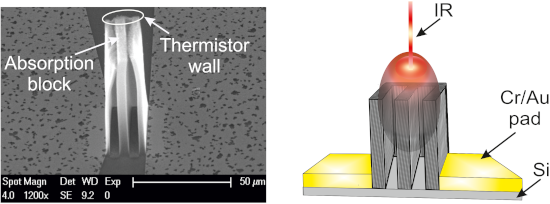
- . Temperature-dependent I–V curves (a) for sample 1 with contact pads and (b) for sample 2 using gold whisker contacts. Resistance–temperature relationship (a) for sample 1 with contact pads and (b) for sample 2 using gold whisker contacts. Response measurements for sample 1 using metal contact pads at (a) 90


Facile synthesis of Fe-based metal–organic frameworks from Fe2O3 nanoparticles and their application for CO2/N2 separation
Beilstein J. Nanotechnol. 2024, 15, 897–908, doi:10.3762/bjnano.15.74
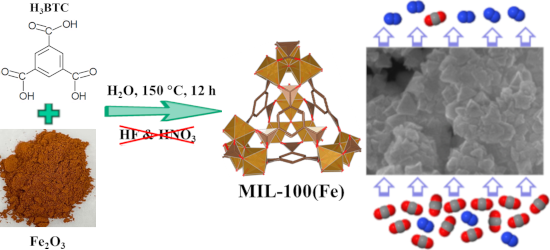
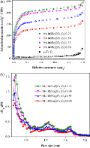
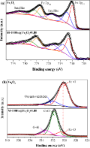
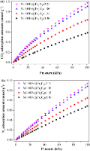
- removed from the termini of iron octahedra in the secondary building units (SBUs) through an activated-thermal process in a vacuum-controlled environment [9][10]. Notably, density and oxidation states of the formed unsaturated Fe sites (Fe(II) and Fe(III)) are temperature-dependent, influencing the





Laser synthesis of nanoparticles in organic solvents – products, reactions, and perspectives
Beilstein J. Nanotechnol. 2024, 15, 638–663, doi:10.3762/bjnano.15.54
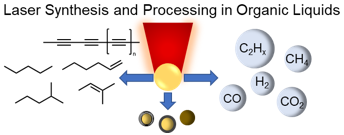
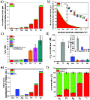
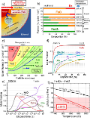
- thousand kelvins and pressures up to the gigapascal range that prevail during nanoparticle synthesis [58][168][169]. Furthermore, the Nernst potential is temperature-dependent, increasing the reactivity of metal precursor and formed





Heat-induced morphological changes in silver nanowires deposited on a patterned silicon substrate
Beilstein J. Nanotechnol. 2024, 15, 435–446, doi:10.3762/bjnano.15.39
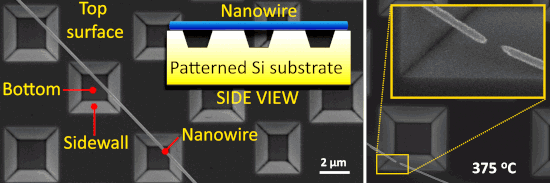
- substrate, while the overhanging segment retained freedom of movement in all directions. The elastic modulus values for the Ag NW and Si substrate were set to the built-in values in Comsol, accounting for their temperature-dependent nature. More technical details can be found in Supporting Information File


Design, fabrication, and characterization of kinetic-inductive force sensors for scanning probe applications
Beilstein J. Nanotechnol. 2024, 15, 242–255, doi:10.3762/bjnano.15.23
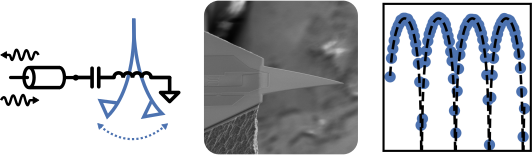
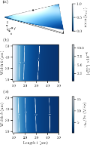
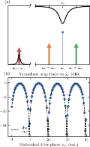
- beneath. Temperature-dependent (a) magnitude and (b) phase response of the microwave resonator as functions of the probe frequency with an on-chip power of −127 dBm, with a fit to theory (dashed lines). The cavity is overcoupled at low temperatures T ≈ 1.7 K, apparent from the 2π phase flip in the



Low temperature atomic layer deposition of cobalt using dicobalt hexacarbonyl-1-heptyne as precursor
Beilstein J. Nanotechnol. 2023, 14, 951–963, doi:10.3762/bjnano.14.78
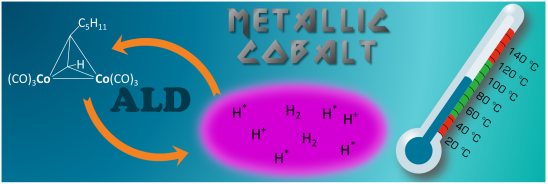
- )6HC≡CC5H11] and H2 plasma The CVD experiments showed that the window for temperature-independent depositions in ALD mode can be expected at temperatures below 125 °C, as it was assumed from the temperature-dependent growth rate measurements (Figure 3). We performed a set of deposition experiments for


Characterisation of a micrometer-scale active plasmonic element by means of complementary computational and experimental methods
Beilstein J. Nanotechnol. 2023, 14, 110–122, doi:10.3762/bjnano.14.12
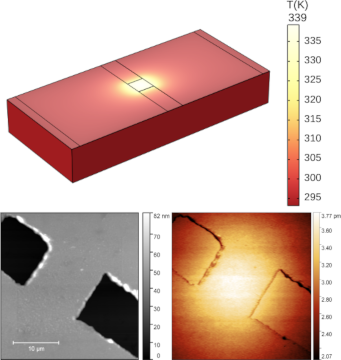
- temperature distribution output from the previous step allows for an accurate representation of temperature-dependent changes on the reflectivity curve. This produces a representation of the modulation depth which is seen when looking at the difference of hot and cold states using a lock-in amplifier. Results




Role of titanium and organic precursors in molecular layer deposition of “titanicone” hybrid materials
Beilstein J. Nanotechnol. 2022, 13, 1240–1255, doi:10.3762/bjnano.13.103
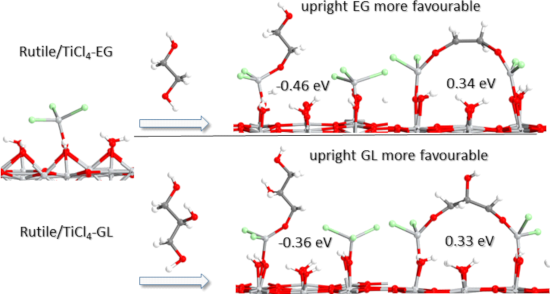
- significant drawback [38]. Fumaric acid (FC) is another alcohol organic precursor that was used to deposit titanicone films using TiCl4 on an Si substrate in a temperature range of 180 °C to 350 °C. A temperature-dependent growth characteristic was observed with the growth rate decreasing from 1.10 Å/cycle at


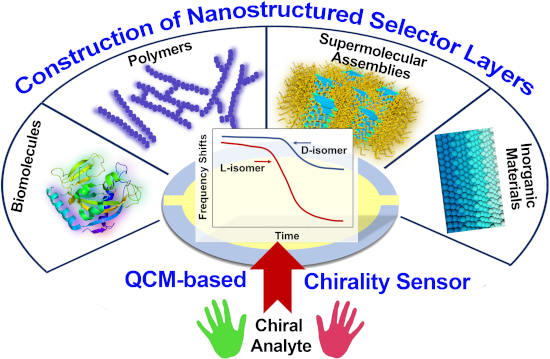
Design of surface nanostructures for chirality sensing based on quartz crystal microbalance
Beilstein J. Nanotechnol. 2022, 13, 1201–1219, doi:10.3762/bjnano.13.100