Search results
Search for 我不是戏神第58章 in Full Text gives 751 result(s) in Beilstein Journal of Nanotechnology. Showing first 200.
Upcycling agroindustrial waste into graphene oxide supports for gold nanoparticles: toward sustainable nanomaterials
Beilstein J. Nanotechnol. 2026, 17, 489–504, doi:10.3762/bjnano.17.32
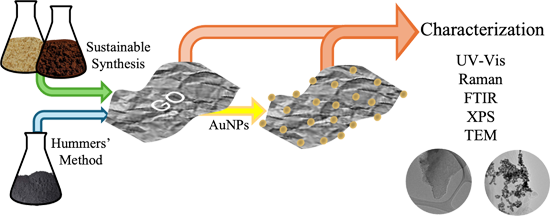
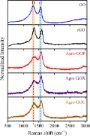
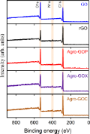
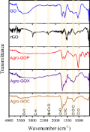
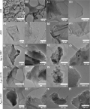
- organic pollutants, including nitroaromatic compounds and dye molecules, under mild reaction conditions [57][58][59]. The synergistic interaction between AuNPs and GO enhances electron transfer, enabling lower noble-metal loading while maintaining high catalytic performance. Furthermore, AuNPs@GO



Defects and defect-mediated engineering of two-dimensional materials: challenges and open questions
Beilstein J. Nanotechnol. 2026, 17, 454–488, doi:10.3762/bjnano.17.31
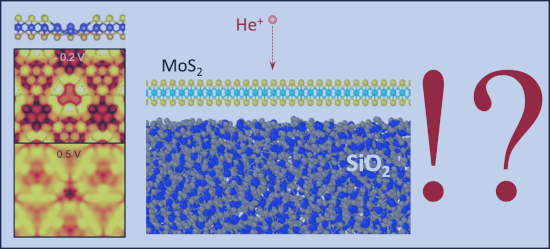
- one containing a sulfur vacancy, decreasing from 1.59 to 0.80 eV [55][56][57][58]. This suggests that the reaction of O2 with a pristine surface is unlikely [59][60] and that S vacancies are likely to play an important role in the process. STM measurements on MoS2 demonstrated a high intrinsic





Biomimetic nanoparticles in cancer photodynamic therapy: a review of targeted delivery systems and therapeutic outcomes
Beilstein J. Nanotechnol. 2026, 17, 396–422, doi:10.3762/bjnano.17.27
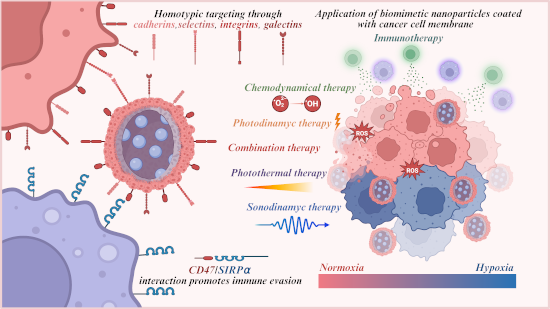
- interaction with target cells [58]. Common techniques include (i) physical co-extrusion, where nanoparticles and membranes are forced through porous membranes to form uniform coatings; (ii) sonication, which uses ultrasonic energy to induce membrane fusion and often favors correct protein orientation; and


Beam shaping techniques for pulsed laser ablation in liquids: Unlocking tunable control of nanoparticle synthesis in liquids
Beilstein J. Nanotechnol. 2026, 17, 309–342, doi:10.3762/bjnano.17.22
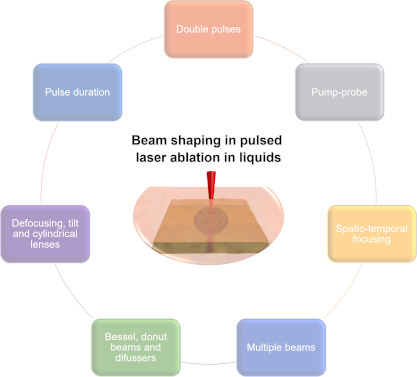
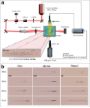
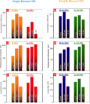
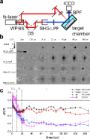
- -rate laser systems [53][54], as well as strategies such as the use of diffractive optical elements to create multifocal structures [55][56], CB bypassing [57], reducing the liquid layer [58][59], avoiding nonlinear effects [60], and optimising sample geometry [61], have significantly increased the







Advancing nanolithography: a comprehensive review of materials for local anodic oxidation with AFM
Beilstein J. Nanotechnol. 2026, 17, 275–291, doi:10.3762/bjnano.17.19
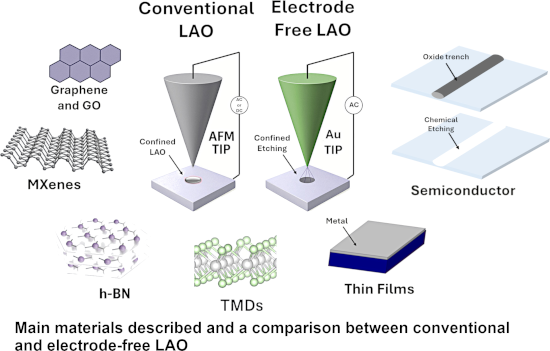
- , and the tip material or coating. Studies such as Garcia et al. [15] and Snow et al. [58] systematically demonstrate this dependence, showing a strong correlation between humidity control and achievable resolution in LAO. Voltage and pulse time also play an important role, when the voltage pulse


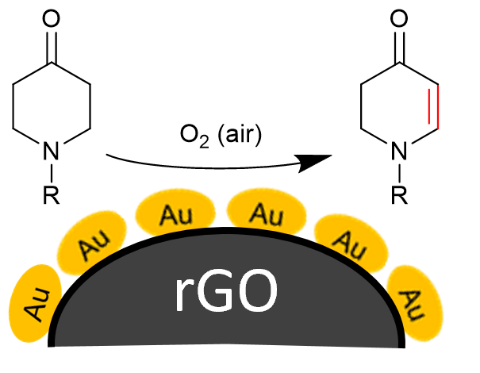
Gold nanoparticle-decorated reduced graphene oxide as a highly effective catalyst for the selective α,β-dehydrogenation of N-alkyl-4-piperidones
Beilstein J. Nanotechnol. 2026, 17, 218–238, doi:10.3762/bjnano.17.15


Time of flight secondary ion mass spectrometry imaging of contaminant species in chemical vapour deposited graphene on copper
Beilstein J. Nanotechnol. 2026, 17, 200–213, doi:10.3762/bjnano.17.13
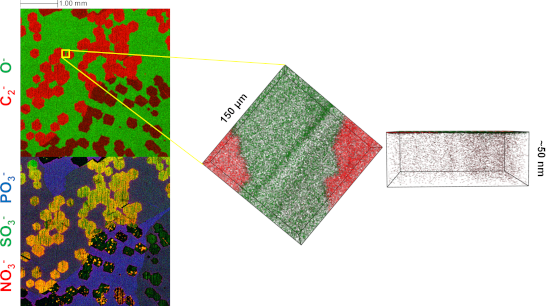
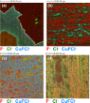
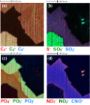
- trade-off in terms of reduced conductivity [58]; while typically not intentionally added to copper used for CVD purposes, it can still be present as a contaminant from the copper production process. The 4 mm × 4 mm ToF-SIMS image of the BO sample in Figure 4b also reveals the presence of sulphite





Safe and sustainable by design with ML/AI: A transformative approach to advancing nanotechnology
Beilstein J. Nanotechnol. 2026, 17, 176–185, doi:10.3762/bjnano.17.11
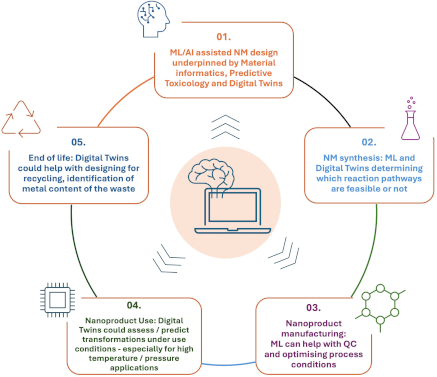
- interpolation from limited experimental datasets [57]. Given that protein corona formation [58] can drastically alter the biodistribution and immunological profile of a nanoparticle, digital twins help pinpoint safer design parameters – such as surface coatings or particle size modifications – which improve


From shield to spear: Charge-reversible nanocarriers in overcoming cancer therapy barriers
Beilstein J. Nanotechnol. 2026, 17, 159–175, doi:10.3762/bjnano.17.10
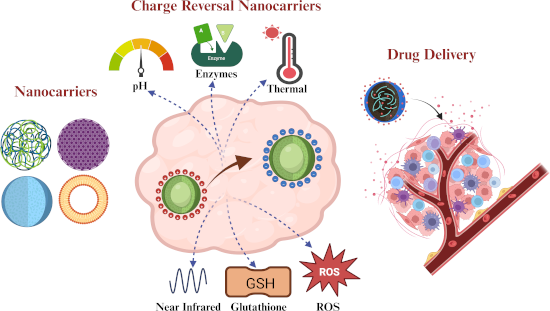
- calcium-ion-crosslinked sodium-alginate-coated mesoporous silica nanoparticles (MSNs) for ultrasound-triggered drug delivery. High- or low-intensity focused ultrasound (HIFU/LIFU) induced reversible disruption of carboxyl–calcium bonds, enabling precise, on-demand release [58]. This confirms that


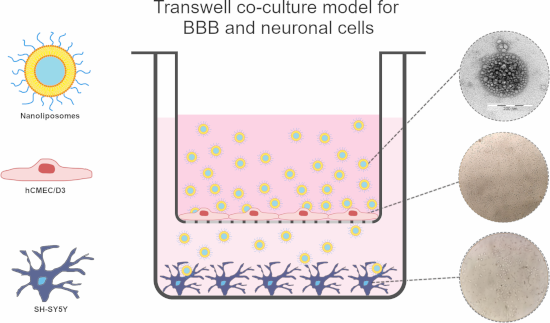
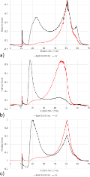
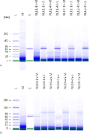
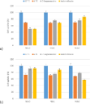
Influence of surface characteristics on the in vitro stability and cell uptake of nanoliposomes for brain delivery
Beilstein J. Nanotechnol. 2026, 17, 139–158, doi:10.3762/bjnano.17.9




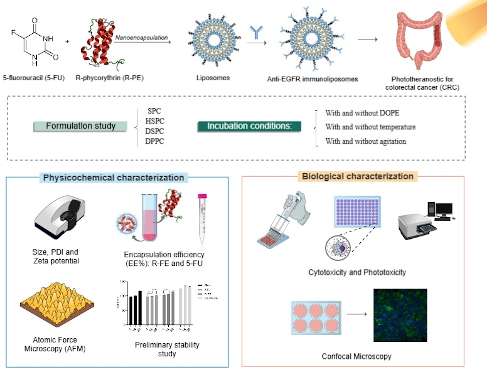
Development and in vitro evaluation of liposomes and immunoliposomes containing 5-fluorouracil and R-phycoerythrin as a potential phototheranostic system for colorectal cancer
Beilstein J. Nanotechnol. 2026, 17, 97–121, doi:10.3762/bjnano.17.7
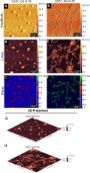
- dehydration process and adhesion forces onto the substrate [57][58]. On the other hand, the z-axis and 3D projections for HSPC-IM-R-PE (Figure 3E and Figure 3H, respectively) demonstrated a more irregular nanoparticle surface, with visibly rougher and more heterogeneous topography, a result consistent with



Functional surface engineering for cultural heritage protection: the role of superhydrophobic and superoleophobic coatings – a comprehensive review
Beilstein J. Nanotechnol. 2026, 17, 63–96, doi:10.3762/bjnano.17.6
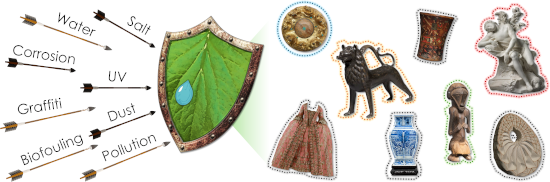
- and buildings, as well as marble statues both in outdoor and indoor environments). Many approaches are used to solve several issues arising from their intrinsic properties such as porosity, which may cause fungal or bacterial fouling [58], and surface chemistry and the affinity to water and humidity




Subdigital integumentary microstructure in Cyrtodactylus (Squamata: Gekkota): do those lineages with incipiently expressed toepads exclusively exhibit adhesive setae?
Beilstein J. Nanotechnol. 2026, 17, 38–56, doi:10.3762/bjnano.17.4
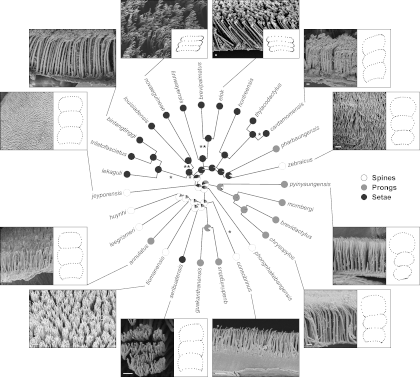
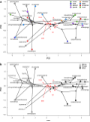
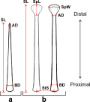
- (louisiadensis group), C. linnwayensis Grismer et al., 2018 [57] (linnwayensis group), C. pharbaungensis Grismer et al., 2018 [58] (sadansinensis group) and C. zebraicus (oldhami group)] was characterized by almost all species bearing setae [except for C. pharbaungensis (prongs) and C. zebraicus Taylor, 1962 [59
- the morphospace is occupied by spine- and prong-bearing species, including the khasiensis and sworderi groups, and the species C. consobrinus, C. leegrismeri, C. zebraicus, C. huynhi, C. tiomanensis, C. phongnhakebangensis, C. jeyporensis, C. annulatus, C. pharbaungensis Grismer et al., 2018 [58] and
- thin, gracile bodies, long limbs, flat heads, large eyes, and subdued colour patterns [58][64][101]. The single intertidal species, C. seribuatensis, was assigned to this category as it occurs in rocky habitats, even though other studies have regarded it more as a generalist species due to its body


Reduced graphene oxide paper electrode for lithium-ion cells – towards optimized thermal reduction
Beilstein J. Nanotechnol. 2026, 17, 24–37, doi:10.3762/bjnano.17.3
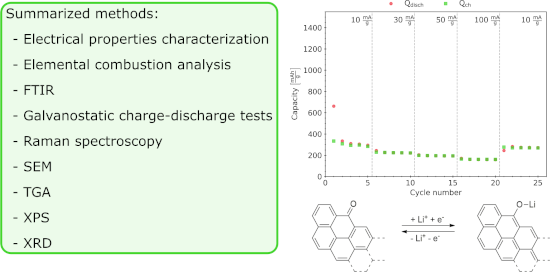
- material reduced at 650 °C in a reducing atmosphere; also, a surfactant agent was applied for the preparation of the film. The capacity values presented herein are also close to those reported by Wen et al. for a non-nitrogen-doped graphene paper sample obtained via a hydrothermal process [58], with a



Competitive helical bands and highly efficient diode effect in F/S/TI/S/F hybrid structures
Beilstein J. Nanotechnol. 2026, 17, 15–23, doi:10.3762/bjnano.17.2
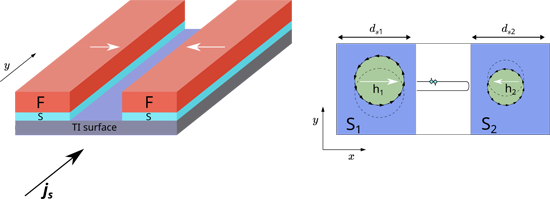
- ][49][50][51][52][53][54][55][56][57][58][59][60][61][62][63][64][65], nanotubes [66], confined systems [67], asymmetric SQUIDs [68][69][70], and superconducting systems with nonuniform magnetization [71]. The diode effect might be useful not only from an application point of view, but it may be also


![[Graphic 16]](/bjnano/content/inline/2190-4286-17-2-i31.svg?max-width=637&scale=1.18182)
![[Graphic 17]](/bjnano/content/inline/2190-4286-17-2-i32.svg?max-width=637&scale=1.18182)


Internal 3D temperature mapping in biological systems using ratiometric light-sheet imaging and lipid-coated upconversion nanothermometers
Beilstein J. Nanotechnol. 2025, 16, 2306–2316, doi:10.3762/bjnano.16.159
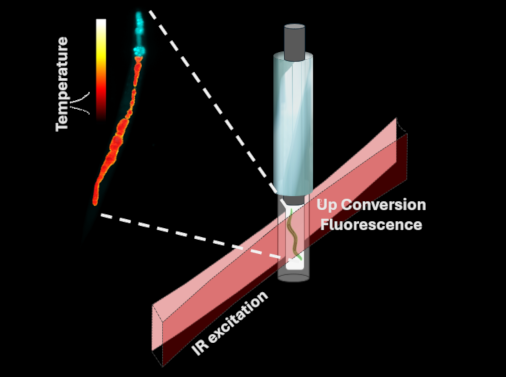
- to electrostatic repulsion with the negatively charged glycocalyx of the intestinal cell membranes, thereby hindering endocytosis [58]. This contrasts with cationic coatings like polyethyleneimine (PEI), which promote endocytosis and lead to UCNP internalization into intestinal cells [59]. This


Geometry-controlled engineering of the low-temperature proximity effect in normal metal–superconductor junctions
Beilstein J. Nanotechnol. 2025, 16, 2265–2273, doi:10.3762/bjnano.16.155
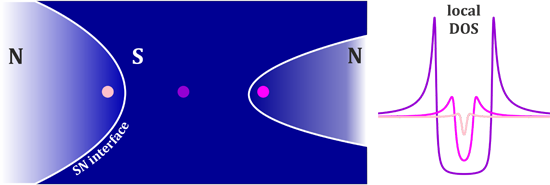
- with the physical picture that the Cooper pair wavefunction becomes more spatially squeezed in the normal region [33][58]. Figure 3d is particularly informative, showing how the power-law decay exponent α varies with η. For negative values of η (i.e., when the superconductor forms a quasi-1D wire), α


Chiral plasmonic nanostructures fabricated with circularly polarized light
Beilstein J. Nanotechnol. 2025, 16, 2245–2264, doi:10.3762/bjnano.16.154
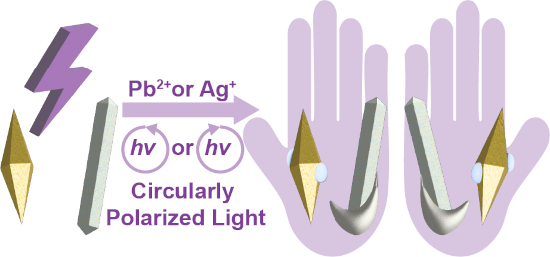
- to experimentally outline the importance of excitation wavelength in determining the resultant structural chirality and optical activity of chiral Au bipyramid (AuBP)/PbO2 nanostructures [56]. Pure metallic cPNSs constructed by CPL have also been reported [57][58][59]. This review’s primary focus are
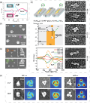
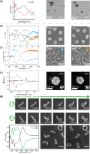
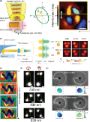
- 4b,c show examples of chiral Ag nanostructures immobilized on a glass plate [58]. The authors fabricated these chiral nanostructures by shining CPL on glass plates immersed in an aqueous solution of silver nitrate and sodium citrate with Ag nanoplates as the precursor to obtain the arrays of chiral





Optical bio/chemical sensors for vitamin B12 analysis in food and pharmaceuticals: state of the art, challenges, and future outlooks
Beilstein J. Nanotechnol. 2025, 16, 2207–2244, doi:10.3762/bjnano.16.153
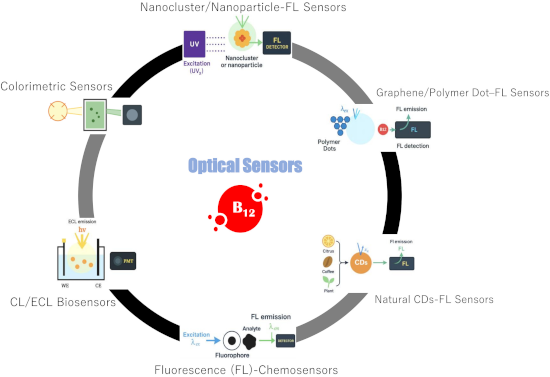
- ) [58][59]. Accordingly, MeCbl emerges as the prevalent form of VB12 in plasma, while AdoCbl is dominant across all tissues [47][60]. MeCbl plays a crucial role in the remethylation of homocysteine (Hcy) to methionine, a process catalyzed by methionine synthase. In this reaction, 5


Quality by design optimization of microemulsions for topical delivery of Passiflora setacea seed oil
Beilstein J. Nanotechnol. 2025, 16, 2116–2131, doi:10.3762/bjnano.16.146
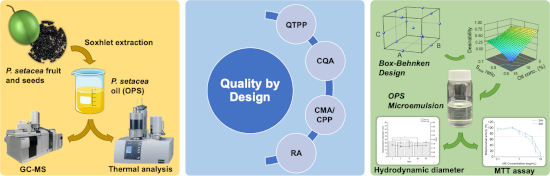
- seed oil. A risk assessment was conducted to identify and prioritize factors most likely to affect the CQAs. This included the construction of an Ishikawa diagram followed by a REM [58]. The REM was based on interdependence scores between QTPP-CQA and CQA-CMA/CPP relationships, using a three-level


Rapid synthesis of highly monodisperse AgSbS2 nanocrystals: unveiling multifaceted activities in cancer therapy, antibacterial strategies, and antioxidant defense
Beilstein J. Nanotechnol. 2025, 16, 2105–2115, doi:10.3762/bjnano.16.145
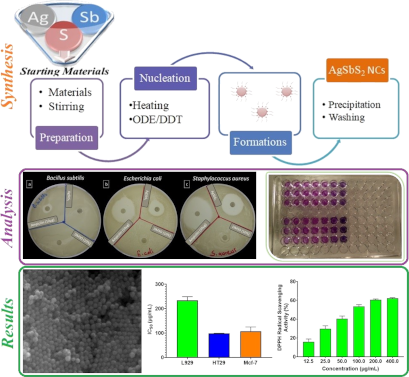
- assay results (Figure 5) showed a concentration-dependent increase in ferric-reducing antioxidant power. At the lowest concentration (12.5 µg/mL), the activity was ≈8 µM Fe2+ equivalent, climbing steadily to ≈58 µM Fe2+ equivalent (IC50 = 165.65 ± 16.03 µg/mL) at 400 µg/mL. These results demonstrate


Molecular and mechanical insights into gecko seta adhesion: multiscale simulations combining molecular dynamics and the finite element method
Beilstein J. Nanotechnol. 2025, 16, 2055–2076, doi:10.3762/bjnano.16.141
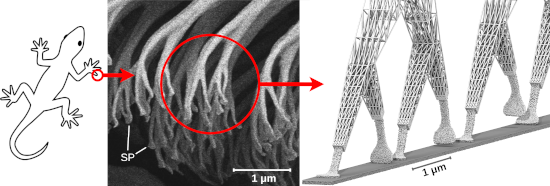
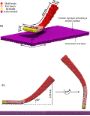
- total preload (spatula–substrate) force of 320 nN combined from all spatulae was reached, ensuring that all spatulae established contact with the substrate. This preload force is similar to the average 18–20 nN per spatula imposed in AFM experiments [23][58]. (3) Following preloading, a set of 10 FEM–MD







Stereodiscrimination of guests in chiral organosilica aerogels studied by ESR spectroscopy
Beilstein J. Nanotechnol. 2025, 16, 2034–2054, doi:10.3762/bjnano.16.140
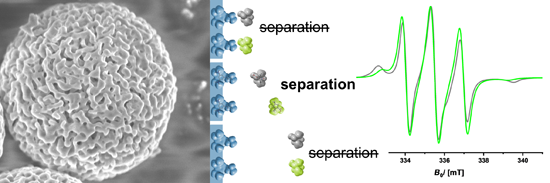
- is that almost any functional group can be attached by the so-called click chemistry or, in this case, thiol-Michael addition [58][59][60][61][62]. The methodology can be used for further functionalization of the aerogel materials [63]. For instance, the addition of perfluorostyrene affords ArFSH




Beyond the shell: exploring polymer–lipid interfaces in core–shell nanofibers to carry hyaluronic acid and β-caryophyllene
Beilstein J. Nanotechnol. 2025, 16, 2015–2033, doi:10.3762/bjnano.16.139
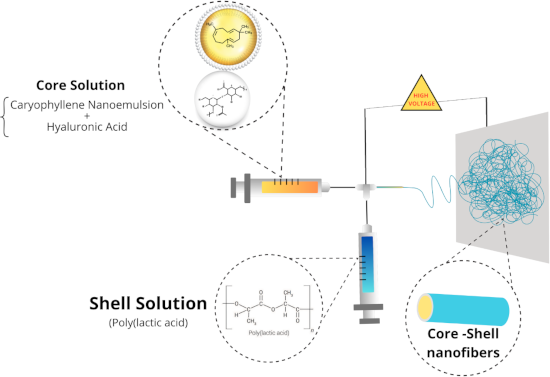
- %), surfactant concentration (2–20%), and HLB (10–15) as the independent variables (data not shown). Based on the preliminary results, a sample was selected for this study. It can be observed that formulations exhibited droplet mean sizes in the nanoscale range, varying from 58 nm. The formulations showed a
- to increased water ingress through the pores, facilitating access to the core [58]. This possibility is also described by Wang and Xu (2018), who successfully prepared tea polyphenol-loaded porous core–shell fibers by controlling coaxial electrospinning parameters [56]. ATR-FTIR spectroscopy has been




Laser ablation in liquids for shape-tailored synthesis of nanomaterials: status and challenges
Beilstein J. Nanotechnol. 2025, 16, 1963–1997, doi:10.3762/bjnano.16.137
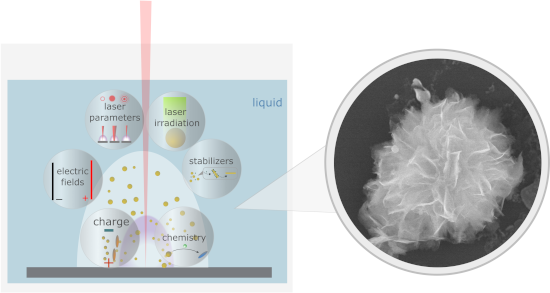
- provides a route to synthesize hollow nanospheres, as shown in [58]. The reactive gases, such as H2, O2, and CO2 can also direct the growth of nonspherical NPs by adsorption on the seed NP surface and block the growth along specific directions [59][60]. The ambient gases can also induce exfoliation of