


Search results
Search for passenger subjective letter native Bering Strait Alaska 20th century in Full Text gives 405 result(s) in Beilstein Journal of Nanotechnology. Showing first 200.
Imaging of SARS-CoV-2 infected Vero E6 cells by helium ion microscopy
Beilstein J. Nanotechnol. 2021, 12, 172–179, doi:10.3762/bjnano.12.13
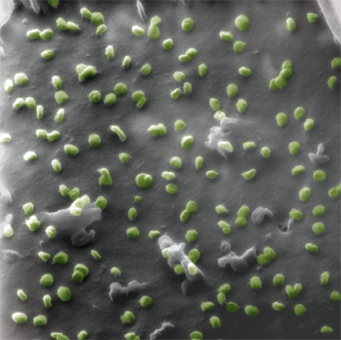
- optimized for each magnification level. All HIM images were recorded with 1024 × 1024 pixels. Before imaging, each sample was stored in the vacuum chamber of the microscope at 3.3 × 10⁻⁷ mbar for at least 24 h to remove most volatile organic contaminants. Results and Discussion A comparison between a native
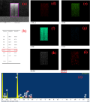
- and an infected Vero E6 cell at multiple magnification levels is shown in Figure 1. Figure 1a shows a sequence of four HIM images of native Vero E6 cells (mock-infected). Figure 1b displays a sequence of HIM images of Vero E6 cells after they have been exposed to SARS-CoV-2 at a multiplicity of


A review on the green and sustainable synthesis of silver nanoparticles and one-dimensional silver nanostructures
Beilstein J. Nanotechnol. 2021, 12, 102–136, doi:10.3762/bjnano.12.9
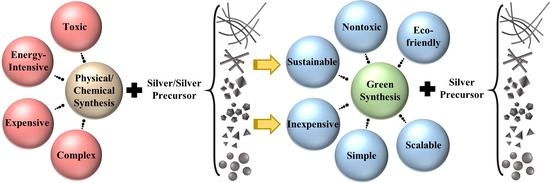
- for blood purification and to inhibit heart palpitations [44]. Silver was used in forms of aqueous solutions, coins, and plates for aseptic and antibacterial applications, as well as in food and dairy preservation up until the 19th century, as it was agreed that food and dairy products kept in silver
- its unique ability to provide advice for synthesizing nanomaterials. The biogenic/green metal nanostructures’ future is bright. Green processes are highly advantageous since they utilize naturally occurring processes to synthesize nanoparticles. The idea was first introduced in the 19th century when


Bio-imaging with the helium-ion microscope: A review
Beilstein J. Nanotechnol. 2021, 12, 1–23, doi:10.3762/bjnano.12.1


Mapping of integrated PIN diodes with a 3D architecture by scanning microwave impedance microscopy and dynamic spectroscopy
Beilstein J. Nanotechnol. 2020, 11, 1764–1775, doi:10.3762/bjnano.11.159
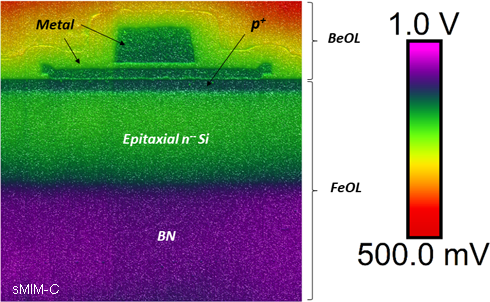
- sensitive to surface charges (often induced by the sample preparation process) and the quality of the native oxide on the scanned silicon surface. When the sMIM probe scans a doped semiconductor, the tip–sample system forms a nano-MIS capacitor exhibiting a corresponding capacitance Cnano. The sMIM-C signal
- a function of the applied bias is recorded. This replaces the subjective approach of guessing the regions of interest (for single-point spectroscopy) by a big data approach, resulting in higher-dimensional data that can be sliced along any axis or plane enabling principal component analysis. Figure
- (including native oxides and surface charge effects). However, the sMIM-C results show a very good signal contrast for both p-type and n-type semiconductors at different levels as well as for lightly doped layers, metallic contacts, oxides, and thin dielectric layers. Therefore, the sMIM methodology provides


Functional nanostructures for electronics, spintronics and sensors
Beilstein J. Nanotechnol. 2020, 11, 1704–1706, doi:10.3762/bjnano.11.152

- ; Nanotechnology and functional nanostructures, exciting trends of the 21st century, are topics that have penetrated and influenced nearly all areas of human activity: from microelectronics to biology, from aerospace to medicine, from agriculture to novel materials engineering. One of the areas of nanoscience and
Walking energy harvesting and self-powered tracking system based on triboelectric nanogenerators
Beilstein J. Nanotechnol. 2020, 11, 1590–1595, doi:10.3762/bjnano.11.141
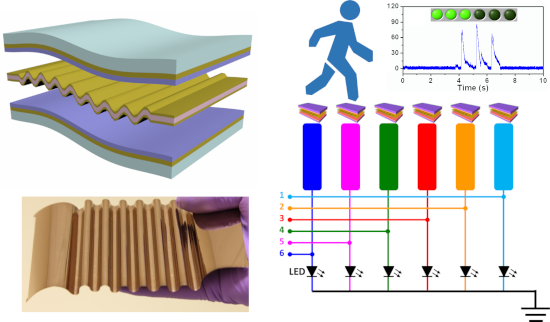
- are able to continuously light up 110 light-emitting diode bulbs. In addition, a self-powered location-tracking system was prepared for pedestrian volume counting and passenger tracing with the purpose of reducing energy consumption in public areas. The proposed walking energy harvesting device is
- passenger tracing. This design could be utilized in low-traffic areas or public passages at night to provide an alternative for energy harvesting and conservation in modern cities. Conclusion In sum, we demonstrated that an undulated electrode-based TENG can be used to harvest walking energy from
- , including men, women and children. In addition, integrated with six sensing channels along a public aisle, a self-powered location-tracking system was constructed for pedestrian volume counting and passenger tracing. This work paves the way for the application of triboelectric sensors in intelligent cities




Atomic defect classification of the H–Si(100) surface through multi-mode scanning probe microscopy
Beilstein J. Nanotechnol. 2020, 11, 1346–1360, doi:10.3762/bjnano.11.119
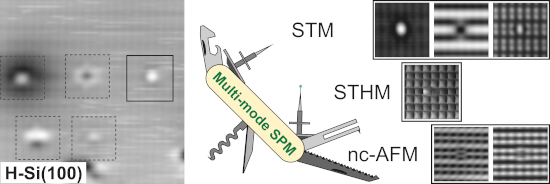
- optimizing sample preparation, quantifying how defects affect device operation [9], or by using convolutional neural networks to autonomously identify defects [10][11][12], a comprehensive understanding of the many varieties of defects is needed. Native silicon atoms at the unreconstructed (unterminated


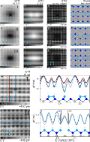

Controlling the proximity effect in a Co/Nb multilayer: the properties of electronic transport
Beilstein J. Nanotechnol. 2020, 11, 1336–1345, doi:10.3762/bjnano.11.118
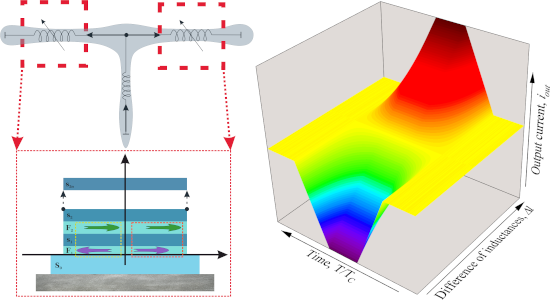
- current and the pair of microwires was used to test an induced potential difference. Each contact was marked with a letter. Therefore, each measurement was denoted by a pair of letters ("RT","TV", etc.). All the low-temperature measurements performed in this work were done using a cryogen-free magnet
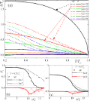
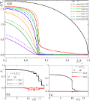
- structure used for the critical temperature measurements (each contact was marked with a letter). Resistance as a function of the temperature (a) without an initial magnetization of the sample, at a current I = 20 μA, and (b) after remagnetization in the longitudinal direction, at a current I = 1 mkA. Each
- contact in the “centipede-like” structure was marked with a letter. Therefore, each measurement was denoted by a pair of letters ("RT", "TV", etc.). (a) The output current, iout, of the inductive synapse versus the geometric inductance, lp, and the sum of the controlled kinetic inductors of the arms, Σl



Role of redox-active axial ligands of metal porphyrins adsorbed at solid–liquid interfaces in a liquid-STM setup
Beilstein J. Nanotechnol. 2020, 11, 1264–1271, doi:10.3762/bjnano.11.110
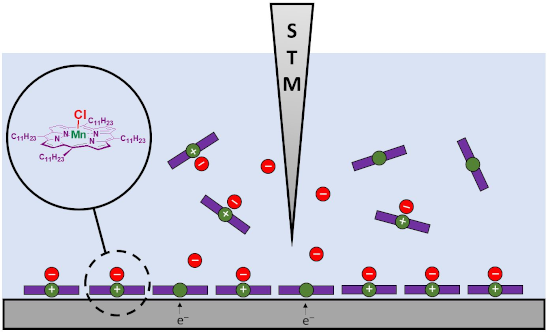
- Au(111)–n-tetradecane interface; the light blue spots are the native MnTUPCl molecules, the red spots their respective Mn=O complexes; left image: in argon atmosphere, a few Mn=O species are present; right image: in oxygen atmosphere, more Mn=O species have been formed. The color bar on the right


Ultrasensitive detection of cadmium ions using a microcantilever-based piezoresistive sensor for groundwater
Beilstein J. Nanotechnol. 2020, 11, 1242–1253, doi:10.3762/bjnano.11.108
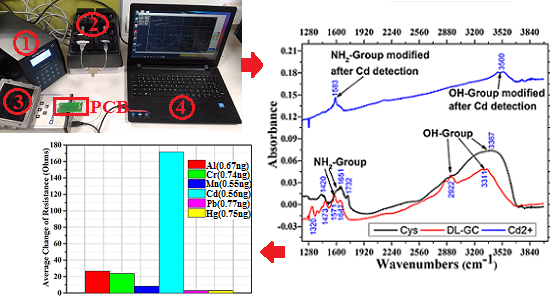
- essential for sustaining life, and an increase in the global population has led to an exponential increase in waste disposal, which causes significantly increased requirements regarding the control of water quality [1]. Clean water is one of the main priorities of the 21st century worldwide, and negligence




Plant growth regulation by seed coating with films of alginate and auxin-intercalated layered double hydroxides
Beilstein J. Nanotechnol. 2020, 11, 1082–1091, doi:10.3762/bjnano.11.93
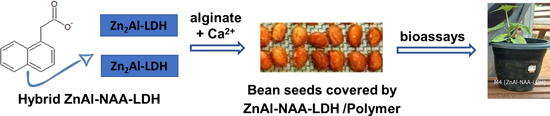
- -LDH. Averages followed by the same letter do not differ from each other by the Tukey test (p > 0.05). Scheme of the bioassays. Composition of polymeric alginate films. pH values, macronutrients, micronutrients, organic matter and organic carbon contents of the soil used in the bioassays. Supporting



Wet-spinning of magneto-responsive helical chitosan microfibers
Beilstein J. Nanotechnol. 2020, 11, 991–999, doi:10.3762/bjnano.11.83
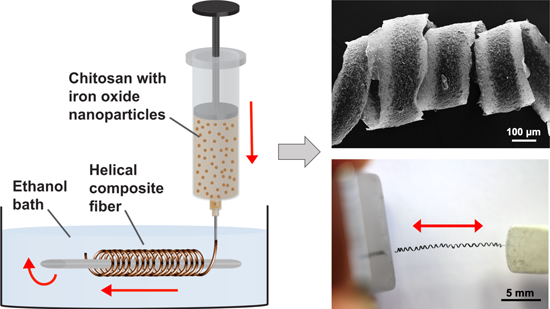
- polysaccharides such as alginate, hyaluronic acid or chitosan, are widely used as biocompatible materials since they are biochemically similar to the native extracellular matrix (ECM) [16]. Chitosan is a biopolymer that combines excellent biocompatibility, low toxicity and antibacterial properties with a low


Electrochemical nanostructuring of (111) oriented GaAs crystals: from porous structures to nanowires
Beilstein J. Nanotechnol. 2020, 11, 966–975, doi:10.3762/bjnano.11.81
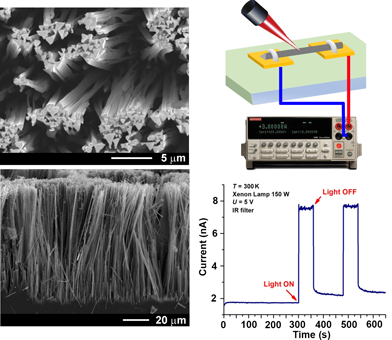
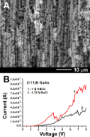
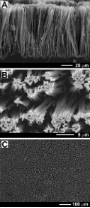
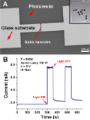
- sonicated in acetone for 15 min, cleaned in distilled water and dried. In order to remove the native oxide from the surface, the samples were dipped in a HCl/H2O (1:3) solution for 2 min. The electrical contacts to the sample were prepared with silver paste, then the samples were pressed against an O-ring





A 3D-polyphenylalanine network inside porous alumina: Synthesis and characterization of an inorganic–organic composite membrane
Beilstein J. Nanotechnol. 2020, 11, 938–951, doi:10.3762/bjnano.11.78
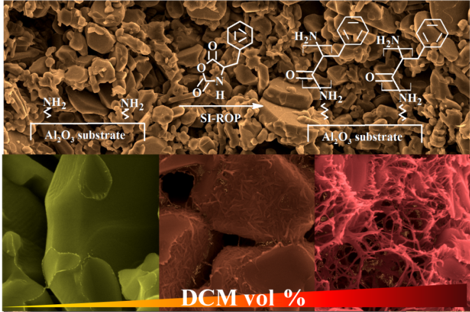
- polymer functionalization schemes for reversed-phase solid phase extraction applications. The adsorption capability of the functionalized composite membrane was increased from 16.7% to 38.1% compared to the native ALOX-membrane. Keywords: alumina; composite membrane; polymer-based sorbent




Hexagonal boron nitride: a review of the emerging material platform for single-photon sources and the spin–photon interface
Beilstein J. Nanotechnol. 2020, 11, 740–769, doi:10.3762/bjnano.11.61
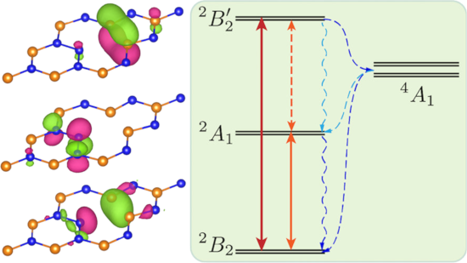
- /compatibility of the active quantum source and the device in use, and they have limitations in terms of scalability. The type of point defects that should be addressed is also a key element and is generally substitutional dopants, native vacancies, and dopant-vacancy complexes. The space of possible defects is
- the UV (303 nm) with certain native point defect origin due to the high localization observed using CL maps. The point defects were likely carbon substitutional at nitrogen sites (CN). Another broad emission not associated with any SPE was present in the same spectral region, here attributed to




Quantitative determination of the interaction potential between two surfaces using frequency-modulated atomic force microscopy
Beilstein J. Nanotechnol. 2020, 11, 729–739, doi:10.3762/bjnano.11.60
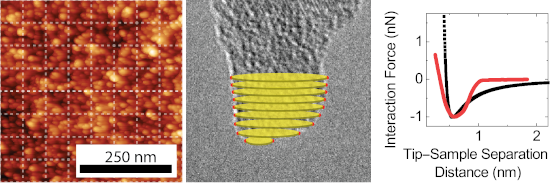
- then compared to experimental results. The method is demonstrated here using a silicon AFM probe with its native oxide and a diamond sample. Assuming the 6-12 Lennard-Jones potential form, best-fit values for the work of adhesion (Wadh) and range of adhesion (z0) parameters were determined to be 80
- geometries. In this manuscript, frequency modulation (FM) AFM was used to determine the interaction forces between two irregularly shaped solids: the apex of a silicon AFM probe with its native oxide and a slightly roughened, nominally flat single-crystal diamond surface. This substrate was chosen due to its
- probe with its native oxide. With these measurements, experimental F(z) curves were analytically determined using the method shown in [45] and compared to theoretical LJ F(z) curves obtained by integrating the 6-12 LJ pair potential over the geometry of the experimental AFM tip apex. From these


Brome mosaic virus-like particles as siRNA nanocarriers for biomedical purposes
Beilstein J. Nanotechnol. 2020, 11, 372–382, doi:10.3762/bjnano.11.28
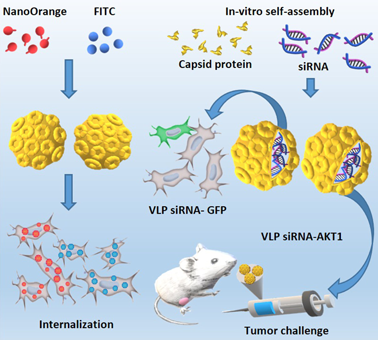
- the native virus (T = 3), as corroborated by TEM (Figure 4A and Figure S2a, Supporting Information File 1). Importantly, this is the first report of the encapsidation of nucleic acids in VLPs from BMV without the need for an RNA packaging signal. Previous reports showed that a tRNA-like structure is


Using gold nanoparticles to detect single-nucleotide polymorphisms: toward liquid biopsy
Beilstein J. Nanotechnol. 2020, 11, 263–284, doi:10.3762/bjnano.11.20
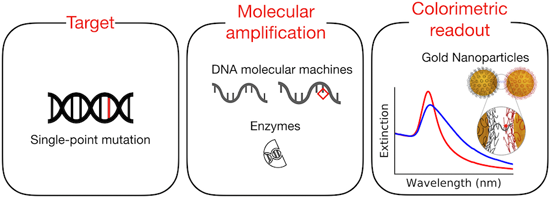
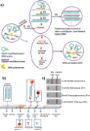
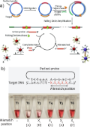
- offers an unprecedented sensitivity in native physiological media. Coupling these nanomaterial-based systems with enzymatic reactions can further increase the sensitivity and selectivity of a given sensor, leading to a scenario in which a tiny structural alteration of a biomolecule can be detected within




Nonequilibrium Kondo effect in a graphene-coupled quantum dot in the presence of a magnetic field
Beilstein J. Nanotechnol. 2020, 11, 225–239, doi:10.3762/bjnano.11.17
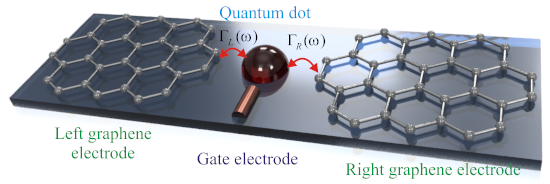
- graphene-based nanoelectronic devices. Graphene is a two-dimensional layer of graphite. Such layers were isolated experimentally about a decade ago [1][2] and described theoretically about half a century ago [49]. The carbon atoms in graphene are arranged in a hexagonal (honeycomb) lattice. The hexagonal


Rational design of block copolymer self-assemblies in photodynamic therapy
Beilstein J. Nanotechnol. 2020, 11, 180–212, doi:10.3762/bjnano.11.15
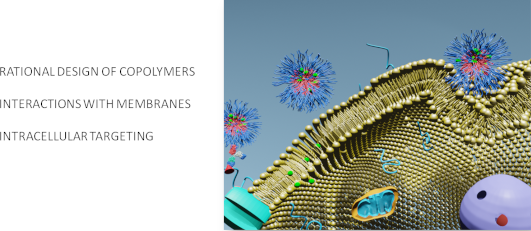
- second part. A third part will focus on the interactions between the vectors with the cell membrane, either in its native form or in biomimetic models. Finally, cellular entrance processes and intracellular targeting will also be described, showing possible intracellular targeting methods as well as the






Nanosecond resistive switching in Ag/AgI/PtIr nanojunctions
Beilstein J. Nanotechnol. 2020, 11, 92–100, doi:10.3762/bjnano.11.9
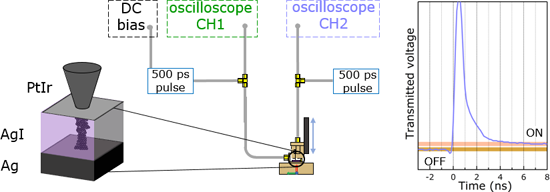
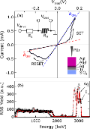
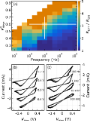
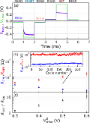
- ; nanosecond operation; resistive switching; silver iodide (AgI); Introduction The half a century long increase of the computational capacity of von Neumann architectures built on ever-shrinking complementary metal-oxide semiconductor (CMOS)-based hardware units is facing its technological, economical and


Gold and silver dichroic nanocomposite in the quest for 3D printing the Lycurgus cup
Beilstein J. Nanotechnol. 2020, 11, 16–23, doi:10.3762/bjnano.11.2
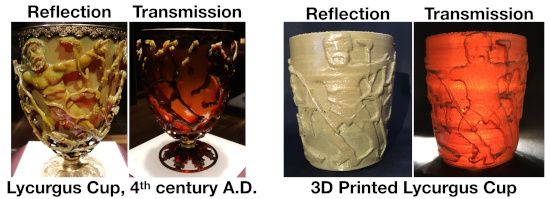
- Lycurgus cup. Keywords: 3D printing; dichroism; Lycurgus cup; nanocomposite; Introduction The Lycurgus cup is, without any doubt, one of the most fascinating glass artefacts in the history of humankind [1]. This 4th century Roman cup, classified as cage cup, is a wonderful masterpiece of glass working


Fully amino acid-based hydrogel as potential scaffold for cell culturing and drug delivery
Beilstein J. Nanotechnol. 2019, 10, 2579–2593, doi:10.3762/bjnano.10.249
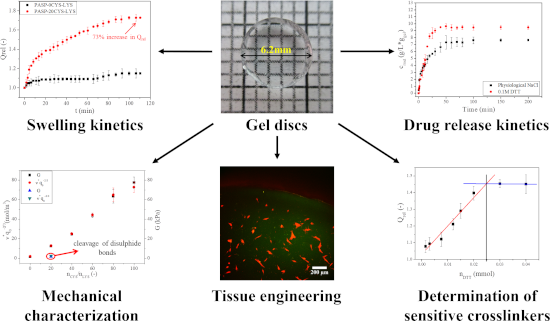
- ]. Among them, synthetic, amino acid-based polymers attract particular attention due to their tunable properties and the structural similarity to the native ECM [26]. The poly(amino acid)s being tested for biomedical applicability can be classified into three groups: anionic, cationic and neutral poly


Long-term stability and scale-up of noncovalently bound gold nanoparticle-siRNA suspensions
Beilstein J. Nanotechnol. 2019, 10, 2568–2578, doi:10.3762/bjnano.10.248
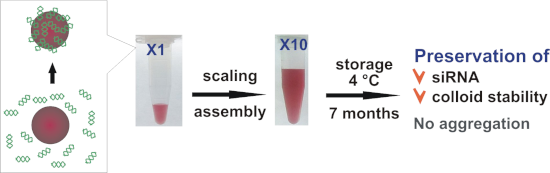
- -enveloped nanoconstructions to effectively deliver siRNA into the cells. The AuNPs are able to carry up to 150 siRNA molecules per one particle [17]. Both strands of siRNA are capable of desorbing from the surface in biological media thus retaining their native properties and the ability to inhibit the
- from the gel with water and precipitated as the sodium salt in acetone. The siRNA samples containing complementary oligoribonucleotides (25 µM each) and 350 mM NaCl were subjected to heating for 3 min at 95 °С, followed by cooling to 25 °С. The samples of native siRNA (1) and fluorescently labeled
- siRNA (2) were synthesized. Noncovalent AuNP-siRNA nanoconstructions The noncovalent AuNP-siRNA nanoconstructions were prepared in two variants. Sample ×1: The just after synthesis AuNP suspension (135 µL) was added to native siRNA (4 µL, 25 µM). The reaction mixture was incubated for 24 h at 25 °С


Advanced hybrid nanomaterials
Beilstein J. Nanotechnol. 2019, 10, 2563–2567, doi:10.3762/bjnano.10.247
- .10.247 Keywords: colloidal chemistry; environmental remediation; hybrid nanomaterials; nanocomposite; nanofillers; nanomedicine; nanostructures; polymer fillers; pore templating; smart materials; The Maya blue pigment that was used in Mexico during the VIIIth century is often given as a prototypical



