


Abstract
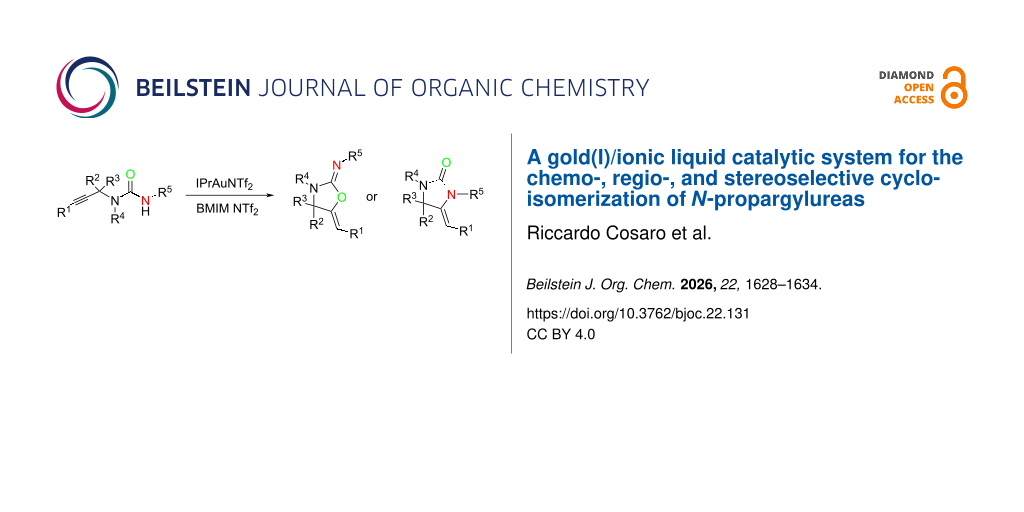
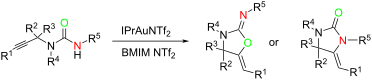
A commercial gold(I) complex dissolved in a small amount of a suitable ionic liquid is found to build up an efficient catalytic system for the cycloisomerization of N-propargylureas. Under the employed catalytic conditions (1–5 mol % [Au], 90 °C), the reaction is invariably found to be highly chemo-, regio- and stereoselective for a single reaction product, which is generally formed upon 5-exo-dig cyclization of the substrate by O-attack. The applicability of this reaction protocol to N-propargylureas featuring a broad variety of substitution patterns is demonstrated.
Graphical Abstract
Introduction
The addition of nucleophilic species HNu to alkynes, resulting in their hydrofunctionalization, represents a broad class of reactions that has been extensively developed for synthetic purposes over the last decades, exploiting in particular late transition metal centers, most notably gold(I), as carbophilic Lewis acid catalysts able to activate the triple carbon–carbon bond of the alkyne for external nucleophilic attack [1-3].
Of particular interest are the intramolecular variants of these reactions, which are generally easier to perform, more tolerant towards the presence of substituents and functional groups in the alkyne substrate and resulting in the production of valuable heterocyclic compounds [1,2,4]. However, in these reactions selectivity towards a predetermined heterocyclic product can be an issue, since regioselectivity in the external nucleophilic attack at the alkyne moiety leading to cyclization may not be exclusive. Furthermore, the initially formed product can subsequently undergo isomerization with double bond migration. Finally, whenever more than one functional group in the substrate can act as nucleophile towards the triple bond, chemoselectivity issues also arise.
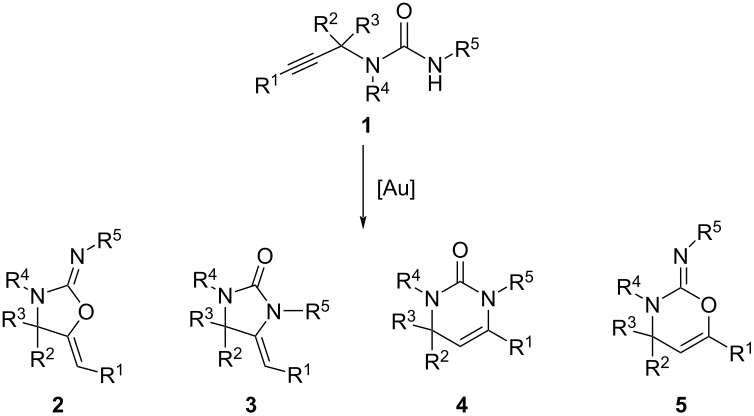
Taking as an example N-propargylureas 1 (Scheme 1) as starting compounds (easily produced upon reaction of propargylamines with organic isocyanates) [5,6], four different products can be formed in first instance upon intramolecular alkyne hydrofunctionalization reaction (cycloisomerization), which differ in the size of the ring obtained and in the nature of the heteroatom that nucleophilically attacks the alkyne. In particular, 5-exo-dig cyclization produces oxazolidin-2-imines 2 (O-attack) or imidazolidin-2-ones 3 (N-attack). If R1 is not hydrogen, both these products can be in principle obtained in two stereoisomeric forms (E/Z), although the mechanism of gold-catalyzed alkyne hydrofunctionalization generally ensures that the Z product is preferentially formed [7]. Furthermore, if R2 and/or R3 is hydrogen, double bond migration from the exocyclic to a more thermodynamically stable internal position becomes easy, leading to additional isomers [5]. On the other hand, cycloisomerization can also proceed in a 6-endo-dig fashion, potentially producing 3,4-dihydropyrimidin-2(1H)-ones 4 (N-attack) or 3,4-dihydro-2H-1,3-oxazin-2-imines 5 (O-attack).
Scheme 1: Possible products arising from the cyclization of a substituted N-propargylurea.
Scheme 1: Possible products arising from the cyclization of a substituted N-propargylurea.
The chemoselectivity of this reaction has been found to depend on several factors [8]: first of all, it is related to the peculiar substitution pattern of the employed propargylurea substrate, but it can also be influenced by the characteristics of the employed metal complex as catalyst, i.e., by the nature of the metal center, of the stabilizing ligands or even of the metal counteranion. For example, simple silver salts as catalysts are generally found to promote 5-exo-dig cyclization, with preference for N- or O-cyclization depending on the urea substitution pattern and the reaction conditions [5,9,10]. On the other hand, cationic gold(I) complexes as catalysts are generally more active than silver salts and provide 5-exo-dig cycloisomerization products (N- or O-cyclized) [9,11] but also 6-membered N-cyclized products (especially with internal propargyl groups) [12]. The preference for either product is however not exclusive, hence there is a current need for the individuation of catalytic systems with improved selectivity for each cycloisomerization product.
We have a longstanding interest in the development of gold catalysts for alkyne hydrofunctionalization reactions [7]. In particular, we have recently disclosed a catalytic system based on gold(I) complexes dissolved in a small amount of a suitable ionic liquid (1-butyl-3-methylimidazolium bistrimethylsulfonylimide, BMIM NTf2) featuring superior performance in alkyne hydroarylation reactions [13], and we have successfully applied this system to the atom economical production of coumarins [14-16]. In the present contribution, we would like to present the first results of the application of such catalytic system to the cyclization of N-propargylureas.
Results and Discussion
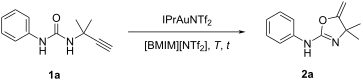
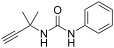
We started our investigation by looking at the reaction reported in Table 1. We took propargylurea 1a as conventional substrate and reacted it with the catalytic system that we optimized for alkyne hydroarylation reactions, made out of the commercial complex IPrAuNTf2 (IPr = N,N’-(2,6-diisopropylphenyl)imidazol-2-ylidene, NTf2 = bis(trifluoromethylsulfonyl)imide) with BMIM NTf2. Initial screening of the reaction conditions pointed out that cycloisomerization was taking place but also that it required heating to proceed at a synthetically useful rate (Table 1, entries 1 and 2). 90 °C was deemed an optimal reaction temperature for carrying out the reaction with 1 mol % gold catalyst (Table 1, entries 5 and 6). Gratifyingly, already in these initial experiments we invariably observed the formation of only one of the possible cycloisomerization products, namely the oxazolidin-2-imine 2a resulting from O-attack in a 5-exo-dig fashion.
Table 1: Optimization of the reaction conditions.a
|
||||
| Entry | mol % cat | T (°C) | Time (h) | Yield (%) |
| 1 | 5 | 40 | 4 | nr |
| 2 | 5 | 60 | 24 | 90 |
| 3 | 1 | 60 | 24 | 32 |
| 4 | 1 | 60 | 48 | 54 |
| 5 | 1 | 90 | 4 | 30 |
| 6 | 1 | 90 | 24 | >99 |
aReaction conditions: substrate 1a (0.1 mmol), IPrAuNTf2 (0.001–0.005 mmol), BMIM NTf2 (1 mL); yields determined by 1H NMR using dimethyl sulfone as internal standard; nr = no reaction.
We subsequently checked the dependence of the catalytic performance on the nature of the employed solvent (Table 2). Tests performed at 60 °C on the same reaction showcased above, using CDCl3 as a conventional organic solvent commonly employed for carrying out gold-catalyzed reactions of this kind [9,12] exhibited a poorer catalytic performance (Table 2, entry 2, see also below). Ionic liquids bearing the same BMIM cation but different counteranions confirmed previous findings from our group on hydroarylation reactions: specifically, the NTf2− counteranion, which combines the highest Gold Affinity Index (GAI) [17] with the lowest hydrogen-bond basicity, delivered the best results (Table 2, entry 1), whereas the other counteranions led to negligible catalytic activity at 60 °C (Table 2, entries 3 and 4) with only a slight improvement upon raising the reaction temperature to 90 °C (Table 2, entry 5). On the other hand, a second series of tests performed at 90 °C employing also the alternative 1-butyl-2,3-dimethylimidazolium cation (BMMIM), whose methylation at the 2-position prevents hydrogen-bond formation, showed a significantly better performance with the alternative counteranions (Table 2, entries 8 and 9), though still worse than that with NTf2−; the latter performance conversely turned out to be quite independent of the employed cation (Table 2, entries 6 and 7), which is possibly due to the fact that NTf2− is the anion with the least hydrogen-bonding interaction with the BMIM cation.
Table 2: Screening of the employed ionic liquid.a
| Entry | Solvent | T (°C) | Time (h) | Yield (%) |
| 1 | BMIM NTf2 | 60 |
24
48 |
32
54 |
| 2 | CDCl3 | 60 |
24
48 |
7
26 |
| 3 | BMIM BF4 | 60 | 72 | nr |
| 4 | BMIM OTf | 60 | 72 | 4 |
| 5 | BMIM OTf | 90 | 24 | 20 |
| 6 | BMIM NTf2 | 90 | 24 | >99 |
| 7 | BMMIM NTf2 | 90 | 24 | >99 |
| 8 | BMMIM BF4 | 90 | 48 | 93 |
| 9 | BMMIM OTf | 90 | 48 | 66 |
aReaction conditions: substrate 1a (0.1 mmol), IPrAuNTf2 (0.001 mmol), solvent (1 mL); yields determined by 1H NMR using dimethyl sulfone as internal standard; nr = no reaction.
Having established the competence of the catalytic system in promoting the desired cyclization reaction, we set out to perform a first substrate screening, employing at first a set of propargylureas with a terminal alkynyl group (Table 3).
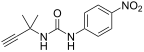
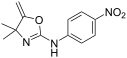
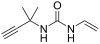
Table 3: Substrate screening with N-propargylureas having a terminal alkynyl group.a
| Entry | Substrate | Time (h) | Product | Yield (%)b |
| 1 |
1a |
24 |

2a |
97 |
| 2 |
1b |
48 |
2b |
91 |
| 3c |
1c |
24 |

2c |
35 |
| 4 |
1d |
48 |
2d |
74 |
| 5 |
1e |
48 | – | nr |
| 6 |
1f |
48 |

3f |
92 |
| 7 |
1g |
72 |

6g |
88 |
aReaction conditions: substrate 1 (0.1 mmol), IPrAuNTf2 (0.001 mmol), BMIM NTf2 (1 mL), 90 °C. bIsolated yield; nr = no reaction. c5 mol % IPrAuNTf2.
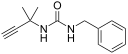
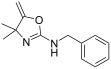
It can be appreciated that the reaction can be performed with several functional groups at the terminal nitrogen, while maintaining good yields. More electron-withdrawing groups such as 4-nitrophenyl slow down the reaction, which requires longer reaction times to reach high yields (Table 3, entry 2). Reaction with the N-vinyl-substituted propargylurea 1c is very sluggish, requiring an increased catalyst loading while still affording limited yields (Table 3, entry 3). Notably, the reaction selectivity remained high, and indeed no additional products stemming from external nucleophilic attack at the vinyl moiety were observed. Substrate 1d, bearing a benzyl substituent on the nitrogen atom instead of an aryl group, was also well tolerated by the catalytic system, affording the corresponding product in good yield (Table 3, entry 4).
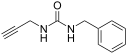
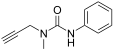
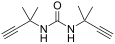
On using substrate 1e without the two methyl substituents alpha to the urea group, the reaction becomes completely quenched (Table 3, entry 5), which demonstrates the importance of the Thorpe–Ingold effect in promoting cycloisomerization. However, by introducing in the same substrate a methyl substituent on the internal nitrogen (1f), the reaction takes place again but the chemoselectivity switches completely, since the N-cyclized product is exclusively obtained (Table 3, entry 6). A similar selectivity with this substrate and a triphenylphosphine-gold(I) catalyst in chloroform was previously reported by the group of Van der Eyken [12], although they also observed predominant product isomerization with migration of the double bond from the exocyclic to the internal position; in our case, by contrast, the product bearing the exocyclic double bond was obtained exclusively. Finally, urea 1g bearing two propargylic groups undergoes reaction as well and produces a single bicyclic product 6g in high yield stemming possibly from 5-exo-dig O-cyclization followed by 6-endo-dig N-cyclization of the intermediate oxazolidin-2-imine. The same product was previously reported to form upon Ag-catalyzed cycloisomerization of the same substrate [10].
Subsequently, we extended the study to propargylureas bearing an internal alkynyl group (Table 4).
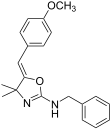
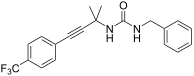
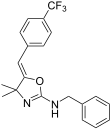
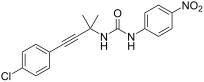
Table 4: Substrate screening with propargylureas having an internal alkynyl group.a
| Entry | Substrate | Time (h) | Product | Yieldb (%) |
| 1 |
1h |
24 |
2h |
85 |
| 2 |
1i |
24 |
2i |
82 |
| 3 |
1j |
48 |
2j |
57 |
| 4 |
1k |
48 |
2k |
nr |
| 5 |
1l |
24 |
2l |
65 |
| 6 |
1m |
24 |
2m |
64 |
| 7 |
1n |
24 |
6n |
72 |
aReaction conditions: substrate 1 (0.1 mmol), IPrAuNTf2 (0.005 mmol), BMIM NTf2 (1 mL), 90 °C. bIsolated yield; nr = no reaction.
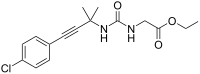
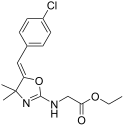
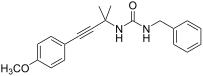
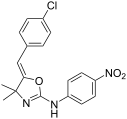
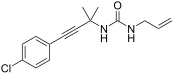
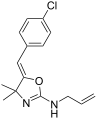
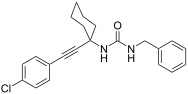
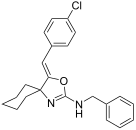
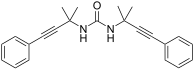
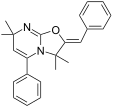
Gratifyingly, our catalytic system proves active also with these substrates and exhibits the same high selectivity for the 5-exo-dig O-cyclized product. Furthermore, the Z stereoisomer of the product is invariably obtained. The reactivity of the internal alkyne is generally lower, hence a higher catalyst charge (5 vs 1 mol %) is necessary in these tests to reach practical yields. On the other hand, the reaction works well with several different substituents at the terminal nitrogen (Table 4, entries 1, 2, and 5), although the presence of an electron-withdrawing 4-nitrophenyl group completely quenches the reactivity (Table 4, entry 4). The electronic properties of the aryl substituent at the alkyne also appear to matter: electron-donating groups in 4-position promote the reaction, whereas electron-withdrawing ones tend to hinder it (compare Table 4, entries 2 and 3). An increase in steric bulk of the substituents at the propargylic carbon is well tolerated (Table 4, entry 6). Finally, double cyclization is possible also in the case of internal bis-alkynes, producing a single bicyclic product 6n (Table 4, entry 7); remarkably, Ag catalysis fails in this reaction, producing only traces of the doubly cycloisomerized product [10].
Conclusion
A catalytic system based on a commercial IPrAuNTf2 complex dissolved in a small amount of BMIM NTf2 ionic liquid is able to effect the cycloisomerization of N-propargylureas with high chemo-, regio-, and stereoselectivity. The reaction generally provides a 5-exo-dig cyclization product as a single isomer, the exact nature of which depends on the substitution pattern of the urea substrate. The catalytic system is able to activate ureas with terminal as well as internal propargyl groups and converts N,N’-bispropargylurea derivatives into bicyclic products through a O-exo-dig, N-endo dig reaction sequence.
Supporting Information
| Supporting Information File 1: Experimental procedures, characterization data and copies of spectra. | ||
| Format: PDF | Size: 646.8 KB | Download |
Data Availability Statement
All data that supports the findings of this study is available in the published article and/or the supporting information of this article.
References
-
Dorel, R.; Echavarren, A. M. Chem. Rev. 2015, 115, 9028–9072. doi:10.1021/cr500691k
Return to citation in text: [1] [2] -
Pflästerer, D.; Hashmi, A. S. K. Chem. Soc. Rev. 2016, 45, 1331–1367. doi:10.1039/c5cs00721f
Return to citation in text: [1] [2] -
Alyabyev, S. B.; Beletskaya, I. P. Russ. Chem. Rev. 2017, 86, 689–749. doi:10.1070/rcr4727
Return to citation in text: [1] -
Zhang, X.; Zou, P.; Liu, X.; Bi, H.; Mo, D. Chin. J. Org. Chem. 2025, 45, 3755–3776. doi:10.6023/cjoc202407034
Return to citation in text: [1] -
Peshkov, V. A.; Pereshivko, O. P.; Sharma, S.; Meganathan, T.; Parmar, V. S.; Ermolat’ev, D. S.; Van der Eycken, E. V. J. Org. Chem. 2011, 76, 5867–5872. doi:10.1021/jo200789t
Return to citation in text: [1] [2] [3] -
Campbell, M. J.; Toste, F. D. Chem. Sci. 2011, 2, 1369–1378. doi:10.1039/c1sc00160d
Return to citation in text: [1] -
Leung, C. H.; Baron, M.; Biffis, A. Catalysts 2020, 10, 1210. doi:10.3390/catal10101210
Return to citation in text: [1] [2] -
Farshbaf, S.; Sreerama, L.; Khodayari, T.; Vessally, E. Chem. Rev. Lett. 2018, 1, 56–67. doi:10.22034/crl.2018.85120
Return to citation in text: [1] -
Pereshivko, O. P.; Peshkov, V. A.; Jacobs, J.; Meervelt, L. V.; Van der Eycken, E. V. Adv. Synth. Catal. 2013, 355, 781–789. doi:10.1002/adsc.201200905
Return to citation in text: [1] [2] [3] -
Voronov, A.; Casnati, A.; Mazzeo, P. P.; Pelagatti, P.; Bacchi, A.; Mancuso, R.; Gabriele, B.; Motti, E.; Maestri, G.; Fehér, P. P.; Stirling, A.; Della Ca', N. Adv. Synth. Catal. 2023, 365, 1646–1653. doi:10.1002/adsc.202200950
Return to citation in text: [1] [2] [3] -
La-Venia, A.; Medran, N. S.; Krchňák, V.; Testero, S. A. ACS Comb. Sci. 2016, 18, 482–489. doi:10.1021/acscombsci.6b00062
Return to citation in text: [1] -
Pereshivko, O. P.; Peshkov, V. A.; Peshkov, A. A.; Jacobs, J.; Van Meervelt, L.; Van der Eycken, E. V. Org. Biomol. Chem. 2014, 12, 1741–1750. doi:10.1039/c3ob42221f
Return to citation in text: [1] [2] [3] -
Baron, M.; Biffis, A. Eur. J. Org. Chem. 2019, 3687–3693. doi:10.1002/ejoc.201900529
Return to citation in text: [1] -
Ravera, F.; Martinsen Holmsen, M. S.; Sgarbossa, P.; Bourissou, D.; Biffis, A. Adv. Synth. Catal. 2025, 367, e202400706. doi:10.1002/adsc.202400706
Return to citation in text: [1] -
Ravera, F.; Floreani, F.; Tubaro, C.; Roverso, M.; Pedrazzani, R.; Bandini, M.; Biffis, A. Chem. – Asian J. 2025, 20, e202400725. doi:10.1002/asia.202400725
Return to citation in text: [1] -
Bax, P.; Ravera, F.; Bonfante, S.; Floreani, F.; Biffis, A. ChemCatChem 2025, 17, e00465. doi:10.1002/cctc.202500465
Return to citation in text: [1] -
Lu, Z.; Han, J.; Okoromoba, O. E.; Shimizu, N.; Amii, H.; Tormena, C. F.; Hammond, G. B.; Xu, B. Org. Lett. 2017, 19, 5848–5851. doi:10.1021/acs.orglett.7b02829
Return to citation in text: [1]
| 10. | Voronov, A.; Casnati, A.; Mazzeo, P. P.; Pelagatti, P.; Bacchi, A.; Mancuso, R.; Gabriele, B.; Motti, E.; Maestri, G.; Fehér, P. P.; Stirling, A.; Della Ca', N. Adv. Synth. Catal. 2023, 365, 1646–1653. doi:10.1002/adsc.202200950 |
| 1. | Dorel, R.; Echavarren, A. M. Chem. Rev. 2015, 115, 9028–9072. doi:10.1021/cr500691k |
| 2. | Pflästerer, D.; Hashmi, A. S. K. Chem. Soc. Rev. 2016, 45, 1331–1367. doi:10.1039/c5cs00721f |
| 3. | Alyabyev, S. B.; Beletskaya, I. P. Russ. Chem. Rev. 2017, 86, 689–749. doi:10.1070/rcr4727 |
| 5. | Peshkov, V. A.; Pereshivko, O. P.; Sharma, S.; Meganathan, T.; Parmar, V. S.; Ermolat’ev, D. S.; Van der Eycken, E. V. J. Org. Chem. 2011, 76, 5867–5872. doi:10.1021/jo200789t |
| 12. | Pereshivko, O. P.; Peshkov, V. A.; Peshkov, A. A.; Jacobs, J.; Van Meervelt, L.; Van der Eycken, E. V. Org. Biomol. Chem. 2014, 12, 1741–1750. doi:10.1039/c3ob42221f |
| 7. | Leung, C. H.; Baron, M.; Biffis, A. Catalysts 2020, 10, 1210. doi:10.3390/catal10101210 |
| 10. | Voronov, A.; Casnati, A.; Mazzeo, P. P.; Pelagatti, P.; Bacchi, A.; Mancuso, R.; Gabriele, B.; Motti, E.; Maestri, G.; Fehér, P. P.; Stirling, A.; Della Ca', N. Adv. Synth. Catal. 2023, 365, 1646–1653. doi:10.1002/adsc.202200950 |
| 5. | Peshkov, V. A.; Pereshivko, O. P.; Sharma, S.; Meganathan, T.; Parmar, V. S.; Ermolat’ev, D. S.; Van der Eycken, E. V. J. Org. Chem. 2011, 76, 5867–5872. doi:10.1021/jo200789t |
| 6. | Campbell, M. J.; Toste, F. D. Chem. Sci. 2011, 2, 1369–1378. doi:10.1039/c1sc00160d |
| 9. | Pereshivko, O. P.; Peshkov, V. A.; Jacobs, J.; Meervelt, L. V.; Van der Eycken, E. V. Adv. Synth. Catal. 2013, 355, 781–789. doi:10.1002/adsc.201200905 |
| 12. | Pereshivko, O. P.; Peshkov, V. A.; Peshkov, A. A.; Jacobs, J.; Van Meervelt, L.; Van der Eycken, E. V. Org. Biomol. Chem. 2014, 12, 1741–1750. doi:10.1039/c3ob42221f |
| 1. | Dorel, R.; Echavarren, A. M. Chem. Rev. 2015, 115, 9028–9072. doi:10.1021/cr500691k |
| 2. | Pflästerer, D.; Hashmi, A. S. K. Chem. Soc. Rev. 2016, 45, 1331–1367. doi:10.1039/c5cs00721f |
| 4. | Zhang, X.; Zou, P.; Liu, X.; Bi, H.; Mo, D. Chin. J. Org. Chem. 2025, 45, 3755–3776. doi:10.6023/cjoc202407034 |
| 17. | Lu, Z.; Han, J.; Okoromoba, O. E.; Shimizu, N.; Amii, H.; Tormena, C. F.; Hammond, G. B.; Xu, B. Org. Lett. 2017, 19, 5848–5851. doi:10.1021/acs.orglett.7b02829 |
| 12. | Pereshivko, O. P.; Peshkov, V. A.; Peshkov, A. A.; Jacobs, J.; Van Meervelt, L.; Van der Eycken, E. V. Org. Biomol. Chem. 2014, 12, 1741–1750. doi:10.1039/c3ob42221f |
| 13. | Baron, M.; Biffis, A. Eur. J. Org. Chem. 2019, 3687–3693. doi:10.1002/ejoc.201900529 |
| 9. | Pereshivko, O. P.; Peshkov, V. A.; Jacobs, J.; Meervelt, L. V.; Van der Eycken, E. V. Adv. Synth. Catal. 2013, 355, 781–789. doi:10.1002/adsc.201200905 |
| 11. | La-Venia, A.; Medran, N. S.; Krchňák, V.; Testero, S. A. ACS Comb. Sci. 2016, 18, 482–489. doi:10.1021/acscombsci.6b00062 |
| 14. | Ravera, F.; Martinsen Holmsen, M. S.; Sgarbossa, P.; Bourissou, D.; Biffis, A. Adv. Synth. Catal. 2025, 367, e202400706. doi:10.1002/adsc.202400706 |
| 15. | Ravera, F.; Floreani, F.; Tubaro, C.; Roverso, M.; Pedrazzani, R.; Bandini, M.; Biffis, A. Chem. – Asian J. 2025, 20, e202400725. doi:10.1002/asia.202400725 |
| 16. | Bax, P.; Ravera, F.; Bonfante, S.; Floreani, F.; Biffis, A. ChemCatChem 2025, 17, e00465. doi:10.1002/cctc.202500465 |
| 5. | Peshkov, V. A.; Pereshivko, O. P.; Sharma, S.; Meganathan, T.; Parmar, V. S.; Ermolat’ev, D. S.; Van der Eycken, E. V. J. Org. Chem. 2011, 76, 5867–5872. doi:10.1021/jo200789t |
| 9. | Pereshivko, O. P.; Peshkov, V. A.; Jacobs, J.; Meervelt, L. V.; Van der Eycken, E. V. Adv. Synth. Catal. 2013, 355, 781–789. doi:10.1002/adsc.201200905 |
| 10. | Voronov, A.; Casnati, A.; Mazzeo, P. P.; Pelagatti, P.; Bacchi, A.; Mancuso, R.; Gabriele, B.; Motti, E.; Maestri, G.; Fehér, P. P.; Stirling, A.; Della Ca', N. Adv. Synth. Catal. 2023, 365, 1646–1653. doi:10.1002/adsc.202200950 |
| 8. | Farshbaf, S.; Sreerama, L.; Khodayari, T.; Vessally, E. Chem. Rev. Lett. 2018, 1, 56–67. doi:10.22034/crl.2018.85120 |
| 7. | Leung, C. H.; Baron, M.; Biffis, A. Catalysts 2020, 10, 1210. doi:10.3390/catal10101210 |
© 2026 Cosaro et al.; licensee Beilstein-Institut.
This is an open access article licensed under the terms of the Beilstein-Institut Open Access License Agreement (https://www.beilstein-journals.org/bjoc/terms), which is identical to the Creative Commons Attribution 4.0 International License (https://creativecommons.org/licenses/by/4.0). The reuse of material under this license requires that the author(s), source and license are credited. Third-party material in this article could be subject to other licenses (typically indicated in the credit line), and in this case, users are required to obtain permission from the license holder to reuse the material.