Search results
Search for "cyclization" in Full Text gives 1140 result(s) in Beilstein Journal of Organic Chemistry. Showing first 200.
Construction of CF2 moieties in FDA-approved drugs (2016–2025): industrial routes, mechanisms, and scale-up considerations
Beilstein J. Org. Chem. 2026, 22, 1122–1150, doi:10.3762/bjoc.22.91
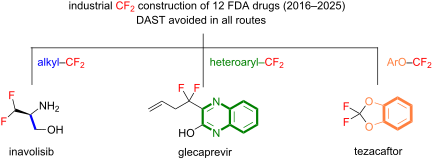
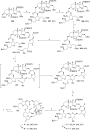
- be repeated here. 1.2.3 Lenacapavir (2022): The pyrazole ring in the lenacapavir (8) molecule is constructed via a cyclization reaction, and the CF2 group on the ring originates from the ketone carbonyl of compound 115 (synthesized from 114 in 4 steps, 54% yield, on a scale of 295 kg [54]) (Figure 10






Rhodopyran, a carboxylated hexahydrocyclopenta[b]pyran from Rhodococcus
Beilstein J. Org. Chem. 2026, 22, 1107–1113, doi:10.3762/bjoc.22.89
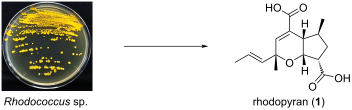
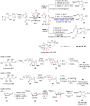
- Michael-type C–C cyclization, whereas closure of the pyran ring could proceed by intramolecular oxa-Michael addition or an epoxide-opening-type O-cyclization. The order of these two ring-forming events cannot be determined from the present data. An alternative catabolic contribution should also be
- metabolism, followed by partial reduction, dehydration, intramolecular aldol- or Michael-type C–C cyclization, intramolecular O-cyclization, and tailoring oxidations. Considering the oxidative and catabolic capacity of Rhodococcus, possible entry from endogenous fatty-acid β-/ω-oxidation intermediates cannot


Synthesis of functionalized, 13-alkyl-substituted coralyne derivatives and investigation of their interactions with duplex and abasic site-containing DNA
Beilstein J. Org. Chem. 2026, 22, 1057–1066, doi:10.3762/bjoc.22.84
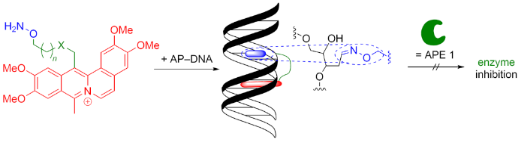
- abasic site-containing DNA (AP-DNA), different synthetic routes towards the functionalization of coralyne were tested. In particular, the alkylation of the benzylic position in papaverine and subsequent cyclization by treatment with acetic anhydride in sulfuric acid led to the synthesis of a coralyne
- , several approaches towards the functionalization of the coralyne core were tested starting from the alkylation of the benzylic position in papaverine and subsequent coralyne formation by a Pictet–Gams-type cyclization. One route eventually enabled the synthesis of conjugate 2g with an attached alkoxyamine


Synthesis of novel 1,2,4-oxadiazole-isoxazoline hybrids and their in silico potential with adenosine receptors
Beilstein J. Org. Chem. 2026, 22, 1033–1047, doi:10.3762/bjoc.22.82
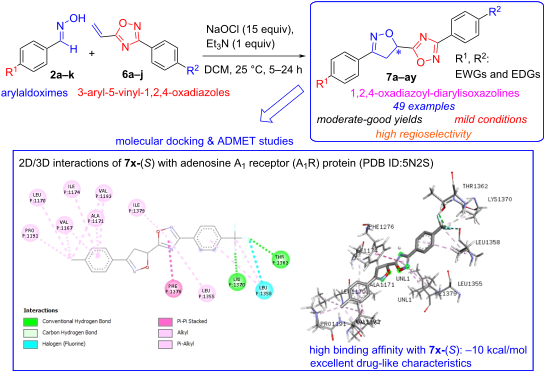
- cycloaddition of indazolyl nitrile oxides with methacrylic acid to afford indazolylisoxazoline esters, followed by cyclization with various aryl benzamidoximes [58]. In a related study, novel 1,2,4-oxadiazole-isoxazole hybrids were synthesized from isoxazoline esters generated through nitrile oxide
- transformation into the corresponding acrylamides 5a–j, and final cyclization to afford 3-(p-subsituted-aryl)-5-vinyl-1,2,4-oxadiazoles 6a–j bearing both electron-donating and electron-withdrawing groups. These compounds were obtained in moderate to good overall yields (51–75%), with the exception of 6i (Scheme
- 3, Table 1). The low yield of 6i is likely attributed to the amidoxime formation step, where the electron-rich dimethylamino group in benzonitrile 3i did not sufficiently facilitate amidoxime formation. Moreover, the final cyclization step, conducted under basic conditions at elevated temperature


Recent advances in copper-catalyzed direct hydroamination of alkenes with (hetero)aromatic amines
Beilstein J. Org. Chem. 2026, 22, 925–947, doi:10.3762/bjoc.22.73
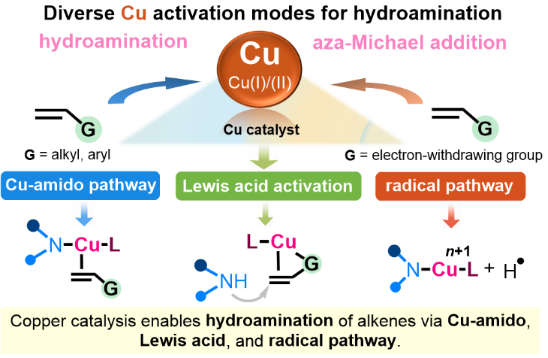
- methodology is demonstrated via a one-pot sequence consisting of copper-catalyzed aza-Michael addition followed by base-mediated cyclization and acid-promoted aerobic oxidation to afford quinolinone derivatives (Scheme 4) [38][39]. In this sequence, 2-aminobenzoate derivatives 4 reacted with α,β-unsaturated
- carbonyl compounds 5 to form the β-amino ketone intermediates, which subsequently underwent base-mediated intramolecular cyclization using KOt-Bu and air oxidation of the resulting 2,3-dihydro-4(1H)-quinolinone intermediates 7 in the presence of HCl to yield functionalized quinolin-4(1H)-one derivatives 6
- cyclization. Scheme 9 summarizes representative examples in which copper acts as a Lewis acid to promote the aza-Michael addition and subsequently enables annulation to construct diverse N-heterocycles. As shown in Scheme 9a, Singh et al. reported that a Pybox-diPh–Cu catalytic system enables the one-pot







A practical CO2-mediated synthesis of 5,6-carboxylated silicon-rhodamines for targeted probe development
Beilstein J. Org. Chem. 2026, 22, 915–924, doi:10.3762/bjoc.22.72
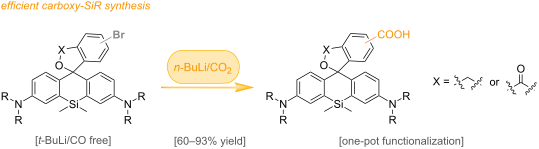
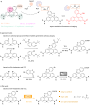
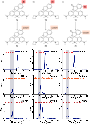
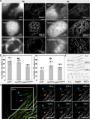
- synthesis of 5,6-carboxylated SiRs generally rely on the prior installation of protected carboxy-containing precursors (Figure 1b), followed by cyclization to construct the SiR framework and subsequent deprotection [41][42][43][44]. In these routes, the strong electron-withdrawing effect of the carboxy



Palladium-catalyzed benzocyclization reactions of quinoline-2-carboxamides via sequential C–H/N–H functionalization
Beilstein J. Org. Chem. 2026, 22, 905–914, doi:10.3762/bjoc.22.71
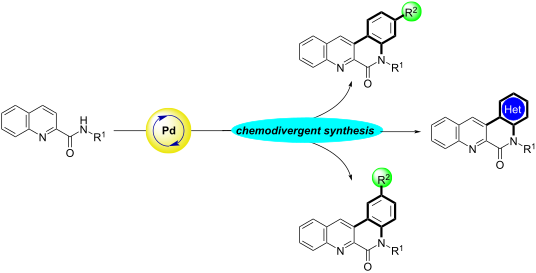
- ]. Additionally, intramolecular C–H arylation reactions with N-heteroaromatics can be used to synthesize various functional molecules that serve as ligands for metal extraction [36][37][38][39][40][41]. Our group developed a cyclization reaction for the intramolecular C–H arylation with N-heterocycles, such as
- phenanthroline and quinoline, containing amide groups (Scheme 2a) [38][40]. These reactions efficiently provide the corresponding annulation products; however, it remains difficult to selectively obtain a variety of substituent positions following cyclization. Moreover, these methodologies necessitate the




Cascade transformation of 2-(diazoacetyl)-2H-azirines to 2-aroyl-3-hydroxy-1H-pyrroles via condensation with aromatic aldehydes
Beilstein J. Org. Chem. 2026, 22, 897–904, doi:10.3762/bjoc.22.70
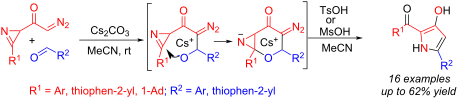
- with aromatic aldehydes does not result in the formation of an azirinyl-substituted β-hydroxy-α-diazocarbonyl compound, but is accompanied by a tandem intramolecular cyclization involving the hydroxy group and the C=N bond of the azirine to form a bicyclic intermediate, a 4-diazo-2-oxa-7-azabicyclo
- [4.1.0]heptan-5-one derivative. The acid-catalyzed transformation of which leads to 2-aroyl-3-hydroxy-1H-pyrroles. Keywords: azirines; condensation; cyclization; diazo compounds; pyrroles; Introduction Diazo compounds play a significant role in the synthesis of heterocyclic compounds, which explains
- reaction of 2-(diazoacetyl)-2H-azirines 1 with aromatic aldehydes 2, which does not terminate in condensation to form an azirinyl-substituted β-hydroxy-α-diazocarbonyl compound 3, but is accompanied by a tandem intramolecular cyclization involving the hydroxy group and the azirine C=N bond to form a


Diastereodivergent electrophilic trapping of α-boryl lithium derivatives
Beilstein J. Org. Chem. 2026, 22, 882–887, doi:10.3762/bjoc.22.68
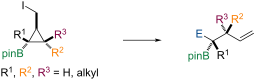
- : cyclopropane 5i possessing a chloride as a leaving group underwent highly selective cyclization to deliver the stereodefined borylated cyclopentane 6k in high 84% yield as a single diastereomer. The relative configuration of 6k was unambiguously established by X-ray crystallographic analysis of an osmylated




Synthesis and structural elucidation of a novel bis-spirooxindole from isatin and ethylenediamine
Beilstein J. Org. Chem. 2026, 22, 813–820, doi:10.3762/bjoc.22.63
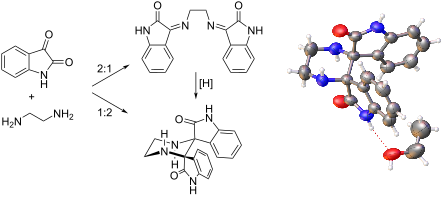
- bond formation and cyclization. Scheme 5 depicts a hypothetical rationalization of the process. Reaction of isatin (1) with ethylenediamine (23) should initially form the imine 26. Its reaction with a second molecule of isatine should lead to the diimine 24. Under the reaction conditions both imines 26


Design, synthesis, and biological evaluation of FXR/ASK1 dual-target modulators
Beilstein J. Org. Chem. 2026, 22, 771–781, doi:10.3762/bjoc.22.59
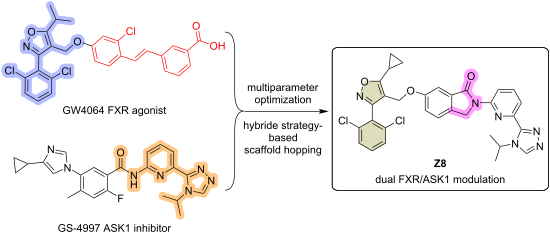
- II with NCS, followed by cyclization with methyl 3-cyclopropyl-3-oxopropionate, furnished isoxazole IV. Reduction of IV with lithium aluminum hydride gave alcohol V, which was then brominated with phosphorus tribromide to yield the desired isoxazole intermediate 2 in five steps (Scheme 4) [31]. The


Rongalite addition to dienones: diastereoselectivity in cyclic sulfone synthesis; stereochemical rationalization and prospects as a general conjugate nucleophile
Beilstein J. Org. Chem. 2026, 22, 742–752, doi:10.3762/bjoc.22.56

- therefore more likely that steric effects in the transition state for the putative cyclization to give 8 are prohibitive. Indeed, we were unable to locate a transition state for this process computationally. In order to test the limits of the reaction with related substitution patterns in this process, we
- crude 1H NMR spectrum (Supporting Information File 1). We thus used computation to model the cyclization to give products trans-12a and cis-12b, as this substrate appeared to represent a limiting case for both reaction diastereoselectivity and steric tolerance. Given that the reaction takes place in a
- 1b. Minimized structure of dienone 7 (calculated using the PBE0 functional [26] and the def2-SVP basis set [27] (see Supporting Information File 1 for full computational details)). Modeling of cyclization transition states (the solvating acetic acid molecules were omitted for clarity, and the




Synthesis of heterocycles based on azomethine ylides from α-amino acids (or amines) and carbonyl compounds
Beilstein J. Org. Chem. 2026, 22, 705–741, doi:10.3762/bjoc.22.55
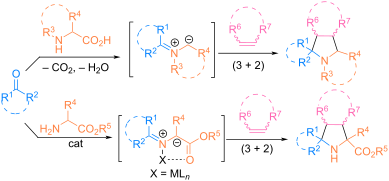
- form pyrrolidine 64. Further treatment of 64 with cinnamaldehyde and N-phenylmaleimide leads to the second (3 + 2) cycloaddition adduct 65. Addition of ICl to 65 results in cyclization involving the styrene groups, which is accompanied by the formation of decahydropyrrolo[2,1,5-cd]indolizine 66. The


Synthesis of depressin, cryptomeridiol and 4-epi-cryptomeridiol enabled by a terpenoid chiral pool-producing platform
Beilstein J. Org. Chem. 2026, 22, 683–690, doi:10.3762/bjoc.22.53
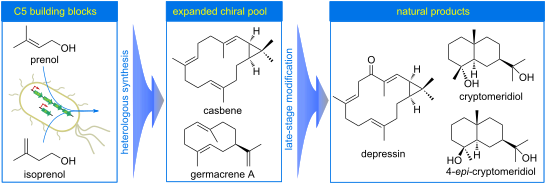
- hydroxy group allowed the synthesis of compound 1 from 4 in nine steps. Selective acid-mediated 5,10-transannular cyclization of 5 followed by hydration reaction furnished both products 2 and 3 in two steps. Keywords: chemoenzymatic synthesis; chiral pool; isopentenol utilization pathway; terpene
- be widely used as popular starting materials. It is interesting to note that for the biosynthesis of the complex terpenoid skeletons, Nature has evolved a straightforward strategy by the terpene cyclase-catalyzed cyclization of linear oligoprenyl pyrophosphates, which are generally derived from the
- efficient macrocyclization methods, including tetracarbonylnickel-promoted cyclization of allylic dibromide [17][18], copper-mediated intramolecular carbene–olefin cyclization [19], titanium-induced intramolecular carbonyl coupling [20], and organozinc carbenoid-mediated intramolecular cyclopropanation [21


Melifoliox B, a novel phloroglucin derivative isolated from Melicope barbigera (Rutaceae) and synthesis of new oxidation products from melifoliones A and B
Beilstein J. Org. Chem. 2026, 22, 535–546, doi:10.3762/bjoc.22.39
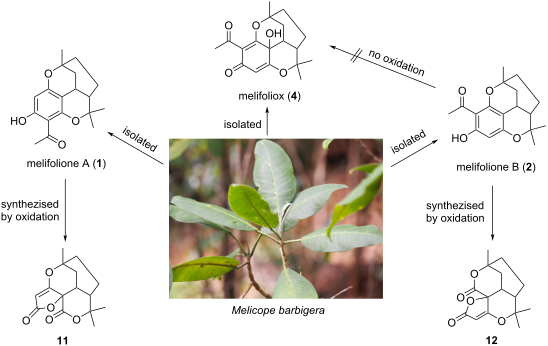
- in the mixture of melifoliones was increased to a maximum of about 10–15%. Since it was not possible to distinguish or even to separate the isomeric melifoliones using chromatographic methods, their quantitative ratio after cyclization of 5 could only be determined using the 1H NMR spectra. After



Modern synthetic pathways towards eribulin and its subunits
Beilstein J. Org. Chem. 2026, 22, 495–526, doi:10.3762/bjoc.22.37
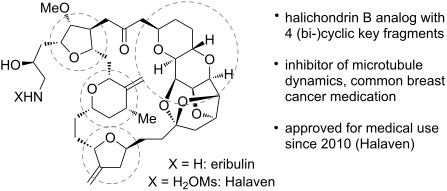
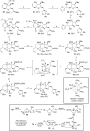
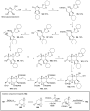
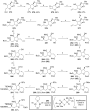
- –Kishi (NHK) coupling and Pd-mediated cyclization. Fragment 31 was synthesized from known precursor 28 [74] in 9 steps via MMTr-protection, replacement of the Bn- with TBDMS-protecting groups, hydroxylation of sulfone 29 to alcohol 30, tosylation, bromide substitution, acidic MMTr-cleavage and DMP
- proved to be suitable for the cyclization towards 35 and the eventual macrocyclization was achieved via coupling of the alkyl bromide unit with the thioester. Mechanistically, this reaction is enabled by the formation of an intermediate alkylzinc halide, which is produced by single electron transfer
- reactions [76][77] for the assembly of fragment 45 (Scheme 6) [78]. Here, 40 and 42 served as the substrates for the allene-Prins reaction towards 43. Notably, the Bz-derivative of 40, 41, served as a starting point for a corresponding halichondrin B analog. The stereoselective course of this cyclization is








Recent advances in the stereoselective synthesis of distal biaxially chiral molecules
Beilstein J. Org. Chem. 2026, 22, 461–479, doi:10.3762/bjoc.22.34
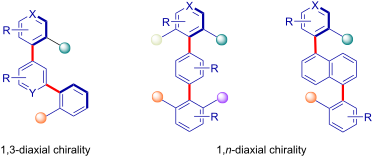
- ) intermediate, which undergoes intramolecular nucleophilic cyclization (Scheme 15) [54]. This work represents the first synthesis of a compound integrating both helical and axial stereogenic elements, and achieves high diastereoselectivity and enantioselectivity through a cinchona alkaloid-derived squaramide
- organocatalytic approach. The mechanistic study revealed that the reaction proceeds through a stepwise double cyclization process: The first cyclization generates an intermediate bearing a stereogenic axis, while the second cyclization involves dynamic kinetic resolution of the spiral reaction intermediate under
- . Soon after, Shibata and co-workers developed a cycloisomerization strategy that generated various axially chiral polycyclic aromatic hydrocarbons (PAHs) 70 through bond-cleavage followed by successive cyclization reactions with excellent yields and enantioselectivity (Scheme 19) [58]. In 2020, Miller


Structural reassignment of compound 968, an allosteric glutaminase inhibitor
Beilstein J. Org. Chem. 2026, 22, 455–460, doi:10.3762/bjoc.22.33
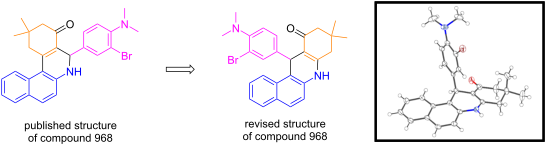
- reaction with 2-naphthol as the dinucleophile is also known [32]. In all cases, the regiochemistry of cyclization is selective and no isomeric products are formed. Conclusion In this report, we confirm the finding by Martinez [28] and Kozlov [29][30] that the three-component reaction originally claimed to


Concept-driven strategies in target-oriented synthesis
Beilstein J. Org. Chem. 2026, 22, 451–454, doi:10.3762/bjoc.22.32
- dearomatization (review, Xiangbing Qi and co-worker), enamide cyclization (review, Xiao-Ming Zhang et al.), glycosylation (PI-88, Guothi Xiao et al.), [3 + 2 + 1] cycloaddition (tetrahydrofluorenone, Zhi-Xiang Yu et al.), 1,n-enyne cyclization (review, Maosheng Cheng, Lu Yang, Yongxiang Liu et al.), oxidative
- radical cyclization (prostaglandin D2 metabolite, Jun Huang et al.), reductive cyclization cascade (aglacin B, Jina Xiao, Yu Peng et al.), electrochemical cyclization (review, Bin Li, H. N. C. Wong, Xiao-Shui Peng et al.), photochemical reactions (review, Shao-Min Fu, Bo Liu et al.), carbene insertion


A facile and practical method for the synthesis of trans-(±)-taxifolin and its derivatives via Darzens reaction
Beilstein J. Org. Chem. 2026, 22, 443–450, doi:10.3762/bjoc.22.31
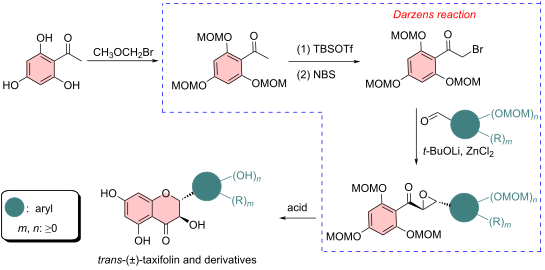
- with 2,4,6-trihydroxyacetophenone as a starting material undergoing hydroxy protection, α-bromination, construction of α,β-epoxy carbonyl products via the Darzens reaction, acid-mediated deprotection, and cyclization to afford the target compounds. This method is highlighted by satisfactory overall
- -epoxycarbonyl intermediates. The latter undergo simultaneous deprotection and cyclization by treatment with acid to afford the targeted trans-(±)-taxifolin and its derivatives [19][20][21][22][23][24][25][26][27][28][29][30] (Scheme 1a). Although this synthetic route is efficient, a significant drawback is that
- via Darzens reaction. Subsequent acid-mediated deprotection and cyclization then afforded the target compounds. Compared with the widely used method involving peroxides reported earlier, the present method is highlighted with avoidance of the use of peroxides, therefore enabling safe scale-up and


Synthesis and stereochemical analysis of dynamic planar chiral oxa[7]orthocyclophene
Beilstein J. Org. Chem. 2026, 22, 436–442, doi:10.3762/bjoc.22.30

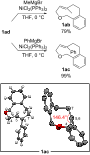
- , the treatment with iPrMgBr for preparation of the magnesium alkoxide at highly dilute conditions (10 mM) and sequential cyclization successfully proceeded to provide the C6-iodo-substituted oxacyclophene 1ad in 79% yield. Synthesis of C6-methyl and C6-phenyl-substituted oxacyclophenes The Kumada–Tamao




Electrosynthetic access to unsymmetrical oxaza[8]helicenes with high chiral stability and strong circularly polarized luminescence (CPL)
Beilstein J. Org. Chem. 2026, 22, 372–382, doi:10.3762/bjoc.22.25
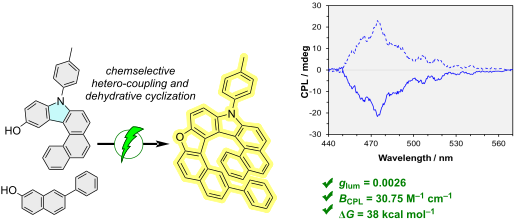
- enables selective oxidative hetero-coupling followed by dehydrative cyclization, furnishing the extended [8]helical scaffold efficiently under mild, oxidant-free conditions. Structural analyses show retained aromaticity, increased helical distortion, and higher configurational stability (≈38 kcal/mol
- electrochemical arenol activations reported by Waldvogel and co-workers [46]. Subsequent intramolecular dehydrative cyclization furnishes the desired oxaza[8]helicenes 5. The oxidation-potential gap between 3 and 4 and the reactivity of Int-I thus provides a handle to control chemo- and regioselectivity
- designed coupling partners to control both chemo- and regioselectivity. A finely tuned anodic sequence enables selective oxidative hetero-coupling followed by dehydrative cyclization, delivering extended [8]helical scaffolds efficiently under mild, oxidant-free conditions. Combined experimental and DFT




Synthesis of tricyclic fused pyrrolidine nitroxides from 2-alkynylpyrrolidine-1-oxyls
Beilstein J. Org. Chem. 2026, 22, 344–351, doi:10.3762/bjoc.22.22

- literature data on reactivity of 5-azidopentyne derivatives in intramolecular Huisgen cycloaddition reactions are contradictory. Some authors successfully obtained 5-azidopentyne derivatives upon nucleophilic substitution at 80 °C in DMF, and additional heating at 170 °C was necessary for cyclization to
- dioxide in tetrahydrofuran gave vinyl ether 8, which was isolated with 50% yield (Scheme 4). The structure of the product 8 was confirmed by X-ray crystallographic analysis (Figure 3, CCDC 2512653). Formation of 8 apparently occurs via cyclization of alkynal 7. The formation of vinyl ethers has been


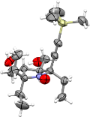


Spirobarbiturates with a pyrrolizidine moiety: synthesis, structure and biological evaluation
Beilstein J. Org. Chem. 2026, 22, 274–288, doi:10.3762/bjoc.22.20
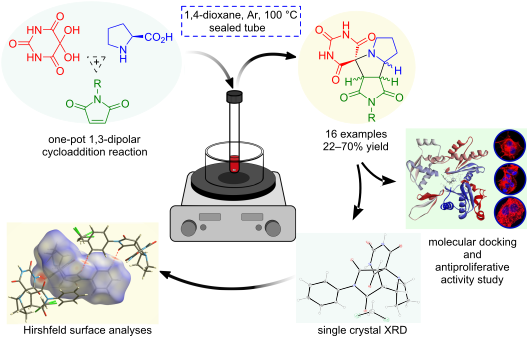
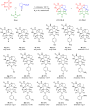
- by intramolecular cyclization to yield a lactone, which undergoes decarboxylation to produce the corresponding azomethine ylide. In our system, we propose this generated ylide reacts with N-substituted maleimides 3a–p such that the transformation predominantly proceeds via the endo-TS, leading to




A mild and atom-efficient four-component cascade strategy for the construction of biologically relevant 4-hydroxyquinolin-2(1H)-one derivatives
Beilstein J. Org. Chem. 2026, 22, 244–256, doi:10.3762/bjoc.22.18
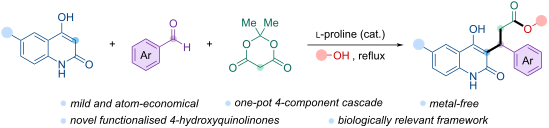
- formation of the cyclic lactone, which predominated under such conditions. These findings suggest that intramolecular attack by the quinolinone OH group, leading to cyclization and formation of pyranoquinolinone, proceeds faster than nucleophilic attack by the external alcohol. Thus, under mild or brief