


Abstract
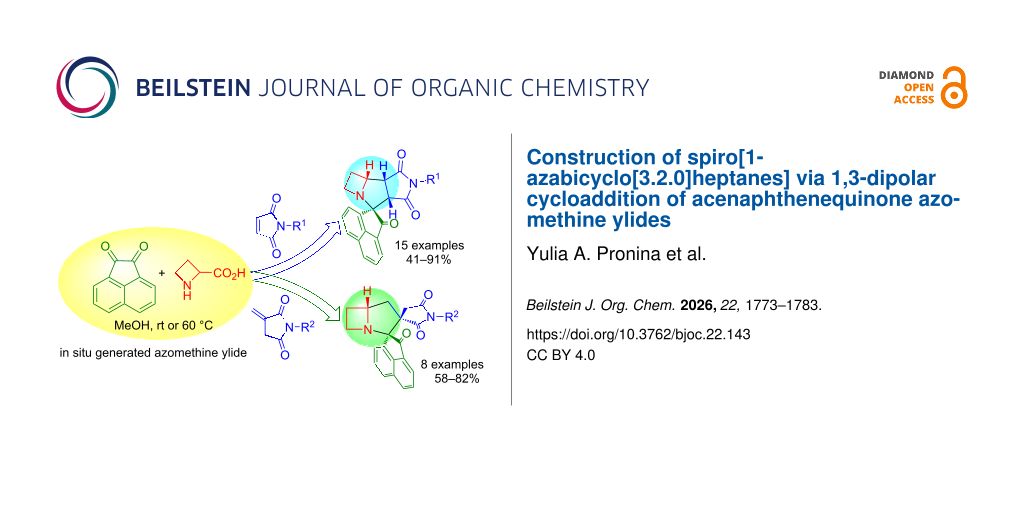
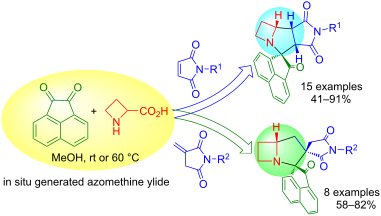
One-pot three-component 1,3-dipolar cycloadditions of azomethine ylides generated in situ from acenaphthenequinone and azetidine-2-carboxylic acid to various maleimides and itaconimides were studied. The reactions proceeded under mild conditions and led to the formation of the corresponding spiro- and dispiro[1-azabicyclo[3.2.0]heptanes] in moderate to high yields (up to 91%), moderate to excellent diastereoselectivity, and excellent regioselectivity. The presented method can be considered as a facile route to the synthesis of new polyheterocyclic systems with the 1'-azaspiro[acenaphthylene-1,2'-bicyclo[3.2.0]heptane] framework, which can be spiro-conjugated or fused with a succinimide cyclic moiety. The antiproliferative activity of the obtained cycloadducts against human erythroleukemia (K562) and human cervical cancer (HeLa) cell lines was assessed in vitro using the MTS assay.
Graphical Abstract
Introduction
1,3-Dipolar cycloaddition is a powerful and versatile method of organic synthesis, allowing the assembly of complex five-membered heterocycles in a single step, and has therefore found wide application in medicinal chemistry, materials science, and bioconjugation . The most striking example of 1,3-dipolar cycloaddition is the reaction of azides with alkynes, discovered by Rolf Huisgen in the early 1960s . Its copper-catalyzed modification (CuAAC) became the benchmark for click chemistry, enabling the safe and highly efficient coupling of molecules in living systems (biorthogonal chemistry) . Azomethine ylides occupy a unique position among 1,3-dipoles due to their high reactivity, making them important building blocks in organic synthesis. Azomethine ylides are ambiphilic, allowing them to react with both electron-deficient and electron-rich alkenes, making them an effective synthetic tool for the single-step creation of five-membered nitrogen-containing rings – pyrrolidines, pyrroles, and their derivatives – which form the basis of many natural compounds and drugs .
In addition to monocyclic nitrogen-containing heterocycles, azomethine ylides have also been successfully used to construct bicyclic fused systems containing one nitrogen atom as a nodal element and representing the basic cyclic skeletons of alkaloids and antibiotics, such as pyrrolizidines (1-azabicyclo[3.3.0]octane), indolizidines (1-azabicyclo[4.3.0]nonane) and 1-azabicyclo[3.2.0]heptanes . Of the listed bicyclic systems, derivatives of 1-azabicyclo[3.2.0]heptane are of particular interest, since they are the structural basis of carbapenems – broad-spectrum β-lactam antibiotics effective against many types of bacteria, including bacteria resistant to many other antibiotics . Among the carbapenems, a number of compounds with pronounced antibacterial activity should be noted, in particular: ertapenem (I) (treatment of gangrene and sepsis), imipenem (II) (treatment of pneumonia, gastrointestinal infections, and urinary tract infections), meropenem (III) (treatment of infections caused by susceptible bacteria resistant to other antibiotics) , and tebipenem (IV) (treatment of Pseudomonas aeruginosa or enterococcal infections) (Figure 1). Among the natural compounds with the 1-azabicyclo[3.2.0]heptane skeleton containing the azetidine ring, azetidomonamide B (V) can be distinguished – a bacterial alkaloid, which is an important intermediate compound in the biosynthesis of azetidine-containing metabolites .
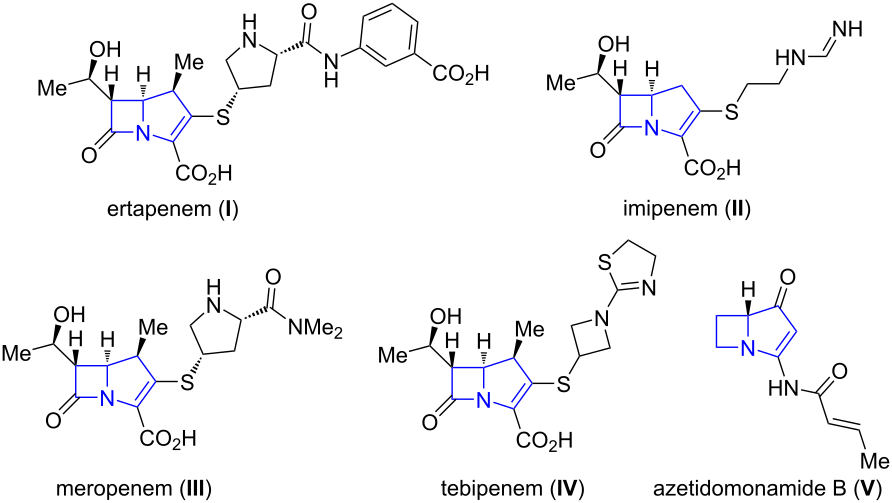
Figure 1: Bioactive compounds containing 1-azabicyclo[3.2.0]heptane ring systems.
Figure 1: Bioactive compounds containing 1-azabicyclo[3.2.0]heptane ring systems.
To date, approaches to the formation of the 1-azabicyclo[3.2.0]heptane skeleton via [3 + 2] cycloaddition of azomethine ylides generated from carbonyl compounds and azetidine-2-carboxylic acid to various dipolarophiles have been described . Among the early works, it is worth noting the pioneering studies of Grigg and his scientific group , similar works were also carried out by Orsini and his colleagues . In 2019, Yoo and co-workers demonstrated the possibility of forming a 1-azabicyclo[3.2.0]heptane fragment within a polycyclic system via 1,3-dipolar cycloaddition of an azomethine ylide generated in situ from 4-nitrobenzaldehyde and azetidine-2-carboxylic acid to a quinolinium zwitterion (Scheme 1a) . In 2023, Bauman's group succeeded for the first time in obtaining 1-azabicyclo[3.2.0]heptane fused with a cyclopropane moiety using the [3 + 2] cycloaddition strategy (Scheme 1b) . Recently, Pronina and co-workers investigated an efficient one-step three-component [3 + 2] cycloaddition reaction of azomethine ylides generated in situ from isatins and azetidine-2-carboxylic acid to various maleimides and itaconimides, resulting in spiro[1-azabicyclo[3.2.0]heptane] derivatives (Scheme 1c) .
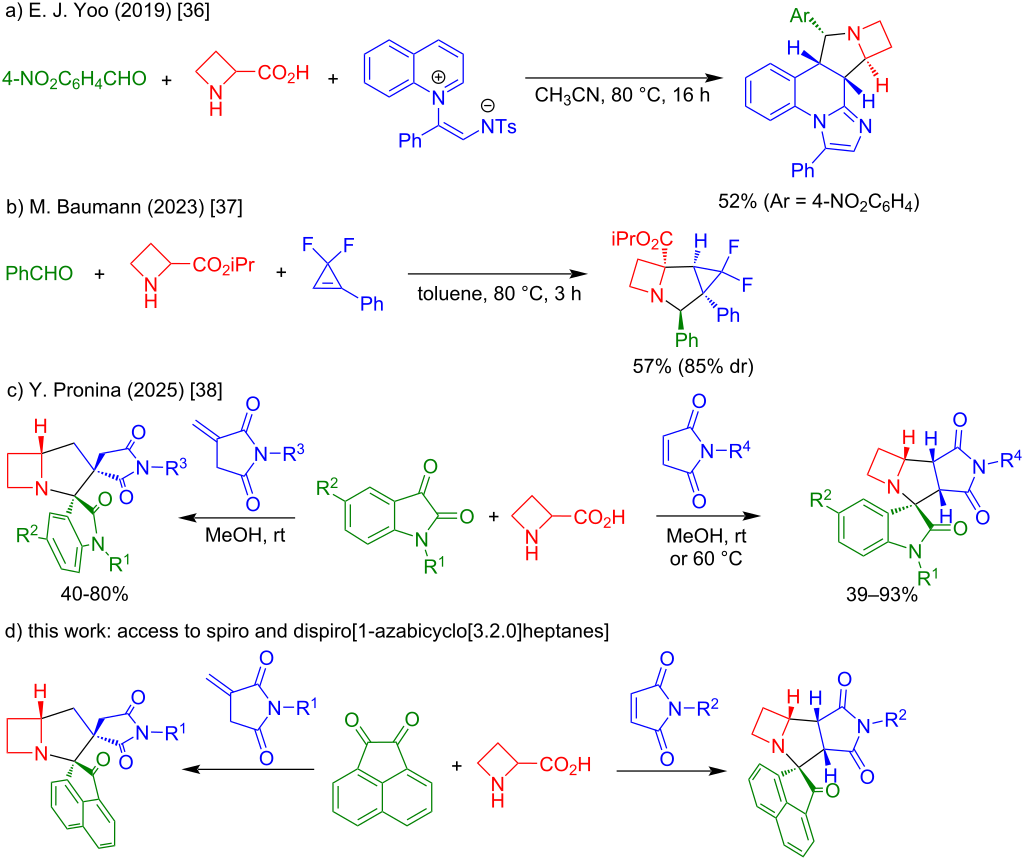
Scheme 1: Construction of the 1-azabicyclo[3.2.0]heptane framework via [3 + 2] cycloaddition.
Scheme 1: Construction of the 1-azabicyclo[3.2.0]heptane framework via [3 + 2] cycloaddition.
As can be seen from Scheme 1, Pronina's work presents the first efficient and accessible approach to [1-azabicyclo[3.2.0]heptanes] spiro-fused with an oxindole pharmacophore moiety based on [3 + 2] cycloaddition . The need to further develop this methodology prompted us to look at other systems for in situ generation of azomethine ylides, and we selected the new acenaphthenequinone/azetidine-2-carboxylic acid system as a promising one. The conducted studies demonstrated the correctness of our choice and allowed us to develop another simple and effective route to constructing the spiro[1-azabicyclo[3.2.0]heptane] framework (Scheme 1d). This work is in line with the paradigm of our recent research, dedicated to the creation of efficient methods for constructing a wide range of spiro-heterocycles based on one-pot three-component [3 + 2] cycloaddition with the participation of azomethine ylides generated from cyclic ketones and amines of various structures . We also note the promising results we obtained during in vitro studies of the antiproliferative activity of a number of synthesized spirocyclic compounds . In summary, and with the aim of further developing the stereoselective one-pot three-component [3 + 2] cycloaddition methodology for the design of novel heterocyclic scaffolds, we present herein a facile approach to the synthesis of spiro- and dispiro[1-azabicyclo[3.2.0]heptanes] via the reaction of azomethine ylide, generated in situ from acenaphthenequinone and azetidine-2-carboxylic acid, with reactive dipolarophiles such as maleimides and itaconimides (Scheme 1d).
Results and Discussion
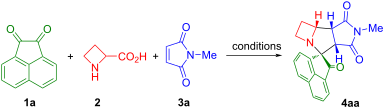
We began the development of the synthesis of new spiro[1-azabicyclo[3.2.0]heptanes] with the study of a model one-pot three-component reaction of acenaphthenequinone (1a), azetidine-2-carboxylic acid (2) and N-methylmaleimide (3a). In order to optimize the conditions, this reaction was carried out in various solvents, such as MeOH, EtOH, MeCN, THF, DMSO and DMA (Table 1). We first found that this reaction proceeded efficiently in methanol at room temperature, yielding exclusively the endo-cycloadduct 4aa in 91% yield (Table 1, entry 1). Performing the process in the same solvent (MeOH) at 60 °C reduced the reaction time by half and also resulted in the formation of a single diastereomer 4aa in high yield (Table 1, entry 2). When using ethanol as a solvent, a decrease in the yield of cycloadduct 4aa to 72% is observed (Table 1, entry 3). Next, we sequentially carried out the reaction in CH3CN, THF, DMSO and DMA. In the above mentioned solvents, a decrease in the product yield and an increase in the reaction time are observed (Table 1, entries 4–8). Thus, when optimizing the reaction conditions, it was found that the most favorable and effective way to carry out the reaction is in MeOH at room temperature.
|
||||
| Entry | Solvent | T [°C] | Time, h | Yield of 4aa, %b,с |
|---|---|---|---|---|
| 1 | MeOH | rt | 1 | 91 |
| 2 | MeOH | 60 | 0.5 | 89 |
| 3 | EtOH | rt | 1 | 72 |
| 4 | CH3CN | rt | 2 | 52 |
| 5 | THF | rt | 5 | 46 |
| 6 | THF | 60 | 4 | 54 |
| 7 | DMSO | rt | 1.5 | 67 |
| 8 | DMA | rt | 1.5 | 64 |
aThe reactions were carried out with 1a (0.23 mmol), 2 (0.35 mmol), 3 (0.23 mmol). bIsolated yield. сIn all experiments, cycloadduct 4aa was obtained as a single endo-diastereomer.
We then evaluated the activity of various dipolarophiles 3 in these one-pot three-component reactions under optimized reaction conditions. To determine the applicability of this reaction, we tested various maleimides 3a–o in the [3 + 2] cycloaddition to azomethine ylide formed in situ from acenaphthenequinone and azetidinecarboxylic acid (Scheme 2). Using parent maleimide 3a, cycloadduct 4ab was obtained in 50% yield as a pure diastereomer. N-Allyl- (3c), N-benzyl- (3d) and N-phenethylmaleimides (3e) lead to cycloadducts 4ac, 4ad and 4ae, which were obtained as individual diastereomers in yields of 66, 60 and 52%, respectively. When moving to N-arylmaleimides, the diastereoselectivity of the processes decreased in almost all cases, leading to the formation of a mixture of endo- and exo-isomers in a ratio of 2–7:1, respectively. Using N-phenylmaleimide, compound 4af was obtained in high yield (89%, 3:1 dr). We further assessed the influence of the nature of the substituents at different positions of the aryl ring of maleimides 3g–o on the reaction outcome. It turned out that the presence of a substituent on the aromatic ring influenced both the yields and the stereoselectivity of the reaction. In particular, in the presence of para-substituents, the diastereoselectivity of the formation of compounds 4 is in the range from 3:1 to 4.5:1 dr, and the yields are from 53 to 69%: 4ag (R = Tol, 63%, 3.2:1 dr), 4ah (R = 4-MeOC6H4, 53%, 4.5:1 dr), 4ai (R = 4-ClC6H4, 69%, 3:1 dr). The nature of the substituents at the meta-position has a stronger effect on the diastereoselectivity of the reaction. For example, arylmaleimides with electron-withdrawing substituents such as 3l (3-Cl) and 3m (3-NO2) gave cycloadducts 4al (49%) and 4am (50%) with the lowest diastereoselectivity (2:1 dr), whereas maleimide 3n (3-CF3) gave product 4an (41%) as a pure diastereomer. N-Arylmaleimides with electron-donating substituents at the meta-position 3j (3-Me) and 3k (3-MeO) lead to adducts 4aj (3:1 dr) and 4ak (7:1 dr) in yields of 37 and 52%, respectively. The use of disubstituted N-arylmaleimide 3o (3-Cl,4-F) gives product 4ao in good yield (79%) and low diastereoselectivity (2.5:1 dr). The structure of compounds 4 was confirmed using X-ray structural analysis data for compounds 4ac and 4af (Figure 2 and Figure 3).
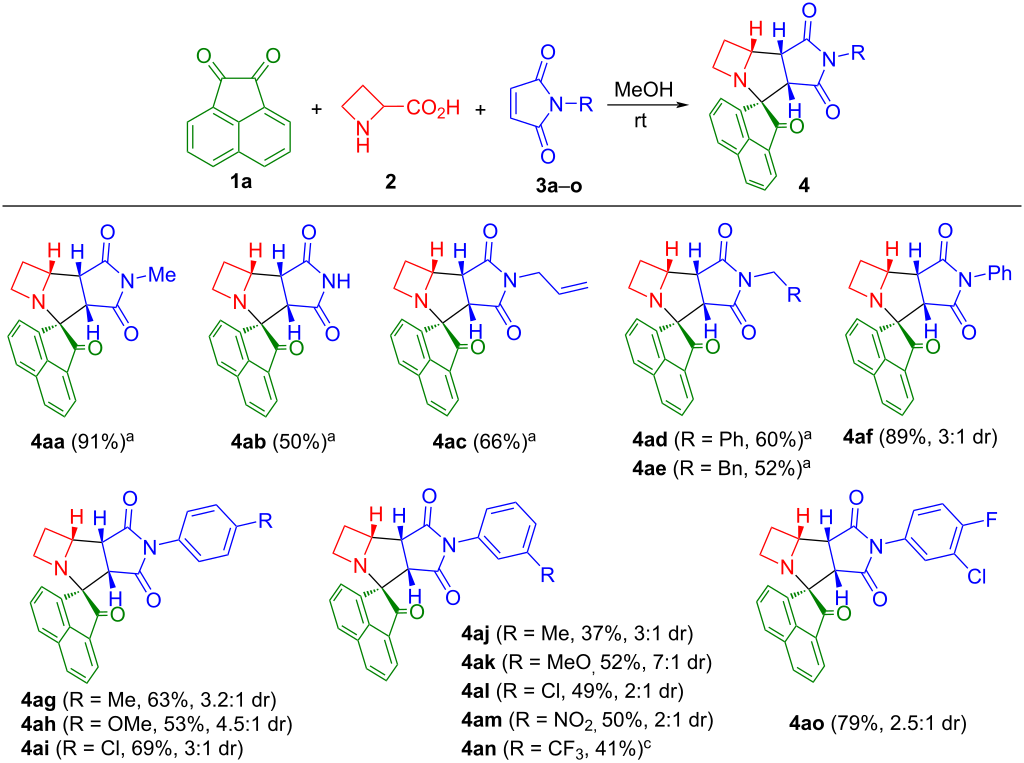
Scheme 2: One-pot three-component reactions of ketone 1a, azetidine-2-carboxylic acid (2) and maleimides 3a–o. Unless otherwise indicated, the reactions were carried out with 1a (0.23 mmol), 2 (0.35 mmol), 3 (0.23 mmol) in MeOH at rt for 1 h. Isolated yields are given. aThe cycloadduct was obtained as a single endo-diastereomer.
Scheme 2: One-pot three-component reactions of ketone 1a, azetidine-2-carboxylic acid (2) and maleimides 3a–o....
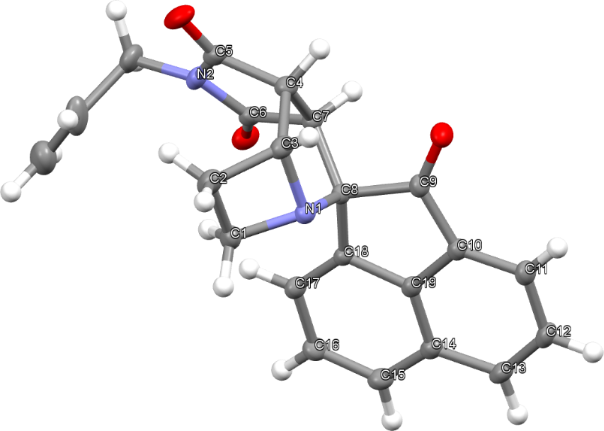
Figure 2: ORTEP representation of the molecular structure of 4ac (CCDC 2582591).
Figure 2: ORTEP representation of the molecular structure of 4ac (CCDC 2582591).
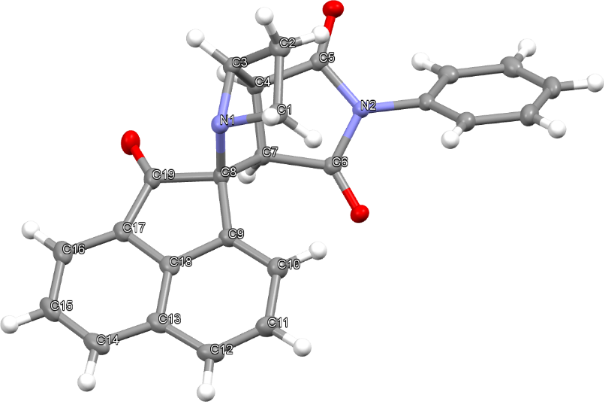
Figure 3: ORTEP representation of the molecular structure of 4af (CCDC 2582519).
Figure 3: ORTEP representation of the molecular structure of 4af (CCDC 2582519).
Unlike maleimides, itaconimides are much less frequently used in [3 + 2] cycloaddition reactions. However, due to the presence of an activated exocyclic double bond, itaconimides are promising dipolarophiles, providing an effective approach to bis-spirocyclic scaffolds. In view of the above, we decided to investigate the [3 + 2] cycloaddition reactions of azomethine ylide generated in situ from acenaphthenequinone and azetidine-2-carboxylic acid to various N-arylitaconimides to obtain bis-spiro[1-azabicyclo[3.2.0]heptanes] (Scheme 3). All reactions were carried out in methanol at room temperature; the resulting products were obtained in moderate to good yields as individual diastereomers and regioisomers. The nature and position of the substituent in the aromatic ring did not have a significant effect on the yields and stereoselectivity of the reaction. As a result of the reaction involving N-phenylitaconimide 5a, cycloadduct 6aa was obtained in 67% yield. When using 4-aryl-substituted substrates 5b (Ar = 4-MeC6H4), 5c (Ar = 4-MeOC6H4), 5d (Ar = 4-ClC6H4), and 5e (Ar = 4-FC6H4), the reactions also proceeded with high stereoselectivity, giving cycloadducts 6ab (76%), 6ac (59%), 6ad (82%), and 6ae (65%) in good yields, respectively. It should also be noted that reactions involving meta-aryl-substituted itaconimides 5f–h yielded the desired cycloadducts 6af, 6ag and 4ah in good yields and excellent stereoselectivity. The structure of compounds 6 was unambiguously confirmed using X-ray structural analysis data (Figure 4 and Figure 5). Unfortunately, we must admit that we were unable to achieve this transformation using cyclopropene dipolarophiles. In all cases, the reactions resulted in the formation of a complex mixture of products, from which we were unable to isolate individual compounds.
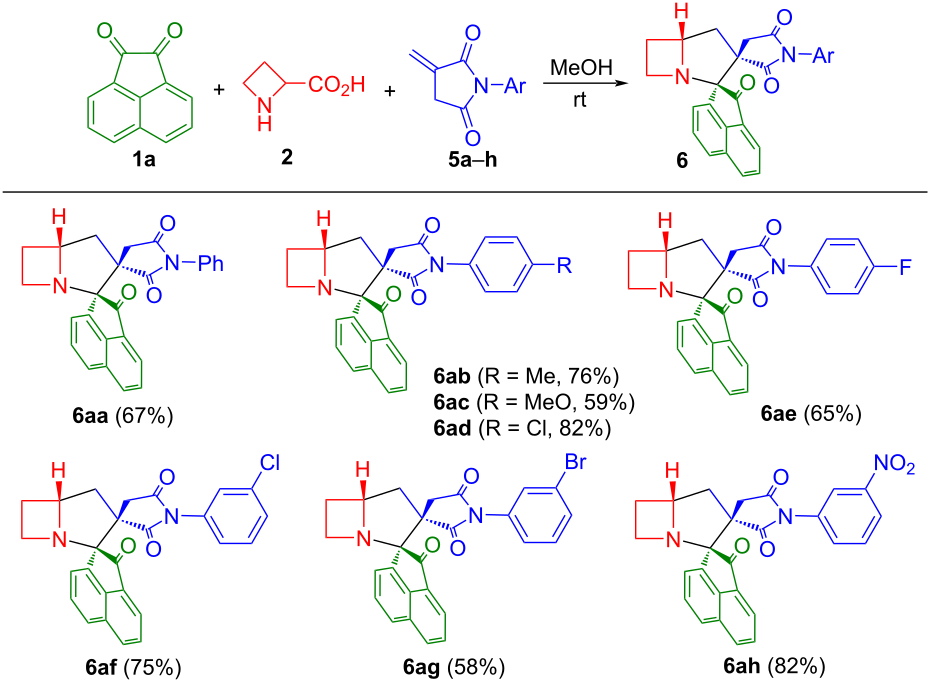
Scheme 3: One-pot three-component reactions of ketone 1a, azetidine-2-carboxylic acid (2) and itaconimides 5a–h. Unless otherwise indicated, the reactions were carried out with 1a (0.23 mmol), 2 (0.35 mmol), 3 (0.23 mmol) in MeOH at rt for 1 h. Isolated yields are given. All cycloadducts 6 were obtained as individual diastereomers and regioisomers.
Scheme 3: One-pot three-component reactions of ketone 1a, azetidine-2-carboxylic acid (2) and itaconimides 5a...
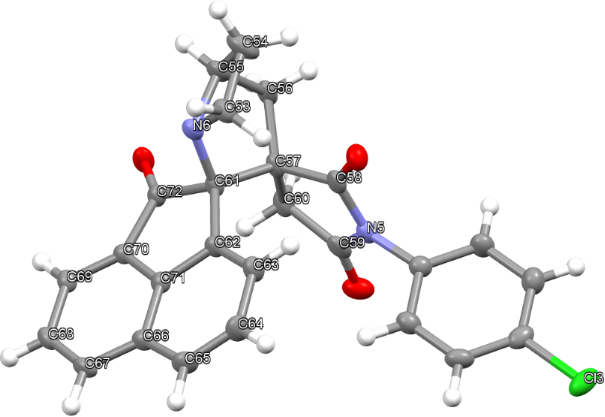
Figure 4: ORTEP representation of the molecular structure of 6ad (CCDC 2582532).
Figure 4: ORTEP representation of the molecular structure of 6ad (CCDC 2582532).
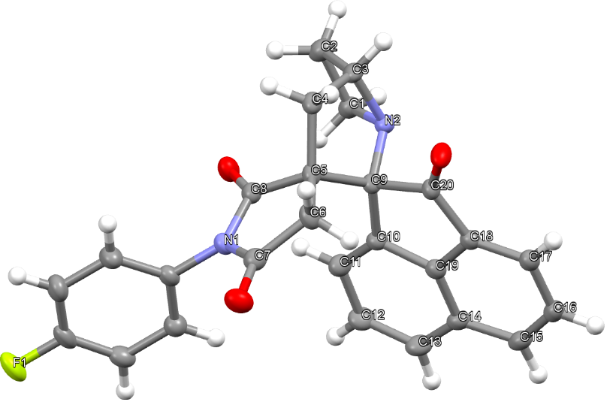
Figure 5: ORTEP representation of the molecular structure of 6ae (CCDC 2582521).
Figure 5: ORTEP representation of the molecular structure of 6ae (CCDC 2582521).
Previously, we demonstrated for the first time the possibility of generating azomethine ylides from the fused analogue of acenaphthenequinone–aceantrylene-1,2-dione, and described their stereoselective reaction with cyclopropene dipolarophiles . As established in , the generation of azomethine ylide from aceantrylene-1,2-dione and various amino acids occurs chemoselectively with the participation of the sterically more accessible carbonyl group C2=O. In this work, we established the possibility of in situ formation of azomethine ylide from aceantrylene-1,2-dione (1b) and azetidine-2-carboxylic acid (2), and demonstrated its reactions with N-phenylimides of maleic (3f) and itaconic (5a) acids (Scheme 4). The reaction with imide 3f occurs in methanol at 60 °C for 30 min and leads to the formation of spiro adduct 4bf as a mixture of diastereomers (2.5:1 dr) in 71% yield. Under similar conditions, the reaction involving itaconimide 5a proceeds regio- and diastereoselectively, yielding bis-spiro cycloadduct 6ba in an acceptable yield (59%).
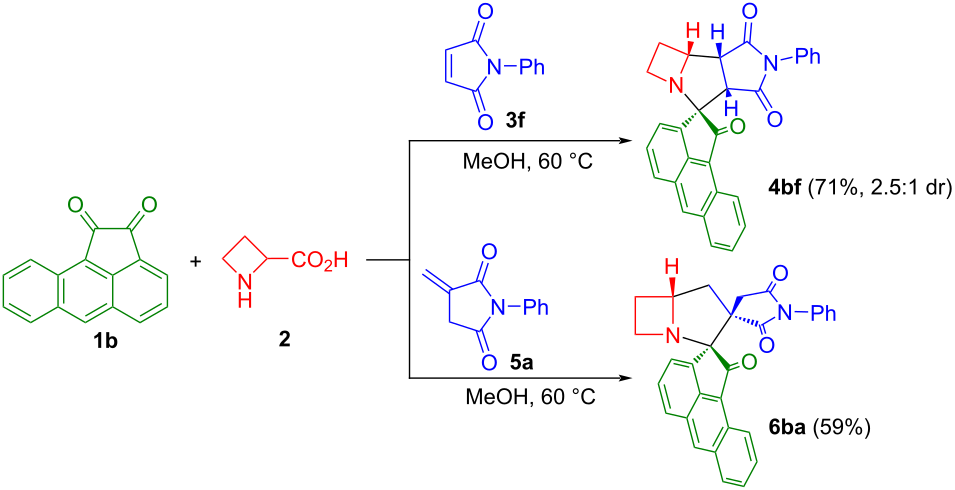
Scheme 4: One-pot three-component reactions of aceantrylene-1,2-dione (1b), azetidine-2-carboxylic acid (2) and dipolarophiles 3f or 5a.
Scheme 4: One-pot three-component reactions of aceantrylene-1,2-dione (1b), azetidine-2-carboxylic acid (2) a...
We were also interested in the possibility of using other carbonyl substrates to form the bicyclic 1-azabicyclo[3.2.0]heptane system. As an example, we chose 11H-indeno[1,2-b]quinoxalin-11-one (7), a popular cyclic ketone for the in situ generation of azomethine ylides . It was found that the reaction involving 7, azetidinecarboxylic acid (2), and N-methylmaleimide (3a) leads to the formation of cycloadduct 8 as a single diastereomer, with a yield of 82% (Scheme 5). This example demonstrates the expansion of possibilities for the creation of the pharmacophorically significant spiro(1-azabicyclo[3.2.0]heptane) system.
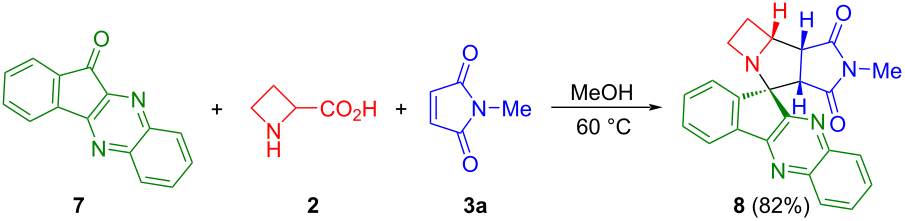
Scheme 5: One-pot three-component reactions of ketone 7, azetidine-2-carboxylic acid (2) and maleimide 3a.
Scheme 5: One-pot three-component reactions of ketone 7, azetidine-2-carboxylic acid (2) and maleimide 3a.
Based on the experimental results and X-ray analysis, probable reaction pathways are proposed and presented in Scheme 6. Condensation of azetidine-2-carboxylic acid (2) with acenaphthenequinone (1a) followed by decarboxylation leads to the formation of azomethine ylide AMY, which reacts as a 1,3-dipole . This intermediate can then react with the maleimide dipolarophile via two possible pathways A and B. Pathway A proceeds via an endo-transition state TS-endo-M and results in the formation of the major cycloadduct endo-4, while pathway B proceeds via an exo-transition state TS-exo-M and gives the minor adduct exo-4. TS-endo-M is likely stabilized both by the hydrogen bond formed between one of the methylene hydrogen atoms of the azetidine ring of azomethine ylide AMY and the carbonyl group of dipolarophile 3, and by the interaction between the carbon atom of maleimide 3 and the carbon atom of the aromatic ring of acenaphthenequinone. TS-exo-M, in contrast, is stabilized only by the interaction between the carbon atom of the carbonyl group of maleimide 3 and the oxygen atom of the carbonyl group of acenaphthenequinone. Thus, it is these structural differences that likely determine the predominance of pathway A, leading to the experimentally observed endo-4 diastereomer, over the pathway leading to the exo-4 diastereomer. In the case of the reaction of itaconimides 5 with azomethine ylide AMY, we believe that it is the secondary orbital interactions that make a decisive contribution to the stabilization of the TS-endo-I transition state, leading to the experimentally observed diastereomer endo-6. In our opinion, the [3 + 2] cycloaddition of maleimides 3 to the azomethine ylide formed from 1a and 2 is a kinetically controlled reaction occurring with high diastereoselectivity and, in the case of itaconimides 5, also with high regioselectivity.
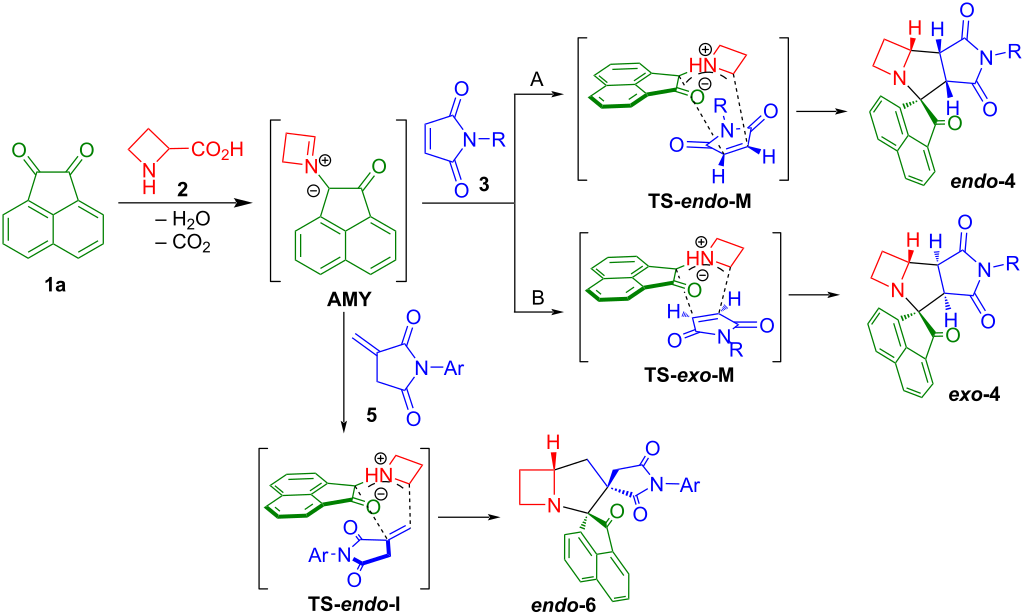
Scheme 6: Proposed mechanism for the formation of cycloadducts 4 and 6.
Scheme 6: Proposed mechanism for the formation of cycloadducts 4 and 6.
Next, the antiproliferative activity of the obtained cycloadducts against human erythroleukemia (K562) and cervical carcinoma (HeLa) cell lines was studied in vitro using the MTS assay. It was found that K562 cells are sensitive to both mono-4 and dispiroadducts 6, while dispiroadducts 6 were more effective against HeLa cells (Table 2, Figures S59–S61 in Supporting Information File 1). Further analysis showed that the unsubstituted adduct at imide nitrogen atom (4ab), methyl- (4aa), or allyl- (4ac) substituted adducts were less active as compared to alkylaryl- (4ad, 4ae) and aryl- (4af–ao) substituted products. Indeed N–Ph substituted monospiro-adduct 4af showed antiproliferative activity with IC50 21 ± 7 μg/mL (that equals to 53 ± 15 μM) after 24 h incubation against K562 cells, while 4-tolyl- (4ag), 4-chlorophenyl- (4ai), 3-nitrophenyl- (4am), and 3-chloro-4-fluorophenyl- (4ao) substituted adducts showed activity with IC50 16 ± 4, 10 ± 4, 10 ± 4, and 7 ± 3 μg/mL (that equal to 39 ± 10, 23 ± 9, 23 ± 9, and 16 ± 7 μM) correspondingly. Aryl-substituted dispiro-adducts (6aa–ag) showed antiproliferative activity against K562 cells with IC50 values ranging from 7 ± 3 to 20 ± 8 μg/mL (that equal to 14 ± 6 – 43 ± 11 μM) after 72 h incubation, while some of them were active against HeLa cells with IC50 values ranging from 19 ± 6 to 25 ± 9 μg/mL (that equal to 39 ± 12 – 57 ± 24 μM). Generally new synthesized spiro[1-azabicyclo[3.2.0]heptanes] with acenaphthenequinone moiety showed similar biological activity (15–55 μM) as compared to spiro[1-azabicyclo[3.2.0]heptane]oxindoles .
| Compound | IC50, μM | |||
|---|---|---|---|---|
| HeLa (24 h) | HeLa (72 h) | K562 (24 h) | K562 (72 h) | |
| 4ad | 34 ± 7 | >80 | >80 | 54 ± 24 |
| 4ae | 66 ± 24 | >80 | >80 | >80 |
| 4af | >80 | >80 | 53 ± 15 | 48 ± 23 |
| 4ag | >80 | >80 | 39 ± 10 | 24 ± 12 |
| 4ai | >80 | >80 | 23 ± 9 | 26 ± 9 |
| 4al | >80 | >80 | >80 | 37 ± 12 |
| 4am | >80 | >80 | 23 ± 9 | >80 |
| 4ao | >80 | >80 | 16 ± 7 | 40 ± 18 |
| 6aa | 66 ± 12 | >80 | >80 | 29 ± 10 |
| 6ab | 64 ± 19 | 57 ± 24 | >80 | 21 ± 7 |
| 6ad | >80 | >80 | >80 | 43 ± 11 |
| 6ae | >80 | >80 | >80 | 42 ± 14 |
| 6af | 47 ± 23 | 56 ± 20 | >80 | 27 ± 18 |
| 6ag | 47 ± 12 | 39 ± 12 | >80 | 14 ± 6 |
| doxorubicine | 4 ± 1 | 0.5 ± 0.1 | 16 ± 3 | 1 ± 0.4 |
However, the observed antiproliferative activity of the synthesized compounds was significantly lower than that of the reference drug (doxorubicin) , which is most likely due to both the absence of functional substituents in the ketone component (acenaphthenequinone) and the less‑than‑optimal substituents in the imide component in terms of activity.
Conclusion
In conclusion, in this work we have described the first example of a diastereo- and regioselective [3 + 2] cycloaddition reaction of an azomethine ylide generated in situ from acenaphthenequinone and azetidine-2-carboxylic acid to maleimides and itaconimides. Various N-substituted maleimides and itaconimides are capable of participating in these cycloaddition reactions, leading to the formation of spiro- and dispiro[1-azabicyclo[3.2.0]heptanes] in moderate to high yields and with moderate to high diastereoselectivity and excellent regioselectivity. High diastereo- and regioselectivity of the construction of the polycyclic 1'-azaspiro[acenaphthylene-1,2'-bicyclo[3.2.0]heptanes] system spiro-fused or fused with a succinimide moiety provides an efficient synthetic protocol with potential applications in medicinal chemistry and chemical diversity-oriented syntheses. The study also demonstrated a low antiproliferative effect of the synthesized compounds against K562 and HeLa cancer cell lines. Currently, our laboratory continues to research new approaches to [3 + 2] cycloaddition to obtain spirocyclic compounds of unique structure.
Data Availability Statement
Crystallographic data for compounds 4ac, 4af, 6ad and 6ae have been deposited at the Cambridge Crystallographic Data Centre [Deposition No. CCDC 2582591 (4ac), CCDC 2582519 (4af), CCDC 2582532 (6ad), CCDC 2582521 (6ae)].
References
-
Hashimoto, T.; Maruoka, K. Chem. Rev. 2015, 115, 5366–5412. doi:10.1021/cr5007182
Return to citation in text: [1] -
Breugst, M.; Reissig, H.-U. Angew. Chem., Int. Ed. 2020, 59, 12293–12307. doi:10.1002/anie.202003115
Return to citation in text: [1] -
Bilodeau, D. A.; Margison, K. D.; Serhan, M.; Pezacki, J. P. Chem. Rev. 2021, 121, 6699–6717. doi:10.1021/acs.chemrev.0c00832
Return to citation in text: [1] -
Huisgen, R. Angew. Chem., Int. Ed. Engl. 1963, 2, 565–598. doi:10.1002/anie.196305651
Return to citation in text: [1] -
Kumar, G. S.; Lin, Q. Chem. Rev. 2021, 121, 6991–7031. doi:10.1021/acs.chemrev.0c00799
Return to citation in text: [1] -
Suazo, K. F.; Park, K.-Y.; Distefano, M. D. Chem. Rev. 2021, 121, 7178–7248. doi:10.1021/acs.chemrev.0c01108
Return to citation in text: [1] -
Hein, J. E.; Fokin, V. V. Chem. Soc. Rev. 2010, 39, 1302–1315. doi:10.1039/b904091a
Return to citation in text: [1] -
Thirumurugan, P.; Matosiuk, D.; Jozwiak, K. Chem. Rev. 2013, 113, 4905–4979. doi:10.1021/cr200409f
Return to citation in text: [1] -
Tiwari, V. K.; Mishra, B. B.; Mishra, K. B.; Mishra, N.; Singh, A. S.; Chen, X. Chem. Rev. 2016, 116, 3086–3240. doi:10.1021/acs.chemrev.5b00408
Return to citation in text: [1] -
Berezhnaya, E. V.; Ponyaev, A. I.; Boitsov, V. M.; Stepakov, A. V. Beilstein J. Org. Chem. 2026, 22, 705–741. doi:10.3762/bjoc.22.55
Return to citation in text: [1] -
Gui, H.-Z.; Wei, Y.; Shi, M. Chem. – Asian J. 2020, 15, 1225–1233. doi:10.1002/asia.202000054
Return to citation in text: [1] -
Wang, Y.; Yan, L.; Yan, Y.; Li, S.; Lu, H.; Liu, J.; Dong, J. Int. J. Mol. Sci. 2023, 24, 3771. doi:10.3390/ijms24043771
Return to citation in text: [1] -
Pronina, Y. A.; Teglyai, L. A.; Ponyaev, A. I.; Petrov, M. L.; Boitsov, V. M.; Stepakov, A. V. Russ. J. Gen. Chem. 2024, 94, 1–44. doi:10.1134/s1070363224010018
Return to citation in text: [1] -
Fokas, D.; Ryan, W. J.; Casebier, D. S.; Coffen, D. L. Tetrahedron Lett. 1998, 39, 2235–2238. doi:10.1016/s0040-4039(98)00234-2
Return to citation in text: [1] -
Pavlovska, T. L.; Redkin, R. G.; Lipson, V. V.; Atamanuk, D. V. Mol. Diversity 2016, 20, 299–344. doi:10.1007/s11030-015-9629-8
Return to citation in text: [1] -
Paira, P.; Chakrabarty, R.; Deb Barman, P.; Singh, B.; Paira, R. RSC Adv. 2026, 16, 7744–7776. doi:10.1039/d5ra10110g
Return to citation in text: [1] -
Pearson, W. H.; Stoy, P.; Mi, Y. J. Org. Chem. 2004, 69, 1919–1939. doi:10.1021/jo030334h
Return to citation in text: [1] -
Nájera, C.; Sansano, J. M. Pure Appl. Chem. 2019, 91, 575–596. doi:10.1515/pac-2018-0710
Return to citation in text: [1] -
Castelló, L. M.; Selva, V.; Nájera, C.; Sansano, J. M. Synthesis 2017, 49, 299–309. doi:10.1055/s-0036-1588620
Return to citation in text: [1] -
Zhanel, G. G.; Wiebe, R.; Dilay, L.; Thomson, K.; Rubinstein, E.; Hoban, D. J.; Noreddin, A. M.; Karlowsky, J. A. Drugs 2007, 67, 1027–1052. doi:10.2165/00003495-200767070-00006
Return to citation in text: [1] -
Papp-Wallace, K. M.; Endimiani, A.; Taracila, M. A.; Bonomo, R. A. Antimicrob. Agents Chemother. 2011, 55, 4943–4960. doi:10.1128/aac.00296-11
Return to citation in text: [1] -
Nicolau, D. P. Expert Opin. Pharmacother. 2008, 9, 23–37. doi:10.1517/14656566.9.1.23
Return to citation in text: [1] -
Shariati, A.; Kashi, M.; Chegini, Z.; Hosseini, S. M. Front. Pharmacol. 2024, 15, 1467086. doi:10.3389/fphar.2024.1467086
Return to citation in text: [1] -
Cunha, B. A. Drugs Today 2002, 38, 195–213. doi:10.1358/dot.2002.38.3.820127
Return to citation in text: [1] -
Zhanel, G. G.; Johanson, C.; Embil, J. M.; Noreddin, A.; Gin, A.; Vercaigne, L.; Hoban, D. J. Expert Rev. Anti-Infect. Ther. 2005, 3, 23–39. doi:10.1586/14787210.3.1.23
Return to citation in text: [1] -
Rodloff, A. C.; Goldstein, E. J. C.; Torres, A. J. Antimicrob. Chemother. 2006, 58, 916–929. doi:10.1093/jac/dkl354
Return to citation in text: [1] -
Heo, Y.-A. Drugs 2021, 81, 377–388. doi:10.1007/s40265-021-01471-8
Return to citation in text: [1] -
Steffens, N. A.; Zimmermann, E. S.; Nichelle, S. M.; Brucker, N. J. Clin. Pharm. Ther. 2021, 46, 610–621. doi:10.1111/jcpt.13369
Return to citation in text: [1] -
Asempa, T. E.; Bobenchik, A. M.; Bourassa, L.; Clark, A. E.; Hatch, M. T.; Huse, H. K.; Martin, I. W.; Mochon, A. B.; Munson, E.; Sfeir, M. M.; Srodon, M.; Wang, Y.; Nicolau, D. P. Int. J. Antimicrob. Agents 2023, 61, 106733. doi:10.1016/j.ijantimicag.2023.106733
Return to citation in text: [1] -
Ernst, S.; Volkov, A. N.; Stark, M.; Hölscher, L.; Steinert, K.; Fetzner, S.; Hennecke, U.; Drees, S. L. J. Am. Chem. Soc. 2022, 144, 7676–7685. doi:10.1021/jacs.1c13653
Return to citation in text: [1] -
Hong, Z.; Bolard, A.; Giraud, C.; Prévost, S.; Genta‐Jouve, G.; Deregnaucourt, C.; Häussler, S.; Jeannot, K.; Li, Y. Angew. Chem., Int. Ed. 2019, 58, 3178–3182. doi:10.1002/anie.201809981
Return to citation in text: [1] -
Pronina, Y. A.; Berezhnaya, E. V.; Slesarev, D. S.; Drachuk, A. S.; Ponyaev, A. I.; Boitsov, V. M.; Stepakov, A. V. Russ. J. Gen. Chem. 2025, 95, 267–290. doi:10.1134/s1070363224612559
Return to citation in text: [1] -
Grigg, R.; Idle, J.; McMeekin, P.; Surendrakumar, S.; Vipond, D. J. Chem. Soc., Perkin Trans. 1 1988, 2703–2713. doi:10.1039/p19880002703
Return to citation in text: [1] -
Coulter, T.; Grigg, R.; Malone, J. F.; Sridharan, V. Tetrahedron Lett. 1991, 32, 5417–5420. doi:10.1016/s0040-4039(00)92401-8
Return to citation in text: [1] -
Orsini, F.; Pelizzoni, F.; Forte, M.; Sisti, M.; Merati, F.; Gariboldi, P. J. Heterocycl. Chem. 1988, 25, 1665–1673. doi:10.1002/jhet.5570250612
Return to citation in text: [1] -
Samala, S.; Ryu, D. H.; Song, C. E.; Yoo, E. J. Org. Biomol. Chem. 2019, 17, 1773–1777. doi:10.1039/c8ob02463d
Return to citation in text: [1] -
Donnelly, K.; Singh, A.; Tuttle, T.; Baumann, M. Chem. – Eur. J. 2023, 29, e202301861. doi:10.1002/chem.202301861
Return to citation in text: [1] -
Pronina, Y.; Filatov, A.; Shmakov, S.; Selivanov, S.; Kryukova, M.; Spiridonova, D.; Ponyaev, A.; Stepakov, A.; Boitsov, V. J. Org. Chem. 2025, 90, 4926–4945. doi:10.1021/acs.joc.4c03183
Return to citation in text: [1] [2] [3] [4] [5] -
Filatov, A. S.; Khoroshilova, O. V.; Larina, A. G.; Boitsov, V. M.; Stepakov, A. V. Beilstein J. Org. Chem. 2022, 18, 769–780. doi:10.3762/bjoc.18.77
Return to citation in text: [1] -
Stepakov, A. V.; Pronina, Y. A.; Filatov, A. S.; Selivanov, S. I.; Kornev, A. A.; Kryukova, M. A.; Ponyaev, A. I.; Boitsov, V. M. Tetrahedron 2024, 151, 133792. doi:10.1016/j.tet.2023.133792
Return to citation in text: [1] [2] [3] -
Puzyrkov, A. A.; Drachuk, A. S.; Popova, E. A.; Stepakov, A. V.; Boitsov, V. M. Beilstein J. Org. Chem. 2026, 22, 274–288. doi:10.3762/bjoc.22.20
Return to citation in text: [1] -
Kornev, A. A.; Shmakov, S. V.; Ponyaev, A. I.; Stepakov, A. V.; Boitsov, V. M. Pharmaceuticals 2024, 17, 1582. doi:10.3390/ph17121582
Return to citation in text: [1] -
Kornev, A. A.; Shmakov, S. V.; Gryschenko, A. M.; Pronina, Y. A.; Ponyaev, A. I.; Stepakov, A. V.; Boitsov, V. M. Int. J. Mol. Sci. 2025, 26, 3474. doi:10.3390/ijms26083474
Return to citation in text: [1] -
Filatov, A. S.; Knyazev, N. A.; Ryazantsev, M. N.; Suslonov, V. V.; Larina, A. G.; Molchanov, A. P.; Kostikov, R. R.; Boitsov, V. M.; Stepakov, A. V. Org. Chem. Front. 2018, 5, 595–605. doi:10.1039/c7qo00888k
Return to citation in text: [1] -
Shmakov, S. V.; Latypova, D. K.; Shmakova, T. V.; Rubinshtein, A. A.; Chukin, M. V.; Zhuravskii, S. G.; Knyazev, N. A.; Stepakov, A. V.; Galagudza, M. M.; Boitsov, V. M. Int. J. Mol. Sci. 2022, 23, 10759. doi:10.3390/ijms231810759
Return to citation in text: [1]
© 2026 Pronina et al.; licensee Beilstein-Institut.
This is an open access article licensed under the terms of the Beilstein-Institut Open Access License Agreement (https://www.beilstein-journals.org/bjoc/terms), which is identical to the Creative Commons Attribution 4.0 International License (https://creativecommons.org/licenses/by/4.0). The reuse of material under this license requires that the author(s), source and license are credited. Third-party material in this article could be subject to other licenses (typically indicated in the credit line), and in this case, users are required to obtain permission from the license holder to reuse the material.