Search results
Search for "π–π-interactions" in Full Text gives 134 result(s) in Beilstein Journal of Organic Chemistry.
Synthesis of heterocycles based on azomethine ylides from α-amino acids (or amines) and carbonyl compounds
Beilstein J. Org. Chem. 2026, 22, 705–741, doi:10.3762/bjoc.22.55
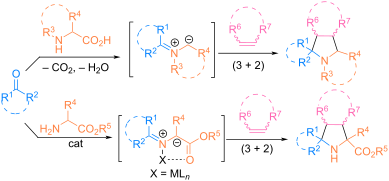
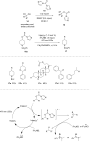
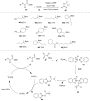
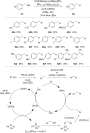
- constraints and π–π interactions occurring in transition state E between the aromatic rings of the enone and iminoester substrates. It has been also demonstrated that in this particular (3 + 2) cycloaddition reaction ligand L9 acts as a pseudo-bidentate ligand. The formation of the enone Cu−O bond and the


Electrosynthetic access to unsymmetrical oxaza[8]helicenes with high chiral stability and strong circularly polarized luminescence (CPL)
Beilstein J. Org. Chem. 2026, 22, 372–382, doi:10.3762/bjoc.22.25
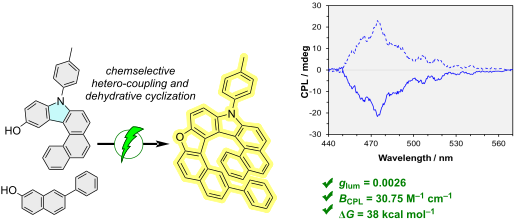
- hydrocarbons (PAHs) built from angularly annulated rings – occupy a distinctive niche because their non-planar, screw-shaped architectures generate inherent, configurational chirality [3][4][5]. This helicity originates from intramolecular steric congestion and stabilizing π–π interactions between terminal




Configuration–packing synergy enabling integrated crystalline-state RTP and amorphous-state TADF
Beilstein J. Org. Chem. 2026, 22, 224–236, doi:10.3762/bjoc.22.16
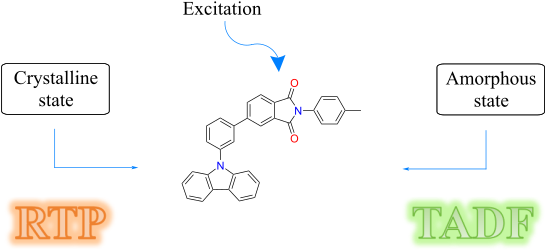
- , an in-depth analysis was conducted on both the molecular structure and the packing arrangement in single crystals of 1. As depicted in Figure 6a, the crystal structure of 1 reveals the presence of significant π–π interactions between adjacent molecules. These interactions are crucial for stabilizing
- the excitons within the crystal, thus facilitating the generation of room-temperature phosphorescence. The presence of these intermolecular π–π interactions enhances the efficiency of phosphorescence by providing a stable environment for the triplet excitons, which are otherwise prone to non-radiative
- temperature, the emission wavelength observed for 1 is red-shifted compared to that of single-molecule phosphorescence. This red shift is indicative of the influence of intermolecular π–π interactions, which stabilize the triplet excitons and shift the emission to lower energies. The molecular packing


Screwing the helical chirality through terminal peri-functionalization
Beilstein J. Org. Chem. 2026, 22, 205–212, doi:10.3762/bjoc.22.14
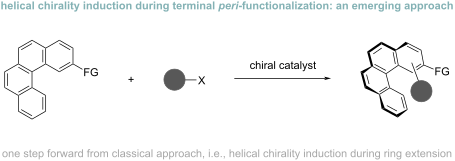
- asymmetric synthesis, where they serve as chiral ligands and organocatalysts, delivering high enantioselectivities [17][18]. Their tunable HOMO–LUMO gaps and controlled π–π interactions, is key to the use of helicenes in molecular electronics and organic semiconductors as well. Helicenes function as active


The intramolecular stabilizing effects of O-benzoyl substituents as a driving force of the acid-promoted pyranoside-into-furanoside rearrangement
Beilstein J. Org. Chem. 2025, 21, 2456–2464, doi:10.3762/bjoc.21.187
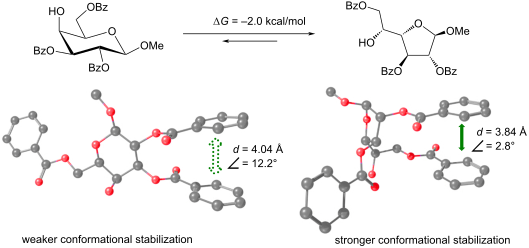
- furanoside forms exhibit π–π interactions between the phenyl rings of some benzoate substituents. These are benzoates at O2 and O3 in the pyranoside and benzoates at O2 and O6 in the furanoside. Obviously the orientation of the C5–C6 in the furanoside greatly influences the possibility of such an interaction
- given in Table 1. Looking at the obtained conformations (Figure 5B), one can find that the same π–π interactions are present in the α-galactoside structures as in their β-isomers. However, there is a possibility of another interaction. This is the repulsion between the cis-oriented O-1 and O-2 atoms in
- rings. The internal C–C–C angles in them differ leading to more freedom for the side substituents in furanosides. This, in our opinion, means that the π–π interactions between the phenyl rings must increase in this case. However, a repulsive interaction that occurs between O-1 and O-2 oxygen atoms in




Insoluble methylene-bridged glycoluril dimers as sequestrants for dyes
Beilstein J. Org. Chem. 2025, 21, 2302–2314, doi:10.3762/bjoc.21.176
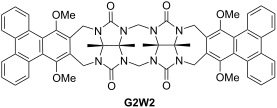
- molecules of molecules of G2W3 of opposite helicity pack in the crystal by π–π interactions (Figure 5b) between the external faces of one of the naphthalene sidewalls as seen frequently for glycoluril-derived molecular clips [49]. The distance between the mean planes of these offset stacked naphthalene
- rings is 3.4562 Å. The other naphthalene sidewall does not engage in π–π interactions and instead interacts with the convex face of a glycoluril unit on a separate dimeric unit of G2W3. The self-filling of the cavity of G2W3 with its OCH3 substituents – which is not possible for H2 with its OH and CH3
- triphenylene ring system closest to the glycoluril dimer backbone. Both the inwardly turned OCH3 group which partially fills its own cavity and the distinctly non-planar triphenylene sidewalls which disrupt π–π interactions with guests allow us to rationalize the relatively poor abilities of G2W1 as a solid




Pathway economy in cyclization of 1,n-enynes
Beilstein J. Org. Chem. 2025, 21, 2260–2282, doi:10.3762/bjoc.21.173
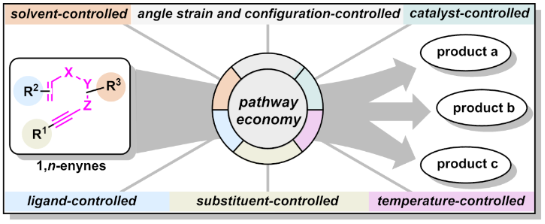
- assembled the pentacyclic spiroindole framework 61 (Scheme 13, path b). The controllability of this cyclization process arose from the steric and electronic effects of the aryl group, where the π–π interactions and rigid structure of the aryl group facilitated the stabilization of the five-membered spiro


Reactions of acryl thioamides with iminoiodinanes as a one-step synthesis of N-sulfonyl-2,3-dihydro-1,2-thiazoles
Beilstein J. Org. Chem. 2025, 21, 1397–1403, doi:10.3762/bjoc.21.104
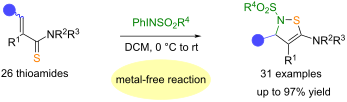
- data, compound 3aa crystallizes in the centrosymmetric spatial group of the monoclinic system. The molecule has a tweezer-like conformation due to π–π interactions between the electron-donating tolyl and the electron-acceptor fragment NC‒C=C‒S. The heterocyclic fragment in the molecule is non-planar



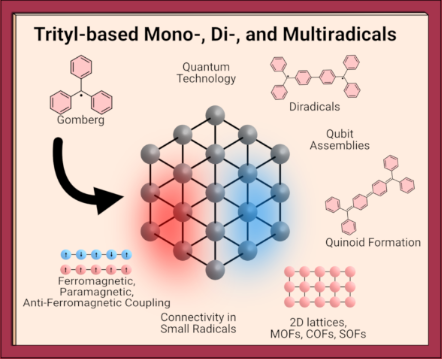
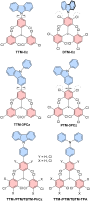
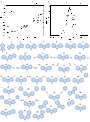
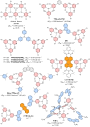
On the photoluminescence in triarylmethyl-centered mono-, di-, and multiradicals
Beilstein J. Org. Chem. 2025, 21, 964–998, doi:10.3762/bjoc.21.80









Recent advances in controllable/divergent synthesis
Beilstein J. Org. Chem. 2025, 21, 890–914, doi:10.3762/bjoc.21.73

- Friedel–Crafts-type addition and protonation to complete ortho-position cyclization. In contrast, para-position cyclization was exclusively achieved through π–π interactions between the electron-rich X-phos ligand and the substrate, compensating for the electron-deficient nature of the aromatic system and




Orthogonal photoswitching of heterobivalent azobenzene glycoclusters: the effect of glycoligand orientation in bacterial adhesion
Beilstein J. Org. Chem. 2025, 21, 736–748, doi:10.3762/bjoc.21.57
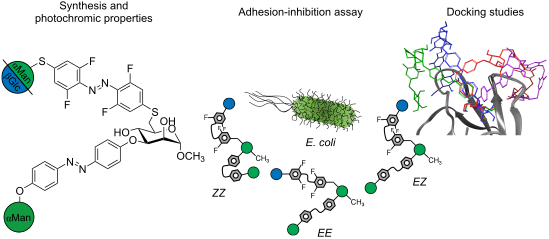
- controlled (cf. Supporting Information File 1, Figures S13–S16). The testing results are illustrated in Figure 3. All photoswitches comprising an α-ᴅ-mannopyranose ligand bound to an azobenzene unit (1, 2, 4, and 5) show a stronger inhibitory potency than MeMan. This can be explained by, i.a., π–π
- -interactions of the aromatic azobenzene portion with the so-called tyrosine gate at the entrance of the FimH carbohydrate binding domain constituted by Tyr48 and Tyr137 [44]. In case of the glycoazobenzene antennas 6αMan 4 and 3αMan 5, it is apparent that the inhibitory potency of the individual glycoconjugate


Acyclic cucurbit[n]uril bearing alkyl sulfate ionic groups
Beilstein J. Org. Chem. 2025, 21, 717–726, doi:10.3762/bjoc.21.55
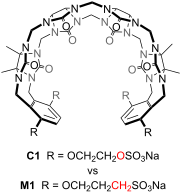
- , two aromatic o-xylylene walls, and four sulfonates as solubilizing ionic groups. In accord with these structural features, M1 binds a variety of hydrophobic and cationic guest molecules by the hydrophobic effect, π–π interactions, and electrostatic (ion–dipole and ion–ion) interactions. Although




Binding of tryptophan and tryptophan-containing peptides in water by a glucose naphtho crown ether
Beilstein J. Org. Chem. 2025, 21, 541–546, doi:10.3762/bjoc.21.42
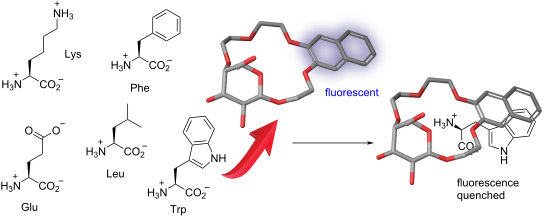
- Information File 1). These observations suggest that receptor 1 binds selectively to the Trp residues in the studied tripeptides and the binding occurs predominantly through π–π interactions. This conclusion is supported by the considerably lower affinity of 1 to peptide 8, lacking a Trp residue, and by the


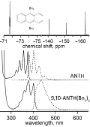
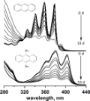
Deep-blue emitting 9,10-bis(perfluorobenzyl)anthracene
Beilstein J. Org. Chem. 2025, 21, 515–525, doi:10.3762/bjoc.21.39
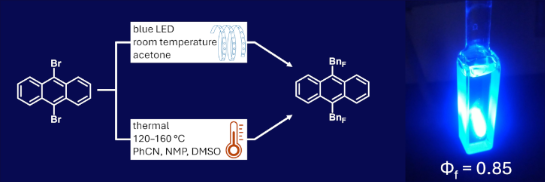
- , the size and conformational flexibility of the five BnF groups resulted in significant disruption of CORA–CORA π–π interactions due to the greater CORA–CORA bowl-to-bowl distances relative to the less bulky C5-CORA(CF3)5 analogue [18][19]. However, corannulene derivatives are only weakly fluorescent





Advances in the use of metal-free tetrapyrrolic macrocycles as catalysts
Beilstein J. Org. Chem. 2024, 20, 3085–3112, doi:10.3762/bjoc.20.257
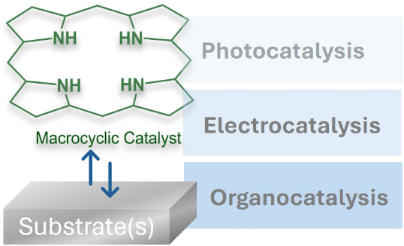
- secondary amine 57. They have hypothesized that the organocatalytic activity of the aggregates is based on two types of interactions, i.e., electrostatic interactions of α,β-unsaturated iminium cations derived from cinnamaldehyde and the cyclic secondary amine with anionic sulfonate groups and π–π
- interactions between phenyl groups and cyclopentadiene. Due to the presence of both types of moieties on the aggregate surface, the two reacting species can get into proximity and form the desired product (Figure 10b). Later, an analogous system was used for catalysis of an asymmetrical Diels–Alder reaction


The charge transport properties of dicyanomethylene-functionalised violanthrone derivatives
Beilstein J. Org. Chem. 2024, 20, 2921–2930, doi:10.3762/bjoc.20.244
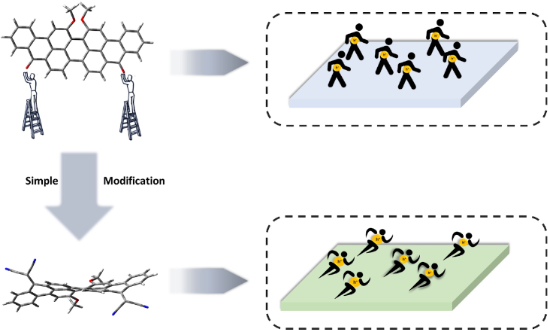
- ][16][17], high electron affinity, excellent self-assembling properties [18][19][20], and thermal and photochemical stabilities [21]. The excellent charge carrier mobility of PDIs has been explained by the intermolecular π–π interactions with an interplanar distance (3.3–3.5 Å) [22][23][24][25] that
- ) exhibit the strongest π–π interactions since the distance between two adjacent molecules is shorter and less steric repulsion is observed. This was reflected by the highest hole mobility of the derivatives with n-hexyl chains (3.15 × 10⁻⁴ cm2 V−1 s−1), compared to derivatives with n-octyl chains (1.76
- × 10−4 cm2 V−1 s−1) and 2-ethylhexyl chains (4.93 × 10⁻⁵ cm2 V−1 s−1). The stronger π–π interactions led to a higher power conversion efficiency (PCE) as a result of the higher short-circuit current density (Jsc), due to films with higher crystallinity providing a smoother pathway to charge carriers to


C–C Coupling in sterically demanding porphyrin environments
Beilstein J. Org. Chem. 2024, 20, 2784–2798, doi:10.3762/bjoc.20.234
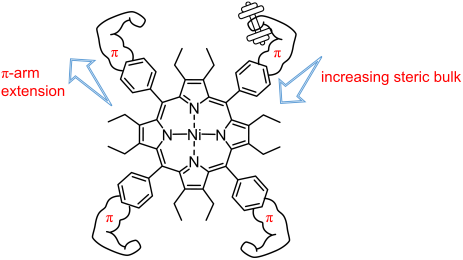
- porphyrins Nonplanar porphyrins are known to form supramolecular assemblies [6], either through hydrogen-bonding networks or through π–π interactions. Examples of this can be seen in the trapping of Keggin-type heteropolyoxometalate (POM) through nonplanar Mo(V)–porphyrin complexes [58], or porphyrin
- nanotubes/nanochannels by intermolecular π–π interactions of the peripheral phenyl groups [59]. Additionally nonplanar supramolecular assemblies have found use in anion capture [12][15], and sensing [60], making the synthesis of these structures desirable from a supramolecular standpoint. Two especially


Interaction of a pyrene derivative with cationic [60]fullerene in phospholipid membranes and its effects on photodynamic actions
Beilstein J. Org. Chem. 2024, 20, 2732–2738, doi:10.3762/bjoc.20.231

- present study for controlling both the location and photodynamic actions of a cationic derivative of C60 (catC60), a simple model compound of the triad molecules, in a membrane via π–π interactions with 1-pyrenebutyric acid (PyBA). (d–f) Chemical structures of 1,2-dimyristoyl-sn-glycero-3-phosphocholine


Synthesis, electrochemical properties, and antioxidant activity of sterically hindered catechols with 1,3,4-oxadiazole, 1,2,4-triazole, thiazole or pyridine fragments
Beilstein J. Org. Chem. 2024, 20, 2378–2391, doi:10.3762/bjoc.20.202
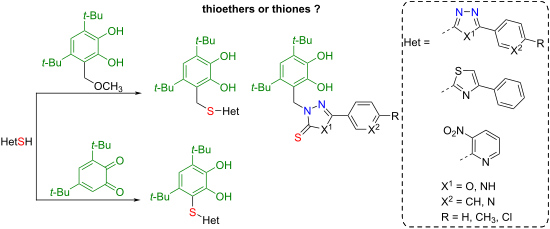
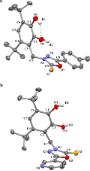
- –N1 is 160°/164°, here and further, two data sets are given, taking into account the pyridine cycle disorder). In the crystal of 5, two molecules form pairs due to the π–π interactions between pyridine cycles (the Cg···Cg distance between centroids is 3.855(4) and 3.891(4) Å; the angle between the
- -bonds and π–π interactions are shown as dotted lines). The interactions in pair of independent molecules A and B of 6 in crystal 6·0.5CH3CN (the H-bonds are shown as dotted lines). Fragment of the pack of catechol 8 in crystal (the H-bonds and π–π interactions are shown as dotted lines). The CV curve of




Asymmetric organocatalytic synthesis of chiral homoallylic amines
Beilstein J. Org. Chem. 2024, 20, 2349–2377, doi:10.3762/bjoc.20.201
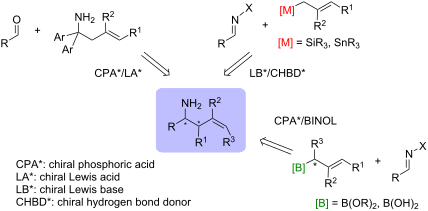
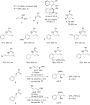
- give the desired product 99 after 72 h returning hemiaminal (Scheme 21). Alkyl acetals, such as cyclohexyl carboxaldehyde acetal reacted sluggishly with low yield and selectivity (<10% yield, 43–50% ee), possibly due to their inability to participate in π–π interactions. In general, the π-stacking






Catalysing (organo-)catalysis: Trends in the application of machine learning to enantioselective organocatalysis
Beilstein J. Org. Chem. 2024, 20, 2280–2304, doi:10.3762/bjoc.20.196

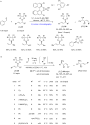
- physical organic chemistry with data-driven analysis techniques, in particular MLR, to gain a greater understanding of the enantioselectivity-determining steps for a C–N coupling catalysed by CPA derivatives (Figure 15A) [143]. Based on their findings that π–π interactions between the catalyst’s triazole


The Groebke–Blackburn–Bienaymé reaction in its maturity: innovation and improvements since its 21st birthday (2019–2023)
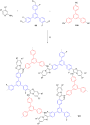
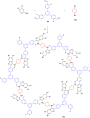
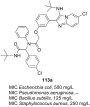
Beilstein J. Org. Chem. 2024, 20, 1839–1879, doi:10.3762/bjoc.20.162






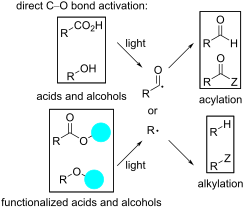
Generation of alkyl and acyl radicals by visible-light photoredox catalysis: direct activation of C–O bonds in organic transformations
Beilstein J. Org. Chem. 2024, 20, 1348–1375, doi:10.3762/bjoc.20.119
- electron density, which facilitates a π–π interactions with the aryl iodide system and ultimately results in the production of an electron donor–acceptor (EDA) complex 21. Photoexcitation of this EDA complex furnishes an aryl iodide radical anion and a radical cation complex 22. Then, the elimination of








Diameter-selective extraction of single-walled carbon nanotubes by interlocking with Cu-tethered square nanobrackets
Beilstein J. Org. Chem. 2024, 20, 1298–1307, doi:10.3762/bjoc.20.113
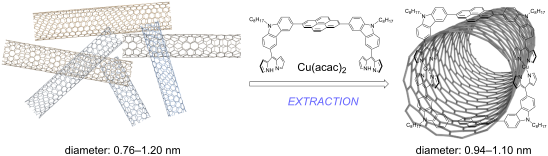
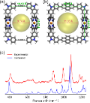
- suggest π–π interactions in the latter complex. Their difference in Ebind shown in Figure 6a can be interpreted by that in these interactions. In addition, their difference in conformational flexibility supports the wider favorable diameter range of 1b than 1a. Conclusion A cyclic host molecule (Cu




Structure–property relationships in dicyanopyrazinoquinoxalines and their hydrogen-bonding-capable dihydropyrazinoquinoxalinedione derivatives
Beilstein J. Org. Chem. 2024, 20, 1037–1052, doi:10.3762/bjoc.20.92
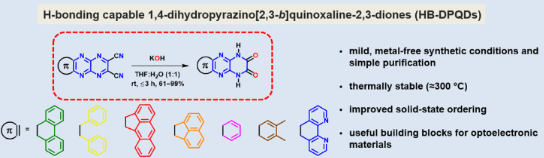
- perylenebisimide (PBI) components connected laterally through H-bonding and self-assembled orthogonally through π–π interactions [13]. Mixtures of PBI and OPV successfully exhibited ambipolar charge transport depending on processing conditions as a result of the co-assembled morphology. Our group utilized a