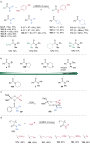
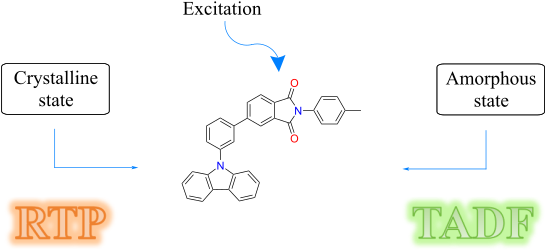
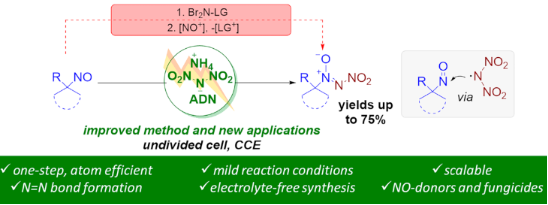
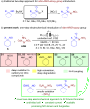
Search for "anode" in Full Text gives 100 result(s) in Beilstein Journal of Organic Chemistry.
Beilstein J. Org. Chem. 2025, 21, 2173–2201, doi:10.3762/bjoc.21.166
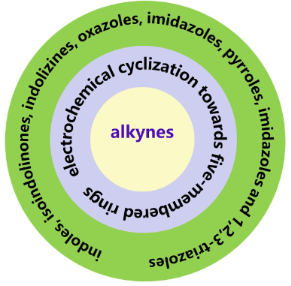
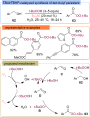
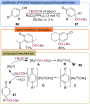
Graphical Abstract
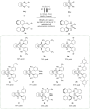
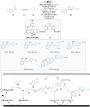
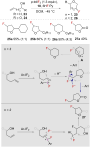
Figure 1: Natural products and functional molecules possessing five-membered rings.
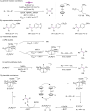
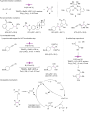
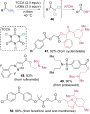
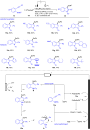
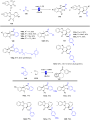
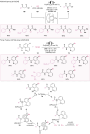
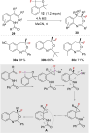
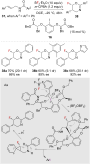
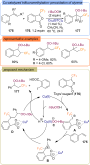
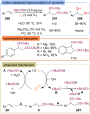
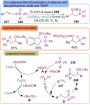
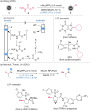
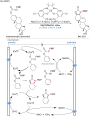
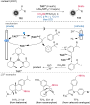
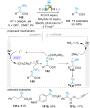
Scheme 1: Electrochemical intramolecular coupling of ureas to form indoles.
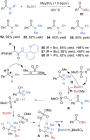
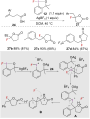
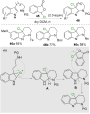
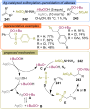
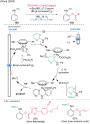
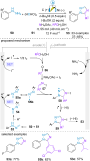
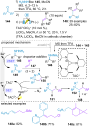
Scheme 2: Electrochemical dehydrogenative annulation of alkynes with anilines.
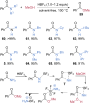
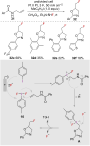
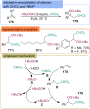
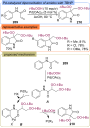
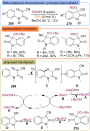
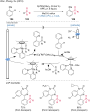
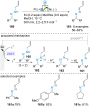
Scheme 3: Electrochemical annulations of o-arylalkynylanilines.
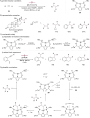
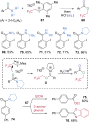
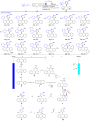
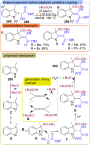
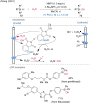
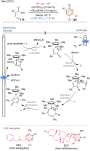
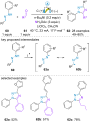
Scheme 4: Electrochemical cyclization of 2-ethynylanilines.
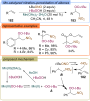
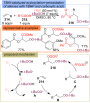
Scheme 5: Electrochemical selenocyclization of diselenides and 2-ethynylanilines.
Scheme 6: Electrochemical cascade approach towards 3-selenylindoles.
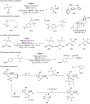
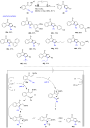
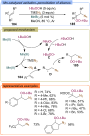
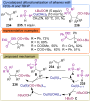
Scheme 7: Electrochemical C–H indolization.
Scheme 8: Electrochemical annulation of benzamides and terminal alkynes.
Scheme 9: Electrochemical synthesis of isoindolinone by 5-exo-dig aza-cyclization.
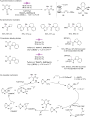
Scheme 10: Electrochemical reductive cascade annulation of o-alkynylbenzamide.
Scheme 11: Electrochemical intramolecular 1,2-amino oxygenation of alkyne.
Scheme 12: Electrochemical multicomponent reaction of nitrile, (thio)xanthene, terminal alkyne and water.
Scheme 13: Electrochemical aminotrifluoromethylation/cyclization of alkynes.
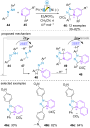
Scheme 14: Electrochemical cyclization of o-nitrophenylacetylene.
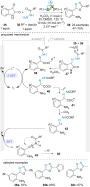
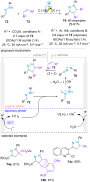
Scheme 15: Electrochemical annulation of alkynyl enaminones.
Scheme 16: Electrochemical annulation of alkyne and enamide.
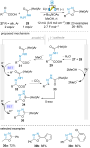
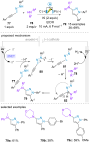
Scheme 17: Electrochemical tandem Michael addition/azidation/cyclization.
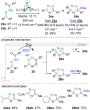
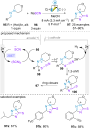
Scheme 18: Electrochemical [3 + 2] cyclization of heteroarylamines.
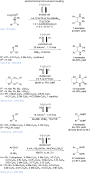
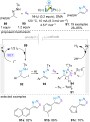
Scheme 19: Electrochemical CuAAC to access 1,2,3-triazole.
Beilstein J. Org. Chem. 2025, 21, 1897–1908, doi:10.3762/bjoc.21.147
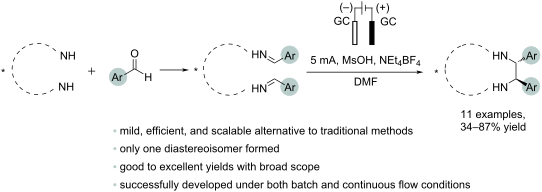
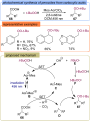
Graphical Abstract
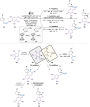
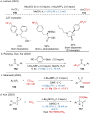
Scheme 1: Synthesis of vicinal diamines via imino-pinacol coupling in the presence of metal-based reductants.
Scheme 2: Light-promoted imino-pinacol coupling for the synthesis of vicinal diamines.
Scheme 3: Historical perspective on electrochemical imino-coupling protocols.
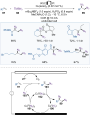
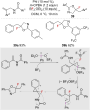
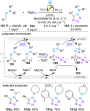
Scheme 4: Stereoselective electroreductive intramolecular imino-pinacol reaction.
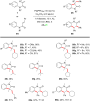
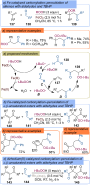
Scheme 5: Scope of the imino-pinacol coupling reaction. Reaction conditions: GC electrodes, NEt4BF4 (2.6 equi...
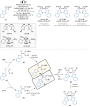
Figure 1: X-ray determined structure of chiral piperazine 2b.
Scheme 6: Continuous flow synthesis of piperazine 2a. The yield was determined by 1H NMR spectroscopy using 1...
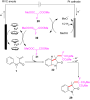
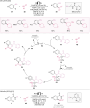
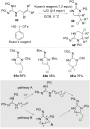
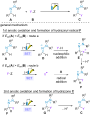
Scheme 7: Proposed reaction mechanism.
Scheme 8: Cyclic voltammetry investigation. Cyclic voltammetry of a 0.325 M solution of Et4NBF4 in DMF (light...
Beilstein J. Org. Chem. 2025, 21, 1207–1271, doi:10.3762/bjoc.21.98
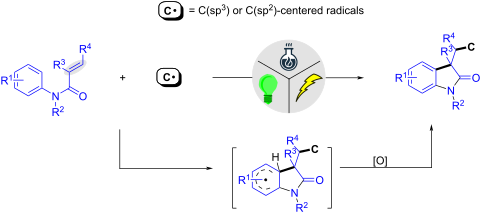
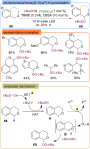
Graphical Abstract
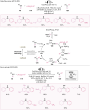
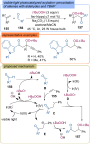
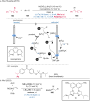
Scheme 1: DTBP-mediated oxidative alkylarylation of activated alkenes.
Scheme 2: Iron-catalyzed oxidative 1,2-alkylarylation.
Scheme 3: Possible mechanism for the iron-catalyzed oxidative 1,2-alkylation of activated alkenes.
Scheme 4: A metal-free strategy for synthesizing 3,3-disubstituted oxindoles.
Scheme 5: Iminoxyl radical-promoted cascade oxyalkylation/alkylarylation of alkenes.
Scheme 6: Proposed mechanism for the iminoxyl radical-promoted cascade oxyalkylation/alkylarylation of alkene...
Scheme 7: Bicyclization of 1,n-enynes with alkyl nitriles.
Scheme 8: Possible reaction mechanism for the bicyclization of 1,n-enynes with alkyl nitriles.
Scheme 9: Radical cyclization of N-arylacrylamides with isocyanides.
Scheme 10: Plausible mechanism for the radical cyclization of N-arylacrylamides with isocyanides.
Scheme 11: Electrochemical dehydrogenative cyclization of 1,3-dicarbonyl compounds.
Scheme 12: Plausible mechanism for the dehydrogenative cyclization of 1,3-dicarbonyl compounds.
Scheme 13: Photocatalyzed cyclization of N-arylacrylamide and N,N-dimethylaniline.
Scheme 14: Proposed mechanism for the photocatalyzed cyclization of N-arylacrylamides and N,N-dimethylanilines....
Scheme 15: Electrochemical monofluoroalkylation cyclization of N-arylacrylamides with dimethyl 2-fluoromalonat...
Scheme 16: Proposed mechanism for the electrochemical radical cyclization of N-arylacrylamides with dimethyl 2...
Scheme 17: Photoelectrocatalytic carbocyclization of unactivated alkenes using simple malonates.
Scheme 18: Plausible mechanism for the photoelectrocatalytic carbocyclization of unactivated alkenes with simp...
Scheme 19: Bromide-catalyzed electrochemical trifluoromethylation/cyclization of N-arylacrylamides.
Scheme 20: Proposed mechanism for the electrochemical trifluoromethylation/cyclization of N-arylacrylamides.
Scheme 21: Visible light-mediated trifluoromethylarylation of N-arylacrylamides.
Scheme 22: Plausible reaction mechanism for the visible light-mediated trifluoromethylarylation of N-arylacryl...
Scheme 23: Electrochemical difluoroethylation cyclization of N-arylacrylamides with sodium difluoroethylsulfin...
Scheme 24: Electrochemical difluoroethylation cyclization of N-methyacryloyl-N-alkylbenzamides with sodium dif...
Scheme 25: Photoredox-catalyzed radical aryldifluoromethylation of N-arylacrylamides with S-(difluoromethyl)su...
Scheme 26: Proposed mechanism for the photoredox-catalyzed radical aryldifluoromethylation of N-arylacrylamide...
Scheme 27: Visible-light-induced domino difluoroalkylation/cyclization of N-cyanamide alkenes.
Scheme 28: Proposed mechanism of photoredox-catalyzed radical domino difluoroalkylation/cyclization of N-cyana...
Scheme 29: Palladium-catalyzed oxidative difunctionalization of alkenes.
Scheme 30: Two possible mechanisms of palladium-catalyzed oxidative difunctionalization.
Scheme 31: Silver-catalyzed oxidative 1,2-alkyletherification of unactivated alkenes with α-bromoalkylcarbonyl...
Scheme 32: Photochemical radical cascade cyclization of dienes.
Scheme 33: Proposed mechanism for the photochemical radical cascade 6-endo cyclization of dienes with α-carbon...
Scheme 34: Photocatalyzed radical coupling/cyclization of N-arylacrylamides and.
Scheme 35: Photocatalyzed radical-type couplings/cyclization of N-arylacrylamides with sulfoxonium ylides.
Scheme 36: Possible mechanism of visible-light-induced radical-type couplings/cyclization of N-arylacrylamides...
Scheme 37: Visible-light-promoted difluoroalkylated oxindoles systhesis via EDA complexes.
Scheme 38: Possible mechanism for the visible-light-promoted radical cyclization of N-arylacrylamides with bro...
Scheme 39: A dicumyl peroxide-initiated radical cascade reaction of N-arylacrylamide with DCM.
Scheme 40: Possible mechanism of radical cyclization of N-arylacrylamides with DCM.
Scheme 41: An AIBN-mediated radical cascade reaction of N-arylacrylamides with perfluoroalkyl iodides.
Scheme 42: Possible mechanism for the reaction with perfluoroalkyl iodides.
Scheme 43: Photoinduced palladium-catalyzed radical annulation of N-arylacrylamides with alkyl halides.
Scheme 44: Radical alkylation/cyclization of N-Alkyl-N-methacryloylbenzamides with alkyl halides.
Scheme 45: Possible mechanism for the alkylation/cyclization with unactivated alkyl chlorides.
Scheme 46: Visible-light-driven palladium-catalyzed radical cascade cyclization of N-arylacrylamides with unac...
Scheme 47: NHC-catalyzed radical cascade cyclization of N-arylacrylamides with alkyl bromides.
Scheme 48: Possible mechanism of NHC-catalyzed radical cascade cyclization.
Scheme 49: Electrochemically mediated radical cyclization reaction of N-arylacrylamides with freon-type methan...
Scheme 50: Proposed mechanistic pathway of electrochemically induced radical cyclization reaction.
Scheme 51: Redox-neutral photoinduced radical cascade cylization of N-arylacrylamides with unactivated alkyl c...
Scheme 52: Proposed mechanistic hypothesis of redox-neutral radical cascade cyclization.
Scheme 53: Thiol-mediated photochemical radical cascade cylization of N-arylacrylamides with aryl halides.
Scheme 54: Proposed possible mechanism of thiol-mediated photochemical radical cascade cyclization.
Scheme 55: Visible-light-induced radical cascade bromocyclization of N-arylacrylamides with NBS.
Scheme 56: Possible mechanism of visible-light-induced radical cascade cyclization.
Scheme 57: Decarboxylation/radical C–H functionalization by visible-light photoredox catalysis.
Scheme 58: Plausible mechanism of visible-light photoredox-catalyzed radical cascade cyclization.
Scheme 59: Visible-light-promoted tandem radical cyclization of N-arylacrylamides with N-(acyloxy)phthalimides....
Scheme 60: Plausible mechanism for the tandem radical cyclization reaction.
Scheme 61: Visible-light-induced aerobic radical cascade alkylation/cyclization of N-arylacrylamides with alde...
Scheme 62: Plausible mechanism for the aerobic radical alkylarylation of electron-deficient amides.
Scheme 63: Oxidative decarbonylative [3 + 2]/[5 + 2] annulation of N-arylacrylamide with vinyl acids.
Scheme 64: Plausible mechanism for the decarboxylative (3 + 2)/(5 + 2) annulation between N-arylacrylamides an...
Scheme 65: Rhenium-catalyzed alkylarylation of alkenes with PhI(O2CR)2.
Scheme 66: Plausible mechanism for the rhenium-catalyzed decarboxylative annulation of N-arylacrylamides with ...
Scheme 67: Visible-light-induced one-pot tandem reaction of N-arylacrylamides.
Scheme 68: Plausible mechanism for the visible-light-initiated tandem synthesis of difluoromethylated oxindole...
Scheme 69: Copper-catalyzed redox-neutral cyanoalkylarylation of activated alkenes with cyclobutanone oxime es...
Scheme 70: Plausible mechanism for the copper-catalyzed cyanoalkylarylation of activated alkenes.
Scheme 71: Photoinduced alkyl/aryl radical cascade for the synthesis of quaternary CF3-attached oxindoles.
Scheme 72: Plausible photoinduced electron-transfer (PET) mechanism.
Scheme 73: Photoinduced cerium-mediated decarboxylative alkylation cascade cyclization.
Scheme 74: Plausible reaction mechanism for the decarboxylative radical-cascade alkylation/cyclization.
Scheme 75: Metal-free oxidative tandem coupling of activated alkenes.
Scheme 76: Control experiments and possible mechanism for 1,2-carbonylarylation of alkenes with carbonyl C(sp2...
Scheme 77: Silver-catalyzed acyl-arylation of activated alkenes with α-oxocarboxylic acids.
Scheme 78: Proposed mechanism for the decarboxylative acylarylation of acrylamides.
Scheme 79: Visible-light-mediated tandem acylarylation of olefines with carboxylic acids.
Scheme 80: Proposed mechanism for the radical cascade cyclization with acyl radical via visible-light photored...
Scheme 81: Erythrosine B-catalyzed visible-light photoredox arylation-cyclization of N-arylacrylamides with ar...
Scheme 82: Electrochemical cobalt-catalyzed radical cyclization of N-arylacrylamides with arylhydrazines or po...
Scheme 83: Proposed mechanism of radical cascade cyclization via electrochemical cobalt catalysis.
Scheme 84: Copper-catalyzed oxidative tandem carbamoylation/cyclization of N-arylacrylamides with hydrazinecar...
Scheme 85: Proposed reaction mechanism for the radical cascade cyclization by copper catalysis.
Scheme 86: Visible-light-driven radical cascade cyclization reaction of N-arylacrylamides with α-keto acids.
Scheme 87: Proposed mechanism of visible-light-driven cascade cyclization reaction.
Scheme 88: Peroxide-induced radical carbonylation of N-(2-methylallyl)benzamides with methyl formate.
Scheme 89: Proposed cyclization mechanism of peroxide-induced radical carbonylation with N-(2-methylallyl)benz...
Scheme 90: Persulfate promoted carbamoylation of N-arylacrylamides and N-arylcinnamamides.
Scheme 91: Proposed mechanism for the persulfate promoted radical cascade cyclization reaction of N-arylacryla...
Scheme 92: Photocatalyzed carboacylation with N-arylpropiolamides/N-alkyl acrylamides.
Scheme 93: Plausible mechanism for the photoinduced carboacylation of N-arylpropiolamides/N-alkyl acrylamides.
Scheme 94: Electrochemical Fe-catalyzed radical cyclization with N-arylacrylamides.
Scheme 95: Plausible mechanism for the electrochemical Fe-catalysed radical cyclization of N-phenylacrylamide.
Scheme 96: Substrate scope of the selective functionalization of various α-ketoalkylsilyl peroxides with metha...
Scheme 97: Proposed reaction mechanism for the Fe-catalyzed reaction of alkylsilyl peroxides with methacrylami...
Scheme 98: EDA-complex mediated C(sp2)–C(sp3) cross-coupling of TTs and N-methyl-N-phenylmethacrylamides.
Scheme 99: Proposed mechanism for the synthesis of oxindoles via EDA complex.
Beilstein J. Org. Chem. 2025, 21, 770–797, doi:10.3762/bjoc.21.61
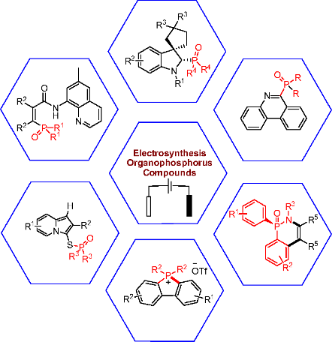
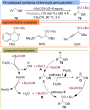
Graphical Abstract
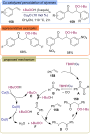
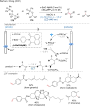
Scheme 1: Electrosynthesis of phenanthridine phosphine oxides.
Scheme 2: Electrosynthesis of 1-aminoalkylphosphine oxides.
Scheme 3: Various electrochemical C–P coupling reactions.
Scheme 4: Electrochemical C–P coupling reaction of indolines.
Scheme 5: Electrochemical C–P coupling reaction of ferrocene.
Scheme 6: Electrochemical C–P coupling reaction of acridines with phosphites.
Scheme 7: Electrochemical C–P coupling reaction of alkenes.
Scheme 8: Electrochemical C–P coupling reaction of arenes in a flow system.
Scheme 9: Electrochemical C–P coupling reaction of heteroarenes.
Scheme 10: Electrochemical C–P coupling reaction of thiazoles.
Scheme 11: Electrochemical C–P coupling reaction of indole derivatives.
Scheme 12: Electrosynthesis of 1-amino phosphonates.
Scheme 13: Electrochemical C–P coupling reaction of aryl and vinyl bromides.
Scheme 14: Electrochemical C–P coupling reaction of phenylpyridine with dialkyl phosphonates in the presence o...
Scheme 15: Electrochemical P–C bond formation of amides.
Scheme 16: Electrochemical synthesis of α-hydroxy phosphine oxides.
Scheme 17: Electrochemical synthesis of π-conjugated phosphonium salts.
Scheme 18: Electrochemical phosphorylation of indoles.
Scheme 19: Electrochemical synthesis of phosphorylated propargyl alcohols.
Scheme 20: Electrochemical synthesis of phosphoramidates.
Scheme 21: Electrochemical reaction of carbazole with diphenylphosphine.
Scheme 22: Electrochemical P–N coupling of carbazole with phosphine oxides.
Scheme 23: Electrochemical P–N coupling of indoles with a trialkyl phosphite.
Scheme 24: Electrochemical synthesis of iminophosphoranes.
Scheme 25: Electrochemical P–O coupling of phenols with dialkyl phosphonate.
Scheme 26: Electrochemical P–O coupling of alcohols with diphenylphosphine.
Scheme 27: Electrochemical P–S coupling of thiols with dialkylphosphines.
Scheme 28: Electrochemical thiophosphorylation of indolizines.
Scheme 29: Electrosynthesis of S-heteroaryl phosphorothioates.
Scheme 30: Electrochemical phosphorylation reactions.
Scheme 31: Electrochemical P–Se formation.
Scheme 32: Electrochemical selenation/halogenation of alkynyl phosphonates.
Scheme 33: Electrochemical enantioselective aryl C–H bond activation.
Beilstein J. Org. Chem. 2025, 21, 630–638, doi:10.3762/bjoc.21.50
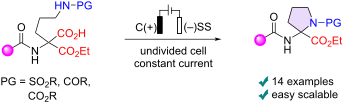
Graphical Abstract
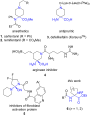
Figure 1: Selected examples of α,α-disubstituted cyclic amino acids in drug design.
Figure 2: Electrochemical decarboxylative amination reactions.
Scheme 1: Preparation of malonic acid monoester 9a.
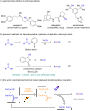
Figure 3: A) Cyclic voltammograms of 6a and 9a at 3 mM and 6 mM concentration, respectively, in 5:1 MeCN/H2O ...
Scheme 2: Electrolysis of acid 9d in deuterated solvents.
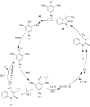
Figure 4: Plausible mechanism for formation of pyrrolidine 6a and hemiaminal 10a.
Scheme 3: Scope of the decarboxylative amidation. aStainless-steel cathode; bgraphite cathode; cyield determi...
Scheme 4: Synthetic modifications of 2-aminoproline derivatives 6.
Beilstein J. Org. Chem. 2025, 21, 451–457, doi:10.3762/bjoc.21.32
Graphical Abstract
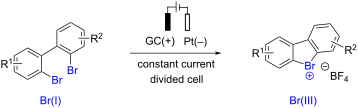
Scheme 1: Synthesis of cyclic diarylbromonium compounds.
Scheme 2: Substrate scope. Reactions were performed on a 0.15 mmol scale. Yields were determined by 1H NMR sp...
Scheme 3: A: Background and iR drop-corrected CVs of 5 mM 4a at different scan rates (solvent: HFIP, working ...
Beilstein J. Org. Chem. 2025, 21, 155–178, doi:10.3762/bjoc.21.9
Graphical Abstract
Figure 1: General mechanisms of traditional and radical-mediated cross-coupling reactions.
Figure 2: Types of electrocatalysis (using anodic oxidation).
Figure 3: Recent developments and features of electrochemical copper catalysis.
Figure 4: Scheme and proposed mechanism for Cu-catalyzed alkynylation and annulation of benzamide.
Figure 5: Scheme and proposed mechanism for Cu-catalyzed asymmetric C–H alkynylation.
Figure 6: Scheme for Cu/TEMPO-catalyzed C–H alkenylation of THIQs.
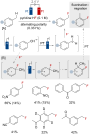
Figure 7: Scheme and proposed mechanism for Cu-catalyzed electrophotochemical enantioselective cyanation of b...
Figure 8: Scheme and proposed mechanism for Cu-catalyzed electrophotochemical asymmetric heteroarylcyanation ...
Figure 9: Scheme and proposed mechanism for Cu-catalyzed enantioselective regiodivergent cross-dehydrogenativ...
Figure 10: Scheme and proposed mechanism for Cu/Ni-catalyzed stereodivergent homocoupling of benzoxazolyl acet...
Figure 11: Scheme and proposed mechanism for Cu-catalyzed electrochemical amination.
Figure 12: Scheme and proposed mechanism for Cu-catalyzed electrochemical azidation of N-arylenamines and annu...
Figure 13: Scheme and proposed mechanism for Cu-catalyzed electrochemical halogenation.
Figure 14: Scheme and proposed mechanism for Cu-catalyzed asymmetric cyanophosphinoylation of vinylarenes.
Figure 15: Scheme and proposed mechanism for Cu/Co dual-catalyzed asymmetric hydrocyanation of alkenes.
Figure 16: Scheme and proposed mechanism for Cu-catalyzed electrochemical diazidation of olefins.
Figure 17: Scheme and proposed mechanism for Cu-catalyzed electrochemical azidocyanation of alkenes.
Figure 18: Scheme and proposed mechanism for Cu-catalyzed electrophotochemical asymmetric decarboxylative cyan...
Figure 19: Scheme and proposed mechanism for electrocatalytic Chan–Lam coupling.
Beilstein J. Org. Chem. 2025, 21, 1–7, doi:10.3762/bjoc.21.1
Graphical Abstract
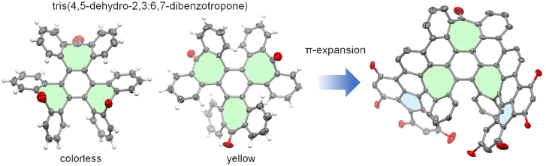
Figure 1: Structures of compounds 1–3 and the polycyclic skeleton of 1 as mapped on a carbon schwarzite unit ...
Scheme 1: a) Synthesis of 1; b) reactions of 1; c) synthesis of 3.
Figure 2: (a) Structures of 1 in the colorless crystal; (b) structures of (P,M,P)-1 in the yellow crystal. (C...
Figure 3: Structure of (M,P,M)-3 in the crystal of 3·CH2Cl2 (carbon and oxygen atoms are shown as grey and re...
Figure 4: UV–vis absorption spectrum (black line) and emission spectrum (blue line, excited at 400 nm) of com...
Beilstein J. Org. Chem. 2024, 20, 3113–3133, doi:10.3762/bjoc.20.258
Graphical Abstract
Figure 1: Example bioactive compounds containing cyclic scaffolds potentially accessible by HVI chemistry.
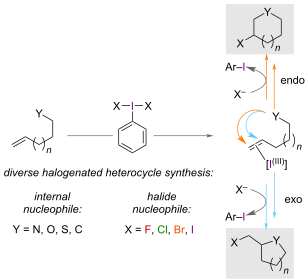
Figure 2: A general mechanism for HVI-mediated endo- or exo-halocyclisation.
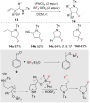
Scheme 1: Metal-free synthesis of β-fluorinated piperidines 6. Ts = tosyl.
Scheme 2: Intramolecular aminofluorination of unactivated alkenes with a palladium catalyst.
Scheme 3: Aminofluorination of alkenes in the synthesis of enantiomerically pure β-fluorinated piperidines. P...
Scheme 4: Synthesis of β-fluorinated piperidines.
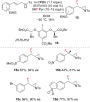
Scheme 5: Intramolecular fluoroaminations of unsaturated amines published by Li.
Scheme 6: Intramolecular aminofluorination of unsaturated amines using 1-fluoro-3,3-dimethylbenziodoxole (12)...
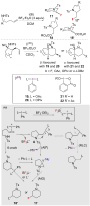
Scheme 7: 3-fluoropyrrolidine synthesis. aDiastereomeric ratio (cis/trans) determined by 19F NMR analysis.
Scheme 8: Kitamura’s synthesis of 3-fluoropyrrolidines. Values in parentheses represent the cis:trans ratio.
Scheme 9: Jacobsen’s enantio- and diastereoselective protocol for the synthesis of syn-β-fluoroaziridines 15.
Scheme 10: Different HVI reagents lead to different diastereoselectivity in aminofluorination competing with c...
Scheme 11: Fluorocyclisation of unsaturated alcohols and carboxylic acids to make tetrahydrofurans, fluorometh...
Scheme 12: Oxyfluorination of unsaturated alcohols.
Scheme 13: Synthesis and mechanism of fluoro-benzoxazepines.
Scheme 14: Intramolecular fluorocyclisation of unsaturated carboxylic acids. Yield of isolated product within ...
Scheme 15: Synthesis of fluorinated tetrahydrofurans and butyrolactone.
Scheme 16: Synthesis of fluorinated oxazolines 32. aReaction time increased to 40 hours. Yields refer to isola...
Scheme 17: Electrochemical synthesis of fluorinated oxazolines.
Scheme 18: Electrochemical synthesis of chromanes.
Scheme 19: Synthesis of fluorinated oxazepanes.
Scheme 20: Enantioselective oxy-fluorination with a chiral aryliodide catayst.
Scheme 21: Catalytic synthesis of 5‑fluoro-2-aryloxazolines using BF3·Et2O as a source of fluoride and an acti...
Scheme 22: Intramolecular carbofluorination of alkenes.
Scheme 23: Intramolecular chlorocyclisation of unsaturated amines.
Scheme 24: Synthesis of chlorinated cyclic guanidines 44.
Scheme 25: Synthesis of chlorinated pyrido[2,3-b]indoles 46.
Scheme 26: Chlorolactonization and chloroetherification reactions.
Scheme 27: Proposed mechanism for the synthesis of chloromethyl oxazolines 49.
Scheme 28: Oxychlorination to form oxazine and oxazoline heterocycles promoted by BCl3.
Scheme 29: Aminobromocyclisation of homoallylic sulfonamides 53. The cis:trans ratios based on the 1H NMR of t...
Scheme 30: Synthesis of cyclic imines 45.
Scheme 31: Synthesis of brominated pyrrolo[2,3-b]indoles 59.
Scheme 32: Bromoamidation of alkenes.
Scheme 33: Synthesis of brominated cyclic guanidines 61 and 61’.
Scheme 34: Intramolecular bromocyclisation of N-oxyureas.
Scheme 35: The formation of 3-bromoindoles.
Scheme 36: Bromolactonisation of unsaturated acids 68.
Scheme 37: Synthesis of 5-bromomethyl-2-oxazolines.
Scheme 38: Synthesis of brominated chiral morpholines.
Scheme 39: Bromoenolcyclisation of unsaturated dicarbonyl groups.
Scheme 40: Brominated oxazines and oxazolines with BBr3.
Scheme 41: Synthesis of 5-bromomethtyl-2-phenylthiazoline.
Scheme 42: Intramolecular iodoamination of unsaturated amines.
Scheme 43: Formation of 3-iodoindoles.
Scheme 44: Iodoetherification of 2,2-diphenyl-4-penten-1-carboxylic acid (47’) and 2,2-diphenyl-4-penten-1-ol (...
Scheme 45: Synthesis of 5-iodomethyl-2-oxazolines.
Scheme 46: Synthesis of chiral iodinated morpholines. aFrom the ʟ-form of the amino acid starting material. Th...
Scheme 47: Iodoenolcyclisation of unsaturated dicarbonyl compounds 74.
Scheme 48: Synthesis of 5-iodomethtyl-2-phenylthiazoline (87).
Beilstein J. Org. Chem. 2024, 20, 2959–3006, doi:10.3762/bjoc.20.249
Graphical Abstract
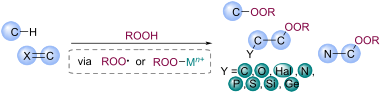
Scheme 1: Organic peroxide initiators in polymer chemistry.
Scheme 2: Synthesis of organic peroxides.
Scheme 3: Richness of radical cascades with species formed from hydroperoxides in redox conditions.
Scheme 4: Co-catalyzed allylic peroxidation of alkenes 1 and 3 by TBHP.
Scheme 5: Allylic peroxidation of alkenes 6 by Pd(II)TBHP.
Scheme 6: Cu(I)-catalyzed allylic peroxidation.
Scheme 7: Enantioselective peroxidation of alkenes 10 with TBHP in the presence of copper(I) compounds.
Scheme 8: Oxidation of α-pinene (12) by the Cu(I)/TBHP system.
Scheme 9: Introduction of the tert-butylperoxy fragment into the α-position of cyclic ketones 15 and 17.
Scheme 10: α-Peroxidation of β-dicarbonyl compounds 19 using the Cu(II)/TBHP system.
Scheme 11: Co-catalyzed peroxidation of cyclic compounds 21 with TBHP.
Scheme 12: Co-, Mn- and Fe-catalyzed peroxidation of 2-oxoindoles 23, barbituric acids 25, and 4-hydroxycoumar...
Scheme 13: Cu-catalyzed and metal-free peroxidation of barbituric acid derivatives 31 and 3,4-dihydro-1,4-benz...
Scheme 14: Electrochemical peroxidation of 1,3-dicarbonyl compounds 35.
Scheme 15: Peroxidation of β-dicarbonyl compounds, cyanoacetic esters and malonic esters 37 by the TBAI/TBHP s...
Scheme 16: Cu-catalyzed peroxidation of malonodinitriles and cyanoacetic esters 39 with TBHP.
Scheme 17: Mn-catalyzed remote peroxidation via trifluromethylation of double bond.
Scheme 18: Cu-catalyzed remote peroxidation via trifluromethylthiolation of double bond.
Scheme 19: Fe-, Mn-, and Ru-catalyzed peroxidation of alkylaromatics 45, 47, 49, and 51 with TBHP.
Scheme 20: Cu-catalyzed peroxidation of diphenylacetonitrile (53) with TBHP.
Scheme 21: Cu-catalyzed peroxidation of benzyl cyanides 60 with TBHP.
Scheme 22: Synthesis of tert-butylperoxy esters 63 from benzyl alcohols 62 using the TBAI/TBHP system.
Scheme 23: Enantioselective peroxidation of 2-phenylbutane (64) with TBHP and chiral Cu(I) complex.
Scheme 24: Photochemical synthesis of peroxides 67 from carboxylic acids 66.
Scheme 25: Photochemical peroxidation of benzylic C(sp3)–H.
Scheme 26: Cu- and Ru-catalyzed peroxidation of alkylamines with TBHP.
Scheme 27: Peroxidation of amides 76 with the TBAI/TBHP system.
Scheme 28: Fe-catalyzed functionalization of ethers 78 with TBHP.
Scheme 29: Synthesis of 4-(tert-butylperoxy)-5-phenyloxazol-2(3H)-ones 82 from benzyl alcohols 80 and isocyana...
Scheme 30: Fe- and Co-catalyzed peroxidation of alkanes with TBHP.
Scheme 31: Rh-catalyzed tert-butylperoxy dienone synthesis with TBHP.
Scheme 32: Rh- and Cu-catalyzed phenolic oxidation with TBHP.
Scheme 33: Metal-free peroxidation of phenols 94.
Scheme 34: Cu-catalyzed alkylation–peroxidation of acrylonitrile.
Scheme 35: Cu-catalyzed cycloalkylation–peroxidation of coumarins 99.
Scheme 36: Metal-free cycloalkylation–peroxidation of coumarins 102.
Scheme 37: Difunctionalization of indene 104 with tert-butylperoxy and alkyl groups.
Scheme 38: Acid-catalyzed radical addition of ketones (108, 111) and TBHP to alkenes 107 and acrylates 110.
Scheme 39: Cu-catalyzed alkylation–peroxidation of alkenes 113 with TBHP and diazo compounds 114.
Scheme 40: Cobalt(II)-catalyzed addition of TBHP and 1,3-dicarbonyl compound 116 to alkenes 117.
Scheme 41: Cu(0)- or Co(II)-catalyzed addition of TBHP and alcohols 120 to alkenes 119.
Scheme 42: Fe-catalyzed functionalization of allenes 122 with TBHP.
Scheme 43: Fe-catalyzed alkylation–peroxidation of alkenes 125 and 127.
Scheme 44: Fe- and Co-catalyzed alkylation–peroxidation of alkenes 130, 133 and 134 with TBHP and aldehydes as...
Scheme 45: Carbonylation–peroxidation of alkenes 137, 140, 143 with hydroperoxides and aldehydes.
Scheme 46: Carbamoylation–peroxidation of alkenes 146 with formamides and TBHP.
Scheme 47: TBAB-catalyzed carbonylation–peroxidation of alkenes.
Scheme 48: VOCl2-catalyzed carbonylation–peroxidation of alkenes 152.
Scheme 49: Acylation–peroxidation of alkenes 155 with aldehydes 156 and TBHP using photocatalysis.
Scheme 50: Cu-catalyzed peroxidation of styrenes 158.
Scheme 51: Fe-catalyzed acylation-peroxidation of alkenes 161 with carbazates 160 and TBHP.
Scheme 52: Difunctionalization of alkenes 163, 166 with TBHP and (per)fluoroalkyl halides.
Scheme 53: Difunctionalization of alkenes 169 and 172 with hydroperoxides and sodium (per)fluoromethyl sulfina...
Scheme 54: Trifluoromethylation–peroxidation of styrenes 175 using MOF Cu3(BTC)2 as a catalyst.
Scheme 55: Difunctionalization of alkenes 178 with tert-butylperoxy and dihalomethyl fragments.
Scheme 56: Difunctionalization of alkenes 180 with the tert-butylperoxy and dihalomethyl moieties.
Scheme 57: The nitration–peroxidation of alkenes 182 with t-BuONO and TBHP.
Scheme 58: Azidation–peroxidation of alkenes 184 with TMSN3 and TBHP.
Scheme 59: Co-catalyzed bisperoxidation of butadiene 186.
Scheme 60: Bisperoxidation of styrene (189) and acrylonitrile (192) with TBHP by Minisci.
Scheme 61: Mn-catalyzed synthesis of bis(tert-butyl)peroxides 195 from styrenes 194.
Scheme 62: Bisperoxidation of arylidene-9H-fluorenes 196 and 3-arylidene-2-oxoindoles 198 with TBHP under Mn-c...
Scheme 63: Synthesis of bisperoxides from styrenes 200 and 203 using the Ru and Rh catalysis.
Scheme 64: Iodine-catalyzed bisperoxidation of styrenes 206.
Scheme 65: Synthesis of di-tert-butylperoxyoxoindoles 210 from acrylic acid anilides 209 using a Pd(II)/TBHP o...
Scheme 66: Pinolation/peroxidation of styrenes 211 catalyzed by Cu(I).
Scheme 67: TBAI-catalyzed acyloxylation–peroxidation of alkenes 214 with carboxylic acids and TBHP.
Scheme 68: Difunctionalization of alkenes 217 with TBHP and water or alcohols.
Scheme 69: TBAI-catalyzed hydroxyperoxidation of 1,3-dienes 220.
Scheme 70: Hydroxyperoxidation of 1,3-dienes 220.
Scheme 71: Iodination/peroxidation of alkenes 223 with I2 and hydroperoxides.
Scheme 72: The reactions of cyclic enol ethers 226 and 228 with I2/ROOH system.
Scheme 73: Synthesis of 1-(tert-butylperoxy)-2-iodoethanes 231.
Scheme 74: Synthesis of 1-iodo-2-(tert-butylperoxy)ethanes 233.
Scheme 75: Cu-catalyzed phosphorylation–peroxidation of alkenes 234.
Scheme 76: Co-catalyzed phosphorylation–peroxidation of alkenes 237.
Scheme 77: Ag-catalyzed sulfonylation–peroxidation of alkenes 241.
Scheme 78: Co-catalyzed sulfonylation–peroxidation of alkenes 244.
Scheme 79: Synthesis of α/β-peroxysulfides 248 and 249 from styrenes 247.
Scheme 80: Cu-catalyzed trifluoromethylthiolation–peroxidation of alkenes 250 and allenes 252.
Scheme 81: Photocatalytic sulfonyl peroxidation of alkenes 254 via deamination of N-sulfonyl ketimines 255.
Scheme 82: Photoredox-catalyzed 1,4-peroxidation–sulfonylation of enynones 257.
Scheme 83: Cu-catalyzed silylperoxidation of α,β-unsaturated compounds 260 and enynes 261.
Scheme 84: Fe-catalyzed silyl peroxidation of alkenes.
Scheme 85: Cu-catalyzed germyl peroxidation of alkenes 267.
Scheme 86: TBAI-catalyzed intramolecular cyclization of diazo compounds 269 with further peroxidation.
Scheme 87: Co-catalyzed three-component coupling of benzamides 271, diazo compounds 272 and TBHP.
Scheme 88: Co-catalyzed esterification-peroxidation of diazo compounds 274 with TBHP and carboxylic acids 275.
Scheme 89: Cu-catalyzed alkylation–peroxidation of α-carbonylimines 277 or ketones 280.
Scheme 90: Mn-catalyzed ring-opening peroxidation of cyclobutanols 282 with TBHP.
Scheme 91: Peroxycyclization of tryptamines 284 with TBHP.
Scheme 92: Radical cyclization–peroxidation of homotryptamines 287.
Scheme 93: Iodine-catalyzed oxidative coupling of indoles 288, cyanoacetic esters and TBHP.
Scheme 94: Summary of metal-catalyzed peroxidation processes.
Beilstein J. Org. Chem. 2024, 20, 2500–2566, doi:10.3762/bjoc.20.214
Graphical Abstract
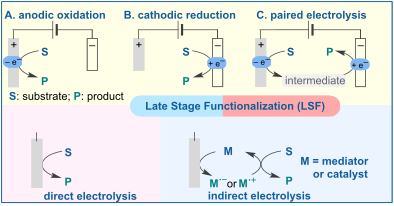
Figure 1: Classification of LSF reactions in this review.
Scheme 1: C(sp2)–H trifluoromethylation of heteroarenes.
Scheme 2: C(sp2)–H and C(sp3)–H alkylation of complex molecules.
Scheme 3: Electrochemical oxidation-induced intermolecular aromatic C–H sulfonamidation.
Scheme 4: Bioconjugation of tyrosine with (a) phenothiazine and (b) urazole derivatives.
Scheme 5: Electrochemical iodoamination of indoles using unactivated amines.
Scheme 6: Allylic C(sp3)–H aminations with sulfonamides.
Scheme 7: Electrochemical benzylic oxidation of C–H bonds.
Scheme 8: Site-selective electrooxidation of methylarenes to aromatic acetals.
Scheme 9: Electrochemical activation of C–H by electron-deficient W2C nanocrystals.
Scheme 10: α-Acyloxy sulfide preparation via C–H/OH cross-dehydrogenative coupling.
Scheme 11: Aromatic C–H-bond thiolation.
Scheme 12: C(sp2)–H functionalization for the installation of sulfonamide groups.
Scheme 13: Preparation of (hetero)aryl chlorides and vinyl chloride with 1,2-dichloroethane. aCu(OAc)2 (0.05 e...
Scheme 14: Electrochemical dual-oxidation enables access to α-chlorosulfoxides.
Scheme 15: Regio- and chemoselective formyloxylation–bromination/chlorination/trifluoromethylation of alkenes.
Scheme 16: Aziridine formation by coupling amines and alkenes.
Scheme 17: Formation of iminosulfide ethers via difunctionalization of an isocyanide.
Scheme 18: Synthesis of 1,3-difunctionalized molecules via C–C-bond cleavage of arylcyclopropane.
Scheme 19: Electrooxidative amino- and oxyselenation of alkenes. VBImBr = 1-butyl-3-vinylimidazolium bromide.
Scheme 20: Electrooxidative dehydrogenative [4 + 2] annulation of indole derivatives.
Scheme 21: Electrochemical cyclization combined with alkoxylation of triticonazole.
Scheme 22: Electrochemically tuned oxidative [4 + 2] annulation of olefins with hydroxamic acids.
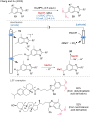
Scheme 23: Electrosynthesis of indole derivatives via cyclization of 2-ethynylanilines.
Scheme 24: Allylic C–H oxidation of mono-, di-, and sesquiterpenes.
Scheme 25: Oxidation of unactivated C–H bonds.
Scheme 26: Fluorination of C(sp3)–H bonds. rAP = rapid alternating polarity.
Scheme 27: C(sp3)–H α-cyanation of secondary piperidines.
Scheme 28: Selective electrochemical hydrolysis of hydrosilanes to silanols.
Scheme 29: Organocatalytic electrochemical amination of benzylic C–H bonds.
Scheme 30: Iodide ion-initiated anodic oxidation reactions.
Scheme 31: Mn(III/IV) electro-catalyzed C(sp3)–H azidation.
Scheme 32: Tailored cobalt–salen complexes enable electrocatalytic intramolecular allylic C–H functionalizatio...
Scheme 33: Cobalt–salen complexes-induced electrochemical (cyclo)additions.
Scheme 34: Electrochemical 1,2-diarylation of alkenes enabled by direct dual C–H functionalization of electron...
Scheme 35: Cobalt-electrocatalyzed atroposelective C–H annulation.
Scheme 36: Nickel-electrocatalyzed C(sp2)–H alkoxylation with secondary alcohols.
Scheme 37: Nickel-catalyzed electrochemical enantioselective amination.
Scheme 38: Ruthenium-electrocatalyzed C(sp2)–H mono- and diacetoxylation.
Scheme 39: Rhodium(III)-catalyzed aryl-C–H phosphorylation enabled by anodic oxidation-induced reductive elimi...
Scheme 40: Asymmetric Lewis-acid catalysis for the synthesis of non-racemic 1,4-dicarbonyl compounds.
Scheme 41: Electrochemical enantioselective C(sp3)–H alkenylation.
Scheme 42: Palladium-catalyzed electrochemical dehydrogenative cross-coupling.
Scheme 43: Ir-electrocatalyzed vinylic C(sp2)–H activation for the annulation between acrylic acids and alkyne...
Scheme 44: Electrochemical gold-catalyzed C(sp3)–C(sp) coupling of alkynes and arylhydrazines.
Scheme 45: Photoelectrochemical alkylation of C–H heteroarenes using organotrifluoroborates.
Scheme 46: Mn-catalyzed photoelectro C(sp3)–H azidation.
Scheme 47: Photoelectrochemical undirected C–H trifluoromethylations of (Het)arenes.
Scheme 48: Photoelectrochemical dehydrogenative cross-coupling of heteroarenes with aliphatic C–H bonds.
Scheme 49: C–H amination via photoelectrochemical Ritter-type reaction.
Scheme 50: Photoelectrochemical multiple oxygenation of C–H bonds.
Scheme 51: Accelerated C(sp3)–H heteroarylations by the f-EPC system.
Scheme 52: Photoelectrochemical cross-coupling of amines.
Scheme 53: Birch electroreduction of arenes. GSW = galvanized steel wire.
Scheme 54: Electroreductive deuterations.
Scheme 55: Chemoselective electrosynthesis using rapid alternating polarity.
Scheme 56: Electroreductive olefin–ketone coupling.
Scheme 57: Electroreductive approach to radical silylation.
Scheme 58: Electrochemical borylation of alkyl halides. CC = carbon close.
Scheme 59: Radical fluoroalkylation of alkenes.
Scheme 60: Electrochemical defluorinative hydrogenation/carboxylation.
Scheme 61: Electrochemical decarboxylative olefination.
Scheme 62: Electrochemical decarboxylative Nozaki–Hiyama–Kishi coupling.
Scheme 63: Nickel-catalyzed electrochemical reductive relay cross-coupling.
Scheme 64: Electrochemical chemo- and regioselective difunctionalization of 1,3-enynes.
Scheme 65: Electrocatalytic doubly decarboxylative crosscoupling.
Scheme 66: Electrocatalytic decarboxylative crosscoupling with aryl halides.
Scheme 67: Nickel-catalyzed electrochemical reductive coupling of halides.
Scheme 68: Nickel-electrocatalyzed enantioselective carboxylation with CO2.
Scheme 69: Reductive electrophotocatalysis for borylation.
Scheme 70: Electromediated photoredox catalysis for selective C(sp3)–O cleavages of phosphinated alcohols to c...
Scheme 71: Stereoselective electro-2-deoxyglycosylation from glycals. MFE = methyl nonafluorobutyl ether.
Scheme 72: Electrochemical peptide modifications.
Scheme 73: Electrochemical α-deuteration of amides.
Scheme 74: Electrochemical synthesis of gem-diselenides.
Scheme 75: Site-selective electrochemical aromatic C–H amination.
Scheme 76: Electrochemical coupling of heteroarenes with heteroaryl phosphonium salts.
Scheme 77: Redox-neutral strategy for the dehydroxyarylation reaction.
Scheme 78: Nickel-catalyzed electrochemical C(sp3)–C(sp2) cross-coupling of benzyl trifluoroborate and halides....
Scheme 79: Paired electrocatalysis for C(sp3)–C(sp2) coupling.
Scheme 80: Redox-neutral strategy for amination of aryl bromides.
Scheme 81: Redox-neutral cross-coupling of aryl halides with weak N-nucleophiles. aProtocol with (+) RVC | RVC...
Scheme 82: Nickel-catalyzed N-arylation of NH-sulfoximines with aryl halides.
Scheme 83: Esterification of carboxylic acids with aryl halides.
Scheme 84: Electrochemically promoted nickel-catalyzed carbon–sulfur-bond formation. GFE = graphite felt elect...
Scheme 85: Electrochemical deoxygenative thiolation by Ni-catalysis. GFE = graphite felt electrode; NFE = nick...
Scheme 86: Electrochemical coupling of peptides with aryl halides.
Scheme 87: Paired electrolysis for the phosphorylation of aryl halides. GFE = graphite felt electrode, FNE = f...
Scheme 88: Redox-neutral alkoxyhalogenation of alkenes.
Beilstein J. Org. Chem. 2024, 20, 2392–2400, doi:10.3762/bjoc.20.203
Graphical Abstract
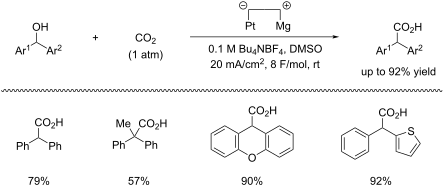
Scheme 1: Synthesis of diarylacetic acids 2 from diarylmethanol compounds 1 and carbon dioxide.
Scheme 2: Attempted electrochemical carboxylation of halogen-containing diphenylmethanol compounds 1b and 1c.
Scheme 3: Synthesis of diarylacetic acids 2 by electrochemical carboxylation of diarylmethanol species 1.
Scheme 4: Attempted electrochemical carboxylation of 1m and 1n.
Scheme 5: Electrolysis of 1a under a nitrogen atmosphere.
Scheme 6: Plausible reaction pathways.
Beilstein J. Org. Chem. 2024, 20, 1988–2004, doi:10.3762/bjoc.20.175
Graphical Abstract
Scheme 1: Synthesis of triazolopyridinium salts [34-36].
Scheme 2: Synthesis of pyrazoles [37].
Scheme 3: Synthesis of indazoles from ketone-derived hydrazones [38].
Scheme 4: Intramolecular C(sp2)–H functionalization of aldehyde-derived N-(2-pyridinyl)hydrazones for the syn...
Scheme 5: Synthesis of pyrazolo[4,3-c]quinoline derivatives [40].
Scheme 6: Synthesis of 1,3,4-oxadiazoles and Δ3-1,3,4-oxadiazolines [41].
Scheme 7: Synthesis of 1,3,4-oxadiazoles [43].
Scheme 8: Synthesis of 2-(1,3,4-oxadiazol-2-yl)anilines [44].
Scheme 9: Synthesis of fused s-triazolo perchlorates [45].
Scheme 10: Synthesis of 1-aryl and 1,5-disubstitued 1,2,4-triazoles [49].
Scheme 11: Synthesis of 1,3,5-trisubstituted 1,2,4-triazoles [50].
Scheme 12: Alternative synthesis of 1,3,5-trisubstituted 1,2,4-triazoles [51].
Scheme 13: Synthesis of 5-amino 1,2,4-triazoles [55].
Scheme 14: Synthesis of 1-arylpyrazolines [58].
Scheme 15: Synthesis of 3‑aminopyrazoles [60].
Scheme 16: Synthesis of [1,2,4]triazolo[4,3-a]quinolines [61].·
Scheme 17: Synthesis of 1,2,3-thiadiazoles [64].
Scheme 18: Synthesis of 5-thioxo-1,2,4-triazolium inner salts [65].
Scheme 19: Synthesis of 1-aminotetrazoles [66].
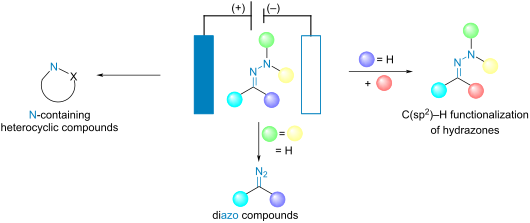
Scheme 20: C(sp2)–H functionalization of aldehyde-derived hydrazones: general mechanisms.
Scheme 21: C(sp2)–H functionalization of benzaldehyde diphenyl hydrazone [68,69].
Scheme 22: Phosphorylation of aldehyde-derived hydrazones [70].
Scheme 23: Azolation of aldehyde-derived hydrazones [72].
Scheme 24: Thiocyanation of benzaldehyde-derived hydrazone 122 [73].
Scheme 25: Sulfonylation of aromatic aldehyde-derived hydrazones [74].
Scheme 26: Trifluoromethylation of aromatic aldehyde-derived hydrazones [76].
Scheme 27: Electrooxidation of benzophenone hydrazones [77].
Scheme 28: Electrooxidative coupling of benzophenone hydrazones and alkenes [77].
Scheme 29: Electrosynthesis of α-diazoketones [78].
Scheme 30: Electrosynthesis of stable diazo compounds [80].
Scheme 31: Photoelectrochemical synthesis of alkenes through in situ generation of diazo compounds [81].
Scheme 32: Synthesis of nitriles [82].
Scheme 33: Electrochemical oxidation of ketone-derived NH-allylhydrazone [83].
Beilstein J. Org. Chem. 2024, 20, 1906–1913, doi:10.3762/bjoc.20.166
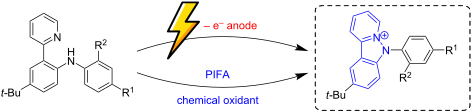
Graphical Abstract
Scheme 1: Pyridoindazolium salts known to date and obtained in the present work.
Scheme 2: Synthesis of S1–S3 salts using PIFA as an oxidant and the resonance structures demonstrating the el...
Figure 1: CV curves for salt S2 and corresponding amine A2 (left, Figure 1a) and salt S3 with and without diethyl malo...
Scheme 3: Redox-interconversion between diarylamines A1–A3 and N-arylpyridoindazoliums S1–S3.
Scheme 4: Electrochemical approach to pyridoindazolium salts.
Figure 2: CV curves for amine A1 without the lutidine additive (black curve) and after addition of 2 equiv (r...
Figure 3: Semi-differential CV curves for the mediators (TEMPO, bis(4-tert-butylphenyl)nitroxide and tris(4-b...
Figure 4: CV curves of bis(4-tert-butylphenyl)nitroxide (a) and TEMPO (b) with amine A3 and 2,6-lutidine adde...
Beilstein J. Org. Chem. 2024, 20, 1900–1905, doi:10.3762/bjoc.20.165
Graphical Abstract
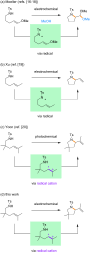
Scheme 1: Radical and ionic intramolecular cyclizations.
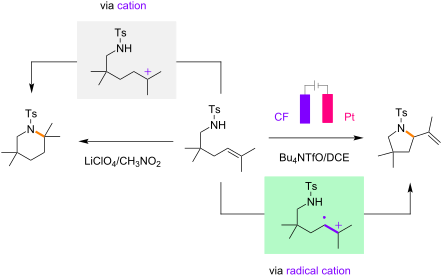
Scheme 2: Electrochemical and photochemical aza-Wacker cyclizations.
Scheme 3: Scope of electrochemical aza-Wacker cyclization. Reaction conditions: the alkene (0.20 mmol), Bu4NO...
Scheme 4: Mechanistic studies of aza-Wacker cyclization. A: Electrochemical (Bu4NOTf in CH3CN/1,2-DCE), B: no...
Figure 1: Cyclic voltammograms for aryl sulfonamides.
Beilstein J. Org. Chem. 2024, 20, 1746–1757, doi:10.3762/bjoc.20.153
Graphical Abstract
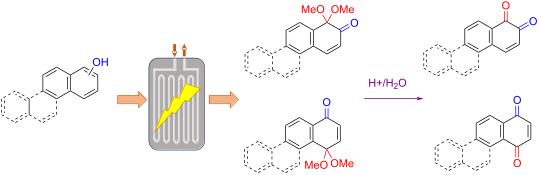
Scheme 1: Formation of phenoxonium cation in the anodic oxidation of phenol performed under neutral or weakly...
Scheme 2: Anodic oxidation reported by Swenton et al. [37].
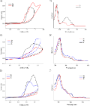
Figure 1: Cyclic voltammograms of PAPs first scan at 0.1 V/s in 0.1 M [NBu4] [PF6] in MeCN and UV–vis spectra...
Scheme 3: Proposed mechanism for the formation of p-dimethoxy acetals in the anodic oxidation of 1b and 3b.
Figure 2: Resonance structures of the phenoxonium cation formed from 2-chrysenol (3a).
Beilstein J. Org. Chem. 2024, 20, 1560–1571, doi:10.3762/bjoc.20.139
Graphical Abstract
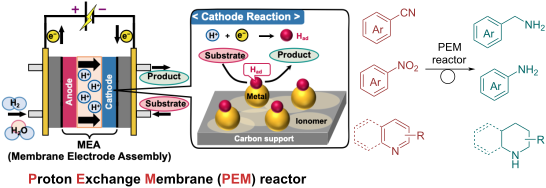
Figure 1: Schematic of (a) a PEM reactor and (b) MEA.
Scheme 1: Plausible mechanism for the reduction of 1a leading to benzylamine 2a and dibenzylamine 3a.
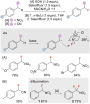
Scheme 2: Electrochemical reduction of cyanoarenes under optimal conditions. Reaction conditions: anode catal...
Scheme 3: Scope of the electrochemical reduction of nitroarenes. Reaction conditions: anode catalyst, Pt/C; c...
Figure 2: Hypothesis of the trap of quinoline on membrane and tetrahydroquinoline and the effect of adding an...
Figure 3: Recycled use of MEA for the electroreduction of 6a in the presence of PTSA (0.10 equiv). Reaction c...
Figure 4: Recycled use of MEA for the electroreduction of 6a in the presence of PPTS (0.10 equiv). Reaction c...
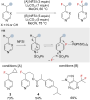
Scheme 4: Scope of the electroreduction of 6 in the presence of PTSA (0.10 equiv). Reaction conditions: anode...
Scheme 5: a) Large scale synthesis of 7a and b) electoreduction of 6a using H2SO4 as a proton source.
Scheme 6: Scope of the electroreduction of 6 in the presence of PTSA (1 equiv). Reaction conditions: anode ca...
Beilstein J. Org. Chem. 2024, 20, 1527–1547, doi:10.3762/bjoc.20.137
Graphical Abstract
Figure 1: A) Benzylic fluorides in bioactive compounds, with B) the relative BDEs of different benzylic C–H b...
Figure 2: Base-mediated benzylic fluorination with Selectfluor.
Figure 3: Sonochemical base-mediated benzylic fluorination with Selectfluor.
Figure 4: Mono- and difluorination of nitrogen-containing heteroaromatic benzylic substrates.
Figure 5: Palladium-catalysed benzylic C–H fluorination with N-fluoro-2,4,6-trimethylpyridinium tetrafluorobo...
Figure 6: Palladium-catalysed, PIP-directed benzylic C(sp3)–H fluorination of α-amino acids and proposed mech...
Figure 7: Palladium-catalysed monodentate-directed benzylic C(sp3)–H fluorination of α-amino acids.
Figure 8: Palladium-catalysed bidentate-directed benzylic C(sp3)–H fluorination.
Figure 9: Palladium-catalysed benzylic fluorination using a transient directing group approach. Ratio refers ...
Figure 10: Outline for benzylic C(sp3)–H fluorination via radical intermediates.
Figure 11: Iron(II)-catalysed radical benzylic C(sp3)–H fluorination using Selectfluor.
Figure 12: Silver and amino acid-mediated benzylic fluorination.
Figure 13: Copper-catalysed radical benzylic C(sp3)–H fluorination using NFSI.
Figure 14: Copper-catalysed C(sp3)–H fluorination of benzylic substrates with electrochemical catalyst regener...
Figure 15: Iron-catalysed intramolecular fluorine-atom-transfer from N–F amides.
Figure 16: Vanadium-catalysed benzylic fluorination with Selectfluor.
Figure 17: NDHPI-catalysed radical benzylic C(sp3)–H fluorination with Selectfluor.
Figure 18: Potassium persulfate-mediated radical benzylic C(sp3)–H fluorination with Selectfluor.
Figure 19: Benzylic fluorination using triethylborane as a radical chain initiator.
Figure 20: Heterobenzylic C(sp3)–H radical fluorination with Selectfluor.
Figure 21: Benzylic fluorination of phenylacetic acids via a charge-transfer complex. NMR yields in parenthese...
Figure 22: Oxidative radical photochemical benzylic C(sp3)–H strategies.
Figure 23: 9-Fluorenone-catalysed photochemical radical benzylic fluorination with Selectfluor.
Figure 24: Xanthone-photocatalysed radical benzylic fluorination with Selectfluor II.
Figure 25: 1,2,4,5-Tetracyanobenzene-photocatalysed radical benzylic fluorination with Selectfluor.
Figure 26: Xanthone-catalysed benzylic fluorination in continuous flow.
Figure 27: Photochemical phenylalanine fluorination in peptides.
Figure 28: Decatungstate-photocatalyzed versus AIBN-initiated selective benzylic fluorination.
Figure 29: Benzylic fluorination using organic dye Acr+-Mes and Selectfluor.
Figure 30: Palladium-catalysed benzylic C(sp3)–H fluorination with nucleophilic fluoride.
Figure 31: Manganese-catalysed benzylic C(sp3)–H fluorination with AgF and Et3N·3HF and proposed mechanism. 19...
Figure 32: Iridium-catalysed photocatalytic benzylic C(sp3)–H fluorination with nucleophilic fluoride and N-ac...
Figure 33: Iridium-catalysed photocatalytic benzylic C(sp3)–H fluorination with TBPB HAT reagent.
Figure 34: Silver-catalysed, amide-promoted benzylic fluorination via a radical-polar crossover pathway.
Figure 35: General mechanism for oxidative electrochemical benzylic C(sp3)–H fluorination.
Figure 36: Electrochemical benzylic C(sp3)–H fluorination with HF·amine reagents.
Figure 37: Electrochemical benzylic C(sp3)–H fluorination with 1-ethyl-3-methylimidazolium trifluoromethanesul...
Figure 38: Electrochemical benzylic C(sp3)–H fluorination of phenylacetic acid esters with HF·amine reagents.
Figure 39: Electrochemical benzylic C(sp3)–H fluorination of triphenylmethane with PEG and CsF.
Figure 40: Electrochemical benzylic C(sp3)–H fluorination with caesium fluoride and fluorinated alcohol HFIP.
Figure 41: Electrochemical secondary and tertiary benzylic C(sp3)–H fluorination. GF = graphite felt. DCE = 1,...
Figure 42: Electrochemical primary benzylic C(sp3)–H fluorination of electron-poor toluene derivatives. Ring f...
Figure 43: Electrochemical primary benzylic C(sp3)–H fluorination utilizing pulsed current electrolysis.
Beilstein J. Org. Chem. 2024, 20, 1497–1503, doi:10.3762/bjoc.20.133
Graphical Abstract
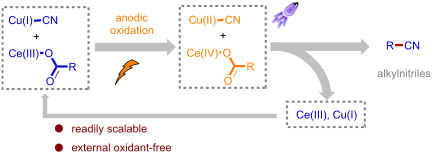
Figure 1: Decarboxylative cyanation: background and our working hypothesis.
Figure 2: Scope of electrophotochemical decarboxylative cyanation of aliphatic carboxylic acids. All yields a...
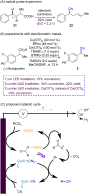
Figure 3: Mechanistic studies and proposed catalytic cycles.
Beilstein J. Org. Chem. 2024, 20, 1327–1333, doi:10.3762/bjoc.20.116
Graphical Abstract
Scheme 1: Electrochemical hydroarylation of alkenes with aryl halides.
Scheme 2: Substrate scope. Reaction conditions for 1 (X = Cl, Br): 1 (1.0 mmol), 2 (3.5 mmol), 1,3-DCB (5 mol...
Scheme 3: Gram-scale reaction and control experiments.
Scheme 4: Plausible mechanism.
Beilstein J. Org. Chem. 2024, 20, 552–560, doi:10.3762/bjoc.20.47
Graphical Abstract
Scheme 1: Synthesis of compound 1 and N-acylated compounds 2a–c.
Figure 1: Absorption (1), fluorescence (2, λex = 410 nm) and fluorescence excitation (3, λfl = 465 nm) spectr...
Figure 2: Electronic absorption spectra of compound 2b in acetonitrile before (1) and after 15 s (2), 35 s (3...
Scheme 2: Photoisomerization of N-acylated ketoenamines 2a–c.
Figure 3: Molecular structure of O-acylated isomer 3b. Thermal ellipsoids are drawn at the 50% probability le...
Figure 4: Fragment of the molecular packing of compound 3b, showing π–π interactions in the crystalline state...
Figure 5: Absorption spectra of compound 2a in acetonitrile before (1) and after (2) the addition of Fe2+ (c2a...
Figure 6: Changes in the absorption intensity of compound 2a in acetonitrile at 520 nm after the addition of ...
Scheme 3: Sequential interaction of compounds 2a–c with Fe2+ and AcO−.
Figure 7: Job’s plot at the wavelength 429 nm, reflecting the interaction of compound 2a with Fe2+ in acetoni...
Figure 8: Fluorescence intensity of compound 2a upon alternate addition of Fe2+ and AcO−.
Beilstein J. Org. Chem. 2024, 20, 379–426, doi:10.3762/bjoc.20.36
Graphical Abstract
Scheme 1: Examples of BIMs used for their medicinal properties.
Scheme 2: Mechanisms for the synthesis of BIMs using protic or Lewis acids as catalysts.
Scheme 3: Synthesis of bis(indolyl)methanes using DBDMH.
Scheme 4: Competition experiments and synthesis of bis(indolyl)methanes using DBDMH.
Scheme 5: Proposed mechanism for formation of BIM of using DBDMH.
Scheme 6: Synthesis of bis(indolyl)methanes using I2.
Scheme 7: General reaction mechanism upon halogen bonding.
Scheme 8: Synthesis of bis(indolyl)methanes using I2, introduced by Ji.
Scheme 9: Synthesis of bis(indolyl)methanes using Br2 in CH3CN.
Scheme 10: Βidentate halogen-bond donors.
Scheme 11: Synthesis of bis(indolyl)methanes using bidentate halogen-bond donor 26.
Scheme 12: Proposed reaction mechanism.
Scheme 13: Synthesis of bis(indolyl)methanes using iodoalkyne as catalyst.
Scheme 14: Proposed reaction mechanism.
Scheme 15: Optimized reaction conditions used by Ramshini.
Scheme 16: Activation of the carbonyl group by HPA/TPI-Fe3O4.
Scheme 17: Synthesis of BIMs in the presence of nanoAg-Pt/SiO2-doped silicate.
Scheme 18: Mechanism of action proposed by Khalafi-Nezhad et al.
Scheme 19: Activation of the carbonyl group by the Cu–isatin Schiff base complex.
Scheme 20: Optimum reaction conditions published by Jain.
Scheme 21: Organocatalytic protocol utilizing nanoparticles introduced by Bankar.
Scheme 22: Activation of the carbonyl group by the AlCl3·6H2O-SDS-SiO2 complex.
Scheme 23: Optimal reaction conditions for the aforementioned nano-Fe3O4 based catalysts.
Scheme 24: Nanocatalytic protocol proposed by Kaur et al.
Scheme 25: Microwave approach introduced by Yuan.
Scheme 26: Microwave approach introduced by Zahran et al.
Scheme 27: Microwave irradiation protocol introduced by Bindu.
Scheme 28: Silica-supported microwave irradiation protocol.
Scheme 29: Proposed mechanism for formation of BIM by Nongkhlaw.
Scheme 30: Microwave-assisted synthesis of BIMs catalyzed by succinic acid.
Scheme 31: Proposed mechanism of action of MMO-4.
Scheme 32: Catalytic approach introduced by Muhammadpoor-Baltork et al.
Scheme 33: Reaction conditions used by Xiao-Ming.
Scheme 34: Ultrasonic irradiation-based protocol published by Saeednia.
Scheme 35: Pyruvic acid-mediated synthesis of BIMs proposed by Thopate.
Scheme 36: Synthesis of BIMs using [bmim]BF4 or [bmim]PF6 ionic liquids.
Scheme 37: Synthesis of BIMs utilizing In(OTf)3 in octylmethylimidazolium hexafluorophosphate as ionic liquid.
Scheme 38: FeCl3·6H2O-catalyzed synthesis of BIMs with use of ionic liquid.
Scheme 39: Synthesis of BIMs utilizing the [hmim]HSO4/EtOH catalytic system.
Scheme 40: Synthesis of BIMs utilizing acidic ionic liquid immobilized on silica gel (ILIS-SO2Cl).
Scheme 41: The [bmim][MeSO4]-catalyzed reaction of indole with various aldehydes.
Scheme 42: The role of [bmim][MeSO4] in catalyzing the reaction of indole with aldehydes.
Scheme 43: Synthesis of BIMs utilizing FeCl3-based ionic liquid ([BTBAC]Cl-FeCl3) as catalyst.
Scheme 44: Synthesis of BIMs using [Msim]Cl at room temperature.
Scheme 45: [Et3NH][H2PO4]-catalyzed synthesis of bis(indolyl)methanes.
Scheme 46: PILs-catalyzed synthesis of bis(indolyl)methanes.
Scheme 47: FSILs-mediated synthesis of bis(indolyl)methanes.
Scheme 48: Possible “release and catch” catalytic process.
Scheme 49: Synthesis of bis(indolyl)methanes by [DABCO-H][HSO4].
Scheme 50: Synthesis of bis(indolyl)methanes by [(THA)(SO4)].
Scheme 51: Synthesis of BBSI-Cl and BBSI-HSO4.
Scheme 52: Synthesis of BIMs in the presence of BBSI-Cl and BBSI-HSO4.
Scheme 53: Chemoselectivity of the present method.
Scheme 54: Synthesis of BIMs catalyzed by chitosan-supported ionic liquid.
Scheme 55: Proposed mechanism of action of CSIL.
Scheme 56: Optimization of the reaction in DESs.
Scheme 57: Synthesis of BIMs using ChCl/SnCl2 as DES.
Scheme 58: Synthesis of BIMs derivatives in presence of DES.
Scheme 59: BIMs synthesis in choline chloride/urea (CC/U).
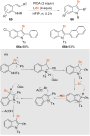
Scheme 60: Flow chemistry-based synthesis of BIMs by Ley.
Scheme 61: Flow chemistry-based synthesis of BIMs proposed by Nam et al.
Scheme 62: Amino-catalyzed reaction of indole with propionaldehyde.
Scheme 63: Aminocatalytic synthesis of BIMs.
Scheme 64: Proposed mechanism for the aminocatalytic synthesis of BIMs.
Scheme 65: Enzymatic reaction of indole with aldehydes.
Scheme 66: Proposed mechanism for the synthesis of BIMs catalyzed by TLIM.
Scheme 67: Proposed reaction mechanism by Badsara.
Scheme 68: Mechanism proposed by D’Auria.
Scheme 69: Photoinduced thiourea catalysis.
Scheme 70: Proposed mechanism of photoacid activation.
Scheme 71: Proposed mechanism of action for CF3SO2Na.
Scheme 72: Proposed mechanism for the synthesis of BIMs by Mandawad.
Scheme 73: Proposed mechanism for the (a) acid generation and (b) synthesis of BIMs.
Scheme 74: a) Reaction conditions employed by Khaksar and b) activation of the carbonyl group by HFIP.
Scheme 75: Activation of the carbonyl group by the PPy@CH2Br through the formation of a halogen bond.
Scheme 76: Reaction conditions utilized by Mhaldar et al.
Scheme 77: a) Reaction conditions employed by López and b) activation of the carbonyl group by thiourea.
Scheme 78: Infrared irradiation approach introduced by Luna-Mora and his research group.
Scheme 79: Synthesis of BIMs with the use of the Fe–Zn BMOF.
Beilstein J. Org. Chem. 2024, 20, 346–378, doi:10.3762/bjoc.20.35
Graphical Abstract
Scheme 1: Comparison between Barton and NHPI ester radical precursors.
Scheme 2: Overview of the mechanisms and activation modes involved in radical generation from RAEs.
Scheme 3: Common mechanisms in photocatalysis.
Scheme 4: A) Giese-type radical addition of NHPI esters mediated by a reductive quenching photocatalytic cycl...
Scheme 5: A) Minisci-type radical addition of NHPI esters. B) Reaction mechanism involving an “off-cycle” red...
Scheme 6: Activation of NHPI esters through hydrogen-bonding in an oxidative quenching photocatalytic cycle.
Scheme 7: SET activation of RAE facilitated by a Lewis acid catalyst.
Scheme 8: PCET activation of NHPI esters in the context of a radical-redox annulation.
Scheme 9: Activation enabled by a strong excited-state reductant catalyst and its application in the dearomat...
Scheme 10: Proposed formation of an intramolecular charge-transfer complex in the synthesis of (spiro)anellate...
Scheme 11: Formation of a charge-transfer complex between enamides and NHPI esters enabled by a chiral phospha...
Scheme 12: Activation of NHPI ester through the formation of photoactive EDA-complexes.
Scheme 13: A) EDA complex-mediated radical hydroalkylation reactions of NHPI esters. B) Proposed mechanism for...
Scheme 14: Proposed radical chain mechanism initiated by EDA-complex formation.
Scheme 15: A) Photoinduced decarboxylative borylation. B) Proposed radical chain mechanism.
Scheme 16: A) Activation of NHPI esters mediated by PPh3/NaI. B) Proposed catalytic cycle involving EDA-comple...
Scheme 17: A) Radical generation facilitated by EDA complex formation between PTH1 catalyst and NHPI esters. B...
Scheme 18: Proposed catalytic cycle for the difunctionalization of styrenes.
Scheme 19: Formation of a charge-transfer complex between NHPI esters and Cs2CO3 enables decarboxylative amina...
Scheme 20: 3-Acetoxyquinuclidine as catalytic donor in the activation of TCNHPI esters.
Scheme 21: A) Photoinduced Cu-catalyzed decarboxylative amination. B) Proposed catalytic cycle. C) Radical clo...
Scheme 22: A) Photoinduced Pd-catalyzed aminoalkylation of 1,4-dienes. B) Proposed catalytic cycle.
Scheme 23: A) TM-catalyzed decarboxylative coupling of NHPI esters and organometallic reagents. B) Representat...
Scheme 24: Synthetic applications of the TM-catalyzed decarboxylative coupling of NHPI esters and organometall...
Scheme 25: A) Ni-catalyzed cross-electrophile coupling of NHPI esters. B) Representative catalytic cycle.
Scheme 26: A) Synthetic applications of decarboxylative cross-electrophile couplings. B) Decarboxylative aryla...
Scheme 27: A) Activation of tetrachlorophthalimide redox-active esters enabled by a low-valency Bi complex. B)...
Scheme 28: Activation of NHPI esters mediated by Zn0 applied in a Z-selective alkenylation reaction.
Scheme 29: A) Activation of NHPI esters enabled by a pyridine-boryl radical species applied to the decarboxyla...
Scheme 30: A) Decarboxylative coupling of RAE and aldehydes enabled by NHC-catalyzed radical relay. B) Propose...
Scheme 31: A) Decarboxylative C(sp3)–heteroatom coupling reaction of NHPI esters under NHC catalysis B) The NH...
Scheme 32: A) Electrochemical Giese-type radical addition of NHPI esters. B) Reaction mechanism.
Scheme 33: Electrochemical Minisci-type radical addition of NHPI-esters.
Scheme 34: Ni-electrocatalytic cross-electrophile coupling of NHPI esters with aryl iodides.
Scheme 35: A) Decarboxylative arylation of NHPI esters under Ag-Ni electrocatalysis B) Formation of AgNP on th...
Scheme 36: Synthetic applications of decarboxylative couplings of NHPI esters under Ni-electrocatalysis.
Scheme 37: Examples of natural product syntheses in which RAEs were used in key C–C bond forming reactions.
Beilstein J. Org. Chem. 2024, 20, 336–345, doi:10.3762/bjoc.20.34
Graphical Abstract
Scheme 1: Synthesis of 6,8-di-tert-butyl-N-aryl-3H-phenoxazin-3-imines 3 [6] and 6,8-di-tert-butyl-2-(arylamino)...
Figure 1: DFT-calculated molecular geometry (B3LYP/6-311++G(d,p) level) and distribution of electronic densit...
Scheme 2: 6,8-Di-tert-butyl-2-(arylamino)-3H-phenoxazin-3-ones 4 prepared by the one-pot reaction between 6,8...
Figure 2: Molecular structure of 6,8-di-tert-butyl-2-(o-nitrophenylamino)-3H-phenoxazin-3-one (4f). a) Select...
Figure 3: UV–vis spectra of 6,8-di-tert-butyl-2-(arylamino)-3H-phenoxazin-3-ones 4a–h (toluene, c = 2⋅10−5 M, ...
Scheme 3: Synthesis of 14H-quinoxaline[2,3-b]phenoxazines 5 and 6.
Scheme 4: Relative stability of the tautomers 7 and 7a,b of quinoxaline[2,3-b]phenoxazine calculated at the D...
Scheme 5: Preparation of quinoxaline[2,3-b]phenoxazine (7) from 2-amino-3H-phenoxazin-3-one (8) [10] and 2-ethoxy...
Figure 4: Molecular structure of ethyl 2,4-di-tert-butyl-14H-quinoxalino[2,3-b]phenoxazine-10-carboxylate (5c...
Scheme 6: Triphenodioxazine and oxazinophenothiazine derivatives 10 via condensation of 3H-phenoxazin-3-one 1...
Figure 5: a) UV–vis (solid lines) and fluorescence emission (λex = 365 nm, dashed) spectra of compounds 5a–c ...
Figure 6: UV–vis (solid lines) and fluorescence emission (dashed, λex = 365 nm) spectra of compounds 6a,b in ...
Figure 7: UV–vis, fluorescence emission (λex = 500 nm), and fluorescence excitation (λobs = 590 nm) spectra o...
Beilstein J. Org. Chem. 2024, 20, 264–271, doi:10.3762/bjoc.20.27
Graphical Abstract
Figure 1: Application of amidyl radical species generated by PCET.
Figure 2: (A) Effect of phosphate base on the cyclic voltammogram of 1. (B) Cyclic voltammograms of 1 in the ...
Figure 3: Plausible models illustrating the size effect of the hydrogen bond complex on the interaction effic...
Figure 4: Plausible mechanism for the inter-/intramolecular hydroamination of 1.