


Search results
Search for "chromophore" in Full Text gives 175 result(s) in Beilstein Journal of Organic Chemistry.
The role of spacer length and flexibility in peptide self-assembly
Beilstein J. Org. Chem. 2026, 22, 986–996, doi:10.3762/bjoc.22.77
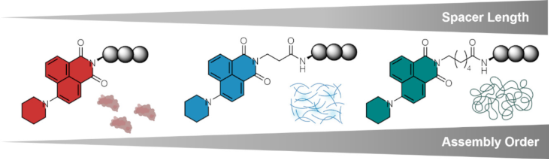
- electronically coupled face-to-face chromophore stacks, whereas 8 remains largely monomeric or in a non-ordered state. Analysis of the emission spectra reveals subtle differences already in the dissolved state: the C0-spacer-containing compound 8 emits at 540 nm, while the C3- (7) and C6-spacer (6) variants both


Get a better glimpse on sequential photoreactions of trisnorbornadienes with 19F NMR spectroscopy
Beilstein J. Org. Chem. 2026, 22, 527–534, doi:10.3762/bjoc.22.38
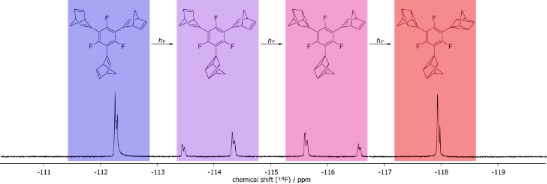
- ortho-fluoro substituents. These substituents also induce a strong electron-withdrawing effect on the chromophore and thus lower the HOMO energy, likely leading to a larger HOMO–LUMO gap and to a small hypsochromic shift of the absorption (1f: λmax = 273 nm; parent norbornadiene 1b: λmax = 283 nm) [49


Design and synthesis of an axially chiral platinum(II) complex and its CPL properties in PMMA matrix
Beilstein J. Org. Chem. 2026, 22, 143–150, doi:10.3762/bjoc.22.7
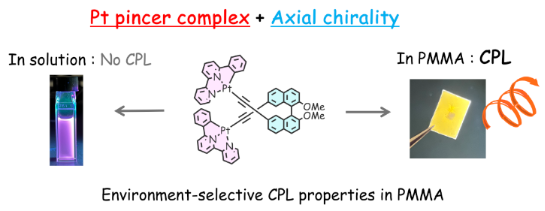
- two platinum(II) chromophore units, leading to the chiroptical properties in the MLCT region through exciton coupling under restricted molecular motion. Keywords: axial chirality; chiral chemistry; circularly polarized luminescence (CPL); phosphorescence; platinum(II) complex; Introduction
- -to-ligand charge transfer (MLCT). Furthermore, chiroptical measurements by circular dichroism (CD) and CPL spectroscopy indicated that the axial chirality of the binaphthyl moiety governs the relative orientation of the Pt(II)-based chromophore pair, generating MLCT-band CD and CPL signals through


Symmetrical D–π–A–π–D indanone dyes: a new design for nonlinear optics and cyanide detection
Beilstein J. Org. Chem. 2026, 22, 131–142, doi:10.3762/bjoc.22.6
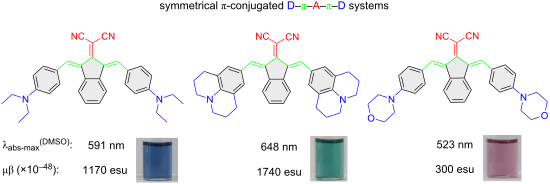
- indicative of a high NLO response in a typical organic NLO chromophore. Apart from the existence of donor (D) and acceptor (A) groups linked by a π-conjugation path, the NLO response is also influenced by the strength of the D and A groups in the structure. For high NLO responses, a small energy gap between


Rotaxanes with integrated photoswitches: design principles, functional behavior, and emerging applications
Beilstein J. Org. Chem. 2025, 21, 2345–2366, doi:10.3762/bjoc.21.179

- –guest interaction induces a chiral signal, while the azobenzene chromophore imparts photoswitching properties to the molecule. Furthermore, solvent-mediated hydrogen-bonding interactions tailored within the inner cyclodextrin cavity, combined with photocontrolled isomerization of the azo moiety, enable


Recent advances in Norrish–Yang cyclization and dicarbonyl photoredox reactions for natural product synthesis
Beilstein J. Org. Chem. 2025, 21, 2315–2333, doi:10.3762/bjoc.21.177
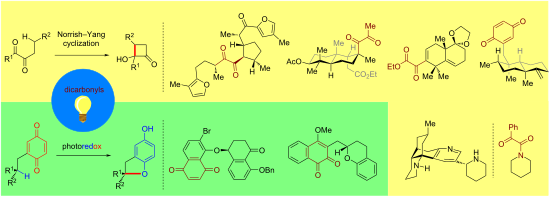
- spiroacetal core using multi-functionalized 1,2-naphthoquinone substrates [51]. This study focused on substituent effects of methoxy groups at different positions (C5–C8) on the naphthoquinone chromophore (Scheme 13b). Key findings revealed that substrates bearing methoxy groups at C5, C6, or C8 (108a, 108b
- : reactive substrates exhibited λmax < 460 nm (yellow-orange), whereas unreactive ones showed λmax > 460 nm (dark red-purple). This suggests insufficient excitation energy for Norrish type-II hydrogen abstraction in the latter. Such chromophore-dependent reactivity provides critical insights for designing




Pd-catalyzed dehydrogenative arylation of arylhydrazines to access non-symmetric azobenzenes, including tetra-ortho derivatives
Beilstein J. Org. Chem. 2025, 21, 2234–2242, doi:10.3762/bjoc.21.170
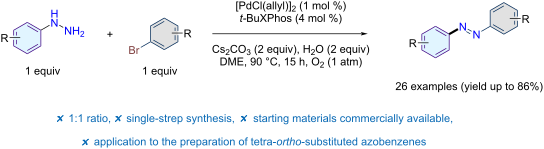
- of applications, including molecular switches, sensors, and light-controlled materials [1][2][3][4][5][6][7][8]. The photoswitching behavior arises from the reversible photoisomerization between the E- and Z-forms of the azobenzene chromophore, driven by the isomerization of the N–N double bond. This


A m-quaterphenyl probe for absolute configurational assignments of primary and secondary amines
Beilstein J. Org. Chem. 2025, 21, 2211–2219, doi:10.3762/bjoc.21.168
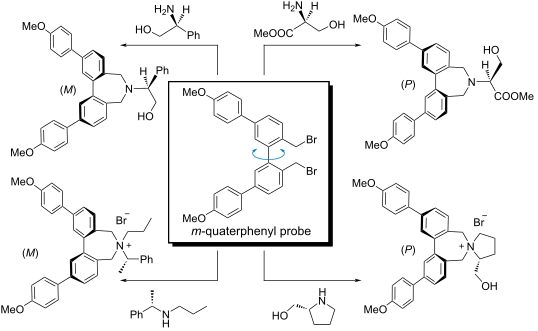
- bond. Therefore, the π-electron conjugation is widespread almost over the chromophores. However, the UV spectrum of 1–ʟ-alaninol conjugate (S)-2a shows an intense absorption, maintaining the nature of methoxybiphenyl chromophore. The absorption band at 259 nm is attributed to the π–π* transition


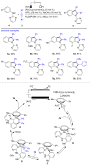
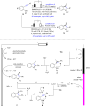
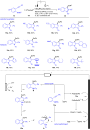
Electrochemical cyclization of alkynes to construct five-membered nitrogen-heterocyclic rings
Beilstein J. Org. Chem. 2025, 21, 2173–2201, doi:10.3762/bjoc.21.166
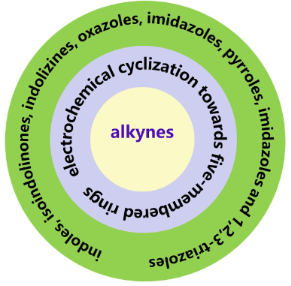
- F and cryptotrione have fused and spiro five-membered rings, respectively [25][26]. Strepsesquitriol bearing bridged five-membered rings was firstly synthesized by Li in 2024 [27]. The green fluorescent protein (GFP) core chromophore (o-LHBDI) displayed a potential application in organic light









Solar thermal fuels: azobenzene as a cyclic photon–heat transduction platform
Beilstein J. Org. Chem. 2025, 21, 2036–2047, doi:10.3762/bjoc.21.159
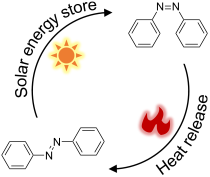
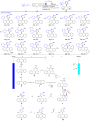
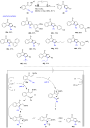
- . Grossman et al. synthesized azobenzene-functionalized single-walled carbon nanotubes (SWCNTs) (Figure 3a) and demonstrated their application as solar thermal fuels [43]. The conformational restriction imposed by the chromophore-template structure combined with photochemically generated spatial strain
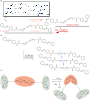
- polymer solar thermal fuels Conjugated azobenzene polymer solar thermal fuels [47][48] utilize π-conjugated systems as templates for azobenzene chromophore photoisomerization, as schematically illustrated in Figure 4. Han et al. developed azobenzene-functionalized polydiacetylene-based solar thermal fuels




Photoswitches beyond azobenzene: a beginner’s guide
Beilstein J. Org. Chem. 2025, 21, 1808–1853, doi:10.3762/bjoc.21.143
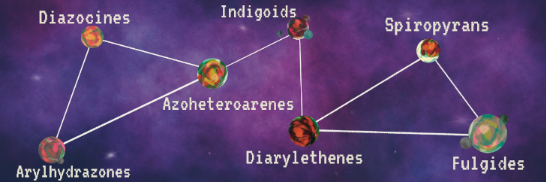
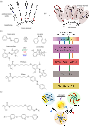
- conjugated with the chromophore structure, will influence its absorption spectrum and stability [4]. The solvent will also affect the properties, as it can stabilise or destabilise either the ground or the excited state, resulting in a red- or blue shift of the spectra. The thermal half-life (t1/2) measures
- -shift the absorption of the ππ* absorption band, which overlaps with the nπ*, resulting in a decrease in the PSS (Scheme 11), while they are well tolerated when separated from the chromophore backbone [50][52][53][54]. Electron-withdrawing groups seem not to perturb much the absorption spectra [55




Tautomerism and switching in 7-hydroxy-8-(azophenyl)quinoline and similar compounds
Beilstein J. Org. Chem. 2025, 21, 1404–1421, doi:10.3762/bjoc.21.105
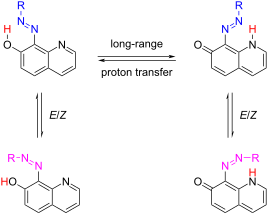
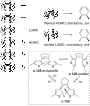
- -influenced tautomerism takes place, but its interpretation is not a trivial work. The curves, shown in Figure 1, indicate why. It seems that the spectra of KE and KK are almost identical as position and intensity, which is reasonable, because they share the same chromophore system and, due to the stabilizing




Optimized synthesis of aroyl-S,N-ketene acetals by omission of solubilizing alcohol cosolvents
Beilstein J. Org. Chem. 2025, 21, 1201–1206, doi:10.3762/bjoc.21.97
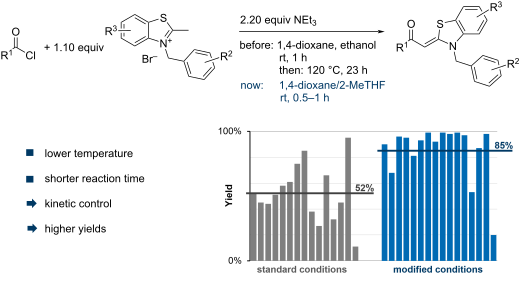
- -on of emission upon induced aggregation in alcohol–water mixtures [1]. This chromophore class has been extensively developed in recent years, even to aggregation-induced emissive (AIE) multichromophores [2] and even bichromophoric fluorimetric sensors [3][4]. The retrosynthesis of the title compounds


Recent advances in the electrochemical synthesis of organophosphorus compounds
Beilstein J. Org. Chem. 2025, 21, 770–797, doi:10.3762/bjoc.21.61
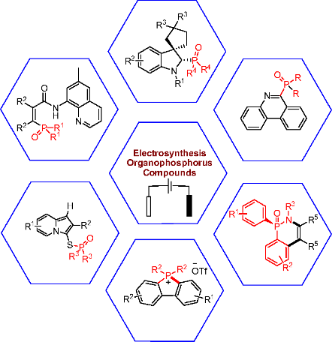
- , the C3-phosphorylated product was also formed. In 2024, Mdluli et al. [67] reported an electrochemical method for synthesizing iminophosphoranes. In this method, iminophosphorane was investigated due to its air stability and the presence of a UV–vis chromophore, which enables the analysis of the


Unprecedented visible light-initiated topochemical [2 + 2] cycloaddition in a functionalized bimane dye
Beilstein J. Org. Chem. 2025, 21, 500–509, doi:10.3762/bjoc.21.37
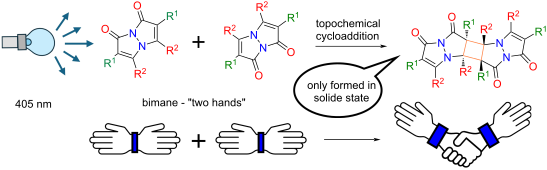
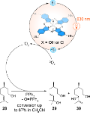
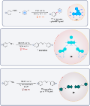
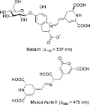
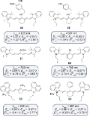
- between these bonds is outside the acceptable range (4.2 Å) [24]. This finding, along with the re-examination of several previously synthesized bimane compounds, suggests that substituting the bimane chromophore with groups that sufficiently redshift the absorption maximum could result in a wide range of


Red light excitation: illuminating photocatalysis in a new spectrum
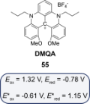
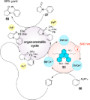
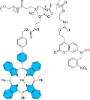
Beilstein J. Org. Chem. 2025, 21, 296–326, doi:10.3762/bjoc.21.22
















Streamlined modular synthesis of saframycin substructure via copper-catalyzed three-component assembly and gold-promoted 6-endo cyclization
Beilstein J. Org. Chem. 2025, 21, 226–233, doi:10.3762/bjoc.21.14
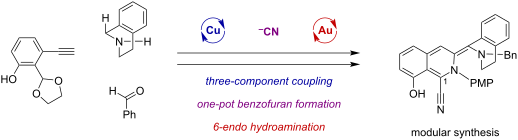
- at 375 nm), the chromophore of the pentacyclic intermediate 18 suggests a potential as a fluorescent probe. Conclusion In summary, we have developed a novel synthetic approach for the efficient construction of the substructure of saframycin A (1). Our strategy streamlines the three key


Ceratinadin G, a new psammaplysin derivative possessing a cyano group from a sponge of the genus Pseudoceratina
Beilstein J. Org. Chem. 2024, 20, 3215–3220, doi:10.3762/bjoc.20.267
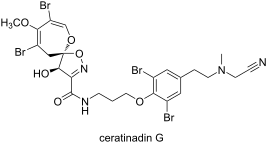
- existence of a substituted benzenoid chromophore was suggested by the UV absorption maximum at 258 nm. The presence of hydroxy and/or amino groups and a carbonyl group was indicated by IR absorptions at 3337 cm−1 and 1671 cm−1, respectively. The analysis of the HSQC spectrum, along with the 1H and 13C NMR


Investigation of a bimetallic terbium(III)/copper(II) chemosensor for the detection of aqueous hydrogen sulfide
Beilstein J. Org. Chem. 2024, 20, 2818–2826, doi:10.3762/bjoc.20.237

- an antenna chromophore and a receptor for Cu2+ ions; the Cu2+ complex was shown to be a chemosensor for the detection of aqueous hydrogen sulfide. The chemosensor exhibited significant reversibility over multiple cycles, observed with the sequential addition of Na2S followed by Cu2+ ions. The limit
- 4-(2-pyridyl)-1,2,3-triazole). A europium(III)/copper(II) complex [Eu(triazole-DPA)3·3Cu]3+(Figure 1), functionalized with 4-(2-pyridyl)-1,2,3-triazole serving as both an antenna chromophore and a receptor for Cu2+ ions, previously demonstrated theoretical limits of detection (LoD) of 1.1 μM for


Synthesis of indano[60]fullerene thioketone and its application in organic solar cells
Beilstein J. Org. Chem. 2024, 20, 1270–1277, doi:10.3762/bjoc.20.109
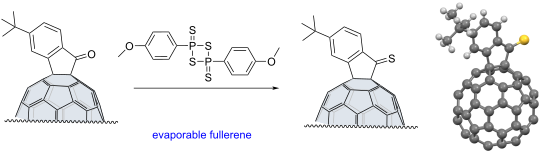
- around 1000 cm−1 for t-Bu-FIDS. Ultraviolet–visible (UV–vis) spectroscopy of t-Bu-FIDS in o-DCB exhibited two prominent UV absorption bands with peaks at 257 nm and 320 nm (Figure 1b). The absorption at 257 nm indicated the integrity of the fullerene cage chromophore. The absorption peak at 320 nm was


Mechanistic investigations of polyaza[7]helicene in photoredox and energy transfer catalysis
Beilstein J. Org. Chem. 2024, 20, 1236–1245, doi:10.3762/bjoc.20.106
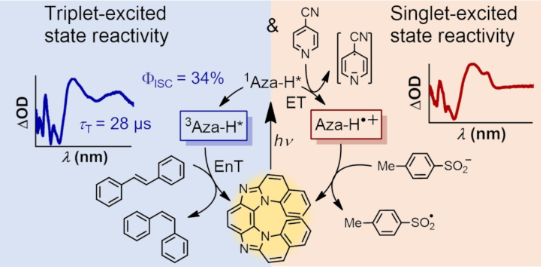
- thorough photochemical characterization is essential for efficient light-driven applications. In this article, the mode of action of a polyazahelicene catalyst (Aza-H) was investigated using laser flash photolysis (LFP). The study revealed that the chromophore can function as a singlet-state photoredox
- chromophores and their roles in catalytic cycles have been extensively studied leading to numerous findings and novel reaction pathways [55][58][59][60][61]. Lately, polyazahelicenes have gained some attention by synthetic groups [62][63][64][65][66]. However, this chromophore class is underexplored concerning




Synthesis of π-conjugated polycyclic compounds by late-stage extrusion of chalcogen fragments
Beilstein J. Org. Chem. 2024, 20, 287–305, doi:10.3762/bjoc.20.30
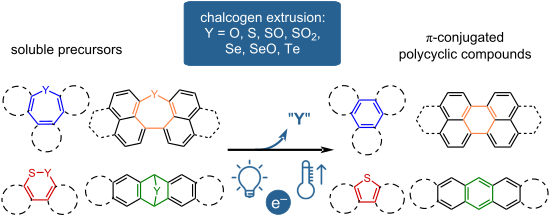
- , in matrices [22][23][24][25] or in a single crystal [26]. This strategy has also been extended to the synthesis of dyads involving an acene moiety combined with a chromophore [27]. Alternatively, when inserting a monoketone bridging fragment, i.e., a norbornadien-7-one moiety, in the soluble




Photochromic derivatives of indigo: historical overview of development, challenges and applications
Beilstein J. Org. Chem. 2024, 20, 228–242, doi:10.3762/bjoc.20.23
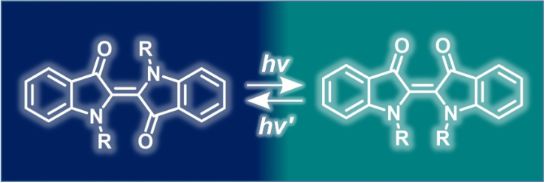
- involved in the main indigo chromophore comprising a C=C double bond substituted by two acceptors and two donor groups (Figure 4) [18]. Notably, the benzene rings make just a small contribution to the chromophore. In other words, the primary chromophore of indigo consists of two intersecting merocyanine
- hypsochromic shifts of the absorption maxima [24]. These effects can be easily explained considering the direction of the charge transfer in the H-chromophore of indigo upon excitation. Thus, in the excited state, the electron density shifts from the N towards the O atom (Figure 4). Therefore, an increase in
- lifetimes, radiative and non-radiative relaxation pathways of the indigo chromophore [26][27][30][31][32][33][34][35] as well as to estimate ionization potentials and electronic structures [28][29], singlet oxygen generation capacity [31], QSAR properties [25], and others. In both solution and solid state



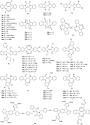


Perspectives on push–pull chromophores derived from click-type [2 + 2] cycloaddition–retroelectrocyclization reactions of electron-rich alkynes and electron-deficient alkenes
Beilstein J. Org. Chem. 2024, 20, 125–154, doi:10.3762/bjoc.20.13
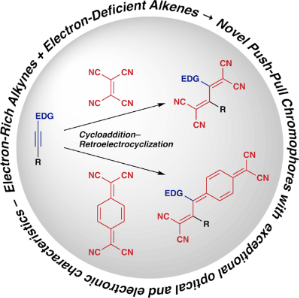
- . Additional skeletal transformation reactions in TCBD structures, such as those shown in Scheme 12, have also been reported [113][114][115][116], which enable the construction of a wide array of push–pull chromophore structures. For instance, Shoji et al. reported that the reaction between 3(4-(N,N
- multiple chromophore units induces complexity in the interpretation of the resulting circular dichroism (CD) spectra because of the overlap of several exciton couplets. Thus, exciton coupling CD signals were not discernible for 51–55. Further, regarding 56, the exciton coupling CD signal in the ICT region
- the plausible energy transfer from the local charge-separated (CS) state of the push–pull chromophore (namely N,N-diethylanilino (DEA)•+–TCBD•−) to the singlet excited state of C60 (1C60*). In transient absorption spectral measurements conducted via the femtosecond laser-flash photolysis of compound


Using the phospha-Michael reaction for making phosphonium phenolate zwitterions
Beilstein J. Org. Chem. 2024, 20, 41–51, doi:10.3762/bjoc.20.6
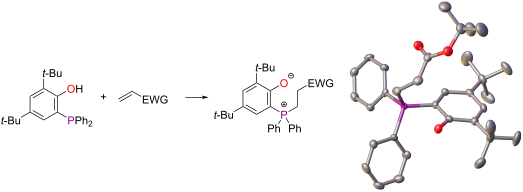
- Figure 3). The blue shift is more pronounced for those zwitterions not bearing any hydrogen-bond-donating functional groups. Accordingly, it is plausible to explain the blue-shifted absorption maxima of 2b and 2h in chloroform by a more polar environment of the chromophore caused by the hydrogen-bond





