Search results
Search for "configuration" in Full Text gives 1071 result(s) in Beilstein Journal of Organic Chemistry. Showing first 200.
Discovery of sugarnitriles A and B, and structural reassignment of SF-2140, from a sugarcane endophytic actinomycete Amycolatopsis sp. JS-O27
Beilstein J. Org. Chem. 2026, 22, 1114–1121, doi:10.3762/bjoc.22.90
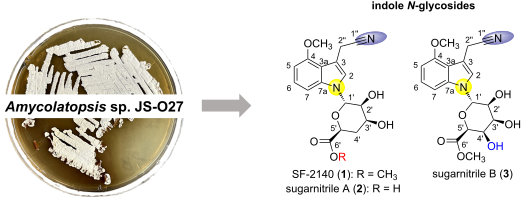
- ( +64.3 in MeOH, c 0.88) with that of SF-2140 ( +59 in MeOH, c 1.0) indicated that the absolute configuration of 1 is consistent with that of SF-2140. Compound 2 was isolated as a colorless amorphous solid ( −31.0 in MeOH, c 0.67). The molecular formula was deduced as C17H18N2O6 by HRESIMS (found m/z
- possess the same absolute configuration of C-1'. Thus, the absolute configurations of 3 were determined as 1'S,2'S,3'S,4'R,5'S. We next evaluated the bioactivity of compounds 1–3. In the cytotoxicity assay, the three compounds showed no cytotoxicity against HepG2 cells at 50 μM. In the antibacterial assay


Rhodopyran, a carboxylated hexahydrocyclopenta[b]pyran from Rhodococcus
Beilstein J. Org. Chem. 2026, 22, 1107–1113, doi:10.3762/bjoc.22.89
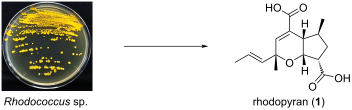
- Rhodococcus sp. strain RD066637. The planar structure was elucidated by 1D/2D NMR analyses and HRMS spectrometry, and the relative configuration was assigned from vicinal coupling constants and NOESY correlations, while the absolute configuration remains undetermined. Rhodopyran represents a structurally
- than that of Streptomyces. In our continuing cultivation-based survey of metabolites from Rhodococcus, Rhodococcus sp. strain RD066637 was found to produce a new cyclopenta[b]pyran metabolite, rhodopyran (1) (Figure 1). Herein, we describe the isolation, structure elucidation, relative configuration
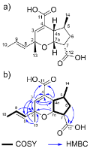
- defined two main partial structures: a 1-propenyl moiety (H-8/H-9/H3-10) with a large trans vicinal coupling (J = 15.4 Hz), consistent with an E configuration across C-8/C-9, and a methyl-branched aliphatic spin system, H-4a/H-5(H3-14)/H2-6/H-7/H-7a, including the H-5/H2-6 and H-5/H3-14 COSY correlations


Amino acid-based surfactants: sustainable synthesis and antimicrobial mechanisms
Beilstein J. Org. Chem. 2026, 22, 1067–1085, doi:10.3762/bjoc.22.85
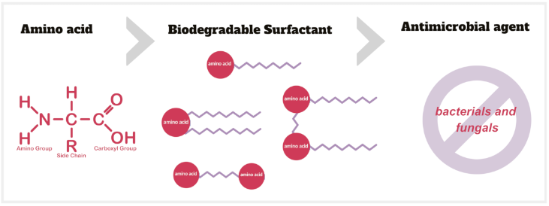
- numerous microorganisms and their biofilms. The antimicrobial action of these agents can be explained by their amphiphilic structure, a configuration that allows interactions with structural components, such as the microorganism membranes and extracellular matrices of biofilms, promoting destructive
- can be explained by their cationic charge and amphipathic structure [21][22]. This configuration allows these compounds to give rise to electrostatic and hydrophobic interactions with the cell membranes of microorganisms, which are mainly formed by a lipid bilayer [23]. The studies on the


Synthesis and optical resolution of 4,5-diaminohomoadamantane: a promising scaffold for chiral ligands and bioactive compounds
Beilstein J. Org. Chem. 2026, 22, 1013–1022, doi:10.3762/bjoc.22.80
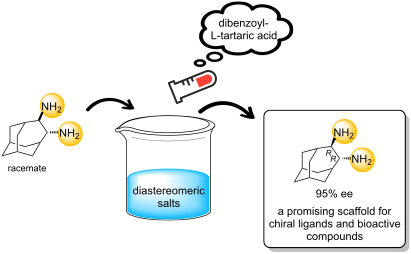
- trans-isomer was selectively obtained via ring-opening of an N-Tf-protected aziridine. The racemic trans-4,5-diaminohomoadamantane was resolved with dibenzoyl-ʟ-tartaric acid. The absolute (4R,5R)-configuration was proposed on the basis of TDDFT calculations of the specific optical rotation using the
- -dihydropyrazine (4R,5R)-17 derived from diamine (4R,5R)-8a', the enantiomeric excess was determined to be 95%. Multiple attempts to grow a crystal suitable for X-ray analysis were unsuccessful; therefore, the absolute configuration of (4R,5R)-8a' was proposed on the basis of quantum mechanical calculations. To
- date, a number of successful determinations of the absolute configuration for both conformationally flexible and rigid molecules have been performed by comparison of experimental and calculated specific rotation values [93][94][95][96][97][98][99][100][101]. The main difficulty of such a procedure is


Electrochemical reduction of unsaturated carbon–carbon bonds via 3d transition-metal catalysis
Beilstein J. Org. Chem. 2026, 22, 955–981, doi:10.3762/bjoc.22.75
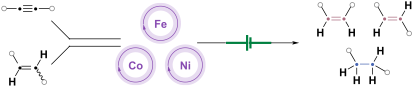
- the use of stoichiometric reagents. In this context, when electrochemistry is employed as a synthetic tool in organic chemistry, several critical parameters must be taken into account, including (a) electrode, (b) electrolysis mode, and (c) cell configuration (Figure 1). Among these, the choice of
- . Finally, the configuration of the electrochemical cell further modulates reaction outcomes (Figure 1B). While undivided cells are generally preferred for their simplicity, as both electrodes operate within a single compartment, divided cells are required when anodic and cathodic processes must be
- spatially separated to prevent undesired interactions between reactive intermediates. Although such separation improves selectivity and mechanistic control, it may also introduce increased cell resistance and mass transport limitations. Consequently, the choice of cell configuration is closely tied to the








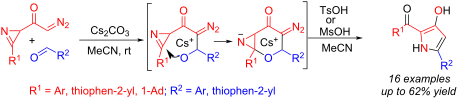
Cascade transformation of 2-(diazoacetyl)-2H-azirines to 2-aroyl-3-hydroxy-1H-pyrroles via condensation with aromatic aldehydes
Beilstein J. Org. Chem. 2026, 22, 897–904, doi:10.3762/bjoc.22.70
- impossibility of trans-fusion. The trans configuration forces the bridgehead substituents onto opposite sides of the rings. This rigid geometric requirement severely distorts the sp³ bond angles at the fusion carbons, generating immense, destabilizing angle and torsional strain across the fused system. In fact


Chiral cyclopropenimine-catalyzed enantioselective Michael reactions of phenol and benzofuran-derived α,β-unsaturated pyrazolamides with benzophenone-imine of glycine esters
Beilstein J. Org. Chem. 2026, 22, 888–896, doi:10.3762/bjoc.22.69
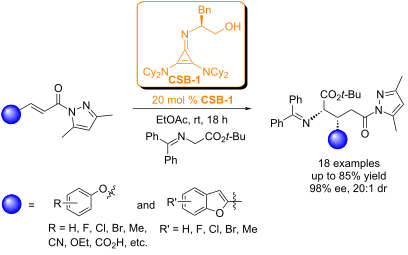
- -conformation and the absolute configurations of 7d’ was unambiguously assigned as 2S and 3S, this means that the benzophenone-imine group and bromophenoxymethyl group should be arranged on the same side of the longest carbon chain to be syn before lactamization, therefore, the absolute configuration of 6d’ was
- yields and enantioselectivities. The absolute configuration of chiral 3-substituted pyroglutamic acid ester were determined by X-ray single crystal diffraction. This protocol can be used for the late-stage modification of bioactive molecules containing a phenol group. The synthesis of chiral 3,4
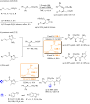
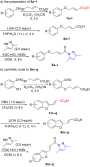
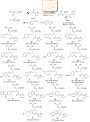
- benzophenone-imine esters. The catalysts used in the screening of Michael reaction conditions. The proposed attack modes of Michael addition of 2a and 5a. A proposed reaction mechanism of CSB-1 catalyzed Michael reaction between 2a and 5a. Configuration of 7d’ determined by X-ray diffraction analysis. Chiral






Diastereodivergent electrophilic trapping of α-boryl lithium derivatives
Beilstein J. Org. Chem. 2026, 22, 882–887, doi:10.3762/bjoc.22.68
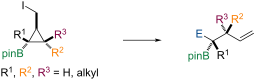
- results suggest that the stereochemical outcome is independent of the initial configuration at C2 and is instead dictated by conformational preferences of the α-boryl lithium intermediate. A simplified steric model is proposed in which lithium coordination induces a pseudo-chelated structure that controls
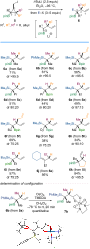
- electrophile PhMe2SiCl did not alter the selectivity of the transformation, yielding 6b as a single diastereomer (Scheme 3). The relative configuration of 6b was determined by X-ray analysis of the osmate ester 7b, derived from osmium-catalyzed dihydroxylation (Scheme 3) [38], and the other products were
- assigned by analogy. Interestingly, the relative configuration is reversed compared to the cases with aryl group as R3 (Scheme 2) [34]. The presence of an aliphatic substituent as R2 instead of R3 (R3 = H, R2 = allyl) has no influence on the diastereoselectivity, as 6c was obtained with high selectivity




The trans-influence in gold chemistry from a catalytic perspective
Beilstein J. Org. Chem. 2026, 22, 838–856, doi:10.3762/bjoc.22.66
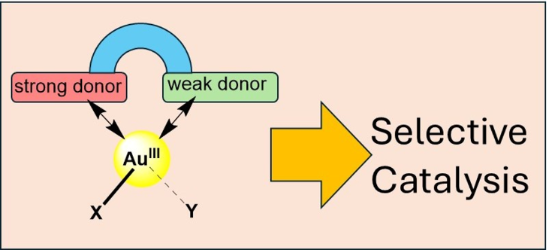
- -relativistic computations on hydride complexes of heavy metals with 5d10 and 5d8 electron configuration to show that the 1H NMR chemical shift is dominated by relativistic spin–orbit (SO) effects. Weak trans-influence ligands, such as NO3−, Cl− or pyridine are strongly shielding, leading to negative values on
- (C^C^N)Au–C(R)=C(R)H (Z-configuration), most probably via (C^C^N)AuH as intermediate [54]. Allenes are more reactive, and both (C^N^C)AuH 8a and [(P^N^C)AuH]+ 11 give allene-insertion products, by unspecified mechanisms [31][52]. This picture changed however when it was realised that (C^N^C)AuH


Halogenated azobenzene acrylates: from efficient solution photoswitching to stable solid-state photochromic materials
Beilstein J. Org. Chem. 2026, 22, 782–794, doi:10.3762/bjoc.22.60
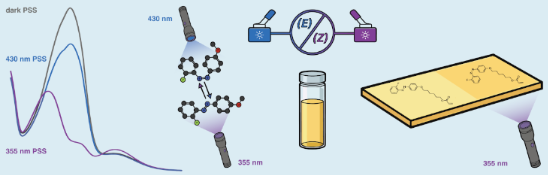
- phase within the liquid crystalline copolymer enables modulation of the proton conductivity, as demonstrated by Nagano et al. [13]. Lin et al. reported on azobenzene-containing peptoids forming hollow spherical supramolecular aggregates (E-configuration) that transform into helical arrangement (Z
- -configuration) after irradiation with UV light. Furthermore, when a fluorescent pyrene moiety was embedded into the azopeptoids, the emission wavelength could be significantly modulated via the photoinduced azobenzene E/Z switch by allowing Förster resonance energy transfer (FRET) [14]. Azobenzene has also been


Design, synthesis, and biological evaluation of FXR/ASK1 dual-target modulators
Beilstein J. Org. Chem. 2026, 22, 771–781, doi:10.3762/bjoc.22.59
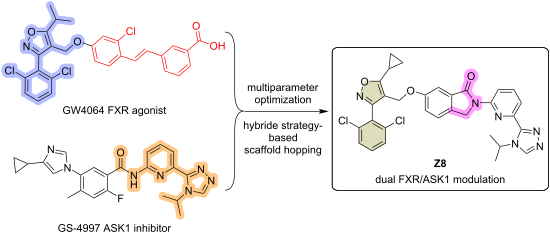
- afford triazoles IXa,c,d or, in case of product IXb with (R)-alanine methyl ester. The absolute stereochemistry of IXb is R. All compounds with defined absolute configuration described below were synthesized from IXb, thereby preserving the absolute stereochemistry and affording the corresponding R
- -dioxane/H2O, 80 °C, 18 h, 64–90% yield; (b) K2CO3, KI, MeCN, 50 °C, 6 h, 53–95% yield; (c) LiOH·H2O, THF/MeOH/H2O, rt, 4 h, 55–76% yield; (d) LiAlH4, THF, 0 °C, 4 h, 43–89% yield; (e) absolute configuration is R. Synthesis of compound Z30. Conditions: (a) NaH, DMF, rt, 16 h; (b) TFA, DCM, 0 °C, 3 h; (c


Synthesis and biological evaluation of new brassinosteroid analogs with C-22 benzoate function
Beilstein J. Org. Chem. 2026, 22, 753–762, doi:10.3762/bjoc.22.57
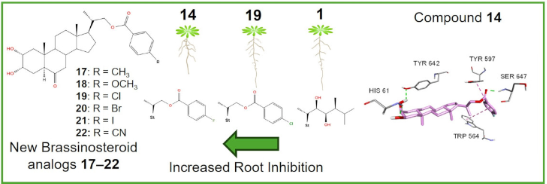
- inhibition of root growth of Arabidopsis thaliana. The RLIT data is compared with those previously reported for two series of compounds having the same substitution pattern at C-22 but different structure in ring A. This comparison revealed that a 2α,3α-dihydroxy configuration is more active than a 3
- stereochemical configuration of natural BRs, both in the rings and side alkyl chain, is an enormous synthetic challenge [27]. Consequently, synthetic BRs and BR analogs are not affordable for large-scale commercial applications and therefore, the search for more accessible and bioactive analogs has become a
- of A. thaliana. The results provide information on the most probable configuration, the main interactions, and the binding energy as a function of the chemical structure of BR analogs. The lower binding energy is commonly associated to the most active BR analog. Thus, docking results have allowed to


Synthesis of heterocycles based on azomethine ylides from α-amino acids (or amines) and carbonyl compounds
Beilstein J. Org. Chem. 2026, 22, 705–741, doi:10.3762/bjoc.22.55
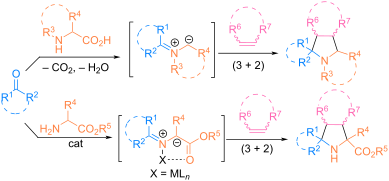
- yields (up to 83%) and diastereoselectivity (up to 95%). The (S)-configuration of the sulfinyl group is capable of inducing the absolute configuration (2S,3R,4S,5R) in the final pyrrolidines. In the study [67], the 1,3-dipolar cycloaddition reaction of triarylideneacetylacetone derivatives with
- configuration and the structure of the transition state [88]. In [1], we developed an efficient protocol for the diastereo- and regioselective synthesis of spiro[cyclopropa[a]pyrrolizine-2,2'-indenes] 128–131 using 1,3-dipolar cycloaddition reactions of stable azomethine ylide 123, obtained in situ by


Anti-invasive and cytotoxic evaluation of a (+)-pinoresinol-based semisynthetic library against glioblastoma
Beilstein J. Org. Chem. 2026, 22, 691–704, doi:10.3762/bjoc.22.54
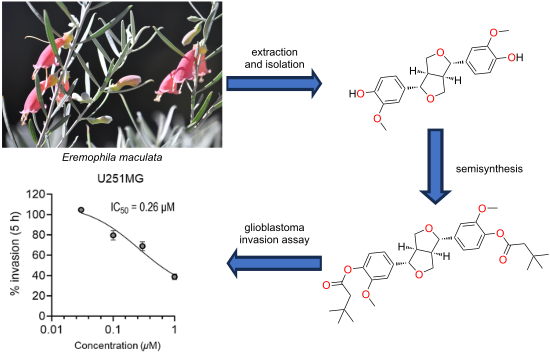
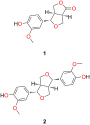
- planar structure assignment for 5. Moreover, the relative configuration of the semisynthetic derivative 5 was assigned following ROESY data analysis. Following the slow evaporation of a methanolic solution of (+)-eudesmin (3), suitable crystals were obtained for X-ray crystallographic studies (Figure 4
- ), which enabled the absolute configuration of 3 to be assigned as 7S,8R,7'S,8'R. Moreover, this is the first report of a crystal structure of (+)-eudesmin (3). In 2015, Lu et al. reported the purification and full characterization of both enantiomers of eudesmin from Acorus tatarinowii, along with the X
- -ray crystallographic structure (Cu source) for (−)-eudesmin only, which enabled the absolute configuration of this stereoisomer to be assigned [27]. Our experimental data and stereochemical assignment for (+)-eudesmin (3) are consistent with those reported by Lu et al. [27]. Furthermore, during our



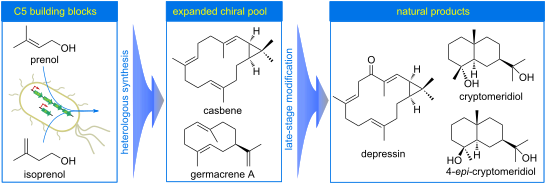
Synthesis of depressin, cryptomeridiol and 4-epi-cryptomeridiol enabled by a terpenoid chiral pool-producing platform
Beilstein J. Org. Chem. 2026, 22, 683–690, doi:10.3762/bjoc.22.53
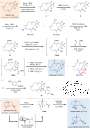
- derivative 16 (CCDC 2470579) as a brownish-yellow needle suitable for X-ray diffraction (Scheme 2b) [56][57], which confirmed the absolute configuration of the casbene skeleton and the position of the first allylic oxidation. It is also interesting to note that the three double bonds in this molecule are
- -butylammonium fluoride (TBAF) for TBS ether removal, followed by DMP for hydroxy group oxidation, delivering the desired product 1 in 29% overall yield in three steps from 14a/b, together with a double bond-isomerized product 15 in 39% overall yield after HPLC purification. The configuration of C12–C13 double


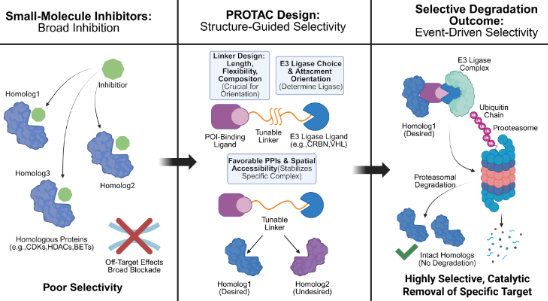
Advantages of PROTACs in achieving selective degradation of homologous protein families
Beilstein J. Org. Chem. 2026, 22, 628–661, doi:10.3762/bjoc.22.49


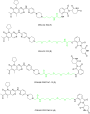

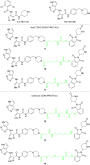


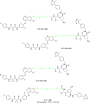
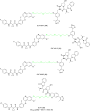




Kinetic resolution of racemic planar-chiral vinylcymantrenes by molybdenum-catalyzed asymmetric metathesis dimerization
Beilstein J. Org. Chem. 2026, 22, 568–574, doi:10.3762/bjoc.22.42
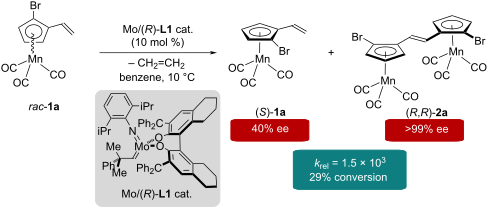
- configuration of (–)-2b Levorotatory AMD/KR product (–)-2b, which was obtained as in entry 8, Table 1 using Mo/(R)-L1 precatalyst, was recrystallized by slow diffusion of pentane into the concentrated diethyl ether solution. Crystals of (–)-2b were grown as light-yellow blocks. The X-ray crystallography
- Information File 2 for details). The two cyclopentadienides and the olefinic moiety are nearly coplanar with a C2–C13–C14–C8 torsion angle of 175.4(2)°. The Flack parameter for this structure was determined to be –0.010(4), and the absolute configuration of (–)-2b was unambiguously determined to be (S,S) (see


Experimental and DFT studies on the regioselective methanolysis of 5-azido-9-oxabicyclo[6.1.0]nonan-4-yl 4-nitrobenzoate isomers
Beilstein J. Org. Chem. 2026, 22, 547–556, doi:10.3762/bjoc.22.40
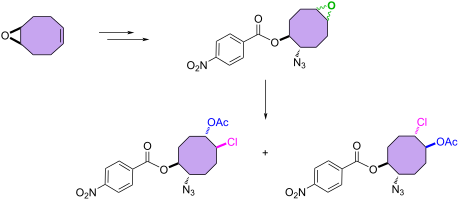
- -ray analysis (Figure 2) [25]. X-ray analysis of azido compound 10 confirmed the trans configuration of the azide group with chloride and the cis configuration with the acetate. Our suggested mechanism for the ring-opening of the epoxides 9 with HCl(g) in MeOH proceeded as described in Scheme 3. As
- spectroscopic data. However, the uncertainty or weakness of the cross peaks in NOESY and NOE signals indicated that compound 11 exhibits significant conformational flexibility. The cyclooctane ring has increased flexibility, so the configuration assignment of 11 is difficult to determine with the help of the


Melifoliox B, a novel phloroglucin derivative isolated from Melicope barbigera (Rutaceae) and synthesis of new oxidation products from melifoliones A and B
Beilstein J. Org. Chem. 2026, 22, 535–546, doi:10.3762/bjoc.22.39
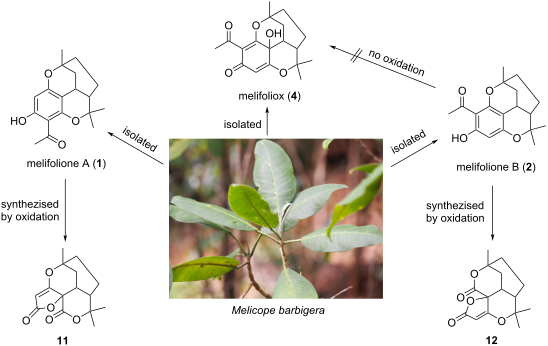
- hydrogenated pyran rings of 4 can only be linked cis, the two possible enantiomers of 4 have the following configuration: (6aR,9S,10aS,10bR) or (6aS,9R,10aR,10bS). Due to the finding, that the isolated compound showed no optical rotation, it exists as a racemate. A stereo model of 4 provided important



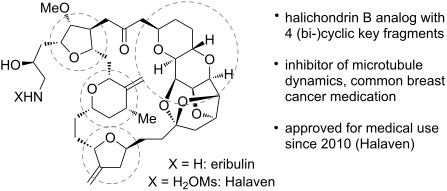
Modern synthetic pathways towards eribulin and its subunits
Beilstein J. Org. Chem. 2026, 22, 495–526, doi:10.3762/bjoc.22.37
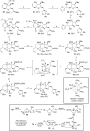
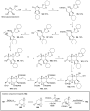
- . Here, 121 bears the right configuration needed for Halaven synthesis, but the authors also showed that 122 was easily converted to 121 via Mitsunobu inversion. Although 121 only represents a small building block for the total assembly of 1, this method especially stands out for its cost-efficiency and








Recent advances in the stereoselective synthesis of distal biaxially chiral molecules
Beilstein J. Org. Chem. 2026, 22, 461–479, doi:10.3762/bjoc.22.34
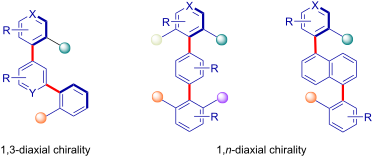
- –C derivatives through reaction of 1-alkynylnaphthalenes with benzamides. In this context they observed that the stereoselectivity of the alkyne insertion could be tuned by solvent effects, particularly with hexafluoroisopropanol, which induced inversion of the C–C axial configuration (not shown). In


Electrosynthetic access to unsymmetrical oxaza[8]helicenes with high chiral stability and strong circularly polarized luminescence (CPL)
Beilstein J. Org. Chem. 2026, 22, 372–382, doi:10.3762/bjoc.22.25
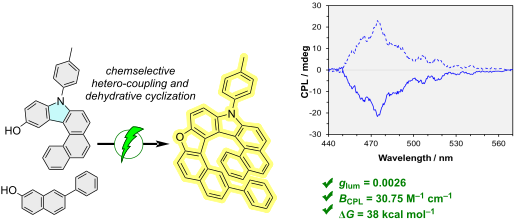
- emitters. The |glum| values were determined to be 0.001 at 498.0 nm for 5a, 0.0026 at 474.5 nm for 5b, 0.0006 at 441.8 nm for 6a, and 0.0018 at 448.8 nm for 6b, with the (P)-configuration exhibiting a positive Cotton effect and the (M)-configuration showing a negative Cotton effect (Figure 5B). According
- lowest energy excited state (S1) and TD-DFT calculated transitions at MN15/6-311G(2d,p)/SMD=chloroform level of theory. Chiroptical properties of oxaza[n]helicenes: (A) CD spectra measured in chloroform (1 × 10⁻⁵ M); CPL spectra measured in chloroform (1 × 10⁻³ M). Solid lines for (M)-configuration and
- dashed lines for (P)-configuration of 5a (black), 5b (blue), 6a (green), and 6b (red). Recent examples of hetero[8]helicenes: (A) symmetric hetero[8]helicenes; (B) unsymmetrical hetero[8]helicenes; (C) short-step electrosynthetic access to new unsymmetrical oxaza[8]helicenes. Short-step synthesis of




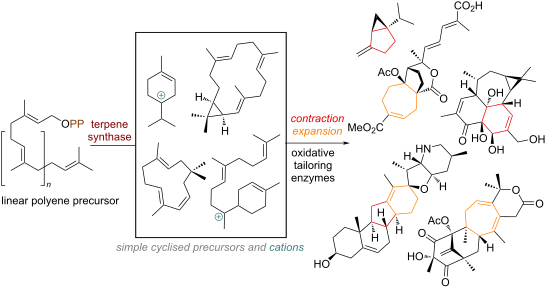
Ring contraction and ring expansion reactions in terpenoid biosynthesis and their application to total synthesis
Beilstein J. Org. Chem. 2026, 22, 289–343, doi:10.3762/bjoc.22.21
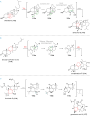
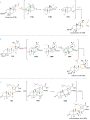
- isomers (128b) of the aldol addition is privileged to undergo intramolecular esterification to give alstoscholarinoid B (125). The configuration of the other isomer 128c has been reportedly isolated already in 2002 by Kuo and Chiang [182]. For alstoscholarinoid A (124) an analogous oxidative cleavage and






Spirobarbiturates with a pyrrolizidine moiety: synthesis, structure and biological evaluation
Beilstein J. Org. Chem. 2026, 22, 274–288, doi:10.3762/bjoc.22.20
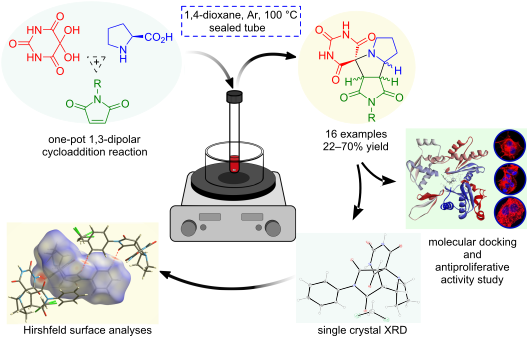
- in the maleimide: in most cases the endo-isomer is the main (or only) product, but for some N-arylmaleimides the exo-product is predominant. The proposed mechanism is discussed, and the products were characterized by detailed spectral analysis. The configuration of the stereocenters was determined by
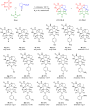
- configuration of their stereocenters, was determined using NMR spectroscopy and XRD analysis. endo-Isomers 4a–e exhibited the following characteristic signals in their 1H NMR spectra: multiplets in the range of δ 1.5–4.4 ppm were assigned to the protons of the pyrrolizidine ring system. The methyl singlets of
- allowed unambiguous determination of the absolute configuration of the spirobarbiturate adducts. Additionally, a detailed analysis of intermolecular interactions in the crystal structure was performed using Hirshfeld surface calculations, providing valuable insights into the packing arrangements of these




Arene activation via π-bond localization: concepts and opportunities
Beilstein J. Org. Chem. 2026, 22, 257–273, doi:10.3762/bjoc.22.19
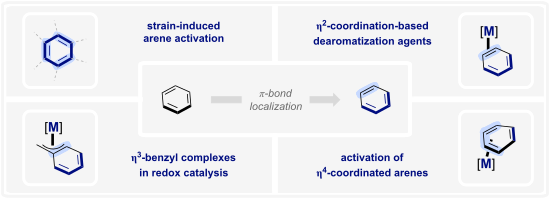
- of the archetypal pentaammineosmium(II) system prior to discussing synthetic utility (Figure 6). The five ammine ligands, strong σ-donors with negligible π-interaction, combined with the d6 configuration render the Os(II) center highly electron-rich and an exceptional π-base [43]. This electronic
- configuration promotes strong binding to π-acidic ligands, effectively compensating for the loss of aromaticity upon η2-coordination to arenes, while disfavoring oxidative addition due to geometric constraints of the octahedral complex. The resulting η2-arene complexes, encompassing both arenes and heteroarenes
- metal center with α-pinene and subsequent ligand substitution proceeds with retention of configuration, the corresponding Mo(0) complex undergoes racemization during substitution (Scheme 2A). This obstacle was overcome by a redox-based approach: oxidation of the Mo(0)–α-pinene complex with iodine to a