


Search results
Search for "copper" in Full Text gives 792 result(s) in Beilstein Journal of Organic Chemistry. Showing first 200.
Construction of CF2 moieties in FDA-approved drugs (2016–2025): industrial routes, mechanisms, and scale-up considerations
Beilstein J. Org. Chem. 2026, 22, 1122–1150, doi:10.3762/bjoc.22.91
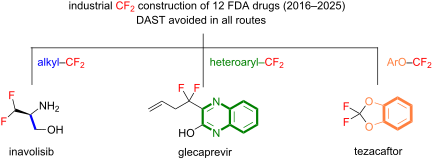
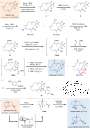
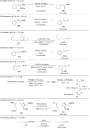
- . First, compound 84 formed an imine with (S)-tert-butylsulfinamide quantitatively in the presence of copper sulfate, which was then added to 85, followed by reduction with magnesium turnings to introduce the CF2 group. The addition step was clean, with no minor isomer detected, but required −78 °C and
- –CF2 Direct CF2 functionalization of aromatic rings typically employs metal-catalyzed methods, such as the reaction of ethyl bromodifluoroacetate with 2-haloarenes in the presence of copper powder, or metal-catalyzed coupling using difluoromethyl 2-pyridylsulfone (Hu's Reagent). Among the four drugs
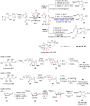
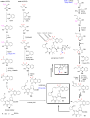
- using ethyl bromodifluoroacetate and 2-halopyridine in the presence of copper powder [56]. As shown in Figure 11, the synthesis of the key intermediate 119 of oteseconazole (9) employs precisely this method. The reaction proceeds via a radical-mediated mechanism. The patent [57] systematically






Controlled supramolecular assemblies of luminescent tridentate cyclometalated alkynylgold(III) amphiphiles in aqueous media
Beilstein J. Org. Chem. 2026, 22, 1097–1106, doi:10.3762/bjoc.22.88
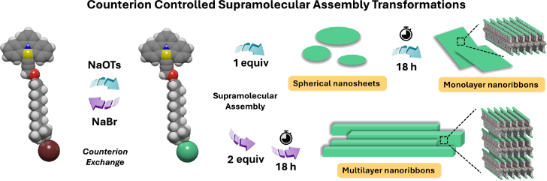
- cyclometalated gold(III) complex 2 was synthesized and further reacted with compound 1 in the presence of triethylamine and a catalytic amount of copper iodide to afford the amphiphile precursor 3. The nucleophilic substitution of compound 3 with trimethylamine enabled to afford GA. The chemical structures of
- , J = 7.7 Hz, 2H), 7.70 (d, J = 7.2 Hz, 2H), 7.43 (t, J = 7.3 Hz, 2H), 7.32 (t, J = 7.6 Hz, 2H). Compound 3: A mixture of compound 1 (87 mg, 0.33 mmol) and compound 2 (103 mg, 0.22 mmol) in the presence of a catalytic amount of copper(I) iodide (4 mg, 0.02 mmol) in triethylamine (1 mL) and
- 20.0 °C at a rate of 1.0 °C/min. Transmission electron microscopy (TEM): TEM samples were prepared by depositing sample solutions (0.2 wt %, 10.0 μL) onto a carbon grid (Micro to Nano, EMR Carbon support film on copper, 400 square mesh) for 30 s. The sample solution was removed by blotting and


Synthesis and optical resolution of 4,5-diaminohomoadamantane: a promising scaffold for chiral ligands and bioactive compounds
Beilstein J. Org. Chem. 2026, 22, 1013–1022, doi:10.3762/bjoc.22.80
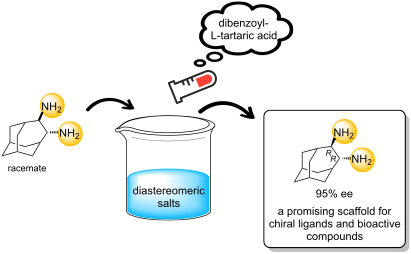
- benzaldehyde and the N,N’-dibenzyl-substituted ligand (4R,5R)-19’ was synthesized by reduction of diimine 18 (Scheme 7). Ligands (4R,5R)-8a′ and 18 were studied as chiral inducers in a Henry reaction. The reaction of benzaldehyde with nitromethane was carried out in iPrOH in the presence of copper(II) acetate


Novel macrocycles: from synthesis to supramolecular function
Beilstein J. Org. Chem. 2026, 22, 982–985, doi:10.3762/bjoc.22.76
- designed protection and functionalization sequences, the authors introduced orthogonal reactive groups at opposite rims of the macrocycle. The synthetic versatility of these systems was demonstrated by copper-catalyzed “click” reactions and amine-based transformations, yielding highly functionalized
Recent advances in copper-catalyzed direct hydroamination of alkenes with (hetero)aromatic amines
Beilstein J. Org. Chem. 2026, 22, 925–947, doi:10.3762/bjoc.22.73
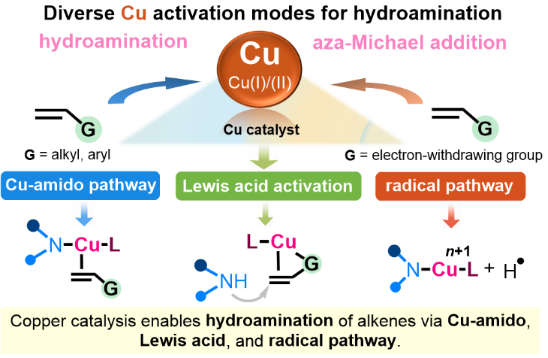
- coordination behavior of these substrates render such transformations inherently challenging. Recently, copper catalysis has emerged as a versatile and practical platform for addressing these limitations. Owing to its redox flexibility and ligand tunability, copper facilitates multiple activation modes
- , including copper–amido-mediated nucleophilic addition or aminocupration, Lewis acid-type alkene activation, and radical-mediated pathways. These complementary mechanisms provide access to diverse alkene classes with control over regioselectivity (Markovnikov vs anti-Markovnikov addition), stereoselectivity
- , and functional group tolerance. This review summarizes recent advances in the copper-catalyzed hydroamination of alkenes with (hetero)aromatic N–H nucleophiles, emphasizing the mechanistic paradigms and the factors governing selectivity. Keywords: aromatic amines; aza-Michael addition; Cu catalysis




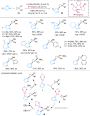


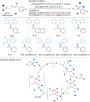

Synthesis of heterocycles based on azomethine ylides from α-amino acids (or amines) and carbonyl compounds
Beilstein J. Org. Chem. 2026, 22, 705–741, doi:10.3762/bjoc.22.55
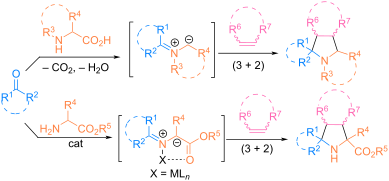
- hypothesized that when ligand L8 is utilized, throughout the entire catalytic cycle both the nitrogen and phosphorus atoms of the ligand maintain their coordination to copper. The final product 16 is formed as a consequence of electron redistribution within the metal-ligand assembly, coupled with steric
- diastereoselectivity in the catalytic (3 + 2) cycloaddition between iminoethers and electrophilic alkenes occurring using chiral metal complexes based on copper(I) and silver(I) salts and ligands (S)-DM-Segphos (L12) or (S)-DTBM-Segphos (L11) (Scheme 12). The reactions involved various dipolarophiles such as acrylates
- absence of interaction between the metal and the electron-withdrawing group of the dipolarophile, and the coordination properties of the metal, for example, the possibility of changing the coordination sphere of copper(I) from bidentate to monodentate, which does not occur with the Ag(I) atom, which has


Synthesis of depressin, cryptomeridiol and 4-epi-cryptomeridiol enabled by a terpenoid chiral pool-producing platform
Beilstein J. Org. Chem. 2026, 22, 683–690, doi:10.3762/bjoc.22.53
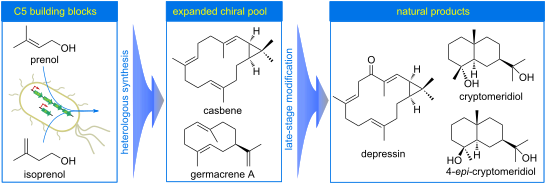
- efficient macrocyclization methods, including tetracarbonylnickel-promoted cyclization of allylic dibromide [17][18], copper-mediated intramolecular carbene–olefin cyclization [19], titanium-induced intramolecular carbonyl coupling [20], and organozinc carbenoid-mediated intramolecular cyclopropanation [21


Hydrogen production from formic acid catalyzed by NHC–Cu complexes
Beilstein J. Org. Chem. 2026, 22, 620–627, doi:10.3762/bjoc.22.48
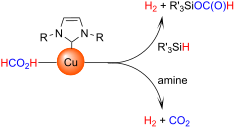
- equimolar mixture of H2 and CO2. The efficiency of the catalysis showed to be strongly dependent on the nature of the amine. Keywords: copper N-heterocyclic carbene; formic acid dehydrogenation; hydrogen storage; metal hydride; silanes; Introduction The discovery and utilization of alternative and
- such as Co [35][36], Ni [37][38], Al [39][40], and Mn [41][42][43] have been released. In this scenario, copper systems remain widely unexplored and, generally, have displayed low activity, regardless of the oxidation state of the Cu precursor and of the presence/absence of additives [44][45][46][47
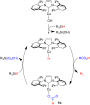
- performances than copper salts, even with lower catalyst loading and under milder conditions [49][50][51]. Based on this background, the first potential formic acid dehydrogenation catalyzed by NHC–Cu complexes (Figure 1) was investigated. Results and Discussion We have shown that the reaction of [Cu(OH)(IPr



Cone p-aminocalix[4]arenes enriched with ‘clickable’ alkyne or azide functionalities
Beilstein J. Org. Chem. 2026, 22, 399–415, doi:10.3762/bjoc.22.28
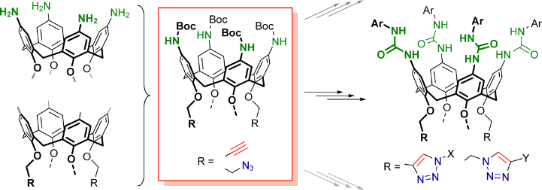
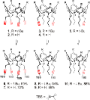
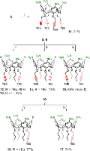
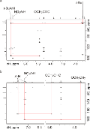
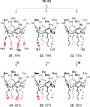
- excess benzyl azide or phenylacetylene, taken as representatives, under copper(I) catalysis, resulting in the narrow-rim triazolated macrocycles. By removing the Boc protecting groups and involving the free amino groups in reactions with p-tolyl isocyanate, a series of narrow-rim triazolated
- conversion into diverse 1,4-disubstituted 1,2,3-triazole units under CuAAC (copper(I)-catalyzed azide–alkyne cycloaddition) ‘click’ conditions [70][71][72][73]. The first implementation of the CuAAC approach for calixarene modification was published shortly after its introduction into chemistry in general
- affect the cycloaddition by, for instance, binding copper cations or counter anions, and thus their presence in the structures of calixarenes at the CuAAC step must be avoided. On the other hand, the unmodified amines may also contribute to undesired Cu(I) stabilization and complicate the CuAAC work up






Synthesis of tricyclic fused pyrrolidine nitroxides from 2-alkynylpyrrolidine-1-oxyls
Beilstein J. Org. Chem. 2026, 22, 344–351, doi:10.3762/bjoc.22.22

- propargylamines via A3-coupling reaction [21]. In analogy to a literature procedure [22], heating of radical 2a in a mixture of dimethylamine, formalin, and tetrahydrofuran in the presence of copper(II) acetate afforded the corresponding dimethylamino derivative 2f. To confirm the structure of the novel




Screwing the helical chirality through terminal peri-functionalization
Beilstein J. Org. Chem. 2026, 22, 205–212, doi:10.3762/bjoc.22.14
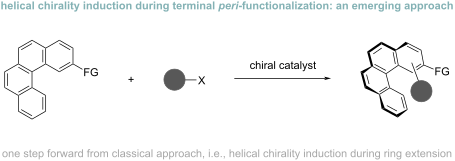
- helical chiral entities was reported by Wang and co-workers. They reported an organocatalyzed asymmetric synthesis of phosphorus-containing chiral helicenes enabled by dynamic kinetic resolution using copper and peptide-mimetic phosphonium salts, i.e. amino acid-derived phosphonium iodide and bromide as
- catalysts [33]. A domino reaction was developed, beginning with a PPS L2-catalyzed Michael addition of phosphine oxides 7 to nitro-substituted oxa[5]helicenes 6, followed by a copper-promoted aromatization. This sequence efficiently produced phosphorus-containing oxa[5]helicene derivatives 8 in high yields


Base-promoted deacylation of 2-acetyl-2,5-dihydrothiophenes and their oxygen-mediated hydroxylation
Beilstein J. Org. Chem. 2026, 22, 192–204, doi:10.3762/bjoc.22.13
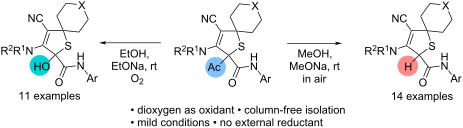
- available reagents is an important task. Recently, we have developed a copper(I)/rhodium(II)-catalyzed method toward two types of regioisomeric 2,5-dihydrothiophenes 1 and 4, containing an acetyl group [50]. In this work, to evaluate the synthetic utility of these compounds (the scope is presented at page




Synthesis and applications of alkenyl chlorides (vinyl chlorides): a review
Beilstein J. Org. Chem. 2026, 22, 1–63, doi:10.3762/bjoc.22.1
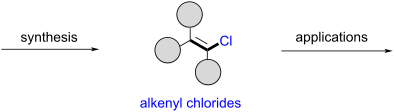
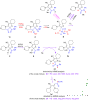
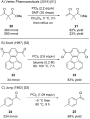
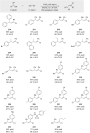
- ). In 2006, Apotex reported the synthesis of alkenyl chlorides using POCl3 in the presence of triethylamine and a copper catalyst (Scheme 16) [69]. The preparation of compound 84 is of industrial significance due to its application in the synthesis of terbinafine (86), an antifungal agent. The reaction
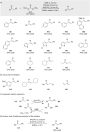
- iodide or bromide by chloride. In the presence of a copper catalyst and tetramethylammonium chloride (Me4NCl) as the chloride source, alkenyl iodides and bromides were efficiently converted to the corresponding alkenyl chlorides. Importantly, the transformation proceeded with full retention of the double
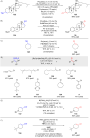
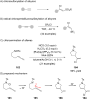
- , catalyzed by a chiral copper complex generated in situ from CuTC and phosphoramidite ligand 361, furnished the corresponding enantioenriched alkenyl chlorides in high yield and with exclusive formation of the Z-isomer. A decade later, Fañanás-Mastral and co-workers demonstrated that alkenylcopper species























Recent advancements in the synthesis of Veratrum alkaloids
Beilstein J. Org. Chem. 2025, 21, 2657–2693, doi:10.3762/bjoc.21.206
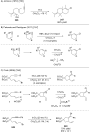
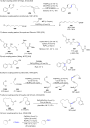
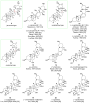
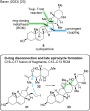
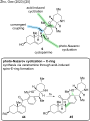
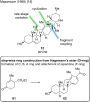
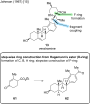
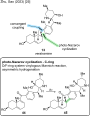
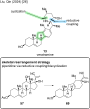
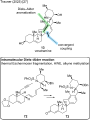
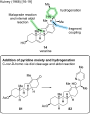
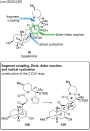
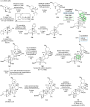
- 3-position, a copper-mediated C–H activation of position 12 and subsequent protection of the introduced hydroxy moiety to give compound 25 (Scheme 6). Installation of the lactone moiety in 22 was carried out in a three-step sequence via a 1,2-addition of organocerium reagent 26 to the ketone
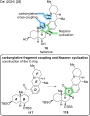
- substituted cyclopentenone motif 37. The authors report the reaction to favor the desired diastereomer and could further enrich the desired isomer by recrystallization. Final steps for this fragment included a 1,4-reduction of the enone motif via a copper hydride species, a Wittig reaction to install the exo
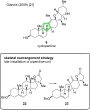
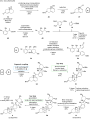
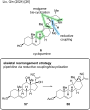
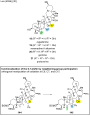
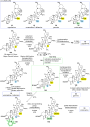
- , with the hydroxy group at C17 playing a crucial role trapping a cationic intermediate from this rearrangement. Starting point in this synthesis is again dehydroepiandrosterone (24), which was protected in 3-position with an acetyl group (Scheme 12). A copper-mediated C–H activation procedure to obtain
















Ni-promoted reductive cyclization cascade enables a total synthesis of (+)-aglacin B
Beilstein J. Org. Chem. 2025, 21, 2548–2552, doi:10.3762/bjoc.21.197
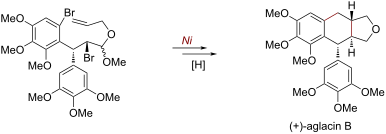
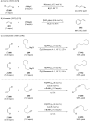
- asymmetric conjugate addition was carried out [20][21]. The in situ generated aryl–copper(I) species was obtained under the action of CuBr·Me2S with Grignard reagent 8, and then added to a THF solution of the α,β-unsaturated acyl oxazolidinone 7 at −48 °C. This reaction demonstrated an excellent


Palladium-catalyzed regioselective C1-selective nitration of carbazoles
Beilstein J. Org. Chem. 2025, 21, 2479–2488, doi:10.3762/bjoc.21.190
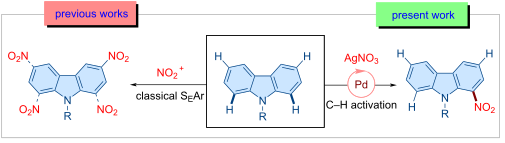
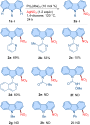
- and copper salts were examined as an oxidant to enhance the yield. Surprisingly, none of the tested silver salts afforded the desired product, while copper salts resulted in either trace amounts or a lower yield of 2a (Table 1, entries 4 and 5). We also evaluated inorganic oxidants, but these oxidants


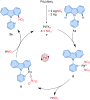
An Fe(II)-catalyzed synthesis of spiro[indoline-3,2'-pyrrolidine] derivatives
Beilstein J. Org. Chem. 2025, 21, 2383–2388, doi:10.3762/bjoc.21.183
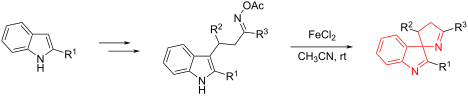
- under heating furnished chiral spiroindolylpyrroles in excellent yields and enantioselectivity (Scheme 1, path d) [11]. Moreover, a copper-catalyzed reaction of oxindole-derived alkenes with acetophenone O-acetyl oxime has also been employed to construct the spiroindolylpyrrole scaffold (Scheme 1, path


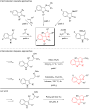


Comparative analysis of complanadine A total syntheses
Beilstein J. Org. Chem. 2025, 21, 2334–2344, doi:10.3762/bjoc.21.178
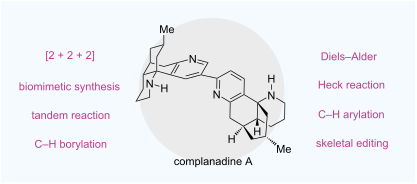
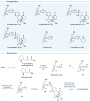
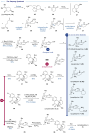
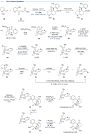
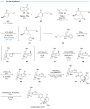
- , followed by acetylation of the resulting propargylic alcohol afforded 17 which was further advanced to 18 via copper-catalyzed selective displacement of the propargyl acetate with benzylamine and hydrolysis of the primary acetate. The primary alcohol of 18 was activated with PPh3/CCl4, triggering an



Halogenated butyrolactones from the biomass-derived synthon levoglucosenone
Beilstein J. Org. Chem. 2025, 21, 2297–2301, doi:10.3762/bjoc.21.175
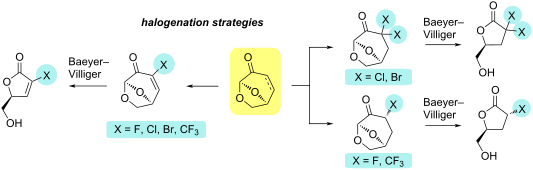
- using CF3 donors in copper-catalyzed [34], base- and Lewis acid-mediated reactions [35][36][37]. The reaction of enamine 9a with Togni’s reagent (18) and subsequent hydrolysis gave the substituted derivative 19 in 35% yield (qNMR) (Scheme 4). The yield was improved using the N-methylpiperazine-derived



Enantioselective radical chemistry: a bright future ahead
Beilstein J. Org. Chem. 2025, 21, 2283–2296, doi:10.3762/bjoc.21.174
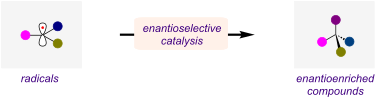
- -photocatalysts [10][11][12] have been successfully incorporated into enantioselective radical reactions. The use of transition metals to catalyze enantioselective radical reactions can be considered a major advancement in the field of asymmetric catalysis. Several metals such as cobalt, nickel, copper, and
- titanium have been employed successfully to catalyze enantioselective radical reactions. Two earth abundant transition metals that have found extensive application in enantioselective radical reactions are copper and nickel. These metals, particularly Ni, can be used in radical–radical coupling reactions
- occurred in an anti fashion. Products were obtained with up to 97% ee via catalysis by complexes of magnesium or copper(II) with ligand L1. The absolute stereochemistry of the product could be controlled by a simple change from copper(II) to magnesium Lewis acids while using the same chiral ligand, thus


Pathway economy in cyclization of 1,n-enynes
Beilstein J. Org. Chem. 2025, 21, 2260–2282, doi:10.3762/bjoc.21.173
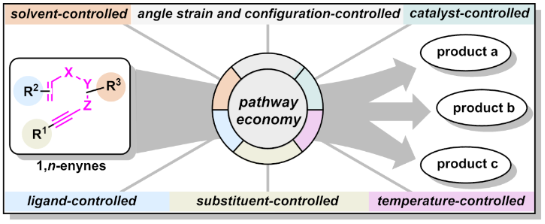
- 133 (Scheme 27, path b). Through precise acid catalyst selection, the reaction pathways were strategically modulated to afford efficient construction of both 1H-pyrrolo[2,3-d]carbazole derivatives and spiro[indoline-3,3'-pyrrolidin]-2-one derivatives. In 2019, the Ye group reported a copper-catalyzed
- stereospecific tandem cyclization of indolyl homopropargyl amides for the construction of bridged aza[n.2.1] frameworks (Scheme 28) [40]. The copper catalyst, acting as a σ,π-dual activator, induced a 5-endo-dig cyclization to form a vinylcopper intermediate 135. Subsequently, a protodemetalation process first
- copper-catalyzed tandem process initiated by endo-cyclization of indolyl homopropargyl amides, enabling atom-economical synthesis of therapeutically significant bridged aza[n.2.1] skeletons. Angle strain and configuration-controlled cyclization of 1,n-enynes In cyclization reactions, angle strain and


Pd-catalyzed dehydrogenative arylation of arylhydrazines to access non-symmetric azobenzenes, including tetra-ortho derivatives
Beilstein J. Org. Chem. 2025, 21, 2234–2242, doi:10.3762/bjoc.21.170
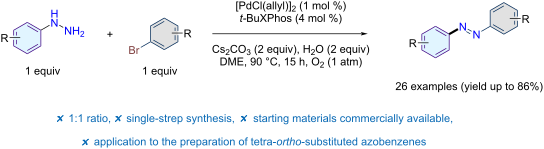
- and co-workers developed a Chan–Evans–Lam-type oxidative cross-coupling reaction between N-arylphthalic hydrazides and arylboronic acids using copper catalysis [41]. Similarly, in 2003, Lee and co-workers introduced a desymmetrization approach employing simpler N=N precursors, specifically N-protected


Synthesis of triazolo- and tetrazolo-fused 1,4-benzodiazepines via one-pot Ugi–azide and Cu-free click reactions
Beilstein J. Org. Chem. 2025, 21, 2202–2210, doi:10.3762/bjoc.21.167
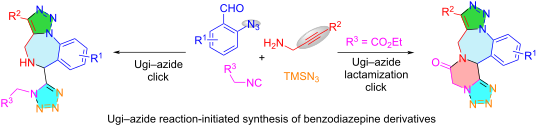
- advantages over traditional copper-catalyzed azide–alkyne cycloaddition (CuAAC) reactions, including operational simplicity and the absence of metal contaminants, which is crucial for pharmaceutical applications. After having identified suitable reaction conditions of the Ugi–azide and click reactions for


Electrochemical cyclization of alkynes to construct five-membered nitrogen-heterocyclic rings
Beilstein J. Org. Chem. 2025, 21, 2173–2201, doi:10.3762/bjoc.21.166
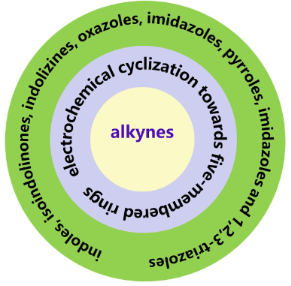
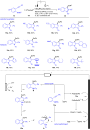
- , this protocol was an efficient and sustainable approach to synthesize 2,3′-biindolyl atropisomers and could be potentially applied in manufacture of functional materials, bioactive molecules and chiral ligands. Construction of isoindolinones and indolizines An electrochemical and copper-catalyzed
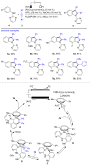
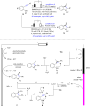
- of 22 with Cu(OPiv)2 and the following anodic copper(II) oxidation provided copper(III) carboxylate intermediate B. Facile carboxylate-promoted C–H activation and ligand exchange with 23 formed the copper(III) species D, which underwent metalation/reductive elimination to generate intermediate E
- along with the formation of Cu(OPiv) which was transformed to Cu(OPiv)2 by oxidation at the anode. Finally, the cyclization of E afforded target isoindolone 24. Notably, this reaction was the first example of electrochemical copper-catalyzed oxidative cyclization of alkyne which was enabled by C–H









C2 to C6 biobased carbonyl platforms for fine chemistry
Beilstein J. Org. Chem. 2025, 21, 2103–2172, doi:10.3762/bjoc.21.165
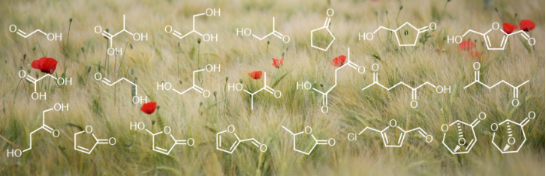
- promising strategy for sustainable energy development involves the electrochemical oxidation of biomass-derived feedstocks. Recent work by Shen et al. demonstrates that glycolic acid (GA), also referred to as hydroxyacetic acid, can be synthesized from glycerol (GLY) using a copper single-atom
- trans-4,5-diamino-cyclopent-2-enones and 2,4-diaminocyclopent-2-enones [186]. In 2021, Coelho and Afonso prepared a silica-supported copper catalyst (Cu/SiO2-N2) by impregnation with copper nitrate, and used it for the reaction of furfural with secondary amines (alkyl, cyclic and aromatic) to produce
- trans-4,5-diaminocyclopent-2-enones in hexane/isopropanol solvent mixture under continuous flow conditions (Scheme 56). The scope could be extended to 2-substituted trans-4,5-diaminocyclopent-2-enones by using 3-substituted furfurals [187]. A copper triflate-based analogous strategy was also reported





