Search for "cycloadditions" in Full Text gives 256 result(s) in Beilstein Journal of Organic Chemistry. Showing first 200.
Beilstein J. Org. Chem. 2025, 21, 2584–2603, doi:10.3762/bjoc.21.200
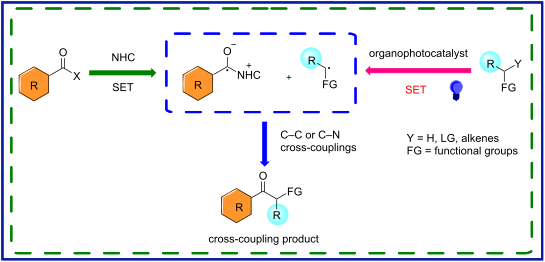
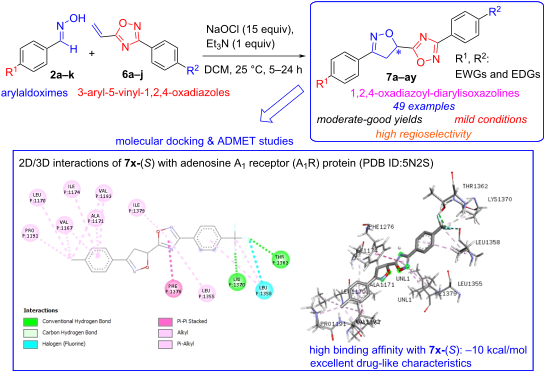
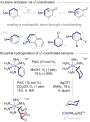
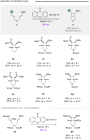
Graphical Abstract
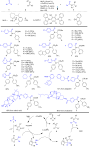
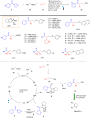
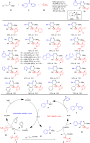
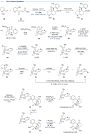
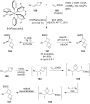
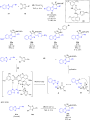
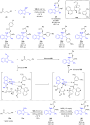
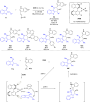
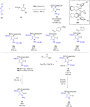
Scheme 1: NHC-catalyzed umpolung strategy for the metal-free synthesis of amide via dual catalysis.
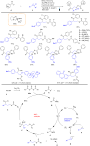
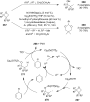
Scheme 2: Visible-light promoted cooperative NHC/photoredox catalyzed ring-opening of aryl cyclopropanes.
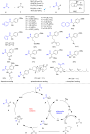
Scheme 3: NHC-catalyzed benzylic C–H acylation by dual catalysis.
Scheme 4: NHC/photoredox-catalyzed three-component coupling reaction for the preparation of γ-aryloxy ketones....
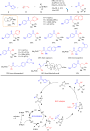
Scheme 5: NHC-catalyzed silyl radical generation from silylboronate via dual catalysis.
Scheme 6: NHC-catalyzed C–H acylation of arenes and heteroarenes through photocatalysis.
Scheme 7: NHC-catalyzed iminoacylation of alkenes via photoredox dual organocatalysis.
Scheme 8: NHC/photoredox catalyzed direct synthesis of β-arylketoesters.
Scheme 9: Visible-light-driven NHC/photoredox catalyzed borylacylation of alkenes.
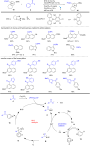
Scheme 10: NHC-catalyzed oxidative functionalization of cinnamaldehyde.
Scheme 11: NHC/photocatalyzed oxidative Smiles rearrangement.
Scheme 12: NHC-catalyzed synthesis of cyclohexanones through photocatalyzed annulation.
Scheme 13: Dual organocatalyzed meta-selective acylation of electron-rich arenes and heteroarenes using blue L...
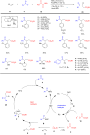
Scheme 14: Asymmetric synthesis of fused pyrrolidinones via organophotoredox/N‑heterocyclic carbene dual catal...
Beilstein J. Org. Chem. 2025, 21, 2389–2415, doi:10.3762/bjoc.21.184
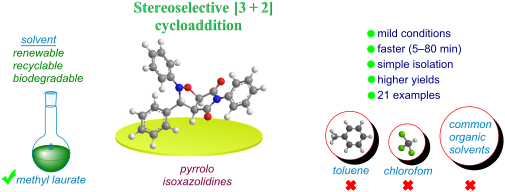
Graphical Abstract
Figure 1: Versatile compounds via cycloaddition reactions.
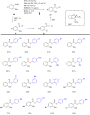
Scheme 1: Molecular structures of parent compounds 1a–f, 2a–d and cycloadducts 3a–u.
Figure 2: a) Radar view of the physical properties of methyl laurate. b) Oral toxicity values of methyl laura...
Figure 3: The oral toxicity values of all the solvents utilized in the present study obtained with ProTox 3.0....
Figure 4: Ecological, environmental risk assessments, pesticide similarity and biodegradability assessments o...
Figure 5: Ecological, environmental risk assessments, pesticide similarity and biodegradability assessments o...
Figure 6: Ecological, environmental risk assessments, pesticide similarity and biodegradability assessments o...
Figure 7: Various toxicity parameters of methyl laurate and a series of other solvents calculated by ADMETLab...
Figure 8: a) Visualization of the localization of conventional organic and bio-based solvents in the Hansen s...
Figure 9: Vapour pressures of the solvents used (values retrieved from the Chemeo molecular database).
Scheme 2: Endo and exo stereoisomeric approaches of nitrone 1a and maleimide 2a in [3 + 2] cycloaddition reac...
Figure 10: Signals of protons used in the calculation of the diastereomeric ratios (cis/trans) of cycloadditio...
Figure 11: Results of studies on the recovery of solvents used in the reaction.
Figure 12: Simplified scheme describing the reaction monitoring and solvent recovery.
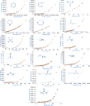
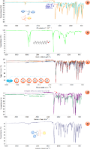
Figure 13: a) The superimposed spectra of C,N-diphenylnitrone and N-phenylmaleimide. b) The spectrum of methyl...
Beilstein J. Org. Chem. 2025, 21, 2334–2344, doi:10.3762/bjoc.21.178
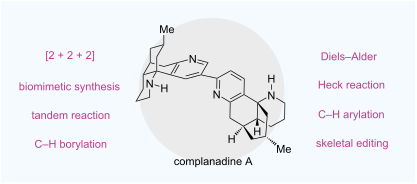
Graphical Abstract
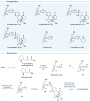
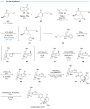
Scheme 1: Complanadine natural products and their plausible biosynthesis.
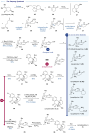
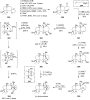
Scheme 2: The Siegel total synthesis of complanadine A enabled by [2 + 2 + 2] cycloadditions.
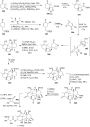
Scheme 3: The Sarpong total synthesis of complanadine A enabled by a biomimetic strategy and C–H activation.
Scheme 4: The Tsukano total synthesis of complanadine A enabled by Diels–Alder cycloaddition, Heck cyclizatio...
Scheme 5: The Dai total synthesis of complanadine A using single-atom skeletal editing.
Scheme 6: Comparative summary of the four complanadine A total syntheses.
Beilstein J. Org. Chem. 2025, 21, 2283–2296, doi:10.3762/bjoc.21.174
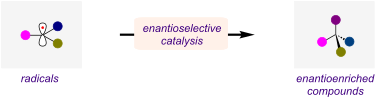
Graphical Abstract
Figure 1: Methods of radical generation (A) and general types of radical reactions (B).
Figure 2: Chiral catalysis in enantioselective radical chemistry [13-37].
Scheme 1: Diastereo- and enantioselective additions of nucleophilic radicals to N-enoyloxazolidinone and pyrr...
Scheme 2: Organocatalyzed formal [3 + 2] cycloadditions affording substituted pyrrolidines.
Scheme 3: Synthesis of a hexacyclic compound via an organocatalyzed enantioselective polyene cyclization.
Scheme 4: Nickel-catalyzed asymmetric cross-coupling reactions.
Scheme 5: Chiral cobalt–porphyrin metalloradical-catalyzed radical cyclization reactions.
Scheme 6: Enantioselective radical chaperone catalysis.
Scheme 7: Enantioselective radical addition by decatungstate/iminium catalysis.
Scheme 8: An ene-reductase-catalyzed photoenzymatic enantioselective radical cyclization/enantioselective HAT...
Scheme 9: Photoenzymatic oxidative C(sp3)–C(sp3) coupling reactions between organoboron compounds and amino a...
Scheme 10: Electrochemical α-alkenylation reactions of 2-acylimidazoles catalyzed by a chiral-at-rhodium Lewis...
Scheme 11: Regio- and enantioselective electrochemical reactions of silyl polyenolates catalyzed by a chiral n...
Beilstein J. Org. Chem. 2025, 21, 2173–2201, doi:10.3762/bjoc.21.166
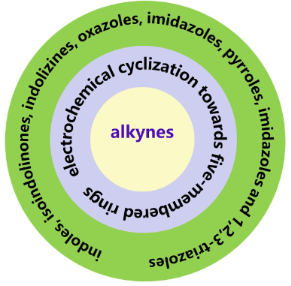
Graphical Abstract
Figure 1: Natural products and functional molecules possessing five-membered rings.
Scheme 1: Electrochemical intramolecular coupling of ureas to form indoles.
Scheme 2: Electrochemical dehydrogenative annulation of alkynes with anilines.
Scheme 3: Electrochemical annulations of o-arylalkynylanilines.
Scheme 4: Electrochemical cyclization of 2-ethynylanilines.
Scheme 5: Electrochemical selenocyclization of diselenides and 2-ethynylanilines.
Scheme 6: Electrochemical cascade approach towards 3-selenylindoles.
Scheme 7: Electrochemical C–H indolization.
Scheme 8: Electrochemical annulation of benzamides and terminal alkynes.
Scheme 9: Electrochemical synthesis of isoindolinone by 5-exo-dig aza-cyclization.
Scheme 10: Electrochemical reductive cascade annulation of o-alkynylbenzamide.
Scheme 11: Electrochemical intramolecular 1,2-amino oxygenation of alkyne.
Scheme 12: Electrochemical multicomponent reaction of nitrile, (thio)xanthene, terminal alkyne and water.
Scheme 13: Electrochemical aminotrifluoromethylation/cyclization of alkynes.
Scheme 14: Electrochemical cyclization of o-nitrophenylacetylene.
Scheme 15: Electrochemical annulation of alkynyl enaminones.
Scheme 16: Electrochemical annulation of alkyne and enamide.
Scheme 17: Electrochemical tandem Michael addition/azidation/cyclization.
Scheme 18: Electrochemical [3 + 2] cyclization of heteroarylamines.
Scheme 19: Electrochemical CuAAC to access 1,2,3-triazole.
Beilstein J. Org. Chem. 2025, 21, 2103–2172, doi:10.3762/bjoc.21.165
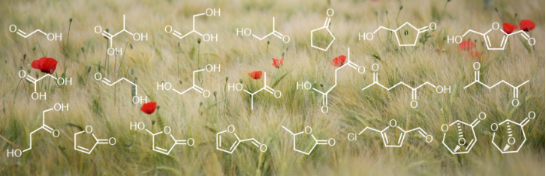
Graphical Abstract
Figure 1: C2–C6 biobased carbonyl building blocks.
Scheme 1: Proposed (2 + 2) route to glycolaldehyde and glycolic acid from erythritol by Cu/AC catalyst (AC = ...
Scheme 2: Reductive amination of GCA.
Scheme 3: N-Formylation of secondary amines by reaction with GCA.
Scheme 4: Synthesis and conversion of hydroxy acetals to cyclic acetals.
Scheme 5: Synthesis of 3-(indol-3-yl)-2,3-dihydrofurans via three-component reaction of glycolaldehyde, indol...
Scheme 6: BiCl3-catalyzed synthesis of benzo[a]carbazoles from 2-arylindoles and α-bromoacetaldehyde ethylene...
Scheme 7: Cu/NCNSs-based conversion of glycerol to glycolic acid and other short biobased acids.
Scheme 8: E. coli-based biotransformation of C1 source molecules (CH4, CO2 and CO) towards C2 glycolic acid.
Scheme 9: N-Formylation of amines with C2 (a) or C3 (b) biomass-based feedstocks.
Scheme 10: Methods for the formation of propanoic acid (PA) from lactic acid (LA).
Scheme 11: Co-polymerization of biobased lactic acid and glycolic acid via a bicatalytic process.
Scheme 12: Oxidation of α-hydroxy acids by tetrachloroaurate(III) in acetic acid–sodium acetate buffer medium.
Figure 2: Selective catalytic pathways for the conversion of lactic acid (LA).
Scheme 13: Synthesis of 1,3-PDO via cross-aldol reaction between formaldehyde and acetaldehyde to 3-hydroxypro...
Scheme 14: Hydrothermal conversion of 1,3-dihydroxy-2-propane and 2,3-dihydroxypropanal to methylglyoxal.
Scheme 15: FLS-catalyzed formose reaction to synthesize GA and DHA.
Scheme 16: GCA and DHA oxidation products of glycerol and isomerization of GCA to DHA under flow conditions us...
Scheme 17: Acid-catalyzed reactions of DHA with alcohols.
Scheme 18: Synthesis of dihydroxyacetone phosphate from dihydroxyacetone.
Scheme 19: Bifunctional acid–base catalyst DHA conversion into lactic acid via pyruvaldehyde or fructose forma...
Scheme 20: Catalytic one-pot synthesis of GA and co-synthesis of formamides and formates from DHA.
Scheme 21: (a) Synthesis of furan derivatives and (b) synthesis of thiophene derivative by cascade [3 + 2] ann...
Scheme 22: Brønsted acidic ionic liquid catalyzed synthesis of benzo[a]carbazole from renewable acetol and 2-p...
Scheme 23: Asymmetric hydrogenation of α-hydroxy ketones to 1,2-diols.
Scheme 24: Synthesis of novel 6-(substituted benzylidene)-2-methylthiazolo [2,3-b]oxazol-5(6H)-one from 1-hydr...
Scheme 25: ʟ-Proline-catalyzed synthesis of anti-diols from hydroxyacetone and aldehydes.
Scheme 26: C–C-bond-formation reactions of a biomass-based feedstock aromatic aldehyde (C5) and hydroxyacetone...
Scheme 27: Ethanol upgrading to C4 bulk chemicals via the thiamine (VB1)-catalyzed acetoin condensation.
Scheme 28: One-pot sequential chemoenzymatic synthesis of 2-aminobutane-1,4-diol and 1,2,4-butanetriol via 1,4...
Scheme 29: Synthesis of 1,4-dihydroxybutan-2-one by microbial transformation.
Scheme 30: Conversion of polyols by [neocuproine)Pd(OAc)]2(OTf)2] to α-hydroxy ketones.
Scheme 31: Chemoselective oxidation of alcohols with chiral palladium-based catalyst 2.
Scheme 32: Electrochemical transformation of furfural to 5-hydroxy-2(5H)-furanone (HFO).
Scheme 33: Selective hydrodeoxygenation of HFO and oxidation to γ-butyrolactone (GBL).
Scheme 34: Photosensitized oxygenation of furan towards HFO via ozonide intermediates.
Scheme 35: Conversion of furfural to HFO and MAN by using mesoporous carbon nitride (SGCN) as photocatalyst.
Scheme 36: Synthesis of HFO from furan derivatives.
Scheme 37: Photooxidation of furfural to 5-hydroxy-2(5H)-furanone (HFO).
Scheme 38: Synthesis of Friedel–Crafts indole adduct from HFO.
Scheme 39: Conversion of HFO to α,γ-substituted chiral γ-lactones.
Scheme 40: Tautomeric transformation of HFO to formylacrylic acid.
Scheme 41: Hydrolysis of HFO to succinic acid in aqueous solution.
Scheme 42: Substitution and condensation reactions of 5-hydroxy-2(5H)-furanone (HFO).
Scheme 43: (a) Conversion of HFO towards valuable C4 chemicals and (b) anodic oxidation of 5-hydroxy-2(5H)-fur...
Figure 3: Conversion of HFO towards other natural and synthetic substances.
Scheme 44: Conversion of furfural to maleic anhydride (reaction a: VOx/Al2O3; reaction b: VPO).
Scheme 45: Conversion of furfural into succinic acid.
Scheme 46: Electro‑, photo‑, and biocatalysis for one-pot selective conversions of furfural into C4 chemicals.
Scheme 47: Production route of furfural from hemicellulose.
Scheme 48: Mechanism for xylose dehydration to furfural through a choline xyloside intermediate.
Scheme 49: Conversion of furfural to furfuryl alcohol and its derivatives.
Scheme 50: Conversion of furfural to furfuryl alcohol and 3-(2-furyl)acrolein.
Scheme 51: The aerobic oxidative condensation of biomass-derived furfural and linear alcohols.
Scheme 52: The single-step synthesis of 2-pentanone from furfural.
Scheme 53: Electrocatalytic coupling reaction of furfural and levulinic acid.
Scheme 54: Conversion of furfural to m-xylylenediamine.
Scheme 55: Conversion of furfural to tetrahydrofuran-derived amines.
Scheme 56: Formation of trans-4,5-diamino-cyclopent-2-enones from furfural.
Scheme 57: Production of pyrrole and proline from furfural.
Scheme 58: Synthesis of 1‑(trifluoromethyl)-8-oxabicyclo[3.2.1]oct-3-en-2-ones from furfural.
Scheme 59: Conversion of furfural to furfural-derived diacids.
Scheme 60: A telescope protocol derived from furfural and glycerol.
Scheme 61: A tandem cyclization of furfural and 5,5-dimethyl-1,3-cyclohexanedione.
Scheme 62: A Ugi four-component reaction to construct furfural-based polyamides.
Scheme 63: One-pot synthesis of γ-acyloxy-Cy7 from furfural.
Scheme 64: Dimerization–Piancatelli sequence toward humins precursors from furfural.
Scheme 65: Conversion of furfural to CPN.
Scheme 66: Synthesis of jet fuels range cycloalkanes from CPN and lignin-derived vanillin.
Scheme 67: Solar-energy-driven synthesis of high-density biofuels from CPN.
Scheme 68: Reductive amination of CPN to cyclopentylamine.
Scheme 69: Asymmetric hydrogenation of C=O bonds of exocyclic α,β-unsaturated cyclopentanones.
Scheme 70: Preparation of levulinic acid via the C5 route (route a) or C6 route (routes b1 and b2).
Scheme 71: Mechanism of the rehydration of HMF to levulinic acid and formic acid.
Scheme 72: Important levulinic acid-derived chemicals.
Scheme 73: Direct conversion of levulinic acid to pentanoic acid.
Scheme 74: Catalytic aerobic oxidation of levulinic acid to citramalic acid.
Scheme 75: Conversion of levulinic acid to 1,4-pentanediol (a) see ref. [236]; b) see ref. [237]; c) see ref. [238]; d) see r...
Scheme 76: Selective production of 2-butanol through hydrogenolysis of levulinic acid.
Scheme 77: General reaction pathways proposed for the formation of 5MPs from levulinic acid.
Scheme 78: Selective reductive amination of levulinic acid to N-substituted pyrroles.
Scheme 79: Reductive amination of levulinic acid to chiral pyrrolidinone.
Scheme 80: Reductive amination of levulinic acid to non-natural chiral γ-amino acid.
Scheme 81: Nitrogen-containing chemicals derived from levulinic acid.
Scheme 82: Preparation of GVL from levulinic acid by dehydration and hydrogenation.
Scheme 83: Ruthenium-catalyzed levulinic acid to chiral γ-valerolactone.
Scheme 84: Catalytic asymmetric hydrogenation of levulinic acid to chiral GVL.
Scheme 85: Three steps synthesis of ε-caprolactam from GVL.
Scheme 86: Multistep synthesis of nylon 6,6 from GVL.
Scheme 87: Preparation of MeGVL by α-alkylation of GVL.
Scheme 88: Ring-opening polymerization of five-membered lactones.
Scheme 89: Synthesis of GVL-based ionic liquids.
Scheme 90: Preparation of butene isomers from GVL under Lewis acid conditions.
Scheme 91: Construction of C5–C12 fuels from GVL over nano-HZSM-5 catalysts.
Scheme 92: Preparation of alkyl valerate from GVL via ring opening/reduction/esterification sequence.
Scheme 93: Construction of 4-acyloxypentanoic acids from GVL.
Scheme 94: Synthesis of 1,4-pentanediol (PDO) from GVL.
Scheme 95: Construction of novel cyclic hemiketal platforms via self-Claisen condensation of GVL.
Scheme 96: Copper-catalyzed lactamization of GVL.
Figure 4: Main scaffolds obtained from HMF.
Scheme 97: Biginelli reactions towards HMF-containing dihydropyrimidinones.
Scheme 98: Hantzsch dihydropyridine synthesis involving HMF.
Scheme 99: The Kabachnik–Fields reaction involving HMF.
Scheme 100: Construction of oxazolidinone from HMF.
Scheme 101: Construction of rhodamine-furan hybrids from HMF.
Scheme 102: A Groebke–Blackburn–Bienaymé reaction involving HMF.
Scheme 103: HMF-containing benzodiazepines by [4 + 2 + 1] cycloadditions.
Scheme 104: Synthesis of fluorinated analogues of α-aryl ketones.
Scheme 105: Synthesis of HMF derived disubstituted γ-butyrolactone.
Scheme 106: Functionalized aromatics from furfural and HMF.
Scheme 107: Diels–Alder adducts from HMF or furfural with N-methylmaleimide.
Scheme 108: Pathway of the one-pot conversion of HMF into phthalic anhydride.
Scheme 109: Photocatalyzed preparation of humins (L-H) from HMF mixed with spoiled HMF residues (LMW-H) and fur...
Scheme 110: Asymmetric dipolar cycloadditions on HMF.
Scheme 111: Dipolar cycloadditions of HMF based nitrones to 3,4- and 3,5-substituted isoxazolidines.
Scheme 112: Production of δ-lactone-fused cyclopenten-2-ones from HMF.
Scheme 113: Aza-Piancatelli access to aza-spirocycles from HMF-derived intermediates.
Scheme 114: Cross-condensation of furfural, acetone and HMF into C13, C14 and C15 products.
Scheme 115: Base-catalyzed aldol condensation/dehydration sequences from HMF.
Scheme 116: Condensation of HMF and active methylene nitrile.
Scheme 117: MBH reactions involving HMF.
Scheme 118: Synthesis of HMF-derived ionic liquids.
Scheme 119: Reductive amination/enzymatic acylation sequence towards HMF-based surfactants.
Scheme 120: The formation of 5-chloromethylfurfural (CMF).
Scheme 121: Conversion of CMF to HMF, levulinic acid, and alkyl levulinates.
Scheme 122: Conversion of CMF to CMFCC and FDCC.
Scheme 123: Conversion of CMF to BHMF.
Scheme 124: Conversion of CMF to DMF.
Scheme 125: CMF chlorine atom substitutions toward HMF ethers and esters.
Scheme 126: Introduction of carbon nucleophiles in CMF.
Scheme 127: NHC-catalyzed remote enantioselective Mannich-type reactions of CMF.
Scheme 128: Conversion of CMF to promising biomass-derived dyes.
Scheme 129: Radical transformation of CMF with styrenes.
Scheme 130: Synthesis of natural herbicide δ-aminolevulinic acid from CMF.
Scheme 131: Four step synthesis of the drug ranitidine from CMF.
Scheme 132: Pd/CO2 cooperative catalysis for the production of HHD and HXD.
Scheme 133: Different ruthenium (Ru) catalysts for the ring-opening of 5-HMF to HHD.
Scheme 134: Proposed pathways for preparing HXD from HMF.
Scheme 135: MCP formation and uses.
Scheme 136: Cu(I)-catalyzed highly selective oxidation of HHD to 2,5-dioxohexanal.
Scheme 137: Synthesis of N‑substituted 3‑hydroxypyridinium salts from 2,5-dioxohexanal.
Scheme 138: Ru catalyzed hydrogenations of HHD to 1,2,5-hexanetriol (a) see ref. [396]; b) see ref. [397]).
Scheme 139: Aviation fuel range quadricyclanes produced by HXD.
Scheme 140: Synthesis of HDGK from HXD and glycerol as a chain extender.
Scheme 141: Synthesis of serinol pyrrole from HXD and serinol.
Scheme 142: Synthesis of pyrroles from HXD and nitroarenes.
Scheme 143: Two-step production of PX from cellulose via HXD.
Scheme 144: Preparation of HCPN from HMF via hydrogenation and ring rearrangement.
Scheme 145: Suggested pathways from HMF to HCPN.
Scheme 146: α-Alkylation of HCPN with ethylene gas.
Scheme 147: Synthesis of 3-(hydroxymethyl)cyclopentylamine from HMF via reductive amination of HCPN.
Scheme 148: Production of LGO and Cyrene® from biomass.
Scheme 149: Synthesis of HBO from LGO and other applications.
Scheme 150: Construction of m-Cyrene® homopolymer.
Scheme 151: Conversion of Cyrene® to THFDM and 1,6-hexanediol.
Scheme 152: RAFT co-polymerization of LGO and butadienes.
Scheme 153: Polycondensation of HO-LGOL and diols with dimethyl adipate.
Scheme 154: Self-condensation of Cyrene® and Claisen–Schmidt reactions.
Scheme 155: Synthesis of 5-amino-2-(hydroxymethyl)tetrahydropyran from Cyrene®.
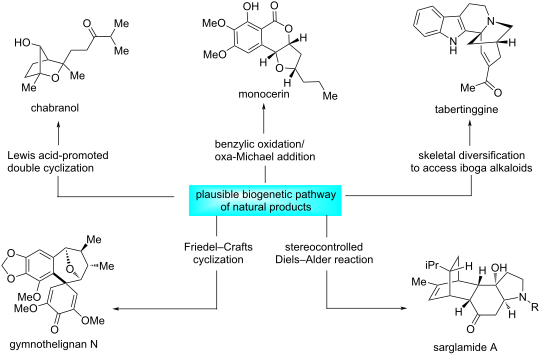
Beilstein J. Org. Chem. 2025, 21, 2048–2061, doi:10.3762/bjoc.21.160
Graphical Abstract
Figure 1: Representative natural products with biomimetic total synthesis.
Scheme 1: Bioinspired total synthesis of chabranol (2010).
Scheme 2: Proposed biosynthetic pathway of monocerin-family natural products.
Scheme 3: Bioinspired total synthesis of monocerin-family molecules (2013).
Scheme 4: Bioinspired skeletal diversification of (12-MeO-)tabertinggine (2016).
Scheme 5: Structures and our proposed biosynthetic pathway of gymnothelignans.
Scheme 6: Bioinspired total synthesis of gymnothelignans (2014–2025).
Scheme 7: Bioinspired total synthesis of sarglamides (2025).
Beilstein J. Org. Chem. 2025, 21, 1890–1896, doi:10.3762/bjoc.21.146
Graphical Abstract
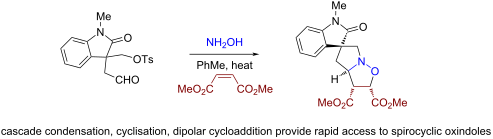
Figure 1: Representative oxindole alkaloids.
Scheme 1: Proposed synthetic approach.
Scheme 2: Preparation of the aldehyde 4.
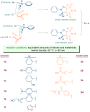
Scheme 3: Cycloaddition with N-methylmaleimide.
Figure 2: Orientation for the cycloaddition (left) and the crystal structure of the major stereoisomer 5a (ri...
Scheme 4: Cycloaddition with N-phenylmaleimide.
Scheme 5: Cycloaddition with dimethyl fumarate and dimethyl maleate.
Beilstein J. Org. Chem. 2025, 21, 1613–1626, doi:10.3762/bjoc.21.125
Graphical Abstract
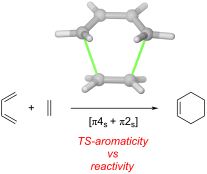
Scheme 1: (a) Diels–Alder cycloaddition reaction between butadiene and ethylene. (b) Gold(I)-catalyzed propar...
Figure 1: Transition states computed for the Diels–Alder cycloaddition reaction between isoprene and methyl a...
Figure 2: Comparative activation strain analyses (a) and energy decomposition analysis (b) of the Diels–Alder...
Figure 3: (a) Evolution of the NICS(3, +1) values along a z-axis perpendicular to the molecular plane of the ...
Figure 4: Comparative activation strain analyses (a) and energy decomposition analysis (b) of the carbonyl–en...
Figure 5: AICD (a) and EDDB (b) plots for the transition state involved in the DGRT between ethene and ethane....
Figure 6: Comparative activation strain analyses (a) and energy decomposition analysis (b) of the DGRT betwee...
Scheme 2: Representative cycloisomerization reaction of 1,3-hexadien-5-yne.
Figure 7: AICD plots of the transition states associated with the Hopf cyclization reactions involving cis-he...
Figure 8: Comparative activation strain analyses of the Hopf cyclization involving ene–ene–ynes E=CH–CH=CH–C≡...
Scheme 3: 1,3-Dipolar cycloaddition reactions between t-BuN3 and cyaphide complexes.
Figure 9: Evolution of the NICS(3, +1) values along a z-axis perpendicular to the molecular plane of the TSs ...
Figure 10: Comparative activation strain analyses (a) and energy decomposition analysis (b) of the 1,3-dipolar...
Beilstein J. Org. Chem. 2025, 21, 1508–1519, doi:10.3762/bjoc.21.113
Graphical Abstract
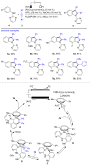
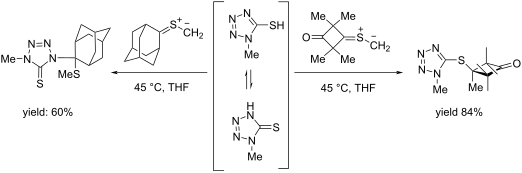
Scheme 1: Typical [3 + 2] cycloaddition (above) and trapping (below) reactions of thiocarbonyl S-methanides 1a...
Scheme 2: Ambident reactivity of 5-mercapto-1H-tetrazoles 4 towards dimethyl 2-arylcyclopropane dicarboxylate...
Scheme 3: Regioselectivity of [3 + 2] cycloadditions of diazomethane with adamantanethione (7a) [22,24,25], and sterica...
Scheme 4: The in situ generation of sterically crowded thiocarbonyl S-methanides 1c,d (via a 1,3-dipolar cycl...
Scheme 5: Reactions of the in situ-generated thiocarbonyl S-methanides 1 (from 1,3,4-thiadiazolines 2) with e...
Figure 1: (a) Molecular structure of the N-insertion product (thioaminal) 9i. Atoms are represented by therma...
Scheme 6: Stepwise mechanism of the competitive N- and S-insertion reactions between the in situ-generated th...
Scheme 7: Mechanism of the isomerization of initially formed thioaminals 9 to dithioacetals 10.
Beilstein J. Org. Chem. 2025, 21, 1477–1479, doi:10.3762/bjoc.21.109
Beilstein J. Org. Chem. 2025, 21, 1422–1453, doi:10.3762/bjoc.21.106
Beilstein J. Org. Chem. 2025, 21, 1324–1373, doi:10.3762/bjoc.21.101
Graphical Abstract
Figure 1: Bond lengths and bond angles in oxetane at 140 K [2].
Figure 2: Analogy of 3-substituted oxetanes to carbonyl and gem-dimethyl groups [12].
Figure 3: Use of oxetanes in drug design – selected examples.
Figure 4: Examples of oxetane-containing natural products.
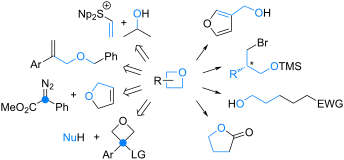
Scheme 1: Synthetic strategies towards construction of the oxetane ring.
Scheme 2: Overview of intramolecular Williamson etherification and competing Grob fragmentation.
Scheme 3: Synthesis of spiro-oxetanes via 1,4-C–H insertion and Williamson etherification.
Scheme 4: Use of phenyl vinyl selenone in the synthesis of spirooxindole oxetanes.
Scheme 5: Synthesis of bicyclic 3,5-anhydrofuranoses via double epoxide opening/etherification.
Scheme 6: Preparation of spirooxetanes by cycloisomerisation via MHAT/RPC.
Scheme 7: Oxetane synthesis via alcohol C–H functionalisation.
Scheme 8: Access to oxetanes 38 from α-acetyloxy iodides.
Scheme 9: The kilogram-scale synthesis of oxetane intermediate 41.
Scheme 10: Overview of the intramolecular opening of 3-membered rings.
Scheme 11: Synthesis of 4,7-dioxatricyclo[3.2.1.03,6]octane skeletons.
Scheme 12: Silicon-directed electrophilic cyclisation of homoallylic alcohols.
Scheme 13: Hydrosilylation–iodocyclisation of homopropargylic alcohols.
Scheme 14: Cu-catalysed intramolecular O-vinylation of γ-bromohomoallylic alcohols.
Scheme 15: Cu-catalysed intramolecular cross-coupling of hydroxyvinylstannanes.
Scheme 16: Isomerisation of oxiranyl ethers containing weakly carbanion-stabilising groups.
Scheme 17: Cyclisation of diethyl haloalkoxymalonates.
Scheme 18: Synthesis of oxetanes through a 1,5-HAT/radical recombination sequence.
Scheme 19: General approach to oxetanes via [2 + 2] cycloadditions.
Scheme 20: Synthesis of tricyclic 4:4:4 oxetanes through a photochemical triple cascade reaction.
Scheme 21: Iridium-catalysed Paternò–Büchi reaction between α-ketoesters and simple alkenes.
Scheme 22: Three-step synthesis of spirocyclic oxetanes 83 via Paternò–Büchi reaction, nucleophilic ring openi...
Scheme 23: Enantioselective Paternò–Büchi reaction catalysed by a chiral iridium photocatalyst.
Scheme 24: Synthesis of polysubstituted oxetanes 92 via Cu(II)-mediated formal [2 + 2] cycloadditions.
Scheme 25: Synthesis of alkylideneoxetanes via NHC- and DBU-mediated formal [2 + 2] cycloadditions.
Scheme 26: Use of sulphur-stabilised carbanions in ring expansions.
Scheme 27: Synthesis of α,α-difluoro(arylthio)methyl oxetanes.
Scheme 28: Ring expansion in an industrial synthesis of PF-06878031.
Scheme 29: Ring contraction of triflated 2-hydroxy-γ-lactones.
Scheme 30: Ring contraction in an industrial synthesis of PF-06878031.
Scheme 31: Photochemical ring contraction of 2,5-dihydrofurans by aryldiazoacetic acid esters.
Scheme 32: Synthesis of 3-oxetanones via O-H insertion of carbenes.
Scheme 33: Synthesis of phosphonate oxetanones via gold-mediated alkyne oxidation/O–H insertion.
Scheme 34: Syntheses and common derivatisations of 3-oxetanone.
Scheme 35: SN1 substitution of 3-aryloxetan-3-ols by thiols and alcohols.
Scheme 36: Fe–Ni dual-catalytic olefin hydroarylation towards 3-alkyl-3-(hetero)aryloxetanes.
Scheme 37: Synthesis of 3-aryloxetan-3-carboxylic acids.
Scheme 38: Decarboxylative alkylation of 3-aryloxetan-3-carboxylic acids.
Scheme 39: Synthesis of 3-amino-3-aryloxetanes via photoredox/nickel cross-coupling catalysis.
Scheme 40: Intermolecular cross-selective [2 + 2] photocycloaddition towards spirooxetanes.
Scheme 41: Synthesis of 3-aryl-3-aminooxetanes via defluorosulphonylative coupling.
Scheme 42: Two-step synthesis of amide bioisosteres via benzotriazolyl Mannich adducts 170.
Scheme 43: Functionalisation of oxetanyl trichloroacetimidates 172.
Scheme 44: Synthesis of oxetane-amino esters 176.
Scheme 45: Tandem Friedel–Crafts alkylation/intramolecular ring opening of 3-aryloxetan-3-ols.
Scheme 46: Synthesis of polysubstituted furans and pyrroles.
Scheme 47: Synthesis of oxazolines and bisoxazolines.
Scheme 48: Tandem, one-pot syntheses of various polycyclic heterocycles.
Scheme 49: Synthesis of 1,2-dihydroquinolines via skeletal reorganisation of oxetanes.
Scheme 50: Synthesis of benzoindolines and 2,3-dihydrobenzofurans and their derivatisations.
Scheme 51: Synthesis of polysubstituted 1,4-dioxanes.
Scheme 52: Preparation of various lactones via ring opening of oxetane-carboxylic acids 219.
Scheme 53: Tsuji-Trost allylation/ring opening of 3-aminooxetanes.
Scheme 54: Arylative skeletal rearrangement of 3-vinyloxetan-3-ols to 2,5-dihydrofurans.
Scheme 55: Reductive opening of oxetanes using catalytic Mg–H species.
Scheme 56: Opening of oxetanes by silyl ketene acetals.
Scheme 57: Rhodium-catalysed hydroacylation of oxetanes.
Scheme 58: Generation of radicals from oxetanes mediated by a vitamin B12-derived cobalt catalyst.
Scheme 59: Reductive opening of oxetanes by B–Si frustrated Lewis pairs.
Scheme 60: Zirconocene-mediated reductive opening of oxetanes.
Scheme 61: Enantioselective syntheses of small and medium-size rings using chiral phosphoric acids.
Scheme 62: Asymmetric synthesis of 2,3-dihydrobenzo[b]oxepines catalysed by a chiral scandium complex.
Scheme 63: Enantioselective synthesis of 1,3-bromohydrins under a chiral squaramide catalysis.
Scheme 64: Enantioselective opening of 2-aryl-2-ethynyloxetanes by anilines.
Scheme 65: Ru-catalysed insertion of diazocarbonyls into oxetanes.
Scheme 66: Ring expansion of oxetanes by stabilised carbenes generated under blue light irradiation.
Scheme 67: Expansion of oxetanes via nickel-catalysed insertion of alkynyltrifluoroborates.
Scheme 68: Nickel-catalysed expansion of oxetanes into ε-caprolactones.
Scheme 69: Expansion of oxetanes via cobalt-catalysed carbonyl insertion.
Scheme 70: Gold-catalysed intramolecular 1,1-carboalkoxylation of oxetane-ynamides.
Scheme 71: Expansion of oxetanes by stabilised sulphoxonium ylides.
Scheme 72: Cu-catalysed ring expansion of 2-vinyloxetanes by diazoesters.
Scheme 73: Total synthesis of (+)-oxetin.
Scheme 74: Total synthesis of racemic oxetanocin A.
Scheme 75: Total synthesis of (−)-merrilactone A.
Scheme 76: Total synthesis of (+)-dictyoxetane.
Scheme 77: Total synthesis of ent-dichrocephone B.
Scheme 78: Total synthesis of (−)-mitrephorone A.
Scheme 79: Total synthesis of (−)-taxol.
Beilstein J. Org. Chem. 2025, 21, 1161–1169, doi:10.3762/bjoc.21.92
Graphical Abstract
Figure 1: Bioactive compounds bearing imidazopyridine (red) and isoquinolinone-kind (blue) rings.
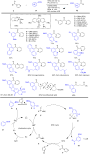
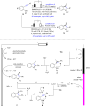
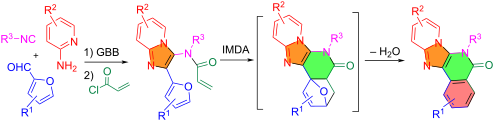
Scheme 1: GBB-initiated synthesis of imidazopyridine-fused isoquinolinones.
Scheme 2: GBB reaction and N-acylation for the preparation of imidazo[1,2-a]pyridines 6.
Scheme 3: Substrate scope for IMDA and dehydrative aromatization in making 8. Reaction conditions: 6 and AlCl3...
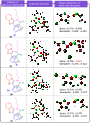
Figure 2: Transition state analysis of IMDA reactions for 6a, 6j, 6h and 6r.
Figure 3: Relative energy diagram for the synthesis of 8a from 6a.
Scheme 4: Using thiophene-2-carbaldehyde for the synthesis of 8t.
Scheme 5: Proposed mechanisms for IMDA reaction and dehydration re-aromatization.
Beilstein J. Org. Chem. 2025, 21, 999–1009, doi:10.3762/bjoc.21.81
Graphical Abstract
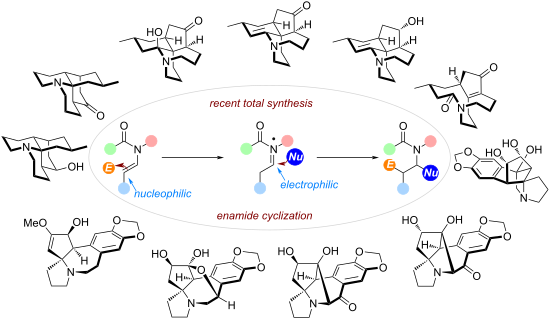
Figure 1: Reactivity of enamides and enamide cyclizations.
Scheme 1: Total synthesis of (−)-dihydrolycopodine and (−)-lycopodine.
Scheme 2: Collective total synthesis of fawcettimine-type alkaloids.
Scheme 3: Total syntheses of cephalotaxine and cephalezomine H.
Scheme 4: Collective total syntheses of Cephalotaxus alkaloids.
Scheme 5: Asymmetric tandem cyclization/Pictet–Spengler reaction of tertiary enamides.
Scheme 6: Tandem cyclization/Pictet–Spengler reaction for the synthesis of chiral tetracyclic compounds.
Scheme 7: Total synthesis of (−)-cephalocyclidin A.
Beilstein J. Org. Chem. 2025, 21, 854–863, doi:10.3762/bjoc.21.69
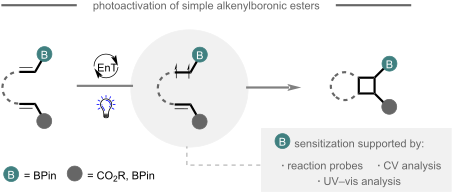
Graphical Abstract
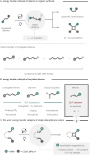
Figure 1: A) Energy transfer catalysis of alkenes in organic synthesis. B) Energy transfer catalysis of conju...
Figure 2: Probing boron effects on reactivity (A) and confirming the generation of a photostationary state eq...
Figure 3: Probing EnT catalysis enabled [2 + 2] cycloaddition of simple alkenylboronic esters.
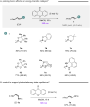
Scheme 1: Establishing the substrate scope. Conditions: 3 (1 equiv), xanthone (20 mol %), MeCN (0.03 M), unde...
Scheme 2: A) Product derivatization and B) transition-metal EnT catalysis. Reaction conditions A): 4d (1 equi...
Beilstein J. Org. Chem. 2025, 21, 458–472, doi:10.3762/bjoc.21.33
Graphical Abstract
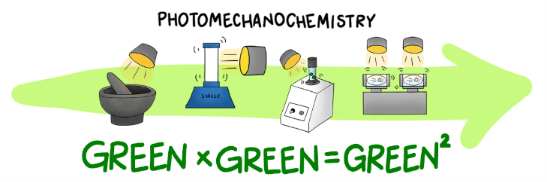
Figure 1: The Grotthuss–Draper, Einstein–Stark, and Beer–Lambert laws. T: transmittance; ε: molar attenuation...
Figure 2: The benefits of merging photochemistry with mechanochemical setups (top). Most common setups for ph...
Scheme 1: Mechanochemically triggered pedal-like motion in solid-state [2 + 2] photochemical cycloaddition fo...
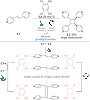
Scheme 2: Mechanically promoted [2 + 2] photodimerization of trans-1,2-bis(4-pyridyl)ethylene (2.1) via supra...
Scheme 3: Photo-thermo-mechanosynthesis of quinolines [65].
Scheme 4: Study of the mechanically assisted [2 + 2] photodimerization of chalcone [66].
Scheme 5: Liquid-assisted vortex grinding (LAVG) for the synthesis of [2.2]paracyclophane [68].
Scheme 6: Photomechanochemical approach for the riboflavin tetraacetate-catalyzed photocatalytic oxidation of...
Scheme 7: Photomechanochemical oxidation of 1,2-diphenylethyne to benzil. The photo in Scheme 7 was republished with ...
Scheme 8: Photomechanochemical borylation of aryldiazonium salts. The photo in Scheme 8 was reproduced from [72] (© 2017 ...
Scheme 9: Photomechanochemical control over stereoselectivity in the [2 + 2] dimerization of acenaphthylene. ...
Scheme 10: Photomechanochemical synthesis of polyaromatic compounds using UV light. The photo in Scheme 10 was reproduc...
Scheme 11: Mechanically assisted photocatalytic reactions: A) atom-transfer-radical addition, B) pinacol coupl...
Scheme 12: Use of mechanoluminescent materials as photon sources for photomechanochemistry. SAOED: SrAl2O4:Eu2+...
Figure 3: SWOT (strengths, weaknesses, opportunities, threats) analysis of photomechanochemistry.
Beilstein J. Org. Chem. 2024, 20, 3290–3298, doi:10.3762/bjoc.20.273
Graphical Abstract
Figure 1: Examples of important azafluoranthene and benzo[j]fluoranthene natural products, and acenaphthylene...
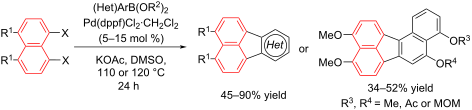
Scheme 1: Selected synthetic strategies towards heterocyclic fluoranthene analogues, and our approach.
Scheme 2: Synthesis of benzo[j]fluoranthene 18.
Scheme 3: Synthesis of benzo[j]fluoranthene 23.
Scheme 4: Synthesis of benzo[j]fluoranthene 28.
Beilstein J. Org. Chem. 2024, 20, 3221–3255, doi:10.3762/bjoc.20.268
Graphical Abstract
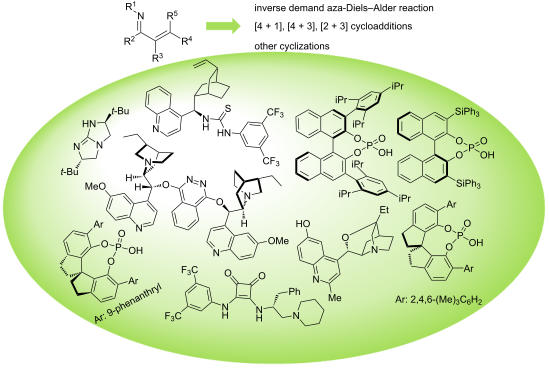
Figure 1: Reactivity of α,β-unsaturated imines and variety of structures.
Figure 2: The hetero-Diels–Alder and inverse electron demand hetero-Diels–Alder reactions.
Figure 3: Different strategies to promote the activation of dienes and dienophiles in IEDADA reactions.
Figure 4: Examples of non-covalent interactions in organocatalysis.
Scheme 1: Enantioselective bifunctional thiourea-catalyzed inverse electron demand Diels–Alder reaction of N-...
Scheme 2: Cinchona-derived thiourea-catalyzed stereoselective (3 + 2) reaction of α,β-unsaturated imines and ...
Scheme 3: Cinchona-derived thiourea-catalyzed stereoselective (3 + 2)/(4 + 2) cascade reaction of α,β-unsatur...
Scheme 4: Enantioselective bifunctional squaramide-catalyzed formal [4 + 2] cycloaddition of malononitrile wi...
Scheme 5: Bifunctional squaramide-catalyzed IEDADA reaction of saccharin-derived 1-azadienes and azlactones.
Scheme 6: Chiral guanidine-catalyzed enantioselective (4+1) cyclization of benzofuran-derived azadienes with ...
Scheme 7: Bifunctional squaramide-catalyzed [4 + 2] cyclization of benzofuran-derived azadienes and azlactone...
Scheme 8: Chiral bifunctional squaramide-catalyzed domino Mannich/formal [4 + 2] cyclization of 2-benzothiazo...
Scheme 9: Chiral bifunctional thiourea-catalyzed formal IEDADA reaction of β,γ-unsaturated ketones and benzof...
Scheme 10: Dihydroquinine-derived squaramide-catalyzed (3 + 2) cycloaddition reaction of isocyanoacetates and ...
Scheme 11: Enantioselective squaramide-catalyzed asymmetric IEDADA reaction of benzofuran-derived azadienes an...
Scheme 12: Scale up and derivatizations of benzofuran-fused 2-piperidinol derivatives.
Scheme 13: Dihydroquinine-derived squaramide-catalyzed Mannich-type reaction of isocyanoacetates with N-(2-ben...
Figure 5: Structure of a cinchona alkaloid and (DHQD)2PHAL.
Scheme 14: Enantioselective modified cinchona alkaloid-catalyzed [4 + 2] annulation of γ-butenolides and sacch...
Scheme 15: Chiral tertiary amine-catalyzed [2 + 4] annulation of cyclic 1-azadiene with γ-nitro ketones.
Scheme 16: Inverse electron demand aza-Diels–Alder reaction (IEDADA) of 1-azadienes with enecarbamates catalyz...
Scheme 17: Phosphoric acid-catalyzed enantioselective [4 + 2] cycloaddition of benzothiazolimines and enecarba...
Scheme 18: Phosphoric acid-catalyzed enantioselective inverse electron demand aza-Diels–Alder reaction of in s...
Scheme 19: Proposed reaction mechanism for the phosphoric acid-catalyzed enantioselective inverse electron dem...
Scheme 20: Enantioselective dearomatization of indoles by a (3 + 2) cyclization with azoalkenes catalyzed by a...
Scheme 21: Synthetic applicability of the pyrroloindoline derivatives.
Scheme 22: Chiral phosphoric acid-catalyzed (2 + 3) dearomative cycloaddition of 3-alkyl-2-vinylindoles with a...
Scheme 23: Chiral phosphoric acid-catalyzed asymmetric [4 + 2] cycloaddition of aurone-derived 1-azadienes and...
Scheme 24: Phosphoric acid-catalyzed enantioselective formal [4 + 2] cycloaddition of dienecarbamates and 2-be...
Scheme 25: Chiral phosphoric acid-catalyzed asymmetric inverse electron demand aza-Diels–Alder reaction of 1,3...
Scheme 26: Chiral phosphoric acid-catalyzed asymmetric Attanasi reaction between 1,3-dicarbonyl compounds and ...
Scheme 27: Synthetic applicability of the NPNOL derivatives.
Scheme 28: Chiral phosphoric acid-catalyzed asymmetric intermolecular formal (3 + 2) cycloaddition of azoalken...
Scheme 29: Enantioselective [4 + 2] cyclization of α,β-unsaturated imines and azlactones.
Scheme 30: Catalytic cycle for the chiral phosphoric acid-catalyzed enantioselective [4 + 2] cyclization of α,...
Beilstein J. Org. Chem. 2024, 20, 3198–3204, doi:10.3762/bjoc.20.265
Graphical Abstract
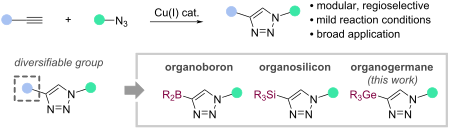
Scheme 1: The CuAAC reaction and installation of functional groups for product diversification.
Scheme 2: Scope of germanyl acetylene CuAAC. Alkyne (1.0 equiv), azide (1.1 equiv), CuSO4·5H2O (5.0 mol %), N...
Scheme 3: (a) Application of Ge-alkyne CuAAC to functional molecules. (b) Functionalisation of germylated tri...
Beilstein J. Org. Chem. 2024, 20, 2799–2805, doi:10.3762/bjoc.20.235
Graphical Abstract
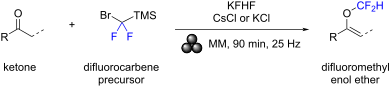
Scheme 1: Overview over difluoromethyl enol ether syntheses from acyclic and cyclic 1,3-diones (A), acyclic k...
Scheme 2: Attempted difluoromethylation of 1a in solution. The reactions were performed on a 0.2 mmol scale. ...
Scheme 3: Scope of ketones. The yields were determined by 1H NMR spectroscopy using 1,2-dichloroethane as the...
Scheme 4: Proposed mechanism (A) and mechanistic investigations (B and C). The yields were determined by 1H N...
Beilstein J. Org. Chem. 2024, 20, 2739–2775, doi:10.3762/bjoc.20.232
Graphical Abstract
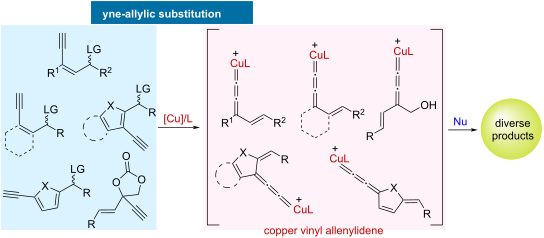
Scheme 1: Copper-catalyzed allylic and yne-allylic substitution.
Scheme 2: Challenges in achieving highly selective yne-allylic substitution.
Scheme 3: Yne-allylic substitutions using indoles and pyroles.
Scheme 4: Yne-allylic substitutions using amines.
Scheme 5: Yne-allylic substitution using 1,3-dicarbonyls.
Scheme 6: Postulated mechanism via copper acetylide-bonded allylic cation.
Scheme 7: Amine-participated asymmetric yne-allylic substitution.
Scheme 8: Asymmetric decarboxylative yne-allylic substitution.
Scheme 9: Asymmetric yne-allylic alkoxylation and alkylation.
Scheme 10: Proposed mechanism for Cu(I) system.
Scheme 11: Asymmetric yne-allylic dialkylamination.
Scheme 12: Proposed mechanism of yne-allylic dialkylamination.
Scheme 13: Asymmetric yne-allylic sulfonylation.
Scheme 14: Proposed mechanism of yne-allylic sulfonylation.
Scheme 15: Aymmetric yne-allylic substitutions using indoles and indolizines.
Scheme 16: Double yne-allylic substitutions using pyrrole.
Scheme 17: Proposed mechanism of yne-allylic substitution using electron-rich arenes.
Scheme 18: Aymmetric yne-allylic monofluoroalkylations.
Scheme 19: Proposed mechanism.
Scheme 20: Aymmetric yne-allylic substitution of yne-allylic esters with anthrones.
Scheme 21: Aymmetric yne-allylic substitution of yne-allylic esters with coumarins.
Scheme 22: Aymmetric yne-allylic substitution of with coumarins by Lin.
Scheme 23: Proposed mechanism.
Scheme 24: Amination by alkynylcopper driven dearomatization and rearomatization.
Scheme 25: Arylation by alkynylcopper driven dearomatization and rearomatization.
Scheme 26: Remote substitution/cyclization/1,5-H shift process.
Scheme 27: Proposed mechanism.
Scheme 28: Arylation or amination by alkynylcopper driven dearomatization and rearomatization.
Scheme 29: Remote nucleophilic substitution of 5-ethynylthiophene esters.
Scheme 30: Proposed mechanism.
Scheme 31: [4 + 1] annulation of yne-allylic esters and cyclic 1,3-dicarbonyls.
Scheme 32: Asymmetric [4 + 1] annulation of yne-allylic esters.
Scheme 33: Proposed mechanism.
Scheme 34: Asymmetric [3 + 2] annulation of yne-allylic esters.
Scheme 35: Postulated annulation step.
Scheme 36: [4 + 1] Annulations of vinyl ethynylethylene carbonates and 1,3-dicarbonyls.
Scheme 37: Proposed mechanism.
Scheme 38: Formal [4 + 1] annulations with amines.
Scheme 39: Formal [4 + 2] annulations with hydrazines.
Scheme 40: Proposed mechanism.
Scheme 41: Dearomative annulation of 1-naphthols and yne-allylic esters.
Scheme 42: Dearomative annulation of phenols or 2-naphthols and yne-allylic esters.
Scheme 43: Postulated annulation mechanism.
Scheme 44: Dearomative annulation of phenols or 2-naphthols.
Scheme 45: Dearomative annulation of indoles.
Scheme 46: Postulated annulation step.
Scheme 47: Asymmetric [4 + 1] cyclization of yne-allylic esters with pyrazolones.
Scheme 48: Proposed mechanism.
Scheme 49: Construction of C–C axially chiral arylpyrroles.
Scheme 50: Construction of C–N axially chiral arylpyrroles.
Scheme 51: Construction of chiral arylpyrroles with 1,2-di-axial chirality.
Scheme 52: Proposed mechanism.
Scheme 53: CO2 shuttling in yne-allylic substitution.
Scheme 54: CO2 fixing in yne-allylic substitution.
Scheme 55: Proposed mechanism.
Beilstein J. Org. Chem. 2024, 20, 2024–2077, doi:10.3762/bjoc.20.178
Graphical Abstract
Scheme 1: Consecutive three-component synthesis of pyrazoles 1 via in situ-formed 1,3-diketones 2 [44].
Scheme 2: Consecutive three-component synthesis of 4-ethoxycarbonylpyrazoles 5 via SmCl3-catalyzed acylation ...
Scheme 3: Consecutive four-component synthesis of 1-(thiazol-2-yl)pyrazole-3-carboxylates 8 [51].
Scheme 4: Three-component synthesis of thiazolylpyrazoles 17 via in situ formation of acetoacetylcoumarins 18 ...
Scheme 5: Consecutive pseudo-four-component and four-component synthesis of pyrazoles 21 from sodium acetylac...
Scheme 6: Consecutive three-component synthesis of 1-substituted pyrazoles 24 from boronic acids, di(Boc)diim...
Scheme 7: Consecutive three-component synthesis of N-arylpyrazoles 25 via in situ formation of aryl-di(Boc)hy...
Scheme 8: Consecutive three-component synthesis of 1,3,4-substituted pyrazoles 27 and 28 from methylhydrazine...
Scheme 9: Consecutive three-component synthesis of 4-allylpyrazoles 32 via oxidative allylation of 1,3-dicarb...
Scheme 10: Pseudo-five-component synthesis of tris(pyrazolyl)methanes 35 [61].
Scheme 11: Pseudo-three-component synthesis of 5-(indol-3-yl)pyrazoles 39 from 1,3,5-triketones 38 [64].
Scheme 12: Three-component synthesis of thiazolylpyrazoles 43 [65].
Scheme 13: Three-component synthesis of triazolo[3,4-b]-1,3,4-thiadiazin-3-yl substituted 5-aminopyrazoles 47 [67]....
Scheme 14: Consecutive three-component synthesis of 5-aminopyrazoles 49 via formation of β-oxothioamides 50 [68].
Scheme 15: Synthesis of 3,4-biarylpyrazoles 52 from aryl halides, α-bromocinnamaldehyde, and tosylhydrazine vi...
Scheme 16: Consecutive three-component synthesis of 3,4-substituted pyrazoles 57 from iodochromones 55 by Suzu...
Scheme 17: Pseudo-four-component synthesis of pyrazolyl-2-pyrazolines 59 by ring opening/ring closing cyclocon...
Scheme 18: Consecutive three-component synthesis of pyrazoles 61 [77].
Scheme 19: Three-component synthesis of pyrazoles 62 from malononitrile, aldehydes, and hydrazines [78-90].
Scheme 20: Four-component synthesis of pyrano[2,3-c]pyrazoles 63 [91].
Scheme 21: Three-component synthesis of persubstituted pyrazoles 65 from aldehydes, β-ketoesters, and hydrazin...
Scheme 22: Three-component synthesis of pyrazol-4-carbodithioates 67 [100].
Scheme 23: Regioselective three-component synthesis of persubstituted pyrazoles 68 catalyzed by ionic liquid [...
Scheme 24: Consecutive three-component synthesis of 4-halopyrazoles 69 and anellated pyrazoles 70 [102].
Scheme 25: Three-component synthesis of 2,2,2-trifluoroethyl pyrazole-5-carboxylates 72 [103].
Scheme 26: Synthesis of pyrazoles 75 in a one-pot process via carbonylative Heck coupling and subsequent cycli...
Scheme 27: Copper-catalyzed three-component synthesis of 1,3-substituted pyrazoles 76 [105].
Scheme 28: Pseudo-three-component synthesis of bis(pyrazolyl)methanes 78 by ring opening-ring closing cyclocon...
Scheme 29: Three-component synthesis of 1,4,5-substituted pyrazoles 80 [107].
Scheme 30: Consecutive three-component synthesis of 3,5-bis(fluoroalkyl)pyrazoles 83 [111].
Scheme 31: Consecutive three-component synthesis of difluoromethanesulfonyl-functionalized pyrazole 88 [114].
Scheme 32: Consecutive three-component synthesis of perfluoroalkyl-substituted fluoropyrazoles 91 [115].
Scheme 33: Regioselective consecutive three-component synthesis of 1,3,5-substituted pyrazoles 93 [116].
Scheme 34: Three-component synthesis of pyrazoles 96 mediated by trimethyl phosphite [117].
Scheme 35: One-pot synthesis of pyrazoles 99 via Liebeskind–Srogl cross-coupling/cyclocondensation [118].
Scheme 36: Synthesis of 1,3,5-substituted pyrazoles 101 via domino condensation/Suzuki–Miyaura cross-coupling ...
Scheme 37: Consecutive three-component synthesis of 1,3,5-trisubstituted pyrazoles 102 and 103 by Sonogashira ...
Scheme 38: Polymer analogous consecutive three-component synthesis of pyrazole-based polymers 107 [132].
Scheme 39: Synthesis of 1,3,5-substituted pyrazoles 108 by sequentially Pd-catalyzed Kumada–Sonogashira cycloc...
Scheme 40: Consecutive four-step one-pot synthesis of 1,3,4,5-substituted pyrazoles 110 [137].
Scheme 41: Four-component synthesis of pyrazoles 113, 115, and 117 via Sonogashira coupling and subsequent Suz...
Scheme 42: Consecutive four- or five-component synthesis for the preparation of 4-pyrazoly-1,2,3-triazoles 119...
Scheme 43: Four-component synthesis of pyrazoles 121 via alkynone formation by carbonylative Pd-catalyzed coup...
Scheme 44: Preparation of 3-azulenyl pyrazoles 124 by glyoxylation, decarbonylative Sonogashira coupling, and ...
Scheme 45: Four-component synthesis of a 3-indoloylpyrazole 128 [147].
Scheme 46: Two-step synthesis of 5-acylpyrazoles 132 via glyoxylation-Stephen–Castro sequence and subsequent c...
Scheme 47: Copper on iron mediated consecutive three-component synthesis of 3,5-substituted pyrazoles 136 [150].
Scheme 48: Consecutive three-component synthesis of 3-substituted pyrazoles 141 by Sonogashira coupling and su...
Scheme 49: Consecutive three-component synthesis of pyrazoles 143 initiated by Cu(I)-catalyzed carboxylation o...
Scheme 50: Consecutive three-component synthesis of benzamide-substituted pyrazoles 146 starting from N-phthal...
Scheme 51: Consecutive three-component synthesis of 1,3,5-substituted pyrazoles 148 [156].
Scheme 52: Three-component synthesis of 4-ninhydrin-substituted pyrazoles 151 [158].
Scheme 53: Consecutive four-component synthesis of 4-(oxoindol)-1-phenylpyrazole-3-carboxylates 155 [159].
Scheme 54: Three-component synthesis of pyrazoles 160 [160].
Scheme 55: Consecutive three-component synthesis of pyrazoles 165 [162].
Scheme 56: Consecutive three-component synthesis of 3,5-disubstituted and 3-substituted pyrazoles 168 and 169 ...
Scheme 57: Three-component synthesis of 3,4,5-substituted pyrazoles 171 via 1,3-dipolar cycloaddition of vinyl...
Scheme 58: Three-component synthesis of pyrazoles 173 and 174 from aldehydes, tosylhydrazine, and vinylidene c...
Scheme 59: Three-component synthesis of pyrazoles 175 from glyoxyl hydrates, tosylhydrazine, and electron-defi...
Scheme 60: Pseudo-four-component synthesis of pyrazoles 177 from glyoxyl hydrates, tosylhydrazine, and aldehyd...
Scheme 61: Consecutive three-component synthesis of pyrazoles 179 via Knoevenagel-cycloaddition sequence [179].
Scheme 62: Three-component synthesis of 5-dimethylphosphonate substituted pyrazoles 182 from aldehydes, the Be...
Scheme 63: Consecutive three-component synthesis of 5-(dimethyl phosphonate)-substituted pyrazoles 185 from al...
Scheme 64: Three-component synthesis of 5-(dimethyl phosphonate)-substituted pyrazoles 187 from aldehydes, the...
Scheme 65: Three-component synthesis of 5-diethylphosphonate/5-phenylsulfonyl substituted pyrazoles 189 from a...
Scheme 66: Pseudo-three-component synthesis of 3-(dimethyl phosphonate)-substituted pyrazoles 190 [185].
Scheme 67: Three-component synthesis of 3-trifluoromethylpyrazoles 193 [186].
Scheme 68: Consecutive three-component synthesis of 5-stannyl-substituted 4-fluoropyrazole 197 [191,192].
Scheme 69: Pseudo-three-component synthesis of 3,5-diacyl-4-arylpyrazoles 199 [195].
Scheme 70: Three-component synthesis of pyrazoles 204 via nitrilimines [196].
Scheme 71: Three-component synthesis of 1,3,5-substituted pyrazoles 206 via formation of nitrilimines and sali...
Scheme 72: Pseudo four-component synthesis of pyrazoles 209 from acetylene dicarboxylates 147, hydrazonyl chlo...
Scheme 73: Consecutive three-component synthesis of pyrazoles 213 via syndnones 214 [200].
Scheme 74: Consecutive three-component synthesis of pyrazoles 216 via in situ-formed diazomethinimines 217 [201].
Scheme 75: Consecutive three-component synthesis of 3-methylthiopyrazoles 219 from aldehydes, hydrazine, and 1...
Scheme 76: Three-component synthesis of 1,3,5-substituted pyrazoles 220 from aldehydes, hydrazines, and termin...
Scheme 77: Three-component synthesis of 1,3,4,5-substituted pyrazoles 222 from aldehydes, hydrazines, and DMAD ...
Scheme 78: Pseudo three-component synthesis of pyrazoles 224 from sulfonyl hydrazone and benzyl acrylate under...
Scheme 79: Titanium-catalyzed consecutive four-component synthesis of pyrazoles 225 via enamino imines 226 [211]. a...
Scheme 80: Titanium-catalyzed three-component synthesis of pyrazoles 227 via enhydrazino imine complex interme...
Scheme 81: Pseudo-three-component synthesis of pyrazoles 229 via Glaser coupling of terminal alkynes and photo...
Scheme 82: Copper(II)acetate-mediated three-component synthesis of pyrazoles 232 [216].
Scheme 83: Copper-catalyzed three-component synthesis of 1,3,4-substituted pyrazole 234 from oxime acetates, a...
Scheme 84: Three-component synthesis of 3-trifluoroethylpyrazoles 239 [218].
Scheme 85: Pseudo-three-component synthesis of 1,4-bisulfonyl-substituted pyrazoles 242 [219].
Scheme 86: Three-component synthesis of 4-hydroxypyrazole 246 [221].
Beilstein J. Org. Chem. 2024, 20, 1713–1745, doi:10.3762/bjoc.20.152
Graphical Abstract
Figure 1: Steroidal spiro heterocycles with remarkable pharmacological activity.
Scheme 1: Synthesis of the spirooxetanone 2. a) t-BuOK, THF, rt, 16%.
Scheme 2: Synthesis of the 17-spirooxetane derivative 7. a) HC≡C(CH2)2CH2OTBDPS, n-BuLi, THF, BF3·Et2O, −78 °...
Scheme 3: Pd-catalyzed carbonylation of steroidal alkynols to produce α-methylene-β-lactones at C-3 and C-17 ...
Scheme 4: Catalyst-free protocol to obtain functionalized spiro-lactones by an intramolecular C–H insertion. ...
Scheme 5: One-pot procedure from dienamides to spiro-β-lactams. a) 1. Ac2O, DMAP, Et3N, CH2Cl2, 2. malononitr...
Scheme 6: Spiro-γ-lactone 20 afforded from 7α-alkanamidoestrone derivative 17. a) HC≡CCH2OTHP, n-BuLi, THF, –...
Scheme 7: Synthesis of the 17-spiro-γ-lactone 23, a key intermediate to obtain spironolactone. a) Ethyl propi...
Scheme 8: Synthetic pathway to obtain 17-spirodihydrofuran-3(2H)-ones from 17-oxosteroids. a) 1-Methoxypropa-...
Scheme 9: One-pot procedure to obtain 17-spiro-2H-furan-3-one compounds. a) NaH, diethyl oxalate, benzene, rt...
Scheme 10: Synthesis of 17-spiro-2H-furan-3-one derivatives. a) RCH=NOH, N-chlorosuccinimide/CHCl3, 99%; b) H2...
Scheme 11: Intramolecular condensation of a γ-acetoxy-β-ketoester to synthesize spirofuranone 37. a) (CH3CN)2P...
Scheme 12: Synthesis of spiro 2,5-dihydrofuran derivatives. a) Allyl bromide, DMF, NaH, 0 °C to rt, 93%; b) G-...
Scheme 13: First reported synthesis of C-16 dispiropyrrolidine derivatives. a) Sarcosine, isatin, MeOH, reflux...
Scheme 14: Cycloadducts 47 with antiproliferative activity against human cancer cell lines. a) 1,4-Dioxane–MeO...
Scheme 15: Spiropyrrolidine compounds generated from (E)-16-arylidene steroids and different ylides. a) Acenap...
Scheme 16: 3-Spiropyrrolidines 52a–c obtained from ketones 50a–c. a) p-Toluenesulfonyl hydrazide, MeOH, rt; b)...
Scheme 17: 16-Spiropyrazolines from 16-methylene-13α-estrone derivatives. a) AgOAc, toluene, rt, 78–81%.
Scheme 18: 6-Spiroimidazolines 57 synthesized by a one-pot multicomponent reaction. a) R3-NC, T3P®, DMSO, 70 °...
Scheme 19: Synthesis of spiro-1,3-oxazolines 60, tested as progesterone receptor antagonist agents. a) CF3COCF3...
Scheme 20: Synthesis of spiro-1,3-oxazolidin-2-ones 63 and 66a,b. a) RNH2, EtOH, 70 °C, 70–90%; b) (CCl3O)2CO,...
Scheme 21: Formation of spiro 1,3-oxazolidin-2-one and spiro 2-substituted amino-4,5-dihydro-1,3-oxazoles from ...
Scheme 22: Synthesis of diastereomeric spiroisoxazolines 74 and 75. a) Ar-C(Cl)=N-OH, DIPEA, toluene, rt, 74 (...
Scheme 23: Spiro 1,3-thiazolidine derivatives 77–79 obtained from 2α-bromo-5α-cholestan-3-one 76. a) 2-aminoet...
Scheme 24: Method for the preparation of derivative 83. a) Benzaldehyde, MeOH, reflux, 77%; b) thioglycolic ac...
Scheme 25: Synthesis of spiro 1,3-thiazolidin-4-one derivatives from steroidal ketones. a) Aniline, EtOH, refl...
Scheme 26: Synthesis of spiro N-aryl-1,3-thiazolidin-4-one derivatives 91 and 92. a) Sulfanilamide, DMF, reflu...
Scheme 27: 1,2,4-Trithiolane dimers 94a–e selectively obtained from carbonyl derivatives. a) LR, CH2Cl2, reflu...
Scheme 28: Spiro 1,2,4-triazolidin-3-ones synthesized from semicarbazones. a) H2O2, CHCl3, 0 °C, 82–85%.
Scheme 29: Steroidal spiro-1,3,4-oxadiazoline 99 obtained in two steps from cholest-5-en-3-one (97). a) NH2NHC...
Scheme 30: Synthesis of spiro-1,3,4-thiadiazoline 101 by cyclization and diacetylation of thiosemicarbazone 100...
Scheme 31: Mono- and bis(1,3,4-thiadiazolines) obtained from estrane and androstane derivatives. a) H2NCSNHNH2...
Scheme 32: Different reaction conditions to synthesize spiro-1,3,2-oxathiaphospholanes 108 and 109.
Scheme 33: Spiro-δ-lactones derived from ADT and epi-ADT as inhibitors of 17β-HSDs. a) CH≡C(CH2)2OTHP, n-BuLi,...
Scheme 34: Spiro-δ-lactams 123a,b obtained in a five-step reaction sequence. a) (R)-(+)-tert-butylsulfinamide,...
Scheme 35: Steroid-coumarin conjugates as fluorescent DHT analogues to study 17-oxidoreductases for androgen m...
Scheme 36: 17-Spiro estradiolmorpholinones 130 bearing two types of molecular diversity. a) ʟ- or ᴅ-amino acid...
Scheme 37: Steroidal spiromorpholinones as inhibitors of enzyme 17β-HSD3. a) Methyl ester of ʟ- or ᴅ-leucine, ...
Scheme 38: Steroidal spiro-morpholin-3-ones achieved by N-alkylation or N-acylation of amino diols 141, follow...
Scheme 39: Straightforward method to synthesize a spiromorpholinone derivative from estrone. a) BnBr, K2CO3, CH...
Scheme 40: Pyrazolo[4,3-e][1,2,4]-triazine derivatives 152–154. a) 4-Aminoantipyrine, EtOH/DMF, reflux, 82%; b...
Scheme 41: One-pot procedure to synthesize spiro-1,3,4-thiadiazine derivatives. a) NH2NHCSCONHR, H2SO4, dioxan...
Scheme 42: 1,2,4-Trioxanes with antimalarial activity. a) 1. O2, methylene blue, CH3CN, 500 W tungsten halogen...
Scheme 43: Tetraoxanes 167 and 168 synthesized from ketones 163, 165 and 166. a) NaOH, iPrOH/H2O, 80 °C, 93%; ...
Scheme 44: 1,2,4,5-Tetraoxanes bearing a steroidal moiety and a cycloalkane. a) 30% H2O2/CH2Cl2/CH3CN, HCl, rt...
Scheme 45: Spiro-1,3,2-dioxaphosphorinanes obtained from estrone derivatives. a) KBH4, MeOH, THF or CH2Cl2; b)...
Scheme 46: Synthesis of steroidal spiro-ε-lactone 183. a) 1. Jones reagent, acetone, 0 °C to rt, 2. ClCOCOCl, ...
Scheme 47: Synthesis of spiro-2,3,4,7-tetrahydrooxepines 185 and 187 derived from mestranol and lynestrenol (38...
Beilstein J. Org. Chem. 2024, 20, 1684–1692, doi:10.3762/bjoc.20.150
Graphical Abstract
Figure 1: a) Schematic overview of a photochemical isomerization and b) absorption spectra of the isomers of ...
Figure 2: a) Scheme of the setup and b) picture of the setup.
Figure 3: A visual example of the power determination. a) Power without any elements (left) and with insulate...
Figure 4: UV–vis absorption spectra of azobenzene upon irradiation at 340 nm (methanol solution, 20 °C). a) E...