Search results
Search for "esters" in Full Text gives 936 result(s) in Beilstein Journal of Organic Chemistry. Showing first 200.
The surprising reaction of (chloro- and methanesulfonyloxy)(phenyl)methylphosphonates and –(phenyl)methylphosphine oxides with potassium diphenylphosphide followed by oxidation
Beilstein J. Org. Chem. 2026, 22, 1160–1167, doi:10.3762/bjoc.22.93
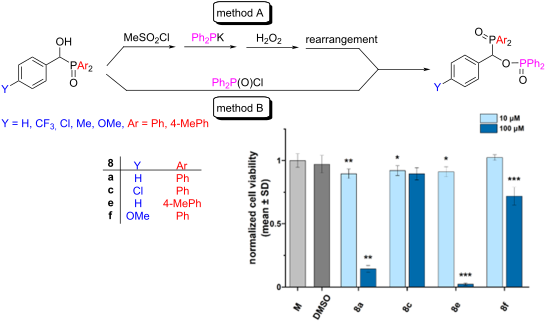
- with alcohols to provide the α-alkoxy derivatives [8]. Surprisingly, the sulfonyloxyphosphonates could also be involved in the Michaelis–Arbuzov reaction with trivalent P-esters to furnish bisphosphonic derivatives [8][9]. Hydroxymethylene-bisphosphonates form a special group within α


A cascade synthesis of 2-aminothiochromones from 2-fluorophenyl ketone and thiocarbonyldiimidazole
Beilstein J. Org. Chem. 2026, 22, 1151–1159, doi:10.3762/bjoc.22.92
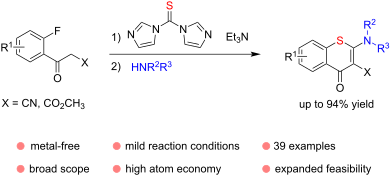
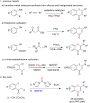
- thiophenol derivatives (Scheme 1b). A classic example is the condensation of substituted thiophenols with β-keto esters in the presence of polyphosphoric acid [22]. A gentle route was developed by Simon, which involved the reaction of thiosalicylic acids with 2-substituted N,N-dialkylacetamides in the



Construction of CF2 moieties in FDA-approved drugs (2016–2025): industrial routes, mechanisms, and scale-up considerations
Beilstein J. Org. Chem. 2026, 22, 1122–1150, doi:10.3762/bjoc.22.91
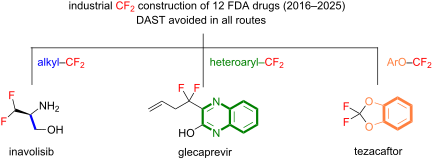
- carbonyl group to give 62, followed by hydrolysis to afford 63. For the difluorination of β-keto esters, synthetic methods using SF4 have been reported [29], and safety and efficiency evaluations indicate that SF4 holds promise for such transformations. However, whether the continuous-flow difluorination
- of α-keto esters such as ethyl pyruvate (61) can be achieved remains to be investigated. In route c, assembled from literature [17][30] reported between 2012 and 2023, the key CF2 introduction (reported in 2023) uses methyl 2-(R)-fluoropropanoate or the racemate 65 as the starting material. Compounds






Synthesis and acaricidal activity against Varroa destructor of α- and γ-costic acid dimers
Beilstein J. Org. Chem. 2026, 22, 1088–1096, doi:10.3762/bjoc.22.87
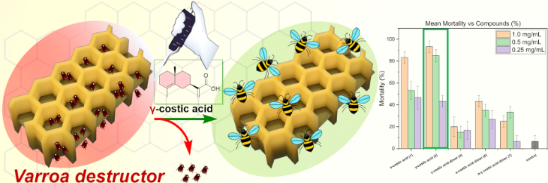
- specific activity has never been reported for γ-costic acid (3), for which only antifeedant [19] and antibacterial activities [8] have been demonstrated. Recently, some of us reported that the synthesized dimeric esters of both polygodial and ophiobolin A with ethylene glycol show enhanced anticancer
- ,γ-costic acid heterodimer esters in comparison with their parent monomeric acids. Results and Discussion Given the significant economic and ecological impact of V. destructor, considerable efforts have been devoted to the development of acaricides to control this ectoparasite [21]. However, the use


Amino acid-based surfactants: sustainable synthesis and antimicrobial mechanisms
Beilstein J. Org. Chem. 2026, 22, 1067–1085, doi:10.3762/bjoc.22.85
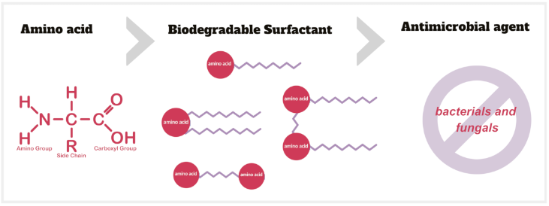
- fatty acids or other lipophilic chains [18][19]. Upon the introduction of a reactive molecule with a hydrophobic chain, such as fatty acids, esters, amines and alcohols, through alkyl ester or amide bonds, amino acids having at least two functional groups (carboxylic and amino groups), can be easily
- moderate to high yields, whereas direct alkylation requires strict stoichiometric and reaction control to minimize overalkylation and side reactions [13]. In addition, double-chain derivatives (e.g., LANHCn) are commonly obtained via aminolysis of methyl esters with long-chain amines under thermal
- with amphotericin B [19]. Chain length-dependent activity and CMC relationships A comparative analysis of the CMCs and minimum inhibitory concentrations (MICs) of cationic surfactant analogues derived from ʟ-phenylalanine (C1–C20) and ʟ-tyrosine (C8–C14) esters against various bacterial strains


Synthesis of novel 1,2,4-oxadiazole-isoxazoline hybrids and their in silico potential with adenosine receptors
Beilstein J. Org. Chem. 2026, 22, 1033–1047, doi:10.3762/bjoc.22.82
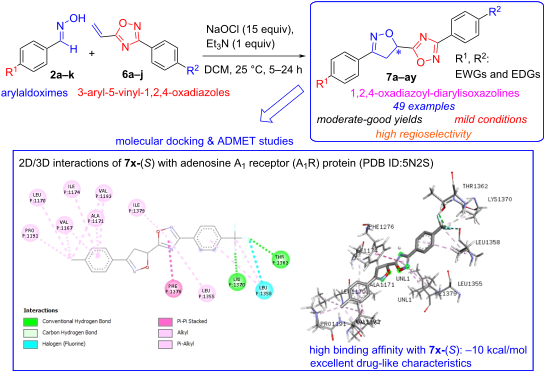
- cycloaddition of indazolyl nitrile oxides with methacrylic acid to afford indazolylisoxazoline esters, followed by cyclization with various aryl benzamidoximes [58]. In a related study, novel 1,2,4-oxadiazole-isoxazole hybrids were synthesized from isoxazoline esters generated through nitrile oxide


Rh(III)-catalyzed chelation-assisted C–H activation/annulation of 2-arylimidazolines with cyclic diazo-1,3-dicarbonyl compounds: a novel approach to tetracyclic annulated derivatives of 2,3-dihydroimidazo[2,1-a]isoquinoline
Beilstein J. Org. Chem. 2026, 22, 997–1003, doi:10.3762/bjoc.22.78
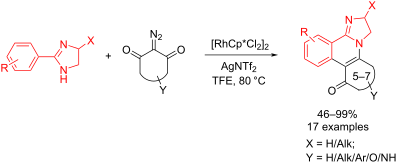
- immunosuppressive activity. The latter was used to develop antiasthmatic, pulmonary, and anti-allergy agents acting as platelet-activating factor receptor (PAF-R) antagonists [12][13]. Derivatives with X = H were accessed only via lithiation of 2-(o-tolyl)imidazolines followed by condensation with aromatic esters


Electrochemical reduction of unsaturated carbon–carbon bonds via 3d transition-metal catalysis
Beilstein J. Org. Chem. 2026, 22, 955–981, doi:10.3762/bjoc.22.75
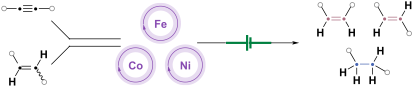
- uncontrolled overreduction in iron electrocatalysis. The reaction proceeds efficiently with internal diarylalkynes bearing both electron-donating and electron-withdrawing substituents, while functional groups typically sensitive to reductive conditions, such as aryl halides and arylboronic esters, are well
- previously established in Baran’s study (Scheme 6A) [103]. Redox-sensitive functionalities such as esters, ketones, epoxides, nitriles, and arylboronic esters remained intact, and both electron-rich and electron-poor arenes were fully compatible with the reaction conditions (Scheme 6B). Importantly, this
- authors selected fumarate esters as model substrates, as these species typically undergo oligomerization and competitive hydrogen evolution under conventional electrode-mediated reduction conditions (Scheme 7B). In subsequent controlled-potential coulometry (CPC) experiments conducted at −1.30 V vs Fc+/0








Recent advances in copper-catalyzed direct hydroamination of alkenes with (hetero)aromatic amines
Beilstein J. Org. Chem. 2026, 22, 925–947, doi:10.3762/bjoc.22.73
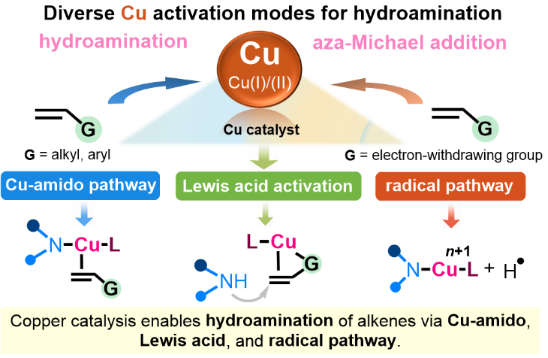
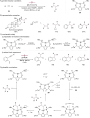
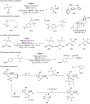
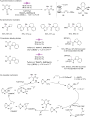
- Scheme 7, the use of an air- and moisture-stable (CAAC)Cu–Cl catalyst in the presence of KOt-Bu enabled the efficient hydroamination of activated olefins 12 bearing electron-withdrawing groups such as esters, nitriles, and sulfone substituents. Under these conditions, various anilines reacted efficiently
- -supported copper nanocomplex, Cu(0)NC@PHA, derived from cellulose-based poly(hydroxamic acid) ligands [50]. The supported Cu(0) NPs catalyzed aza-Michael addition reactions of aromatic amines with various α,β-unsaturated esters 33 in ethanol at room temperature. The heterogeneous catalyst exhibited high


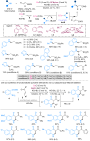


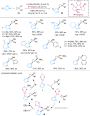


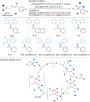

Chiral cyclopropenimine-catalyzed enantioselective Michael reactions of phenol and benzofuran-derived α,β-unsaturated pyrazolamides with benzophenone-imine of glycine esters
Beilstein J. Org. Chem. 2026, 22, 888–896, doi:10.3762/bjoc.22.69
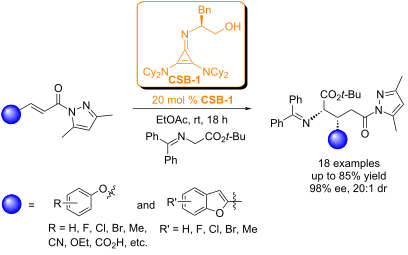
- , 710032, China School of Pharmacy, Lanzhou University, Lanzhou, 730000, China 10.3762/bjoc.22.69 Abstract The enantioselective Michael reactions of benzophenone-imine of glycine esters with phenol- and benzofuran-derived α,β-unsaturated pyrazolamides have been realized by using a chiral cyclopropenimine
- series of 3-substitued glutamic acid esters in high yields and diastereoselectivities through DBU-catalyzed Michael additions of benzophenone-imine of glycine ester and α,β-unsaturated esters which derived from phenols and benzofurans under mild conditions [5][6]. The chiral 3-aryl-substituted glutamic
- and pyroglutamic acid esters were also produced by enantioselective Michael additions of β-aryl-substituted α,β-unsaturated pyrazolamides with benzophenone-imine of glycine ester in excellent ee and de values by using a chiral cyclopropenimine (Lambert catalyst, Figure 2b) as an organosuperbase






Diastereodivergent electrophilic trapping of α-boryl lithium derivatives
Beilstein J. Org. Chem. 2026, 22, 882–887, doi:10.3762/bjoc.22.68
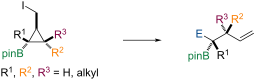
- range of electrophiles to give boronic esters bearing vicinal tri- and tetrasubstituted stereocenters in good yields and high diastereoselectivities. Notably, substrates bearing alkyl substituents display the opposite sense of diastereoselectivity to previously studied aryl-substituted analogues. The
- facial selectivity during electrophilic trapping. These findings expand the synthetic utility of α-boryl lithium intermediates and provide insight into the origins of their diastereoselectivity. Keywords: α-boryl lithium; diastereoselectivity; (iodomethyl)cyclopropylboronic esters; ring-opening
- regioselectivity. The use of various electrophiles enabled the synthesis of acyclic boronic esters featuring vicinal tri- and tetrasubstituted stereocenters. Cyclopropylmethyl iodide starting materials. Synthesis and reactivity of α-boryl lithium species. Diastereodivergent electrophilic trapping of α-boryl




The trans-influence in gold chemistry from a catalytic perspective
Beilstein J. Org. Chem. 2026, 22, 838–856, doi:10.3762/bjoc.22.66
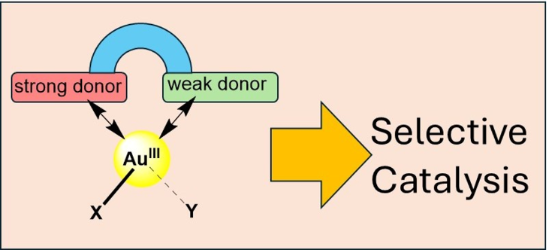
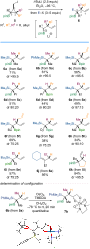
- . for the catalytic formation of trans-vinyl triflate esters (Scheme 20) [93]. The above discussion has highlighted how important the ligand trans-influence is in determining gold-catalysed reaction paths. Nickel or palladium-like reactivity, such as migratory alkene, alkyne or CO insertions into metal
- bonds [20][84]. Catalytic acetylene functionalisation [86][87]. Examples of alkene insertions into Au–C bonds [88][89]. Examples of β-H elimination and chain walking processes in (C^P)-ligated gold alkyls [90]. Mechanism of alkyne hydroarylation with (C^P) gold catalysts [92]. Vinylic triflate esters by


Preparation of 3-(alkylamino)imidazo[1,2-a]pyridine-2-carbaldehydes via Kornblum oxidation and unexpected ring-opening reactions of the corresponding alcohols under oxidative conditions
Beilstein J. Org. Chem. 2026, 22, 763–770, doi:10.3762/bjoc.22.58
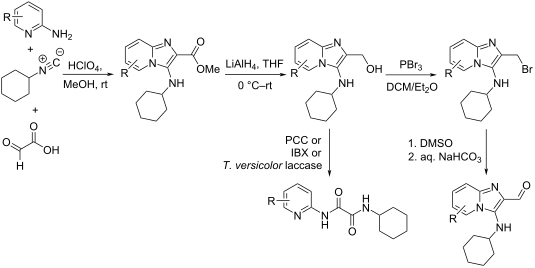
- esters, had been obtained from 2-aminopyridines 9a–d while no reaction was observed for 2-aminopyridine 9e (Scheme 1). We reasoned that at the relatively small scale of the reaction (≈350 mg aminopyridine) and because a period of 30 min stirring of all reactants had been allowed prior to addition of the
- . Compound 9f was also successfully converted into 13f under the conditions shown in Table 1. Nenajdenko et al. reported a few examples of the preparation of imidazo[1,2-a]pyridin-3-amine ethyl esters starting from ethyl glyoxylate in toluene and using ammonium chloride as a catalyst in yields of 30–35% [26
- ]. With the relatively facile preparation of esters 13a–d and 13f now demonstrated, we shifted our focus to investigate possible routes to compounds such as 8, that have not been reported previously. There were three immediate possibilities to consider: i) reaction of the ester directly with 2


Synthesis of heterocycles based on azomethine ylides from α-amino acids (or amines) and carbonyl compounds
Beilstein J. Org. Chem. 2026, 22, 705–741, doi:10.3762/bjoc.22.55
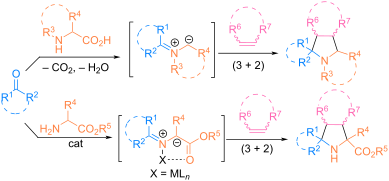
- derivatives with multiple chiral centers under high regio- and stereocontrol. Currently, strategies using azomethine ylides based on imino esters or α-amino acids with a variety of cyclic and acyclic carbonyl compounds dominate. Enantioselective (3 + 2) cycloaddition reactions of azomethine ylides obtained
- from imino esters, catalyzed by chiral Cu(I,II) and Ag(I) complexes, are widely used. Reactions using α-amino acids proceed, in most cases, without the use of catalysts, with high yields and high stereoselectivity. Electrophilic alkenes of various structures, (hetero)aromatic olefins and benzofulvenes
- , the importance of the formation of azomethine ylides from amino esters, amino acids, imine derivatives, aziridines or other substrates was emphasized. A review [26] demonstrates metal-catalyzed as well as metal-free asymmetric and racemic transformations of imino ethers upon interaction with various


Computational prediction of C–H hydricities and their use in predicting the regioselectivity of electron-rich C–H functionalisation reactions
Beilstein J. Org. Chem. 2026, 22, 603–610, doi:10.3762/bjoc.22.46
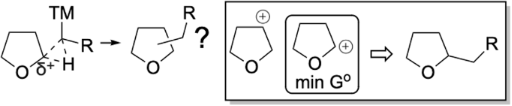
- photoredox activation, followed by anion-binding-catalysed functionalisation to form β-amino esters. Here, the reacting atom is the one with the lowest hydricity and BDE. Compounds 8–10 Schmidt et al. [44] reported the visible light-catalysed bromination of compound 8, Kamon et al. [45] reported the light


![[Graphic 6]](/bjoc/content/inline/1860-5397-22-46-i8.svg?max-width=637&scale=1.18182)


Synthesis and uranyl(VI) extraction performance of a calix[4]pyrrole–tetrahydroxamic acid receptor
Beilstein J. Org. Chem. 2026, 22, 486–494, doi:10.3762/bjoc.22.36
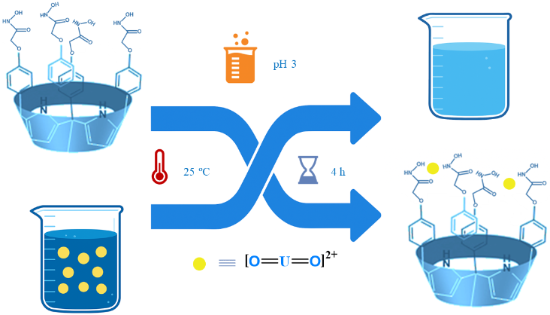
- carboxylic acid derivatives such as esters, acyl chlorides and anhydrides with hydroxylamine salts [41]. A variety of coupling or activating agents were also employed in case of simple addition of hydroxylamine to carboxylic acid compounds [42][43][44]. In addition, alternative methods starting from
- amount of solid KCN in aqueous hydroxylamine has been reported for the solution-phase hydroxylamination of esters previously described by Ho et al. [52]. This study demonstrated that the extent of ester conversion and the formation of carboxylic acid by-products vary markedly with the structure of the
- outcome is strongly influenced by the nature of the ester substrate. As a result, this synthetic route was discontinued. Another straightforward method for the synthesis of hydroxamic acids from esters was reported in 1994 by Hutchinson et al., for the synthesis of calixarene tetrahydroxamates from


Recent advances in the stereoselective synthesis of distal biaxially chiral molecules
Beilstein J. Org. Chem. 2026, 22, 461–479, doi:10.3762/bjoc.22.34
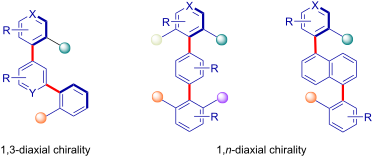
- yields, indicating potential utility in chiral fluorescent materials. In addition, Du’s group reported an N-heterocyclic carbene (NHC)-catalyzed (3 + 3) cycloaddition of 2,6-disubstituted alkyne esters 38 with 6-aminouracils 39, affording distal biaxial uracil frameworks with both C–C and C–N chiral axes


Cone p-aminocalix[4]arenes enriched with ‘clickable’ alkyne or azide functionalities
Beilstein J. Org. Chem. 2026, 22, 399–415, doi:10.3762/bjoc.22.28
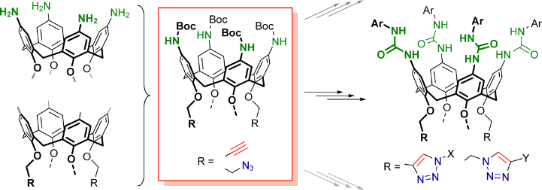
- macrocyclic core through simple acylation of p-aminocalix[4]arenes with the respective phosphorous-containing activated esters. Such grafting of well-known receptor units onto a common platform has led to substantial amplification of the efficiency of lanthanide and actinide extraction from acidic media by






Recent advances in the cleavage of non-activated amides
Beilstein J. Org. Chem. 2026, 22, 352–369, doi:10.3762/bjoc.22.23
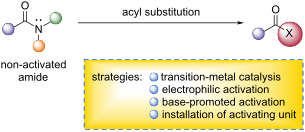
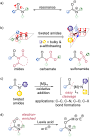
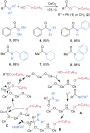
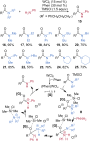
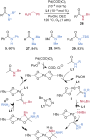
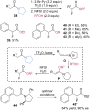
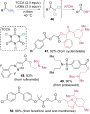
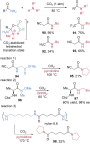
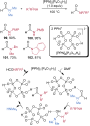
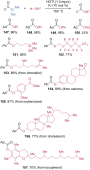
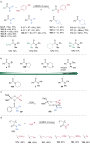
- undergoes hydrolysis to afford the benzyl ester 30. Under the optimized conditions, primary, secondary, and tertiary amides 12, 31–33 were successfully converted to benzyl esters in high yields. Notably, loss of enantiopurity of chiral amide 33 was not observed during esterification. Sulfuryl fluoride
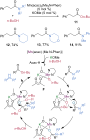
- (SO2F2) was demonstrated to be a powerful electrophilic reagent for amide-bond cleavage by Qin et al. (Scheme 8) [56]. Under an atmosphere of SO2F2, esterification of tertiary amides 28, 35–37 smoothly afforded esters 34 in high yields, although the efficiency was reduced when a bulky substituent was
- 2.2 equivalents of 2-bromopyridine as a base, pyrrolidine-derived amides 38 were effectively activated. Subsequent addition of NFSI as the electrophilic fluorinating reagent, along with alcohols as the nucleophile, afforded the corresponding esters 39–43 in moderate yields. Mechanistically, the










A mild and atom-efficient four-component cascade strategy for the construction of biologically relevant 4-hydroxyquinolin-2(1H)-one derivatives
Beilstein J. Org. Chem. 2026, 22, 244–256, doi:10.3762/bjoc.22.18
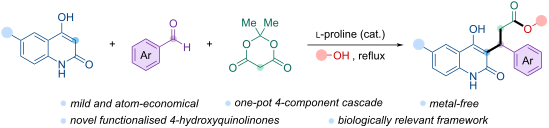
- acids followed by sequential Michael-type addition and subsequent cascade transformations. This versatile one-pot protocol delivers structurally diverse open-chain 3-arylpropanoate esters in moderate to good yields (46–69%), while cyclic pyranoquinolinones are formed under kinetically controlled
- direct access to scarcely explored open-chain quinolinone esters, expanding the medicinal chemistry toolbox with promising scaffolds for drug discovery. Keywords: antibacterial activity; 4-hydroxyquinolin-2(1H)-one; ʟ-proline catalysis; Meldrum’s acid; Michael addition; multicomponent reaction
- ) and cyclized (lactone) forms [35]. The γ-position of the propanoic acid side chain was further modified with a 3,4-dimethoxyphenyl group, inspired by earlier reports [36]. The carboxylic acid functionality was either retained or converted into methyl, ethyl, isopropyl, or cyclohexyl esters to evaluate


Synthesis of diaryl phosphates using phytic acid as a phosphorus source
Beilstein J. Org. Chem. 2026, 22, 213–223, doi:10.3762/bjoc.22.15
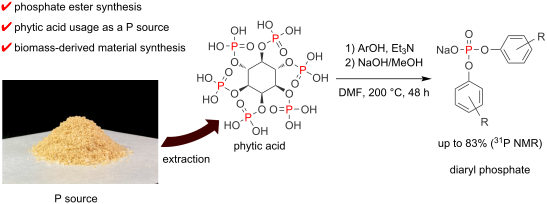
- soil. It can potentially serve as a phosphorus source in the syntheses of organic phosphates; however, this approach has not been utilized for the preparation of phosphate esters. In this study, we report the first successful synthesis of phosphate esters using phytic acid as a phosphorus source. Crude
- with a recovery of 4.2% and then conducted an esterification reaction using the extracted phytic acid and phenol. As a result, diphenyl phosphate with a yield of 44% was obtained. This work can facilitate the development of an environmentally friendly method for producing phosphate esters that does not
- rely on phosphate rock but instead uses biomass as a phosphorus source. Keywords: diaryl phosphates; phosphate esters; phosphate ester synthesis; phosphorus recovery; phytic acid; Introduction Phytic acid (myo-inositol-1,2,3,4,5,6-hexakisphosphate, Scheme 1) is a phosphorus-rich molecule, which is




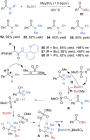
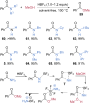
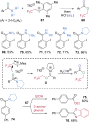
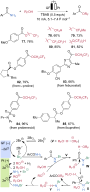
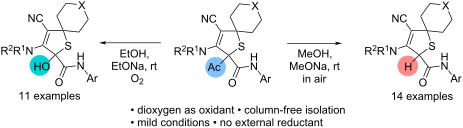
Base-promoted deacylation of 2-acetyl-2,5-dihydrothiophenes and their oxygen-mediated hydroxylation
Beilstein J. Org. Chem. 2026, 22, 192–204, doi:10.3762/bjoc.22.13
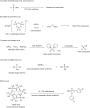
- 1A) [15][16]. Oxidative rearrangements of carbonyl compounds are based on Dakin [17] and Baeyer–Villiger reactions [18] and their modifications. Cyclic and acyclic ketones were oxidized to afford lactones and esters, accordingly, involving catalytic reactions with hydrogen peroxide [19][20][21][22


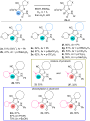


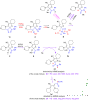
Circumventing Mukaiyama oxidation: selective S–O bond formation via sulfenamide–alcohol coupling
Beilstein J. Org. Chem. 2026, 22, 158–166, doi:10.3762/bjoc.22.9
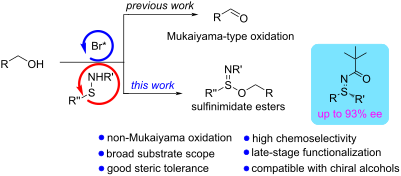
- /bjoc.22.9 Abstract A selective and efficient method for the synthesis of sulfinimidate esters via an NBS-promoted oxidative coupling of sulfenamides with alcohols has been developed. This operationally simple, metal-free protocol uses inexpensive and readily available reagents, operates under mild
- RU58841. Moreover, chiral alcohols such as ʟ-menthol are well tolerated, affording diastereomeric sulfinimidate esters that can undergo stereospecific Grignard substitutions to furnish enantioenriched sulfilimines with up to 93% ee. These results demonstrate the potential of sulfinimidate esters as
- versatile intermediates for enantioselective S–C bond formation under mild and metal-free conditions. Keywords: asymmetric synthesis; late-stage functionalization; selective oxidation; sulfenamides; sulfinimidate esters; Introduction Sulfur is a privileged heteroatom in organic chemistry, celebrated for


Highly electrophilic, gem- and spiro-activated trichloromethylnitrocyclopropanes: synthesis and structure
Beilstein J. Org. Chem. 2026, 22, 123–130, doi:10.3762/bjoc.22.5
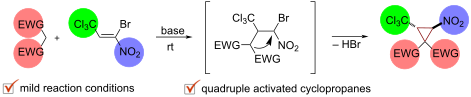
- of ring opening or expanding [11][12][13]. Thus, known trichloromethyl-containing cyclopropanes can serve as precursors for hard-to-access halogenated β,γ- and γ,δ-unsaturated esters [14][15]. Nitrocyclopropanes are known as highly electrophilic substrates and can form a carbanion stabilized by the


Advances in Zr-mediated radical transformations and applications to total synthesis
Beilstein J. Org. Chem. 2026, 22, 71–87, doi:10.3762/bjoc.22.3
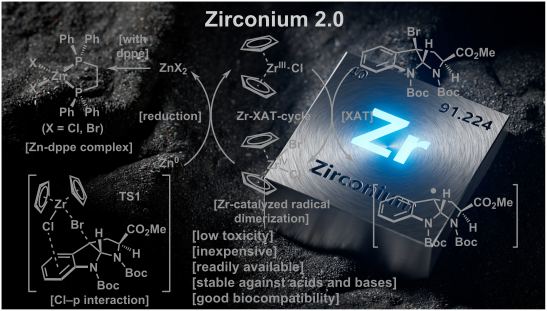
- conditions, delivering the desired ketones 12 in good yields. The reaction also tolerated a wide range of protecting groups, including esters, carbamates, and silyl ethers, without degradation (10f–k). Neopentyl iodide 10l and secondary alkyl iodide 10m were also competent substrates, although tertiary alkyl
- hydrogen atom from 1,4-cyclohexadiene, affording the hydrogenated product 36. The reaction proved broadly applicable to a wide range of alkyl chlorides. For example, primary alkyl chlorides bearing functional groups such as amides (34b), esters (34c), ketones (34d), and phosphoesters (34e) underwent smooth