


Search results
Search for "C–C bond cleavage" in Full Text gives 36 result(s) in Beilstein Journal of Organic Chemistry.
Rearrangements of organic peroxides and related processes
- Ivan A. Yaremenko,
- Vera A. Vil’,
- Dmitry V. Demchuk and
- Alexander O. Terent’ev
Beilstein J. Org. Chem. 2016, 12, 1647–1748, doi:10.3762/bjoc.12.162
- rearrangement is a protic or Lewis acid-promoted rearrangement of hydroperoxides A resulting in a C–C bond cleavage to form alcohol B and carbonyl compound C (Scheme 50) [313]. The Hock rearrangement is a key step in the cumene process, which is used for the industrial production of phenol (170) and acetone

Graphical Abstract
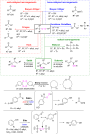
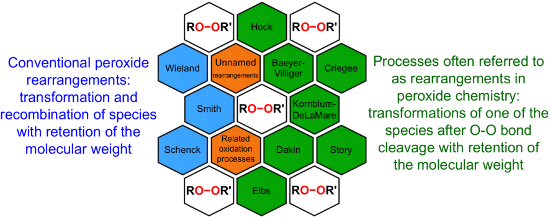
Figure 1: The named transformations considered in this review.

Scheme 1: The Baeyer–Villiger oxidation.

Scheme 2: The general mechanism of the peracid-promoted Baeyer–Villiger oxidation.

Scheme 3: General mechanism of the Lewis acid-catalyzed Baeyer–Villiger rearrangement.

Scheme 4: The theoretically studied mechanism of the BV oxidation reaction promoted by H2O2 and the Lewis aci...

Scheme 5: Proton movements in the transition states of the Baeyer–Villiger oxidation.

Scheme 6: The dependence of the course of the Baeyer–Villiger oxidation on the type of O–O-bond cleavage in t...
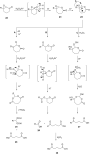
Scheme 7: The acid-catalyzed Baeyer–Villiger oxidation of cyclic epoxy ketones 22.

Scheme 8: Oxidation of isophorone oxide 29.

Scheme 9: Synthesis of acyl phosphate 32 from acyl phosphonate 31.

Scheme 10: Synthesis of aflatoxin B2 (36).

Scheme 11: The Baeyer–Villiger rearrangement of ketones 37 to lactones 38.

Scheme 12: Synthesis of 3,4-dimethoxybenzoic acid (40) via Baeyer–Villiger oxidation.

Scheme 13: Oxone transforms α,β-unsaturated ketones 43 into vinyl acetates 44.

Scheme 14: The Baeyer–Villiger oxidation of ketones 45 using diaryl diselenide and hydrogen peroxide.

Scheme 15: Baeyer–Villiger oxidation of (E)-2-methylenecyclobutanones.

Scheme 16: Oxidation of β-ionone (56) by H2O2/(BnSe)2 with formation of (E)-2-(2,6,6-trimethylcyclohex-1-en-1-...

Scheme 17: The mechanism of oxidation of ketones 58a–f by hydrogen peroxide in the presence of arsonated polys...

Scheme 18: Oxidation of ketone (58b) by H2O2 to 6-methylcaprolactone (59b) catalyzed by Pt complex 66·BF4.

Scheme 19: Oxidation of ketones 67 with H2O2 in the presence of [(dppb}Pt(µ-OH)]22+.

Scheme 20: The mechanism of oxidation of ketones 67 in the presence of [(dppb}Pt(µ-OH)]22+ and H2O2.

Scheme 21: Oxidation of benzaldehydes 69 in the presence of the H2O2/MeReO3 system.

Scheme 22: Oxidation of acetophenones 72 in the presence of the H2O2/MeReO3 system.

Scheme 23: Baeyer–Villiger oxidation of 2-adamantanone (45c) in the presence of Sn-containing mesoporous silic...

Scheme 24: Aerobic Baeyer–Villiger oxidation of ketones 76 using metal-free carbon.

Scheme 25: A regioselective Baeyer-Villiger oxidation of functionalized cyclohexenones 78 into a dihydrooxepin...

Scheme 26: The oxidation of aldehydes and ketones 80 by H2O2 catalyzed by Co4HP2Mo15V3O62.

Scheme 27: The cleavage of ketones 82 with hydrogen peroxide in alkaline solution.

Scheme 28: Oxidation of ketones 85 to esters 86 with H2O2–urea in the presence of KHCO3.

Scheme 29: Mechanism of the asymmetric oxidation of cyclopentane-1,2-dione 87a with the Ti(OiPr)4/(+)DET/t-BuO...

Scheme 30: The oxidation of cis-4-tert-butyl-2-fluorocyclohexanone (93) with m-chloroperbenzoic acid.

Scheme 31: The mechanism of the asymmetric oxidation of 3-substituted cyclobutanone 96a in the presence of chi...

Scheme 32: Enantioselective Baeyer–Villiger oxidation of cyclic ketones 98.

Scheme 33: Regio- and enantioselective Baeyer–Villiger oxidation of cyclic ketones 101.

Scheme 34: The proposed mechanism of the Baeyer–Villiger oxidation of acetal 105f.

Scheme 35: Synthesis of hydroxy-10H-acridin-9-one 117 from tetramethoxyanthracene 114.

Scheme 36: The Baeyer–Villiger oxidation of the fully substituted pyrrole 120.

Scheme 37: The Criegee rearrangement.

Scheme 38: The mechanism of the Criegee reaction of a peracid with a tertiary alcohol 122.

Scheme 39: Criegee rearrangement of decaline ethylperoxoate 127 into ketal 128.

Scheme 40: The ionic cleavage of 2-methoxy-2-propyl perester 129.

Scheme 41: The Criegee rearrangement of α-methoxy hydroperoxide 136.
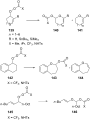
Scheme 42: Synthesis of enol esters and acetals via the Criegee rearrangement.

Scheme 43: Proposed mechanism of the transformation of 1-hydroperoxy-2-oxabicycloalkanones 147a–d.

Scheme 44: Transformation of 3-hydroxy-1,2-dioxolanes 151 into diketone derivatives 152.

Scheme 45: Criegee rearrangement of peroxide 153 with the mono-, di-, and tri-O-insertion.

Scheme 46: The sequential Criegee rearrangements of adamantanes 157a,b.

Scheme 47: Synthesis of diaryl carbonates 160a–d from triarylmethanols 159a–d through successive oxygen insert...

Scheme 48: The synthesis of sesquiterpenes 162 from ketone 161 with a Criegee rearrangement as one key step.

Scheme 49: Synthesis of trans-hydrindan derivatives 164, 165.

Scheme 50: The Hock rearrangement.

Scheme 51: The general scheme of the cumene process.

Scheme 52: The Hock rearrangement of aliphatic hydroperoxides.
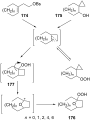
Scheme 53: The mechanism of solvolysis of brosylates 174a–c and spiro cyclopropyl carbinols 175a–c in THF/H2O2....

Scheme 54: The fragmentation mechanism of hydroperoxy acetals 178 to esters 179.

Scheme 55: The acid-catalyzed rearrangement of phenylcyclopentyl hydroperoxide 181.

Scheme 56: The peroxidation of tertiary alcohols in the presence of a catalytic amount of acid.

Scheme 57: The acid-catalyzed reaction of bicyclic secondary alcohols 192 with hydrogen peroxide.

Scheme 58: The photooxidation of 5,6-disubstituted 3,4-dihydro-2H-pyrans 196.

Scheme 59: The oxidation of tertiary alcohols 200a–g, 203a,b, and 206.

Scheme 60: Transformation of functional peroxide 209 leading to 2,3-disubstitued furans 210 in one step.

Scheme 61: The synthesis of carbazoles 213 via peroxide rearrangement.

Scheme 62: The construction of C–N bonds using the Hock rearrangement.

Scheme 63: The synthesis of moiety 218 from 217 which is a structural motif in the antitumor–antibiotic of CC-...

Scheme 64: The in vivo oxidation steps of cholesterol (219) by singlet oxygen.

Scheme 65: The proposed mechanism of the rearrangement of cholesterol-5α-OOH 220.

Scheme 66: Photochemical route to artemisinin via Hock rearrangement of 223.

Scheme 67: The Kornblum–DeLaMare rearrangement.

Scheme 68: Kornblum–DeLaMare transformation of 1-phenylethyl tert-butyl peroxide (225).

Scheme 69: The synthesis 4-hydroxyenones 230 from peroxide 229.

Scheme 70: The Kornblum–DeLaMare rearrangement of peroxide 232.

Scheme 71: The reduction of peroxide 234.

Scheme 72: The Kornblum–DeLaMare rearrangement of endoperoxide 236.

Scheme 73: The rearrangement of peroxide 238 under Kornblum–DeLaMare conditions.

Scheme 74: The proposed mechanism of rearrangement of peroxide 238.

Scheme 75: The Kornblum–DeLaMare rearrangement of peroxides 242a,b.

Scheme 76: The base-catalyzed rearrangements of bicyclic endoperoxides having electron-withdrawing substituent...

Scheme 77: The base-catalyzed rearrangements of bicyclic endoperoxides 249a,b having electron-donating substit...

Scheme 78: The base-catalyzed rearrangements of bridge-head substituted bicyclic endoperoxides 251a,b.

Scheme 79: The Kornblum–DeLaMare rearrangement of hydroperoxide 253.

Scheme 80: Synthesis of β-hydroxy hydroperoxide 254 from endoperoxide 253.

Scheme 81: The amine-catalyzed rearrangement of bicyclic endoperoxide 263.

Scheme 82: The base-catalyzed rearrangement of meso-endoperoxide 268 into 269.

Scheme 83: The photooxidation of 271 and subsequent Kornblum–DeLaMare reaction.

Scheme 84: The Kornblum–DeLaMare rearrangement as one step in the oxidation reaction of enamines.

Scheme 85: The Kornblum–DeLaMare rearrangement of 3,5-dihydro-1,2-dioxenes 284, 1,2-dioxanes 286, and tert-but...

Scheme 86: The Kornblum–DeLaMare rearrangement of epoxy dioxanes 290a–d.

Scheme 87: Rearrangement of prostaglandin H2 292.

Scheme 88: The synthesis of epicoccin G (297).

Scheme 89: The Kornblum–DeLaMare rearrangement used in the synthesis of phomactin A.

Scheme 90: The Kornblum–DeLaMare rearrangement in the synthesis of 3H-quinazolin-4-one 303.

Scheme 91: The Kornblum–DeLaMare rearrangement in the synthesis of dolabriferol (308).

Scheme 92: Sequential transformation of 3-substituted 2-pyridones 309 into 3-hydroxypyridine-2,6-diones 311 in...

Scheme 93: The Kornblum–DeLaMare rearrangement of peroxide 312 into hydroxy enone 313.

Scheme 94: The Kornblum–DeLaMare rearrangement in the synthesis of polyfunctionalized carbonyl compounds 317.

Scheme 95: The Kornblum–DeLaMare rearrangement in the synthesis of (Z)-β-perfluoroalkylenaminones 320.

Scheme 96: The Kornblum–DeLaMare rearrangement in the synthesis of γ-ketoester 322.

Scheme 97: The Kornblum–DeLaMare rearrangement in the synthesis of diterpenoids 326 and 328.

Scheme 98: The synthesis of natural products hainanolidol (331) and harringtonolide (332) from peroxide 329.

Scheme 99: The synthesis of trans-fused butyrolactones 339 and 340.

Scheme 100: The synthesis of leucosceptroid C (343) and leucosceptroid P (344) via the Kornblum–DeLaMare rearra...

Scheme 101: The Dakin oxidation of arylaldehydes or acetophenones.

Scheme 102: The mechanism of the Dakin oxidation.

Scheme 103: A solvent-free Dakin reaction of aromatic aldehydes 356.

Scheme 104: The organocatalytic Dakin oxidation of electron-rich arylaldehydes 358.

Scheme 105: The Dakin oxidation of electron-rich arylaldehydes 361.

Scheme 106: The Dakin oxidation of arylaldehydes 358 in water extract of banana (WEB).

Scheme 107: A one-pot approach towards indolo[2,1-b]quinazolines 364 from indole-3-carbaldehydes 363 through th...

Scheme 108: The synthesis of phenols 367a–c from benzaldehydes 366a-c via acid-catalyzed Dakin oxidation.

Scheme 109: Possible transformation paths of the highly polarized boric acid coordinated H2O2–aldehyde adduct 3...

Scheme 110: The Elbs oxidation of phenols 375 to hydroquinones.

Scheme 111: The mechanism of the Elbs persulfate oxidation of phenols 375 affording p-hydroquinones 376.

Scheme 112: Oxidation of 2-pyridones 380 under Elbs persulfate oxidation conditions.

Scheme 113: Synthesis of 3-hydroxy-4-pyridone (384) via an Elbs oxidation of 4-pyridone (382).

Scheme 114: The Schenck rearrangement.

Scheme 115: The Smith rearrangement.

Scheme 116: Three main pathways of the Schenck rearrangement.

Scheme 117: The isomerization of hydroperoxides 388 and 389.

Scheme 118: Trapping of dioxacyclopentyl radical 392 by oxygen.

Scheme 119: The hypothetical mechanism of the Schenck rearrangement of peroxide 394.

Scheme 120: The autoxidation of oleic acid (397) with the use of labeled isotope 18O2.

Scheme 121: The rearrangement of 18O-labeled hydroperoxide 400 under an atmosphere of 16O2.

Scheme 122: The rearrangement of the oleate-derived allylic hydroperoxides (S)-421 and (R)-425.

Scheme 123: Mechanisms of Schenck and Smith rearrangements.

Scheme 124: The rearrangement and cyclization of 433.

Scheme 125: The Wieland rearrangement.

Scheme 126: The rearrangement of bis(triphenylsilyl) 439 or bis(triphenylgermyl) 441 peroxides.

Scheme 127: The oxidative transformation of cyclic ketones.

Scheme 128: The hydroxylation of cyclohexene (447) in the presence of tungstic acid.

Scheme 129: The oxidation of cyclohexene (447) under the action of hydrogen peroxide.

Scheme 130: The reaction of butenylacetylacetone 455 with hydrogen peroxide.

Scheme 131: The oxidation of bridged 1,2,4,5-tetraoxanes.

Scheme 132: The proposed mechanism for the oxidation of bridged 1,2,4,5-tetraoxanes.

Scheme 133: The rearrangement of ozonides.

Scheme 134: The acid-catalyzed oxidative rearrangement of malondialdehydes 462 under the action of H2O2.

Scheme 135: Pathways of the Lewis acid-catalyzed cleavage of dialkyl peroxides 465 and ozonides 466.

Scheme 136: The mechanism of the transformation of (tert-butyldioxy)cyclohexanedienones 472.

Scheme 137: The synthesis of Vitamin K3 from 472a.

Scheme 138: Proposed mechanism for the transformation of 478d into silylated endoperoxide 479d.

Scheme 139: The rearrangement of hydroperoxide 485 to form diketone 486.

Scheme 140: The base-catalyzed rearrangement of cyclic peroxides 488a–g.

Scheme 141: Synthesis of chiral epoxides and aldols from peroxy hemiketals 491.

Scheme 142: The multistep transformation of (R)-carvone (494) to endoperoxides 496a–e.

Scheme 143: The decomposition of anthracene endoperoxide 499.

Scheme 144: Synthesis of esters 503 from aldehydes 501 via rearrangement of peroxides 502.

Scheme 145: Two possible paths for the base-promoted decomposition of α-azidoperoxides 502.

Scheme 146: The Story decomposition of cyclic diperoxide 506a.

Scheme 147: The Story decomposition of cyclic triperoxide 506b.

Scheme 148: The thermal rearrangement of endoperoxides A into diepoxides B.

Scheme 149: The transformation of peroxide 510 in the synthesis of stemolide (511).

Scheme 150: The possible mechanism of the rearrangement of endoperoxide 261g.

Scheme 151: The photooxidation of indene 517.

Scheme 152: The isomerization of ascaridole (523).

Scheme 153: The isomerization of peroxide 525.

Scheme 154: The thermal transformation of endoperoxide 355.

Scheme 155: The photooxidation of cyclopentadiene (529) at a temperature higher than 0 °C.

Scheme 156: The thermal rearrangement of endoperoxides 538a,b.

Scheme 157: The transformation of peroxides 541.

Scheme 158: The thermal rearrangements of strained cyclic peroxides.

Scheme 159: The thermal rearrangement of diacyl peroxide 551 in the synthesis of C4-epi-lomaiviticin B core 553....

Scheme 160: The 1O2 oxidation of tryptophan (554) and rearrangement of dioxetane intermediate 555.

Scheme 161: The Fe(II)-promoted cleavage of aryl-substituted bicyclic peroxides.

Scheme 162: The proposed mechanism of the Fe(II)-promoted rearrangement of 557a–c.

Scheme 163: The reaction of dioxolane 563 with Fe(II) sulfate.

Scheme 164: Fe(II)-promoted rearrangement of 1,2-dioxane 565.

Scheme 165: Fe(II) cysteinate-promoted rearrangement of 1,2-dioxolane 568.

Scheme 166: The transformation of 1,2-dioxanes 572a–c under the action of FeCl2.

Scheme 167: Fe(II) cysteinate-promoted transformation of tetraoxane 574.

Scheme 168: The CoTPP-catalyzed transformation of bicyclic endoperoxides 600a–d.

Scheme 169: The CoTPP-catalyzed transformation of epoxy-1,2-dioxanes.

Scheme 170: The Ru(II)-catalyzed reactions of 1,4-endoperoxide 261g.

Scheme 171: The Ru(II)-catalyzed transformation as a key step in the synthesis of elyiapyrone A (610) from 1,4-...

Scheme 172: Peroxides with antimalarial activity.

Scheme 173: The interaction of iron ions with artemisinin (616).

Scheme 174: The interaction of FeCl2 with 1,2-dioxanes 623, 624.

Scheme 175: The mechanism of reaction 623 and 624 with Fe(II)Cl2.

Scheme 176: The reaction of bicyclic natural endoperoxides G3-factors 631–633 with FeSO4.

Scheme 177: The transformation of terpene cardamom peroxide 639.
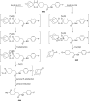
Scheme 178: The different ways of the cleavage of tetraoxane 643.

Scheme 179: The LC–MS analysis of interaction of tetraoxane 646 with iron(II)heme 647.

Scheme 180: The rearrangement of 3,6-epidioxy-1,10-bisaboladiene (EDBD, 649).

Scheme 181: Easily oxidized substrates.

Scheme 182: Biopathway of synthesis of prostaglandins.

Scheme 183: The reduction and rearrangements of isoprostanes.

Scheme 184: The partial mechanism for linoleate 658 oxidation.

Scheme 185: The transformation of lipid hydroperoxide.

Scheme 186: The acid-catalyzed cleavage of the product from free-radical oxidation of cholesterol (667).

Scheme 187: Two pathways of catechols oxidation.

Scheme 188: Criegee-like or Hock-like rearrangement of the intermediate hydroperoxide 675 in dioxygenase enzyme...

Scheme 189: Carotinoides 679 cleavage by carotenoid cleavage dioxygenases.
Base metal-catalyzed benzylic oxidation of (aryl)(heteroaryl)methanes with molecular oxygen
- Hans Sterckx,
- Johan De Houwer,
- Carl Mensch,
- Wouter Herrebout,
- Kourosch Abbaspour Tehrani and
- Bert U. W. Maes
Beilstein J. Org. Chem. 2016, 12, 144–153, doi:10.3762/bjoc.12.16
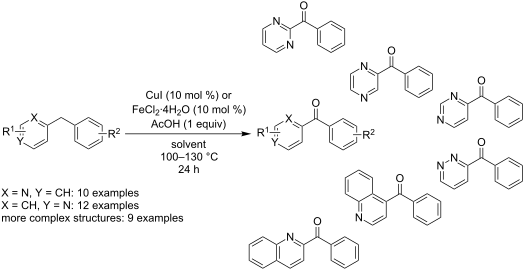
- anilines resulting in the formation of 2-aryl-α-ketoacetamides was reported by Jiao [22] and a closely related intramolecular variant leading to isatins has been published by Ilangovan [23]. A remarkable Cu-catalyzed chemoselective oxidative C–C bond cleavage of methyl ketones was reported by the group of

Graphical Abstract
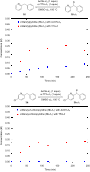
Figure 1: Hydrogen–deuterium exchange through acid-catalyzed imine–enamine tautomerization of 3h (0.5 M) and ...

Scheme 1: Benzylic oxygenation of benzoannulated azines and diazines (5).

Scheme 2: Classical (top) and new formal (bottom) synthesis of Mefloquine.

Scheme 3: Iron-catalyzed aerobic oxidation of papaverine (15).
Recent highlights in biosynthesis research using stable isotopes
- Jan Rinkel and
- Jeroen S. Dickschat
Beilstein J. Org. Chem. 2015, 11, 2493–2508, doi:10.3762/bjoc.11.271
- incorporation of labeled Gly into the methyl group was rationalized by glycine degradation, directing the labeling via tetrahydrofolate and SAM into aspirochlorine biosynthesis. The conversion of the Phe residue to Gly may proceed through either oxidative C–C bond cleavage or a retro-aldol reaction in 18, in

Graphical Abstract

Figure 1: Structures of lovastatin (1), aflatoxin B1 (2) and amphotericin B (3).

Scheme 1: a) Structure of rhizoxin (4). b) Two possible mechanisms of chain branching catalysed by a branchin...
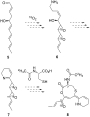
Scheme 2: Structure of coelimycin P1 (8) and proposed biosynthetic formation from the putative PKS produced a...
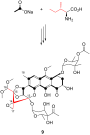
Scheme 3: Structure of trioxacarcin A (9) with highlighted carbon origins of the polyketide core from acetate...

Scheme 4: Proposed biosynthetic assembly of clostrubin A (12). Bold bonds show intact acetate units.

Figure 2: Structure of forazoline A (13).

Figure 3: Structures of tyrocidine A (14) and teixobactin (15).

Figure 4: Top: Structure of the NRPS product kollosin A (16) with the sequence N-formyl-D-Leu-L-Ala-D-Leu-L-V...

Scheme 5: Proposed biosynthesis of aspirochlorine (20) via 18 and 19.
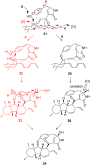
Scheme 6: Two different macrocyclization mechanisms in the biosynthesis of pyrrocidine A (24).

Figure 5: Structure of thiomarinol A (27). Bold bonds indicate carbon atoms derived from 4-hydroxybutyrate.
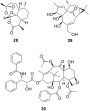
Figure 6: Structures of artemisinin (28), ingenol (29) and paclitaxel (30).

Figure 7: The revised (31) and the previously suggested (32) structure of hypodoratoxide and the structure of...

Figure 8: Structure of the two interconvertible conformers of (1(10)E,4E)-germacradien-6-ol (34) studied with...
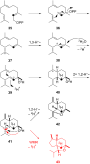
Scheme 7: Proposed cyclization mechanism of corvol ethers A (42) and B (43) with the investigated reprotonati...

Scheme 8: Predicted (top) and observed (bottom) 13C-labeling pattern in cyclooctatin (45) after feeding of [U-...

Scheme 9: Proposed mechanism of the cyclooctat-9-en-7-ol (52) biosynthesis catalysed by CotB2. Annotated hydr...

Scheme 10: Cyclization mechanism of sesterfisherol (59). Bold lines indicate acetate units; black circles repr...
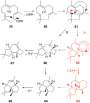
Scheme 11: Cyclization mechanisms to pentalenene (65) and protoillud-6-ene (67).

Scheme 12: Reactions of chorismate catalyzed by three different enzyme subfamilies. Oxygen atoms originating f...

Scheme 13: Incorporation of sulfur into tropodithietic acid (72) via cysteine.

Scheme 14: Biosynthetic proposal for the starter unit of antimycin biosynthesis. The hydrogens at positions R1...
Recent advances in copper-catalyzed C–H bond amidation
- Jie-Ping Wan and
- Yanfeng Jing
Beilstein J. Org. Chem. 2015, 11, 2209–2222, doi:10.3762/bjoc.11.240

- ] reported the copper-catalyzed, tert-butyl hydroperoxide (TBHP)-assisted C–H amidation of tertiary amines 1. By heating at 80 °C, the C–H bond in dimethylaniline underwent direct amidation to provide products 3 in the presence of amides 2. On the other hand, the dephenylation transformation via C–C bond
- cleavage took place as the main route when N-phenyl-N-methylaniline was employed as the alternative reactant, which led to the production of 3 as the main products, while corresponding products 4 via C–H bond amidation occurred as the minor ones. Notably, this kind of C–H amidation strategy could be

Graphical Abstract

Scheme 1: Copper-catalyzed C–H amidation of tertiary amines.

Scheme 2: Copper-catalyzed C–H amidation and sulfonamidation of tertiary amines.

Scheme 3: Copper-catalyzed sulfonamidation of allylic C–H bonds.

Scheme 4: Copper-catalyzed sulfonamidation of benzylic C–H bonds.

Scheme 5: Copper-catalyzed sulfonamidation of C–H bonds adjacent to oxygen.

Scheme 6: Copper-catalyzed amidation and sulfonamidation of inactivated alkyl C–H bonds.

Scheme 7: Copper-catalyzed amidation and sulfonamidation of inactivated alkanes.

Scheme 8: Copper-catalyzed intramolecular C–H amidation for lactam synthesis.

Scheme 9: Copper-catalyzed intramolecular C–H amidation for lactam synthesis.

Scheme 10: Copper-catalyzed amidation/sulfonamidation of aryl C–H bonds.

Scheme 11: C–H amidation of pyridinylbenzenes and indoles.

Scheme 12: Mechanism of the Cu-catalyzed C2-amidation of indoles.

Scheme 13: Copper-catalyzed, 2-phenyl oxazole-assisted C–H amidation of benzamides.

Scheme 14: DG-assisted amidation/imidation of indole and benzene C–H bonds.

Scheme 15: Copper-catalyzed C–H amination/amidation of quinoline N-oxides.

Scheme 16: Copper-catalyzed aldehyde formyl C–H amidation.

Scheme 17: Copper-catalyzed formamide C–H amidation.

Scheme 18: Copper-catalyzed sulfonamidation of vinyl C–H bonds.

Scheme 19: CuCl2-catalyzed amidation/sulfonamidation of alkynyl C–H bonds.

Scheme 20: Cu(OH)2-catalyzed amidation/sulfonamidation of alkynyl C–H bonds.

Scheme 21: Sulfonamidation-based cascade reaction for the synthesis of tetrahydrotriazines.

Scheme 22: Copper-catalyzed cascade reaction for the synthesis of quinazolinones.
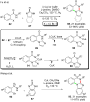
Scheme 23: Copper-catalyzed cascade reactions for the synthesis of fused quinazolinones.

Scheme 24: Copper-catalyzed synthesis of quinazolinones via methyl C–H bond amidation.

Scheme 25: Dicumyl peroxide-based cascade synthesis of quinazolinones.

Scheme 26: Copper-catalyzed cascade reactions for the synthesis of indolinones.
Copper-catalyzed aerobic radical C–C bond cleavage of N–H ketimines
- Ya Lin Tnay,
- Gim Yean Ang and
- Shunsuke Chiba
Beilstein J. Org. Chem. 2015, 11, 1933–1943, doi:10.3762/bjoc.11.209

- cleavage of N–H ketimines. Treatment of N–H ketimines having an α-sp3 hybridized carbon under Cu-catalyzed aerobic reaction conditions resulted in a radical fragmentation with C–C bond cleavage to give the corresponding carbonitrile and carbon radical intermediate. This radical process has been applied for
- the construction of oxaspirocyclohexadienones as well as in the electrophilic cyanation of Grignard reagents with pivalonitrile as a CN source. Keywords: C–C bond cleavage; copper; ketimines; molecular oxygen; radical; Introduction Alkylideneaminyl radicals (iminyl radicals) have been utilized for
- formation of the desired 6-membered azaspirocycle 3a’ was observed, while oxaspirocyclohexadienone 3a, biaryl alkene 4a, and p-tolunitrile (5a) were isolated in 29%, 32%, and 86% yields, respectively (Scheme 4). Oxaspirocyclohexadienone 3a was formed through C–C bond cleavage from N–H ketimine intermediate

Graphical Abstract

Scheme 1: Generation of iminyl radicals from oxime derivatives.

Scheme 2: Oxidative generation of iminyl radicals from N–H ketimines.

Scheme 3: Copper-catalyzed aerobic reactions of in situ generated biaryl N–H ketimines.

Scheme 4: Copper-catalyzed aerobic C–C bond cleavage reactions of N–H ketimines.
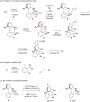
Scheme 5: Proposed reaction mechanisms for the formation of 3a, 4a and 5a, and the reaction of hydroperoxide 6...

Scheme 6: Formation of bromoketone 6e.

Scheme 7: Electrophilic cyanation of Grignard reagents with pivalonitrile (1f).

Scheme 8: Electrophilic cyanation with pivalonitrile (1e).
Recent applications of ring-rearrangement metathesis in organic synthesis
- Sambasivarao Kotha,
- Milind Meshram,
- Priti Khedkar,
- Shaibal Banerjee and
- Deepak Deodhar
Beilstein J. Org. Chem. 2015, 11, 1833–1864, doi:10.3762/bjoc.11.199
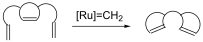
- syntheses of virgidivarine and virgiboidine by employing an intramolecular ene–ene–yne domino RRM protocol in combination with an oxidative C–C bond cleavage. This protocol opens-up new opportunities for the construction of intricate dipiperidine-based targets in a stereoselective manner (Scheme 12). Lee

Graphical Abstract

Figure 1: Ruthenium alkylidene catalysts used in RRM processes.
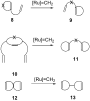
Figure 2: General representation of various RRM processes.

Figure 3: A general mechanism for RRM process.

Scheme 1: RRM of cyclopropene systems.

Scheme 2: RRM of cyclopropene with catalyst 2. (i) catalyst 2 (2.5 mol %), ethylene (24, 1 atm), (ii) toluene...

Scheme 3: RRM of various cyclopropene derivatives with catalyst 2. (i) catalyst 2 (2.5 mol %), CH2Cl2 (c = 0....

Scheme 4: RRM of substituted cyclopropene system with catalyst 2.

Scheme 5: RRM of cyclobutene system with catalyst 2.

Scheme 6: RRM approach to various bicyclic compounds.

Scheme 7: RRM approach to erythrina alkaloid framework.

Scheme 8: ROM–RCM sequence to lactone derivatives.

Scheme 9: RRM protocol towards the synthesis of lactone derivative 58.

Scheme 10: RRM protocol towards the asymmetric synthesis of asteriscunolide D (61).

Scheme 11: RRM strategy towards the synthesis of various macrolide rings.

Scheme 12: RRM protocol to dipiperidine system.

Scheme 13: RRM of cyclopentene system to generate the cyclohexene systems.

Scheme 14: RRM of cyclopentene system 74.

Scheme 15: RRM approach to compound 79.

Scheme 16: RRM approach to spirocycles.

Scheme 17: RRM approach to bicyclic dihydropyrans.

Scheme 18: RCM–ROM–RCM cascade using non strained alkenyl heterocycles.

Scheme 19: First ROM–RCM–ROM–RCM cascade for the synthesis of trisaccharide 97.

Scheme 20: RRM of cyclohexene system.

Scheme 21: RRM approach to tricyclic spirosystem.

Scheme 22: RRM approach to bicyclic building block 108a.

Scheme 23: ROM–RCM protocol for the synthesis of the bicyclo[3.3.0]octene system.

Scheme 24: RRM protocol to bicyclic enone.

Scheme 25: RRM protocol toward the synthesis of the tricyclic system 118.

Scheme 26: RRM approach toward the synthesis of the tricyclic enones 122a and 122b.

Scheme 27: Synthesis of tricyclic and tetracyclic systems via RRM protocol.

Scheme 28: RRM protocol towards the synthesis of tetracyclic systems.

Scheme 29: RRM of the propargylamino[2.2.1] system.

Scheme 30: RRM of highly decorated bicyclo[2.2.1] systems.

Scheme 31: RRM protocol towards fused tricyclic compounds.

Scheme 32: RRM protocol to functionalized tricyclic systems.

Scheme 33: RRM approach to functionalized polycyclic systems.

Scheme 34: Sequential RRM approach to functionalized tricyclic ring system 166.

Scheme 35: RRM protocol to functionalized CDE tricyclic ring system of schintrilactones A and B.

Scheme 36: Sequential RRM approach to 7/5 fused bicyclic systems.

Scheme 37: Sequential ROM-RCM protocol for the synthesis of bicyclic sugar derivatives.

Scheme 38: ROM–RCM sequence of the norbornene derivatives 186 and 187.

Scheme 39: RRM approach toward highly functionalized bridge tricyclic system.

Scheme 40: RRM approach toward highly functionalized tricyclic systems.

Scheme 41: Synthesis of hexacyclic compound 203 by RRM approach.

Scheme 42: RRM approach toward C3-symmetric chiral trimethylsumanene 209.

Scheme 43: Triquinane synthesis via IMDA reaction and RRM protocol.

Scheme 44: RRM approach to polycyclic compounds.

Scheme 45: RRM strategy toward cis-fused bicyclo[3.3.0]carbocycles.

Scheme 46: RRM protocol towards the synthesis of bicyclic lactone 230.

Scheme 47: RRM approach to spiro heterocyclic compounds.

Scheme 48: RRM approach to spiro heterocyclic compounds.

Scheme 49: RRM approach to regioselective pyrrolizidine system 240.

Scheme 50: RRM approach to functionalized bicyclic derivatives.

Scheme 51: RRM approach to tricyclic derivatives 249 and 250.

Scheme 52: RRM approach to perhydroindoline derivative and spiro system.

Scheme 53: RRM approach to bicyclic pyran derivatives.

Scheme 54: RRM of various functionalized oxanorbornene systems.

Scheme 55: RRM to assemble the spiro fused-furanone core unit. (i) 129, benzene, 55 °C, 3 days; (ii) Ph3P=CH2B...

Scheme 56: RRM protocol to norbornenyl sultam systems.

Scheme 57: Ugi-RRM protocol for the synthesis of 2-aza-7-oxabicyclo system.

Scheme 58: Synthesis of spiroketal systems via RRM protocol.

Scheme 59: RRM approach to cis-fused heterotricyclic system.

Scheme 60: RRM protocol to functionalized bicyclic systems.

Scheme 61: ROM/RCM/CM cascade to generate bicyclic scaffolds.

Scheme 62: RCM of ROM/CM product.

Scheme 63: RRM protocol to bicyclic isoxazolidine ring system.

Scheme 64: RRM approach toward the total synthesis of (±)-8-epihalosaline (300).

Scheme 65: Sequential RRM approach to decalin 304 and 7/6 fused 305 systems.

Scheme 66: RRM protocol to various fused carbocyclic derivatives.

Scheme 67: RRM to cis-hydrindenol derivatives.

Scheme 68: RRM protocol towards the cis-hydrindenol derivatives.

Scheme 69: RRM approach toward the synthesis of diversed polycyclic lactams.

Scheme 70: RRM approach towards synthesis of hexacyclic compound 324.

Scheme 71: RRM protocol to generate luciduline precursor 327 with catalyst 2.

Scheme 72: RRM protocol to key building block 330.

Scheme 73: RRM approach towards the synthesis of key intermediate 335.

Scheme 74: RRM protocol to highly functionalized spiro-pyran system 339.

Scheme 75: RRM to various bicyclic polyether derivatives.
Organobase-catalyzed three-component reactions for the synthesis of 4H-2-aminopyrans, condensed pyrans and polysubstituted benzenes
- Moustafa Sherief Moustafa,
- Saleh Mohammed Al-Mousawi,
- Maghraby Ali Selim,
- Ahmed Mohamed Mosallam and
- Mohamed Hilmy Elnagdi
Beilstein J. Org. Chem. 2014, 10, 141–149, doi:10.3762/bjoc.10.11
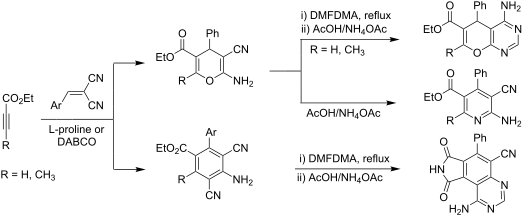
- propiolate (4a) in the presence of L-proline to produce the penta-substituted benzene derivative 13b in 60% yield (Scheme 4). In order to explain this unusual finding, we proposed that malononitrile, perhaps formed under the reaction conditions by C–C bond cleavage promoted fragmentation of 8, adds to 9 to

Graphical Abstract

Scheme 1: Reaction of active methylenenitriles with α,β-unsaturated ketones 1.

Scheme 2: Synthesis of 2-amino-4-phenyl-3-cyanopyridines 2.

Scheme 3: Synthesis of polysubstituted benzenes 3.

Scheme 4: Syntheses of compound 9 and compounds 13a,b.
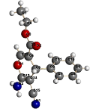
Figure 1: X-ray crystal structure of 9.

Figure 2: X-ray crystal structure of 13a.

Figure 3: X-ray crystal structure of 18.
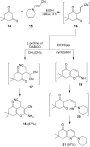
Scheme 5: Syntheses of compounds 18 and 21.
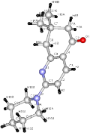
Figure 4: X-ray crystal structure of 21.

Figure 5: X-ray crystal structure of 26.
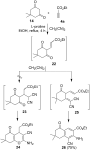
Scheme 6: Syntheses of compound 26.

Figure 6: X-ray crystal structure of 27a.

Scheme 7: Syntheses of compound 28a,b.

Figure 7: X-ray crystal structure of 28b.

Figure 8: X-ray crystal structure of 31a.

Figure 9: X-ray crystal structure of 31b.

Scheme 8: Syntheses of compound 31a,b.

Scheme 9: Syntheses of compound 33a,b.

Figure 10: X-ray crystal structure of 33a.
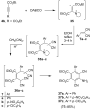
Scheme 10: Syntheses of compound 37a–c.

Figure 11: X-ray crystal structure of 37a.

Figure 12: X-ray crystal structure of 37b.

Scheme 11: Syntheses of compounds 38–40.
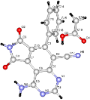
Figure 13: X-ray crystal structure of 39.
The chemistry of amine radical cations produced by visible light photoredox catalysis
- Jie Hu,
- Jiang Wang,
- Theresa H. Nguyen and
- Nan Zheng
Beilstein J. Org. Chem. 2013, 9, 1977–2001, doi:10.3762/bjoc.9.234
- azodicarboxylates. α-Arylation of amines. Plausible mechanism for α-arylation of amines. Photoinduced C–C bond cleavage of tertiary amines. Photoredox cleavage of C–C bonds of 1,2-diamines. Proposed mechanism photoredox cleavage of C–C bonds. Intermolecular [3 + 2] annulation of cyclopropylamines with olefins

Graphical Abstract

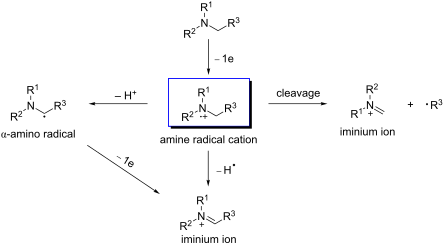
Scheme 1: Amine radical cations’ mode of reactivity.

Scheme 2: Reductive quenching of photoexcited Ru complexes by Et3N.

Scheme 3: Photoredox aza-Henry reaction.

Scheme 4: Formation of iminium ions using BrCCl3 as stoichiometric oxidant.

Scheme 5: Oxidative functionalization of N-aryltetrahydroisoquinolines using Eosin Y.

Scheme 6: Synthetic and mechanistic studies of Eosin Y-catalyzed aza-Henry reaction.

Scheme 7: Oxidative functionalization of N-aryltetrahydroisoquinolines using RB and GO.

Scheme 8: Merging Ru-based photoredox catalysis and Lewis base catalysis for the Mannich reaction.

Scheme 9: Merging Au-based photoredox catalysis and Lewis base catalysis for the Mannich reaction.

Scheme 10: Merging Ru-based photoredox catalysis and Cu-catalyzed alkynylation reaction.

Scheme 11: Merging Ru-based photoredox catalysis and NHC catalysis.

Scheme 12: 1,3-Dipolar cycloaddition of photogenically formed azomethine ylides.

Scheme 13: Plausible mechanism for photoredox 1,3-dipolar cycloaddition.

Scheme 14: Photoredox-catalyzed cascade reaction for the synthesis of fused isoxazolidines.

Scheme 15: Plausible mechanism for the photoredox-catalyzed cascade reaction.

Scheme 16: Photoredox-catalyzed α-arylation of glycine derivatives.

Scheme 17: Photoredox-catalyzed α-arylation of amides.

Scheme 18: Intramolecular interception of iminium ions by sulfonamides.

Scheme 19: Intramolecular interception of iminium ions by alcohols and sulfonamides.

Scheme 20: Intermolecular interception of iminium ions by phosphites.

Scheme 21: Photoredox-catalyzed oxidative phosphonylation by Eosin Y.
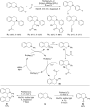
Scheme 22: Conjugated addition of α-amino radicals to Michael acceptors.

Scheme 23: Conjugated addition of α-amino radicals to Michael acceptors assisted by a Brønsted acid.

Scheme 24: Conjugated addition of α-amino radicals derived from anilines to Michael acceptors.

Scheme 25: Oxygen switch between two pathways involving α-amino radicals.

Scheme 26: Interception of α-amino radicals by azodicarboxylates.

Scheme 27: α-Arylation of amines.

Scheme 28: Plausible mechanism for α-arylation of amines.

Scheme 29: Photoinduced C–C bond cleavage of tertiary amines.

Scheme 30: Photoredox cleavage of C–C bonds of 1,2-diamines.

Scheme 31: Proposed mechanism photoredox cleavage of C–C bonds.

Scheme 32: Intermolecular [3 + 2] annulation of cyclopropylamines with olefins.

Scheme 33: Proposed mechanism for intermolecular [3 + 2] annulation.

Scheme 34: Photoinduced clevage of N–N bonds of aromatic hydrazines and hydrazides.
Recent developments in gold-catalyzed cycloaddition reactions
- Fernando López and
- José L. Mascareñas
Beilstein J. Org. Chem. 2011, 7, 1075–1094, doi:10.3762/bjoc.7.124
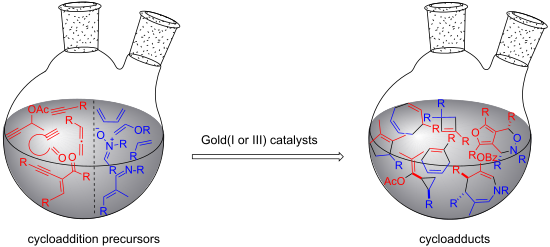
- authors proposed an initial nucleophilic attack of the carbonyl oxygen on the gold(I)-activated alkyne to form a vinyl–gold intermediate XII, analogous to that previously shown in Scheme 5 (IX). Aromatization of this intermediate through C–C bond cleavage of the oxirane unit, followed by addition of the

Graphical Abstract

Scheme 1: AuCl3-catalyzed benzannulations reported by Yamamoto.

Scheme 2: Synthesis of 9-oxabicyclo[3.3.1]nona-4,7-dienes from 1-oxo-4-oxy-5-ynes [40].

Scheme 3: Stereocontrolled oxacyclization/(4 + 2)-cycloaddition cascade of ketone–allene substrates [43].

Scheme 4: Gold-catalyzed synthesis of polycyclic, fully substituted furans from 1-(1-alkynyl)cyclopropyl keto...

Scheme 5: Gold-catalyzed 1,3-dipolar cycloaddition of 2-(1-alkynyl)-2-alken-1-ones with nitrones [47].

Scheme 6: Enantioselective 1,3-dipolar cycloaddition of 2-(1-alkynyl)-2-alken-1-ones with nitrones [48].

Scheme 7: Gold-catalyzed 1,3-dipolar cycloaddition of 2-(1-alkynyl)-2-alken-1-ones with α,β-unsaturated imine...

Scheme 8: Gold-catalyzed (4 + 3) cycloadditions of 1-(1-alkynyl)oxiranyl ketones [50].

Scheme 9: (3 + 2) Cycloaddition of gold-containing azomethine ylides [52].

Scheme 10: Gold-catalyzed generation and reaction of azomethine ylides [53].

Scheme 11: Gold-catalyzed intramolecular (4 + 2) cycloadditions of unactivated alkynes and dienes [55].

Scheme 12: Gold-catalyzed preparation of bicyclo[4.3.0]nonane derivatives from dienol silyl ethers [59].

Scheme 13: Gold(I)-catalyzed intramolecular (4 + 2) cycloadditions of arylalkynes or 1,3-enynes with alkenes [60].

Scheme 14: Gold(I)-catalyzed intermolecular (2 + 2) cycloaddition of alkynes with alkenes [62].

Scheme 15: Metal-catalyzed cycloaddition of alkynes tethered to cycloheptatriene [65].

Scheme 16: Gold-catalyzed cycloaddition of functionalized ketoenynes: Synthesis of (+)-orientalol F [68].

Scheme 17: Gold-catalyzed intermolecular cyclopropanation of enynes with alkenes [70].

Scheme 18: Gold-catalyzed intermolecular hetero-dehydro Diels–Alder cycloaddition [72].

Figure 1: Gold-catalyzed 1,2- or 1,3-acyloxy migrations of propargyl esters.

Scheme 19: Gold(I)-catalyzed stereoselective olefin cyclopropanation [74].

Scheme 20: Reaction of propargylic benzoates with α,β-unsaturated imines to give azepine cycloadducts [77].

Scheme 21: Gold-catalyzed (3 + 3) annulation of azomethine imines with propargyl esters [81].

Scheme 22: Gold(I)-catalyzed isomerization of 5-en-2-yn-1-yl acetates [83].

Scheme 23: (3 + 2) and (2 + 2) cycloadditions of indole-3-acetates 41 [85,86].

Scheme 24: Gold(I)-catalyzed (2 + 2) cycloaddition of allenenes [87].

Scheme 25: Formal (3 + 2) cycloaddition of allenyl MOM ethers and alkenes [90].

Scheme 26: (4 + 3) Cycloadditions of allenedienes [97,98].

Scheme 27: Gold-catalyzed transannular (4 + 3) cycloaddition reactions [101].

Scheme 28: Gold(I)-catalyzed (4 + 2) cycloadditions of allenedienes [102].

Scheme 29: Enantioselective gold(I)-catalyzed (4 + 2) cycloadditions of allenedienes [88,102,104].

Scheme 30: (3 + 2) versus (2 + 2) Cycloadditions of allenenes [87,99].

Figure 2: NHC ligands with different π-acceptor properties [106].

Scheme 31: (3 + 2) versus (2 + 2) Cycloadditions of allenenes [106].

Scheme 32: Gold(I)-catalyzed intermolecular (4 + 2) cycloaddition of allenamides and acyclic dienes [109].
Synthetic applications of gold-catalyzed ring expansions
- David Garayalde and
- Cristina Nevado
Beilstein J. Org. Chem. 2011, 7, 767–780, doi:10.3762/bjoc.7.87
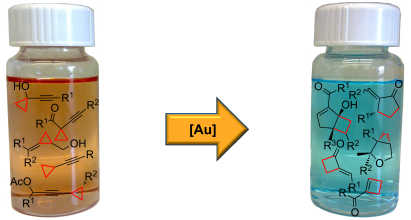
- activation of the cyclopropene, cation 55 is formed. C–C bond cleavage of the cyclopropyl ring followed by a Friedel–Crafts reaction affords, after recovery of aromaticity, the observed products [47]. 4 Ring expansions involving annulation reactions Diels–Alder, [1,3]-dipolar-, [2 + 2]- and [4 + 3

Graphical Abstract

Scheme 1: Transition metal promoted rearrangements of bicyclo[1.1.0]butanes.

Scheme 2: Gold-catalyzed rearrangements of strained rings.

Scheme 3: Gold-catalyzed ring expansions of cyclopropanols and cyclobutanols.

Scheme 4: Mechanism of the cycloisomerization of alkynyl cyclopropanols and cyclobutanols.

Scheme 5: Proposed mechanism for the Au-catalyzed isomerization of alkynyl cyclobutanols.

Scheme 6: Gold-catalyzed cycloisomerization of 1-allenylcyclopropanols.

Scheme 7: Gold-catalyzed cycloisomerization of cyclopropylmethanols.

Scheme 8: Gold-catalyzed cycloisomerization of aryl alkyl epoxides.

Scheme 9: Gold-catalyzed synthesis of furans.

Scheme 10: Transformations of alkynyl oxiranes.

Scheme 11: Transformations of alkynyl oxiranes into ketals.

Scheme 12: Gold-catalyzed cycloisomerization of cyclopropyl alkynes.

Scheme 13: Gold-catalyzed synthesis of substituted furans.

Scheme 14: Proposed mechanism for the isomerization of alkynyl cyclopropyl ketones.

Scheme 15: Cycloisomerization of cyclobutylazides.

Scheme 16: Cycloisomerization of alkynyl aziridines.

Scheme 17: Gold-catalyzed synthesis of disubstituted cyclohexadienes.

Scheme 18: Gold-catalyzed synthesis of indenes.

Scheme 19: Gold-catalyzed [n + m] annulation processes.

Scheme 20: Gold-catalyzed generation of 1,4-dipoles.

Scheme 21: Gold-catalyzed synthesis of repraesentin F.

Scheme 22: Gold-catalyzed ring expansion of cyclopropyl 1,6-enynes.

Scheme 23: Gold-catalyzed synthesis of ventricos-7(13)-ene.

Scheme 24: 1,2- vs 1,3-Carboxylate migration.

Scheme 25: Gold-catalyzed cycloisomerization of vinyl alkynyl cyclopropanes.

Scheme 26: Proposed mechanism for the cycloisomerization of vinyl alkynyl cyclopropanes.

Scheme 27: Gold-catalyzed 1,2-acyloxy rearrangement/cyclopropanation/cycloisomerization cascades.

Scheme 28: Formal total synthesis of frondosin A.

Scheme 29: Gold-catalyzed rearrangement/cycloisomerization of cyclopropyl propargyl acetates.
Photosonochemical catalytic ring opening of α-epoxyketones
- Hamid R. Memarian and
- Ali Saffar-Teluri
Beilstein J. Org. Chem. 2007, 3, No. 2, doi:10.1186/1860-5397-3-2
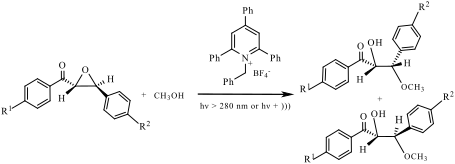
- electron transfer reactions by dicyanoanthracene (DCA), [32][33] tetracyanoethylene (TCNE) [34][35] and 2,4,6-triphenylpyrilium tetrafluoroborate. [36][37][38][39][40] In the case of C-C bond cleavage, the generated intermediates from epoxide radical cations have been trapped by molecular oxygen to form

Graphical Abstract

Scheme 1: Ultrasound-assisted photocatalytic ring opening of α-epoxyketones.
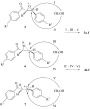
Scheme 2: Possible intermediates involved in the ring opening of α-epoxyketones.

Scheme 3: Possible formation of a complex involved in reaction in acetone.

Scheme 4: Interaction of oxygen lone pair of carbonyl group with carbocation center.

Figure 1: The semi-empirical PM3 calculations for interaction of 1a with NBTPT.



