


Search results
Search for "carbon" in Full Text gives 2167 result(s) in Beilstein Journal of Organic Chemistry. Showing first 200.
Preparation of 3-(alkylamino)imidazo[1,2-a]pyridine-2-carbaldehydes via Kornblum oxidation and unexpected ring-opening reactions of the corresponding alcohols under oxidative conditions
Beilstein J. Org. Chem. 2026, 22, 763–770, doi:10.3762/bjoc.22.58
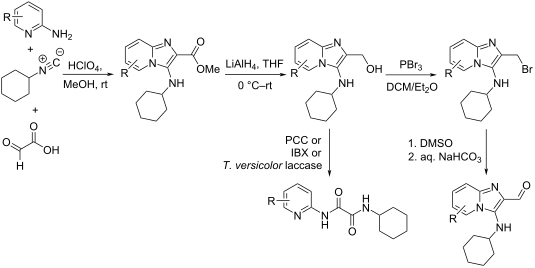
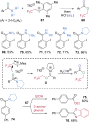
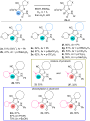
- similar reactions on alcohols 17b–d led to the corresponding ring-opened products 18b–d (Scheme 4). The ring-opened products were isolated in yields of 26–36%, with loss of one carbon atom occurring (-CH2OH). To test whether C-2 decarboxylation could have immediately preceded ring-opening, decarboxylated
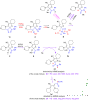
- mechanism. Oxidative ring-opening of imidazo[1,2-a]pyridines has been reported previously, but in these cases different ring-opened products were identified. These previous results are compared to our present report in Figure 5. Wang and co-workers [30] reported ring-opening accompanied by loss of a carbon
- , rt, 20–24 h. Ester hydrolysis and in situ decarboxylation. Ester reduction to the corresponding alcohols. Reaction yields are provided in parentheses. Oxidative ring-opening with loss of one carbon atom. Yields are provided in parentheses. Oxidative conditions applied to decarboxylated compound 12b


Synthesis and biological evaluation of new brassinosteroid analogs with C-22 benzoate function
Beilstein J. Org. Chem. 2026, 22, 753–762, doi:10.3762/bjoc.22.57
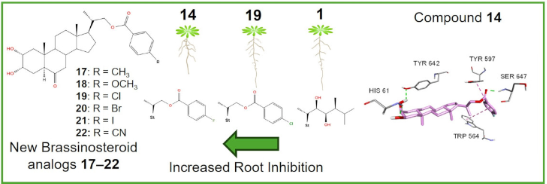
- 7.2 Hz, H-22b), are assigned to carbinolic hydrogens H-22a and H-22b, respectively. In the 13C NMR spectrum, the signals observed at δ = 166.57, 143.31, 129.40, 128.93, 127.65, and 21.52 ppm, are assigned to carbon ArCOO, C-4’, C-2’, C-3’, C-1’, and CH3-Ar of the benzoate group, respectively. All


Synthesis of heterocycles based on azomethine ylides from α-amino acids (or amines) and carbonyl compounds
Beilstein J. Org. Chem. 2026, 22, 705–741, doi:10.3762/bjoc.22.55
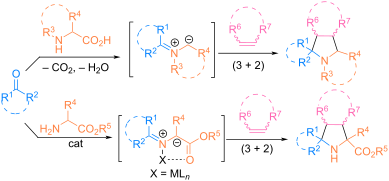
- dipolarophile can lead to a change in the mechanism and to an effective electrophilicity polarization toward the terminal carbon atom. This finding strongly supports the suitability of moderately activated olefins as dipolarophiles for the catalyzed asymmetric cycloaddition reactions involving azomethine ylides
- reactions proceed with high stereoselectivity, providing products with eleven chiral carbon atoms in three steps. In 2018, Zhang and co-workers presented a sequential process based on a combination of inter- and intramolecular (3 + 2) cycloaddition reactions to prepare highly fused heterocyclic systems
- due to the possibility of cycloaddition at the carbon–oxygen double bond (C=O) of the aldehyde, which acts as an alternative to the carbon–carbon double bond (C=C) [83]. In 2016, Sridharan reported a one-pot iridium-catalyzed three-component dehydrogenation/1,3-dipolar cycloaddition cascade reaction


Anti-invasive and cytotoxic evaluation of a (+)-pinoresinol-based semisynthetic library against glioblastoma
Beilstein J. Org. Chem. 2026, 22, 691–704, doi:10.3762/bjoc.22.54
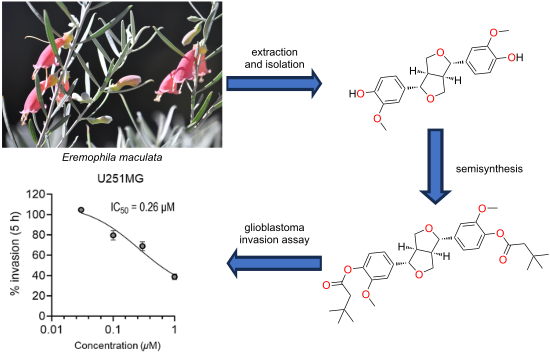
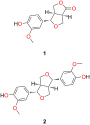
- 7.06 (2H), 6.83 (2H)), as well as two methine (δH 4.75 (2H), 3.11 (2H)), one methylene (δH 4.27/3.90, 4H), and one methoxy signal (δH 3.92, 6H)). The 13C NMR and HSQC spectra of 5 indicated a total of 10 unique carbon signals, including one methoxy (δC 56.6, 2C), two methine (δC 85.4, 53.9, 4C), one
- methylene (δC 71.8, 2C), and six aromatic carbon signals (δC 147.6, 142.9, 133.3, 122.3, 108.4, 108.0, 12C). Comparison of the 1H and 13C NMR data of 5 and (+)-pinoresinol (2) showed a high degree of homology, with the major differences in NMR data associated with a chemical shift of the aryl resonances
- collected on a Rigaku XtaLAB synergy diffractometer using Cu Kα radiation at 100.0(1) K using an Oxford Cryostream cooling device. The structure was solved by direct methods and difference Fourier synthesis [36]. Hydrogen atoms bound to the carbon atom were placed at their idealized positions and included



Synthesis of depressin, cryptomeridiol and 4-epi-cryptomeridiol enabled by a terpenoid chiral pool-producing platform
Beilstein J. Org. Chem. 2026, 22, 683–690, doi:10.3762/bjoc.22.53
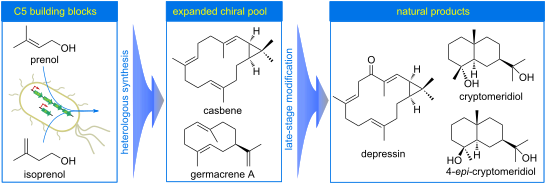
- cyclases; Introduction Terpenoids are one of the most important family of natural products that have been found to be produced in all domains of life. Although containing only carbon, hydrogen and oxygen atoms in most cases, over 100,000 terpenoid structures containing diverse skeletons and rich oxidative
- pathway, have been adopted to provide the two key five-carbon building blocks DMAPP and IPP. With the recent advancement in the field of synthetic biology, more chiral terpenes (e.g., guaia-6,10(14)-diene [7][8], drimenol [9][10], and ent-atiserenoic acid [11] as shown in Figure 1b) became easily
- -carbon alcohols prenol and isoprenol. Late-stage redox modification of the casbene skeleton allowed us to synthesize depressin in nine steps, while transannular cyclization of the germacrene A skeleton followed by hydration has made cryptomeridiol and 4-epi-cryptomeridiol easily accessible in two steps


Advantages of PROTACs in achieving selective degradation of homologous protein families
Beilstein J. Org. Chem. 2026, 22, 628–661, doi:10.3762/bjoc.22.49
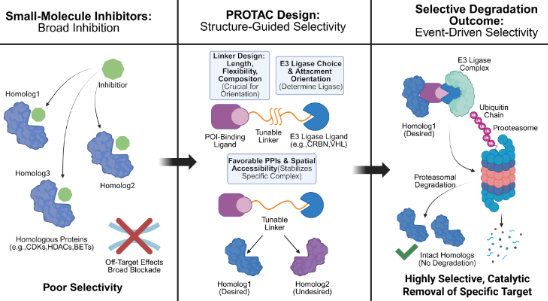
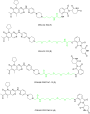
- pharmaceutical chemists. In 2019, Gray, Zhang and co-workers designed a PROTAC-1 (1) to degrade CDK4/6 [21]. To construct compound 1 they used the CDK4/6 inhibitor palbociclib as the POI ligand, pomalidomide, which combines with CRBN as the E3 ligand and a 4-carbon alkyl linker to connect them. The compound can
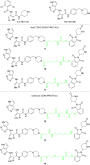
- C5-linker series (Figure 7). As for these compounds, the difference is the number of carbon atoms (n) between nexturastat A and the triazole fragment or the number of carbon atoms (m) between pomalidomide and the triazole fragment. It was found that compound 20d (DC50 = 1.64 ± 0.24 nM) with a medium
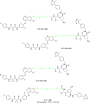
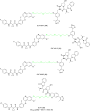
- , the resulting PROTAC showed a robust selective degradation of p38δ. Compound 33 degraded p38δ with a DC50 of 46.17 ± 9.85 nM and Dmax of 99.41 ± 3.31% but did not degrade α, β, or γ at all. In some cases, even changing single carbon atoms of the linker segment may cause a surprising change in the









Computational prediction of C–H hydricities and their use in predicting the regioselectivity of electron-rich C–H functionalisation reactions
Beilstein J. Org. Chem. 2026, 22, 603–610, doi:10.3762/bjoc.22.46
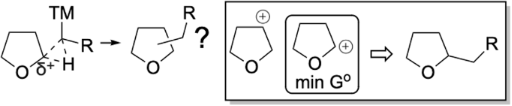
- primarily anthracene derivatives and benzyl C–H bonds, suggesting potential systematic errors in QM computations or experimental measurements. Radical and cation stabilities generally follow the trend: tertiary > secondary > primary methyl carbon stability. Our study also explores the correlation between


![[Graphic 6]](/bjoc/content/inline/1860-5397-22-46-i8.svg?max-width=637&scale=1.18182)


Experimental and DFT studies on the regioselective methanolysis of 5-azido-9-oxabicyclo[6.1.0]nonan-4-yl 4-nitrobenzoate isomers
Beilstein J. Org. Chem. 2026, 22, 547–556, doi:10.3762/bjoc.22.40
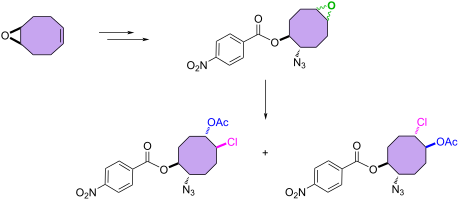
- regioselectivity (Figure 4). In the protonated intermediate 12 derived from epoxide 9a, the carbon atom preferentially attacked by chloride bears a relatively more positive charge, which is consistent with an electronically favoured nucleophilic attack. In contrast, for the protonated intermediate 15 derived from
- epoxide 9b, the more positively charged epoxide carbon is sterically shielded by the neighbouring ester carbonyl group. As a result, nucleophilic attack occurs at the sterically more accessible, albeit less positively charged, epoxide carbon. These observations indicate that the regioselectivity of


Melifoliox B, a novel phloroglucin derivative isolated from Melicope barbigera (Rutaceae) and synthesis of new oxidation products from melifoliones A and B
Beilstein J. Org. Chem. 2026, 22, 535–546, doi:10.3762/bjoc.22.39
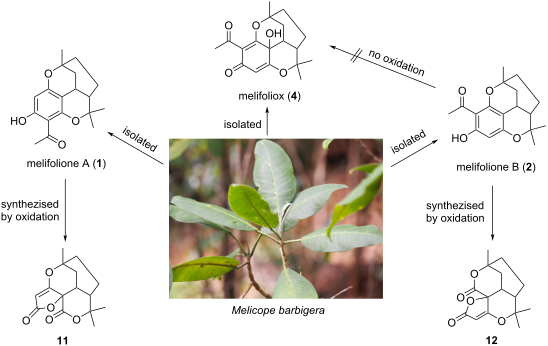
- careful analysis of the 2D NMR spectra (HSQC, HMBC) all carbon signals of both isomers could be unambiguously assigned to the corresponding atoms (Table 2). This clearly shows that the data given in literature [4] must be corrected. Oxidation of melifoliones Mixtures of melifolione A (1) and melifolione B


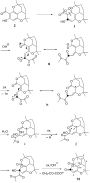

Synthesis and uranyl(VI) extraction performance of a calix[4]pyrrole–tetrahydroxamic acid receptor
Beilstein J. Org. Chem. 2026, 22, 486–494, doi:10.3762/bjoc.22.36
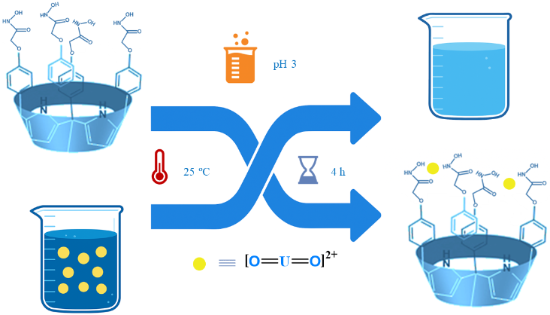
- their 2,5-positions through sp3-hybridized meso-carbon atoms [10]. The ability of CPs to selectively bind anions [11], cations, ion pairs and neutral guest species, combined with the versatility to introduce diverse functional groups, has enabled the fabrication of calix[4]pyrrole-based supramolecular


Synthesis of a HDAC inhibitor–nanogold probe for cryo-EM visualization in class I HDAC co-repressor complexes
Beilstein J. Org. Chem. 2026, 22, 480–485, doi:10.3762/bjoc.22.35
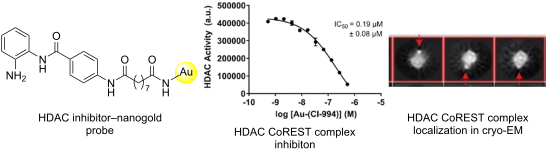
- active site [17]. Hence, we decided to functionalize this position with an alkyl linker consisting of 9 carbon atoms to mitigate any steric clashes between the HDAC inhibitor and the nanogold particle, which could be detrimental to the probe binding affinity (Figure 1). Further to this, we previously
- clearly visualized in association with the CoREST complex by cryo-EM; however, its absence in side-view 2D classes prevented precise localization of the HDAC catalytic domain. We speculate that the flexibility of the 9-carbon alkyl linker, and additional flexible linker to the nanogold particles, may have



Synthesis and anti-cancer activity of naphthalimide–organylselanyl conjugates
Beilstein J. Org. Chem. 2026, 22, 416–435, doi:10.3762/bjoc.22.29
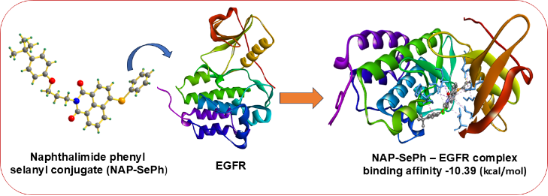
- reference to 13C NMR signals of the starting material 12, the 13C NMR spectrum of compound 7 exhibits four additional aromatic carbon resonances, which are consistent with the phenyl ring carbons of phenyl selanyl function tethered to the naphthalimide core. The signal at 142 ppm is assigned to the ipso
- carbon directly attached to the selenium atom. The resonance observed at 136 ppm corresponds to the chemically equivalent ortho carbons. The meta carbons appear as a single signal at 130 ppm, while the para carbon is observed at 127 ppm. The reduced number of aromatic signals arises from the chemical
- equivalence of the ortho and meta carbon pairs, confirming the proposed structure. In contrast, with reference to the 13C NMR signals of starting material 12, compound 8 exhibited eight new 13C NMR peaks in the aliphatic region (14–32 ppm), which is attributed to the incorporation of an octyl selenide unit




Design, synthesis and biological evaluation of 2,5-diaryloxazolo[4,5-d]pyrimidin-7-ylamines as selective cytotoxic agents against HeLa cells
Beilstein J. Org. Chem. 2026, 22, 390–398, doi:10.3762/bjoc.22.27
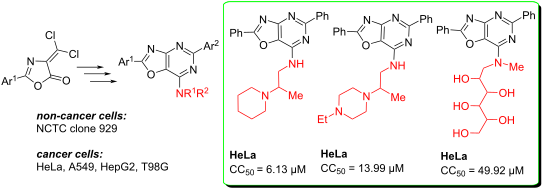
- %) with the calculated values. The carbon and hydrogen contents were determined using the Pregl gravimetric method, nitrogen by using Dumas' gasometric micromethod, and chlorine by the mercurimetric method. N-Methyl-ᴅ-glucamine and (−)-cytisine ((1R,5S)-1,2,3,4,5,6-hexahydro-1,5-methano-8H-pyrido[1,2-a


Non-central chirality in organic chemistry
Beilstein J. Org. Chem. 2026, 22, 370–371, doi:10.3762/bjoc.22.24
- ; chiroptical properties; molecular chirality; Chirality is a foundational concept in organic chemistry, traditionally framed around tetrahedral carbon stereocenters. Over the past decades, however, it has become increasingly clear that molecular handedness is not confined to localized points in space. Axes
Recent advances in the cleavage of non-activated amides
Beilstein J. Org. Chem. 2026, 22, 352–369, doi:10.3762/bjoc.22.23
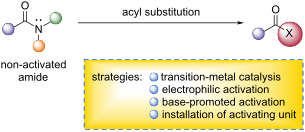
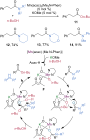
- substituents on the nitrogen (e.g., tosyl, carbamate, or acyl groups) distorts the planarity of the amide and diminishes amidic conjugation (Scheme 1b). These “twisted” amides exhibit a dramatically enhanced electrophilicity at the carbonyl carbon and a significantly weaker C–N bond strength [28][29][30][31
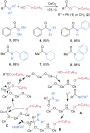
- of CeO2 to attack the carbonyl carbon, leading to cleavage of the C–N bond (B). Subsequent nucleophilic attack of the octoxide anion on the activated carbonyl center (C) then furnishes the ester product. Later, the same group found that niobium could also serve as a heterogeneous Lewis acid catalyst
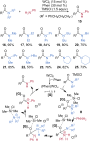
- hydrogen chloride acting as a Lewis acid, enabling nucleophilic attack by the amine to form a tetrahedral intermediate Z. Subsequent intramolecular hydrogen shift, followed by elimination of dimethylamine, affords the protonated transamidation product. In 2021, Lee et al. discovered that carbon dioxide




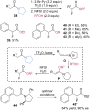
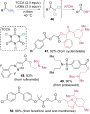
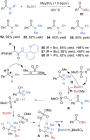
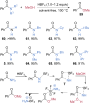






Ring contraction and ring expansion reactions in terpenoid biosynthesis and their application to total synthesis
Beilstein J. Org. Chem. 2026, 22, 289–343, doi:10.3762/bjoc.22.21
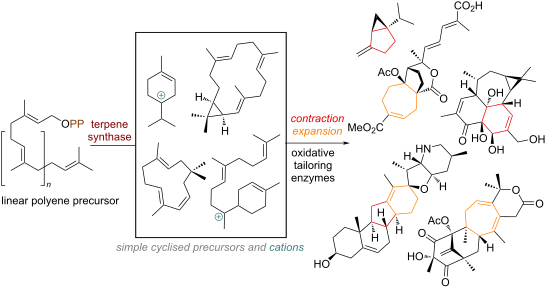
- . This review aims to explore intriguing examples of such ring-size alterations in all aspects of terpenoid synthesis. The current state-of-the-art regarding proposed biosynthetic pathways for terpenoids with unusual carbon skeleta, occurring either during initial cyclisation or subsequent oxidative
- these puzzling questions or even result in reassignment of the molecular structure [6][7][8][9][10]. Nevertheless, terpenoids with novel or highly uncommon carbon skeleta continue to attract interest from both biologists and chemists, as they often possess interesting biological properties owing to
- secured. Organic synthetic chemistry can help to fill gaps or evaluate, support or revise initially implausible proposed biogenesis routes by attempting to mimic these transformations (= bioinspired or biomimetic synthesis) [11][12][13][14][15][16][17][18]. In general, the biogenesis of unique carbon






Spirobarbiturates with a pyrrolizidine moiety: synthesis, structure and biological evaluation
Beilstein J. Org. Chem. 2026, 22, 274–288, doi:10.3762/bjoc.22.20
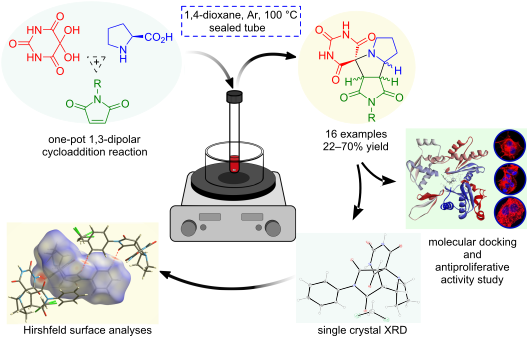
- -adducts 4a–e, the carbon signals of ring A (Figure 1) appear at δC 44.8–45.0 ppm (CH21), 27.3 ppm (CH22), and 25.2 ppm (CH23). Ring B carbons resonate at δC 67.7–67.8 ppm (CH4), 46.3–46.4 ppm (CH5), and 58.2–58.3 ppm (CH6). The carbonyl carbons of ring C and the barbiturate ring appear at δC 150.0, 169.3
- –169.4, 171.2–171.5, 175.5–176.8, and 176.4–177.9 ppm. The spiro carbon appears at δC 70.1–70.3 ppm. For diastereomers 4f–p, the 13C NMR spectra proved more informative than the 1H NMR spectra, clearly displaying a duplicate set of nearly all signals. The chemical shifts of carbons in rings A, B, and C




Arene activation via π-bond localization: concepts and opportunities
Beilstein J. Org. Chem. 2026, 22, 257–273, doi:10.3762/bjoc.22.19
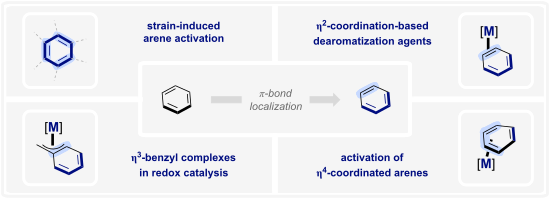
- molecular structure and reactivity, yet it cannot be measured directly [4]. This inherent elusiveness contributed to decades of debate over the structure of benzene, the prototypical aromatic molecule, until August Kekulé proposed his venerable representation: a six-membered carbon ring with alternating
- single and double bonds (Figure 1A) [5]. However, despite its strength in representing a planar cyclic arrangement of tetravalent carbon atoms, this formalism fails to accurately depict the observed reactivity, structure, and stability of benzene. It implies three rapidly equilibrating, localized double
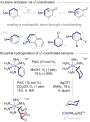
- the W(0) center was also found to promote the retro-Diels–Alder process, effecting the formal extrusion of acetylene and generating modified arenes. This transformation thus represents both a rare example of a Diels–Alder reaction of benzenes and a remarkable two-carbon molecular editing of the




A mild and atom-efficient four-component cascade strategy for the construction of biologically relevant 4-hydroxyquinolin-2(1H)-one derivatives
Beilstein J. Org. Chem. 2026, 22, 244–256, doi:10.3762/bjoc.22.18
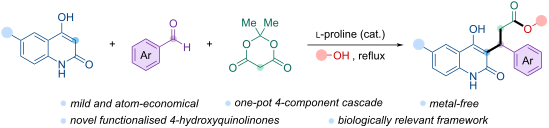
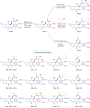
- represent thermodynamically favored, more stable products formed upon prolonged heating. To support the hypothesis that the carbonyl carbon atom in pyranoquinoline exhibits higher electrophilicity than in the open-chain ester, quantum chemical calculations were performed to evaluate their electrophilic
- properties (see Supporting Information File 1, pages S3 and S50–S51). The methyl ester was selected as the model open-chain compound. Calculations revealed that the initial atomic charge on the carbonyl carbon in the lactone was +0.234, whereas in the methyl ester it was slightly lower at +0.225. Further
- consistently confirmed the trend: greater electrophilicity is observed for the carbonyl carbon in pyranoquinoline, corroborating the experimental observations. Based on these results, the proposed mechanism of the multicomponent reaction involves initial lactone formation, followed by ring opening


Base-promoted deacylation of 2-acetyl-2,5-dihydrothiophenes and their oxygen-mediated hydroxylation
Beilstein J. Org. Chem. 2026, 22, 192–204, doi:10.3762/bjoc.22.13
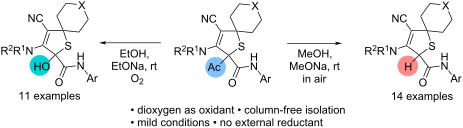
- phenols [25]. Hocking has described the oxidation of o-hydroxyacetophenone and some benzophenones with an aqueous alkaline hydrogen peroxide solution [26]. The key steps of oxidation of ketones into phenols include: a) nucleophilic addition of the hydroperoxide anion to the carbonyl carbon; b) [1,2]-aryl




Streptoquinolines A and B, new antibacterial meroterpenoids produced by Streptomyces sp. TMPU-A0679
Beilstein J. Org. Chem. 2026, 22, 185–191, doi:10.3762/bjoc.22.12
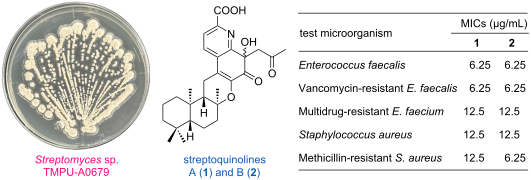
- corresponding to five methyl protons, seven sp3 methylene protons, two sp3 methine protons, two sp2 methine protons, and two hydroxy protons. The connectivity of proton and carbon atoms was assigned from the HMQC spectrum (Table 2). The planar structure of compound 1 was elucidated by a 2D NMR experiment
- III (H-9 (δ 1.58)/H2-11 (δ 2.55, 2.48)). 1H,13C HMBC correlations were then observed from the methyl protons H3-12 (δ 0.89) and H3-13 (δ 0.83) to the sp3 methylene carbon C-3 (δ 41.3), the sp3 quaternary carbon C-4 (δ 32.8), and the sp3 methine carbon C-5 (δ 55.2). Correlations were observed from the
- methyl proton H3-14 (δ 0.91) to the sp3 methylene carbon C-1 (δ 38.4), C-5, the sp3 methine carbon C-9 (δ 51.1), and the sp3 quaternary carbon C-10 (δ 36.5) and from the methyl proton H3-15 (δ 1.15) to the sp3 methylene carbon C-7 (δ 39.5), the oxygenated sp3 quaternary carbon C-8 (δ 77.9), and C-9


Improved synthesis and physicochemical characterization of the selective serotonin 2A receptor agonist 25CN-NBOH
Beilstein J. Org. Chem. 2026, 22, 175–184, doi:10.3762/bjoc.22.11
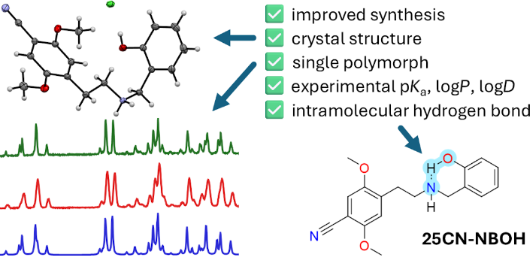
- Å (as a proxy for the replacement by deuterium) [20]. Thus, the calculated isotope effect is the sum of the effects of deuteration of the OH and NH positions. However, as isotope effects are transmitted poorly via aliphatic carbon atoms [18], the effect at the phenolic ring can be assumed to stem
- bond [21]. When measuring 13C NMR spectra in DMSO-d6 containing different D2O/H2O ratios, isotope effects were clearly observed at several positions (Figure 6c and Figure 6d), with a particularly pronounced upfield shift of the phenol ipso-carbon atom (C14, Δδexp = 0.21 ppm). This two-bond isotope
- ) Structure of the truncated model compound used for DFT calculations, with explicit water molecules and hydrogen bonds. b) Structure of 1 indicating formation of IMHB, as well as numbering of all carbon positions. c) Overlay of peaks from the 13C NMR spectra of 1 with varying percentages of D2O/H2O in DMSO


Circumventing Mukaiyama oxidation: selective S–O bond formation via sulfenamide–alcohol coupling
Beilstein J. Org. Chem. 2026, 22, 158–166, doi:10.3762/bjoc.22.9
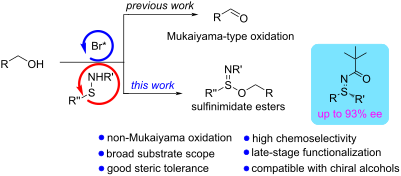
- its multiple oxidation states and ability to form diverse bonds with carbon, nitrogen, and oxygen. This versatility underpins the pivotal roles of organosulfur compounds in pharmaceuticals, catalysis, and materials science [1][2][3][4]. Among these, sulfilimines (R2S=NR') have attracted growing


Symmetrical D–π–A–π–D indanone dyes: a new design for nonlinear optics and cyanide detection
Beilstein J. Org. Chem. 2026, 22, 131–142, doi:10.3762/bjoc.22.6
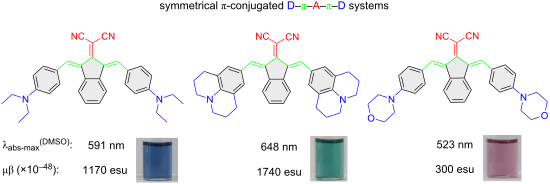
- formation of another structure with increased electron density in conjugated system. Especially, the signal at 5.9 ppm (Hb, green to cyan) can be attributed to a change in aromatic hydrogen to aliphatic. The addition of cyanide to vinyl carbon can explain this change. Upon the addition of 1 equiv of CN


Highly electrophilic, gem- and spiro-activated trichloromethylnitrocyclopropanes: synthesis and structure
Beilstein J. Org. Chem. 2026, 22, 123–130, doi:10.3762/bjoc.22.5
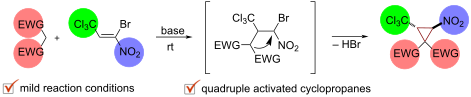
- by BH+ from the side opposite to the –CH(EWG)2. Thus, only diastereomer III is formed. Deprotonation of this intermediate leads to carbanion IV. For further attack by the carbanion center to the carbon atom bonded to bromine, the –C(EWG)2 moiety must hold an anti-periplanar position relative to the





