


Search results
Search for "catalyst" in Full Text gives 1886 result(s) in Beilstein Journal of Organic Chemistry. Showing first 200.
Cone p-aminocalix[4]arenes enriched with ‘clickable’ alkyne or azide functionalities
Beilstein J. Org. Chem. 2026, 22, 399–415, doi:10.3762/bjoc.22.28
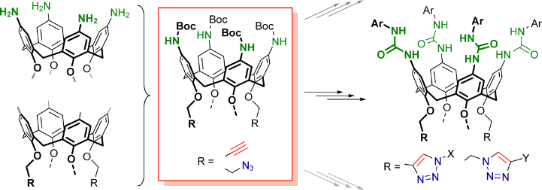
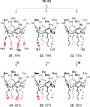
- next the TBS-protecting groups were removed from the acetylene units in the Boc-protected tetraamines 21–23 (Scheme 4). For the removal of the TBS groups, instead of using an equivalent amount of n-Bu4NF, it was used as a catalyst in a water/THF mixture, which showed excellent efficiency for the room
- conditions, and the wide-rim pernitrated tetra- and ditosylates 29 and 30 were obtained in good yield. However, the subsequent reduction step was expectedly complicated. On the one hand, even partial reduction of the tosyl groups in calixarenes 29 and 30 might result in poisoning of a metal catalyst, thus
- copper complex (although an extraction procedure for complex destruction using Na2S2O3 was applied), which was difficult to separate from the relatively polar free calixarene 37 using column chromatography. In line with this, when toluene-soluble CuI·P(OEt)3 was used as a catalyst (in this case heating






Non-central chirality in organic chemistry
Beilstein J. Org. Chem. 2026, 22, 370–371, doi:10.3762/bjoc.22.24
- remote from the reaction site. Second, non-central chiral frameworks remain fertile ground for catalyst design, not only as derivatives of established motifs but also as newly conceived architectures that redefine how chirality can be embedded into catalytic systems. Third, the pronounced chiroptical and
Recent advances in the cleavage of non-activated amides
Beilstein J. Org. Chem. 2026, 22, 352–369, doi:10.3762/bjoc.22.23
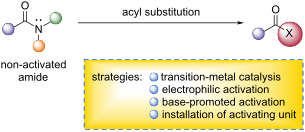
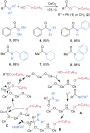
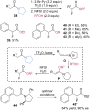
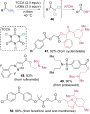
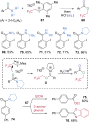
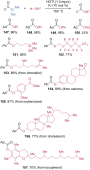
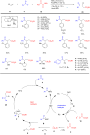
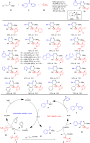
- , respectively. N-Phenylbenzamide (5) also afforded 1 in 86% yield. Secondary and tertiary acetamides 6–8 were also successfully cleaved, affording the product 2 in high yields. The CeO2 catalyst was recyclable, although a slight decrease in yield was observed upon reuse. Notably, catalytic activity was fully
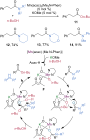
- of CeO2 to attack the carbonyl carbon, leading to cleavage of the C–N bond (B). Subsequent nucleophilic attack of the octoxide anion on the activated carbonyl center (C) then furnishes the ester product. Later, the same group found that niobium could also serve as a heterogeneous Lewis acid catalyst
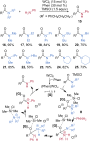
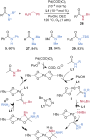
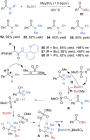
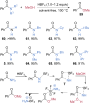
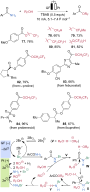
- for the hydrolysis of amides (Scheme 3) [47]. In the presence of a catalytic amount of Nb2O5, N,N-dialkylamides 3 and 4 and anilides 5 and 10 were efficiently converted into the corresponding carboxylic acids 9 in high yields, and the Nb2O5 catalyst could be successfully recycled. The authors proposed










Arene activation via π-bond localization: concepts and opportunities
Beilstein J. Org. Chem. 2026, 22, 257–273, doi:10.3762/bjoc.22.19
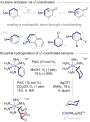
- catalyst yields desirable cycloalkenes after oxidative decomplexation in excellent yield. The same reaction with D2 produces a single isomer in which all the deuterium atoms are anti to osmium. Earlier authoritative reviews by Harman provide comprehensive accounts of the rich chemistry accessible through
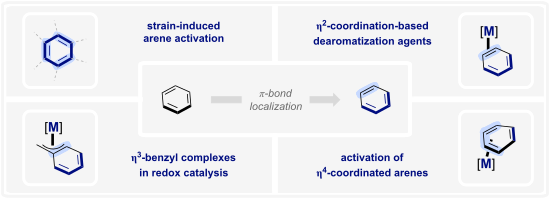
- this review, η3-benzyl complexes stand out as catalytically competent intermediates in redox-catalytic transformations. Future advances in this arena will depend on broadening the nucleophile portfolio, exerting precise catalyst control over site-selectivity (spanning benzylic, ortho, and para




A mild and atom-efficient four-component cascade strategy for the construction of biologically relevant 4-hydroxyquinolin-2(1H)-one derivatives
Beilstein J. Org. Chem. 2026, 22, 244–256, doi:10.3762/bjoc.22.18
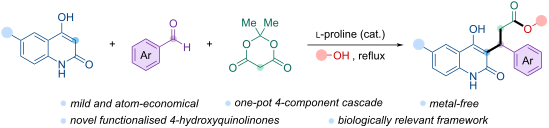
- a related protocol operating at room temperature using the ionic liquid [Bmim]HSO4 as a catalyst, expanding the scope to include aliphatic aldehydes [38]. Later, in 2017, Esmayeel Abbaspour-Gilandeh et al. reported a modified variant of this transformation under solvent-free heating, catalyzed by


Synthesis of diaryl phosphates using phytic acid as a phosphorus source
Beilstein J. Org. Chem. 2026, 22, 213–223, doi:10.3762/bjoc.22.15
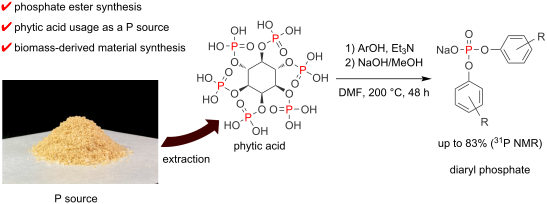
- [22] and as insecticides [23]. Particularly, phosphate diesters are among the most important synthetic catalysts, such as the Akiyama–Terada catalyst that serves as a chiral Brønsted acid catalyst [24][25] and promotes a variety of stereoselective reactions. Phosphate diesters also catalyze the ring
- esters could be slightly improved by using a catalytic amount of 1-butylimidazole; however, in the present work, a catalyst was not employed to simplify the purification step. The reaction temperature in this process should have been set to 230 °C. However, at this temperature, a burnt black material was




Screwing the helical chirality through terminal peri-functionalization
Beilstein J. Org. Chem. 2026, 22, 205–212, doi:10.3762/bjoc.22.14
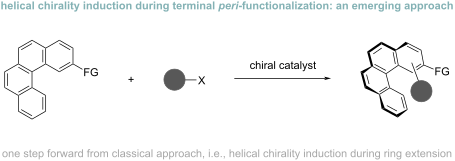
- through a catalytic kinetic resolution (KR) process was developed by Liu and co-workers [32]. The authors screened a range of organocatalysts, i.e., Takemoto’s thiourea catalyst, (S,S)-1,2-cyclohexanediamine-derived thioureas, cinchona alkaloid-derived thiourea, and squaramides to achieve the desired
- outcome of the reaction. After rigorous testing, (S,S)-1,2-cyclohexanediamine-derived catalyst L1 was found to be the most effective organocatalyst to induce both the helical chirality and remote axial chirality during the functionalization of the [4]- and [5]helicenes 3a–k with good yield and excellent
- enantioselectivity. Notably, [6]helicene 3k was also readily produced, via kinetic resolution (Scheme 1). Computational studies suggested that hydrogen bonding and π interactions between the reactants and catalyst L1 controlled the stereochemical output of the products 3. The catalyst proximate both reactants to


Base-promoted deacylation of 2-acetyl-2,5-dihydrothiophenes and their oxygen-mediated hydroxylation
Beilstein J. Org. Chem. 2026, 22, 192–204, doi:10.3762/bjoc.22.13
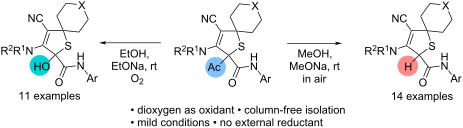
- S3 of Supporting Information File 1) we have studied their transformations in ethanolic or methanolic solutions in the presence of sodium ethoxide or methoxide, accordingly. As a result, catalyst-free oxidation under mild conditions of 2-acetyl-2,5-dihydrothiophenes into 2-hydroxy-substituted




Asymmetric Mannich reaction of aromatic imines with malonates in the presence of multifunctional catalysts
Beilstein J. Org. Chem. 2026, 22, 151–157, doi:10.3762/bjoc.22.8
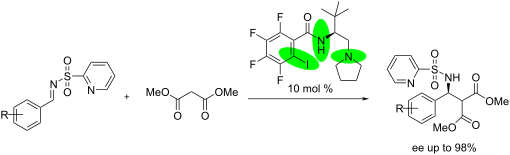
- with the steric effect of the tert-butyl group of the catalyst, is responsible for the high stereoselectivity of the reaction. Keywords: aromatic imine; asymmetric catalysis; Mannich reaction; noncovalent interactions; organocatalysis; Introduction The Mannich reaction, i.e., the addition of an
- led to the use of multifunctional catalysts of “homocooperativity,” where multiple units of the same catalyst perform different but complementary roles [17]. These catalysts employing noncovalent interactions via hydrogen bonds and also possess Lewis basic and π–π-interaction sites have been highly
- ], halogen bonding is more frequently employed as a component of multifunctional catalytic systems [23][24][25]. Multifunctionality of the catalyst is essential to intensify weak noncovalent interactions. Results and Discussion As a continuation of our previous studies [18][24], we now report an asymmetric


Total synthesis of natural products based on hydrogenation of aromatic rings
Beilstein J. Org. Chem. 2026, 22, 88–122, doi:10.3762/bjoc.22.4
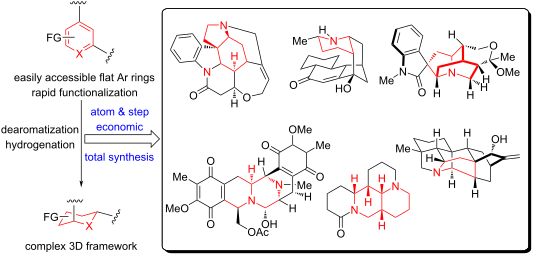
- saturation the aromatic ring facilitates synthetic chemists to efficiently synthesize natural products with complex three-dimensional structures. Recent advances in catalyst and ligand design have enabled unprecedented progress in the catalytic hydrogenation of (hetero)aromatic systems. Quinoline
- limitation requires the design of catalysts that achieve precise electronic complementarity, enabling selective activation across a broad spectrum of aromatic compounds (Scheme 2) [32]. From the standpoint of scalable synthesis, catalyst cost is a major bottleneck in aromatic hydrogenation. Most state-of-the
- transformation into a broadly enabling strategy in complex molecule synthesis, yet a unified perspective connecting recent methodological advances with their strategic applications in the total synthesis of natural products remains lacking. Although several reviews discuss catalyst development for (hetero)arene











Advances in Zr-mediated radical transformations and applications to total synthesis
Beilstein J. Org. Chem. 2026, 22, 71–87, doi:10.3762/bjoc.22.3
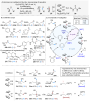
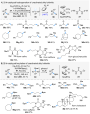
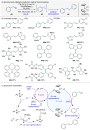
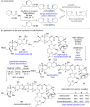
- Schwartz’s reagent to furnish product 4d. In 2017, Kishi et al. reported a radical-based ketone synthesis employing zirconocene and a nickel catalyst (Scheme 2A) [9]. Traditional anion-based ketone syntheses (e.g., Grignard or RLi reagents) are often unsuitable for complex molecules due to the strongly basic
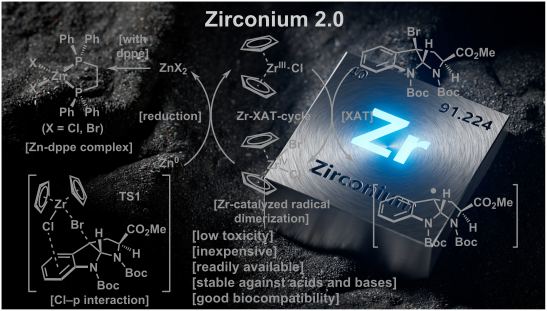
- a photosensitizer, together with compound 22 as a sacrificial reductant, in the dimerization of benzyl bromide (19). The desired dimerized product 20 was obtained in 40% yield. This study highlights the potential of zirconium complexes as a photoredox catalyst, pointing to promising opportunities
- experiments, coordination of thiourea 26 to the Zr center was suggested. This effect is considered to have tuned the reactivity of the Zr-catalyst, thereby having a positive effect on the reaction process. Finally, the regioselectivity of epoxide ring opening was compared between low-valent titanocene and








Synthesis and applications of alkenyl chlorides (vinyl chlorides): a review
Beilstein J. Org. Chem. 2026, 22, 1–63, doi:10.3762/bjoc.22.1
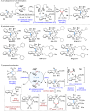
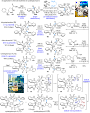
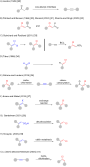
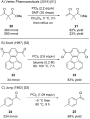
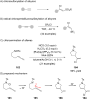
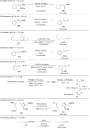
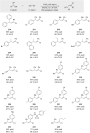
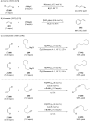
- ). In 2006, Apotex reported the synthesis of alkenyl chlorides using POCl3 in the presence of triethylamine and a copper catalyst (Scheme 16) [69]. The preparation of compound 84 is of industrial significance due to its application in the synthesis of terbinafine (86), an antifungal agent. The reaction
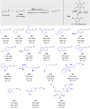
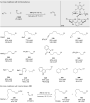
- that were irreversibly adhered (Figure 6, oval stirring bar left a mark in the solid polymer). Various catalyst loadings of CuCl (5–20 mol %) were evaluated, with 15–20 mol % required to achieve useful yields of 9 within several hours (Figure 7). Mechanistic analysis proved challenging, as the catalyst
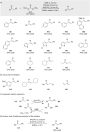
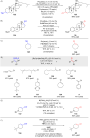
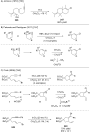
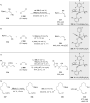
- described a ruthenium-catalyzed conversion of alkenyl triflates to alkenyl chlorides (Scheme 22C) [80]. A subsequent study from the same group demonstrated that [Cp*Ru(MeCN)3]OTf could serve as an alternative catalyst, thereby avoiding the need for in situ reduction of Ru(III) to Ru(II) by organometallic























Total synthesis of asperdinones B, C, D, E and terezine D
Beilstein J. Org. Chem. 2025, 21, 2730–2738, doi:10.3762/bjoc.21.210
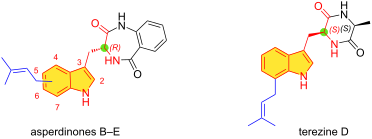
- 94% yield using CPhos-Pd-G3 as the palladium pre-catalyst (Scheme 1) [31]. However, under the same reported conditions only the unreacted starting material was recovered. In an isolated example, C-7 allylation of 7 was reported via a Stille coupling protocol to give 8 (Scheme 1) [32]. As an
- alternative approach to C-7 functionalization of Nα-Boc-tryptophan methyl ester, we chose a CH activation protocol [33]. Treatment of N1-Piv-Nα-Boc-tryptophan methyl ester (10) with but-3-en-2-one (MVK) in the presence of [RhCp*Cl2]2 catalyst according to Ma et al. [34] led to the 7-(3-keto-1-butyl)-alkylated
- in the presence of the Pd catalyst. It follows that elimination and reduction must occur after Pd insertion and formation of a pallado–zinc intermediate which undergoes β-elimination and proton transfer. Seminal studies by Jackson [61] have reported related results with iodozinc N-Boc-ʟ-alanine


Competitive cyclization of ethyl trifluoroacetoacetate and methyl ketones with 1,3-diamino-2-propanol into hydrogenated oxazolo- and pyrimido-condensed pyridones
Beilstein J. Org. Chem. 2025, 21, 2716–2729, doi:10.3762/bjoc.21.209
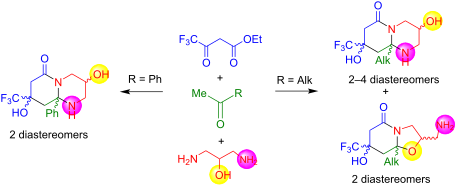
- without catalysis or using triethylamine–acetic acid as a bifunctional catalyst (Scheme 2). The reactions with alkyl methyl ketones 2b,c in 1,4-dioxane without catalysis led to the formation of a mixture of octahydropyrido[1,2-a]pyrimidinones 4b,c and hexahydrooxazolo[3,2-a]pyridones 5b,c, but with a
- catalyst, the cis,trans-isomer is preferentially formed, whereas dual acid-base catalysis favors the formation of the other cis,cis-diastereomer. The obtained hydrogenated oxazolo- and pyrimido-condensed pyridones are of interest for biological testing, which is confirmed by the discovery of an antiviral


Recent advancements in the synthesis of Veratrum alkaloids
Beilstein J. Org. Chem. 2025, 21, 2657–2693, doi:10.3762/bjoc.21.206
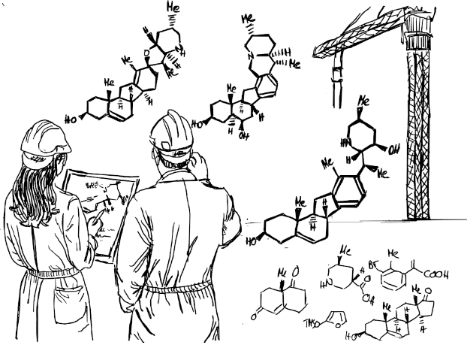
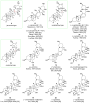
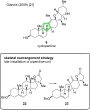
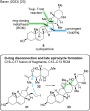
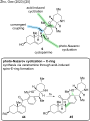
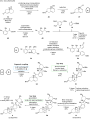
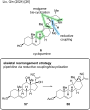
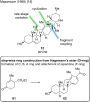
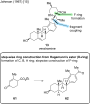
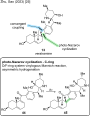
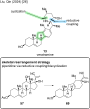
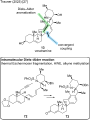
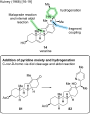
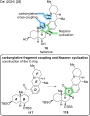
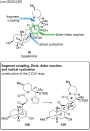
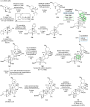
- installed another exo-methylene (in the future F-ring), which would later be reduced to the methyl group at C25. Staudinger reduction and two protecting group manipulations set the stage for the formation of the piperidine (F-ring) through a Mitsunobu reaction. Hydrogenation employing Wilkinson’s catalyst
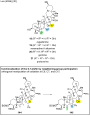
- enantiomeric excess of 92%. This asymmetric hydrogenation included a novel iridium catalyst featuring a chiral SpiroBAP (spiro bidentate aminophosphorane) ligand, which has been developed previously by this group and was now successfully applied in this synthesis [36]. A silver-catalyzed, enantioselective
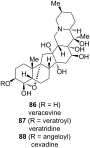
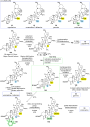
- to abstract the chloride of the [Rh(cod)Cl]2 catalyst, forming a cationic rhodium complex in situ, while diethyl fumarate acted as a hydrogen acceptor. Double bond isomerization, ketone reduction and deprotection of 73 furnished veratramine (13). This Diels–Alder strategy concluded the synthesis of
















Chemoenzymatic synthesis of the cardenolide rhodexin A and its aglycone sarmentogenin
Beilstein J. Org. Chem. 2025, 21, 2637–2644, doi:10.3762/bjoc.21.204
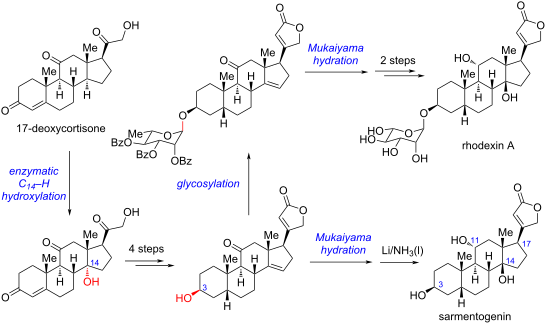
- typical Mukaiyama hydration conditions [30][31][32] to install the C14 β-hydroxy group. However, only a trace amount of the undesired C14α-hydroxylated product 10 was obtained. Additional optimizations regarding the transition-metal catalyst, hydrogen source and solvent all failed to improve the results
- -catalyzed anaerobic conditions [30], 11 was transformed into the C14 hydroxylated intermediate 12 as epimeric mixture in 42% yield and dr = 1:5, among which the undesired 14α-hydroxy epimer was the major component. Interestingly, the use of Co(acac)2 or Mn(acac)2 as the catalyst [31][32] instead of Fe(acac



Thiazolidinones: novel insights from microwave synthesis, computational studies, and potentially bioactive hybrids
Beilstein J. Org. Chem. 2025, 21, 2618–2636, doi:10.3762/bjoc.21.203
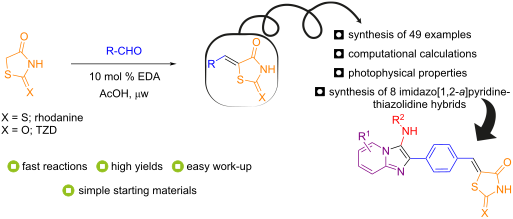
- different products were obtained), delivers excellent yields (up to 99%), and requires low catalyst loading (10 mol %). This new approach was successfully applied to the synthesis of eight novel imidazo[1,2-a]pyridine–thiazolidinone hybrids in good to excellent yields (66–99%). A spectroscopic study of
- condensation-type reaction between aromatic aldehydes with rhodanine or thiazolidine-2,4-dione [39]. Various protocols have been reported employing diverse catalyst systems and reaction conditions. Common catalysts include inorganic bases such as sodium acetate (NaOAc) [40], urea/thiourea [41], NaOH [42
- drawbacks, including long reaction times, harsh conditions, low to moderate yields, tedious work-up procedures, use of environmentally hazardous solvents, high catalyst loadings, toxic residues, and the need for specialized apparatus. To address these limitations, alternative methodologies have been






Visible-light-driven NHC and organophotoredox dual catalysis for the synthesis of carbonyl compounds
Beilstein J. Org. Chem. 2025, 21, 2584–2603, doi:10.3762/bjoc.21.200
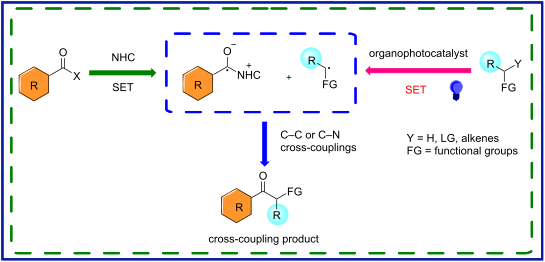
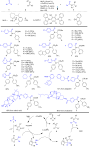
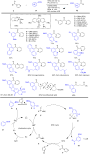
- positive to enable SET oxidation by photoexcited 4CzIPN. The authors described that the reduction potential of the photoredox catalyst (PC = 4CzIPN) was moderately low [Ered(IrIII*/IrII) = +0.66 V vs SCE in MeCN], and the silylboronate 13 permitted the formation of the silyl radical C under mild oxidation
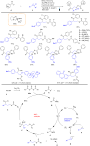
- catalyst. The anticipated meta-acylation product 32 was achieved through highly selective C(sp3)–C(sp3)-radical–radical cross-coupling between the cyclohexadienyl radical C and the benzyl radical species F, formed via single-electron reduction. This photochemical method overturns the traditional ortho and





Recent advances in total synthesis of illisimonin A
Beilstein J. Org. Chem. 2025, 21, 2571–2583, doi:10.3762/bjoc.21.199
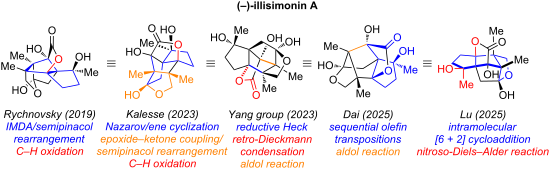
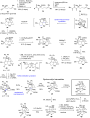
- the same pot to give 72. Isomerization of the allylic methyl ether to an enol methyl ether was achieved using Crabtree’s catalyst in refluxing THF. Subsequent ketalization with the primary alcohol yielded the bridged ketal 73. A Schenck ene reaction on 73 induced the second olefin isomerization






Total syntheses of highly oxidative Ryania diterpenoids facilitated by innovations in synthetic strategies
Beilstein J. Org. Chem. 2025, 21, 2553–2570, doi:10.3762/bjoc.21.198
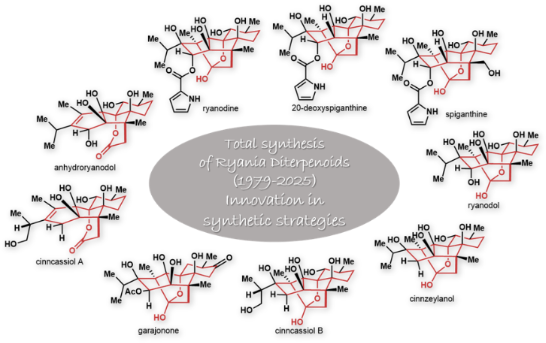
- reaction with allyltributylstannane, yielding compound 40. After isomerization of the C11 allyl double bond and introduction of a C6 isobutenyl group, the resulting diene 42 underwent RCM catalyzed by the Hoveyda–Grubbs catalyst to form the pentacyclic skeleton 43, thus completing the C ring of the natural
- deprotection and ester hydrolysis produced carboxylic acid 101, which upon oxidative dearomatization yielded dienone 102, thus completing the D-ring. Regioselective epoxidation to 103 and reduction (using Adams' catalyst) through intermediate 104 gave lactone 105. A retro-oxa-Michael/intramolecular


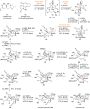

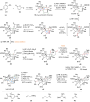

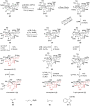


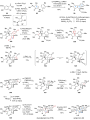

Palladium-catalyzed regioselective C1-selective nitration of carbazoles
Beilstein J. Org. Chem. 2025, 21, 2479–2488, doi:10.3762/bjoc.21.190
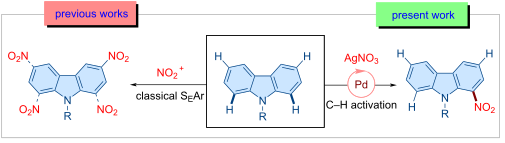
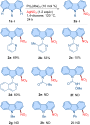
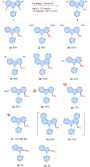
- substrate, using silver nitrate as the nitrating agent (Table 1). After detailed optimization studies, we found that the treatment of 1a with AgNO3 in the presence of Pd2(dba)3 as the catalyst in 1,4-dioxane afforded the desired C1-nitrated product 2a in 69% isolated yield (Table 1, entry 1). Product 2a was
- failed to enhance the product 2a yield (Table 1, entry 10). Attempts to optimize the reaction temperature did not yield improvements either (Table 1, entry 11). Control experiments confirmed that both the palladium catalyst and AgNO3 are essential for the reaction to proceed, as omission of either
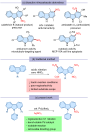
- palladacycle 6 as the catalyst, and the desired nitrated product 2a was obtained in 48% yield (Scheme 5c). This result supports the involvement of palladacycle intermediate 6 in the catalytic cycle. Proposed mechanism Based on our experimental results and related literature precedents [68][69][74][75][76][77


Synthesis of the tetracyclic skeleton of Aspidosperma alkaloids via PET-initiated cationic radical-derived interrupted [2 + 2]/retro-Mannich reaction
Beilstein J. Org. Chem. 2025, 21, 2470–2478, doi:10.3762/bjoc.21.189
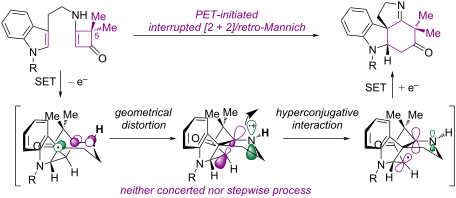
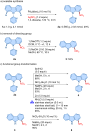
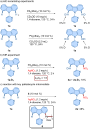
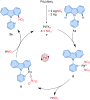
- ] gave the desired product 10a, with catalyst I giving the best result (Table 1, entries 1–3). The necessities of irradiation and the presence of a photocatalyst were also defined (Table 1, entries 4 and 5). However, use of the other tested catalysts did not give the desired product under the reaction
- conditions (see Supporting Information File 1 for details). Next, we evaluated the effects of different solvents on the production of 10a in the presence of catalyst I. Changing the solvent to MeOH, tetrahydrofuran (THF), and dichloromethane (DCM) resulted in decreased yields and substrate conversions, and


Ex-situ generation of gaseous nitriles in two-chamber glassware for facile haloacetimidate synthesis
Beilstein J. Org. Chem. 2025, 21, 2465–2469, doi:10.3762/bjoc.21.188
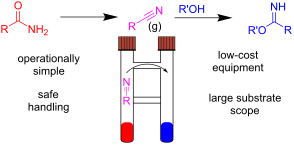
- trichloroacetimidates K2CO3 was effective for the synthesis of β-acetimidates [26], whereas polystyrene-supported DBU [27] was found to be less effective and DBU was therefore the preferred catalyst. The synthesis of perbenzylated α-glucosyl trifluoroacetimidate 3 proceeded in 52% yield on a preparative scale, with DBU


The intramolecular stabilizing effects of O-benzoyl substituents as a driving force of the acid-promoted pyranoside-into-furanoside rearrangement
Beilstein J. Org. Chem. 2025, 21, 2456–2464, doi:10.3762/bjoc.21.187
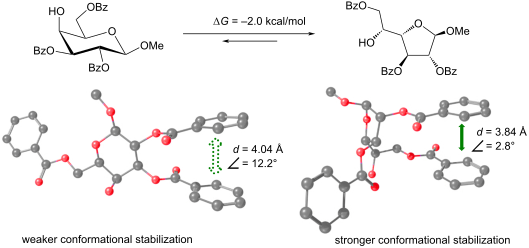
- (Figure 1) [19]. The introduction of an alkyl or aryl substituent in the anomeric center prevents free interconversion between pyranose and furanose forms; however, this transformation can still occur under specific conditions, typically in the presence of an acid catalyst. Even under such conditions, the


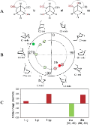

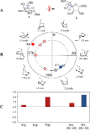

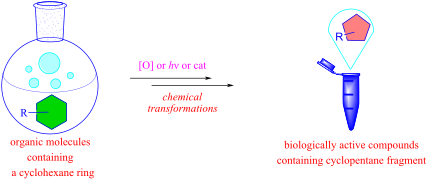
Transformation of the cyclohexane ring to the cyclopentane fragment of biologically active compounds
Beilstein J. Org. Chem. 2025, 21, 2416–2446, doi:10.3762/bjoc.21.185
- ] using Co(II) catalyst 113, in the presence of PhSiH3, TsCl in MeOH resulted in the formation of a cyclopentenone derivative 111 with a yield of 43% and a small amount (<5%) of cyclopentenone derivative 112. The remaining mass balance consisted mainly of the recovered starting material. Demethylation of
- (±)-terretonin L (109) as the main product with a yield of 46%. Radical hydrochlorination of olefin 110 under more powerful oxidizing conditions (Co(II) catalyst 113, N-fluoropyridinium salt (F+) 114), resulted in the formation of cyclopentenone derivative 112 with a yield of 90%. Demethylation of the latter led
- completed by converting the exocyclic methyl ester 144 to an aldehyde145 using a one-pot DIBAL-H/Dess–Martin procedure followed by the removal of TMS protecting group using a stoichiometric Wilkinson’s catalyst (Scheme 25). The authors noted that, in the final stages of reduction and oxidation, yields were





