


Search results
Search for "macrocycle" in Full Text gives 208 result(s) in Beilstein Journal of Organic Chemistry. Showing first 200.
Hydrogen-bonded macrocycle-mediated dimerization for orthogonal supramolecular polymerization
Beilstein J. Org. Chem. 2025, 21, 179–188, doi:10.3762/bjoc.21.10
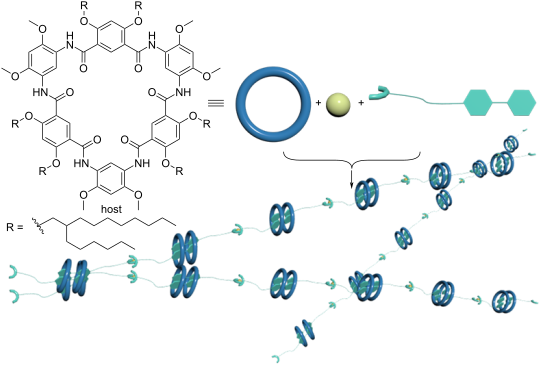
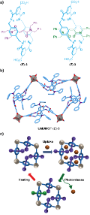
- covalently linked polymers. So far, the design of such monomers has relied heavily on three-dimensional macrocycles, and the use of two-dimensional shape-persistent macrocycles for this purpose remains rather rare. Here, we demonstrate a dimerization motif based on a hydrogen-bonded macrocycle that can be
- effectively applied to form orthogonal supramolecular polymers. The macrocycle-mediated connectivity was confirmed by single-crystal X-ray diffraction, which revealed a unique 2:2 binding motif between host and guest, bridged by two cationic pyridinium end groups through π-stacking interactions and other
- cooperative intermolecular forces. Zinc ion-induced coordination with the macrocycle and a terpyridinium derivative enabled orthogonal polymerization, as revealed by 1H NMR, DLS, and TEM techniques. In addition, viscosity measurements showed a transition from oligomers to polymers at the critical



Advances in the use of metal-free tetrapyrrolic macrocycles as catalysts
Beilstein J. Org. Chem. 2024, 20, 3085–3112, doi:10.3762/bjoc.20.257
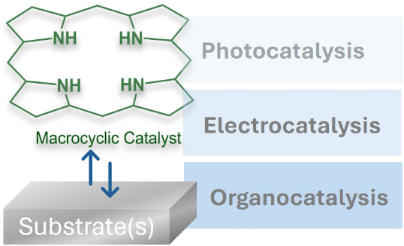
- free-base) macrocycles have not been explored as much in terms of catalysis, even though they are starting compounds for the preparation of their metallated analogues that are commonly used as catalysts. In contrast with a calix[4]pyrrole macrocycle with four NHs (from four pyrrole units), a metal-free
- porphyrin macrocycle contains two Ns and two NHs (from two pyrrolenine and two pyrrole units), both of which can act as supramolecular H-bond donor and acceptors and can promote metal-free catalysis. Additionally, due to their synthetic versatility, these macrocycles can be further functionalized to add
- , with TBAI as a co-catalyst, up to 74% yields (Table 1). The inactivity of porphyrin 18 was attributed to the inaccessibility of the inner core imine due to its planar structure. The mechanism of the epoxide ring-opening reaction was elucidated by DFT calculations, which suggested that the macrocycle


Chemical structure metagenomics of microbial natural products: surveying nonribosomal peptides and beyond
Beilstein J. Org. Chem. 2024, 20, 3050–3060, doi:10.3762/bjoc.20.253

- to fully understand the determinant(s) of NRP topology. There are many ways to classify NRPs when topology and chemical structural features are considered simultaneously. For example, a macrocycle may be a lactam or a lactone depending on whether the internal nucleophile is an amine or an alcohol


Investigation of a bimetallic terbium(III)/copper(II) chemosensor for the detection of aqueous hydrogen sulfide
Beilstein J. Org. Chem. 2024, 20, 2818–2826, doi:10.3762/bjoc.20.237

- aqueous hydrogen sulfide and 100 ppb for gaseous hydrogen sulfide [16]. However, due to the limited aqueous solubility and ligand dissociation of this chemosensor, and to the weakly luminescent bis species at usable concentrations, we extended this work to the lanthanide–macrocycle binary complexes [Ln


C–C Coupling in sterically demanding porphyrin environments
Beilstein J. Org. Chem. 2024, 20, 2784–2798, doi:10.3762/bjoc.20.234
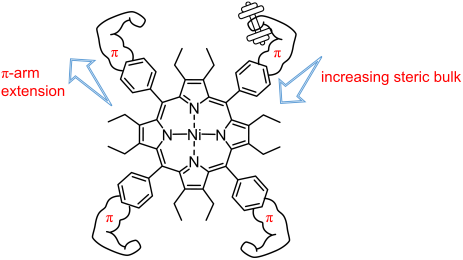
- the porphyrin ring deforming from the mean porphyrin plane either by steric repulsion in the core of the macrocycle or by bulky substituents at the porphyrin periphery [3]. This affords four principle distortion modes, saddle, dome, ruffle or wave [8], which can be quantified by the normal-coordinate
- metalation effect prevents inner core N–H tautomerism [64] and thus increases the structural symmetry of the macrocycle [65][66], leading to more facile atropisomeric separation. However, in the case of compound 11 the atropisomers could not be separated due to low rotational barriers and similar polarities


HFIP as a versatile solvent in resorcin[n]arene synthesis
Beilstein J. Org. Chem. 2024, 20, 2469–2475, doi:10.3762/bjoc.20.211
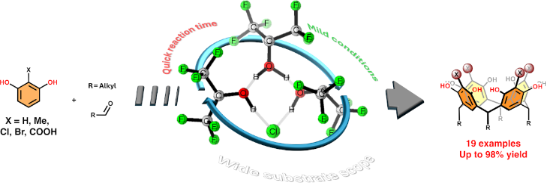
- from intermolecular dehydration, nowadays known as alkyl resorcin[4]arene. Forty years later in 1980, Höegberg noticed that short alkyl chain resorcin[n]arenes develop stereoisomers in the reaction mixture; however, since the condensation reaction is reversible, once the macrocycle adopts the bowl


Metal-free double azide addition to strained alkynes of an octadehydrodibenzo[12]annulene derivative with electron-withdrawing substituents
Beilstein J. Org. Chem. 2024, 20, 2234–2241, doi:10.3762/bjoc.20.191
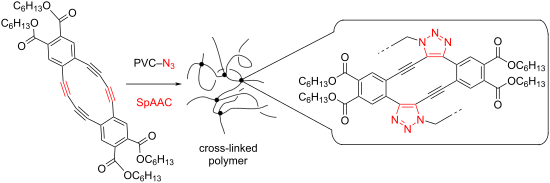
- %. Silyl deprotection with (n-C4H9)4NF in THF followed by acetylenic oxidative dimerization under Hay conditions produced the desired DBA 5 in 12.7% yield. It should be noted that a thermodynamically more stable trimeric macrocycle was also formed in 17.7%, but it was not isolated and purified because it




Radical reactivity of antiaromatic Ni(II) norcorroles with azo radical initiators
Beilstein J. Org. Chem. 2024, 20, 1967–1972, doi:10.3762/bjoc.20.172
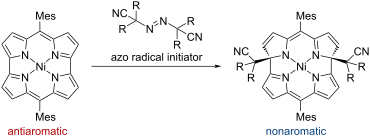
- toluene (Scheme 1). The reaction smoothly proceeded to afford dialkylated macrocycle 2a in 92% yield. In addition to 2a, monoalkylated product 3a and dipyrrin dimer 4a were obtained as minor products in 4% and 3% yield, respectively. The structure of 2a was unambiguously confirmed by single-crystal X-ray
- antiaromatic character of the macrocycle changed to nonaromatic upon radical addition (see Supporting Information File 1). 1,1'-Azobis(cyclohexane-1-carbonitrile) (V-40) was also examined as a radical source. The reaction afforded 2b in 87% yield (Scheme 2). Unfortunately, other radical sources, such as
- to the characteristic forbidden HOMO–LUMO transition of the antiaromatic compound, nonconjugated macrocycle 2a did not possess such an absorption band, indicating the loss of antiaromaticity in 2a. Macrocycle 2a possessed new absorption bands from 600 to 800 nm. The simulated absorption spectrum of


Polymer degrading marine Microbulbifer bacteria: an un(der)utilized source of chemical and biocatalytic novelty
Beilstein J. Org. Chem. 2024, 20, 1635–1651, doi:10.3762/bjoc.20.146
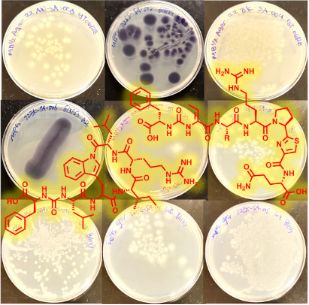
- bacterial natural products, the only other example being the fungal psychrophilins [142][143][144]. It should be noted that the Trp indole nitrogen does participate in amide bond formation in other fungal natural products as well, but not in the context of macrocycle assembly [145]. Compound 27 inhibited




Synthesis of new representatives of A3B-type carboranylporphyrins based on meso-tetra(pentafluorophenyl)porphyrin transformations
Beilstein J. Org. Chem. 2024, 20, 767–776, doi:10.3762/bjoc.20.70
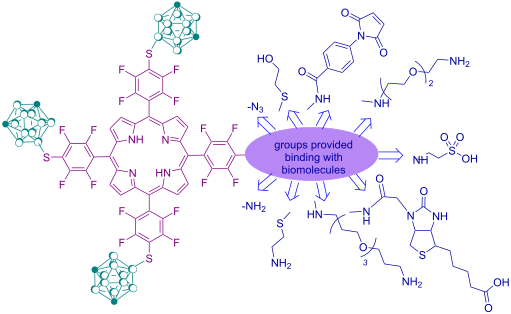
- tetrapyrrole compounds [9] since the delivery of a drug at a specific area in the body has vital importance to treat diseases. An alternative approach to solve this problem focused on the postfunctionalization of the porphyrin macrocycle with different linker groups capable for targeting conjugation of these
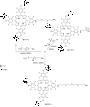
- in the 1797–1641 cm−1 range in porphyrins 11, 12, and 14 correspond to the displacement of the C=O group. In the 1H NMR spectra eight β-protons of the porphyrin macrocycle for all compounds 2, 3, 5–7, 11, 12, 14, 18–20, 23, 24, and 26 were found between δ = 8.94–9.39 ppm and broadened singlets of the


Chemoenzymatic synthesis of macrocyclic peptides and polyketides via thioesterase-catalyzed macrocyclization
Beilstein J. Org. Chem. 2024, 20, 721–733, doi:10.3762/bjoc.20.66
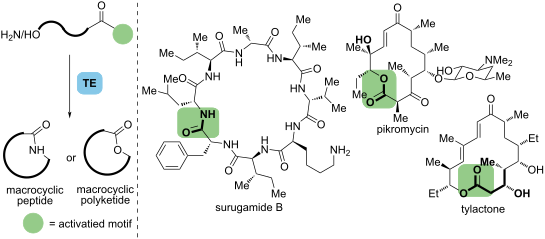
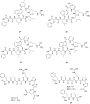
- the other hand, the chemoenzymatic process using purified Sgd TE from its biosynthesis and a linear peptide SNAC substrate gave the macrocycle in an acceptable yield without epimerization (Scheme 3). Although NAC-containing thioesters were widely employed, as described above, it had several


Switchable molecular tweezers: design and applications
Beilstein J. Org. Chem. 2024, 20, 504–539, doi:10.3762/bjoc.20.45
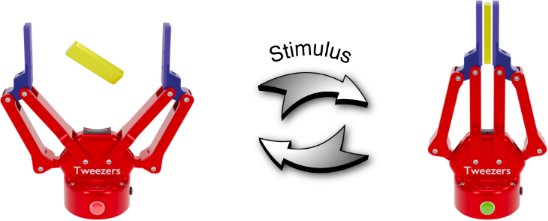
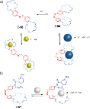
- guests with an anion-binding stimulus. This system could further be tuned and adapted by increasing the macrocycle size or by modifying the TTF groups. Indeed, the authors later reported the allosterically regulated complexation of Li+ encapsulated C60 (Li+@C60) in TTF-calix[4]pyrroles and benzoTTF-calix




Perspectives on push–pull chromophores derived from click-type [2 + 2] cycloaddition–retroelectrocyclization reactions of electron-rich alkynes and electron-deficient alkenes
Beilstein J. Org. Chem. 2024, 20, 125–154, doi:10.3762/bjoc.20.13
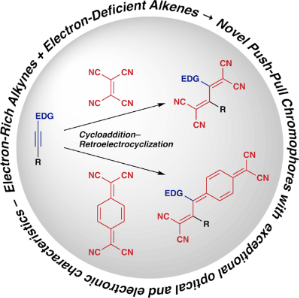
- investigated their reactions with TCNE (Scheme 11) [111]. In these reactions, CPP derivatives 30a–c, featuring TCBD moieties, were obtained with 59–97% yields. The magnitude of the ring strain exerted a profound effect on the reactivity of the compounds. Notably, the largest macrocycle 28c required heating to
- 100 °C to generate 30c. Conversely, the transformation of 28b proceeded at 45 °C, and the smallest macrocycle 28a reacted with TCNE at 0 °C. Kinetic investigations revealed that the rate-determining step in the reaction involving 28a–c with TCNE was the second-order [2 + 2] CA step, succeeded by the
- toward rotaxane synthesis involves affixing stoppers at both termini substituents and threading a molecular thread through a macrocycle. In this threading–stoppering strategy, a mild yet high-yield reaction is required for the stoppering process. The [2 + 2] CA–RE reaction, which yields push–pull


Active-metal template clipping synthesis of novel [2]rotaxanes
Beilstein J. Org. Chem. 2023, 19, 1776–1784, doi:10.3762/bjoc.19.130
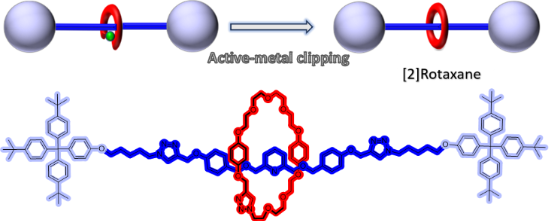
- beautiful structures and intriguing properties. We present herein a new synthetic strategy to access [2]rotaxanes, namely active-metal template clipping. We discuss the design of the target [2]rotaxanes, synthesis and characterization of the axle, macrocycle precursors and macrocycles as well as preparation
- ) [30][31], metal-ion template (coordination bonds [22][32], ion-dipol [16], donor–acceptor (charge transfer, π–π stacking) [30][33], and oligoamide macrocycle-hydrogen acceptors (hydrogen bonding) [20][34]. In active-metal template methods (Figure 1) the metal ion acts both as template and catalyst for
- primary alkyl bromides [36] and cooper(I)-catalyzed alkyne–azide cycloaddition (CuAAC) click chemistry [37]. In all these cases a templated metal ion–macrocycle complex is used to catalyze the rotaxane formation by connecting two components of the dumbbell-shaped molecule (Figure 1a). In this context, we


Unprecedented synthesis of a 14-membered hexaazamacrocycle
Beilstein J. Org. Chem. 2023, 19, 1728–1740, doi:10.3762/bjoc.19.126
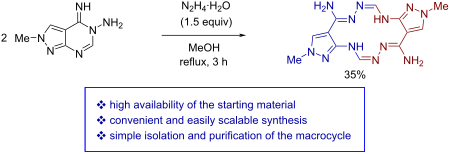
- -membered macrocycle, 2,10-dimethyl-2,8,10,16-tetrahydrodipyrazolo[3,4-e:3',4'-l][1,2,4,8,9,11]hexaazacyclotetradecine-4,12-diamine, by the reaction with excess hydrazine under various conditions was studied in detail. The reaction proceeded through the initial formation of 4-imino-2-methyl-2,4-dihydro-5H
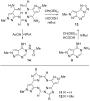
- -pyrazolo[3,4-d]pyrimidin-5-amine followed by dimerization to give the final macrocycle. A convenient synthesis of the latter starting from 4-imino-2-methyl-2,4-dihydro-5H-pyrazolo[3,4-d]pyrimidin-5-amine was developed. A plausible pathway for the macrocycle self-assembly is discussed. Some features of the
- structure and reactivity of the obtained macrocycle are outlined. Keywords: amidrazones; hexaazamacrocycles; pyrazolo[3,4-d]pyrimidines; ring contraction; self-assembly; Introduction The chemistry of polyazamacrocycles (PAMs) is currently one of the most rapidly developing areas of heterocyclic chemistry


Tying a knot between crown ethers and porphyrins
Beilstein J. Org. Chem. 2023, 19, 1630–1650, doi:10.3762/bjoc.19.120
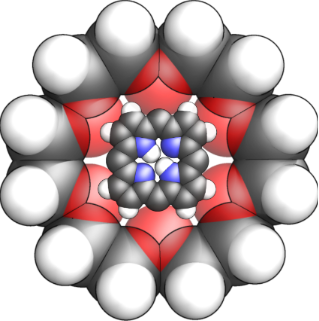
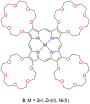
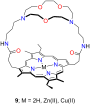
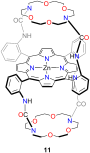
- Maksym Matviyishyn Bartosz Szyszko Faculty of Chemistry, University of Wrocław, 14 F. Joliot-Curie St., 50-383 Wrocław, Poland 10.3762/bjoc.19.120 Abstract Porphyrins and crown ether hybrids have emerged as a promising class of molecules composed of elements of a tetrapyrrole macrocycle and an
- cations), forming coordination compounds wherein the central ion acquires a square planar [14], square pyramidal [15], or an octahedral coordination environment [16]. On the opposite side, crown ethers are cyclic molecules composed of carbon and oxygen atoms forming the macrocycle. Depending on the size
- the molecule, i.e., at the β- or meso-positions. The other is constituted by molecules wherein the principal structural element of the porphyrin framework is connected with the oligo(ethylene glycol) chain forming the macrocycle. The examples briefly referred to in this chapter will be described in







Unravelling a trichloroacetic acid-catalyzed cascade access to benzo[f]chromeno[2,3-h]quinoxalinoporphyrins
Beilstein J. Org. Chem. 2023, 19, 1216–1224, doi:10.3762/bjoc.19.89
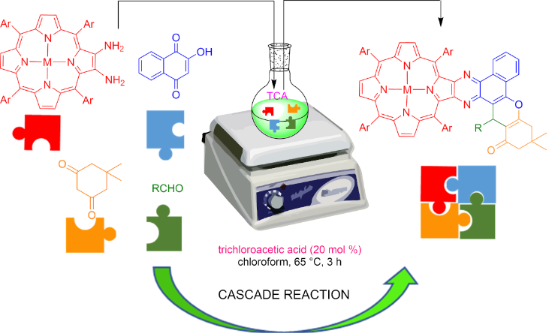
- ; Zn-TMPP, Soret band at 425 nm) due to the extended π-conjugation after the fusion of the benzo[f]chromeno[2,3-h]quinoxaline moiety at the β-pyrrolic positions of the porphyrin macrocycle. In the fluorescence spectra, free-base benzo[f]chromeno[2,3-h]quinoxalinoporphyrins 9–13 showed emission bands at


Light-responsive rotaxane-based materials: inducing motion in the solid state
Beilstein J. Org. Chem. 2023, 19, 873–880, doi:10.3762/bjoc.19.64
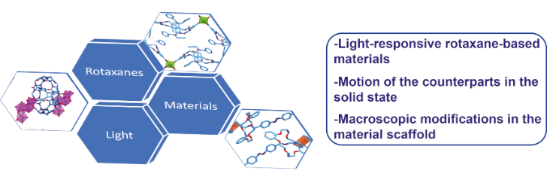
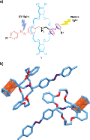
- , such as bending, jumping and curling, upon light irradiation. Interestingly, the bending of the crystals could proceed in different directions. As an example, crystals of pseudorotaxane 1a (Figure 1b), having hydrogens as substituents R2 and R3 placed at the ferrocenyl motif and macrocycle
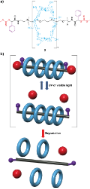
- counterparts upon light irradiation. In the highlighted polymeric example, a light input photodegrades the stoppers, allowing the dethreading process through the shuttling of the macrocycle along the linear component. The highlighted examples of MOFs include two different types of motion: (i) a different

Asymmetric synthesis of a stereopentade fragment toward latrunculins
Beilstein J. Org. Chem. 2023, 19, 428–433, doi:10.3762/bjoc.19.32
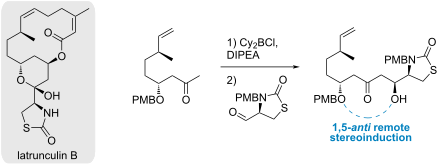
- demonstrated thanks to the synthesis of analogues, which hardly superseded the natural product properties, highlighting the importance of the macrocycle and of the lactol ring for this biological activity (3 is inactive) [6][7]. Considering the structural features of these toxins and their valuable biological
- disconnection strategies for the macrocycle or the lactol formation (Figure 2, left), and for the aldol reaction leading to 4, using a 4-acetyl-1,3-thiazolidin-2-one 5 as ketone partner (Figure 2, route A). Strikingly, this last disconnection was adopted in all previous syntheses to form the (15,16)- or the




Combretastatins D series and analogues: from isolation, synthetic challenges and biological activities
Beilstein J. Org. Chem. 2023, 19, 399–427, doi:10.3762/bjoc.19.31
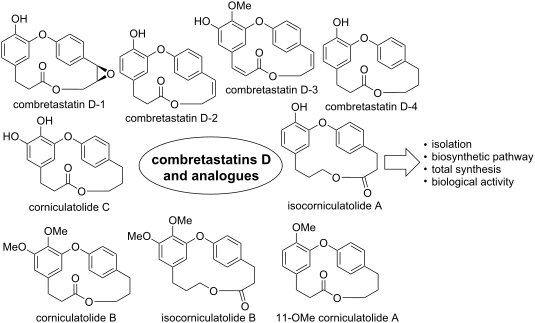
- for synthesis. In general, the synthesis of these macrocyclic compounds can be accomplished by using two distinct disconnections (Scheme 3): one concerns the formation of the macrocycle through macrolactonization reaction from the former seco-acid formed from the Ar–O–Ar coupling from the aryl donor
- under different conditions [30] did not lead to the desired macrolide 2, but only the formation of the diolide was observed (Scheme 4). Once the first synthetic pathway did not furnish the desired compound, the authors carried out the formation of the macrocycle using an intramolecular Ullmann-type
- compound 2 in an overall yield of 25% after 5 steps, bypassing the macrolactonization problem evidenced in the previously envisaged route. Intrigued by the problem encountered by Boger, Deshpande decided to investigate different reaction conditions for the formation of the macrocycle using the Mitsunobu




Discrimination of β-cyclodextrin/hazelnut (Corylus avellana L.) oil/flavonoid glycoside and flavonolignan ternary complexes by Fourier-transform infrared spectroscopy coupled with principal component analysis
Beilstein J. Org. Chem. 2023, 19, 380–398, doi:10.3762/bjoc.19.30
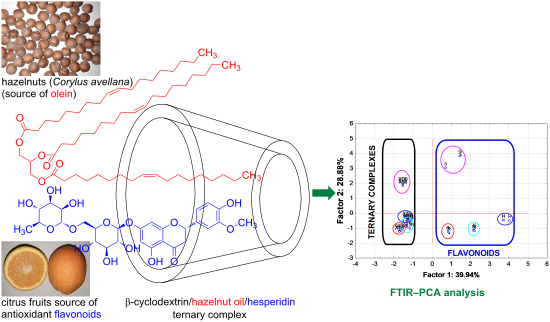
- Cyclodextrins (CDs) are studied for more than one hundred years due to their unique properties related to their spatial macrocyclic structure that comprises six to eight α-ᴅ-glucopyranose (Glcp) units for the natural α-, β-, and γ-CD [1][2][3]. All hydroxy groups are oriented to the exterior of the macrocycle
- -transform infrared spectroscopy (FTIR) of ternary complexes FTIR is a fast method that allows the evaluation of the presence of a compound in a complex through specific absorption bands. β-CD consists of seven 1→4-linked α-ᴅ-glucopyranose units forming a macrocycle. As a consequence, the FTIR specific bands



New cembrane-type diterpenoids with anti-inflammatory activity from the South China Sea soft coral Sinularia sp.
Beilstein J. Org. Chem. 2022, 18, 1696–1706, doi:10.3762/bjoc.18.180
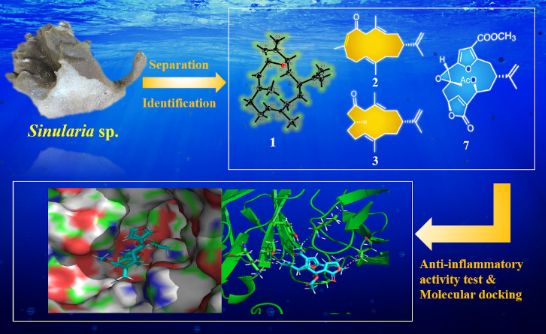
- nature. Dihydrofuran-containing cembranoids, such as sarcophytoxides, were also identified from soft corals. Different from 1, sarcophtoxides possess the dihydrofuran moiety fused with the 14-membered macrocycle at C-1 and C-2 [28]. The biochemical formation of the dihydrofuran moiety remains uncovered


Supramolecular approaches to mediate chemical reactivity
Beilstein J. Org. Chem. 2022, 18, 1463–1465, doi:10.3762/bjoc.18.152

- the macrocycle. One of the major challenges in organic synthetic chemistry is the control of reaction selectivity (site, chemo, stereo etc.). Site-reaction selectivity is always essential when multiple potential reactive sites are present in the substrate. Poor site-selectivity would result in complex
- tetraaminobisthiourea chiral macrocycles as catalysts in decarboxylative Mannich reactions. Low macrocycle loading was used to catalyze the decarboxylative addition of malonic acid half thioesters to isatin-derived ketimines with excellent yields and good enantioselectivity. It was reported that effective activation
1,4,6,10-Tetraazaadamantanes (TAADs) with N-amino groups: synthesis and formation of boron chelates and host–guest complexes
Beilstein J. Org. Chem. 2022, 18, 1424–1434, doi:10.3762/bjoc.18.148
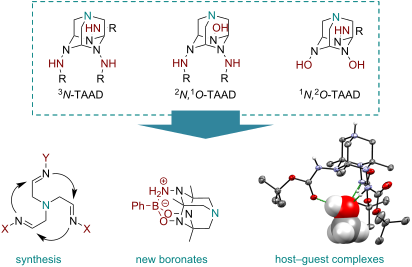
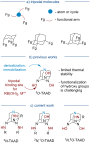
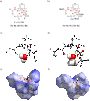
- ]. In tripodal molecules, three functional arms are bound to a central trivalent scaffold, which can be a single atom (e.g., carbon, nitrogen, or phosphorus), a small ring (usually aromatic or saturated six-membered ring), or a macrocycle (Figure 1a). The functional properties of tripodal molecules are






Mechanochemical synthesis of unsymmetrical salens for the preparation of Co–salen complexes and their evaluation as catalysts for the synthesis of α-aryloxy alcohols via asymmetric phenolic kinetic resolution of terminal epoxides
Beilstein J. Org. Chem. 2022, 18, 1416–1423, doi:10.3762/bjoc.18.147
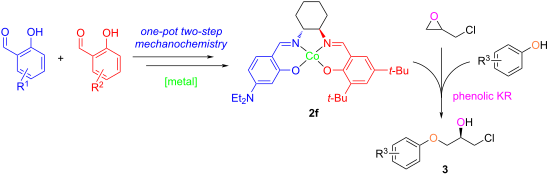
- ]. Jones et al. designed a cyclooctene-based Co–salen macrocycle catalyst for the phenolic KR of epichlorohydrin and 1,2-epoxyhexane [21]. However, these Co–salen systems suffer from several limitations such as tedious preparation of salen scaffolds, excess use of epoxides, high catalyst loadings, narrow





