


Search results
Search for "mechanism" in Full Text gives 1927 result(s) in Beilstein Journal of Organic Chemistry. Showing first 200.
Design and synthesis of an erdafitinib-based selective FGFR2 degrader
Beilstein J. Org. Chem. 2026, 22, 583–591, doi:10.3762/bjoc.22.44
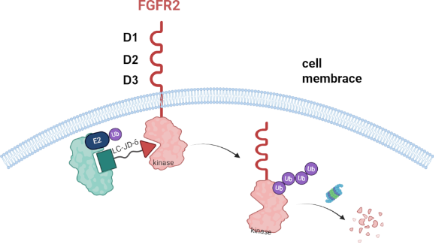
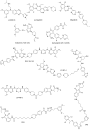
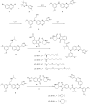
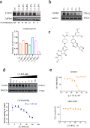
- and HEK293T cells. a) FGFR1, FGFR2, FGFR3, and FGFR4 levels in cells after treatment. b) The mechanism of PROTAC. It was created in BioRender (Chen, Lingfeng https://BioRender.com/7td2yot). This content is not subject to CC BY 4.0. c) Cellular localization of FGFR2 after treatment with LC-JD-6



Molecular tweezer–peptide conjugates disrupt the protein–protein interaction between survivin and histone H3 essential in mitosis
Beilstein J. Org. Chem. 2026, 22, 557–567, doi:10.3762/bjoc.22.41
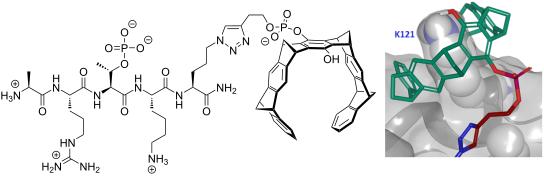
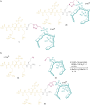
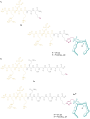
- lab [25]. Affinity determination, co-crystallization attempts, and bioassays are underway in our laboratories. Mechanism of CPC recruitment to centromeres and kinetochores. A) Initially phosphomarks are placed on Thr3 of histone H3 and on Thr120 of histone H2A. In histone H3, P-Thr3 together with the




Experimental and DFT studies on the regioselective methanolysis of 5-azido-9-oxabicyclo[6.1.0]nonan-4-yl 4-nitrobenzoate isomers
Beilstein J. Org. Chem. 2026, 22, 547–556, doi:10.3762/bjoc.22.40
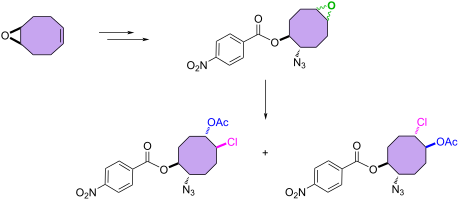
- -ray analysis (Figure 2) [25]. X-ray analysis of azido compound 10 confirmed the trans configuration of the azide group with chloride and the cis configuration with the acetate. Our suggested mechanism for the ring-opening of the epoxides 9 with HCl(g) in MeOH proceeded as described in Scheme 3. As
- NOESY experiments or the other 2D NMR conducted. Compound 11 is not a single crystal, so the determination by X-ray analysis of its structure was not possible. We strongly assume that the structure of 11 is based on the methanolysis mechanism of the epoxide 9a (Scheme 3). In order to elucidate the
- computations were performed to gain insights into the mechanism underlying regioselectivity for the methanolysis of the isomeric epoxides 9 (Figure 3). Detailed mechanistic routes involving all possible intermediates responsible for the regioselectivity step were constructed and the free energy barriers for


Melifoliox B, a novel phloroglucin derivative isolated from Melicope barbigera (Rutaceae) and synthesis of new oxidation products from melifoliones A and B
Beilstein J. Org. Chem. 2026, 22, 535–546, doi:10.3762/bjoc.22.39
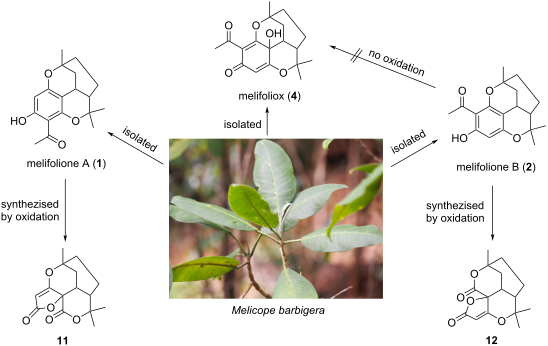
- contraction of the acetyl phenol to a furanone ring, forming the derivatives 11 and 12, whose structures were confirmed by X-ray analysis. A hypothetical mechanism for the oxidative ring contraction is proposed. 11 and 12 are the first representatives of new heterocyclic ring systems that have not previously
- the elucidation of the reaction mechanism and the synthesis of new compounds with possible biological activity. Experimental General Detailed experimental procedures are described in [1]. Instrumentation NMR spectra were recorded on Bruker ARX 300 or AVANCE DMX 600 NMR spectrometers (Bruker, Karlsruhe



Modern synthetic pathways towards eribulin and its subunits
Beilstein J. Org. Chem. 2026, 22, 495–526, doi:10.3762/bjoc.22.37
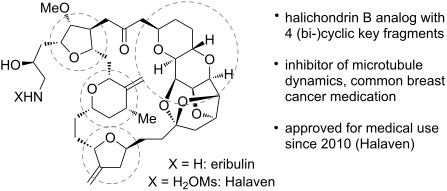
- , Halaven) due to its unique mechanism of action as a microtubule dynamics inhibitor. It is primarily used in the treatment of metastatic breast cancer and liposarcoma, offering a new therapeutic option for patients with advanced disease. To meet the increasing clinical demand, the research on new synthetic
- challenging soft tissue sarcoma, 1 has shown promise in prolonging overall survival and improving quality of life. The key feature that underpins 1's clinical importance is its unique mechanism of action [41][42][43][44][45][46][47][48][49][50]. Unlike other microtubule inhibitors such as taxanes and vinca
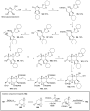
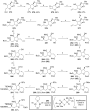
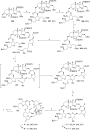
- in 71% yield. A detailed mechanism for this transformation is shown in Scheme 24 below [98]. Here, the Rh(II)-induced elimination of N2 generates carbene 218, which is attacked by the adjacent allyl ether moiety to form unstable zwitterion 219. Sigmatropic rearrangement and acidic workup yielded 213








Synthesis and uranyl(VI) extraction performance of a calix[4]pyrrole–tetrahydroxamic acid receptor
Beilstein J. Org. Chem. 2026, 22, 486–494, doi:10.3762/bjoc.22.36
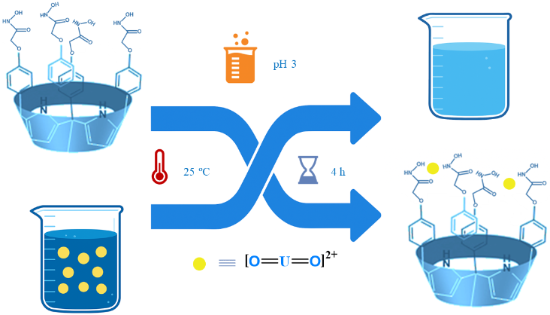
- uranyl ion and the Z-isomer of hydroxamic acid effectively shifts the Z/E equilibrium [70] towards the Z-conformation through a metal-induced fit mechanism [71][72]. Consistent with known hydroxamate coordination chemistry, coordination-induced deprotonation of the hydroxamic acid at low pH provides the


Dialkylaminoalkylation of β-ketosulfones via ring-opening of 3-sulfonylpyrrolidines
Beilstein J. Org. Chem. 2026, 22, 383–389, doi:10.3762/bjoc.22.26
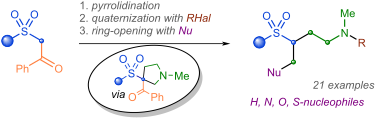
- extraction or column chromatography. On the other hand, upon performing the reaction with amines in acetonitrile we did not observe the formation of benzamides. Presumably, debenzoylation occurred in basic media with water traces and cesium benzoate was discarded upon work-up. The presumable mechanism of the
- % was used instead of methanol, heating at 80 °C for 36 h. bThe quaternization with AlkHal (1.5 equiv) was performed at 70 °C for 7 days. cTHIQ = 1,2,3,4-tetrahydroisoquinolin-2-yl. The presumable mechanism of the domino process. Reductive elimination of the nucleophiles. Synthetic sequence and




Electrosynthetic access to unsymmetrical oxaza[8]helicenes with high chiral stability and strong circularly polarized luminescence (CPL)
Beilstein J. Org. Chem. 2026, 22, 372–382, doi:10.3762/bjoc.22.25
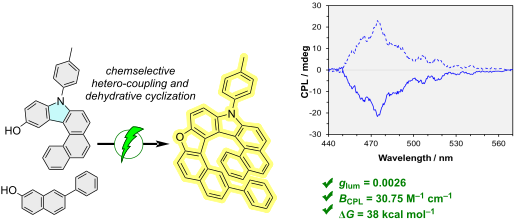
- intense chiroptical responses, including mirror-image CD and strong CPL with |glum| values up to 0.0026 and CPL brightness approaching 30.8 M−1 cm−1. A plausible reaction mechanism: cyclic voltammetry (CV) analyses of hydroxycarbazole derivative 3 and 2-naphthol derivatives 4; DFT-based calculations of




Recent advances in the cleavage of non-activated amides
Beilstein J. Org. Chem. 2026, 22, 352–369, doi:10.3762/bjoc.22.23
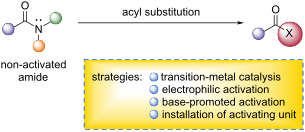
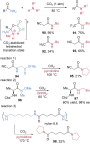
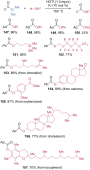
- bioactive compounds underwent smooth esterification with TFE to give the corresponding 2,2,2-trifluoroethyl esters 82–85 in high yields. To elucidate the reaction mechanism, cyclic voltammetry experiments, control reactions, and DFT calculations were conducted. At the anode, bromide ions are oxidized to
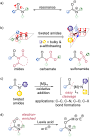
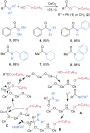
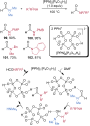
- reacted smoothly with p-methoxyphenyl (PMP) amine, p-methoxybenzyl (PMB) amine, N-benzyl-N-methylamine, and indole, generating the corresponding amides 99–102 in good to excellent yields. Based on kinetic studies, the authors proposed a plausible mechanism in which the dihydrogen tetrametaphosphate
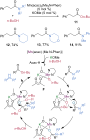
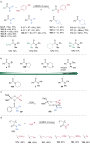
- corresponding amides 108–115 in excellent yields. Beyond benzamides, a variety of α-alkylamides possessing primary, secondary, and tertiary moieties also underwent efficient transamidation with aniline, furnishing the amide products 116–120 in excellent yields. This transformation proceeds through a mechanism


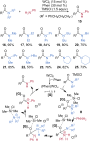
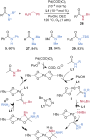


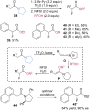
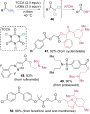






Synthesis of tricyclic fused pyrrolidine nitroxides from 2-alkynylpyrrolidine-1-oxyls
Beilstein J. Org. Chem. 2026, 22, 344–351, doi:10.3762/bjoc.22.22

- that this methylene fragment has a more fixed conformation, consistent with the annulated structure (Figure 4). Nitroxides are known to decay in biological systems; the major mechanism is chemical reduction with cellular antioxidants (ascorbic acid and glutathione) and enzymatic systems [34]. The rate




Ring contraction and ring expansion reactions in terpenoid biosynthesis and their application to total synthesis
Beilstein J. Org. Chem. 2026, 22, 289–343, doi:10.3762/bjoc.22.21
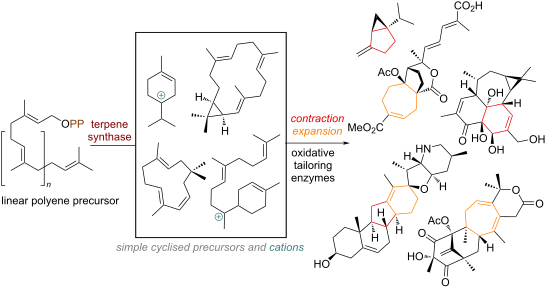
- deliver the most common terpene frameworks. In some instances, these enzymes can also effect ring contraction or expansion directly during the initial cyclisation mechanism [19][20][21][22][23][24][25][26][27]. In many cases though, the ring-altering reaction instead takes place at a later stage of
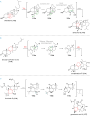
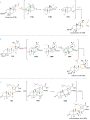
- single, concerted step. This concerted mechanism allows the reaction to bypass a high-energy, non-stabilised secondary carbocation intermediate that would result from a stepwise migration. This pathway is facilitated by the enzyme's active site, where aromatic residues (e.g., Tyr564) are proposed to
- mechanism could be enabled by deprotonation through an active-site base (32b) and re-protonation of the cyclopropane moiety (32c). A 1,2-hydride shift, followed by a 1,2-methyl shift towards that same carbon and an elimination, forms the tetrasubstituted double bond in 33, the precursor for sodorifen (32




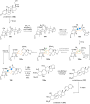


Spirobarbiturates with a pyrrolizidine moiety: synthesis, structure and biological evaluation
Beilstein J. Org. Chem. 2026, 22, 274–288, doi:10.3762/bjoc.22.20
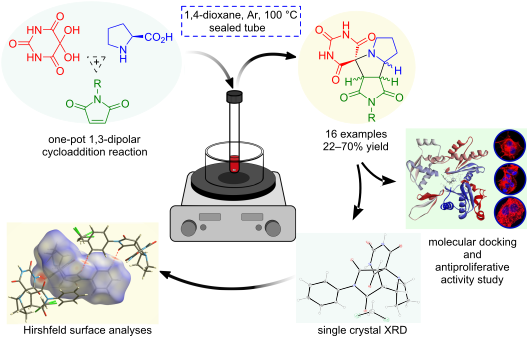
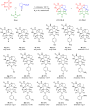
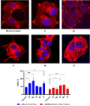
- in the maleimide: in most cases the endo-isomer is the main (or only) product, but for some N-arylmaleimides the exo-product is predominant. The proposed mechanism is discussed, and the products were characterized by detailed spectral analysis. The configuration of the stereocenters was determined by
- azabicyclo[3.1.0]hexane and cyclopropa[a]pyrrolizine moieties can be synthesized via 1,3-dipolar cycloaddition between cyclopropene derivatives and azomethine ylides generated in situ from alloxan and α-amino acids [43]. In [43], a mechanism was proposed for the formation of azomethine ylides from alloxan
- unable to isolate individual products either by chromatography or by recrystallization. The proposed reaction mechanism is shown in Scheme 5, where it can be seen that the intermediate azomethine ylide, acting as a 1,3-dipole, undergoes a [3 + 2] cycloaddition with N-substituted maleimides 3a–p. The




Arene activation via π-bond localization: concepts and opportunities
Beilstein J. Org. Chem. 2026, 22, 257–273, doi:10.3762/bjoc.22.19
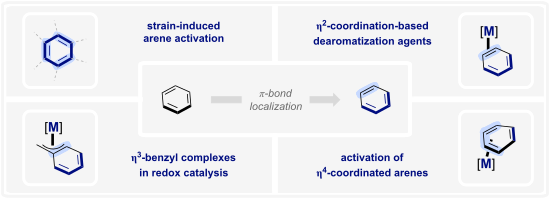
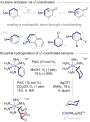
- , display remarkable substitution inertness, even toward strong π-acids and good σ-donors. The substitution rate being relatively independent of the incoming ligand is consistent with a dissociative substitution mechanism. Typically, coordination occurs at positions that minimally disrupt the arene π-system




A mild and atom-efficient four-component cascade strategy for the construction of biologically relevant 4-hydroxyquinolin-2(1H)-one derivatives
Beilstein J. Org. Chem. 2026, 22, 244–256, doi:10.3762/bjoc.22.18
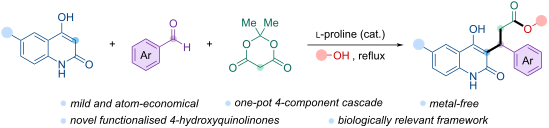
- yields (Scheme 5). The proposed mechanism of the four-component reaction is illustrated in Scheme 6. ʟ-Proline, via its amino group, nucleophilically attacks the carbonyl of the aromatic aldehyde, forming an iminium zwitterion intermediate A. Concurrently, ʟ-proline promotes the generation of the
- consistently confirmed the trend: greater electrophilicity is observed for the carbonyl carbon in pyranoquinoline, corroborating the experimental observations. Based on these results, the proposed mechanism of the multicomponent reaction involves initial lactone formation, followed by ring opening
- using various approaches. Four-component synthesis of 3-(6-halo-4-hydroxy-2-oxo-1,2-dihydroquinolin-3-yl)-3-(3,4-dimethoxyphenyl)propanoic acid esters 9 and 10. The proposed mechanism of the four-component reaction. Synthesis of isopropyl (12a–c) and cyclohexyl (13а–с) esters of 3-(4-hydroxy-2-oxo-1,2


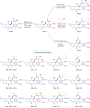
Synthesis of diaryl phosphates using phytic acid as a phosphorus source
Beilstein J. Org. Chem. 2026, 22, 213–223, doi:10.3762/bjoc.22.15
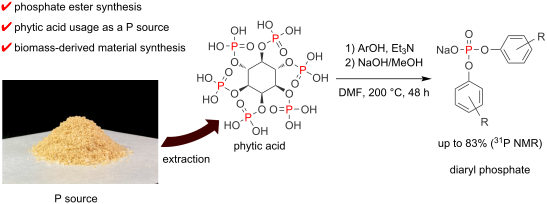
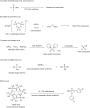
- the other mechanism is based on an E2 reaction, which involves the elimination of phosphoric acid accompanied by alkene formation. The phosphoric acid ester of a secondary alcohol releases phosphoric acid and alkenes through thermal degradation, which has been previously observed using isosorbide




Base-promoted deacylation of 2-acetyl-2,5-dihydrothiophenes and their oxygen-mediated hydroxylation
Beilstein J. Org. Chem. 2026, 22, 192–204, doi:10.3762/bjoc.22.13
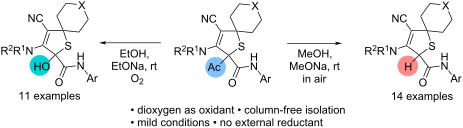
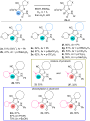
- ). Therefore, the reaction is most likely not proceeding via a free radical mechanism. To clarify the influence of the amide group on the developed transformations, dihydrothiophene 4g bearing a sulfonylimine group instead of an amide was treated with sodium methoxide in methanol or with sodium ethoxide in
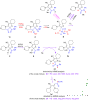
- elemental sulfur S6. Probably, the reaction is accompanied by the desulfurization of the oxidized intermediate, which causes the yellow color of the reaction solutions. The proposed mechanism for the developed transformations is depicted in Scheme 6. The reaction of dihydrothiophene 1a with sodium ethoxide
- (0.13–0.22 mmol, 1.0 equiv), sodium (0.66–1.11 mmol, 5 equiv), dry EtOH (2.5–3.0 mL). Control experiments. Proposed mechanism. Optimization of the transformation of dihydrothiophene 1a.a Optimization of the transformation of dihydrothiophene 4a.a Supporting Information Supporting Information File 17




Circumventing Mukaiyama oxidation: selective S–O bond formation via sulfenamide–alcohol coupling
Beilstein J. Org. Chem. 2026, 22, 158–166, doi:10.3762/bjoc.22.9
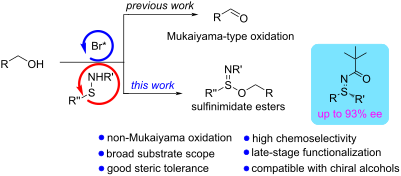
- reactivities of the two diastereomers. Although these findings strongly support the occurrence of a partial kinetic resolution, further kinetic measurements would be required for definitive confirmation. A plausible mechanism is outlined as follows. First, the sulfenamide 1 is oxidatively brominated by N


Asymmetric Mannich reaction of aromatic imines with malonates in the presence of multifunctional catalysts
Beilstein J. Org. Chem. 2026, 22, 151–157, doi:10.3762/bjoc.22.8
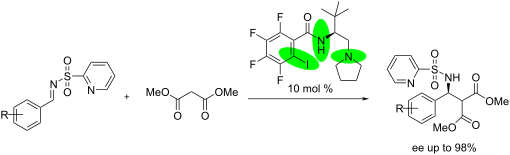
- . Although the activation mechanism was not proved unambiguously, it is assumed that steric effects of the chiral fragment together with a network of noncovalent interactions, including halogen and hydrogen bonds, are responsible for the high enantioselectivity of the reaction. Further developments of the


Symmetrical D–π–A–π–D indanone dyes: a new design for nonlinear optics and cyanide detection
Beilstein J. Org. Chem. 2026, 22, 131–142, doi:10.3762/bjoc.22.6
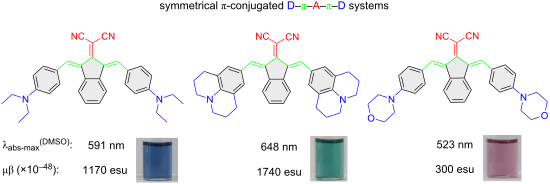
- theory (DFT) methods. The dyes also exhibit chemosensor properties, showing selectivity for cyanide via a Michael addition mechanism that causes the disappearance of the ICT band, and a significant color change was observed in both organic and aqueous media. In addition, the interaction mechanism between
- under ambient light. In addition, interaction mechanisms of dyes with cyanide were studied using the 1H NMR titration method, and it was determined that they interacted through an addition mechanism. Photophysical properties and interaction mechanisms of the compounds were also supported through density
- groups is disrupted. These results strongly suggest the addition of cyanide to the vinyl bridge. Furthermore, the color of dyes 2a–c, blue, green, and pink, respectively, under ambient light changed to yellow when interacting with cyanide. The interaction mechanism was determined by 1H NMR, and the


Highly electrophilic, gem- and spiro-activated trichloromethylnitrocyclopropanes: synthesis and structure
Beilstein J. Org. Chem. 2026, 22, 123–130, doi:10.3762/bjoc.22.5
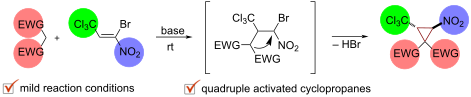
- –C2H protons of the cyclopropane ring (3JH(1)H(2) = 5.7–7.5 Hz) indicate their transoid arrangement [38][39][45]. This makes it possible to assign 1SR,2RS configurations to the stereocenters. The proposed mechanism for this transformation is depicted in Scheme 6. Michael addition of the CH-acid anion I
- -fused trichloromethylnitrocyclopropane 6. Synthesis of spiro-fused trichloromethylnitrocyclopropanes 7–9. i: 1.5 AcOK, MeOH, rt, 3 h. Main NOE correlations in 9a, 9b. Proposed mechanism of the formation of trichloromethylnitrocyclopropanes. Reaction of compound 1 with malononitrile leading to


Advances in Zr-mediated radical transformations and applications to total synthesis
Beilstein J. Org. Chem. 2026, 22, 71–87, doi:10.3762/bjoc.22.3
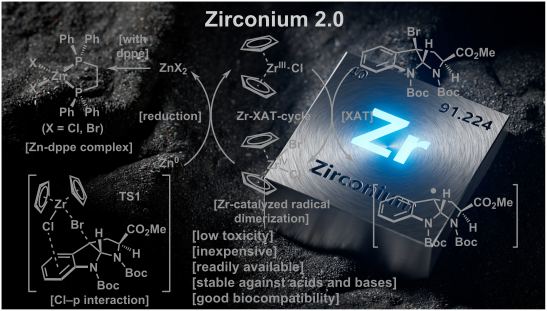
- intramolecular addition to the olefin, affording the cyclized acetal product 4. The reaction proceeded efficiently across a range of substrates bearing various substituents at R¹–R⁴, delivering the desired cyclized products 4a–f in good yields. The proposed mechanism is illustrated in Scheme 1C. Initially
- , demonstrating excellent functional group tolerance. The proposed mechanism is shown in Scheme 2C. Zirconocene dichloride is first reduced by zinc dust to generate ZrII. The resulting low-valent zirconium species reacts with the alkyl iodide to form a metal-centered radical intermediate. This species undergoes
- molecules such as allose (23i) and cholesterol (23k), delivering the desired alcohols in good yields with excellent regioselectivity. The proposed mechanism is shown in Scheme 5C. Homolytic cleavage of the C–O bond in the epoxide generates a strong Zr–O bond, while the resulting alkyl radical abstracts a








Reactivity umpolung of the cycloheptatriene core in hexa(methoxycarbonyl)cycloheptatriene
Beilstein J. Org. Chem. 2026, 22, 64–70, doi:10.3762/bjoc.22.2
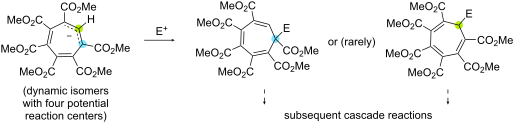
- chlorine is associated with an increase in energy of the lowest unoccupied molecular orbital of halogen molecules and a decrease in their electrophilicity. Therefore, if an electrophilic mechanism takes place, iodine apparently reacts with the main conformer faster than a transition to conformer 2' may
- possibility of i-halogenation via a chain radical mechanism (Scheme 3). The initiation stage includes an oxidation of anion 2 into the corresponding radical 13 which in turn reacts with halogens to form products 4a,b and a halogen atom which can also oxidize the anion. Quantum chemical calculations revealed
- negative free energy changes for all the stages of this reaction. A chlorination experiment with 2,2,6,6-tetramethylpiperidinyloxyl revealed a trace amount of a trap product detected by high-resolution mass spectrometry to support the radical mechanism. However, this does not exclude the possibility of a


Synthesis and applications of alkenyl chlorides (vinyl chlorides): a review
Beilstein J. Org. Chem. 2026, 22, 1–63, doi:10.3762/bjoc.22.1
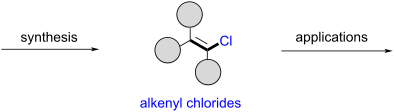
- synthesis lies beyond the scope of the present discussion. Regarding the use of color in graphical representations, structural highlighting was applied selectively, only when judged necessary in the clear identification of the transformation or mechanism depicted. Chapter 2 highlights key applications of
- unable to efficiently separate 61 from side product 94, which was likely formed via addition of acetyl chloride to 61 followed by conversion of the ketone to the alkenyl chloride. Regarding the mechanism (Scheme 18B), acid-catalyzed enolization of the ketone is proposed (enol I), followed by acetylation
- compound loss or degradation at the purification step. 1.2 Exchange reactions This chapter deals with exchange reactions, meaning that a given substituent on the alkene is formally exchanged for chlorine. The reactions are very different from each other in terms of mechanism and for a full discussion the























Sustainable electrochemical synthesis of aliphatic nitro-NNO-azoxy compounds employing ammonium dinitramide and their in vitro evaluation as potential nitric oxide donors and fungicides
Beilstein J. Org. Chem. 2025, 21, 2739–2754, doi:10.3762/bjoc.21.211
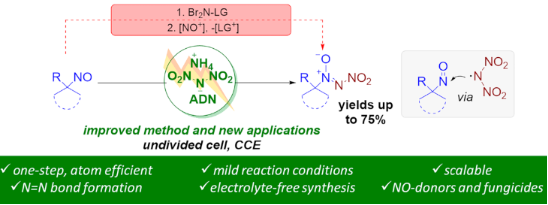
- nucleophilic substitution of –ONO2 groups. To clarify the reaction mechanism, cyclic voltammetry (CV) studies were conducted. CV curves of cyclohexanone oxime (S1), 1-bromo-1-nitrosocyclohexane (S2), 1-chloro-1-nitrosocyclohexane (S3), 1-nitrosocyclohexyl acetate (S4), 1-nitro-1-nitrosocyclohexane (1c), 1
- product nitro-NNO-azoxy propane 2a exhibits an oxidation peak at +1.68 V (Figure 2, pink curve). Despite the lower oxidation potential of 2a, we speculate that an excess of ADN suppresses competitive oxidation of the reaction product. To gain insight into the reaction mechanism, control experiments were
- studied reaction was also carried out under controlled potential conditions (Scheme 4, reaction 2) at E ≈ 1.8 V for 2.0 F per mol 1a. In this case, the formation of 2a was observed in a 68% yield. To gain insight into the reaction mechanism of the discovered nitro-NNO-azoxylation process quantum chemical





Competitive cyclization of ethyl trifluoroacetoacetate and methyl ketones with 1,3-diamino-2-propanol into hydrogenated oxazolo- and pyrimido-condensed pyridones
Beilstein J. Org. Chem. 2025, 21, 2716–2729, doi:10.3762/bjoc.21.209
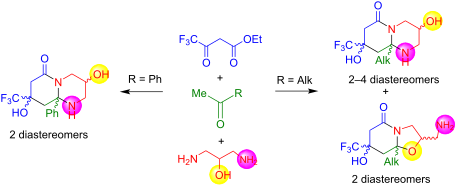
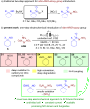
- minor when heated in 1,4-dioxane (Scheme 3, Table 3). Previously, we proposed and experimentally confirmed an aldol mechanism underlying the three-component cyclization of polyfluoroalkyl-3-oxo esters with α-methylene ketones and amines in piperidone derivatives. According to this mechanism, the key
- , AcOH, Et3N, 60 °C. The proposed mechanism of three-component cyclization of 3-oxo ester 1, methyl ketones 2a–d and 1,3-diaminopropan-2-ol (3). Optimization of the reaction conditions for ethyl trifluoroacetoacetate (1), acetone (2a) and 1,3-diaminopropan-2-ol (3). The conversion and the preparative





