


Search results
Search for "mechanistic studies" in Full Text gives 209 result(s) in Beilstein Journal of Organic Chemistry. Showing first 200.
Visible-light-promoted radical cyclisation of unactivated alkenes in benzimidazoles: synthesis of difluoromethyl- and aryldifluoromethyl-substituted polycyclic imidazoles
- Yujun Pang,
- Jinglan Yan,
- Nawaf Al-Maharik,
- Qian Zhang,
- Zeguo Fang and
- Dong Li
Beilstein J. Org. Chem. 2025, 21, 234–241, doi:10.3762/bjoc.21.15
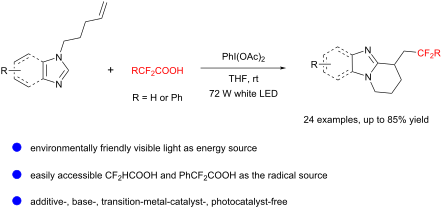
- target products in good to excellent yields. Mechanistic studies revealed that the reaction proceeds via a radical pathway. Keywords: cyclization; difluoromethylation; hypervalent iodine; polycyclic imidazole; visible light; Introduction Organofluorine compounds continue to play important roles in

Graphical Abstract

Figure 1: Selected examples containing tricyclic imidazole, CF2H or PhCF2 group.

Scheme 1: Strategies for the synthesis of difluoromethylated and difluoroarylmethylated tricyclic imidazoles.
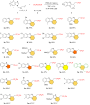
Scheme 2: Substrate scope of the protocol. Reaction conditions: 1 (0.2 mmol), 2 (1.4 mmol), and PIDA (0.8 mmo...
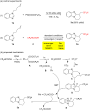
Scheme 3: Control experiments and plausible mechanism.
Recent advances in electrochemical copper catalysis for modern organic synthesis
- Yemin Kim and
- Won Jun Jang
Beilstein J. Org. Chem. 2025, 21, 155–178, doi:10.3762/bjoc.21.9

- , and benzamide, however, no relevant competitive oxidation peak was observed with only Cu(OAc)2. These results indicate that Cu(II) intermediate 5 was generated. Based on the mechanistic studies, the authors suggested plausible reaction mechanisms (Figure 4). First, the Cu(II) catalyst coordinates with
- product 36. Finally, using 1-naphthyl ester and relatively bulkier 2,6-dimethylhydroqunone as starting materials produced chiral 1,6-addition products 37. In mechanistic studies, using quinone 38 instead of hydroquinone 34 in the electrochemical-free process produced the desired product 36, with a similar
- standard Cu-catalyzed electrochemical protocol. Based on mechanistic studies, the proposed mechanism is shown in Figure 9. First, hydroquinone 34 is oxidized at the anode to generate a quinone intermediate 38. Meanwhile, the chiral copper catalyst reacts with the Schiff base 33, generating a nucleophilic

Graphical Abstract

Figure 1: General mechanisms of traditional and radical-mediated cross-coupling reactions.

Figure 2: Types of electrocatalysis (using anodic oxidation).

Figure 3: Recent developments and features of electrochemical copper catalysis.

Figure 4: Scheme and proposed mechanism for Cu-catalyzed alkynylation and annulation of benzamide.
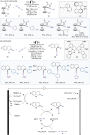
Figure 5: Scheme and proposed mechanism for Cu-catalyzed asymmetric C–H alkynylation.

Figure 6: Scheme for Cu/TEMPO-catalyzed C–H alkenylation of THIQs.
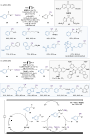
Figure 7: Scheme and proposed mechanism for Cu-catalyzed electrophotochemical enantioselective cyanation of b...
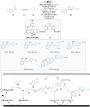
Figure 8: Scheme and proposed mechanism for Cu-catalyzed electrophotochemical asymmetric heteroarylcyanation ...
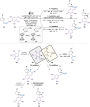
Figure 9: Scheme and proposed mechanism for Cu-catalyzed enantioselective regiodivergent cross-dehydrogenativ...
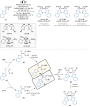
Figure 10: Scheme and proposed mechanism for Cu/Ni-catalyzed stereodivergent homocoupling of benzoxazolyl acet...
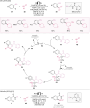
Figure 11: Scheme and proposed mechanism for Cu-catalyzed electrochemical amination.

Figure 12: Scheme and proposed mechanism for Cu-catalyzed electrochemical azidation of N-arylenamines and annu...
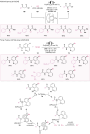
Figure 13: Scheme and proposed mechanism for Cu-catalyzed electrochemical halogenation.

Figure 14: Scheme and proposed mechanism for Cu-catalyzed asymmetric cyanophosphinoylation of vinylarenes.

Figure 15: Scheme and proposed mechanism for Cu/Co dual-catalyzed asymmetric hydrocyanation of alkenes.
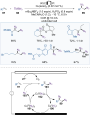
Figure 16: Scheme and proposed mechanism for Cu-catalyzed electrochemical diazidation of olefins.

Figure 17: Scheme and proposed mechanism for Cu-catalyzed electrochemical azidocyanation of alkenes.

Figure 18: Scheme and proposed mechanism for Cu-catalyzed electrophotochemical asymmetric decarboxylative cyan...
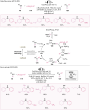
Figure 19: Scheme and proposed mechanism for electrocatalytic Chan–Lam coupling.
Non-covalent organocatalyzed enantioselective cyclization reactions of α,β-unsaturated imines
- Sergio Torres-Oya and
- Mercedes Zurro
Beilstein J. Org. Chem. 2024, 20, 3221–3255, doi:10.3762/bjoc.20.268
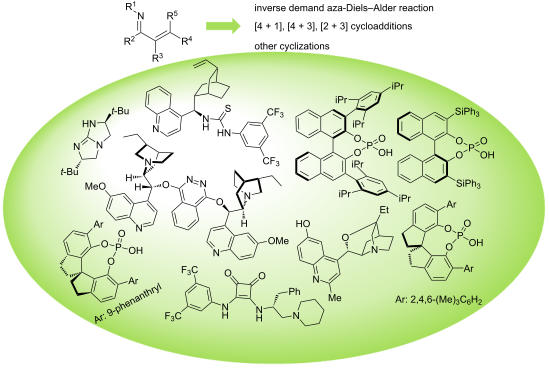
- excellent enantioselectivities (70–95% ee) when using chiral phosphoric acid XIV (Scheme 16). Mechanistic studies were performed to unveil whether a concerted or stepwise mechanism is taking place, such as trying to trap a possible iminium ion intermediate. The outcome of those experiments pointed towards a

Graphical Abstract

Figure 1: Reactivity of α,β-unsaturated imines and variety of structures.

Figure 2: The hetero-Diels–Alder and inverse electron demand hetero-Diels–Alder reactions.

Figure 3: Different strategies to promote the activation of dienes and dienophiles in IEDADA reactions.

Figure 4: Examples of non-covalent interactions in organocatalysis.

Scheme 1: Enantioselective bifunctional thiourea-catalyzed inverse electron demand Diels–Alder reaction of N-...

Scheme 2: Cinchona-derived thiourea-catalyzed stereoselective (3 + 2) reaction of α,β-unsaturated imines and ...

Scheme 3: Cinchona-derived thiourea-catalyzed stereoselective (3 + 2)/(4 + 2) cascade reaction of α,β-unsatur...
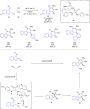
Scheme 4: Enantioselective bifunctional squaramide-catalyzed formal [4 + 2] cycloaddition of malononitrile wi...
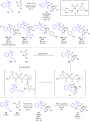
Scheme 5: Bifunctional squaramide-catalyzed IEDADA reaction of saccharin-derived 1-azadienes and azlactones.

Scheme 6: Chiral guanidine-catalyzed enantioselective (4+1) cyclization of benzofuran-derived azadienes with ...
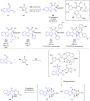
Scheme 7: Bifunctional squaramide-catalyzed [4 + 2] cyclization of benzofuran-derived azadienes and azlactone...
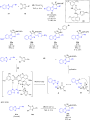
Scheme 8: Chiral bifunctional squaramide-catalyzed domino Mannich/formal [4 + 2] cyclization of 2-benzothiazo...
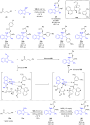
Scheme 9: Chiral bifunctional thiourea-catalyzed formal IEDADA reaction of β,γ-unsaturated ketones and benzof...

Scheme 10: Dihydroquinine-derived squaramide-catalyzed (3 + 2) cycloaddition reaction of isocyanoacetates and ...

Scheme 11: Enantioselective squaramide-catalyzed asymmetric IEDADA reaction of benzofuran-derived azadienes an...

Scheme 12: Scale up and derivatizations of benzofuran-fused 2-piperidinol derivatives.

Scheme 13: Dihydroquinine-derived squaramide-catalyzed Mannich-type reaction of isocyanoacetates with N-(2-ben...

Figure 5: Structure of a cinchona alkaloid and (DHQD)2PHAL.

Scheme 14: Enantioselective modified cinchona alkaloid-catalyzed [4 + 2] annulation of γ-butenolides and sacch...

Scheme 15: Chiral tertiary amine-catalyzed [2 + 4] annulation of cyclic 1-azadiene with γ-nitro ketones.

Scheme 16: Inverse electron demand aza-Diels–Alder reaction (IEDADA) of 1-azadienes with enecarbamates catalyz...

Scheme 17: Phosphoric acid-catalyzed enantioselective [4 + 2] cycloaddition of benzothiazolimines and enecarba...

Scheme 18: Phosphoric acid-catalyzed enantioselective inverse electron demand aza-Diels–Alder reaction of in s...

Scheme 19: Proposed reaction mechanism for the phosphoric acid-catalyzed enantioselective inverse electron dem...

Scheme 20: Enantioselective dearomatization of indoles by a (3 + 2) cyclization with azoalkenes catalyzed by a...

Scheme 21: Synthetic applicability of the pyrroloindoline derivatives.

Scheme 22: Chiral phosphoric acid-catalyzed (2 + 3) dearomative cycloaddition of 3-alkyl-2-vinylindoles with a...
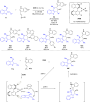
Scheme 23: Chiral phosphoric acid-catalyzed asymmetric [4 + 2] cycloaddition of aurone-derived 1-azadienes and...

Scheme 24: Phosphoric acid-catalyzed enantioselective formal [4 + 2] cycloaddition of dienecarbamates and 2-be...

Scheme 25: Chiral phosphoric acid-catalyzed asymmetric inverse electron demand aza-Diels–Alder reaction of 1,3...

Scheme 26: Chiral phosphoric acid-catalyzed asymmetric Attanasi reaction between 1,3-dicarbonyl compounds and ...

Scheme 27: Synthetic applicability of the NPNOL derivatives.
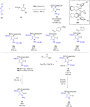
Scheme 28: Chiral phosphoric acid-catalyzed asymmetric intermolecular formal (3 + 2) cycloaddition of azoalken...

Scheme 29: Enantioselective [4 + 2] cyclization of α,β-unsaturated imines and azlactones.

Scheme 30: Catalytic cycle for the chiral phosphoric acid-catalyzed enantioselective [4 + 2] cyclization of α,...
Hypervalent iodine-mediated intramolecular alkene halocyclisation
- Charu Bansal,
- Oliver Ruggles,
- Albert C. Rowett and
- Alastair J. J. Lennox
Beilstein J. Org. Chem. 2024, 20, 3113–3133, doi:10.3762/bjoc.20.258
- . The level of this chemoselectivity was dependent on the iodane ligand: OPiv was more selective for aminofluorination than OAc, which was proposed to be due to differences in basicity and nucleophilicity (Scheme 10). Detailed mechanistic studies were carried out using multinuclear NMR spectroscopy
- diastereoselectivity in aminofluorination competing with carboxyfluorination products. Mechanistic studies of the fluoroamination of acyclic substrates showing the competing carboxyfluorination products. AIF = aziridinium ion formation, AIO = aziridinium ion opening, RLC = reductive ligand coupling. Fluorocyclisation

Graphical Abstract

Figure 1: Example bioactive compounds containing cyclic scaffolds potentially accessible by HVI chemistry.

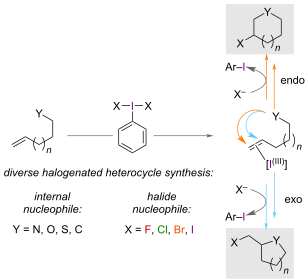
Figure 2: A general mechanism for HVI-mediated endo- or exo-halocyclisation.

Scheme 1: Metal-free synthesis of β-fluorinated piperidines 6. Ts = tosyl.

Scheme 2: Intramolecular aminofluorination of unactivated alkenes with a palladium catalyst.

Scheme 3: Aminofluorination of alkenes in the synthesis of enantiomerically pure β-fluorinated piperidines. P...

Scheme 4: Synthesis of β-fluorinated piperidines.

Scheme 5: Intramolecular fluoroaminations of unsaturated amines published by Li.

Scheme 6: Intramolecular aminofluorination of unsaturated amines using 1-fluoro-3,3-dimethylbenziodoxole (12)...
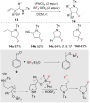
Scheme 7: 3-fluoropyrrolidine synthesis. aDiastereomeric ratio (cis/trans) determined by 19F NMR analysis.

Scheme 8: Kitamura’s synthesis of 3-fluoropyrrolidines. Values in parentheses represent the cis:trans ratio.
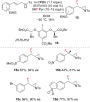
Scheme 9: Jacobsen’s enantio- and diastereoselective protocol for the synthesis of syn-β-fluoroaziridines 15.
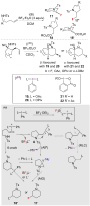
Scheme 10: Different HVI reagents lead to different diastereoselectivity in aminofluorination competing with c...
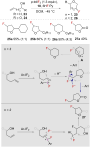
Scheme 11: Fluorocyclisation of unsaturated alcohols and carboxylic acids to make tetrahydrofurans, fluorometh...

Scheme 12: Oxyfluorination of unsaturated alcohols.
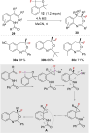
Scheme 13: Synthesis and mechanism of fluoro-benzoxazepines.
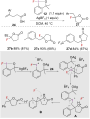
Scheme 14: Intramolecular fluorocyclisation of unsaturated carboxylic acids. Yield of isolated product within ...

Scheme 15: Synthesis of fluorinated tetrahydrofurans and butyrolactone.

Scheme 16: Synthesis of fluorinated oxazolines 32. aReaction time increased to 40 hours. Yields refer to isola...
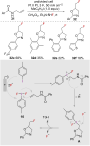
Scheme 17: Electrochemical synthesis of fluorinated oxazolines.

Scheme 18: Electrochemical synthesis of chromanes.

Scheme 19: Synthesis of fluorinated oxazepanes.
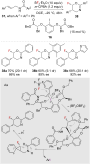
Scheme 20: Enantioselective oxy-fluorination with a chiral aryliodide catayst.
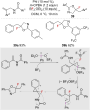
Scheme 21: Catalytic synthesis of 5‑fluoro-2-aryloxazolines using BF3·Et2O as a source of fluoride and an acti...

Scheme 22: Intramolecular carbofluorination of alkenes.

Scheme 23: Intramolecular chlorocyclisation of unsaturated amines.
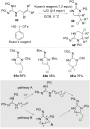
Scheme 24: Synthesis of chlorinated cyclic guanidines 44.
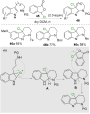
Scheme 25: Synthesis of chlorinated pyrido[2,3-b]indoles 46.

Scheme 26: Chlorolactonization and chloroetherification reactions.
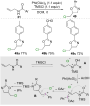
Scheme 27: Proposed mechanism for the synthesis of chloromethyl oxazolines 49.

Scheme 28: Oxychlorination to form oxazine and oxazoline heterocycles promoted by BCl3.

Scheme 29: Aminobromocyclisation of homoallylic sulfonamides 53. The cis:trans ratios based on the 1H NMR of t...
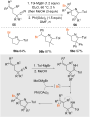
Scheme 30: Synthesis of cyclic imines 45.

Scheme 31: Synthesis of brominated pyrrolo[2,3-b]indoles 59.

Scheme 32: Bromoamidation of alkenes.

Scheme 33: Synthesis of brominated cyclic guanidines 61 and 61’.
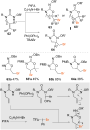
Scheme 34: Intramolecular bromocyclisation of N-oxyureas.
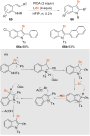
Scheme 35: The formation of 3-bromoindoles.

Scheme 36: Bromolactonisation of unsaturated acids 68.

Scheme 37: Synthesis of 5-bromomethyl-2-oxazolines.
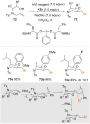
Scheme 38: Synthesis of brominated chiral morpholines.
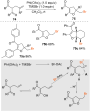
Scheme 39: Bromoenolcyclisation of unsaturated dicarbonyl groups.

Scheme 40: Brominated oxazines and oxazolines with BBr3.

Scheme 41: Synthesis of 5-bromomethtyl-2-phenylthiazoline.

Scheme 42: Intramolecular iodoamination of unsaturated amines.

Scheme 43: Formation of 3-iodoindoles.

Scheme 44: Iodoetherification of 2,2-diphenyl-4-penten-1-carboxylic acid (47’) and 2,2-diphenyl-4-penten-1-ol (...

Scheme 45: Synthesis of 5-iodomethyl-2-oxazolines.

Scheme 46: Synthesis of chiral iodinated morpholines. aFrom the ʟ-form of the amino acid starting material. Th...

Scheme 47: Iodoenolcyclisation of unsaturated dicarbonyl compounds 74.

Scheme 48: Synthesis of 5-iodomethtyl-2-phenylthiazoline (87).
Advances in the use of metal-free tetrapyrrolic macrocycles as catalysts
- Mandeep K. Chahal
Beilstein J. Org. Chem. 2024, 20, 3085–3112, doi:10.3762/bjoc.20.257
- porphyrin radical anion. Ultimately, protonation of intermediate E led to the final product. Formation of intermediates, such as enamine A and cation radical B, was confirmed using techniques like ESIMS, 1H NMR, and EPR, Stern–Volmer quenching experiments, respectively. All these mechanistic studies

Graphical Abstract

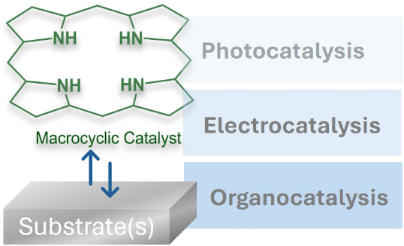
Figure 1: Chemical structures of the main tetrapyrrolic macrocycles studied in this review for their role as ...

Figure 2: Calix[4]pyrroles 3 and 4 and an their acyclic analogue 5 used for the transformation of Danishefsky...

Figure 3: Calixpyrrole-based organocatalysts 11 and 12 for the diastereoselective addition reaction of TMSOF ...

Figure 4: (a) Chemical structures of macrocyclic organocatalysts used for the synthesis of cyclic carbonates ...

Figure 5: Cuprous chloride-catalyzed aziridination of styrene (22) by chloramine-T (23) providing 1-tosyl-2-p...

Figure 6: Chemical structures of the various porphyrin macrocycles (18, 25–41) screened as potential catalyst...

Figure 7: Organocatalytic activity of distorted porphyrins explored by Senge and co-workers. Planar macrocycl...

Figure 8: Chemical structures of H2EtxTPP (x = 0, 2, 4, 6, 8) compounds with incrementally increasing nonplan...

Figure 9: Chemical structures of OxP macrocycles tested as potential organocatalysts for the conjugate additi...

Figure 10: a) Fundamental structure of the J-aggregates of diprotonated TPPS3 53 and b) its use as a catalyst ...

Figure 11: Chemical structures of amphiphilic porphyrin macrocycles used as pH-switchable catalysts based on i...

Figure 12: a) Chemical structures of porphyrin macrocycles for the cycloaddition of CO2 to N-alkyl/arylaziridi...

Figure 13: Electron and energy-transfer processes typical for excited porphyrin molecules (Por = porphyrin mac...

Figure 14: Proposed mechanism for the light-induced α-alkylation of aldehydes with EDA in the presence of H2TP...

Figure 15: a) Chemical structures of porphyrins screened as photoredox catalysts, b) model reaction of furan (...

Figure 16: Porphyrin macrocycles H2TPP (18) and PPIX 78 as photoreductants for the red light-induced C–H aryla...

Figure 17: Porphyrin macrocycles H2TPP (18) and PPIX 78 as photoredox catalyst for (a) α-alkylation of an alde...

Figure 18: Corrole macrocycles 98–100 as photoredox catalysts for C–H arylation and borylation reactions. Adap...

Figure 19: Proposed catalytic cycle of electrocatalytic generation of H2 evolution using tetrapyrrolic macrocy...

Figure 20: a) Chemical structures of tetrapyrrolic macrocycles 109, 73, and 110 used for oxygen reductions in ...

Figure 21: a) Absorption spectra (left) of the air-saturated DCE solutions containing: 5 × 10⁻⁵ M H2TPP (black...

Figure 22: Chemical structures of N,N’-dimethylated saddle-distorted porphyrin isomers, syn-Me2P 111 and anti-...

Figure 23: Reaction mechanisms for the two-electron reduction of O2 by a) syn-Me2Iph 113 and b) anti-Me2Iph 114...

Figure 24: O2/H2O2 interconversion using methylated saddle-distorted porphyrin and isophlorin (reduced porphyr...

Figure 25: Chemical structures of distorted dodecaphenylporphyrin macrocycle 117 and its diprotonated form 118...
Chemical structure metagenomics of microbial natural products: surveying nonribosomal peptides and beyond
- Thomas Ma and
- John Chu
Beilstein J. Org. Chem. 2024, 20, 3050–3060, doi:10.3762/bjoc.20.253

- offloading step always entails the same chemical reaction, wherein nucleophilic attack is promoted by the catalytic triad of a TE via general base catalysis. This is likely why traditional mechanistic studies that focused on the enzyme active site failed to work out how TEs control NRP topology. A priori

Graphical Abstract

Figure 1: In BGF for microbial natural product discovery, the culture extract is fractionated using chromatog...

Figure 2: In light of BGF’s decreasing return-on-investment, scientists have developed new natural product di...

Figure 3: a) Incorporation of the first five amino acid BBs in daptomycin (highlighted in blue) is illustrate...

Figure 4: Syn-BNPs were synthesized in accordance to predicted NRP structures; shown herein are hits from var...

Figure 5: a) “Offloading” is the final step of NRP biosynthesis, wherein the mature NRP is released from the ...
Recent advances in transition-metal-free arylation reactions involving hypervalent iodine salts
- Ritu Mamgain,
- Kokila Sakthivel and
- Fateh V. Singh
Beilstein J. Org. Chem. 2024, 20, 2891–2920, doi:10.3762/bjoc.20.243

- aromatic rings were investigated, and based on the obtained yields of the products it was concluded that the reaction is compatible with electron-donating, electron-withdrawing, and electron-neutral substitutions. Mechanistic studies, including a cross-over reaction, indicated that the aryl migration is

Graphical Abstract

Figure 1: Various structures of iodonium salts.

Scheme 1: Αrylation of α-fluoroacetoacetamides 5 to α-aryl-α-fluoroacetoacetamides 7 and α-fluoroacetamides 8...
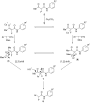
Scheme 2: Proposed mechanism for the arylation of α-fluoroacetoacetamides 5 to α-aryl-α-fluoroacetoacetamides ...

Scheme 3: α-Arylation of α-nitro- and α-cyano derivatives of α-fluoroacetamides 9 employing unsymmetrical DAI...

Scheme 4: Synthesis of α,α-difluoroketones 13 by reacting α,α-difluoro-β-keto acid esters 11 with aryl(TMP)io...

Scheme 5: Coupling reaction of arynes generated by iodonium salts 6 and arynophiles 14 for the synthesis of t...

Scheme 6: Metal-free arylation of quinoxalines 17 and quinoxalinones 19 with DAISs 16.

Scheme 7: Transition-metal-free, C–C cross-coupling of 2-naphthols 21 to 1-arylnapthalen-2-ols 22 employing d...

Scheme 8: Arylation of vinyl pinacol boronates 23 to trans-arylvinylboronates 24 in presence of hypervalent i...

Scheme 9: Light-induced selective arylation at C2 of quinoline N-oxides 25 and pyridine N-oxides 28 in the pr...

Scheme 10: Plaussible mechanism for the light-induced selective arylation of N-heterobiaryls.

Scheme 11: Photoinduced arylation of heterocycles 31 with the help of diaryliodonium salts 16 activated throug...

Scheme 12: Arylation of MBH acetates 33 with DIPEA and DAIRs 16.

Scheme 13: Aryl sulfonylation of MBH acetates 33 with DABSO and diphenyliodonium triflates 16.

Scheme 14: Synthesis of oxindoles 37 from N-arylacrylamides 36 and diaryliodonium salts 26.

Scheme 15: Mechanically induced N-arylation of amines 38 using diaryliodonium salts 16.

Scheme 16: o-Fluorinated diaryliodonium salts 40-mediated diarylation of amines 38.

Scheme 17: Proposed mechanism for the diarylation of amines 38 using o-fluorinated diaryliodonium salts 40.

Scheme 18: Ring-opening difunctionalization of aliphatic cyclic amines 41.

Scheme 19: N-Arylation of amino acid esters 44 using hypervalent iodonium salts 45.

Scheme 20: Regioselective N-arylation of triazole derivatives 47 by hypervalent iodonium salts 48.

Scheme 21: Regioselective N-arylation of tetrazole derivatives 50 by hypervalent iodonium salt 51.

Scheme 22: Selective arylation at nitrogen and oxygen of pyridin-2-ones 53 by iodonium salts 16 depending on t...

Scheme 23: N-Arylation using oxygen-bridged acyclic diaryliodonium salt 56.

Scheme 24: The successive C(sp2)–C(sp2)/O–C(sp2) bond formation of naphthols 58.

Scheme 25: Synthesis of diarylethers 62 via in situ generation of hypervalent iodine salts.

Scheme 26: O-Arylated galactosides 64 by reacting protected galactosides 63 with hypervalent iodine salts 16 i...

Scheme 27: Esterification of naproxen methyl ester 65 via formation and reaction of naproxen-containing diaryl...

Scheme 28: Etherification and esterification products 72 through gemfibrozil methyl ester-derived diaryliodoni...

Scheme 29: Synthesis of iodine containing meta-substituted biaryl ethers 74 by reacting phenols 61 and cyclic ...

Scheme 30: Plausible mechanism for the synthesis of meta-functionalized biaryl ethers 74.

Scheme 31: Intramolecular aryl migration of trifluoromethane sulfonate-substituted diaryliodonium salts 75.

Scheme 32: Synthesis of diaryl ethers 80 via site-selective aryl migration.

Scheme 33: Synthesis of O-arylated N-alkoxybenzamides 83 using aryl(trimethoxyphenyl)iodonium salts 82.

Scheme 34: Synthesis of aryl sulfides 85 from thiols 84 using diaryliodonium salts 16 in basic conditions.

Scheme 35: Base-promoted synthesis of diarylsulfoxides 87 via arylation of general sulfinates 86.

Scheme 36: Plausible mechanism for the arylation of sulfinates 86 via sulfenates A to give diaryl sulfoxides 87...

Scheme 37: S-Arylation reactions of aryl or heterocyclic thiols 88.

Scheme 38: Site-selective S-arylation reactions of cysteine thiol groups in 91 and 94 in the presence of diary...

Scheme 39: The selective S-arylation of sulfenamides 97 using diphenyliodonium salts 98.

Scheme 40: Plausible mechanism for the synthesis of sulfilimines 99.

Scheme 41: Synthesis of S-arylxanthates 102 by reacting DAIS 101 with potassium alkyl xanthates 100.

Figure 2: Structured of the 8-membered and 4-membered heterotetramer I and II.

Scheme 42: S-Arylation by diaryliodonium cations 103 using KSCN (104) as a sulfur source.

Scheme 43: S-Arylation of phosphorothioate diesters 107 through the utilization of diaryliodonium salts 108.

Scheme 44: Transfer of the aryl group from the hypervalent iodonium salt 108 to phosphorothioate diester 107.

Scheme 45: Synthesis of diarylselenides 118 via diarylation of selenocyanate 115.

Scheme 46: Light-promoted arylation of tertiary phosphines 119 to quaternary phosphonium salts 121 using diary...

Scheme 47: Arylation of aminophosphorus substrate 122 to synthesize phosphine oxides 123 using aryl(mesityl)io...

Scheme 48: Reaction of diphenyliodonium triflate (16) with DMSO (124) via thia-Sommelet–Hauser rearrangement.

Scheme 49: Synthesis of biaryl compounds 132 by reacting diaryliodonium salts 131 with arylhydroxylamines 130 ...

Scheme 50: Synthesis of substituted indazoles 134 and 135 from N-hydroxyindazoles 133.
C–H Trifluoromethylthiolation of aldehyde hydrazones
- Victor Levet,
- Balu Ramesh,
- Congyang Wang and
- Tatiana Besset
Beilstein J. Org. Chem. 2024, 20, 2883–2890, doi:10.3762/bjoc.20.242
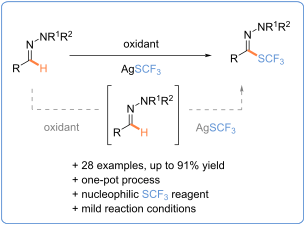
- -trifluoroacetophenone as an internal standard. ND = not detected. Optimization of the reaction conditions.a Supporting Information Supporting Information File 28: Full experimental procedures, characterization of products, details of mechanistic studies, and spectral data. Funding This work has been partially

Graphical Abstract

Scheme 1: State of the art and this work.

Scheme 2: Reaction conditions: hydrazone (0.3 mmol, 1.0 equiv), NBS (0.33 mmol, 1.1 equiv), in CH3CN (0.4 M),...

Scheme 3: Scope of the reaction. Reaction conditions: 1 (0.3 mmol, 1.0 equiv), NBS (0.33 mmol, 1.1 equiv) in ...

Scheme 4: Mechanistic investigations and post-functionalization reactions. a19F NMR yields using α,α,α-triflu...
Mechanochemical difluoromethylations of ketones
- Jinbo Ke,
- Pit van Bonn and
- Carsten Bolm
Beilstein J. Org. Chem. 2024, 20, 2799–2805, doi:10.3762/bjoc.20.235
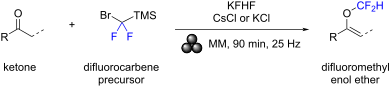
- isolating the low-boiling non-polar products. Mechanistic studies suggested that in situ-generated difluorocarbene reacts with the ketone oxygen, followed by intermolecular protonation/deprotonation. Although the process has still synthetic limitations, also acyclic ketones can now be converted into

Graphical Abstract

Scheme 1: Overview over difluoromethyl enol ether syntheses from acyclic and cyclic 1,3-diones (A), acyclic k...

Scheme 2: Attempted difluoromethylation of 1a in solution. The reactions were performed on a 0.2 mmol scale. ...

Scheme 3: Scope of ketones. The yields were determined by 1H NMR spectroscopy using 1,2-dichloroethane as the...

Scheme 4: Proposed mechanism (A) and mechanistic investigations (B and C). The yields were determined by 1H N...
Copper-catalyzed yne-allylic substitutions: concept and recent developments
- Shuang Yang and
- Xinqiang Fang
Beilstein J. Org. Chem. 2024, 20, 2739–2775, doi:10.3762/bjoc.20.232
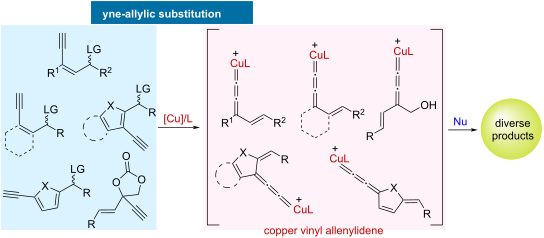
- rise to a series of differently substituted 1,4-enynes with monofluoroalkyl units in high yields and ee values (Scheme 18, 18a–i). The reaction effectively overcomes the drawbacks of low activity of tertiary carbon nucleophiles and instability of fluorinated compounds. Preliminary mechanistic studies
- vinyl allenylidene species. A series of differently substituted spiro-cyclic products can be obtained with high yields, regio- and stereoselectivities (Scheme 32, 30a–x). Preliminary mechanistic studies indicated that the reaction first undergoes a substitution at the α-position of yne-allylic ester
- ). Preliminary mechanistic studies have ruled out the 1,3-sigmatropic shift, indicating that the reaction proceeds through a nucleophilic substitution–annulation process of a reactive π-extended copper-allenylidene intermediate (Scheme 43). At the same time, Qi and Xu et al. [79] also realized the dearomative

Graphical Abstract

Scheme 1: Copper-catalyzed allylic and yne-allylic substitution.

Scheme 2: Challenges in achieving highly selective yne-allylic substitution.

Scheme 3: Yne-allylic substitutions using indoles and pyroles.

Scheme 4: Yne-allylic substitutions using amines.

Scheme 5: Yne-allylic substitution using 1,3-dicarbonyls.

Scheme 6: Postulated mechanism via copper acetylide-bonded allylic cation.

Scheme 7: Amine-participated asymmetric yne-allylic substitution.

Scheme 8: Asymmetric decarboxylative yne-allylic substitution.

Scheme 9: Asymmetric yne-allylic alkoxylation and alkylation.

Scheme 10: Proposed mechanism for Cu(I) system.

Scheme 11: Asymmetric yne-allylic dialkylamination.

Scheme 12: Proposed mechanism of yne-allylic dialkylamination.

Scheme 13: Asymmetric yne-allylic sulfonylation.

Scheme 14: Proposed mechanism of yne-allylic sulfonylation.

Scheme 15: Aymmetric yne-allylic substitutions using indoles and indolizines.

Scheme 16: Double yne-allylic substitutions using pyrrole.

Scheme 17: Proposed mechanism of yne-allylic substitution using electron-rich arenes.

Scheme 18: Aymmetric yne-allylic monofluoroalkylations.

Scheme 19: Proposed mechanism.
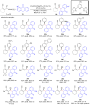
Scheme 20: Aymmetric yne-allylic substitution of yne-allylic esters with anthrones.

Scheme 21: Aymmetric yne-allylic substitution of yne-allylic esters with coumarins.

Scheme 22: Aymmetric yne-allylic substitution of with coumarins by Lin.

Scheme 23: Proposed mechanism.

Scheme 24: Amination by alkynylcopper driven dearomatization and rearomatization.

Scheme 25: Arylation by alkynylcopper driven dearomatization and rearomatization.

Scheme 26: Remote substitution/cyclization/1,5-H shift process.

Scheme 27: Proposed mechanism.

Scheme 28: Arylation or amination by alkynylcopper driven dearomatization and rearomatization.

Scheme 29: Remote nucleophilic substitution of 5-ethynylthiophene esters.

Scheme 30: Proposed mechanism.

Scheme 31: [4 + 1] annulation of yne-allylic esters and cyclic 1,3-dicarbonyls.
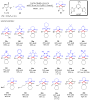
Scheme 32: Asymmetric [4 + 1] annulation of yne-allylic esters.

Scheme 33: Proposed mechanism.

Scheme 34: Asymmetric [3 + 2] annulation of yne-allylic esters.

Scheme 35: Postulated annulation step.

Scheme 36: [4 + 1] Annulations of vinyl ethynylethylene carbonates and 1,3-dicarbonyls.

Scheme 37: Proposed mechanism.

Scheme 38: Formal [4 + 1] annulations with amines.

Scheme 39: Formal [4 + 2] annulations with hydrazines.

Scheme 40: Proposed mechanism.
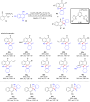
Scheme 41: Dearomative annulation of 1-naphthols and yne-allylic esters.

Scheme 42: Dearomative annulation of phenols or 2-naphthols and yne-allylic esters.

Scheme 43: Postulated annulation mechanism.

Scheme 44: Dearomative annulation of phenols or 2-naphthols.

Scheme 45: Dearomative annulation of indoles.

Scheme 46: Postulated annulation step.

Scheme 47: Asymmetric [4 + 1] cyclization of yne-allylic esters with pyrazolones.

Scheme 48: Proposed mechanism.

Scheme 49: Construction of C–C axially chiral arylpyrroles.

Scheme 50: Construction of C–N axially chiral arylpyrroles.

Scheme 51: Construction of chiral arylpyrroles with 1,2-di-axial chirality.

Scheme 52: Proposed mechanism.

Scheme 53: CO2 shuttling in yne-allylic substitution.

Scheme 54: CO2 fixing in yne-allylic substitution.

Scheme 55: Proposed mechanism.
A review of recent advances in electrochemical and photoelectrochemical late-stage functionalization classified by anodic oxidation, cathodic reduction, and paired electrolysis
- Nian Li,
- Ruzal Sitdikov,
- Ajit Prabhakar Kale,
- Joost Steverlynck,
- Bo Li and
- Magnus Rueping
Beilstein J. Org. Chem. 2024, 20, 2500–2566, doi:10.3762/bjoc.20.214
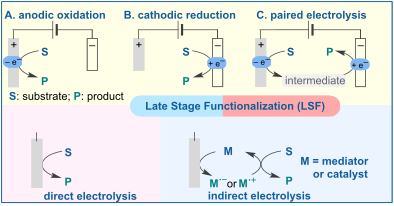
- further emphasized its utility. Mechanistic studies have demonstrated that the key to this selective chemical conversion lies in the dual oxidation process at the anode. The authors suggest that anodic oxidation of the sulfide generates a sulfur radical cation intermediate, which reacts with water at the
- ]. This mild method proceeds with a broad range of unactivated alkenes, including natural products and pharmaceutical derivatives such as sulbactam acid and oxaprozin. Mechanistic studies revealed that the reaction was initiated by the electrochemical oxidation of iodide ions, generating iodine radicals
- group. Based on extensive mechanistic studies, they proposed the formation of a formal Ni(IV) complex during the process. Remarkably, nickel proved to be uniquely effective for this protocol, as other transition-metal catalysts based on Cu, Co, Pd, Ir, Ru, and Rh did not catalyze the reaction (Scheme 36

Graphical Abstract

Figure 1: Classification of LSF reactions in this review.

Scheme 1: C(sp2)–H trifluoromethylation of heteroarenes.
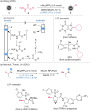
Scheme 2: C(sp2)–H and C(sp3)–H alkylation of complex molecules.

Scheme 3: Electrochemical oxidation-induced intermolecular aromatic C–H sulfonamidation.

Scheme 4: Bioconjugation of tyrosine with (a) phenothiazine and (b) urazole derivatives.

Scheme 5: Electrochemical iodoamination of indoles using unactivated amines.

Scheme 6: Allylic C(sp3)–H aminations with sulfonamides.

Scheme 7: Electrochemical benzylic oxidation of C–H bonds.
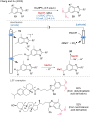
Scheme 8: Site-selective electrooxidation of methylarenes to aromatic acetals.

Scheme 9: Electrochemical activation of C–H by electron-deficient W2C nanocrystals.

Scheme 10: α-Acyloxy sulfide preparation via C–H/OH cross-dehydrogenative coupling.

Scheme 11: Aromatic C–H-bond thiolation.

Scheme 12: C(sp2)–H functionalization for the installation of sulfonamide groups.

Scheme 13: Preparation of (hetero)aryl chlorides and vinyl chloride with 1,2-dichloroethane. aCu(OAc)2 (0.05 e...

Scheme 14: Electrochemical dual-oxidation enables access to α-chlorosulfoxides.

Scheme 15: Regio- and chemoselective formyloxylation–bromination/chlorination/trifluoromethylation of alkenes.

Scheme 16: Aziridine formation by coupling amines and alkenes.

Scheme 17: Formation of iminosulfide ethers via difunctionalization of an isocyanide.

Scheme 18: Synthesis of 1,3-difunctionalized molecules via C–C-bond cleavage of arylcyclopropane.

Scheme 19: Electrooxidative amino- and oxyselenation of alkenes. VBImBr = 1-butyl-3-vinylimidazolium bromide.

Scheme 20: Electrooxidative dehydrogenative [4 + 2] annulation of indole derivatives.

Scheme 21: Electrochemical cyclization combined with alkoxylation of triticonazole.

Scheme 22: Electrochemically tuned oxidative [4 + 2] annulation of olefins with hydroxamic acids.

Scheme 23: Electrosynthesis of indole derivatives via cyclization of 2-ethynylanilines.

Scheme 24: Allylic C–H oxidation of mono-, di-, and sesquiterpenes.

Scheme 25: Oxidation of unactivated C–H bonds.

Scheme 26: Fluorination of C(sp3)–H bonds. rAP = rapid alternating polarity.

Scheme 27: C(sp3)–H α-cyanation of secondary piperidines.
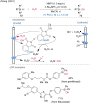
Scheme 28: Selective electrochemical hydrolysis of hydrosilanes to silanols.

Scheme 29: Organocatalytic electrochemical amination of benzylic C–H bonds.

Scheme 30: Iodide ion-initiated anodic oxidation reactions.

Scheme 31: Mn(III/IV) electro-catalyzed C(sp3)–H azidation.
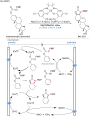
Scheme 32: Tailored cobalt–salen complexes enable electrocatalytic intramolecular allylic C–H functionalizatio...

Scheme 33: Cobalt–salen complexes-induced electrochemical (cyclo)additions.

Scheme 34: Electrochemical 1,2-diarylation of alkenes enabled by direct dual C–H functionalization of electron...

Scheme 35: Cobalt-electrocatalyzed atroposelective C–H annulation.

Scheme 36: Nickel-electrocatalyzed C(sp2)–H alkoxylation with secondary alcohols.

Scheme 37: Nickel-catalyzed electrochemical enantioselective amination.
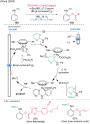
Scheme 38: Ruthenium-electrocatalyzed C(sp2)–H mono- and diacetoxylation.
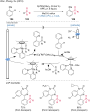
Scheme 39: Rhodium(III)-catalyzed aryl-C–H phosphorylation enabled by anodic oxidation-induced reductive elimi...

Scheme 40: Asymmetric Lewis-acid catalysis for the synthesis of non-racemic 1,4-dicarbonyl compounds.

Scheme 41: Electrochemical enantioselective C(sp3)–H alkenylation.

Scheme 42: Palladium-catalyzed electrochemical dehydrogenative cross-coupling.
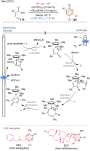
Scheme 43: Ir-electrocatalyzed vinylic C(sp2)–H activation for the annulation between acrylic acids and alkyne...

Scheme 44: Electrochemical gold-catalyzed C(sp3)–C(sp) coupling of alkynes and arylhydrazines.

Scheme 45: Photoelectrochemical alkylation of C–H heteroarenes using organotrifluoroborates.

Scheme 46: Mn-catalyzed photoelectro C(sp3)–H azidation.

Scheme 47: Photoelectrochemical undirected C–H trifluoromethylations of (Het)arenes.

Scheme 48: Photoelectrochemical dehydrogenative cross-coupling of heteroarenes with aliphatic C–H bonds.
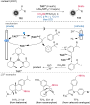
Scheme 49: C–H amination via photoelectrochemical Ritter-type reaction.

Scheme 50: Photoelectrochemical multiple oxygenation of C–H bonds.

Scheme 51: Accelerated C(sp3)–H heteroarylations by the f-EPC system.

Scheme 52: Photoelectrochemical cross-coupling of amines.

Scheme 53: Birch electroreduction of arenes. GSW = galvanized steel wire.

Scheme 54: Electroreductive deuterations.

Scheme 55: Chemoselective electrosynthesis using rapid alternating polarity.

Scheme 56: Electroreductive olefin–ketone coupling.

Scheme 57: Electroreductive approach to radical silylation.

Scheme 58: Electrochemical borylation of alkyl halides. CC = carbon close.

Scheme 59: Radical fluoroalkylation of alkenes.
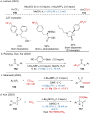
Scheme 60: Electrochemical defluorinative hydrogenation/carboxylation.

Scheme 61: Electrochemical decarboxylative olefination.

Scheme 62: Electrochemical decarboxylative Nozaki–Hiyama–Kishi coupling.
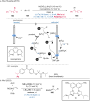
Scheme 63: Nickel-catalyzed electrochemical reductive relay cross-coupling.

Scheme 64: Electrochemical chemo- and regioselective difunctionalization of 1,3-enynes.

Scheme 65: Electrocatalytic doubly decarboxylative crosscoupling.

Scheme 66: Electrocatalytic decarboxylative crosscoupling with aryl halides.

Scheme 67: Nickel-catalyzed electrochemical reductive coupling of halides.

Scheme 68: Nickel-electrocatalyzed enantioselective carboxylation with CO2.

Scheme 69: Reductive electrophotocatalysis for borylation.
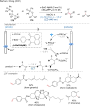
Scheme 70: Electromediated photoredox catalysis for selective C(sp3)–O cleavages of phosphinated alcohols to c...

Scheme 71: Stereoselective electro-2-deoxyglycosylation from glycals. MFE = methyl nonafluorobutyl ether.

Scheme 72: Electrochemical peptide modifications.

Scheme 73: Electrochemical α-deuteration of amides.

Scheme 74: Electrochemical synthesis of gem-diselenides.

Scheme 75: Site-selective electrochemical aromatic C–H amination.

Scheme 76: Electrochemical coupling of heteroarenes with heteroaryl phosphonium salts.
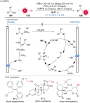
Scheme 77: Redox-neutral strategy for the dehydroxyarylation reaction.
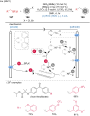
Scheme 78: Nickel-catalyzed electrochemical C(sp3)–C(sp2) cross-coupling of benzyl trifluoroborate and halides....
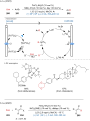
Scheme 79: Paired electrocatalysis for C(sp3)–C(sp2) coupling.

Scheme 80: Redox-neutral strategy for amination of aryl bromides.

Scheme 81: Redox-neutral cross-coupling of aryl halides with weak N-nucleophiles. aProtocol with (+) RVC | RVC...

Scheme 82: Nickel-catalyzed N-arylation of NH-sulfoximines with aryl halides.

Scheme 83: Esterification of carboxylic acids with aryl halides.

Scheme 84: Electrochemically promoted nickel-catalyzed carbon–sulfur-bond formation. GFE = graphite felt elect...

Scheme 85: Electrochemical deoxygenative thiolation by Ni-catalysis. GFE = graphite felt electrode; NFE = nick...
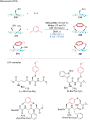
Scheme 86: Electrochemical coupling of peptides with aryl halides.

Scheme 87: Paired electrolysis for the phosphorylation of aryl halides. GFE = graphite felt electrode, FNE = f...

Scheme 88: Redox-neutral alkoxyhalogenation of alkenes.
Catalysing (organo-)catalysis: Trends in the application of machine learning to enantioselective organocatalysis
- Stefan P. Schmid,
- Leon Schlosser,
- Frank Glorius and
- Kjell Jorner
Beilstein J. Org. Chem. 2024, 20, 2280–2304, doi:10.3762/bjoc.20.196
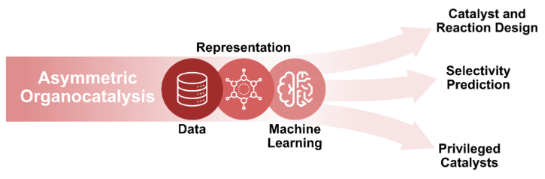

Graphical Abstract

Figure 1: Schematic depiction of available data sources for predictive modelling, each with its advantages an...

Figure 2: Schematic depiction of different kinds of molecular representations for fluoronitroethane. Among th...

Figure 3: Depiction of the energy diagram of a generic enantioselective reaction. In the centre, catalyst and...

Figure 4: Hammett parameters are derived from the equilibrium constant of substituted benzoic acids (example ...

Figure 5: Selected examples of popular descriptors applied to model organocatalytic reactions. Descriptors en...

Figure 6: Example bromocyclization reaction from Toste and co-workers using a DABCOnium catalyst system and C...

Figure 7: Example from Neel et al. using a chiral ion pair catalyst for the selective fluorination of allylic...

Figure 8: Data set created by Denmark and co-workers for the CPA-catalysed thiol addition to N-acylimines [67]. T...

Figure 9: Selected examples of ML developments that used the dataset from Denmark and co-workers [67]. (A) Varnek...

Figure 10: Study from Reid and Sigman developing statistical models for CPA-catalysed nucleophilic addition re...

Figure 11: Selected examples of studies where mechanistic transferability was exploited to model multiple reac...

Figure 12: Generality approach by Denmark and co-workers [132] for the iodination of arylpyridines. From the releva...

Figure 13: Betinol et al. [133] clustered the relevant chemical space and then evaluated the average ee for every c...

Figure 14: Corminboeuf and co-workers [134] chose a representative subset of the reaction space (indicated by dark ...

Figure 15: Example for data-driven modelling to improve substrate and catalyst design. (A) C–N coupling cataly...

Figure 16: Example for utilising a genetic algorithm for catalyst design. (A) Morita–Baylis–Hillman reaction s...

Figure 17: Organocatalysed synthesis of spirooxindole analogues by Kondo et al. [171] (A) Reaction scheme of dienon...

Figure 18: Schematic depiction of required developments in order to overcome current limitations of ML for org...
Multicomponent syntheses of pyrazoles via (3 + 2)-cyclocondensation and (3 + 2)-cycloaddition key steps
- Ignaz Betcke,
- Alissa C. Götzinger,
- Maryna M. Kornet and
- Thomas J. J. Müller
Beilstein J. Org. Chem. 2024, 20, 2024–2077, doi:10.3762/bjoc.20.178

- position 1. This protocol involves the utilization of enaminones, hydrazine, and various aryl halides as substrates, resulting in the formation of 1,3-substituted pyrazoles 76 (Scheme 27) [105]. Mechanistic studies have indicated that in this domino reaction, the initial formation of 3-substituted

Graphical Abstract

Scheme 1: Consecutive three-component synthesis of pyrazoles 1 via in situ-formed 1,3-diketones 2 [44].

Scheme 2: Consecutive three-component synthesis of 4-ethoxycarbonylpyrazoles 5 via SmCl3-catalyzed acylation ...

Scheme 3: Consecutive four-component synthesis of 1-(thiazol-2-yl)pyrazole-3-carboxylates 8 [51].

Scheme 4: Three-component synthesis of thiazolylpyrazoles 17 via in situ formation of acetoacetylcoumarins 18 ...

Scheme 5: Consecutive pseudo-four-component and four-component synthesis of pyrazoles 21 from sodium acetylac...

Scheme 6: Consecutive three-component synthesis of 1-substituted pyrazoles 24 from boronic acids, di(Boc)diim...

Scheme 7: Consecutive three-component synthesis of N-arylpyrazoles 25 via in situ formation of aryl-di(Boc)hy...

Scheme 8: Consecutive three-component synthesis of 1,3,4-substituted pyrazoles 27 and 28 from methylhydrazine...

Scheme 9: Consecutive three-component synthesis of 4-allylpyrazoles 32 via oxidative allylation of 1,3-dicarb...

Scheme 10: Pseudo-five-component synthesis of tris(pyrazolyl)methanes 35 [61].

Scheme 11: Pseudo-three-component synthesis of 5-(indol-3-yl)pyrazoles 39 from 1,3,5-triketones 38 [64].

Scheme 12: Three-component synthesis of thiazolylpyrazoles 43 [65].

Scheme 13: Three-component synthesis of triazolo[3,4-b]-1,3,4-thiadiazin-3-yl substituted 5-aminopyrazoles 47 [67]....

Scheme 14: Consecutive three-component synthesis of 5-aminopyrazoles 49 via formation of β-oxothioamides 50 [68].
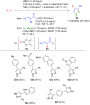
Scheme 15: Synthesis of 3,4-biarylpyrazoles 52 from aryl halides, α-bromocinnamaldehyde, and tosylhydrazine vi...

Scheme 16: Consecutive three-component synthesis of 3,4-substituted pyrazoles 57 from iodochromones 55 by Suzu...

Scheme 17: Pseudo-four-component synthesis of pyrazolyl-2-pyrazolines 59 by ring opening/ring closing cyclocon...

Scheme 18: Consecutive three-component synthesis of pyrazoles 61 [77].

Scheme 19: Three-component synthesis of pyrazoles 62 from malononitrile, aldehydes, and hydrazines [78-90].

Scheme 20: Four-component synthesis of pyrano[2,3-c]pyrazoles 63 [91].

Scheme 21: Three-component synthesis of persubstituted pyrazoles 65 from aldehydes, β-ketoesters, and hydrazin...

Scheme 22: Three-component synthesis of pyrazol-4-carbodithioates 67 [100].

Scheme 23: Regioselective three-component synthesis of persubstituted pyrazoles 68 catalyzed by ionic liquid [...

Scheme 24: Consecutive three-component synthesis of 4-halopyrazoles 69 and anellated pyrazoles 70 [102].

Scheme 25: Three-component synthesis of 2,2,2-trifluoroethyl pyrazole-5-carboxylates 72 [103].

Scheme 26: Synthesis of pyrazoles 75 in a one-pot process via carbonylative Heck coupling and subsequent cycli...

Scheme 27: Copper-catalyzed three-component synthesis of 1,3-substituted pyrazoles 76 [105].

Scheme 28: Pseudo-three-component synthesis of bis(pyrazolyl)methanes 78 by ring opening-ring closing cyclocon...

Scheme 29: Three-component synthesis of 1,4,5-substituted pyrazoles 80 [107].

Scheme 30: Consecutive three-component synthesis of 3,5-bis(fluoroalkyl)pyrazoles 83 [111].

Scheme 31: Consecutive three-component synthesis of difluoromethanesulfonyl-functionalized pyrazole 88 [114].

Scheme 32: Consecutive three-component synthesis of perfluoroalkyl-substituted fluoropyrazoles 91 [115].

Scheme 33: Regioselective consecutive three-component synthesis of 1,3,5-substituted pyrazoles 93 [116].

Scheme 34: Three-component synthesis of pyrazoles 96 mediated by trimethyl phosphite [117].

Scheme 35: One-pot synthesis of pyrazoles 99 via Liebeskind–Srogl cross-coupling/cyclocondensation [118].

Scheme 36: Synthesis of 1,3,5-substituted pyrazoles 101 via domino condensation/Suzuki–Miyaura cross-coupling ...

Scheme 37: Consecutive three-component synthesis of 1,3,5-trisubstituted pyrazoles 102 and 103 by Sonogashira ...

Scheme 38: Polymer analogous consecutive three-component synthesis of pyrazole-based polymers 107 [132].

Scheme 39: Synthesis of 1,3,5-substituted pyrazoles 108 by sequentially Pd-catalyzed Kumada–Sonogashira cycloc...

Scheme 40: Consecutive four-step one-pot synthesis of 1,3,4,5-substituted pyrazoles 110 [137].

Scheme 41: Four-component synthesis of pyrazoles 113, 115, and 117 via Sonogashira coupling and subsequent Suz...

Scheme 42: Consecutive four- or five-component synthesis for the preparation of 4-pyrazoly-1,2,3-triazoles 119...

Scheme 43: Four-component synthesis of pyrazoles 121 via alkynone formation by carbonylative Pd-catalyzed coup...

Scheme 44: Preparation of 3-azulenyl pyrazoles 124 by glyoxylation, decarbonylative Sonogashira coupling, and ...

Scheme 45: Four-component synthesis of a 3-indoloylpyrazole 128 [147].

Scheme 46: Two-step synthesis of 5-acylpyrazoles 132 via glyoxylation-Stephen–Castro sequence and subsequent c...

Scheme 47: Copper on iron mediated consecutive three-component synthesis of 3,5-substituted pyrazoles 136 [150].

Scheme 48: Consecutive three-component synthesis of 3-substituted pyrazoles 141 by Sonogashira coupling and su...

Scheme 49: Consecutive three-component synthesis of pyrazoles 143 initiated by Cu(I)-catalyzed carboxylation o...

Scheme 50: Consecutive three-component synthesis of benzamide-substituted pyrazoles 146 starting from N-phthal...

Scheme 51: Consecutive three-component synthesis of 1,3,5-substituted pyrazoles 148 [156].

Scheme 52: Three-component synthesis of 4-ninhydrin-substituted pyrazoles 151 [158].

Scheme 53: Consecutive four-component synthesis of 4-(oxoindol)-1-phenylpyrazole-3-carboxylates 155 [159].

Scheme 54: Three-component synthesis of pyrazoles 160 [160].

Scheme 55: Consecutive three-component synthesis of pyrazoles 165 [162].

Scheme 56: Consecutive three-component synthesis of 3,5-disubstituted and 3-substituted pyrazoles 168 and 169 ...

Scheme 57: Three-component synthesis of 3,4,5-substituted pyrazoles 171 via 1,3-dipolar cycloaddition of vinyl...

Scheme 58: Three-component synthesis of pyrazoles 173 and 174 from aldehydes, tosylhydrazine, and vinylidene c...

Scheme 59: Three-component synthesis of pyrazoles 175 from glyoxyl hydrates, tosylhydrazine, and electron-defi...

Scheme 60: Pseudo-four-component synthesis of pyrazoles 177 from glyoxyl hydrates, tosylhydrazine, and aldehyd...

Scheme 61: Consecutive three-component synthesis of pyrazoles 179 via Knoevenagel-cycloaddition sequence [179].

Scheme 62: Three-component synthesis of 5-dimethylphosphonate substituted pyrazoles 182 from aldehydes, the Be...

Scheme 63: Consecutive three-component synthesis of 5-(dimethyl phosphonate)-substituted pyrazoles 185 from al...

Scheme 64: Three-component synthesis of 5-(dimethyl phosphonate)-substituted pyrazoles 187 from aldehydes, the...

Scheme 65: Three-component synthesis of 5-diethylphosphonate/5-phenylsulfonyl substituted pyrazoles 189 from a...

Scheme 66: Pseudo-three-component synthesis of 3-(dimethyl phosphonate)-substituted pyrazoles 190 [185].

Scheme 67: Three-component synthesis of 3-trifluoromethylpyrazoles 193 [186].

Scheme 68: Consecutive three-component synthesis of 5-stannyl-substituted 4-fluoropyrazole 197 [191,192].

Scheme 69: Pseudo-three-component synthesis of 3,5-diacyl-4-arylpyrazoles 199 [195].

Scheme 70: Three-component synthesis of pyrazoles 204 via nitrilimines [196].

Scheme 71: Three-component synthesis of 1,3,5-substituted pyrazoles 206 via formation of nitrilimines and sali...

Scheme 72: Pseudo four-component synthesis of pyrazoles 209 from acetylene dicarboxylates 147, hydrazonyl chlo...

Scheme 73: Consecutive three-component synthesis of pyrazoles 213 via syndnones 214 [200].

Scheme 74: Consecutive three-component synthesis of pyrazoles 216 via in situ-formed diazomethinimines 217 [201].

Scheme 75: Consecutive three-component synthesis of 3-methylthiopyrazoles 219 from aldehydes, hydrazine, and 1...

Scheme 76: Three-component synthesis of 1,3,5-substituted pyrazoles 220 from aldehydes, hydrazines, and termin...

Scheme 77: Three-component synthesis of 1,3,4,5-substituted pyrazoles 222 from aldehydes, hydrazines, and DMAD ...

Scheme 78: Pseudo three-component synthesis of pyrazoles 224 from sulfonyl hydrazone and benzyl acrylate under...

Scheme 79: Titanium-catalyzed consecutive four-component synthesis of pyrazoles 225 via enamino imines 226 [211]. a...

Scheme 80: Titanium-catalyzed three-component synthesis of pyrazoles 227 via enhydrazino imine complex interme...

Scheme 81: Pseudo-three-component synthesis of pyrazoles 229 via Glaser coupling of terminal alkynes and photo...

Scheme 82: Copper(II)acetate-mediated three-component synthesis of pyrazoles 232 [216].

Scheme 83: Copper-catalyzed three-component synthesis of 1,3,4-substituted pyrazole 234 from oxime acetates, a...

Scheme 84: Three-component synthesis of 3-trifluoroethylpyrazoles 239 [218].

Scheme 85: Pseudo-three-component synthesis of 1,4-bisulfonyl-substituted pyrazoles 242 [219].

Scheme 86: Three-component synthesis of 4-hydroxypyrazole 246 [221].
1,2-Difluoroethylene (HFO-1132): synthesis and chemistry
- Liubov V. Sokolenko,
- Taras M. Sokolenko and
- Yurii L. Yagupolskii
Beilstein J. Org. Chem. 2024, 20, 1955–1966, doi:10.3762/bjoc.20.171

- the methods for the preparation of HFO-1132 as well as reactions demonstrating the chemical behavior of this compound. From the reactions not included in this Review article, mechanistic studies on 1,2-difluoroethylene ozonolysis [77][103][104][105][106][107][108] and studies on the stability of

Graphical Abstract

Scheme 1: 1,2-Difluoroethylene synthesis from HFO-1123.

Scheme 2: 1,2-Difluoroethylene synthesis from CFC-112 and HCFC-132.

Scheme 3: 1,2-Difluoroethylene synthesis from HFC-143.

Scheme 4: 1,2-Difluoroethylene synthesis from HCFC-142 via HCFC-142a.

Scheme 5: 1,2-Difluoroethylene synthesis from CFO-1112.

Scheme 6: 1,2-Difluoroethylene synthesis from 1,2-dichloroethylene.

Scheme 7: 1,2-Difluoroethylene synthesis from perfluoropropyl vinyl ether.

Scheme 8: Deuteration reaction of 1,2-difluoroethylene.

Scheme 9: Halogen addition to 1,2-difluoroethylene.

Scheme 10: Hypohalite addition to 1,2-difluoroethylene.

Scheme 11: N-Bromobis(trifluoromethyl)amine addition to 1,2-difluoroethylene.

Scheme 12: N-Chloroimidobis(sulfonyl fluoride) addition to 1,2-difluoroethylene.

Scheme 13: Trichlorosilane addition to 1,2-difluoroethylene.

Scheme 14: SF5Br addition to 1,2-difluoroethylene.

Scheme 15: PCl3/O2 addition to 1,2-difluoroethylene.

Scheme 16: Reaction of tetramethyldiarsine with 1,2-difluoroethylene.

Scheme 17: Reaction of trichlorofluoromethane with 1,2-difluoroethylene.

Scheme 18: Addition of perfluoroalkyl iodides to 1,2-difluoroethylene.

Scheme 19: Cyclopropanation of 1,2-difluoroethylene.

Scheme 20: Diels–Alder reaction of 1,2-difluoroethylene and hexachlorocyclopentadiene.

Scheme 21: Cycloaddition reaction of 1,2-difluoroethylene and fluorinated ketones.

Scheme 22: Cycloaddition reaction of 1,2-difluoroethylene and perfluorinated aldehydes.

Scheme 23: Photochemical cycloaddition of 1,2-difluoroethylene and hexafluorodiacetyl.

Scheme 24: Reaction of 1,2-difluoroethylene with difluorosilylene.

Scheme 25: Reaction of 1,2-difluoroethylene with aryl iodides.
Electrochemical radical cation aza-Wacker cyclizations
- Sota Adachi and
- Yohei Okada
Beilstein J. Org. Chem. 2024, 20, 1900–1905, doi:10.3762/bjoc.20.165
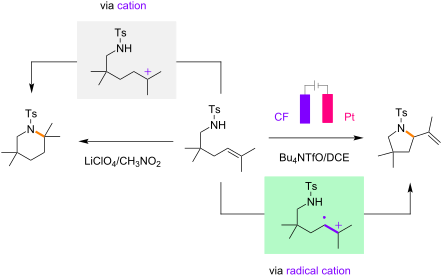
- reactions rather than ionic ones, since five-membered pyrrolidine formation is preferred over six-membered piperidine formation. Further mechanistic studies of the electrochemical radical cation aza-Wacker cyclizations are underway in our laboratory. Experimental Electrochemical aza-Wacker cyclizations: The
- mmol), Bu4NOTf (0.1 M), TFA (1 equiv), CH3CN (0.4 mL), and 1,2-DCE (3.6 mL). Yields reported here are isolated yields. Mechanistic studies of aza-Wacker cyclization. A: Electrochemical (Bu4NOTf in CH3CN/1,2-DCE), B: non-electrochemical (LiClO4 in CH3NO2). Control studies for electrochemical aza-Wacker

Graphical Abstract

Scheme 1: Radical and ionic intramolecular cyclizations.
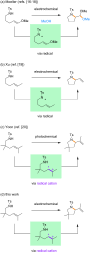
Scheme 2: Electrochemical and photochemical aza-Wacker cyclizations.

Scheme 3: Scope of electrochemical aza-Wacker cyclization. Reaction conditions: the alkene (0.20 mmol), Bu4NO...

Scheme 4: Mechanistic studies of aza-Wacker cyclization. A: Electrochemical (Bu4NOTf in CH3CN/1,2-DCE), B: no...

Figure 1: Cyclic voltammograms for aryl sulfonamides.
Electrophotochemical metal-catalyzed synthesis of alkylnitriles from simple aliphatic carboxylic acids
- Yukang Wang,
- Yan Yao and
- Niankai Fu
Beilstein J. Org. Chem. 2024, 20, 1497–1503, doi:10.3762/bjoc.20.133
- , in an undivided cell, at 2.3 V cell potential, 400 nm LEDs, for 12 hours. a2,4,6-Collidine (1.0 equiv) was used instead of BTMG. bPhen was used instead of BPhen. cDMF/CH3CN (1:15 v/v) was used as solvent. dReactions were run with 0.4 mmol LiClO4 instead of TBABF4. Mechanistic studies and proposed
- catalytic cycles. Reaction discovery and optimization.a Supporting Information Supporting Information File 18: Experimental procedures, mechanistic studies, analytical data and copies of NMR spectra. Funding We thank the National Natural Science Foundation of China (No. 22071252) and the Chinese Academy

Graphical Abstract
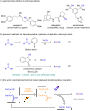
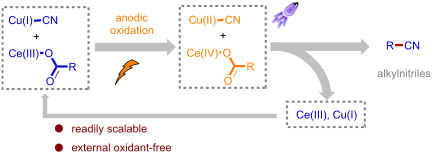
Figure 1: Decarboxylative cyanation: background and our working hypothesis.

Figure 2: Scope of electrophotochemical decarboxylative cyanation of aliphatic carboxylic acids. All yields a...
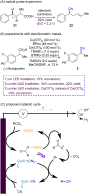
Figure 3: Mechanistic studies and proposed catalytic cycles.
Manganese-catalyzed C–C and C–N bond formation with alcohols via borrowing hydrogen or hydrogen auto-transfer
- Mohd Farhan Ansari,
- Atul Kumar Maurya,
- Abhishek Kumar and
- Saravanakumar Elangovan
Beilstein J. Org. Chem. 2024, 20, 1111–1166, doi:10.3762/bjoc.20.98
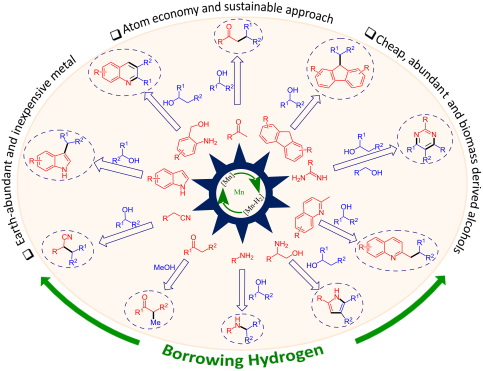
- 110 °C for 16 h), moderate to good yields of N-methylamines were produced (Scheme 15). The mechanistic studies suggested that the base activates the complex Mn3. The active catalyst dehydrogenates methanol into formaldehyde and converts nitroarenes to anilines via transfer hydrogenation. The latter

Graphical Abstract

Scheme 1: General scheme of the borrowing hydrogen (BH) or hydrogen auto-transfer (HA) methodology.

Scheme 2: General scheme for C–N bond formation. A) Traditional cross-couplings with alkyl or aryl halides. B...

Figure 1: Manganese pre-catalysts used for the N-alkylation of amines with alcohols.

Scheme 3: Manganese(I)-pincer complex Mn1 used for the N-alkylation of amines with alcohols and methanol.

Scheme 4: N-Methylation of amines with methanol using Mn2.

Scheme 5: C–N-Bond formation with amines and methanol using PN3P-Mn complex Mn3 reported by Sortais et al. [36]. a...

Scheme 6: Base-assisted synthesis of amines and imines with Mn4. Reaction assisted by A) t-BuOK and B) t-BuON...

Scheme 7: Coupling of alcohols and hydrazine via the HB approach reported by Milstein et al. [38]. aReaction time...

Scheme 8: Proposed mechanism for the coupling of alcohols and hydrazine catalyzed by Mn5.

Scheme 9: Phosphine-free manganese catalyst for N-alkylation of amines with alcohols reported by Balaraman an...

Scheme 10: N-Alkylation of sulfonamides with alcohols.

Scheme 11: Mn–NHC catalyst Mn6 applied for the N-alkylation of amines with alcohols. a3 mol % of Mn6 were used....

Scheme 12: N-Alkylation of amines with primary and secondary alcohols. a80 °C, b100 °C.

Scheme 13: Manganese(III)-porphyrin catalyst for synthesis of tertiary amines.

Scheme 14: Proposed mechanism for the alcohol dehydrogenation with Mn(III)-porphyrin complex Mn7.

Scheme 15: N-Methylation of nitroarenes with methanol using catalyst Mn3.
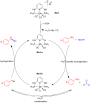
Scheme 16: Mechanism of manganese-catalyzed methylation of nitroarenes using Mn3 as the catalyst.

Scheme 17: Bidentate manganese complex Mn8 applied for the N-alkylation of primary anilines with alcohols. aOn...

Scheme 18: N-Alkylation of amines with alcohols in the presence of manganese salts and triphenylphosphine as t...

Scheme 19: N-Alkylation of diazo compounds with alcohols using catalyst Mn9.

Scheme 20: Proposed mechanism for the amination of alcohols with diazo compounds catalyzed by catalyst Mn9.

Scheme 21: Mn1 complex-catalyzed synthesis of polyethyleneimine from ethylene glycol and ethylenediamine.

Scheme 22: Bis-triazolylidene-manganese complex Mn10 for the N-alkylation of amines with alcohols.

Figure 2: Manganese complexes applied for C-alkylation reactions of ketones with alcohols.

Scheme 23: General scheme for the C–C bond formation with alcohols and ketones.

Scheme 24: Mn1 complex-catalyzed α-alkylation of ketones with primary alcohols.
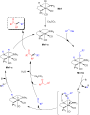
Scheme 25: Mechanism for the Mn1-catalyzed alkylation of ketones with alcohols.

Scheme 26: Phosphine-free in situ-generated manganese catalyst for the α-alkylation of ketones with primary al...
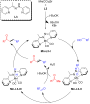
Scheme 27: Plausible mechanism for the Mn-catalyzed α-alkylation of ketones with alcohols.

Scheme 28: α-Alkylation of esters, ketones, and amides using alcohols catalyzed by Mn11.

Scheme 29: Mono- and dialkylation of methylene ketones with primary alcohols using the Mn(acac)2/1,10-phenanth...

Scheme 30: Methylation of ketones with methanol and deuterated methanol.

Scheme 31: Methylation of ketones and esters with methanol. a50 mol % of t-BuOK were used, bCD3OD was used ins...
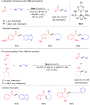
Scheme 32: Alkylation of ketones and secondary alcohols with primary alcohols using Mn4.

Scheme 33: Bidentate manganese-NHC complex Mn6 applied for the synthesis of alkylated ketones using alcohols.

Scheme 34: Mn1-catalyzed synthesis of substituted cycloalkanes by coupling diols and secondary alcohols or ket...
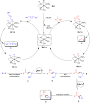
Scheme 35: Proposed mechanism for the synthesis of cycloalkanes via BH method.

Scheme 36: Synthesis of various cycloalkanes from methyl ketones and diols catalyze by Mn13. aReaction time wa...

Scheme 37: N,N-Amine–manganese complex (Mn13)-catalyzed alkylation of ketones with alcohols.

Scheme 38: Naphthyridine‑N‑oxide manganese complex Mn14 applied for the alkylation of ketones with alcohols. a...
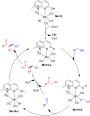
Scheme 39: Proposed mechanism of the naphthyridine‑N‑oxide manganese complex (Mn14)-catalyzed alkylation of ke...

Scheme 40: α-Methylation of ketones and indoles with methanol using Mn15.

Scheme 41: α-Alkylation of ketones with primary alcohols using Mn16. aNMR yield.

Figure 3: Manganese complexes used for coupling of secondary and primary alcohols.
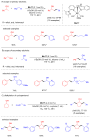
Scheme 42: Alkylation of secondary alcohols with primary alcohols catalyzed by phosphine-free catalyst Mn17. a...

Scheme 43: PNN-Manganese complex Mn18 for the alkylation of secondary alcohols with primary alcohols.
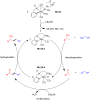
Scheme 44: Mechanism for the Mn-pincer catalyzed C-alkylation of secondary alcohols with primary alcohols.

Scheme 45: Upgrading of ethanol with methanol for isobutanol production.

Scheme 46: Mn-Pincer catalyst Mn19 applied for the β-methylation of alcohols with methanol. a2.0 mol % of Mn19...

Scheme 47: Functionalized ketones from primary and secondary alcohols catalyzed by Mn20. aMn20 (5 mol %), NaOH...
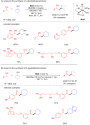
Scheme 48: Synthesis of γ-disubstituted alcohols and β-disubstituted ketones through Mn9-catalyzed coupling of...
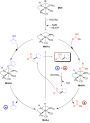
Scheme 49: Proposed mechanism for the Mn9-catalyzed synthesis of γ-disubstituted alcohols and β-disubstituted ...

Scheme 50: Dehydrogenative coupling of ethylene glycol and primary alcohols catalyzed by Mn4.

Scheme 51: Mn18-cataylzed C-alkylation of unactivated esters and amides with alcohols.

Scheme 52: Alkylation of amides and esters using Mn21.

Scheme 53: α-Alkylation of nitriles with primary alcohols using in situ-generated manganese catalyst.

Scheme 54: Proposed mechanism for the α-alkylation of nitriles with primary alcohols.

Scheme 55: Mn9-catalyzed α-alkylation of nitriles with primary alcohols. a1,4-Dioxane was used as solvent, 24 ...

Figure 4: Manganese complexes used for alkylation of heterocyclic compounds.

Scheme 56: Aminomethylation of aromatic compounds with secondary amines and methanol catalyzed by Mn22.
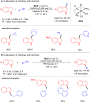
Scheme 57: Regioselective alkylation of indolines with alcohols catalyzed by Mn9. aMn9 (4 mol %), 48 h.

Scheme 58: Proposed mechanism for the C- and N-alkylation of indolines with alcohols.

Scheme 59: C-Alkylation of methyl N-heteroarenes with primary alcohols catalyzed by Mn1. aTime was 60 h.

Scheme 60: C-Alkylation of oxindoles with secondary alcohols.
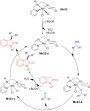
Scheme 61: Plausible mechanism for the Mn23-catalyzed C-alkylation of oxindoles with secondary alcohols.

Scheme 62: Synthesis of C-3-alkylated products by coupling alcohols with indoles and aminoalcohols.

Scheme 63: C3-Alkylation of indoles using Mn1.

Scheme 64: C-Methylation of indoles with Mn15 and methanol.

Scheme 65: α-Alkylation of 2-oxindoles with primary and secondary alcohols catalyzed by Mn25. aReaction carrie...

Scheme 66: Dehydrogenative alkylation of indolines with Mn1. aMn1 (5.0 mol %) was used.

Scheme 67: Synthesis of bis(indolyl)methane derivatives from indoles and alcohols catalyzed by Mn26. aMn26 (5....

Scheme 68: One-pot synthesis of pyrimidines via BH.

Scheme 69: Synthesis of pyrroles from alcohols and aminoalcohols using Mn4.

Scheme 70: Synthesis of pyrroles via multicomponent reaction catalyzed by Mn12.

Scheme 71: Friedländer quinoline synthesis using an in situ-generated phosphine-free manganese catalyst.

Scheme 72: Quinoline synthesis using bis-N-heterocyclic carbene-manganese catalyst Mn6.

Scheme 73: Quinoline synthesis using manganese(III)-porphyrin catalyst Mn7.

Scheme 74: Manganese-catalyzed tetrahydroquinoline synthesis via borrowing BH.

Scheme 75: Proposed mechanism for the manganese-catalyzed tetrahydroquinoline synthesis.

Scheme 76: Synthesis of C3-alkylated indoles using Mn24.

Scheme 77: Synthesis of C-3-alkylated indoles using Mn1.

Scheme 78: C–C Bond formation by coupling of alcohols and ylides.

Scheme 79: C-Alkylation of fluorene with alcohols catalyzed by Mn24.
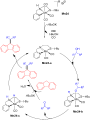
Scheme 80: Proposed mechanism for the C-alkylation of fluorene with alcohols catalyzed by Mn24.

Scheme 81: α-Alkylation of sulfones using Mn-PNN catalyst Mn28.
Direct synthesis of acyl fluorides from carboxylic acids using benzothiazolium reagents
- Lilian M. Maas,
- Alex Haswell,
- Rory Hughes and
- Matthew N. Hopkinson
Beilstein J. Org. Chem. 2024, 20, 921–930, doi:10.3762/bjoc.20.82
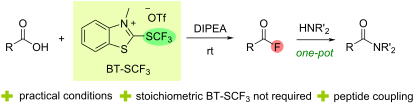
- different amides, including dipeptides, under mild and operationally simple conditions in high yields. Mechanistic studies suggest that BT-SCF3 can generate acyl fluorides from carboxylic acids via two distinct pathways, which allows the deoxyfluorinating reagent to be employed in sub-stoichiometric amounts
- under mild and operationally simple conditions while peptide coupling between two amino acids could be efficiently conducted using the longer-chain perfluoroalkyl reagent BT-SC5F11. Mechanistic studies revealed that each equivalent of the benzothiazolium reagent can feasibly generate two equivalents of

Graphical Abstract

Figure 1: Advantages of acyl fluorides compared to acyl chlorides, previous work on BT-SRF reagents [29-33] and a su...

Scheme 1: Scope of the BT-SCF3-mediated deoxygenative fluorination of carboxylic acids 1. Reactions were perf...
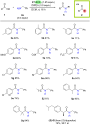
Scheme 2: Scope of the one-pot BT-SCF3-mediated deoxygenative coupling of carboxylic acids and amines via acy...

Scheme 3: One-pot BT-SCF3-mediated deoxygenative coupling of amino acids. Isolated yields after column chroma...
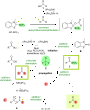
Scheme 4: Plausible mechanism for the deoxyfluorination of carboxylic acids with BT-SCF3.
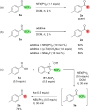
Scheme 5: Mechanistic experiments. (a) Conversion of thioester 3a into acyl fluoride 2a in the presence of DI...
Advancements in hydrochlorination of alkenes
- Daniel S. Müller
Beilstein J. Org. Chem. 2024, 20, 787–814, doi:10.3762/bjoc.20.72
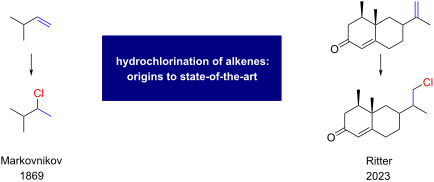
- radical D which is then trapped by TsCl to produce the corresponding alkyl chloride E. Detailed mechanistic studies on a related reaction were recently reported by Shenvi and co-workes [84]. These studies alternatively suggest that intermediate C could also be the result not of a non-simultaneous addition

Graphical Abstract

Scheme 1: Classes of hydrochlorination reactions discussed in this review.

Figure 1: Mayr’s nucleophilicity parameters for several alkenes. References for each compound can be consulte...

Figure 2: Hydride affinities relating to the reactivity of the corresponding alkene towards hydrochlorination....

Scheme 2: Distinction of polar hydrochlorination reactions.

Scheme 3: Reactions of styrenes with HCl gas or HCl solutions.

Figure 3: Normal temperature dependence for the hydrochlorination of (Z)-but-2-ene.

Figure 4: Pentane slows down the hydrochlorination of 11.

Scheme 4: Recently reported hydrochlorinations of styrenes with HCl gas or HCl solutions.
Scheme 5: Hydrochlorination reactions with di- and trisubstituted alkenes.

Scheme 6: Hydrochlorination of fatty acids with liquified HCl.

Scheme 7: Hydrochlorination with HCl/DMPU solutions.

Scheme 8: Hydrochlorination with HCl generated from EtOH and AcCl.

Scheme 9: Hydrochlorination with HCl generated from H2O and TMSCl.

Scheme 10: Regioisomeric mixtures of chlorooctanes as a result of hydride shifts.

Scheme 11: Regioisomeric mixtures of products as a result of methyl shifts.

Scheme 12: Applications of the Kropp procedure on a preparative scale.

Scheme 13: Curious example of polar anti-Markovnikov hydrochlorination.

Scheme 14: Unexpected and expected hydrochlorinations with AlCl3.
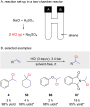
Figure 5: Ex situ-generated HCl gas and in situ application for the hydrochlorination of activated alkenes (*...
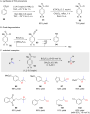
Scheme 15: HCl generated by Grob fragmentation of 92.

Scheme 16: Formation of chlorophosphonium complex 104 and the reaction thereof with H2O.

Scheme 17: Snyder’s hydrochlorination with stoichiometric amounts of complex 104 or 108.

Scheme 18: In situ generation of HCl by mixing of MsOH with CaCl2.

Scheme 19: First hydrochlorination of alkenes using hydrochloric acid.

Scheme 20: Visible-light-promoted hydrochlorination.

Scheme 21: Silica gel-promoted hydrochlorination of alkenes with hydrochloric acid.

Scheme 22: Hydrochlorination with hydrochloric acid promoted by acetic acid or iron trichloride.

Figure 6: Metal hydride hydrogen atom transfer reactions vs cationic reactions; BDE (bond-dissociation energy...

Scheme 23: Carreira’s first report on radical hydrochlorinations of alkenes.

Figure 7: Mechanism for the cobalt hydride hydrogen atom transfer reaction reported by Carreira.

Scheme 24: Radical “hydrogenation” of alkenes; competing chlorination reactions.

Scheme 25: Bogers iron-catalyzed radical hydrochlorination.

Scheme 26: Hydrochlorination instead of hydrogenation product.

Scheme 27: Optimization of the Boger protocol by researchers from Merck [88,89].

Figure 8: Proposed mechanism for anti-Markovnikov hydrochlorination by Nicewicz.

Scheme 28: anti-Markovnikov hydrochlorinations as reported by Nicewicz.

Figure 9: Mechanism for anti-Markovnikov hydrochlorination according to Ritter.

Scheme 29: anti-Markovnikov hydrochlorinations as reported by Nicewicz; rr (regioisomeric ratio) corresponds t...
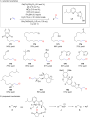
Scheme 30: anti-Markovnikov hydrochlorinations as reported by Liu.
Palladium-catalyzed three-component radical-polar crossover carboamination of 1,3-dienes or allenes with diazo esters and amines
- Geng-Xin Liu,
- Xiao-Ting Jie,
- Ge-Jun Niu,
- Li-Sheng Yang,
- Xing-Lin Li,
- Jian Luo and
- Wen-Hao Hu
Beilstein J. Org. Chem. 2024, 20, 661–671, doi:10.3762/bjoc.20.59
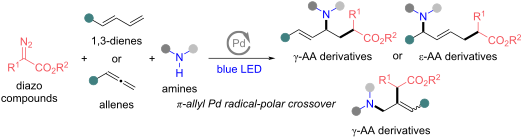
- amine and the traces amount of water in this reaction system may serve as proton sources for the formation of hybrid α-ester alkylpalladium radical. On the basis of above mechanistic studies and previous reports [47][48][49][50][52][58], the following plausible mechanisms are proposed for the palladium

Graphical Abstract
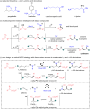
Scheme 1: Background (a and b) and proposed carboamination MCR with diazo esters (c). a) Selected bioactive γ...
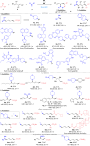
Scheme 2: Substrate scope of diazo compounds, 1,3-dienes and amines. aReactions (1/2/3/Pd(OAc)2/Xantphos = 0....

Scheme 3: Substrate scope of diazo compounds, allenes and amines. aReactions (1/5/3/Pd(OAc)2/Xantphos = 0.3.0...

Scheme 4: Mechanistic experiments. a) Radical trapping experiments with TEMPO. b) Exclusion of possible inter...

Scheme 5: Proposed mechanisms for the carboamination of 1,3-dienes or allenes with diazo esters and amines.

Scheme 6: Scale-up reactions and synthetic transformations. Reaction conditions: a) LiAlH4, THF, 0 °C; b) MeM...
Green and sustainable approaches for the Friedel–Crafts reaction between aldehydes and indoles
- Periklis X. Kolagkis,
- Eirini M. Galathri and
- Christoforos G. Kokotos
Beilstein J. Org. Chem. 2024, 20, 379–426, doi:10.3762/bjoc.20.36
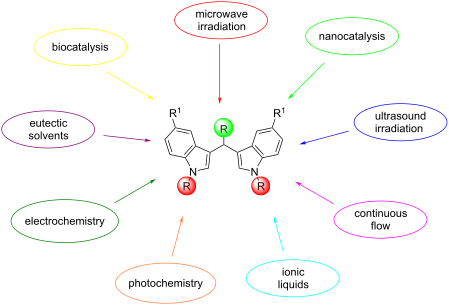

Graphical Abstract

Scheme 1: Examples of BIMs used for their medicinal properties.

Scheme 2: Mechanisms for the synthesis of BIMs using protic or Lewis acids as catalysts.

Scheme 3: Synthesis of bis(indolyl)methanes using DBDMH.

Scheme 4: Competition experiments and synthesis of bis(indolyl)methanes using DBDMH.

Scheme 5: Proposed mechanism for formation of BIM of using DBDMH.

Scheme 6: Synthesis of bis(indolyl)methanes using I2.

Scheme 7: General reaction mechanism upon halogen bonding.

Scheme 8: Synthesis of bis(indolyl)methanes using I2, introduced by Ji.

Scheme 9: Synthesis of bis(indolyl)methanes using Br2 in CH3CN.

Scheme 10: Βidentate halogen-bond donors.

Scheme 11: Synthesis of bis(indolyl)methanes using bidentate halogen-bond donor 26.

Scheme 12: Proposed reaction mechanism.

Scheme 13: Synthesis of bis(indolyl)methanes using iodoalkyne as catalyst.

Scheme 14: Proposed reaction mechanism.

Scheme 15: Optimized reaction conditions used by Ramshini.

Scheme 16: Activation of the carbonyl group by HPA/TPI-Fe3O4.

Scheme 17: Synthesis of BIMs in the presence of nanoAg-Pt/SiO2-doped silicate.

Scheme 18: Mechanism of action proposed by Khalafi-Nezhad et al.

Scheme 19: Activation of the carbonyl group by the Cu–isatin Schiff base complex.

Scheme 20: Optimum reaction conditions published by Jain.

Scheme 21: Organocatalytic protocol utilizing nanoparticles introduced by Bankar.
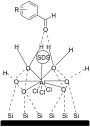
Scheme 22: Activation of the carbonyl group by the AlCl3·6H2O-SDS-SiO2 complex.

Scheme 23: Optimal reaction conditions for the aforementioned nano-Fe3O4 based catalysts.

Scheme 24: Nanocatalytic protocol proposed by Kaur et al.

Scheme 25: Microwave approach introduced by Yuan.

Scheme 26: Microwave approach introduced by Zahran et al.

Scheme 27: Microwave irradiation protocol introduced by Bindu.

Scheme 28: Silica-supported microwave irradiation protocol.

Scheme 29: Proposed mechanism for formation of BIM by Nongkhlaw.

Scheme 30: Microwave-assisted synthesis of BIMs catalyzed by succinic acid.

Scheme 31: Proposed mechanism of action of MMO-4.

Scheme 32: Catalytic approach introduced by Muhammadpoor-Baltork et al.

Scheme 33: Reaction conditions used by Xiao-Ming.

Scheme 34: Ultrasonic irradiation-based protocol published by Saeednia.

Scheme 35: Pyruvic acid-mediated synthesis of BIMs proposed by Thopate.

Scheme 36: Synthesis of BIMs using [bmim]BF4 or [bmim]PF6 ionic liquids.

Scheme 37: Synthesis of BIMs utilizing In(OTf)3 in octylmethylimidazolium hexafluorophosphate as ionic liquid.

Scheme 38: FeCl3·6H2O-catalyzed synthesis of BIMs with use of ionic liquid.

Scheme 39: Synthesis of BIMs utilizing the [hmim]HSO4/EtOH catalytic system.

Scheme 40: Synthesis of BIMs utilizing acidic ionic liquid immobilized on silica gel (ILIS-SO2Cl).

Scheme 41: The [bmim][MeSO4]-catalyzed reaction of indole with various aldehydes.

Scheme 42: The role of [bmim][MeSO4] in catalyzing the reaction of indole with aldehydes.

Scheme 43: Synthesis of BIMs utilizing FeCl3-based ionic liquid ([BTBAC]Cl-FeCl3) as catalyst.

Scheme 44: Synthesis of BIMs using [Msim]Cl at room temperature.

Scheme 45: [Et3NH][H2PO4]-catalyzed synthesis of bis(indolyl)methanes.

Scheme 46: PILs-catalyzed synthesis of bis(indolyl)methanes.

Scheme 47: FSILs-mediated synthesis of bis(indolyl)methanes.

Scheme 48: Possible “release and catch” catalytic process.

Scheme 49: Synthesis of bis(indolyl)methanes by [DABCO-H][HSO4].

Scheme 50: Synthesis of bis(indolyl)methanes by [(THA)(SO4)].

Scheme 51: Synthesis of BBSI-Cl and BBSI-HSO4.

Scheme 52: Synthesis of BIMs in the presence of BBSI-Cl and BBSI-HSO4.

Scheme 53: Chemoselectivity of the present method.

Scheme 54: Synthesis of BIMs catalyzed by chitosan-supported ionic liquid.

Scheme 55: Proposed mechanism of action of CSIL.

Scheme 56: Optimization of the reaction in DESs.

Scheme 57: Synthesis of BIMs using ChCl/SnCl2 as DES.

Scheme 58: Synthesis of BIMs derivatives in presence of DES.

Scheme 59: BIMs synthesis in choline chloride/urea (CC/U).

Scheme 60: Flow chemistry-based synthesis of BIMs by Ley.

Scheme 61: Flow chemistry-based synthesis of BIMs proposed by Nam et al.

Scheme 62: Amino-catalyzed reaction of indole with propionaldehyde.

Scheme 63: Aminocatalytic synthesis of BIMs.

Scheme 64: Proposed mechanism for the aminocatalytic synthesis of BIMs.

Scheme 65: Enzymatic reaction of indole with aldehydes.

Scheme 66: Proposed mechanism for the synthesis of BIMs catalyzed by TLIM.

Scheme 67: Proposed reaction mechanism by Badsara.

Scheme 68: Mechanism proposed by D’Auria.

Scheme 69: Photoinduced thiourea catalysis.

Scheme 70: Proposed mechanism of photoacid activation.

Scheme 71: Proposed mechanism of action for CF3SO2Na.

Scheme 72: Proposed mechanism for the synthesis of BIMs by Mandawad.

Scheme 73: Proposed mechanism for the (a) acid generation and (b) synthesis of BIMs.

Scheme 74: a) Reaction conditions employed by Khaksar and b) activation of the carbonyl group by HFIP.

Scheme 75: Activation of the carbonyl group by the PPy@CH2Br through the formation of a halogen bond.

Scheme 76: Reaction conditions utilized by Mhaldar et al.

Scheme 77: a) Reaction conditions employed by López and b) activation of the carbonyl group by thiourea.

Scheme 78: Infrared irradiation approach introduced by Luna-Mora and his research group.

Scheme 79: Synthesis of BIMs with the use of the Fe–Zn BMOF.
Photochromic derivatives of indigo: historical overview of development, challenges and applications
- Gökhan Kaplan,
- Zeynel Seferoğlu and
- Daria V. Berdnikova
Beilstein J. Org. Chem. 2024, 20, 228–242, doi:10.3762/bjoc.20.23
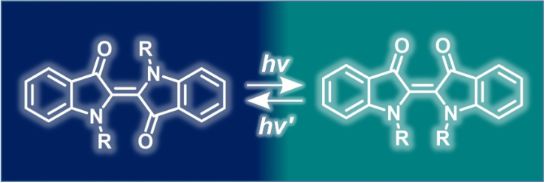
- and unsymmetrical N,N'-substituted alkyl- and arylindigos with tunable thermal half-lives (follow-up mechanistic studies in 2022) 2018: first report on photochromic monoarylated indigos Synthesis of indigo derivatives Indigo (Ind) is one of the oldest organic molecules, which has been used as a dye

Graphical Abstract
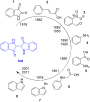
Figure 1: Precursors used in the synthesis of indigo [4].

Figure 2: a) Intramolecular (a = 2.26 Å) and intermolecular (b = 2.11 Å) hydrogen bonds in indigo, b) crystal...

Figure 3: Bond length in the indigo molecule obtained from the single crystal X-ray analysis [12], the typical bo...

Figure 4: The structure of the indigo chromophore (H-chromophore, highlighted in blue), asterisk indicates th...

Figure 5: Influence of substituents in the benzene rings on the color of indigo derivatives.

Figure 6: a) E–Z photoisomerization of indigo and b) photoinduced proton transfer in the excited state, aster...
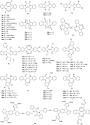
Figure 7: Structures of indigo derivatives discussed in this review.

Figure 8: Photoswitching of N,N'-diacetylindigo (9a) in CCl4 (c = 17.1 µM; cell length = 5.0 cm) irradiated w...

Figure 9: Photoisomerization of compound 18c upon irradiation with red light and schematic representation of ...

Figure 10: Schematic representation of indigo-type (left) and amide-type (right) resonances in N,N'-acetylindi...

Figure 11: Suggested intermediates for the double bond cleavage for the thermal relaxation of N,N'-diacylindig...

Figure 12: Zwitterionic resonance structures of Z-indigo.

Figure 13: Photos of crystalline N,N'-di(Boc)indigo 17a its solutions in 1) DMSO, 2) DMF, 3) N-methyl-2-pyrrol...

Figure 14: Structural isomers of indigo.

Figure 15: Photochromism of indirubin derivatives and supramolecular complexation of the E-isomers with Schrei...

Figure 16: Photoisomerization of the protonated isoindigo.
Recent advancements in iodide/phosphine-mediated photoredox radical reactions
- Tinglan Liu,
- Yu Zhou,
- Junhong Tang and
- Chengming Wang
Beilstein J. Org. Chem. 2023, 19, 1785–1803, doi:10.3762/bjoc.19.131
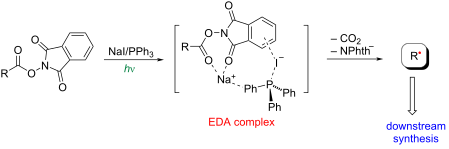
- photoredox radical reactions are relatively scarce [52], representing an unexplored area that requires further investigation. Developing asymmetric methodologies in this domain holds great promise for future exploration. Last but not the least, conducting detailed mechanistic studies on iodide/phosphine

Graphical Abstract

Scheme 1: Photocatalytic decarboxylative transformations mediated by the NaI/PPh3 catalyst system.

Scheme 2: Proposed catalytic cycle of NaI/PPh3 photoredox catalysis.

Scheme 3: Decarboxylative alkenylation of redox-active esters by NaI/PPh3 catalysis.

Scheme 4: Decarboxylative alkenylation mediated by NaI/PPh3 catalysis.

Scheme 5: NaI-mediated photoinduced α-alkenylation of Katritzky salts 7.

Scheme 6: n-Bu4NI-mediated photoinduced decarboxylative olefination.

Scheme 7: Proposed mechanism of the n-Bu4NI-mediated photoinduced decarboxylative olefination.

Scheme 8: Photodecarboxylative alkylation of redox-active esters with diazirines.

Scheme 9: Photoinduced iodine-anion-catalyzed decarboxylative/deaminative C–H alkylation of enamides.

Scheme 10: Photocatalytic C–H alkylation of coumarins mediated by NaI/PPh3 catalysis.

Scheme 11: Photoredox alkylation of aldimines by NaI/PPh3 catalysis.

Scheme 12: Photoredox C–H alkylation employing ammonium iodide.

Scheme 13: NaI/PPh3/CuBr cooperative catalysis for photocatalytic C(sp3)–O/N cross-coupling reactions.
Scheme 14: Proposed mechanism of NaI/PPh3/CuBr cooperative catalysis for photocatalytic C(sp3)–O/N cross-coupl...

Scheme 15: Photocatalytic decarboxylative [3 + 2]/[4 + 2] annulation between enynals and γ,σ-unsaturated N-(ac...

Scheme 16: Proposed mechanism for the decarboxylative [3 + 2]/[4 + 2] annulation.

Scheme 17: Decarboxylative cascade annulation of alkenes/1,6-enynes with N-hydroxyphthalimide esters.

Scheme 18: Decarboxylative radical cascade cyclization of N-arylacrylamides.

Scheme 19: NaI/PPh3-driven photocatalytic decarboxylative radical cascade alkylarylation.

Scheme 20: Proposed mechanism of the NaI/PPh3-driven photocatalytic decarboxylative radical cascade cyclizatio...

Scheme 21: Visible-light-promoted decarboxylative cyclization of vinylcycloalkanes.

Scheme 22: NaI/PPh3-mediated photochemical reduction and amination of nitroarenes.

Scheme 23: PPh3-catalyzed alkylative iododecarboxylation with LiI.

Scheme 24: Visible-light-triggered iodination facilitated by N-heterocyclic carbenes.

Scheme 25: Visible-light-induced photolysis of phosphonium iodide salts for monofluoromethylation.
Morpholine-mediated defluorinative cycloaddition of gem-difluoroalkenes and organic azides
- Tzu-Yu Huang,
- Mario Djugovski,
- Sweta Adhikari,
- Destinee L. Manning and
- Sudeshna Roy
Beilstein J. Org. Chem. 2023, 19, 1545–1554, doi:10.3762/bjoc.19.111
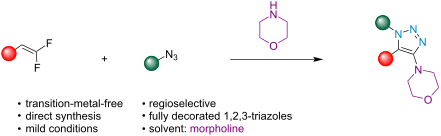
- gem-difluoroalkenes with organic azides in morpholine as a solvent to construct fully decorated morpholine-substituted 1,2,3-triazoles. Mechanistic studies revealed the formation of an addition–elimination intermediate of morpholine and gem-difluoroalkenes prior to the triazolization reaction via two

Graphical Abstract

Figure 1: Functionalization of gem-difluoroalkenes with 1,3-dipoles and N-nucleophiles.

Figure 2: Substrate scope. Reaction conditions: 1 (1 equiv), 2 (1.5 equiv) 0.4 equiv of LiHMDS (1 M in THF), ...

Figure 3: Time course profile monitored by 19F NMR spectroscopy.

Figure 4: NOESY of 4e confirming the regiochemistry of the product.

Figure 5: Proposed mechanism.

Figure 6: Scale-up experiment.
N-Sulfenylsuccinimide/phthalimide: an alternative sulfenylating reagent in organic transformations
- Fatemeh Doraghi,
- Seyedeh Pegah Aledavoud,
- Mehdi Ghanbarlou,
- Bagher Larijani and
- Mohammad Mahdavi
Beilstein J. Org. Chem. 2023, 19, 1471–1502, doi:10.3762/bjoc.19.106
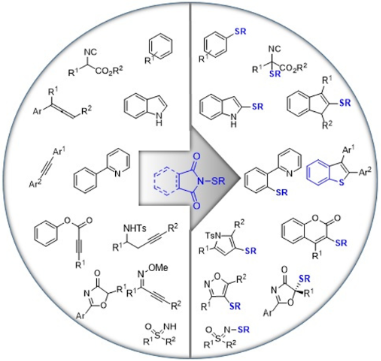
- pyrrolines 62 were obtained by changing the reaction solvent to MeCN. Also, organic fluorophore compounds such as benzothienopyrrole and bis-thiolated boron dipyrromethene can be achieved from 3-thiolated pyrroles. Mechanistic studies showed that the oxidative species HNO and HCHO were generated through a
- conversion of 1-I to 2-II was confirmed by mechanistic studies due to the stability of the benzyl carbocation, followed by 6-endo-dig cyclization. In this method, toxic transition metal catalysts, oxidants, or bases are not used, which made it economically and environmentally reliable. In 2023, Gao et al
- is no need to use a metal catalyst, base, or additive. N-(Sulfenyl)succinimide/phthalimide acted as an active electrophilic sulfur source, acted in the reaction mechanisms. However, mechanistic studies need further exploration to define a valid reaction pathway. Therefore, we believe that the use of

Graphical Abstract

Scheme 1: Sulfur-containing bioactive molecules.

Scheme 2: Scandium-catalyzed synthesis of thiosulfonates.

Scheme 3: Palladium-catalyzed aryl(alkyl)thiolation of unactivated arenes.

Scheme 4: Catalytic cycle for Pd-catalyzed aryl(alkyl)thiolation of unactivated arenes.

Scheme 5: Iron- or boron-catalyzed C–H arylthiation of substituted phenols.

Scheme 6: Iron-catalyzed azidoalkylthiation of alkenes.

Scheme 7: Plausible mechanism for iron-catalyzed azidoalkylthiation of alkenes.

Scheme 8: BF3·Et2O‑mediated electrophilic cyclization of aryl alkynoates.

Scheme 9: Tentative mechanism for BF3·Et2O‑mediated electrophilic cyclization of aryl alkynoates.

Scheme 10: Construction of 6-substituted benzo[b]thiophenes.

Scheme 11: Plausible mechanism for construction of 6-substituted benzo[b]thiophenes.

Scheme 12: AlCl3‑catalyzed cyclization of N‑arylpropynamides with N‑sulfanylsuccinimides.

Scheme 13: Synthetic utility of AlCl3‑catalyzed cyclization of N‑arylpropynamides with N‑sulfanylsuccinimides.

Scheme 14: Sulfenoamination of alkenes with sulfonamides and N-sulfanylsuccinimides.

Scheme 15: Lewis acid/Brønsted acid controlled Pd-catalyzed functionalization of aryl C(sp2)–H bonds.

Scheme 16: Possible mechanism for Lewis acid/Brønsted acid controlled Pd-catalyzed functionalization of aryl C...

Scheme 17: FeCl3-catalyzed carbosulfenylation of unactivated alkenes.

Scheme 18: Copper-catalyzed electrophilic thiolation of organozinc halides.

Scheme 19: h-BN@Copper(II) nanomaterial catalyzed cross-coupling reaction of sulfoximines and N‑(arylthio)succ...

Scheme 20: AlCl3‑mediated cyclization and sulfenylation of 2‑alkyn-1-one O‑methyloximes.

Scheme 21: Lewis acid-promoted 2-substituted cyclopropane 1,1-dicarboxylates with sulfonamides and N-(arylthio...

Scheme 22: Lewis acid-mediated cyclization of β,γ-unsaturated oximes and hydrazones with N-(arylthio/seleno)su...

Scheme 23: Credible pathway for Lewis acid-mediated cyclization of β,γ-unsaturated oximes with N-(arylthio)suc...

Scheme 24: Synthesis of 4-chalcogenyl pyrazoles via chalcogenation/cyclization of α,β-alkynic hydrazones.

Scheme 25: Controllable synthesis of 3-thiolated pyrroles and pyrrolines.

Scheme 26: Possible mechanism for controllable synthesis of 3-thiolated pyrroles and pyrrolines.

Scheme 27: Co-catalyzed C2-sulfenylation and C2,C3-disulfenylation of indole derivatives.

Scheme 28: Plausible catalytic cycle for Co-catalyzed C2-sulfenylation and C2,C3-disulfenylation of indoles.

Scheme 29: C–H thioarylation of electron-rich arenes by iron(III) triflimide catalysis.

Scheme 30: Difunctionalization of alkynyl bromides with thiosulfonates and N-arylthio succinimides.·

Scheme 31: Suggested mechanism for difunctionalization of alkynyl bromides with thiosulfonates and N-arylthio ...

Scheme 32: Synthesis of thioesters, acyl disulfides, ketones, and amides by N-thiohydroxy succinimide esters.

Scheme 33: Proposed mechanism for metal-catalyzed selective acylation and acylthiolation.

Scheme 34: AlCl3-catalyzed synthesis of 3,4-bisthiolated pyrroles.

Scheme 35: α-Sulfenylation of aldehydes and ketones.

Scheme 36: Acid-catalyzed sulfetherification of unsaturated alcohols.

Scheme 37: Enantioselective sulfenylation of β-keto phosphonates.

Scheme 38: Organocatalyzed sulfenylation of 3‑substituted oxindoles.

Scheme 39: Sulfenylation and chlorination of β-ketoesters.

Scheme 40: Intramolecular sulfenoamination of olefins.

Scheme 41: Plausible mechanism for intramolecular sulfenoamination of olefins.

Scheme 42: α-Sulfenylation of 5H-oxazol-4-ones.

Scheme 43: Metal-free C–H sulfenylation of electron-rich arenes.

Scheme 44: TFA-promoted C–H sulfenylation indoles.
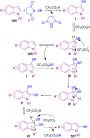
Scheme 45: Proposed mechanism for TFA-promoted C–H sulfenylation indoles.

Scheme 46: Organocatalyzed sulfenylation and selenenylation of 3-pyrrolyloxindoles.

Scheme 47: Organocatalyzed sulfenylation of S-based nucleophiles.

Scheme 48: Conjugate Lewis base Brønsted acid-catalyzed sulfenylation of N-heterocycles.

Scheme 49: Mechanism for activation of N-sulfanylsuccinimide by conjugate Lewis base Brønsted acid catalyst.

Scheme 50: Sulfenylation of deconjugated butyrolactams.

Scheme 51: Intramolecular sulfenofunctionalization of alkenes with phenols.

Scheme 52: Organocatalytic 1,3-difunctionalizations of Morita–Baylis–Hillman carbonates.

Scheme 53: Organocatalytic sulfenylation of β‑naphthols.

Scheme 54: Acid-promoted oxychalcogenation of o‑vinylanilides with N‑(arylthio/arylseleno)succinimides.

Scheme 55: Lewis base/Brønsted acid dual-catalytic C–H sulfenylation of aryls.

Scheme 56: Lewis base-catalyzed sulfenoamidation of alkenes.

Scheme 57: Cyclization of allylic amide using a Brønsted acid and tetrabutylammonium chloride.

Scheme 58: Catalytic electrophilic thiocarbocyclization of allenes with N-thiosuccinimides.

Scheme 59: Suggested mechanism for electrophilic thiocarbocyclization of allenes with N-thiosuccinimides.

Scheme 60: Chiral chalcogenide-catalyzed enantioselective hydrothiolation of alkenes.

Scheme 61: Proposed mechanism for chalcogenide-catalyzed enantioselective hydrothiolation of alkenes.

Scheme 62: Organocatalytic sulfenylation for synthesis a diheteroatom-bearing tetrasubstituted carbon centre.

Scheme 63: Thiolative cyclization of yne-ynamides.

Scheme 64: Synthesis of alkynyl and acyl disulfides from reaction of thiols with N-alkynylthio phthalimides.

Scheme 65: Oxysulfenylation of alkenes with 1-(arylthio)pyrrolidine-2,5-diones and alcohols.

Scheme 66: Arylthiolation of arylamines with (arylthio)-pyrrolidine-2,5-diones.

Scheme 67: Catalyst-free isothiocyanatoalkylthiation of styrenes.

Scheme 68: Sulfenylation of (E)-β-chlorovinyl ketones toward 3,4-dimercaptofurans.

Scheme 69: HCl-promoted intermolecular 1, 2-thiofunctionalization of aromatic alkenes.

Scheme 70: Possible mechanism for HCl-promoted 1,2-thiofunctionalization of aromatic alkenes.

Scheme 71: Coupling reaction of diazo compounds with N-sulfenylsuccinimides.

Scheme 72: Multicomponent reactions of disulfides with isocyanides and other nucleophiles.

Scheme 73: α-Sulfenylation and β-sulfenylation of α,β-unsaturated carbonyl compounds.



