


Search results
Search for "modification" in Full Text gives 889 result(s) in Beilstein Journal of Organic Chemistry. Showing first 200.
Synthetic study toward vibralactone
Beilstein J. Org. Chem. 2025, 21, 2376–2382, doi:10.3762/bjoc.21.182

- ][21]. Additionally, a series of vibralactone homodimers and oxime esters 10–12 were reported by the groups of Liu and Zhang, respectively [22][23]. Through modification of the primary hydroxy group, a structure-based optimization of vibralactone (6) was carried out by Liu and co-workers and yielded


Halogenated butyrolactones from the biomass-derived synthon levoglucosenone
Beilstein J. Org. Chem. 2025, 21, 2297–2301, doi:10.3762/bjoc.21.175
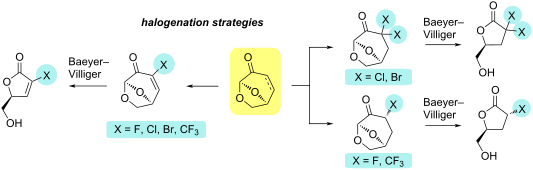
- infections. The preparation of 2-halo-2-deoxy-ᴅ-ribose derivatives can be achieved via the modification of the parent sugar [9][10] or chain-elongation strategies from lower homologues. For example, Castro and co-workers have demonstrated the synthesis of a dichlorinated 2-deoxypentose via the addition of



Research towards selective inhibition of the CLK3 kinase
Beilstein J. Org. Chem. 2025, 21, 2250–2259, doi:10.3762/bjoc.21.172
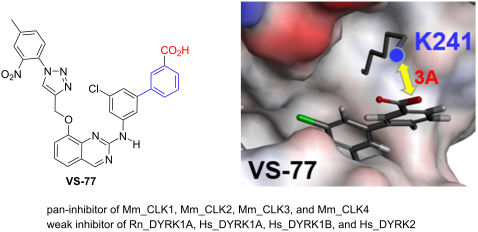
- been able to transform this compound into a derivative having a significant affinity toward this kinase (VS-77, IC50 = 0.3 μM). Further, this compound has kept good activities against the other CLKs, and therefore can be qualified as a new pan-inhibitor of the CLKs. Unexpectedly, this modification has


Synthesis of triazolo- and tetrazolo-fused 1,4-benzodiazepines via one-pot Ugi–azide and Cu-free click reactions
Beilstein J. Org. Chem. 2025, 21, 2202–2210, doi:10.3762/bjoc.21.167
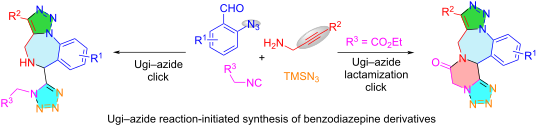
- , the Ugi–azide adducts could undergo lactamization and lead to the formation of highly condensed 1,4-benzodiazepines 8 fused with triazole, tetrazole, and piperazinone rings. This is a new example of combining MCR and post-condensation modification as a one-pot synthesis to access novel heterocyclic


The application of desymmetric enantioselective reduction of cyclic 1,3-dicarbonyl compounds in the total synthesis of terpenoid and alkaloid natural products
Beilstein J. Org. Chem. 2025, 21, 2085–2102, doi:10.3762/bjoc.21.164
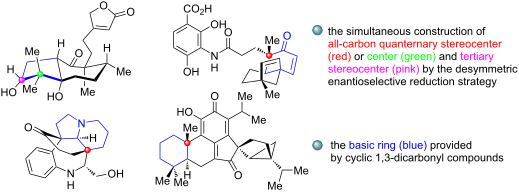
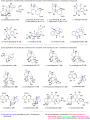
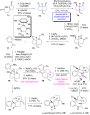
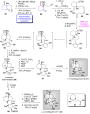
- modification of the terminal double bond afforded ketoaldehyde 31. The 2-bromoallylation [15] of 31 with boronic ester 32 stereoselectively constructed the C3–OH group to give homoallylic alcohol 33. Next, a successive manipulation by removal of TBS group, CSA-catalyzed ketalization, and DMP oxidation of the







Discovery of cytotoxic indolo[1,2-c]quinazoline derivatives through scaffold-based design
Beilstein J. Org. Chem. 2025, 21, 2062–2071, doi:10.3762/bjoc.21.161
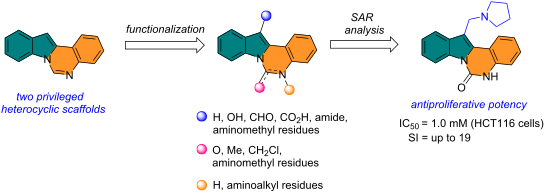
- , offering valuable insights into their SAR and paving the way for a future evaluation of these compounds as anticancer therapeutics. Keywords: antiproliferative activity; antitumor agents; indolo[1,2-c]quinazoline; modification; structure–activity relationship; Introduction Organic compounds featuring
- important modification for generating novel bioactive compounds with enhanced pharmacological potential [6][7]. A prominent example is copanlisib, a 2,3-dihydroimidazo[1,2-c]quinazoline derivative approved for relapsed follicular lymphoma, which, however, was later withdrawn by Bayer in 2023 [8]. The
- in the series for the HCT116 cell line. Incorporation of an additional aminoalkyl moiety in the structure of cyclic amine (compounds 9e, 9f) does not result in any meaningful changes of potency. The same modification of 6-methylindolo[1,2-c]quinazoline scaffold yielding derivatives 10a–c also gave


Rhodium-catalysed connective synthesis of diverse reactive probes bearing S(VI) electrophilic warheads
Beilstein J. Org. Chem. 2025, 21, 1924–1931, doi:10.3762/bjoc.21.150
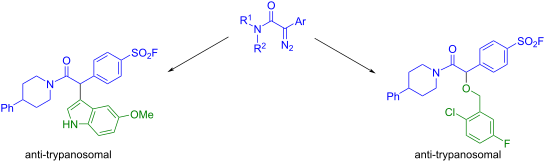
- direct connective synthesis of diverse reactive probes. We envisage that such probes may enable chemical modification of non-cysteine residues within proteins, and may be valuable in investigating and engineering the biology of proteins. Envisaged connective synthesis of reactive probes 3 bearing S(VI


Synthesis, biological and electrochemical evaluation of glycidyl esters of phosphorus acids as potential anticancer drugs
Beilstein J. Org. Chem. 2025, 21, 1909–1916, doi:10.3762/bjoc.21.148
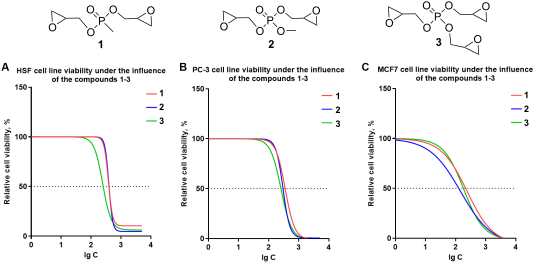
- . When these agents alkylate the HSA amino acid residues (particularly reactive sites like lysine, cysteine, serine NH2, SH, OH-side chains, and possibly other nucleophilic groups), the resulting covalent modification can disrupt the electroactive centers responsible for the protein’s oxidation peaks
- , the significant suppression or disappearance of the HSA oxidation peak upon addition of glycidyl esters 1–3 can be interpreted as evidence of covalent modification (alkylating) of nucleophilic sites on HSA, rather than non-specific binding or merely non-reactive association [27][28][29]. The observed


Systematic pore lipophilization to enhance the efficiency of an amine-based MOF catalyst in the solvent-free Knoevenagel reaction
Beilstein J. Org. Chem. 2025, 21, 1854–1863, doi:10.3762/bjoc.21.144
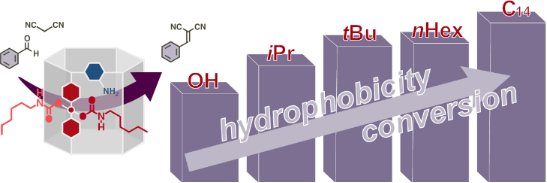
- efficiency. Keywords: metal-organic frameworks; post-synthesis modification; supramolecular catalysis; Introduction Most enzymatic reactions take place in multifunctional cavities in which multiple amino acid residues work cooperatively to orient and activate reactants [1][2][3]. These residues may also
- report we describe, how a similar tailoring of a MOF’s pore environment, with consequent activity modulation, can be realized more efficiently using covalent post-synthetic modification (PSM) strategies [26][27]. Starting with a single MOF material that has both catalytic linkers and auxiliary linkers
- variable and rely solely on MOF modification to create a lipophilic environment in the pores. However, because solvents improve the solubility of the reactants and products, making it easier for the reagents to reach the active sites, we were concerned that performing the reaction under neat conditions


Research progress on calixarene/pillararene-based controlled drug release systems
Beilstein J. Org. Chem. 2025, 21, 1757–1785, doi:10.3762/bjoc.21.139
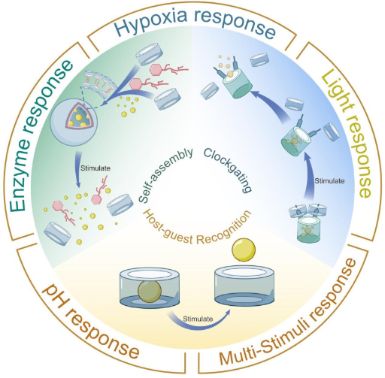
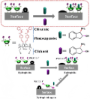
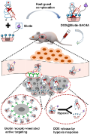
- , ease of modification, electron-rich and hydrophobic cavities, and highly selective molecular recognition. In recent years, numerous supramolecular drug delivery systems utilizing aromatic macrocycles have been developed. This review article provides an overview of the advancements of controlled drug
- or guest molecules are altered upon exposure to specific stimuli, such as light, pH changes, or enzymes. This modification induces the disassembly of the host–guest complex, thereby releasing the encapsulated drugs. Fundamentally, this mechanism relies on controlling the assembly and disassembly
- -step synthesis, convenient modification that can be achieved by introducing functional groups, electron rich and hydrophobic cavities that can effectively recognize electron deficient or neutral guest molecules, and high selectivity in binding with the guest. Their applications are extensive in the






Approaches to stereoselective 1,1'-glycosylation
Beilstein J. Org. Chem. 2025, 21, 1700–1718, doi:10.3762/bjoc.21.133
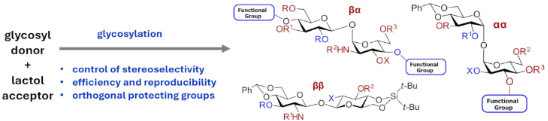
- feature asymmetrically distributed functional groups across their two pyranose rings, emphasizes the importance of robust, stereoselective synthetic strategies capable of producing fully orthogonally protected 1,1′-linked sugars suitable for selective chemical modification. This review highlights recent
- ]. The desired anomeric configuration of the lactol acceptor can also be stabilized through covalent modification; for example, in the form of a trimethylsilyl glycoside. A successful 1,1'-glycosylation using benzyl-protected monosaccharide precursors and 1-O-TMS-protected acceptors is exemplified by the


Continuous-flow-enabled intensification in nitration processes: a review of technological developments and practical applications over the past decade
Beilstein J. Org. Chem. 2025, 21, 1678–1699, doi:10.3762/bjoc.21.132
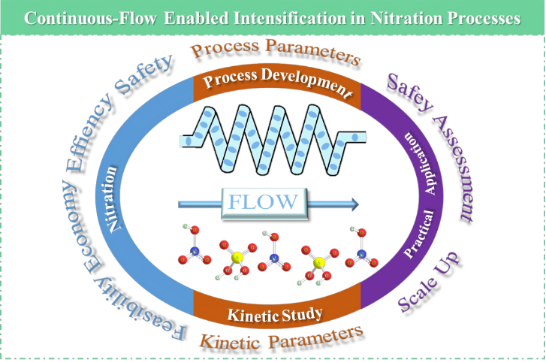
- parameter modification, by systematically varying an individual parameter while maintaining others constant. The prevalence of OFAT in the analysis of continuous-flow nitration processes stems principally from its operational simplicity and it does not require advanced mathematical-modeling expertise. In




Structural analysis of stereoselective galactose pyruvylation toward the synthesis of bacterial capsular polysaccharides
Beilstein J. Org. Chem. 2025, 21, 1671–1677, doi:10.3762/bjoc.21.131

- modifications of bacterial polysaccharides, and the interaction of 4,6-O-pyruvylated pyranoses with lectins depends on the stereochemistry of the pyruvate ketal. Moreover, this chemical modification is crucial, as the distinct R or S diastereochemistry at the ketal center directly influences its biological
- function. Careful manipulation of reaction conditions such as solvent and temperature is necessary to achieve sufficient diastereomeric purity in pyruvate modification. This research contributes to the development in the field of polysaccharide synthesis and draws upon established methodologies, reflecting


Facile synthesis of hydantoin/1,2,4-oxadiazoline spiro-compounds via 1,3-dipolar cycloaddition of nitrile oxides to 5-iminohydantoins
Beilstein J. Org. Chem. 2025, 21, 1552–1560, doi:10.3762/bjoc.21.118

- developed for existing spiro systems to the new hybrid drugs. In this work a similar modification of imidazolidine derivatives was performed for the first time for the synthesis of spiro-hydantoins. The title reactions were carried out using two alternative techniques for the generation of the reactive 1,3



Azobenzene protonation as a tool for temperature sensing
Beilstein J. Org. Chem. 2025, 21, 1528–1534, doi:10.3762/bjoc.21.115
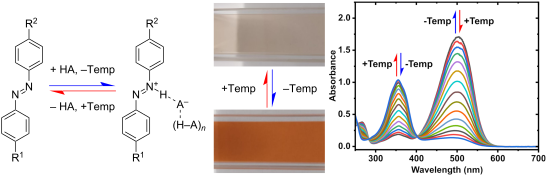
- their widespread use in biomedicine [5][6], energy storage [7][8], soft robotics [9][10], and sensing [11]. The key factors for their success are the efficient photochemical isomerization, causing large spatial, spectral, and electronic changes, as well as the relative ease of modification of the
- modification. By combining a medium with temperature-dependent proton activity and an indicator molecule with systematic spectral changes, the system can be utilised for temperature sensing. Figure 2A shows the drastic change in the relative proportion of the neutral and protonated absorption peaks of 3 in DCE


Ambident reactivity of enolizable 5-mercapto-1H-tetrazoles in trapping reactions with in situ-generated thiocarbonyl S-methanides derived from sterically crowded cycloaliphatic thioketones
Beilstein J. Org. Chem. 2025, 21, 1508–1519, doi:10.3762/bjoc.21.113
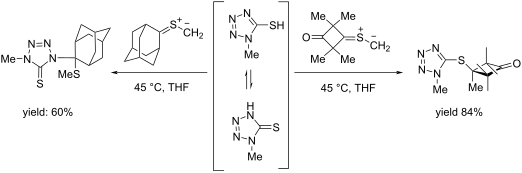
- products formed via S–H and N–H insertion reactions should also be tested. This method of modification of the structure of enolizable 5-mercapto-1H-tetrazole has not yet been described. Results and Discussion New precursors 2c,d of sterically crowded thiocarbonyl S-methanides 1c,d Based on the well


Advances in nitrogen-containing helicenes: synthesis, chiroptical properties, and optoelectronic applications
Beilstein J. Org. Chem. 2025, 21, 1422–1453, doi:10.3762/bjoc.21.106
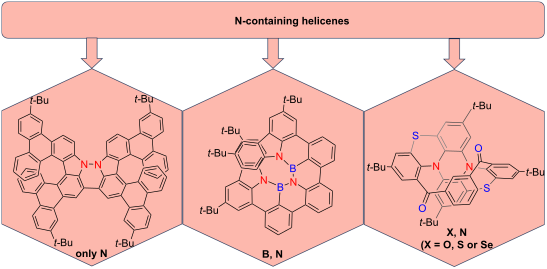
- – particularly those incorporating additional heteroatoms within the helical π-conjugated framework – remains lacking. This review addresses this gap by systematically summarizing recent advances (from the past five years) in the synthesis, structural modification, and chiroptical properties of nitrogen-doped
- , achieving a high enantiomeric excess [92]. They further investigated various post-synthetic modification strategies, demonstrating their potential for application in chiral photonic materials. Collectively, these advances underscore the power of structural tailoring, heteroatom incorporation, and

Oxetanes: formation, reactivity and total syntheses of natural products
Beilstein J. Org. Chem. 2025, 21, 1324–1373, doi:10.3762/bjoc.21.101
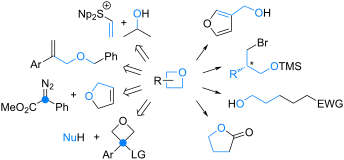
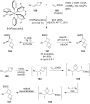
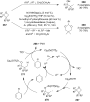
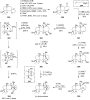
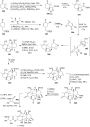
- oxygen and a subsequent proton transfer affords the aromatic heterocycle. The authors also devised a modification to this procedure for olefin precursors which were difficult to prepare: this alternative uses cross-aldol adducts 180 between 3-oxetanone and a ketone, and the ring opening and dehydration








Optimized synthesis of aroyl-S,N-ketene acetals by omission of solubilizing alcohol cosolvents
Beilstein J. Org. Chem. 2025, 21, 1201–1206, doi:10.3762/bjoc.21.97
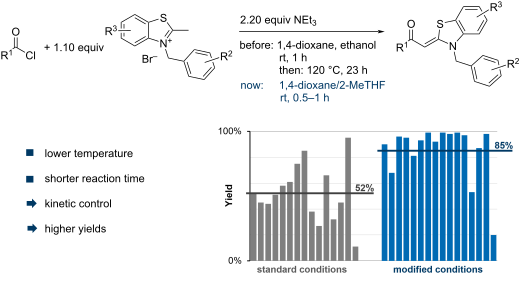
- rise to the formation of aroyl-S,N-ketene acetals in mostly excellent yield. The modification of this condensation synthesis is conceptualized on the basis of relative reactivities of intermediary formed acylammonium salts (electrophilicity) and S,N-ketene acetals (nucleophilicity). In addition


Study of tribenzo[b,d,f]azepine as donor in D–A photocatalysts
Beilstein J. Org. Chem. 2025, 21, 935–944, doi:10.3762/bjoc.21.76

- of D–A structures makes them the ideal structures to further understand the structure–property relationship of D–A molecules for optimizing their photocatalytic performance by simpler modification of the different D–A subunits. In particular, D–A structures featuring sulfur-based acceptors and



A convergent synthetic approach to the tetracyclic core framework of khayanolide-type limonoids
Beilstein J. Org. Chem. 2025, 21, 926–934, doi:10.3762/bjoc.21.75
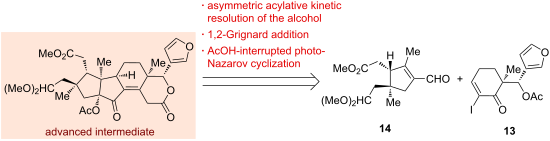
- molecules could be synthesized from diol 9 through a late-stage modification involving adjustment of the oxidation state and regioselective acylation. The formation of 9 was envisioned to proceed via an intramolecular pinacol coupling [30][31] of [5,5,6,6]-tetracycle 10, which forges the A2 ring while




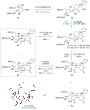
Silver(I) triflate-catalyzed post-Ugi synthesis of pyrazolodiazepines
Beilstein J. Org. Chem. 2025, 21, 915–925, doi:10.3762/bjoc.21.74
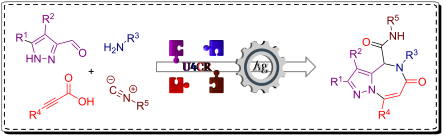
- ) [46]. In 2019, Li, Yang, Van der Eycken and co-workers reported a modification of this strategy relying on thermal activation instead of cationic gold catalysis [47]. The approach worked particularly well with substrates featuring terminal alkynes. Inspired by these developments and taking into




Cu–Bpin-mediated dimerization of 4,4-dichloro-2-butenoic acid derivatives enables the synthesis of densely functionalized cyclopropanes
Beilstein J. Org. Chem. 2025, 21, 877–883, doi:10.3762/bjoc.21.71
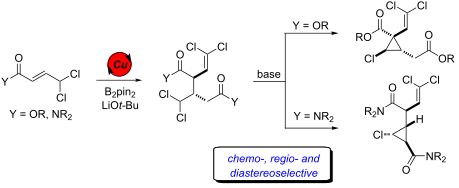
- . However, when the reaction was carried out with KOt-Bu, we observed the selective conversion of 9 into product 20 featuring a different cyclopropane scaffold. Slight modification of the reaction conditions allowed us to obtain product 20 in 56% yield as a single diastereomer (Scheme 5a). Taking advantage


Data accessibility in the chemical sciences: an analysis of recent practice in organic chemistry journals
Beilstein J. Org. Chem. 2025, 21, 864–876, doi:10.3762/bjoc.21.70

- ?’ assess if there are enough metadata to understand how the data have been produced and whether they have been subject to any modification. Around half of the primary data files gave metadata describing instrument and software specifications, and we note that instrument and experimental parameters are






Substituent effects in N-acetylated phenylazopyrazole photoswitches
Beilstein J. Org. Chem. 2025, 21, 830–838, doi:10.3762/bjoc.21.66

- bathochromic shift of the n→π* absorption band further moving their UV–vis absorption spectrum towards the therapeutic window [35]. Moreover, a similar modification in stilbene-based photoswitches and molecular motors showed an increase in performance and photoisomerization quantum yield [36][37]. Consequently





