Search results
Search for "nucleophilic" in Full Text gives 1361 result(s) in Beilstein Journal of Organic Chemistry. Showing first 200.
Ring contraction and ring expansion reactions in terpenoid biosynthesis and their application to total synthesis
Beilstein J. Org. Chem. 2026, 22, 289–343, doi:10.3762/bjoc.22.21
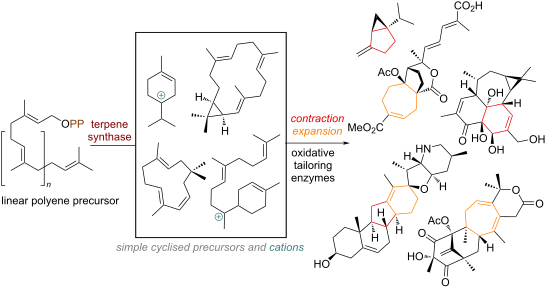
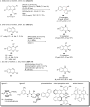
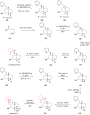
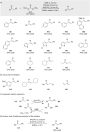
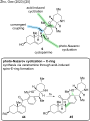
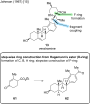
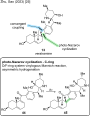
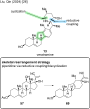
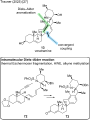
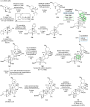
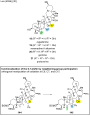
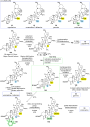
- cyclopropyl system after nucleophilic attack by one of the olefins in 59. After a 1,2-hydride shift (59a to 59b) and nucleophilic capture of the tertiary cation to give 60, the full skeleton of tiglianes (e.g., phorbol (61)) would be assembled. An early example of a puzzling ring contraction observed in
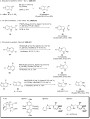
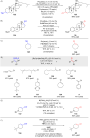
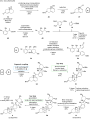
- reactive pathway consists of an alkene isomerisation from the propenyl-substituent at C-5, followed by protonation of the C-7 alcohol to give intermediate 116a. From here a transannular cyclopropanation affords the cation 116b, which upon nucleophilic attack of water provides 116c. Expulsion of acetone
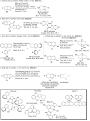
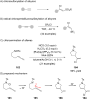
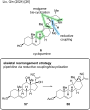
- formed by placing a leaving group on the C-5 tertiary hydroxy group of the precursor 138. This intermediate is privileged to undergo a 1,2-alkyl migration expanding the C-ring, giving a different decalin cation 138b. Keto/enol-tautomerism and nucleophilic attack of the enol at C-4/C-5 furnishes the






Arene activation via π-bond localization: concepts and opportunities
Beilstein J. Org. Chem. 2026, 22, 257–273, doi:10.3762/bjoc.22.19
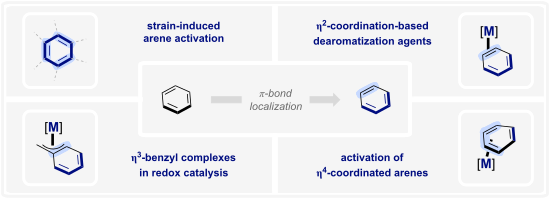
- disrupting the aromatic core, such as electrophilic and nucleophilic aromatic substitutions, transition metal-catalyzed cross-couplings [11], and C–H functionalizations [12]. Taken together with their natural abundance, these transformations have established arenes and heteroarenes as versatile synthetic
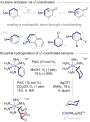
- during subsequent electrophilic addition. Although the trifluorotoluene complex exists as a mixture of its two coordination diastereomers, the pronounced electronic asymmetry of the molybdenum fragment channels protonation to a single η2-arenium intermediate. This enables nucleophilic addition of a
- dearomatization platform, combining pronounced π-basicity with practical scalability. Exploiting these attributes, a new multistep dearomatization protocol has recently been developed, enabling the conversion of arenes into trisubstituted cyclohexenes through three discrete nucleophilic additions to an η2-phenyl




A mild and atom-efficient four-component cascade strategy for the construction of biologically relevant 4-hydroxyquinolin-2(1H)-one derivatives
Beilstein J. Org. Chem. 2026, 22, 244–256, doi:10.3762/bjoc.22.18
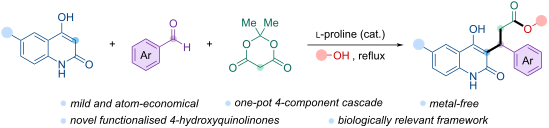
- nucleophilic attack by the alcohol on the carbonyl group of the Meldrum’s acid fragment, thereby favoring formation of an open-chain ester rather than a lactone upon decarboxylation. Following this rationale, the reaction of 4-hydroxyquinolin-2-ones 2a–c, 3,4-dimethoxybenzaldehyde, and Meldrum’s acid in
- formation of the cyclic lactone, which predominated under such conditions. These findings suggest that intramolecular attack by the quinolinone OH group, leading to cyclization and formation of pyranoquinolinone, proceeds faster than nucleophilic attack by the external alcohol. Thus, under mild or brief
- products were also obtained via the four-component reaction using non-nucleophilic acetonitrile as solvent. However, this method requires subsequent purification by preparative chromatography, and, as noted, pyranoquinolines 14a–c readily undergo alcoholysis on silica columns with methanol-containing


Synthesis of diaryl phosphates using phytic acid as a phosphorus source
Beilstein J. Org. Chem. 2026, 22, 213–223, doi:10.3762/bjoc.22.15
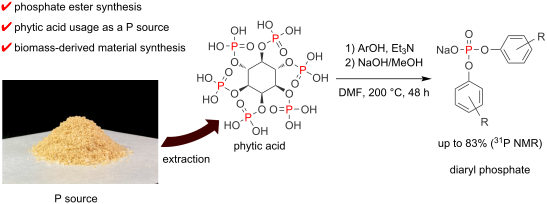
- phosphoric acid through a hydrolysis or E2 elimination reaction. The generated phosphoric acid forms a salt with triethylamine. Next, the phenoxy anion activated by the amine undergoes a nucleophilic attack on the phosphorus atom of the salt of phosphoric acid, resulting in the formation of MPP with the
- elimination of H2O. Then, two MPP molecules undergo a dehydration condensation reaction to form DPpyP [56]. Finally, the phenoxy anion undergoes a nucleophilic attack on the phosphorus atom of DPpyP, and DPP is formed through the elimination of MPP. In the absence of triethylamine, the esterification reaction




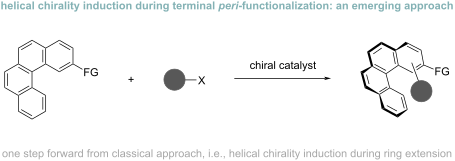
Screwing the helical chirality through terminal peri-functionalization
Beilstein J. Org. Chem. 2026, 22, 205–212, doi:10.3762/bjoc.22.14
- nucleophilic substitution reactions (Scheme 5). A stereochemical model was proposed for the phospha-Michael addition, indicating that enantioselectivity was primarily influenced by steric effects arising from hydrogen bonding and ion pairing between the peptide mimetic phosphonium salt (PPS)-activated


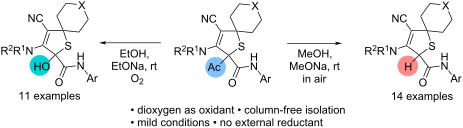
Base-promoted deacylation of 2-acetyl-2,5-dihydrothiophenes and their oxygen-mediated hydroxylation
Beilstein J. Org. Chem. 2026, 22, 192–204, doi:10.3762/bjoc.22.13
- phenols [25]. Hocking has described the oxidation of o-hydroxyacetophenone and some benzophenones with an aqueous alkaline hydrogen peroxide solution [26]. The key steps of oxidation of ketones into phenols include: a) nucleophilic addition of the hydroperoxide anion to the carbonyl carbon; b) [1,2]-aryl




Streptoquinolines A and B, new antibacterial meroterpenoids produced by Streptomyces sp. TMPU-A0679
Beilstein J. Org. Chem. 2026, 22, 185–191, doi:10.3762/bjoc.22.12
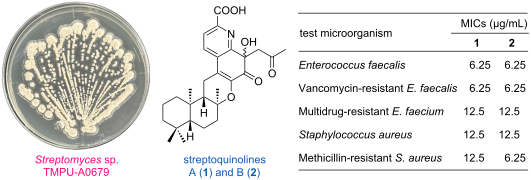
- acetone; therefore, they may be artifacts that formed via the nucleophilic addition of acetone to a ketone-bearing precursor during the extraction process. Despite various modifications to fermentation conditions, it was not possible to detect or isolate the presumed natural precursor. We are currently


Circumventing Mukaiyama oxidation: selective S–O bond formation via sulfenamide–alcohol coupling
Beilstein J. Org. Chem. 2026, 22, 158–166, doi:10.3762/bjoc.22.9
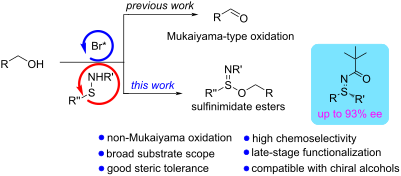
- -bromosuccinimide to generate a highly electrophilic sulfilimidoyl bromide intermediate R–S(Br)=N–C(O)R’, along with succinimide. The resulting S(IV)–Br species is then attacked by the alcohol 2, and nucleophilic substitution at sulfur followed by proton transfer furnishes the sulfinimidate ester 3 and HBr. The


Asymmetric Mannich reaction of aromatic imines with malonates in the presence of multifunctional catalysts
Beilstein J. Org. Chem. 2026, 22, 151–157, doi:10.3762/bjoc.22.8
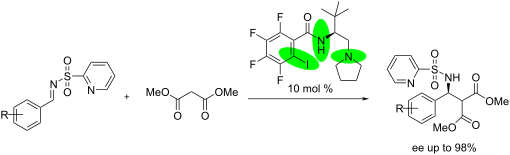
- Mannich reaction between a 2-sulfonylpyridine protected imine and a malonate (Scheme 1). The pyridine-containing protecting group was chosen considering our catalyst design. We envisioned that halogen bond (XB) will complement hydrogen bonds to activate an imine towards the nucleophilic attack of the


Symmetrical D–π–A–π–D indanone dyes: a new design for nonlinear optics and cyanide detection
Beilstein J. Org. Chem. 2026, 22, 131–142, doi:10.3762/bjoc.22.6
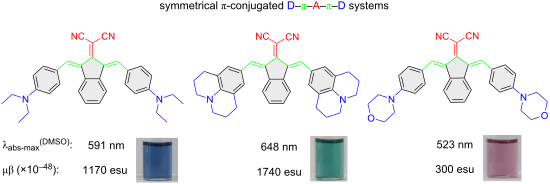
- ). The vinyl bridges were added to the design, which have the potential to open nucleophilic addition reactions (Michael type) due to their electron deficiencies, in addition to acting as π-bridges for the D–A conjugation. Furthermore, a symmetric design with increased π-conjugation was planned to shift
- detect cyanide anions due to the presence of vinyl groups, where cyanide can be attacked via nucleophilic addition reaction. Therefore, the sensitivity and selectivity of dyes towards cyanide were investigated by the addition of cyanide (CN−) and competing anions (F−, Cl−, Br−, I−, AcO−, ClO4−, H2PO4


Highly electrophilic, gem- and spiro-activated trichloromethylnitrocyclopropanes: synthesis and structure
Beilstein J. Org. Chem. 2026, 22, 123–130, doi:10.3762/bjoc.22.5
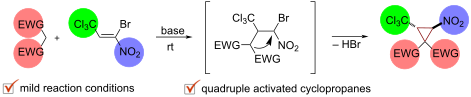
- to the bromonitroalkene afford the intermediate anion II, followed by tautomerization and formation of anion IV, which undergoes intramolecular nucleophilic substitution of the bromide along the C-alkylation pathway [37][38][39] (Scheme 6). The trans-configuration of the methine protons of the


Total synthesis of natural products based on hydrogenation of aromatic rings
Beilstein J. Org. Chem. 2026, 22, 88–122, doi:10.3762/bjoc.22.4
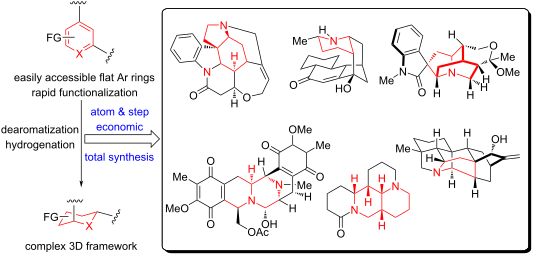
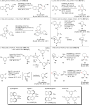
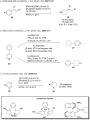
- chloride. Finally, through a sequence of removal of the Cbz protecting group, alcohol chlorination, proximal nucleophilic substitution, and deprotection of the secondary alcohol, the first total synthesis of nominine was completed. Although the synthetic route seemed to be lengthy, this challenging total
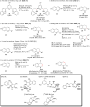
- -tetrahydroisoquinoline natural products, (±)-lemonomycinone and (±)-renieramycin, featuring as key steps a dearomative nucleophilic addition and diastereoselective hydrogenation of a dihydroisoquinoline (Scheme 16) [85]. Starting from pentasubstituted isoquinoline 117, the authors utilized a dearomative nucleophilic
- through sequential nucleophilic attack and intramolecular cyclization. (+)-Isomatrine was subsequently synthesized through catalytic hydrogenation via Rh/C, LAH reduction, and tertiary amine oxidation (Scheme 28). After synthesizing (+)-isomatrine, the effects of catalyst type, loading, temperature, and











Reactivity umpolung of the cycloheptatriene core in hexa(methoxycarbonyl)cycloheptatriene
Beilstein J. Org. Chem. 2026, 22, 64–70, doi:10.3762/bjoc.22.2
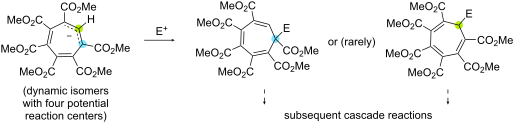
- reactions mainly involve the initial electrophilic attack onto the α-position relative to the hydrogen atom. The selectivity is either due to the high stability of the α-nucleophilic conformer or due to the promotion by the adjacent ester group. Cascade reactions upon the target connection, if installed
- planarity of the two neighboring ester groups and thereby stabilize the anion. The prevalence of this isomer is also confirmed by the NMR data [21], however, other conformers with different charge distributions are also available in solution. To understand the nucleophilic reactivity of the most stable
- revealed that the α-position is most nucleophilic. Notably, anion 1 demonstrated similar HOMO and Fukui function distribution (see Supporting Information File 1), however, all positions would lead to the very same products. The potassium salt of anion 2 was generated in an acetonitrile solution from hexa


Synthesis and applications of alkenyl chlorides (vinyl chlorides): a review
Beilstein J. Org. Chem. 2026, 22, 1–63, doi:10.3762/bjoc.22.1
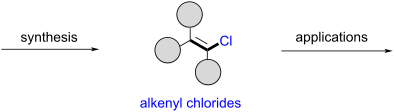
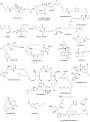
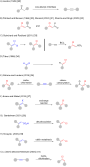
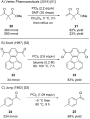
- ). Importantly, a lower alkyne-to-chloride ratio resulted in diminished yields of 155. The authors proposed that the key intermediate is a linear vinyl cation with a planar geometry (217, Scheme 40B), wherein the empty p-orbital lies in the molecular plane. As such, nucleophilic attack occurs within this plane
- nucleophilic chloromethylenetitanium species that transforms a ketone into the corresponding alkenyl chlorides (Scheme 63) [199]. 1.10 Allylic substitutions Allylic substitution of readily accessible alkenyl chlorides bearing a suitable leaving group at the allylic position enables efficient introduction of























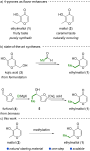
One-pot synthesis of ethylmaltol from maltol
Beilstein J. Org. Chem. 2025, 21, 2755–2760, doi:10.3762/bjoc.21.212

- less nucleophilic and sterically more hindered base lithium diisopropylamide (LDA), the yield of ethylmaltol (1) increased to 25% and maltol (2) was recovered in 17% (Table 1, entry 3). Notably, treatment of maltol (2) with LDA resulted in a deep purple solution with no apparent solubility issues. We
- nucleophilicity of the intermediate lithium alkoxides and to the softer nucleophilic character at C vs O for lithium dienolates. While the dianion strategy was able to convert maltol (2) to ethylmaltol (1) in yields of up to 57%, the reactions suffered from an unsatisfactory purity profile. First, interconversion


Sustainable electrochemical synthesis of aliphatic nitro-NNO-azoxy compounds employing ammonium dinitramide and their in vitro evaluation as potential nitric oxide donors and fungicides
Beilstein J. Org. Chem. 2025, 21, 2739–2754, doi:10.3762/bjoc.21.211
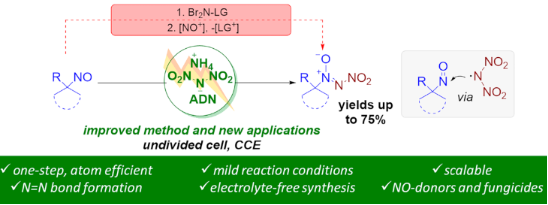
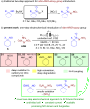
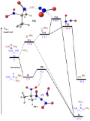
- nucleophilic substitution of –ONO2 groups. To clarify the reaction mechanism, cyclic voltammetry (CV) studies were conducted. CV curves of cyclohexanone oxime (S1), 1-bromo-1-nitrosocyclohexane (S2), 1-chloro-1-nitrosocyclohexane (S3), 1-nitrosocyclohexyl acetate (S4), 1-nitro-1-nitrosocyclohexane (1c), 1





Competitive cyclization of ethyl trifluoroacetoacetate and methyl ketones with 1,3-diamino-2-propanol into hydrogenated oxazolo- and pyrimido-condensed pyridones
Beilstein J. Org. Chem. 2025, 21, 2716–2729, doi:10.3762/bjoc.21.209
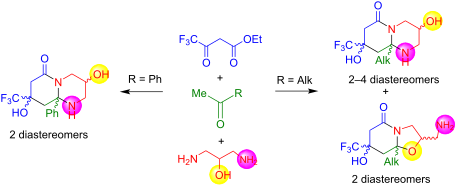
- , 620066 Ekaterinburg, Russian Federation Saint-Petersburg Pasteur Institute, Mira St. 14, 197101 Saint-Petersburg, Russian Federation 10.3762/bjoc.21.209 Abstract The use of 1,3-diamino-2-propanol with competitive N- and O-nucleophilic centers in a three-component cyclization with ethyl 4,4,4
- for 3-polyfluoroalkyl-3-oxo esters containing an activated carbonyl group capable of adding α-methylene ketones. It is characterized by the cyclization at the 1,3-dicarbonyl fragment of 3-oxo ester and offers a possibility of using a variety of nucleophilic agents to form hydrogenated diastereomeric
- three nucleophilic centers in 1,3-diaminopropan-2-ol (3), and because there is a need to increase diastereoselectivity of the cyclization process. Table 1 presents the optimization steps for the reaction conditions at various solvents and temperature. The reaction course was monitored by TLC and 19F NMR


Mechanistic insights into hydroxy(tosyloxy)iodobenzene-mediated ditosyloxylation of chalcones: a DFT study
Beilstein J. Org. Chem. 2025, 21, 2703–2715, doi:10.3762/bjoc.21.208
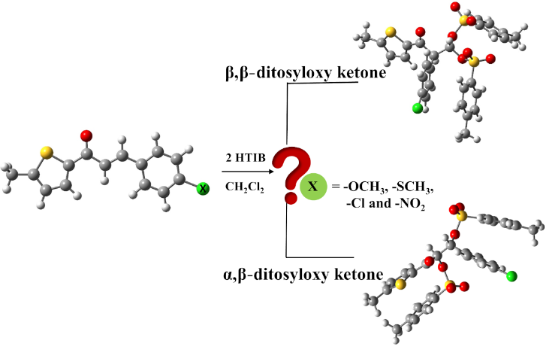
- )3/CH3OH, PhI(OCOCH3)2/CH3OH and PhI(OH)OTs/CH3OH in polar nucleophilic solvents [24][25][26][27][28]. A number of experimental and computational studies have explored the reaction pathway for these oxidative rearrangement reactions under metal-free conditions with the use of hypervalent iodine(III
- ) compounds in polar nucleophilic or non-nucleophilic solvents [10][11][12][20][29][30][31][32][33][34][35][36]. Fujita discusses typical pathways of alkene oxidation with hypervalent iodine in great detail including the stereochemical course of reaction involving a cyclic iodonium ion [30]. In the literature
- differences as given in parenthesis for all studied substituents including -OCH3. Overall both in Scheme 2 and Scheme 3, the reaction between chalcone and HTIB proceeds through electrophilic addition of [PhIOH]+ followed by nucleophilic addition of −OTs. In the beginning electrophilic addition occurs on the


Tandem hydrothiocyanation/cyclization of CF3-iminopropargyl alcohols with NaSCN in the presence of AcOH
Beilstein J. Org. Chem. 2025, 21, 2694–2702, doi:10.3762/bjoc.21.207
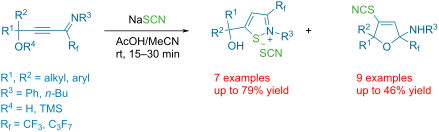
- different cyclizations due to the conjugated imine and alkyne bonds [27], and the hydroxyalkyl moiety linked to the triple bond can also act as a nucleophilic site. Another attractive feature of these compounds is the presence of the trifluoromethyl group (CF3). The latter serves as a valuable structural
- nucleophilic center – imino group or an imino and OH groups. The synthesized compounds are potential drug precursors, synthons, and multipurpose building blocks for fine organic synthesis. We believe that the present method will be of significant interest to synthetic and medicinal chemists due to the



Recent advancements in the synthesis of Veratrum alkaloids
Beilstein J. Org. Chem. 2025, 21, 2657–2693, doi:10.3762/bjoc.21.206
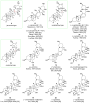
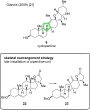
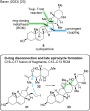
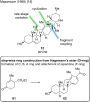
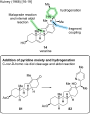
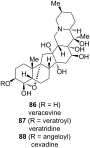
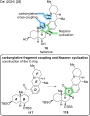
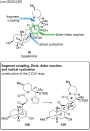
- introduced by addition of 2-lithio-5-methylpyridine (94) to methyl ketone 93, with the major addition product 95 exhibiting the desired configuration at C20. Tosylation of the primary C18–OH in 95 (and secondary C3–OH) was followed by intramolecular nucleophilic substitution through the pyridine nitrogen
















Thiazolidinones: novel insights from microwave synthesis, computational studies, and potentially bioactive hybrids
Beilstein J. Org. Chem. 2025, 21, 2618–2636, doi:10.3762/bjoc.21.203
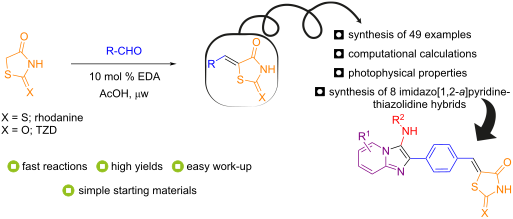
- ], antioxidant [34], cytotoxic [35], and antiproliferative [36]. The structures of these compounds allow the synthesis of a large collection of bioactive molecules due to their nucleophilic and electrophilic properties [37]. One of the forms of modifications is at the methylene group, particularly in the 5
- disubstitution processes involving sulfur-to-nitrogen displacement, likely promoted by the nucleophilic character of the amine. These limitations are likely due to the reaction conditions employed, including the high temperature and acidic environment, which may favor side reactions over the desired






Visible-light-driven NHC and organophotoredox dual catalysis for the synthesis of carbonyl compounds
Beilstein J. Org. Chem. 2025, 21, 2584–2603, doi:10.3762/bjoc.21.200
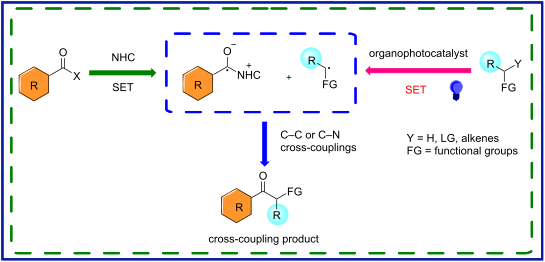
- -rich and electron-poor substituents. This reaction was carried out between arylcyclopropanes 5 and acyl fluoride 4 in the presence of NHC (10 mol %) and 4CzIPN (5 mol %). Mechanistic studies showed that the cascade proceeds via nucleophilic ring-opening of a cyclopropyl radical cation D with subsequent
- system involves the efficient nucleophilic addition of an imidazolyl anion B to radical cation species A, generated via single-electron oxidation of electron-donating arenes 31. The azolide anion B is released from acylimidazole 9 through an addition/elimination sequence in the presence of an NHC



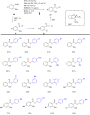

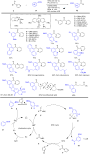

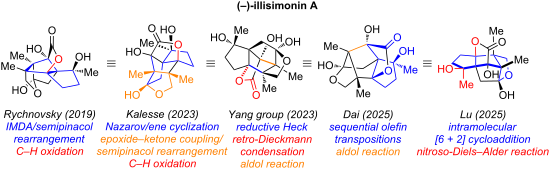
Recent advances in total synthesis of illisimonin A
Beilstein J. Org. Chem. 2025, 21, 2571–2583, doi:10.3762/bjoc.21.199
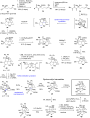
- , deprotonation, and intramolecular addition to ketone. Treatment of the silacycle with MeMgCl cleaved the Si–O bond and subsequent intramolecular nucleophilic substitution of the chloride with the adjacent hydroxy group yielded TMS-epoxide 41. Protonic acid-mediated opening of the TMS-epoxide, accompanied by TES






Assembly strategy for thieno[3,2-b]thiophenes via a disulfide intermediate derived from 3-nitrothiophene-2,5-dicarboxylate
Beilstein J. Org. Chem. 2025, 21, 2489–2497, doi:10.3762/bjoc.21.191
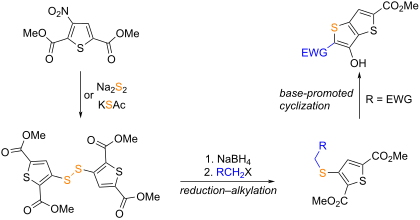
- . Nucleophilic substitution of the nitro group with sulfur nucleophiles, including thioacetate or disulfide anions as well as thioacetamide, yielded bis(thiophen-3-yl)disulfide and sulfide derivatives. The disulfide served as a suitable precursor for the preparation of 3-alkylthio-substituted thiophene-2,5
- functionalized thieno[3,2-b]thiophenes with potential applications in pharmaceutical and materials chemistry. Keywords: aromatic nucleophilic substitution; disulfide derivative; 3-nitrothiophene; organic disulfides; thieno[3,2-b]thiophene; thiophene ring closure; Introduction Thieno[3,2-b]thiophene (TT
- K2CO3 in DMSO to give the desired product [26]. Route III, previously elaborated in our group, utilizes the nucleophilic substitution of the Cl atom in 3-chlorothiophene-2-carboxylates by methyl thioglycolate in the presence of KOt-Bu, followed by KOt-Bu-mediated cyclization to the 3-hydroxy-TTs [27



Synthesis of the tetracyclic skeleton of Aspidosperma alkaloids via PET-initiated cationic radical-derived interrupted [2 + 2]/retro-Mannich reaction
Beilstein J. Org. Chem. 2025, 21, 2470–2478, doi:10.3762/bjoc.21.189
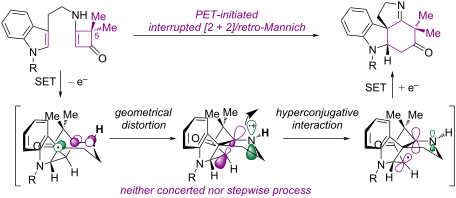
- leads to ketene D, which can undergo cycloaddition with an alkene to yield E. This fragmentation pathway dominates under various conditions (e.g., transition-metal catalysis, nucleophilic addition) and is driven by ring-strain release [11]. PET, an alternative to direct excitation and EnT, enables the