Search results
Search for "rhodamine" in Full Text gives 56 result(s) in Beilstein Journal of Organic Chemistry.
A new approach to silicon rhodamines by Suzuki–Miyaura coupling – scope and limitations
Beilstein J. Org. Chem. 2019, 15, 2569–2576, doi:10.3762/bjoc.15.250
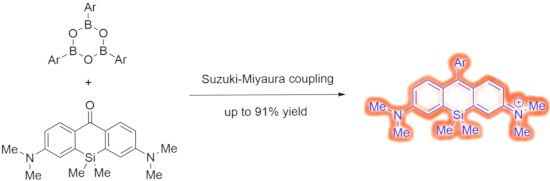
- pharmacokinetic or -dynamic properties of the tumor tracers, silicon rhodamines are relatively small and already examined as fluorophores for the optical imaging of tumors. Using silicon rhodamine SiR700 a more enhanced tumor-to-background ratio in optical imaging could be achieved compared to the cyanine based
- dyes Cy5.5 and Alexa Fluor® 680 [23]. Moreover, silicon rhodamines demonstrated in in vivo imaging experiments excellent fluorescence properties and biostabilities [23] as well as exhibited high quantum efficiencies with high tolerance to photobleaching [24]. A silicon rhodamine antibody conjugate
- could also be successfully applied for optical imaging of a xenograft tumor (human malignant meningioma) in a mouse model [24]. Again, in direct comparison with the cyanine dye Cy5.5, the silicon rhodamine conjugate showed no fading indicating that silicon rhodamine dyes are more suitable for long time


Synthesis of a dihalogenated pyridinyl silicon rhodamine for mitochondrial imaging by a halogen dance rearrangement
Beilstein J. Org. Chem. 2019, 15, 2333–2343, doi:10.3762/bjoc.15.226
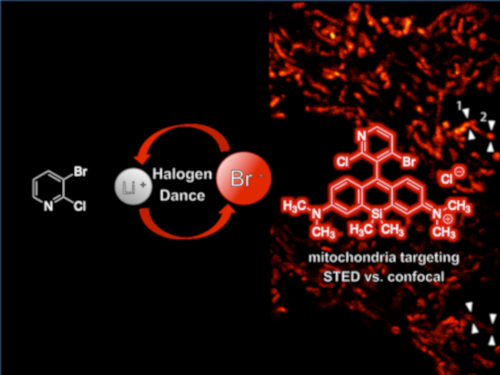
- .15.226 Abstract Background: Since their first synthesis, silicon xanthenes and the subsequently developed silicon rhodamines (SiR) gained a lot of attention as attractive fluorescence dyes offering a broad field of application. We aimed for the synthesis of a fluorinable pyridinyl silicon rhodamine for
- the use in multimodal (PET/OI) medical imaging of mitochondria in cancerous cells. Results: A dihalogenated fluorinatable pyridinyl rhodamine could be successfully synthesized with the high yield of 85% by application of a halogen dance (HD) rearrangement. The near-infrared dye shows a quantum yield
- features with their optical properties and control the latter by rational dye design [15][24][25][26]. These investigations led to new silicon rhodamine dyes with enhanced and fine-tuned properties (quantum yield, lifetime, brightness, absorption and emission maxima). A recent review compared the



Synthesis and properties of sulfur-functionalized triarylmethylium, acridinium and triangulenium dyes
Beilstein J. Org. Chem. 2019, 15, 2133–2141, doi:10.3762/bjoc.15.210
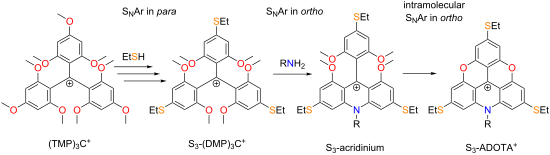
- bichromophoric behavior has been studied in detail for the dialkylamino-substituted xanthenium/rhodamine system [45][46], and is also the likely reason for these compounds being non-fluorescent. The three sulfur-substituted trioxatriangulenium dyes 6, 8, and 9 all display a first absorption band around 480 nm
- = 0.3) than the corresponding dialkylamino-substituted analogues. Structures of some representative triangulenium dyes. a) Rhodamine/fluorescine-like derivatives with donor groups in para-positions (2, 6, and 10) to the formal cation center (12c). b) Derivatives without donor groups. Examples of various


Naphthalene diimides with improved solubility for visible light photoredox catalysis
Beilstein J. Org. Chem. 2019, 15, 2043–2051, doi:10.3762/bjoc.15.201
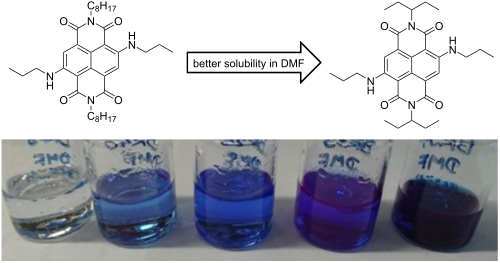
- sustainability further, organic compounds, mainly eosin Y [25], rhodamine 6G [26], 9-mesityl-10-methylacridinium perchlorate [27], 1,2,3,5-tetrakis(carbazol-9-yl)-4,6-dicyanobenzenes [28] and N-phenylphenothiazines [29] were applied as important alternative photoredox catalysts [30][31]. These studies
- cNDI 2 [48][49]. Hence, the photoredox properties of the new cNDI 2–6 are comparable to those of eosin Y and rhodamine 6G as other organic photoredox catalysts. Photoredox catalysis with NDI 1 and cNDI 6 The α-alkylation of 1-octanal (12) by diethyl 2-bromomalonate (13) yielding product 14 (Scheme 2
- and cNDI 2 (in CH2Cl2) in comparison to other organic photoredox catalyst X, in particular eosin Y (EY), rhodamine 6G (Rh6G) and 9-mesityl-10-methylacridinium perchlorate (MesAcr) 1,2,3,5-tetrakis(carbazol-9-yl)-4,6-dicyanobenzenes (4CzIPN) and N-phenylphenothiazine (Ptz). Photoredox catalytic

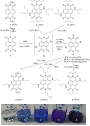


Complexation of a guanidinium-modified calixarene with diverse dyes and investigation of the corresponding photophysical response
Beilstein J. Org. Chem. 2019, 15, 1394–1406, doi:10.3762/bjoc.15.139
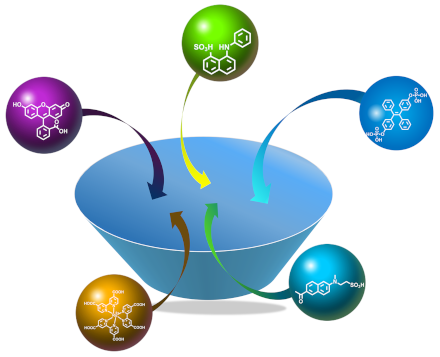
- azocalix[4]arene with rhodamine 123 as the reporter pair [16]. Consequently, with regard to bioimaging, the study of the complexation between macrocycles and two-photon probes is meaningful as two-photon excitation microscopy exhibits several distinct advantages including a deeper tissue penetration

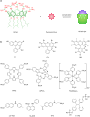


Design and synthesis of multivalent α-1,2-trimannose-linked bioerodible microparticles for applications in immune response studies of Leishmania major infection
Beilstein J. Org. Chem. 2019, 15, 623–632, doi:10.3762/bjoc.15.58
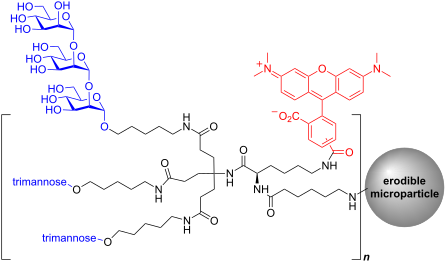
- of the commercially available rhodamine dye, TAMRA (555ex/580em), to the dendrimer would allow for standard immunofluorescence assays, to track the microparticle following cellular uptake and intracellular processing. TAMRA’s high photostability, low pH sensitivity and ease of incorporation through


Novel solid-phase strategy for the synthesis of ligand-targeted fluorescent-labelled chelating peptide conjugates as a theranostic tool for cancer
Beilstein J. Org. Chem. 2018, 14, 2665–2679, doi:10.3762/bjoc.14.244
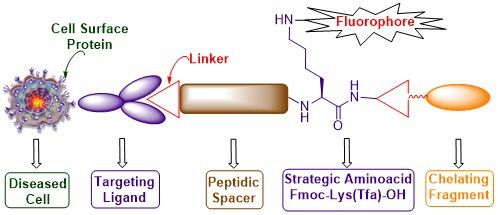
- groups such as Trt (chlorotrityl), Mtt (4-methyltrityl), Mmt (4-methoxytrityl) are employed to synthesise the ligand targeted fluorescent tagged bioconjugates. Using this methodology, DUPA rhodamine B conjugate (DUPA = 2-[3-(1,3-dicarboxypropyl)ureido]pentanedioic acid), targeting prostate specific
- membrane antigen (PSMA) expressed on prostate, breast, bladder and brain cancers and pteroate rhodamine B, targeting folate receptor positive cancers such as ovarian, lung, endometrium as well as inflammatory diseases have been synthesized. In vitro studies using LNCaP (PSMA +ve), PC-3 (PSMA −ve, FR −ve
- resin. The protecting groups of other amino acids present in 11 remain intact during this process. After the successful cleavage of the Tfa protecting group to give 11, the free ε-amino group was covalently bonded to a fluorescent tag such as rhodamine B using standard peptide coupling chemistry to




Rational design of boron-dipyrromethene (BODIPY) reporter dyes for cucurbit[7]uril
Beilstein J. Org. Chem. 2018, 14, 1961–1971, doi:10.3762/bjoc.14.171
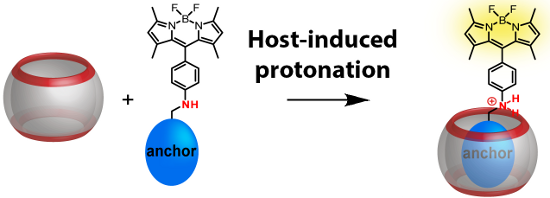
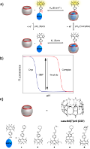
- , or the design of self-inclusion complexes, in which an outer cavity-attached rhodamine was intramolecularly bound in the CB7 cavity. As an alternative, it has been previously suggested that host-assisted protonation of a cavity-binding functional moiety (an “anchor group”) and a suitably attached
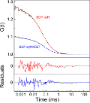
- the diffusion coefficient of the 2•CB7 complex in comparison to the free 2 dye. FCS autocorrelation curves (Figure 6) were analysed to obtain the diffusion times tdiff of 2 and the 2•CB7 complex and then converted into diffusion coefficients D using the reported standard rhodamine 6G (D = 2.80 × 10⁻⁶




Design and biological characterization of novel cell-penetrating peptides preferentially targeting cell nuclei and subnuclear regions
Beilstein J. Org. Chem. 2018, 14, 1378–1388, doi:10.3762/bjoc.14.116
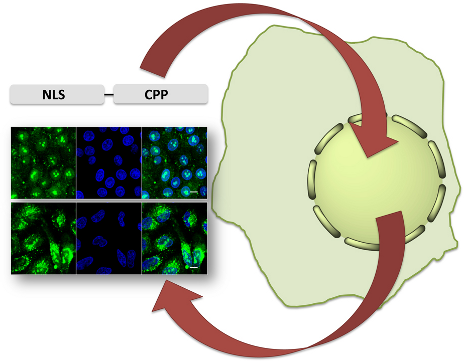
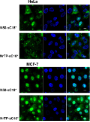
- targeting sequences alone (Figure 4). Rádis-Baptista et al. recently reported about the effective uptake of rhodamine B-labeled NrTP in different tumor cell lines [3][27]. Within their studies, the authors used higher concentrations, longer incubation times and other cell lines, what could probably explain



Development of a fluorogenic small substrate for dipeptidyl peptidase-4
Beilstein J. Org. Chem. 2017, 13, 2690–2697, doi:10.3762/bjoc.13.267
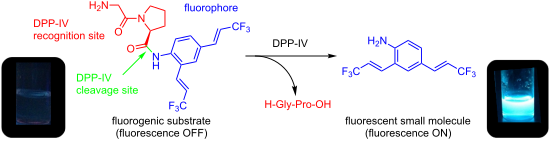
- proceed at a low concentration of DPP-4 (0.07 μg/mL). These results suggest that H-Gly-Pro-1 could be used as an OFF–ON-type fluorogenic substrate for enzymatic reactions of DPP-4, with release of 1 as a fluorophore. In comparison with existing fluorogenic substrates containing rhodamine fluorophore, non


Grip on complexity in chemical reaction networks
Beilstein J. Org. Chem. 2017, 13, 1486–1497, doi:10.3762/bjoc.13.147
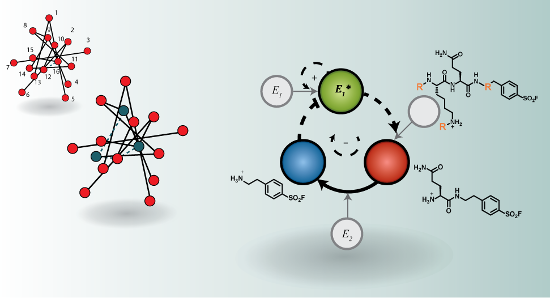
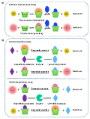
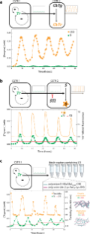
- ), trypsin-catalyzed conversion of a rhodamine substrate (S) to a fluorescent product (P) in the presence of a strong inhibitor (soybean trypsin inhibitor, STI), and trypsin-catalyzed fragmentation of a polycation (in purple) in the presence of a polyanion (in cyan). Adapted with permission from [94




Membrane properties of hydroxycholesterols related to the brain cholesterol metabolism
Beilstein J. Org. Chem. 2017, 13, 720–727, doi:10.3762/bjoc.13.71
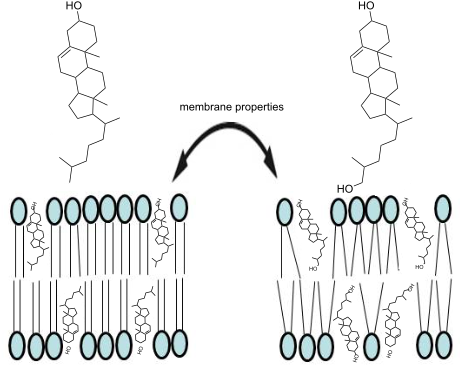
- known for the formation and coexistence of lateral disordered (ld) and ordered (lo) domains. The domain structure was visualized by labeling the membrane with the ld marker 1,2-dioleoyl-sn-glycero-3-phosphoethanolamine-N-(lissamine rhodamine B sulfonyl) (ammonium salt) (N-Rh-DOPE) and recording z-stacks


Novel β-cyclodextrin–eosin conjugates
Beilstein J. Org. Chem. 2017, 13, 543–551, doi:10.3762/bjoc.13.52
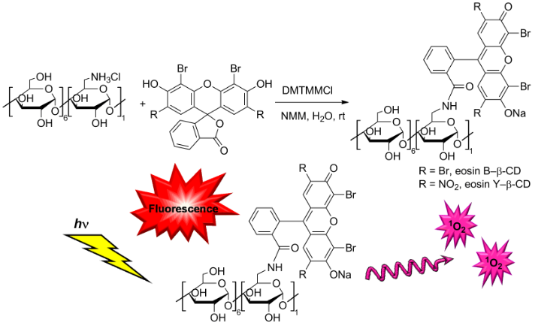
- -yl)-4-methylmorpholinium chloride (DMTMMCl), a coupling reagent frequently used in peptide synthesis. Malanga et al. recently reported on the preparation of xanthene-dye-appended CDs with the most commonly used fluorescent probes rhodamine and fluorescein (Flu, 1). The conjugation of the 6-monoamino



Chemical probes for competitive profiling of the quorum sensing signal synthase PqsD of Pseudomonas aeruginosa
Beilstein J. Org. Chem. 2016, 12, 2784–2792, doi:10.3762/bjoc.12.277
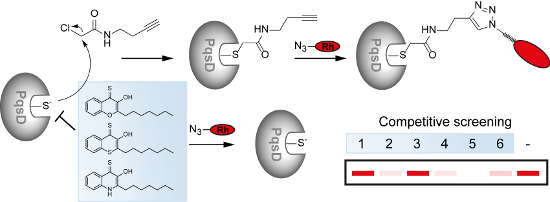
- protein reactive groups, which have been reported to exhibit selectivity for active site cysteines [19] (Supporting Information File 1, Figure S1). Each probe was equipped with a terminal alkyne handle for in-gel analysis by fluorescence tagging via click chemistry with a corresponding rhodamine azide
- Escherichia coli BL21 followed by affinity purification by an ÄKTA chromatography system equipped with a StrepTrap HP column. The individual probes were incubated with purified PqsD for 30 min and a rhodamine fluorescent reporter tag was appended by click chemistry. The remaining non-covalently bound probe
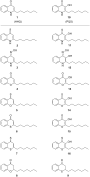
- probe CA2. Library of HHQ and PQS analogues. Competitive profiling platform. A) Schematic representation of the competitive labelling strategy with an alkyne probe (green) and potential inhibitors (blue). Rh = rhodamine. B) Initial screening of our small library of HHQ (1–9) and PQS (10–16) analogues



Biomimetic synthesis and HPLC–ECD analysis of the isomers of dracocephins A and B
Beilstein J. Org. Chem. 2016, 12, 2523–2534, doi:10.3762/bjoc.12.247
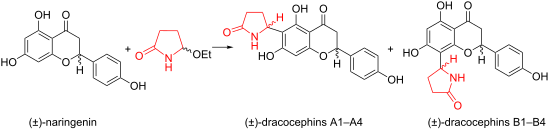
- increase P-gp inhibitory activity [18]. Based on the unaltered accumulation of rhodamine 123, a P-gp substrate fluorescent dye, in the P-gp transfected L5178MDR cells, we observed that none of the synthesized compounds inhibits this transporter. The antioxidant activity of dracocephins A and B was also


Synthesis of a deuterated probe for the confocal Raman microscopy imaging of squalenoyl nanomedicines
Beilstein J. Org. Chem. 2016, 12, 1127–1135, doi:10.3762/bjoc.12.109
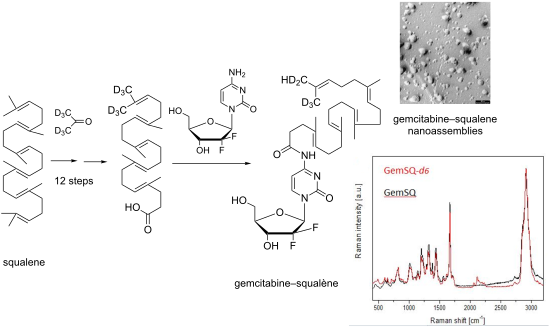
- , the use of fluorescent probes requires the covalent binding of large dye molecules (bodipy, cyanine, rhodamine etc, ...) to the drug conjugate, thus potentially modifying its physicochemical profile as well as the in vivo fate and the pharmacological activity. A simple encapsulation of an amphiphilic


New synthetic strategies for xanthene-dye-appended cyclodextrins
Beilstein J. Org. Chem. 2016, 12, 537–548, doi:10.3762/bjoc.12.53
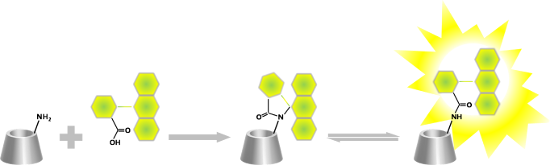
- inexpensive dyes, we prepared rhodamine- and fluorescein-appended cyclodextrins. The compounds were characterized by NMR and IR spectroscopy and MS spectrometry, their UV–vis spectra were recorded at various pH, and their purity was determined by capillary electrophoresis. Two potential models for the
- supramolecular assembly of the xanthene-dye-appended cyclodextrins were developed based on the set of data collected by the extensive NMR characterization. Keywords: DMT-MM; fluorescein; rhodamine; supramolecular assembly; Introduction Cyclodextrins (CDs) are cyclic oligosaccharides consisting of 6, 7 or 8
- representatives of this class are fluorescein and rhodamine (Figure 1), which have been applied as chemosensors [4] and have been widely exploited in various areas such as cell biology, microscopy, biotechnology, and ophthalmology due to their versatile photophysical properties. However, the chemical modification


Synthesis and spectroscopic properties of β-triazoloporphyrin–xanthone dyads
Beilstein J. Org. Chem. 2015, 11, 1434–1440, doi:10.3762/bjoc.11.155
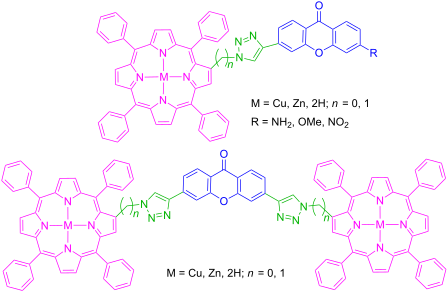
- –tetrathiafulvalenes [14], porphyrin–cyanines [15], porphyrin–carotenes [16], porphyrin–arene diimide [17] and porphyrin–fluorocene or rhodamine [18] have also been synthesized in which the porphyrin unit acts as an electron acceptor. Recently, the 1,2,3-triazole scaffold has been successfully employed to connect


Potential of acylated peptides to target the influenza A virus
Beilstein J. Org. Chem. 2015, 11, 589–595, doi:10.3762/bjoc.11.65
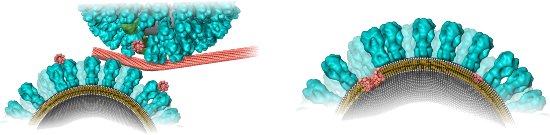
- synthesized the s2s construct with a terminal rhodamine fluorophore. This compound was mixed with DOPC giant unilamellar vesicles (GUV) or human erythrocytes. In both cases clear membrane labeling could be detected (Figure 6). To assess how strong membrane incorporation of these peptides can perturb membranes
- for 24 h at 37 °C. Error bars indicate the standard deviation of three experiments. Fluorescence microscopy images of GUVs (left) and human erythrocytes (right) after incubation with C18-s2s-TAMRA. The overlap of DIC and rhodamine channels demonstrate the labeling of membranes by the fluorescent


Synthetic strategies for the fluorescent labeling of epichlorohydrin-branched cyclodextrin polymers
Beilstein J. Org. Chem. 2014, 10, 3007–3018, doi:10.3762/bjoc.10.319
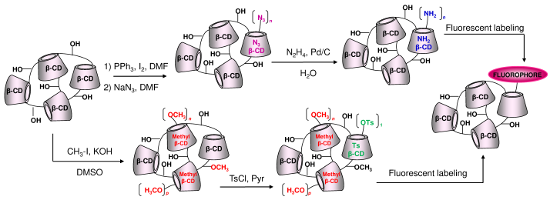
- prepared either in well water-soluble form or as gels of high swelling. Two versatile synthetic strategies for introducing a fluorescent tag (rhodamine, fluorescein, nitrobenzofuran or coumarin) into the water-soluble epichlorohydrin branched cyclodextrin polymers were worked out and compared. The
- techniques and capillary electrophoresis. The applied synthetic routes were evaluated based on the molecular weight, cyclodextrin content of the products and the efficiency of labeling. Keywords: coumarin; fluorescein; functionalized monomers and polymers; nitrobenzofurazan; rhodamine; Introduction
- , we report the controlled, regioselective fluorescent labeling of neutral and cationic epichlorohydrin branched β-CD polymer with four different dyes (rhodamine, fluorescein, coumarin and nitrobenzofurazan). Our goal was the development of versatile synthetic strategies, yielding key intermediates of


Visible-light photoredox catalyzed synthesis of pyrroloisoquinolines via organocatalytic oxidation/[3 + 2] cycloaddition/oxidative aromatization reaction cascade with Rose Bengal
Beilstein J. Org. Chem. 2014, 10, 1233–1238, doi:10.3762/bjoc.10.122
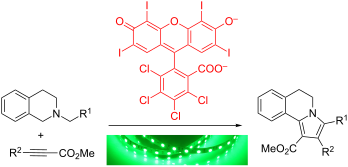
- Rhodamine B or Eosin Y were less efficient compared to Rose Bengal (Table 1, entries 2 and 3, respectively). Several solvents were tested without an improvement in the yield of the product (Table 1, entries 4–9). Finally, after tuning the relative amounts of the reagents, the product 3aa was isolated in 76


Metal and metal-free photocatalysts: mechanistic approach and application as photoinitiators of photopolymerization
Beilstein J. Org. Chem. 2014, 10, 863–876, doi:10.3762/bjoc.10.83
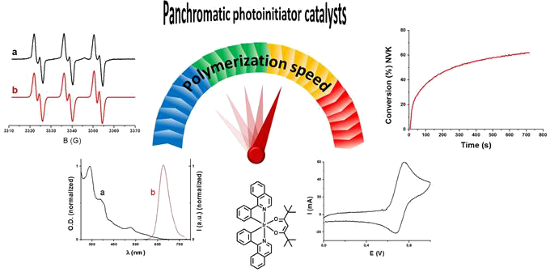
- , potential toxicity and limited availability of these structures, metal-free organic dye compounds (e.g., Eosin-Y, Nile Red, Alizarine Red S, perylene derivative or Rhodamine B etc.) were recently proposed for cooperative asymmetric organophotoredox catalysis [13][14]. Photoredox catalysis was then






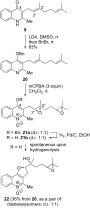
Synthesis and biological activities of the respiratory chain inhibitor aurachin D and new ring versus chain analogues
Beilstein J. Org. Chem. 2013, 9, 1551–1558, doi:10.3762/bjoc.9.176
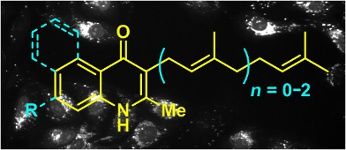
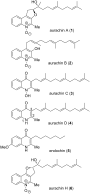
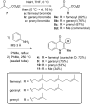
- TMRM and imaged in the rhodamine channel at 200× magnification. Synthesis of aurachin D (4) and geranyl (9), prenyl (10) and methyl (11) analogues. Strategy toward the heterocyclic core of aurachin H. Synthesis of aurachin D analogues with aromatic variations. Cytotoxicity tests on HCT-116 human colon


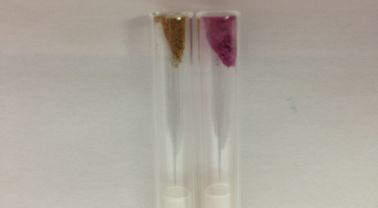
Synthesis and spectroscopic properties of 4-amino-1,8-naphthalimide derivatives involving the carboxylic group: a new molecular probe for ZnO nanoparticles with unusual fluorescence features
Beilstein J. Org. Chem. 2013, 9, 1311–1318, doi:10.3762/bjoc.9.147
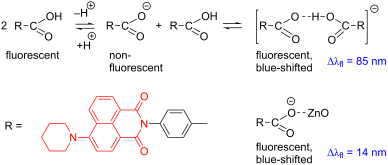
- -photon absorption spectrum with that of rhodamine B (RhB) in methanol, and by normalizing by its quantum yield. The values for RhB found in the literature have been determined with the same typical pulse duration of about 150 fs [19]. Methyl 4-(6-chloro-1,3-dioxo-1H-benzo[de]isoquinolin-2(3H)-yl)benzoate


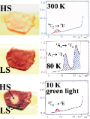
Spin state switching in iron coordination compounds
Beilstein J. Org. Chem. 2013, 9, 342–391, doi:10.3762/bjoc.9.39







![[Graphic 1]](/bjoc/content/inline/1860-5397-9-39-i3.png?max-width=637&scale=1.18182) ) modes versus the anion volu...
) modes versus the anion volu...