Search results
Search for "toluene" in Full Text gives 1213 result(s) in Beilstein Journal of Organic Chemistry. Showing first 200.
Silica gel with covalently attached bambusuril macrocycle for dicyanoaurate sorption from water
Beilstein J. Org. Chem. 2025, 21, 2604–2611, doi:10.3762/bjoc.21.201
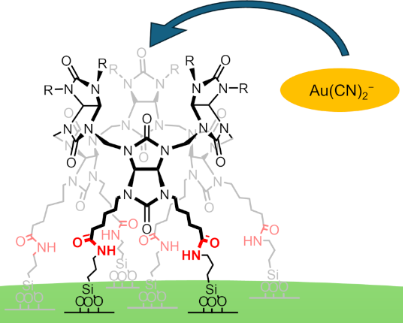
- . First, SG, chosen as the solid substrate, was reacted with an excess of 3-aminopropyltriethoxysilane (APTES) in toluene under reflux to obtain a-SG material with amino groups introduced on the SG surface [15][16]. In the second step, a-SG was treated with BU1, in the presence of 1-hydroxybenzotriazole
- Silica gel (8.01 g) was dispersed in toluene (24 mL) and stirred under argon atmosphere, while heated up to 115 °C. Then, APTES (6 mL) was added, and the dispersion was stirred under inert atmosphere at elevated temperature for 5 h. After cooling, the dispersion was filtered, washed thoroughly with
- toluene, ethanol and acetone to remove unreacted APTES and dried in vacuo (50 °C) overnight in order to get a-SG [15][16]. Further, to prepare covalent SG-NHCO-BU1, a-SG (0.9 g) was suspended in DMF (15 mL) and shaken at ambient temperature for 30 min. BU1 (0.1 g, 1 equiv) was dissolved in a minimum


Visible-light-driven NHC and organophotoredox dual catalysis for the synthesis of carbonyl compounds
Beilstein J. Org. Chem. 2025, 21, 2584–2603, doi:10.3762/bjoc.21.200
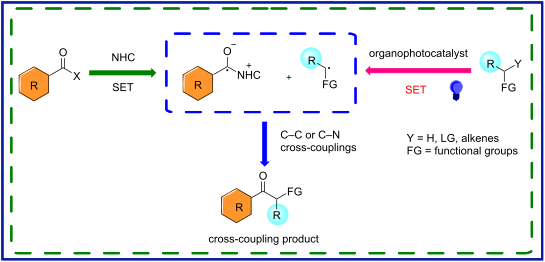
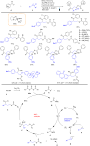
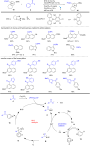
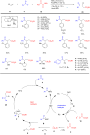
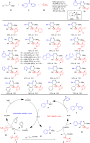
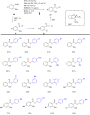
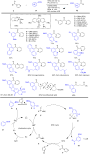
- higher oxidation potential (E1/2 = +1.52 V). This reaction was examined using different solvents, and it was found that toluene and 1,4-dioxane gave low yields (4–5% yield). Under blue LED irradiation, Ir-based PC is photoexcited, and its excited state is reductively quenched by the electron-rich arene





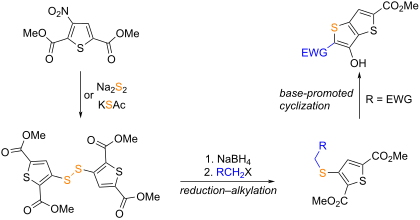
Assembly strategy for thieno[3,2-b]thiophenes via a disulfide intermediate derived from 3-nitrothiophene-2,5-dicarboxylate
Beilstein J. Org. Chem. 2025, 21, 2489–2497, doi:10.3762/bjoc.21.191
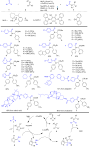
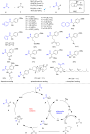
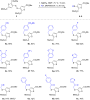
- formation of carboxylic acid 9bA, isolated in 71% yield (Scheme 7). In addition, an attempt to cyclize 6b in the presence of DBU without a solvent at 110 °C led to significant destruction of the substrate and product 9b was obtained with a yield of about 20%. Cyclization of substrate 4a with NaH in toluene
- ,b, and 8a were obtained in 62%, 55%, and 45% yields, respectively. In turn, the suitable reaction conditions for cyclization of substrates 6a–c were their treatment with excess Mg(OMe)2 in a solution of methanol/toluene, which afforded products 9a–c in 66–73% yield. It should be noted that the bases



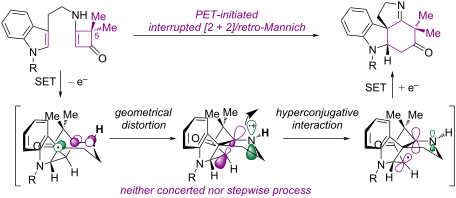
Synthesis of the tetracyclic skeleton of Aspidosperma alkaloids via PET-initiated cationic radical-derived interrupted [2 + 2]/retro-Mannich reaction
Beilstein J. Org. Chem. 2025, 21, 2470–2478, doi:10.3762/bjoc.21.189
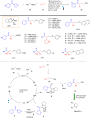
- substrate 9f was subjected to the optimized conditions, which resulted in both a lower conversion and yield (Table 1, entry 9). In contrast, when the reaction of 9f was performed in a mixed MeCN/toluene 10:1 solvent, the conversion of substrate 9f to product 10f decreased, but the yield increased to 56


The intramolecular stabilizing effects of O-benzoyl substituents as a driving force of the acid-promoted pyranoside-into-furanoside rearrangement
Beilstein J. Org. Chem. 2025, 21, 2456–2464, doi:10.3762/bjoc.21.187
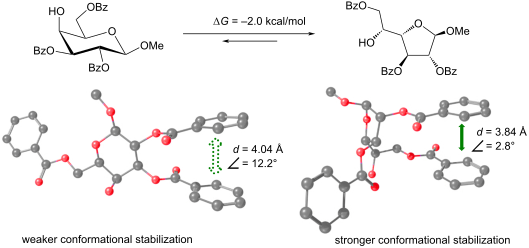
- five-membered ring due to the formation of an intramolecular hydrogen bond (Figure 2A). It has been shown that furanoside is preferentially formed in nonpolar solvents such as toluene. This form was successfully fixed and purified as benzoate derivative. Bulky substituents can also stabilize the




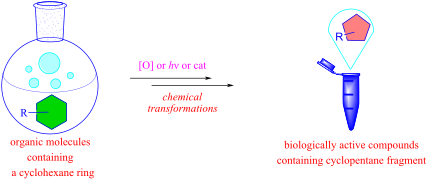
Transformation of the cyclohexane ring to the cyclopentane fragment of biologically active compounds
Beilstein J. Org. Chem. 2025, 21, 2416–2446, doi:10.3762/bjoc.21.185
- Me2S to give dialdehyde 28 and reaction of compound 28 with colloidal potassium in toluene. During aldol condensation in the presence of morpholine-camphorsulfonic acid (CSA) or ʟ-proline, a stable aldehyde 30 was isolated in yields of 50% and 75%, respectively. Decarbonylation and corresponding


The high potential of methyl laurate as a recyclable competitor to conventional toxic solvents in [3 + 2] cycloaddition reactions
Beilstein J. Org. Chem. 2025, 21, 2389–2415, doi:10.3762/bjoc.21.184
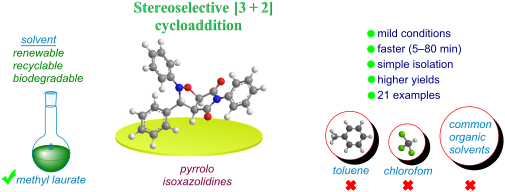
- for the preparation of such cyclic compounds and/or their fused cyclic systems typically necessitate the use of toxic solvents, including chloroform, benzene, toluene etc. [32][53][54][55][56][57][58][59]. Indeed, the selection of conventional organic solvents, including benzene, toluene and
- ADMETLab 3.0 platform [87] are illustrated in Figure 2a. Conversely, the oral toxicity values of methyl laurate, in conjunction with toluene and chloroform – two conventional solvents that are commonly employed in [3 + 2] cycloaddition reactions were calculated with ProTox 3.0 (a webserver for the
- , the conventional solvents that are typically employed as reaction media encompass a range of options, including tetrahydrofuran (THF) (a problematic solvent, p), dioxane (considered hazardous, h), benzene (designated as highly hazardous, hh), toluene (p), chloroform (hh), acetonitrile (p), sulfolane


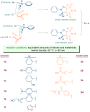




Comparative analysis of complanadine A total syntheses
Beilstein J. Org. Chem. 2025, 21, 2334–2344, doi:10.3762/bjoc.21.178
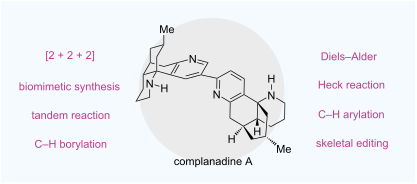
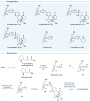
- synthesis [Pd(OAc)2, t-Bu2MePHBF4, Cs2CO3, and CsOPiv in toluene at 130 °C] was utilized to afford the C–H arylation in 78% yield with a 1:4 ratio of 68/69 [36]. Subsequent reduction of the pyridine N-oxide with Pd(OH)2/C and H2 followed by acidic Boc removal completed their total synthesis of complanadine



Pathway economy in cyclization of 1,n-enynes
Beilstein J. Org. Chem. 2025, 21, 2260–2282, doi:10.3762/bjoc.21.173
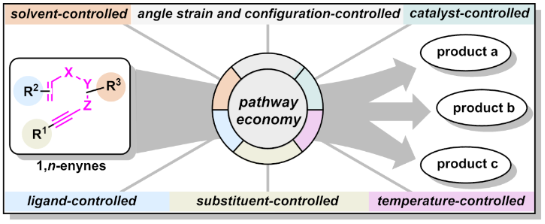
- 1,5-enynes 1 as substrates involving alkyne alkoxylation and dienol ether aromaticity-driven processes (Scheme 2) [8]. The reaction pathway was decisively influenced by the choice of solvent. Under gold catalysis, with toluene as the solvent and 2 equiv of methanol serving as the nucleophile, the


Thiadiazino-indole, thiadiazino-carbazole and benzothiadiazino-carbazole dioxides: synthesis, physicochemical and early ADME characterization of representatives of new tri-, tetra- and pentacyclic ring systems and their intermediates
Beilstein J. Org. Chem. 2025, 21, 2220–2233, doi:10.3762/bjoc.21.169
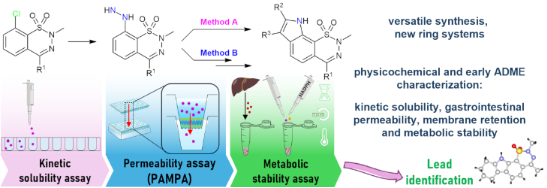
- conditions. Finally, we were able to achieve the Fischer cyclization of compounds 7a–j by using p-toluenesulfonic acid monohydrate as catalyst in boiling toluene (method A, step 2) [26][27]. On the other hand, the one-pot synthesis of target compounds 3a–j starting from hydrazino derivatives 5a,b was
- 1) afforded hydrazones (E)-9a,b. According to LC–MS, only the (E) isomers were present in the reaction mixtures and in the crude products. Hydrazones (E)-9a,b were then cyclized by refluxing in toluene in the presence of p-toluenesulfonic acid monohydrate (method A, step 2). It is noteworthy that
- C17H18N4O2S, 342.1156; found, 342.1151. General methods for the synthesis of compounds 3a–j and 10a,b. Method A, step 2 [26][27]: A suspension of the corresponding crude hydrazone 7 or 9 (100 mg) and p-TsOH monohydrate (1.80 equiv) in toluene (1 mL) was refluxed until the starting material was consumed. Then


C2 to C6 biobased carbonyl platforms for fine chemistry
Beilstein J. Org. Chem. 2025, 21, 2103–2172, doi:10.3762/bjoc.21.165


α-Ketoglutaric acid in Ugi reactions and Ugi/aza-Wittig tandem reactions
Beilstein J. Org. Chem. 2025, 21, 2021–2029, doi:10.3762/bjoc.21.157
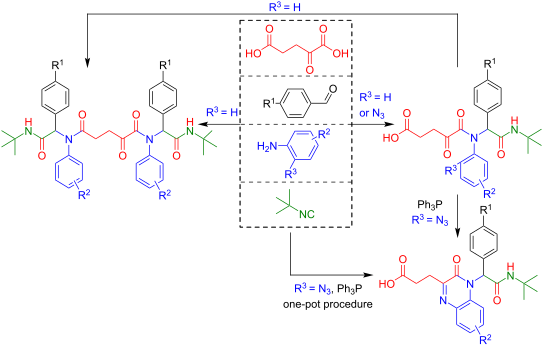
- precipitation from non-polar solvents such as hexane and toluene did not lead to a complete separation of quinoxalinones 9 and Ph3PO. We attribute this to the ability of Ph3PO to form a strong hydrogen bond between the phosphoryl oxygen and a proton from the donor group of the second molecule [56][57][58], in


Photochemical reduction of acylimidazolium salts
Beilstein J. Org. Chem. 2025, 21, 1973–1983, doi:10.3762/bjoc.21.153
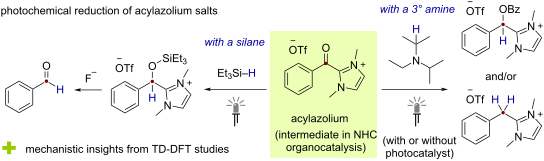
- employed including carboxylic acids [37], xanthates [38], electron-rich toluene or heteroatom-substituted species [39][40][41][42], organoboron compounds [43][44] and organosilanes [43][45]. Moreover, three-component radical relay processes employing styrene derivatives have also been widely studied. In


Enantioselective desymmetrization strategy of prochiral 1,3-diols in natural product synthesis
Beilstein J. Org. Chem. 2025, 21, 1932–1963, doi:10.3762/bjoc.21.151
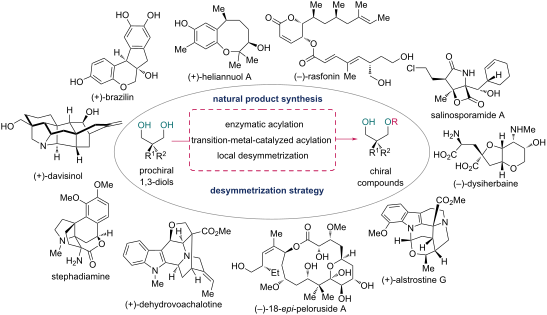
- . Alcohol 28 was obtained from 27 in two steps, and was subsequently converted to hyperione A (30) and ent-hyperione B (31) by refluxing in toluene with Shvo’s catalyst 29. Notably, the authors found that hyperione A (30) could be obtained in higher yield and enantiopurity from alcohol 28 via a two-step






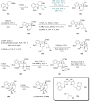
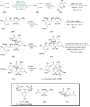


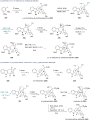


Synthesis of N-doped chiral macrocycles by regioselective palladium-catalyzed arylation
Beilstein J. Org. Chem. 2025, 21, 1917–1923, doi:10.3762/bjoc.21.149
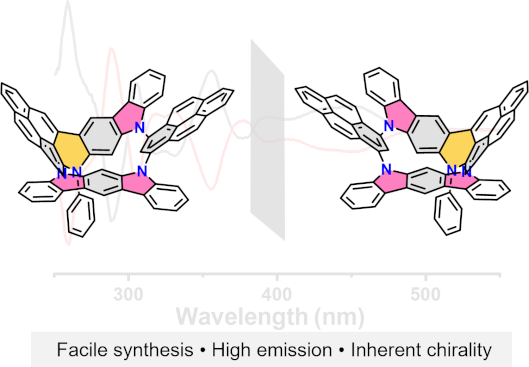
- . Synthesis of N-doped macrocycles MC1, MC2, and MC3. Reaction conditions: a) Pd2(dba)3, Pt-Bu3·HBF4, NaOt-Bu, toluene, 110 °C, 24 h. 3a: 16%; 3b: 10%. b) Pd(OAc)2, PMe(t-Bu)2·HBF4, 1,8-diazabicyclo[5.4.0]undec-7-ene (DBU), DMAc, microwave, 170 °C, 5 h. MC1: 5%; MC2: 90%; MC3: 85%. Supporting Information




Preparation of spirocyclic oxindoles by cyclisation of an oxime to a nitrone and dipolar cycloaddition
Beilstein J. Org. Chem. 2025, 21, 1890–1896, doi:10.3762/bjoc.21.146
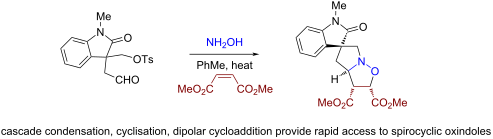
- leaving group and activated, electron-poor dipolarophiles has been reported [31][32]. Treatment of aldehyde 4 with hydroxylamine in toluene at 60 °C for 1–3 h resulted in loss of the aldehyde as judged by 1H NMR spectroscopy of the crude mixture. When this was carried out in the presence of N


Systematic pore lipophilization to enhance the efficiency of an amine-based MOF catalyst in the solvent-free Knoevenagel reaction
Beilstein J. Org. Chem. 2025, 21, 1854–1863, doi:10.3762/bjoc.21.144
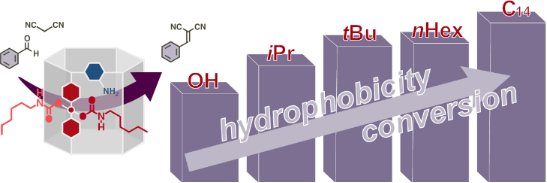
- molecule, yielding BMN as the final product (Scheme 1B) [49]. In the initial trial, 12 mol % of the MOF catalyst was added to a vial containing benzaldehyde, malononitrile, toluene as solvent, and dodecane as internal standard, and the reaction was shaken at 50 °C. Aliquots were collected at 30 minutes
- increases the rate of the condensation reaction. Thus, we initially supposed that, though dodecane was only 5.6 vol % to toluene, its addition was decreasing the difference in lipophilicity between the MOF and the bulk solution, reducing the driving force to remove water from the MOF pores. When we compared
- reaction mixture. To address both concerns of performing the neat Knoevenagel reaction – product precipitation and the incomplete submersion of the MOF catalyst – we reduced the catalyst amount to 1.5 mol %. Surprisingly, the reaction conversions were higher than those in toluene with 12 mol % catalyst


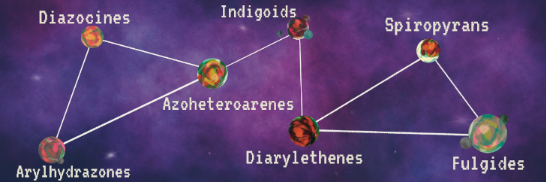
Photoswitches beyond azobenzene: a beginner’s guide
Beilstein J. Org. Chem. 2025, 21, 1808–1853, doi:10.3762/bjoc.21.143


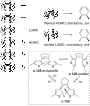


3,3'-Linked BINOL macrocycles: optimized synthesis of crown ethers featuring one or two BINOL units
Beilstein J. Org. Chem. 2025, 21, 1719–1729, doi:10.3762/bjoc.21.134
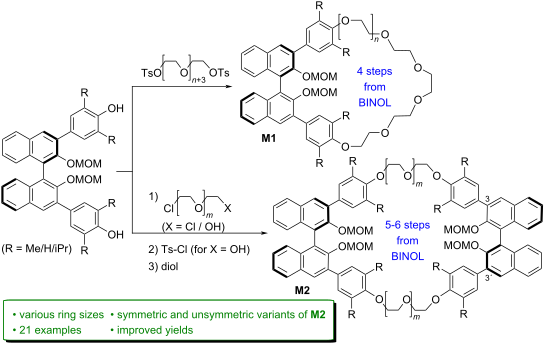
- ]. However, under the same coupling conditions (Pd2(dba)3, P(o-Tol)3, n-Bu4N+OH−, toluene/H2O, 90 °C), the reaction of diiodide 1 with bisboronic acids 75/6/7/8 gave only low yields of the desired macrocycles Me-M1 (7/32/22/21% for Me-M15/6/7/8). Thus, the macrocyclization via two-fold Suzuki coupling was
- routes towards macrocycles featuring one BINOL unit. a) Two-fold Suzuki coupling and b) two-fold Williamson synthesis. Reagents and conditions: i) bis(boronic ester) 75/6/7/8 (1.0. equiv), Pd2(dba)3 (0.1 equiv), P(o-Tol)3 (0.2 equiv), n-Bu4N+OH− (3.2. equiv), toluene/H2O 5:1, 90 °C; ii) ethylene glycol
- shown. Initially attempted route towards bis-BINOL macrocycles based on precursors Me-36 or Me-46. Conditions: i) 96 (2.2 equiv), Pd2(dba)3 (0.1 equiv), P(o-Tol)3 (0.2 equiv), n-Bu4N+OH− (3.2 equiv), toluene/H2O 5:1, 90 °C; ii) 96 (2.2. equiv), Cs2CO3 (3.0 equiv), CH3CN, 80 °C. Synthetic route towards


Continuous-flow-enabled intensification in nitration processes: a review of technological developments and practical applications over the past decade
Beilstein J. Org. Chem. 2025, 21, 1678–1699, doi:10.3762/bjoc.21.132
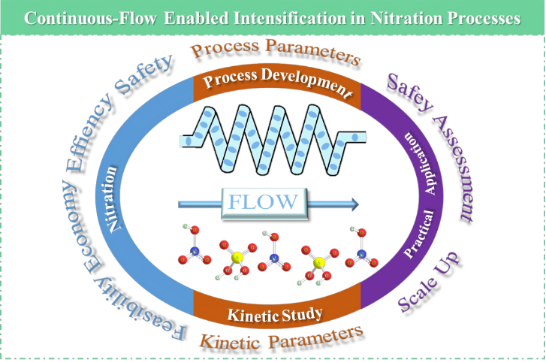
- nitration scale-up processes. HAZOP (hazard and operability study) also serves as a pivotal safety assessment methodology in continuous-flow nitration process development, leveraging its systematic framework for risk identification and process safety optimization. For instance, the nitration of toluene is



Synthesis of optically active folded cyclic dimers and trimers
Beilstein J. Org. Chem. 2025, 21, 1603–1612, doi:10.3762/bjoc.21.124

- diiodobenzene 5 using a Pd2(dba)3/PPh3/CuI catalytic system in toluene and Et3N under diluted conditions (monomer concentration = approximately 1.3 × 10⁻³ M) was performed. The corresponding cyclic dimer (Sp)-6 and trimer (Sp)-7 were detected mainly by thin-layer chromatography (TLC) and separated roughly using
- to be 0.65. Their PL of the cast films fabricated from the toluene solutions were also measured, and weak and inefficient luminescence were observed because of the aggregation-caused PL quenching. The PL lifetimes of (Sp)-6 and (Sp)-7 in the CHCl3 solutions were measured at each PL peak maximum; and
- '-dimethoxybiphenyl), PPh3, CuI, Bu4NF, MeOH, dehydrated THF, dehydrated toluene, and 1,4-diiodobenzene (5). Et3N was purchased and distilled over KOH. (Sp)-1 [31], (Rp)-1 [31], and 2 [48] were prepared as described in the literature. Synthesis of (Sp)-3 A mixture of (Sp)-1 (49.6 mg, 0.081 mmol), 2 (25.3 mg, 0.059



Thermodynamic equilibrium between locally excited and charge transfer states in perylene–phenothiazine dyads
Beilstein J. Org. Chem. 2025, 21, 1577–1586, doi:10.3762/bjoc.21.121
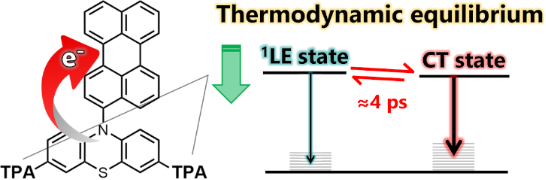
- phenothiazine derivative, 12-phenyl-12H-benzo[a]phenothiazine, in toluene at room temperature has been estimated to be 28 ps (with an additional minor 0.7 ps component attributed to small-scale structural changes) [17]. It is also noted that the relaxation dynamics depend on the molecular structure and the
- surrounding environment. Considering that Pe–PTZ(TPA)2 is significantly larger than that in the aforementioned study, and that benzene has a slightly higher viscosity than toluene (0.60 and 0.56 cP at 297 K, respectively), the time constant of 2.43 ps of the first EAS (EAS1) can be attributed to




Azide–alkyne cycloaddition (click) reaction in biomass-derived solvent CyreneTM under one-pot conditions
Beilstein J. Org. Chem. 2025, 21, 1544–1551, doi:10.3762/bjoc.21.117
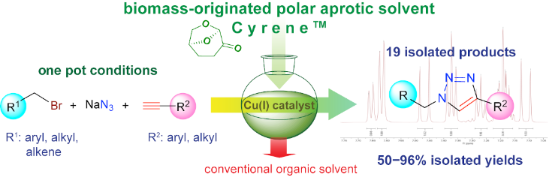
- used for click reactions such as chlorinated hydrocarbons [15][16], toluene [16], tetrahydrofuran (THF) [17][18], N,N-dimethylformamide (DMF) [19][20], N-methylpyrrolidone (NMP) [21], dimethyl sulfoxide (DMSO) [17][19][22], or acetonitrile [23] are classified into Class 1 and 2, of which applications
- capillary column (15 m × 0.25 mm × 0.25 µm) using H2 as a carrier gas. For the analysis, 10 μL of the reaction mixture was dissolved in 1 mL of ethyl acetate, followed by adding 10 μL toluene as the internal standard. Heating profile of GC–FID analysis: The initial temperature was 100 °C and was hold for


Ambident reactivity of enolizable 5-mercapto-1H-tetrazoles in trapping reactions with in situ-generated thiocarbonyl S-methanides derived from sterically crowded cycloaliphatic thioketones
Beilstein J. Org. Chem. 2025, 21, 1508–1519, doi:10.3762/bjoc.21.113
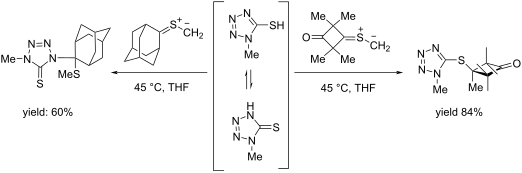
- , trapping reactions (toluene, 60 °C) performed with 2d, functionalized with two spiro-cyclohexyl rings, and 5-mercaptotetrazoles 4a‒e led selectively to dithioacetals 10m‒q, which could be separated chromatographically as crystalline materials in good yields (46‒89%). Isomeric thioaminals of type 9 were not
- regioselectivity in high yields. Upon heating to 65 °C in toluene solution, in analogy to the well-known compounds 2a and 2b, they extruded N2 and the in situ-generated reactive thiocarbonyl S-methanides 1c and 1d, in absence of any trapping reagent, underwent 1,3-dipolar electrocyclization yielding the
- Table 1) in 1 mL of THF was heated at 45 °C (for 2a and 2b) or in 1 mL of toluene at 65 °C (for 2c and 2d). The evolution of nitrogen was controlled using a nitrometer (gas burette) connected with the reaction flask. In all cases the reaction was completed after ca. 3 h. After this time, the solvent was


Microwave-enhanced additive-free C–H amination of benzoxazoles catalysed by supported copper
Beilstein J. Org. Chem. 2025, 21, 1462–1476, doi:10.3762/bjoc.21.108
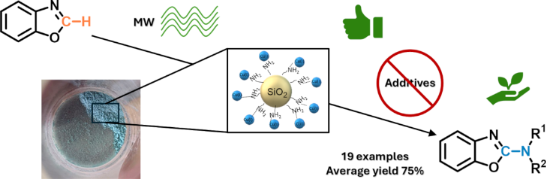
- conditions already reported in the literature for aerobic protocols. As shown in Table 1, entries 1–3, we compared xylene, toluene, and acetonitrile as solvents. According to Bhanage and Wagh [13], Cu(II) catalyses the C–H amination in xylene at 140 °C for 14 hours under oxygen. We tested the reaction in
- refluxing toluene with 20 mol % of CuCl2 and observed a significantly decreased product yield (Table 1, entry 2). As Cao et al. [47] already have reported, acetonitrile improved the reaction efficiency, resulting in an increase in product yield to 78% when the reaction was performed at 80 °C. Interestingly
- of CuCl2 in toluene showed limited effectiveness, achieving 82% conversion but only a 28% yield of the final product. The remaining resulting mixture included 35% of the intermediate 2a-o and 19% of the hydrolysed product 2a-o-hydrol. However, the reaction performance in acetonitrile improved