Search results
Search for "benzene" in Full Text gives 874 result(s) in Beilstein Journal of Organic Chemistry. Showing first 200.
Thermodynamic equilibrium between locally excited and charge transfer states in perylene–phenothiazine dyads
Beilstein J. Org. Chem. 2025, 21, 1577–1586, doi:10.3762/bjoc.21.121
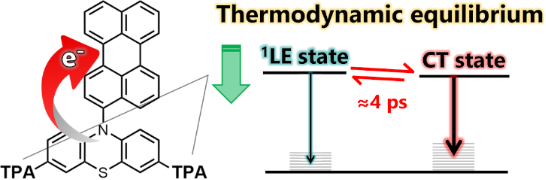
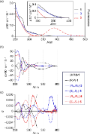
- the degree of electronic interaction between the donor PTZ and acceptor Pe moieties, as indicated by the decreased overlap between HOMO and LUMO. UV–vis absorption spectra of the Pe–PTZ derivatives were recorded in benzene at room temperature (Figure 3a). All compounds exhibited characteristic
- does not necessarily depend on the number of TPA groups. The relative emission quantum yields (Φf) in benzene solution were 2.4, 3.1, 2.4, and 20% for Pe–PTZ, Pe–PTZ(TPA), Pe–PTZ(TPA)2, and Pe–Ph–PTZ(TPA)2, respectively. This order corresponds to the relative intensities of the CT band compared to the
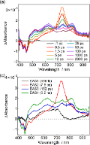
- the transient absorption spectra and EAS of Pe–PTZ(TPA)2 in benzene excited at 350 nm. The excitation at 350 nm predominantly corresponds to an absorption band enhanced by the introduction of TPA groups, suggesting preferential excitation of the PTZ(TPA)2 moiety. Immediately after excitation, ground




Synthesis of an aza[5]helicene-incorporated macrocyclic heteroarene via oxidation of an o-phenylene-pyrrole-thiophene icosamer
Beilstein J. Org. Chem. 2025, 21, 1561–1567, doi:10.3762/bjoc.21.119
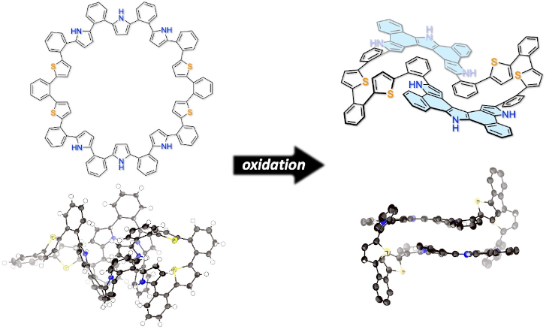
- largest cyclic array in the series. The oxidative fusion reaction with [bis(trifluoroacetoxy)iodo]benzene (PIFA) afforded a cyclophane-type aza[5]helicene-incorporated macrocycle, the structure of which was unambiguously revealed by X-ray diffraction analysis. Its optical properties have been investigated
- macrocycle whose structure has been confirmed by X-ray diffraction analysis. Next, oxidation of 4 was attempted using [bis(trifluoroacetoxy)iodo]benzene (PIFA) in CH2Cl2 at −78 °C (Scheme 2). These reaction conditions had previously proven effective for the oxidation of 3 and other o-phenylene-bridged


Azobenzene protonation as a tool for temperature sensing
Beilstein J. Org. Chem. 2025, 21, 1528–1534, doi:10.3762/bjoc.21.115
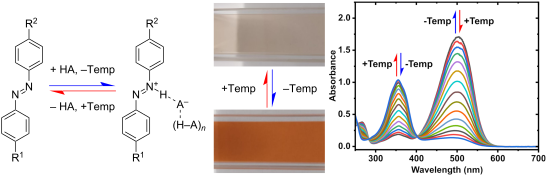
- Due to the lone pairs on their nitrogen atoms, azobenzenes are weak bases. Their basicity can be increased by electron-donating substituents on the benzene rings. para-Alkoxy substitution effectively increases the electron density at the azo-nitrogens without introducing additional protonation sites
- . We opted for methoxy substitution on one or both benzene rings as the simplest alkoxy substituent. The protonation of azobenzene (1), 4-methoxyazobenzene (2), and 4,4'-dimethoxyazobenzene (3) is schematized in Figure 1A. In the presence of a strong acid, these compounds form an equilibrium of neutral


Wittig reaction of cyclobisbiphenylenecarbonyl
Beilstein J. Org. Chem. 2025, 21, 1454–1461, doi:10.3762/bjoc.21.107
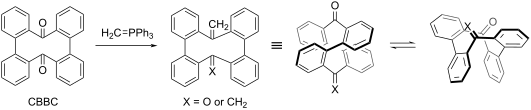
- internally functionalized DBC derivatives [22]. The dihedral angle between the mean planes of the two terminal benzene units is 83°, which is comparable to those of other derivatives. Next, products 3 and 5 were analyzed by variable temperature (VT) 1H NMR spectroscopy. The 1H NMR spectrum of bis-olefin 5 in
- temperature-dependent 1H NMR measurements. The relatively preferable formation of bathtub conformation is attributable to the destabilization of the figure-eight structures by the intramolecular steric repulsion between the exo-methylene units and neighboring benzene rings. Resolution The resolution of rac-3
- , the racemization barrier of 5 (34.8 kcal mol−1) is larger than that of CBBC 1 (33.7 kcal mol−1), which accords with the experimental results. In the transition state TS2, the exocyclic olefin unit a is close to the adjacent benzene ring b, which causes intramolecular steric repulsion to increase the



N-Salicyl-amino acid derivatives with antiparasitic activity from Pseudomonas sp. UIAU-6B
Beilstein J. Org. Chem. 2025, 21, 1388–1396, doi:10.3762/bjoc.21.103
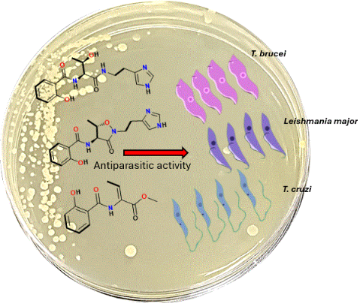
- 1,2-disubstituted benzene ring system was identified by the 1H NMR spectrum showing downfield methine protons at δH 7.88 (dd, J = 8.0, 1.5 Hz, H-5), 7.37 (td, J = 8.0, 1.5 Hz, H-3) 7.01 (d, J = 8.0 Hz, H-2) and 6.92 (t, J = 8.0, H-4) that were consistent with a salicylic acid unit. This was supported


Recent advances in oxidative radical difunctionalization of N-arylacrylamides enabled by carbon radical reagents
Beilstein J. Org. Chem. 2025, 21, 1207–1271, doi:10.3762/bjoc.21.98
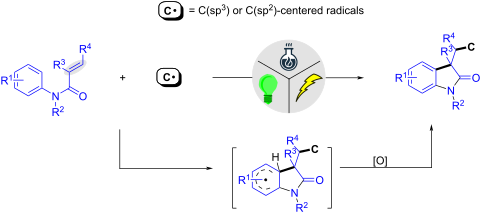
- intramolecular cyclization to form a benzene ring radical intermediate D. Finally, hydrogen abstraction from the radical intermediate by Fe3+(OH) leads to the formation of oxindole compounds 5. A similar reaction was reported by Liang’s group in the same year, as shown in Scheme 4. The study introduced a metal
- . The results indicated that the N-protecting group had little impact on the reaction’s efficiency, and various substrates (e.g., methyl, benzyl, isopropyl) were effectively converted to their respective target products 50a–c. Moreover, benzene rings bearing different substituents, whether electron
- this process, 4CzIPN was employed as the photocatalyst and TfOH as the proton source to ensure the formation of the desired products (Scheme 34) [21]. A range of substituents, including -CH3, -Cl, and -CN, on the benzene ring of N-arylacrylamides (74a–c), were compatible with the reaction conditions












Synthetic approach to borrelidin fragments: focus on key intermediates
Beilstein J. Org. Chem. 2025, 21, 1135–1160, doi:10.3762/bjoc.21.91
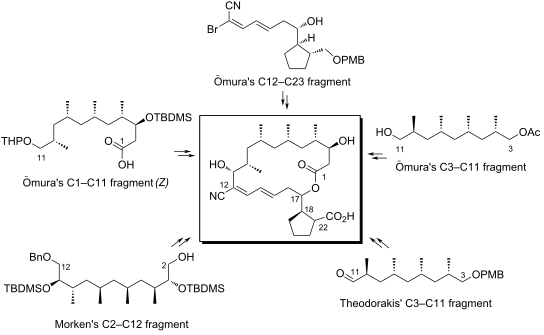
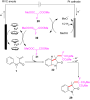
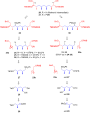
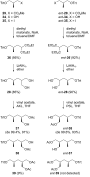
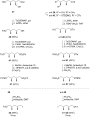
- %), followed by protection of the secondary alcohol as TBDMS ether 81 (98%). The primary alcohol was then liberated using ammonium fluoride in hot methanol (60 °C). Oxidation of this alcohol to a carboxylic acid was achieved using TEMPO and (diacetoxyiodo)benzene (BAIB), completing the synthesis of the target








Gold extraction at the molecular level using α- and β-cyclodextrins
Beilstein J. Org. Chem. 2025, 21, 1116–1125, doi:10.3762/bjoc.21.89
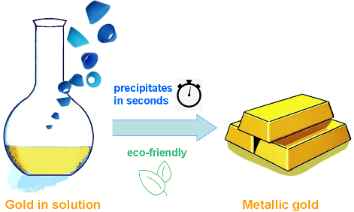
- , led to the quick formation of co-precipitates when added to aqueous solutions of β-CD and KAuBr4 (both at 5 mM): dibutyl carbitol, isopropyl ether, chloroform, dichloromethane, hexane, benzene, and toluene [51]. The most effective one was dibutyl carbitol (DBC), which caused 99.7% precipitation when


Supramolecular assembly of hypervalent iodine macrocycles and alkali metals
Beilstein J. Org. Chem. 2025, 21, 1095–1103, doi:10.3762/bjoc.21.87
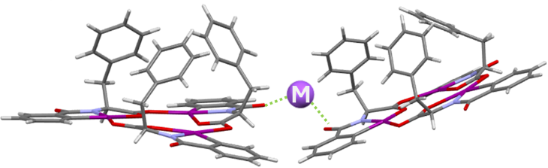
- system [12]. In addition to these covalent bonding interactions, additional secondary bonding (e.g., red-dotted bonds between iodine and oxygen in phenylalanine-based hypervalent iodine macrocycle in benzene system in Figure 1A) can arise in these systems from neighboring atom lone pairs. Secondary
- . Results and Discussion We have reported the synthesis of several variations of valine and phenylalanine-based HIMs that are based on benzene-, naphthalene-, and anthraquinone systems [18][19]. This study employed a phenylalanine and iodobenzoic acid-based HIM system owing to its simplicity in synthesis


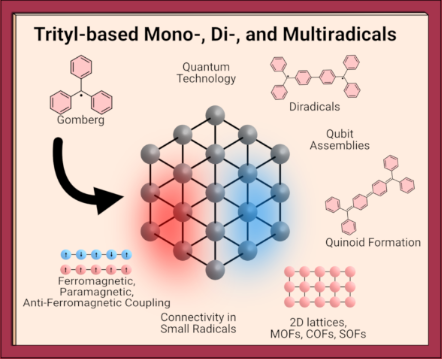
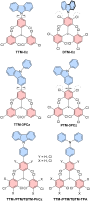
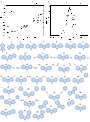
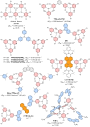
On the photoluminescence in triarylmethyl-centered mono-, di-, and multiradicals
Beilstein J. Org. Chem. 2025, 21, 964–998, doi:10.3762/bjoc.21.80







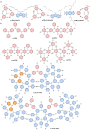
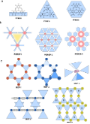


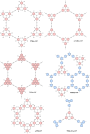
Harnessing tethered nitreniums for diastereoselective amino-sulfonoxylation of alkenes
Beilstein J. Org. Chem. 2025, 21, 947–954, doi:10.3762/bjoc.21.78

- ring was opened in a diastereoselective (SN2 type) and exo-selective manner by a trifluoroacetate anion. The trifluoroacetate anion was conveniently derived from (bis(trifluoroacetoxy)iodo)benzene (PIFA), which was used as the stoichiometric oxidant in the reaction. Overall, this amounted to a highly


Study of tribenzo[b,d,f]azepine as donor in D–A photocatalysts
Beilstein J. Org. Chem. 2025, 21, 935–944, doi:10.3762/bjoc.21.76

- study the diverse or similar properties between the antiaromatic molecules a and b, in which the main difference is the presence of a third aromatic ring. According to the literature, the presence of the third benzene ring in the TBA (a) differentiates the conformations of structures a and b in the

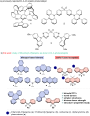


Silver(I) triflate-catalyzed post-Ugi synthesis of pyrazolodiazepines
Beilstein J. Org. Chem. 2025, 21, 915–925, doi:10.3762/bjoc.21.74
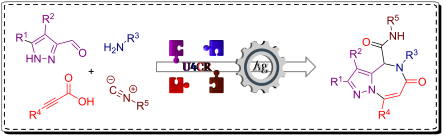
- attention due to their modular hydrogen bond donor/acceptor profile that can be tuned by varying the nitrogen position and the degree of unsaturation as well as by fusion with other rings [3]. Benzodiazepines, which contain a seven-membered diazepine core fused to a benzene ring, are recognized as
- -acting, potent tranquilizer with moderate duration, belonging to the triazolobenzodiazepine family [10]. It is derived through bioisosteric replacement of the benzodiazepine amide moiety with a triazole ring. Replacements of the benzene ring with thiophene and even with pyrrole are also known. Premazepam




Dicarboxylate recognition based on ultracycle hosts through cooperative hydrogen bonding and anion–π interactions
Beilstein J. Org. Chem. 2025, 21, 884–889, doi:10.3762/bjoc.21.72
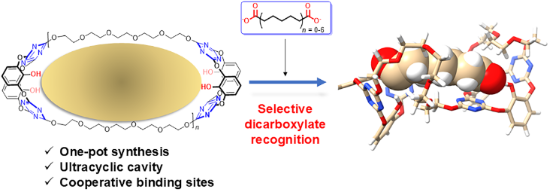
- [29][31]. A one-pot reaction of submacrocycle 1a and 2-(benzyloxy)benzene-1,3-diol (2a) in the presence of 8.0 equivalents of CsF yielded the ultracycle precursor compounds. Three reorganized products B4a, B5a, and B6a with different ring sizes were isolated. As previously observed, the structural


Chitosan-supported CuI-catalyzed cascade reaction of 2-halobenzoic acids and amidines for the synthesis of quinazolinones
Beilstein J. Org. Chem. 2025, 21, 839–844, doi:10.3762/bjoc.21.67
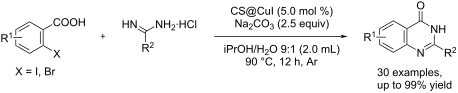
- group, we investigated the reactions with various substituted 2-halobenzoic acids. The reactivity of 2-iodobenzoic acid derivatives (3a–d, 90−96% yields) was higher than that of 2-bromobenzoic acid derivatives (3a–d, 57−73% yields), the electronic properties of the substituents on the benzene ring had
- little effect on the reactivity. When the amidine substituent (R2) was changed to a cyclopropyl group, the yields of all reaction decreased, especially when substituents were present on the benzene ring (3e–h, 55−94% yields for 2-iodobenzoic acid, 43–76% yields for 2-bromobenzoic acid). We then
- reaction activity observed when substituents were presented on the benzene ring. Finally, we examined reactions with 2-halobenzoic acid derivatives where the R2 substituent was a phenyl group. In this case, the reactivity of 2-iodobenzoic acid derivatives (3m–p, 61–99% yields) was again superior to that of


4-(1-Methylamino)ethylidene-1,5-disubstituted pyrrolidine-2,3-diones: synthesis, anti-inflammatory effect and in silico approaches
Beilstein J. Org. Chem. 2025, 21, 817–829, doi:10.3762/bjoc.21.65

- ) production, with an IC50 value of 43.69 ± 5.26 µM. The presence of an electron-withdrawing group (-NO2 group) on the benzene ring at the 1-position of the pyrrolidine-2,3-dione subunit in compound 5e may be responsible for the observed high inhibition activity due to the enhancement and optimization of
- ) has occurred at the exocyclic sp2-hybridized carbon atom, leading to the substitution of the 4-methoxybenzylamino group by a methylamino group. Therefore, the presence of substituents (electron-donating or electron-withdrawing groups) on the benzene rings attached to the 1- and 5-positions of the
- benzene ring at the 5-position of pyrrolidine-2,3-dione core in compounds 5c and 5d could relate to the lower inhibitory activity of 23.76% and 38.41% at the concentration of 100 µM, respectively, as compared to 5a and 5b. However, the existence of a nitro group on the aromatic ring attached to the 1


Recent advances in the electrochemical synthesis of organophosphorus compounds
Beilstein J. Org. Chem. 2025, 21, 770–797, doi:10.3762/bjoc.21.61
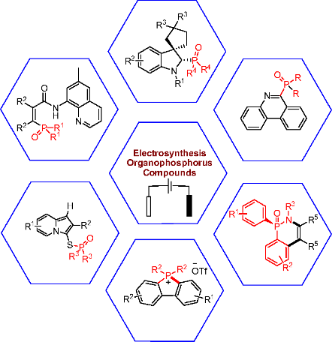
- ). Although using other solvents improved the solubility, it reduced the reaction yield. Ammonium thiocyanate is used as a sulfur source in the presence of DBU as a base and n-Bu4NBF4 as an electrolyte. When electron-donating groups were present at the C2-benzene ring, the reaction yield was higher than when


Development and mechanistic studies of calcium–BINOL phosphate-catalyzed hydrocyanation of hydrazones
Beilstein J. Org. Chem. 2025, 21, 755–765, doi:10.3762/bjoc.21.59
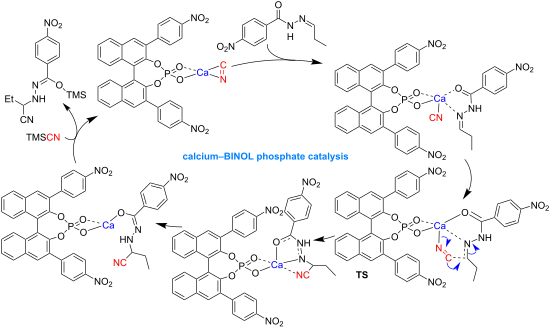
- rearrangement under mild conditions [6], and the Nazarov-type electrocyclization of alkenyl aryl carbinols [7]. Exploiting the ease with which calcium forms hydrides, hydrogenation of aldimines, transfer hydrogenation of alkenes, and even deuteration of benzene by an SNAr mechanism, have been recently achieved


Copper-catalyzed domino cyclization of anilines and cyclobutanone oxime: a scalable and versatile route to spirotetrahydroquinoline derivatives
Beilstein J. Org. Chem. 2025, 21, 749–754, doi:10.3762/bjoc.21.58
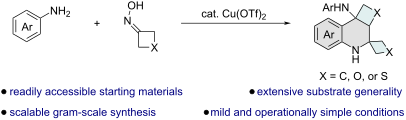
- demonstrated excellent compatibility with the protocol, affording the desired products 3ba–ea in good yields. However, the introduction of strong electron-withdrawing groups, such as trifluoromethoxy, ester, and acetyl, at the para-position of the benzene ring (1f–h) led to a noticeable decrease in the yields


Photochemically assisted synthesis of phenacenes fluorinated at the terminal benzene rings and their electronic spectra
Beilstein J. Org. Chem. 2025, 21, 670–679, doi:10.3762/bjoc.21.53

- , Okayama University, Okayama 700-8530, Japan 10.3762/bjoc.21.53 Abstract [n]Phenacenes ([n] = 5–7), octafluorinated at the terminal benzene rings (F8-phenacenes: F8PIC, F8FUL, and F87PHEN), were photochemically synthesized, and their electronic spectra were investigated to reveal the effects of the
- chemistry, but also for their application in materials science, in particular, in organic electronics [1][2][3][4]. Among the structural classifications of PAHs, the representatives are acenes and phenacenes; the former consisting of linearly fused benzene-ring arrays while the latter exhibit zigzag ones
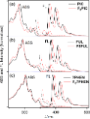
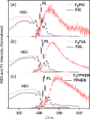
- -extension (ΔλABS = ca. 6 nm per increment of one benzene ring) and the spectral profiles resemble each other irrespective of the length of the phenacene π conjugation and the fluorine substitution. The results suggest that these factors could provide insignificant effects on the apparent electronic spectral





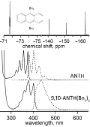
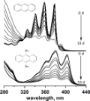
Deep-blue emitting 9,10-bis(perfluorobenzyl)anthracene
Beilstein J. Org. Chem. 2025, 21, 515–525, doi:10.3762/bjoc.21.39
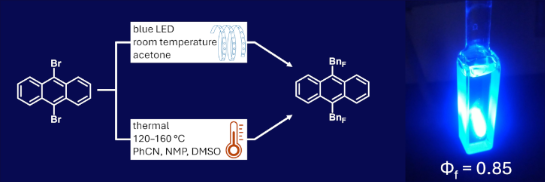
- (trifluoromethyl)benzene (1,4-C6H4(CF3)2, Central Glass Co., 99%); dimethyl sulfoxide (DMSO, Fisher Scientific, ACS grade); anhydrous magnesium sulfate (MgSO4, Fisher Scientific); Cu powder (Strem Chemicals, 99%); dichloromethane (EMD Chemicals, ACS grade); acetone (technical grade); THF (Aldrich/Merck, ACS grade





Photomechanochemistry: harnessing mechanical forces to enhance photochemical reactions
Beilstein J. Org. Chem. 2025, 21, 458–472, doi:10.3762/bjoc.21.33
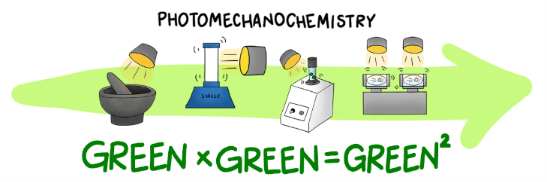
- when a 1:1 mixture of p-di[2-(4-pyridyl)ethenyl]benzene (5.1) and 4-benzylresorcinol (5.2) was ground with a mortar and pestle (1 h) and then irradiated with a low-pressure Hg lamp (60 h), [2.2]paracyclophane (5.3) was formed in poor yield (35% by 1H NMR spectroscopy). Dry vortex grinding did not




Unraveling aromaticity: the dual worlds of pyrazole, pyrazoline, and 3D carborane
Beilstein J. Org. Chem. 2025, 21, 412–420, doi:10.3762/bjoc.21.29
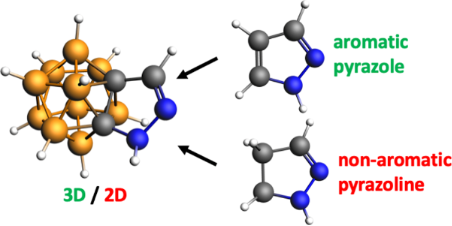
- the n + 1 MOs of the carborane prevents significant electronic delocalization between the two fused components. This contrasts with the fusion of pyrazole and benzene to form indazole, where both rings maintain their 2D aromaticity. Our findings demonstrate that the peripheral σ-aromaticity of
- a π system with 6 π electrons [11]. When fused with a benzene ring, sharing a C–C bond, it remains aromatic, which is the case of indazole. Pyrazoline (C3H6N2), similar to pyrazole, formally has only one double bond and a lone pair on the nitrogen, so it does not satisfy Hückel's rule and it is
- therefore non-aromatic. Even when fused with benzene via a C–C bond, pyrazoline remains non-aromatic, which is the case of indazoline. Icosahedral carboranes are globular molecular clusters made of carbon and boron, displaying 3D aromaticity [12][13][14][15]. Their unique properties – such as aromaticity


Synthesis, characterization, antimicrobial, cytotoxic and carbonic anhydrase inhibition activities of multifunctional pyrazolo-1,2-benzothiazine acetamides
Beilstein J. Org. Chem. 2025, 21, 348–357, doi:10.3762/bjoc.21.25
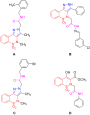
- strains of S. aureus. The MIC90 values for compound 7b were found to be 16 μg/mL and the MIC90 values for compound 7h were found to be 8 μg/mL for all S. aureus strains tested. Halogenation on the benzene ring of the acetamide group showed increased activity against S. aureus with compound 7h the most


Synthesis of disulfides and 3-sulfenylchromones from sodium sulfinates catalyzed by TBAI
Beilstein J. Org. Chem. 2025, 21, 253–261, doi:10.3762/bjoc.21.17
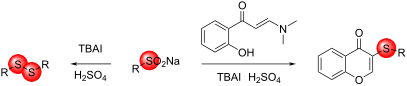
- , demonstrated that a wide range of disulfides were synthesized efficiently when sodium sulfinates served as substrates. The isolated yields ranged from 49% to 89% for products 2a–o. In the case of sodium arylsulfinates with various substituents on the benzene ring, we observed minimal effects on the reaction
- . For example, electron-donating groups (Me, tert-butyl, MeO, naphthyl) and electron-withdrawing groups (F, Cl, Br) attached to the benzene ring led to products 2a–i with yields ranging from 60% to 89%. Interestingly, products with strong electron-withdrawing substituents were obtained in moderate