


Search results
Search for "fluorophores" in Full Text gives 107 result(s) in Beilstein Journal of Organic Chemistry.
Synthesis, enantioseparation and photophysical properties of planar-chiral pillar[5]arene derivatives bearing fluorophore fragments
Beilstein J. Org. Chem. 2019, 15, 1601–1611, doi:10.3762/bjoc.15.164
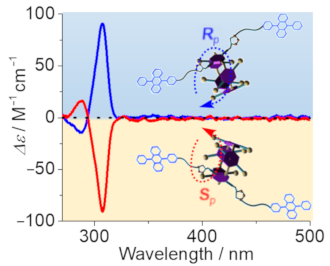
- derivatives (P5A-DPA and P5A-Py) bearing bulky fluorophores were obtained in high yield by click reaction. The photophysical properties of both compounds were investigated in detail. P5A-DPA with two 9,10-diphenylanthracene (DPA) pigments grafted on the pillar[5]arene showed a high fluorescence quantum yield
- due to the bulky chromophore introduced, and the resolution of the enantiomers was achieved due to the bulky size of the fluorophores. The absolute configuration of the enantiomers was determined by circular dichroism (CD) spectra. The solvent-induced aggregation behavior was investigated with the
- chemical introduction of chromophores onto the rims of pillar[5]arene has been applied to allow its use as receptors for molecular sensing or biological applications [30][31][32][33]. It occurred to us that connecting fluorophores with strong absorptions in the visible range and with a high fluorescence

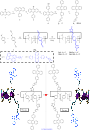


Complexation of a guanidinium-modified calixarene with diverse dyes and investigation of the corresponding photophysical response
Beilstein J. Org. Chem. 2019, 15, 1394–1406, doi:10.3762/bjoc.15.139
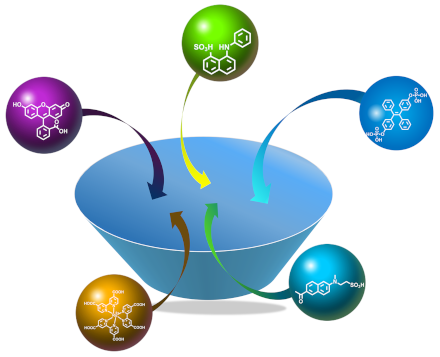
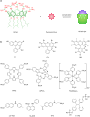
- fluorophores through supramolecular encapsulation using artificial macrocyclic hosts has always been an active research area [10][11][12]. The complexes of macrocycles with luminescent dyes not only act as reporter pairs for sensing [13][14][15], but also offer various applications in bioimaging [16][17
- ], constructing supramolecular dye lasers [18][19], protecting fluorophores from photodegradation [20][21] and manufacturing organic luminescent materials [22][23][24]. Also, variations of luminescence have been utilized to obtain information about the hydrophobicity, polarity, and polarizability of the inner
- disclose photophysical changes of various dyes upon complexation by GC5A, to understand the physicochemical property of the GC5A cavity through the comprehensive discussion, and further guide to potential applications of these complexes. The complexation of GC5A with ACQ dyes Conventional fluorophores




Efficient synthesis of pyrazolopyridines containing a chromane backbone through domino reaction
Beilstein J. Org. Chem. 2019, 15, 874–880, doi:10.3762/bjoc.15.85
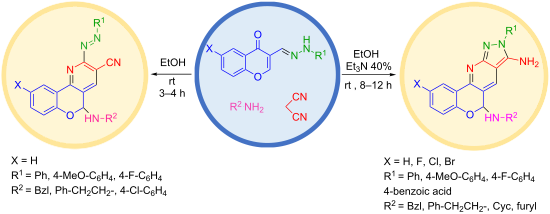
- tracazolate, cartazolate, and etazolate [22]. Other pyrazolopyridine-containing bioactive compounds include a GSK-3 inhibitor [23] and BAY 41-2272, [24][25] and could be used as cardiovascular therapeutic agents (Figure 1). Moreover, pyrazolopyridine derivatives also have industrial importance as fluorophores




Synthesis and fluorescent properties of N(9)-alkylated 2-amino-6-triazolylpurines and 7-deazapurines
Beilstein J. Org. Chem. 2019, 15, 474–489, doi:10.3762/bjoc.15.41
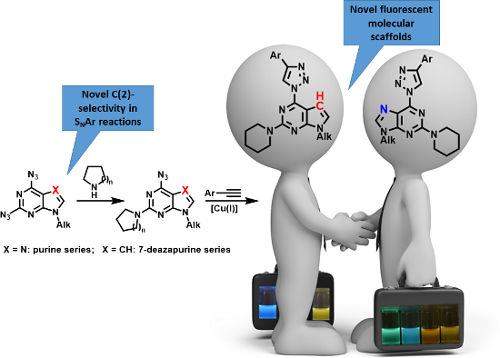
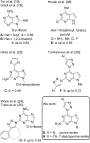
- excited states are environment-dependent it makes these fluorophores interesting as potential sensors of the surroundings such as polarity or (micro)viscosity sensors. Other purine and 7-deazapurine derivatives, which efficiently emit light in the blue region with respect to the structural
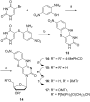
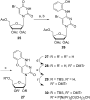
- and 7-deaza-7-ethenyl-2'-deoxyadenosine or 5-(azidomethyl)-2'-deoxyuridine, we can assume that nucleoside analogs bearing fluorophores of our type would be susceptible to metabolic phosphorylation and incorporation into DNA in the living cells. Further studies are required to develop the newly





Aqueous olefin metathesis: recent developments and applications
Beilstein J. Org. Chem. 2019, 15, 445–468, doi:10.3762/bjoc.15.39
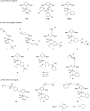
- the detection of ethylene in live cells [91]. BODIPY fluorophores bearing the isopropyloxybenzylidene moiety (101 and 103) reacted with the G-II catalyst to form the HG-II derivatives 102 and 104, respectively (Scheme 21). The resulting compounds are Ru-based profluorescent probes that become




Novel solid-phase strategy for the synthesis of ligand-targeted fluorescent-labelled chelating peptide conjugates as a theranostic tool for cancer
Beilstein J. Org. Chem. 2018, 14, 2665–2679, doi:10.3762/bjoc.14.244
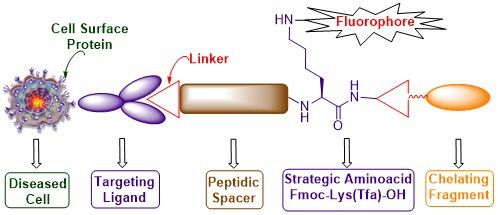
- diagnosis and deep tissue imaging of cancers and inflammatory diseases. Near infrared fluorophores containing a free or activated carboxylic group (e.g., IRDye 800CW NHS ester) can also be conjugated with the peptidic spacer using this methodology through amide coupling reaction. Moreover, the bioconjugates




Rational design of boron-dipyrromethene (BODIPY) reporter dyes for cucurbit[7]uril
Beilstein J. Org. Chem. 2018, 14, 1961–1971, doi:10.3762/bjoc.14.171
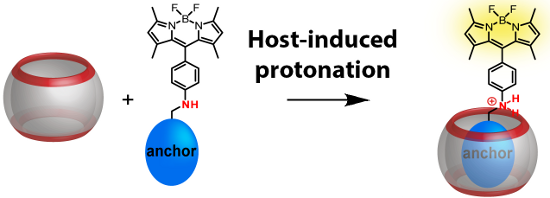
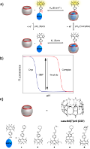
- -dipyrromethene (BODIPY) dyes as a new class of fluorophores for the design of reporter dyes for supramolecular host–guest complex formation with cucurbit[7]uril (CB7). The BODIPYs contain a protonatable aniline nitrogen in the meso-position of the BODIPY chromophore, which was functionalized with known binding
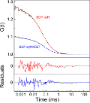
- . This includes indicator displacement assays with favourable absorption and emission wavelengths in the visible spectral region, fluorescence correlation spectroscopy, and noncovalent surface functionalization with fluorophores. Keywords: BODIPY; cucurbituril; fluorescence; pH; photoinduced electron
- -ray photoelectron spectroscopy [67][68][69]. Conclusion We have established herein BODIPYs as fluorophores in the anchor group strategy towards the design of reporter dyes for CB7. The resulting dyes have absorption and emission wavelengths which are compatible with established instrumentation in life




An overview of recent advances in duplex DNA recognition by small molecules
Beilstein J. Org. Chem. 2018, 14, 1051–1086, doi:10.3762/bjoc.14.93
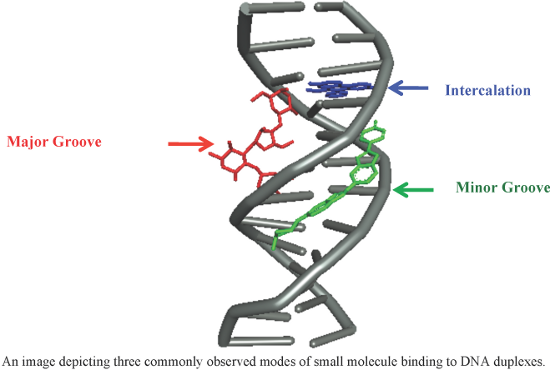
- repeated DNA sequences in living cells were nicely visualized. Choice of fluorophores attached to the N-terminus of the polyamides remains extremely crucial, as they seem to affect DNA minor groove binding significantly. In order to design a novel DNA cleaving agent, a bis(guanidinium)alcohol tethered with
- , thereby changing the efficiency of the FRET process between the two fluorophores and exhibiting a significant red shift in the emission spectrum. Moreover, the conjugate 43 could be used as an attractive tool for imaging of nuclear DNA in the cells due to its low cytotoxicity. A series of water-soluble




An uracil-linked hydroxyflavone probe for the recognition of ATP
Beilstein J. Org. Chem. 2018, 14, 747–755, doi:10.3762/bjoc.14.63
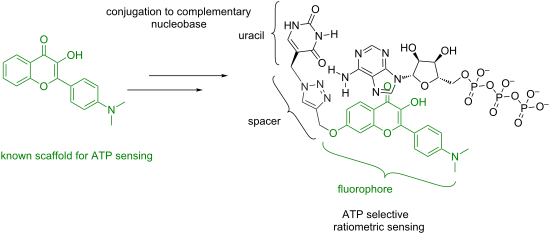
- recognition sites [16][18][19][33], or Zn-dipicolylamine complexes [21][23][24] attracting the negatively charged phosphate units of ATP and by π-stacking between the fluorophores of the sensors and the adenine moiety of ATP [29]. In aqueous solutions at physiological pH, the tetra-charged anionic ATP
- processes of ATP [34]. The ideal ATP probe possessing all the prerequisites to bind ATP should be sensitive to electrostatic fields in solution and in molecular assemblies as well. 3-Hydroxyflavone (HF) fluorophores, especially the highly polarizable 4’-dialkylamino subfamily exhibit strong sensitivity to
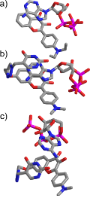
- -based probes exploit the ESIPT nature of these fluorophores to generate multiple emission bands [39][41][42][43]. In this case, however, a new fluorescence band appears in the excitation spectra due to an intermolecular proton transfer from the flavone to the phosphate chain of the nucleotide. Therefore




Fluorogenic PNA probes
Beilstein J. Org. Chem. 2018, 14, 253–281, doi:10.3762/bjoc.14.17
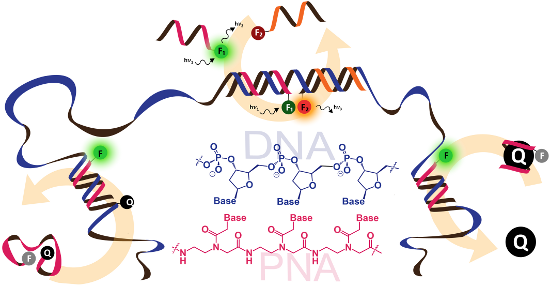
- the unmasking of quenched or caged fluorophores by chemical reactions, such as the Staudinger reaction [98][99][100][101], hydrolysis [102] and group transfer mediated by nucleophilic substitution [103][104]. Optimizing the conditions requires a good balance between the affinity of the probe to the
- high background. The masking of fluorophores by a more stable group, such as azides, is more attractive. Unfortunately, the phosphine probe generally required for the unmasking of the azide probe is susceptible to rapid aerobic oxidation. Accordingly, new developments in this area are still required
- . One promising example is the release of fluorophores by a phosphine-free photocatalyzed reduction of a self-immolative azide-based linker [105]. Single-labeled PNA probes with additional interacting partners PNA-based strand displacement probes Strand displacement probes consist of a fluorescence




Fluorescent nucleobase analogues for base–base FRET in nucleic acids: synthesis, photophysics and applications
Beilstein J. Org. Chem. 2018, 14, 114–129, doi:10.3762/bjoc.14.7
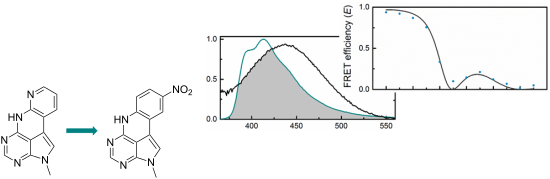
- acid bases inside the base-stack, base analogue donor and acceptor molecules complement external fluorophores like the Cy-, Alexa- and ATTO-dyes and enable detailed investigations of structure and dynamics of nucleic acid containing systems. The first base–base FRET pair, tCO–tCnitro, has recently been
- distance window of opportunity than external fluorophores, and, thus, have the potential to facilitate better structure resolution. Netropsin DNA binding and the B-to-Z-DNA transition are examples of structure investigations that recently have been performed using base–base FRET and that are described here
- becomes a spectroscopic ruler. Such an assumption is often made, both correctly and incorrectly [8][9][10], for covalently attached external nucleic acid fluorophores like Cy-, Alexa- and ATTO-dyes. This provides a powerful means for measuring long distance ranges (typically 35–90 Å) in nucleic acid






Development of a fluorogenic small substrate for dipeptidyl peptidase-4
Beilstein J. Org. Chem. 2017, 13, 2690–2697, doi:10.3762/bjoc.13.267
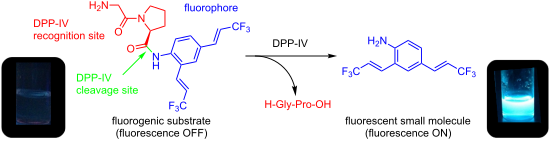
- application as an OFF–ON-type fluorogenic probe for determining dipeptidyl peptidase-4 (DPP-4) activity. Results and Discussion Synthesis of fluorescent compounds as fluorophores It has been reported that the introduction of a TFPE group changes the properties of electron-rich aromatics and leads to a good


Structure–property relationships and third-order nonlinearities in diketopyrrolopyrrole based D–π–A–π–D molecules
Beilstein J. Org. Chem. 2017, 13, 2374–2384, doi:10.3762/bjoc.13.235
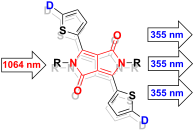
- -emitting diodes (OLED), fluorophores, probes for ion sensing, functional polymers, and more recently also chromophores with nonlinear optical (NLO) activity. The latter property is mostly dictated by their conjugated character, electron-accepting behavior of the DPP scaffold, strong emissive character, and




One-pot syntheses of blue-luminescent 4-aryl-1H-benzo[f]isoindole-1,3(2H)-diones by T3P® activation of 3-arylpropiolic acids
Beilstein J. Org. Chem. 2017, 13, 2340–2351, doi:10.3762/bjoc.13.231
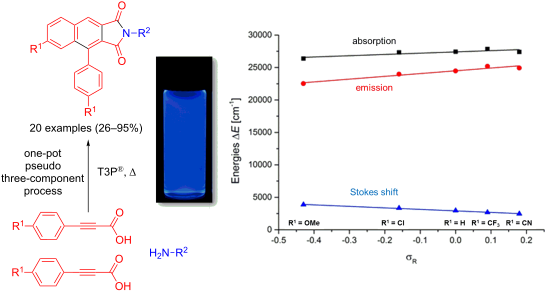
- are often prepared by condensation of acid anhydrides and amines [34]. Their applications are widespread, ranging from pharmaceutically active compounds [35] to agrochemicals [36] and fluorophores [37]. The characteristic photophysical properties of 1,8- and 2,3-naphthalene imides render the substance




The chemistry and biology of mycolactones
Beilstein J. Org. Chem. 2017, 13, 1596–1660, doi:10.3762/bjoc.13.159
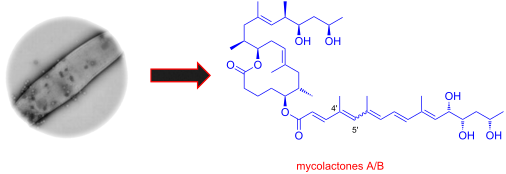


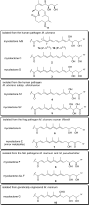


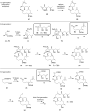


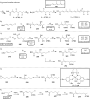


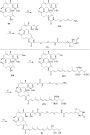

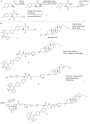
BODIPY-based fluorescent liposomes with sesquiterpene lactone trilobolide
Beilstein J. Org. Chem. 2017, 13, 1316–1324, doi:10.3762/bjoc.13.128
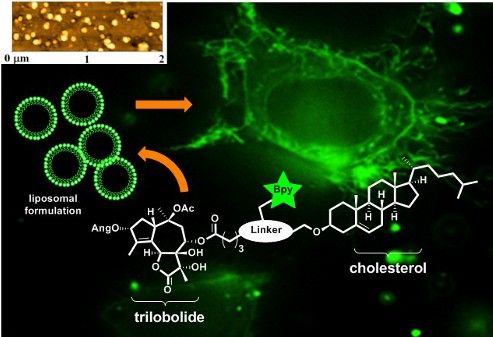
- , sensitivity and good spatio-temporal resolution altogether [5]. From the plethora of known fluorescent compounds, there are widely used small organic fluorophores, such as BODIPY dyes. BODIPYs are fluorescent dyes based on the 4,4-difluoro-4-bora-3a,4a-diaza-s-indacene scaffold, which have recently




Regioselective (thio)carbamoylation of 2,7-di-tert-butylpyrene at the 1-position with iso(thio)cyanates
Beilstein J. Org. Chem. 2017, 13, 1032–1038, doi:10.3762/bjoc.13.102
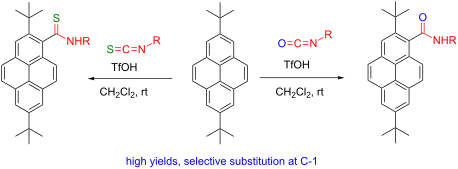
- reported an efficient method for the synthesis of pyrene-1-carbothioamides via reaction of pyrene with isothiocyanates in the presence of trifluoromethanesulfonic (triflic) acid (TfOH) [11][12]. Since 2 was used as a starting material in the syntheses of various pyrenyl fluorophores exhibiting unique
- (thio)cyanates occurs selectively at the 1- position, whereas Friedel–Crafts acylation promoted by this acid leads to 4-substitution. The reaction is less regioselective for aromatic iso(thio)cyanates. We believe that the described reaction opens up new synthetic routes to novel fluorophores having a


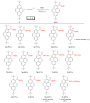


Energy down converting organic fluorophore functionalized mesoporous silica hybrids for monolith-coated light emitting diodes
Beilstein J. Org. Chem. 2017, 13, 768–778, doi:10.3762/bjoc.13.76
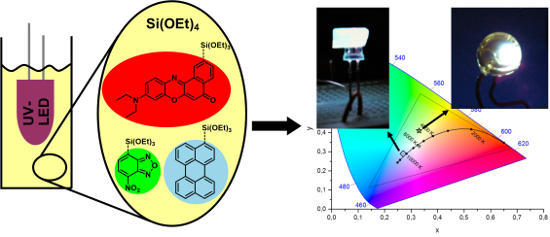
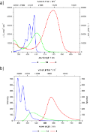
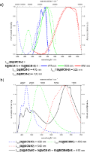
- Markus Borgardts Thomas J. J. Muller Institut für Organische Chemie und Makromolekulare Chemie, Heinrich-Heine-Universität Düsseldorf, Universitätsstr. 1, D-40225 Düsseldorf, Germany 10.3762/bjoc.13.76 Abstract The covalent attachment of organic fluorophores in mesoporous silica matrices for







Fluorescent carbon dots from mono- and polysaccharides: synthesis, properties and applications
Beilstein J. Org. Chem. 2017, 13, 675–693, doi:10.3762/bjoc.13.67
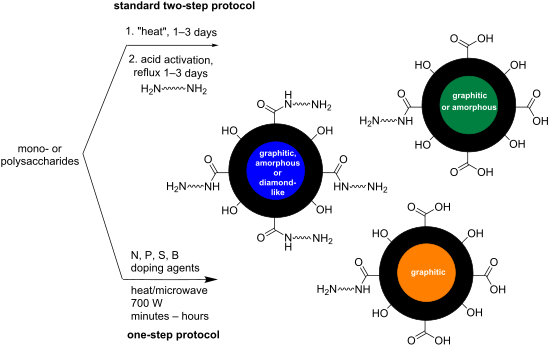
- fluorophores, in addition to bright visible emission, have become particularly popular for their versatility as non-isotopic detection labels which are amenable to live cell imaging and immunoassay applications [7]. In particular, cadmium-based QDs (e.g., CdS, CdSe, CdSe/ZnS) are commonly used for in vitro


Novel β-cyclodextrin–eosin conjugates
Beilstein J. Org. Chem. 2017, 13, 543–551, doi:10.3762/bjoc.13.52
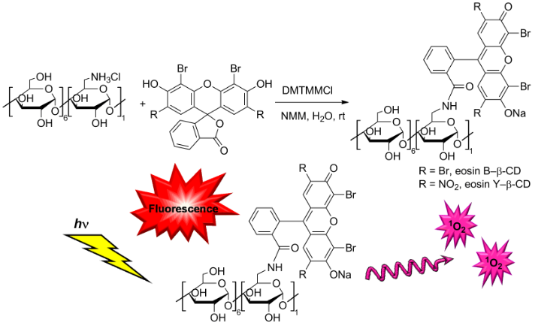
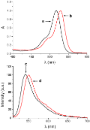
- tentatively be attributed to populations of fluorophores probably interacting in a different way with the CD cavity. As outlined in the introduction, singlet oxygen, 1O2, is the key species involved in PDT and it is generated by energy transfer from the excited triplet state of a PS and the nearby molecular




A postsynthetically 2’-“clickable” uridine with arabino configuration and its application for fluorescent labeling and imaging of DNA
Beilstein J. Org. Chem. 2017, 13, 127–137, doi:10.3762/bjoc.13.16
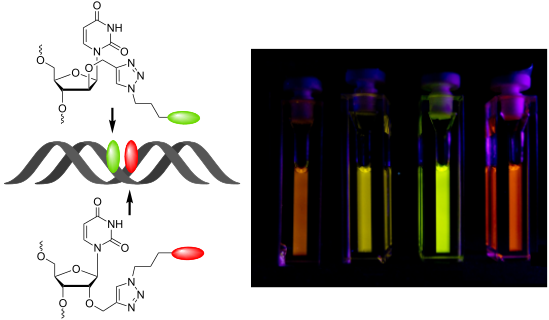
- structure of double-helical DNA elucidates that the positioning of the fluorophores in the major groove may be improved by inversion of the configuration at the 2’-position of the anchor nucleoside sugar. In fact, arabino nucleic acids are an important class of antisense oligonucleotides [20] since their
- corresponding unmodified counterstrand. The four fluorophores D1 [23], a blue emitter excitable at 389 nm, D2 [24], D3 [19], and D4 [24], all green emitters excitable at 450–460 nm, that were “clicked” to the oligonucleotides DNA1a and DNA1r belong to our recently established class of cyanine-styryl dyes that
- -configured uridine 1. This rather small structural difference allows the attached fluorophores to point into the major groove. Thereby optimized dye–DNA orientations result in higher fluorescence quantum yields of these single dye modifications. The modified oligonucleotides with dyes D1–D4 were applied as


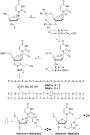
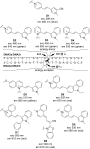


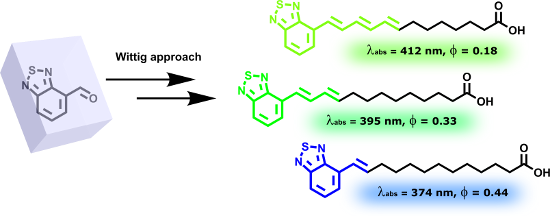
Benzothiadiazole oligoene fatty acids: fluorescent dyes with large Stokes shifts
Beilstein J. Org. Chem. 2016, 12, 2739–2747, doi:10.3762/bjoc.12.270
- methods are commonly employed. Either unnatural fluorescent dyes are inserted into the membrane (e.g., pyrene) or the hydrophilic part of lipids is utilized for the covalent attachment of fluorophores. Another possibility is the use of fluorescently labelled antibodies which bind membrane components such
- −1 for fatty acid 11 with three conjugated double bonds (Table 1). Fluorescence excitation spectra (not shown) for all three fluorophores pretty much coincide with the corresponding absorption spectra in Figure 2, which allows the fluorescence to be switched on at the longest wavelengths respectively


Construction of bis-, tris- and tetrahydrazones by addition of azoalkenes to amines and ammonia
Beilstein J. Org. Chem. 2016, 12, 2471–2477, doi:10.3762/bjoc.12.241
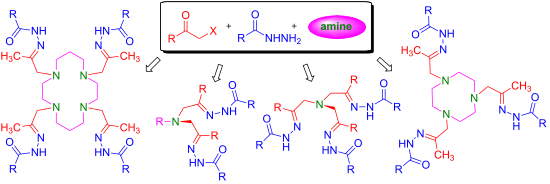
- modulation of the molecular geometry, for example through coordination with metal cations, hydrogen bond formation or irradiation. These unique structural features of the hydrazone fragment have been successfully exploited in the design of various molecular switches, fluorophores and machines. Bis- and




DNA functionalization by dynamic chemistry
Beilstein J. Org. Chem. 2016, 12, 2136–2144, doi:10.3762/bjoc.12.203
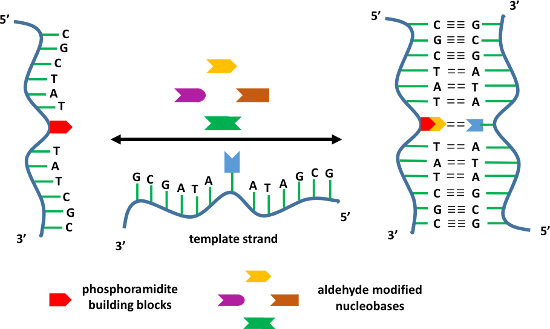
- metal ligands or fluorophores. Functional molecules of interest can be tethered post-synthetically in an irreversible manner as amide or reversibly as imine or thioester. Recent advances in dynamic combinatorial chemistry [29][30][31][32][33][34][35][36][37][38][39][40] have enabled the utilization of


Practical synthetic strategies towards lipophilic 6-iodotetrahydroquinolines and -dihydroquinolines
Beilstein J. Org. Chem. 2016, 12, 1851–1862, doi:10.3762/bjoc.12.174
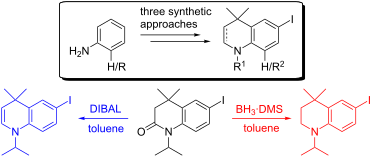
- (DHQ) are heterocyclic scaffolds that are ubiquitous in natural products, therapeutics, fluorophores and dyes [1]. Both are structures of great versatility, and their physical and chemical properties can be finely tuned using synthetic chemistry. Methods for their synthesis have been well studied, and
- range from the classic Skraup–Doebner–von Miller syntheses, to catalytic and asymmetric methods [2][3][4]. We required a straightforward synthesis of THQs and DHQs for the synthesis of a library of biocompatible fluorophores with the potential to be used in fluorescence microscopy applications. The
- mildly red shifted (to 376 nm). This behaviour indicates that 1,4-DHQ structures of this type may function as more effective donor chromophores in dyes and fluorophores than the corresponding THQs due to improved orbital overlap between the nitrogen lone pair and the aromatic π-system by virtue of the





