


Search results
Search for "saponification" in Full Text gives 112 result(s) in Beilstein Journal of Organic Chemistry.
Interactions between shape-persistent macromolecules as probed by AFM
Beilstein J. Org. Chem. 2017, 13, 938–951, doi:10.3762/bjoc.13.95
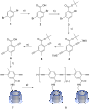
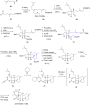
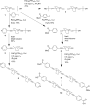
- 4 was prepared by Sonogashira reaction of 3 with trimethylsilylacetylene. Subsequent deprotection of the TMS groups using tetra-n-butylammonium fluoride and saponification of the tert-butyl ester with trifluoroacetic acid resulted in the corresponding benzoic acid 6. The latter was coupled to 6




Synthesis of D-manno-heptulose via a cascade aldol/hemiketalization reaction
Beilstein J. Org. Chem. 2017, 13, 795–799, doi:10.3762/bjoc.13.79

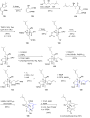
- excellent yield (91%). Saponification of all esters in 16 with potassium carbonate followed by acidic cleavage of the isopropylidene acetal group with aqueous acetic acid furnished D-manno-heptulose (1, 76% over two steps). The structure of 1 was found to be in good agreement with those reported for α-D


Total synthesis of a Streptococcus pneumoniae serotype 12F CPS repeating unit hexasaccharide
Beilstein J. Org. Chem. 2017, 13, 164–173, doi:10.3762/bjoc.13.19
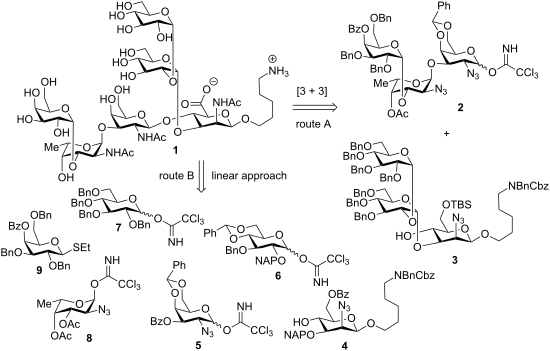
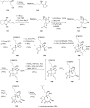
- steps from known galactosylazide selenide 23 [29]. Acetylation of the C3 hydroxy group of 23 furnished fully differentially protected selenoglycoside 24 in 82% yield. Hydrolysis of the selenoglycoside using NIS in aqueous THF produced hemiacetal 25 that was silylated prior to selective saponification of
- % yield; it is important to note that Zn-mediated reduction of 51 led to decomposition of the substrate. Ester saponification of 52 employing sodium methoxide in methanol yielded none of the desired product 53 but rather the tentatively assigned β-elimination products 54 and 55. Furthermore, an attempt at
- /toluene (3:1), −10 °C to 0 °C, 54%. Global deprotection to furnish S. pneumonia serotype 12F repeating unit hexasaccharide 1. Reagents and conditions: (a) thioacetic acid, pyridine, rt, 65%; (b) Zn, AcOH/Ac2O/THF, Cu2SO4 (aq, decomposed); saponification conditions that lead to β-elimination (c) i. NaOMe


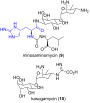
Enduracididine, a rare amino acid component of peptide antibiotics: Natural products and synthesis
Beilstein J. Org. Chem. 2016, 12, 2325–2342, doi:10.3762/bjoc.12.226
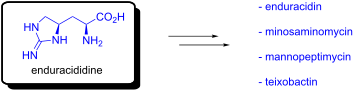
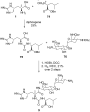
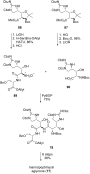
- ). Saponification of the ester of 88 and coupling with H-Ser(Bn)-O-Allyl and treatment with HCl afforded dipeptide 89. A second peptide coupling with acid 90 then gave tripeptide 78. With tripeptide 78 in hand, ligation with the remaining tripeptide 71 followed by cyclisation and global deprotection afforded the
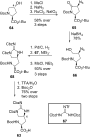
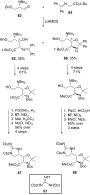
- synthesis reported by Doi et al. [33] to prepare N,O-acetonide 88. N-Mannosylation of acetonide 88 was successful and afforded the desired product in 86% yield (Scheme 19). Saponification then provided the desired benzyl protected mannosyl D-β-hydroxyenduracididine 97. Attempts to utilise the same procedure












Experimental and theoretical insights in the alkene–arene intramolecular π-stacking interaction
Beilstein J. Org. Chem. 2016, 12, 1616–1623, doi:10.3762/bjoc.12.158
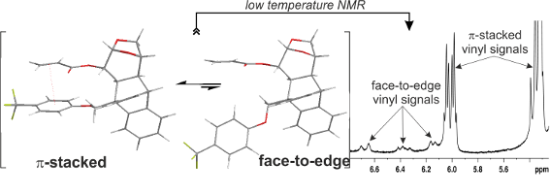
- 1). Saponification of adducts 11 and 12 provided the free 5-norbornenecarboxylic acid and the chiral auxiliaries 5a and 5b in excellent yields, which can be reused. Conclusion We have reported the synthesis of chiral acrylates derived from renewable feedstock as models to study arene–alkene π




Towards potential nanoparticle contrast agents: Synthesis of new functionalized PEG bisphosphonates
Beilstein J. Org. Chem. 2016, 12, 1366–1371, doi:10.3762/bjoc.12.130
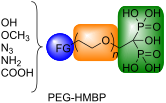
- 12a,b were obtained in 83% and 81% yield, respectively. The alcohols 12a,b were subsequently firstly deprotonated with NaH in DMF and the generated alcoholates were stirred 16 hours with ethyl bromoacetate giving the expected esters 13a,b in moderate yields. The saponification reactions of the esters
- compounds 1 and 1’a,b. The last step was the saponification of the ethyl ester group. Different usual conditions were tested, leading to partial degradation of the HMBP. The use of a diluted aqueous solution of potassium hydroxide (0.1 M) followed by a protonation with a Dowex® 50WX2 H+ resin allowed us to


Artificial Diels–Alderase based on the transmembrane protein FhuA
Beilstein J. Org. Chem. 2016, 12, 1314–1321, doi:10.3762/bjoc.12.124
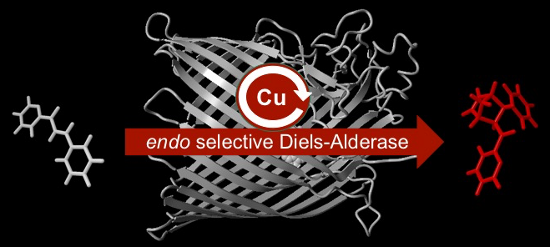
- = 6301 Da). The signal of m/z = 6111 Da results from saponification of the ester and the maleimide moiety (calcd (M + H2O + Na+): m/z = 6111 Da, found: m/z = 6111 Da). We were unable to detect the copper ion in the MALDI–TOF–MS. The isolated biohybrid catalysts were tested in the Diels–Alder reaction of


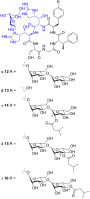
Muraymycin nucleoside-peptide antibiotics: uridine-derived natural products as lead structures for the development of novel antibacterial agents
Beilstein J. Org. Chem. 2016, 12, 769–795, doi:10.3762/bjoc.12.77
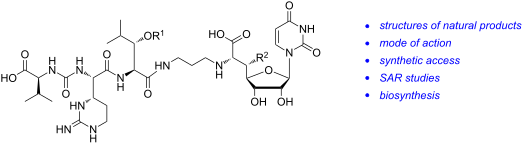
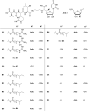
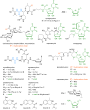
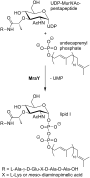
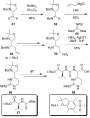
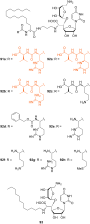
- followed by an azide reduction, Boc protection, saponification of the ester, peptide coupling with the amino acid 17, oxidative cleavage of the double bond to give 18 and an intramolecular reductive amination in order to construct the seven-membered ring. Methylation with subsequent acidic global









Synthesis of Xenia diterpenoids and related metabolites isolated from marine organisms
Beilstein J. Org. Chem. 2015, 11, 2521–2539, doi:10.3762/bjoc.11.273
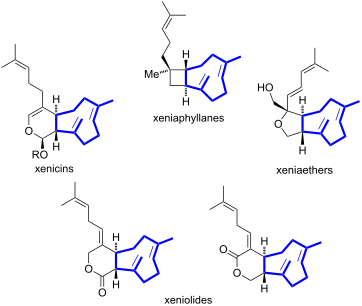
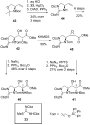
- of ethyl (phenylsulfonyl)acetate, a methylsulfonyl anion equivalent, to cyclobutene ester 49 followed by a sequence consisting of saponification, regioselective decarboxylation and reesterification to afford methyl ester 50. The ester group was reduced with lithium aluminum hydride and the resulting
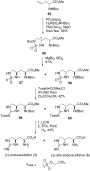
- aldehyde 67 in six steps in 34% yield. After saponification of the ester functionality, treatment with tosyl chloride and trimethylamine resulted in the formation of a ketene that underwent a diastereoselective intramolecular [2 + 2] cycloaddition to provide bicyclic ketone 69. Addition of TMS cerium







Asymmetric 1,4-bis(ethynyl)bicyclo[2.2.2]octane rotators via monocarbinol functionalization. Ready access to polyrotors
Beilstein J. Org. Chem. 2015, 11, 1881–1885, doi:10.3762/bjoc.11.202
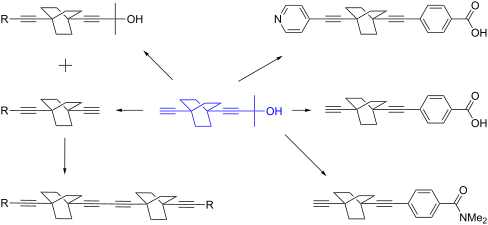
- was obtained from 7 by a modified deprotection procedure of the carbinol group using NaH instead of KOH under dry conditions, thereby allowing the deprotection to proceed succesfully while preventing the ester saponification [19][20]. Indeed, keeping the ester function is of primary importance for
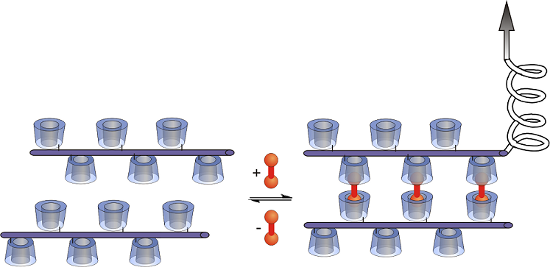
- solubility considerations, as it enhances the reactivity in the homocoupling reaction and also facilitates the purification of 9 by chromatography on silica gel. This yielded the dicarboxylate diyne dirotor 10 with the high purity required for the preparation of framework solids. Saponification of the ester




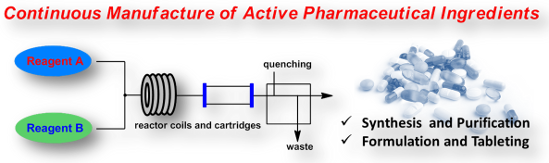
The synthesis of active pharmaceutical ingredients (APIs) using continuous flow chemistry
Beilstein J. Org. Chem. 2015, 11, 1194–1219, doi:10.3762/bjoc.11.134
- -aryl migration step. This was mediated by a hypervalent iodine reagent, PhI(OAc)2 (13), conducted in trimethyl orthoformate (14, TMOF) and methanol (Scheme 2). The direct saponification of the resulting rearranged methyl ester with an excess of base thus completed the telescoped flow synthesis of
- (Friedel–Crafts acylation, 1,2-aryl migration and saponification) this report focuses on improved output by intensifying the overall sequence (Scheme 3). As such an in-line extraction is performed after the Friedel–Crafts acylation step, followed by dissolving intermediate 18 in trimethyl orthoformate and


Carboxylated dithiafulvenes and tetrathiafulvalene vinylogues: synthesis, electronic properties, and complexation with zinc ions
Beilstein J. Org. Chem. 2015, 11, 957–965, doi:10.3762/bjoc.11.107
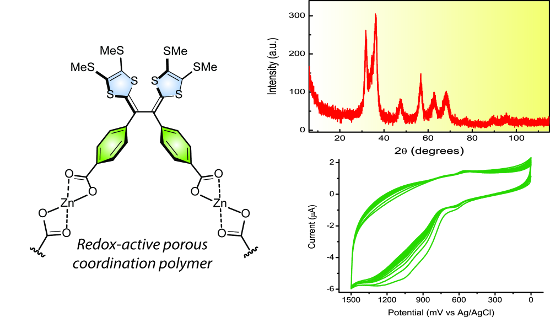
- . Saponification was then performed on compound 5 in a solution of NaOH in water and methanol to finally afford carboxyl-TTFV 6 in 84% yield. Compound 6 showed relatively poor solubility in non-polar organic solvents, but could be readily dissolved in polar solvents such as MeOH, EtOH, THF, and DMSO. For




Synthesis of tripodal catecholates and their immobilization on zinc oxide nanoparticles
Beilstein J. Org. Chem. 2015, 11, 678–686, doi:10.3762/bjoc.11.77
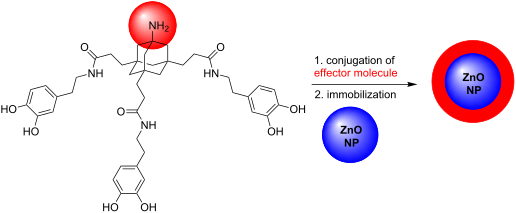
- chloride to give acrylamide 4. Treatment of 4 with dimethylamine and excess KOH leads to the nucleophilic addition of the amine and saponification of the methyl esters in one step to give the free acid 5 after acidic work-up. Subsequent coupling of 5 to dopamine acetonide 6 with EDC and HOBt gave the


Articulated rods – a novel class of molecular rods based on oligospiroketals (OSK)
Beilstein J. Org. Chem. 2015, 11, 74–84, doi:10.3762/bjoc.11.11

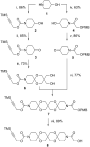
- first step histidine methylester hydrochloride (40) is acylated with anthracene-9-acetic acid to give 41. After saponification of the ester the potassium salt of the corresponding acid 42 was treated with 32c affording the articulated rod 43 in quantitative yield (Scheme 10). The stretched–folded




Synthesis of aromatic glycoconjugates. Building blocks for the construction of combinatorial glycopeptide libraries
Beilstein J. Org. Chem. 2014, 10, 2453–2460, doi:10.3762/bjoc.10.256
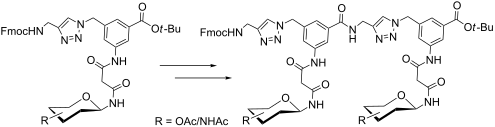
- strategies [10]. Results and Discussion Our synthesis of building blocks 1 and 2 started from known 3-azidomethyl-5-nitrobenzoic acid methyl ester 3 which was prepared from commercially available dimethyl 5-nitroisophthalate in 64% overall yield [12][13]. Saponification of the methyl ester in 3 with aqueous


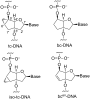
Structure/affinity studies in the bicyclo-DNA series: Synthesis and properties of oligonucleotides containing bcen-T and iso-tricyclo-T nucleosides
Beilstein J. Org. Chem. 2014, 10, 1840–1847, doi:10.3762/bjoc.10.194
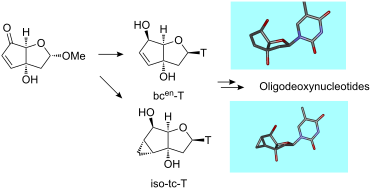
- use of compound 6 as nucleobase acceptor improved the yield of nucleosides 7α,β in general and led to an acceptable β:α = 2.5:1 ratio of anomers. Subsequent saponification of 7α,β (unseparable by flash chromatography) proved to be tricky and after testing a series of standard techniques, only



Synthesis and bioactivity of analogues of the marine antibiotic tropodithietic acid
Beilstein J. Org. Chem. 2014, 10, 1796–1801, doi:10.3762/bjoc.10.188
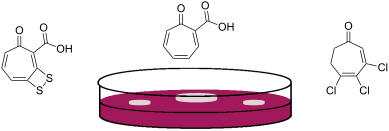
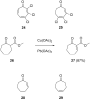
- efficiently converted into 13 by stirring in TFA. The synthesis of 12a followed a previously published route for ethyl tropone-2-carboxylate (12b) [14], but saponification of this ester led to decomposition, and therefore, the tert-butyl ester 12a was prepared that allowed for a conversion into 13 under


Selective allylic hydroxylation of acyclic terpenoids by CYP154E1 from Thermobifida fusca YX
Beilstein J. Org. Chem. 2014, 10, 1347–1353, doi:10.3762/bjoc.10.137
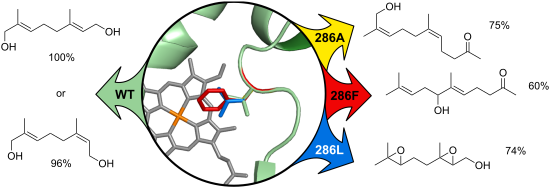
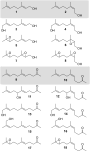
- into neryl acetate ((Z)-19) in 87%, followed by allylic oxidation [38], to provide enal (Z)-20 and allylic alcohol (Z)-21 in 14% and 41% yield, respectively. Saponification of 8-hydroxyneryl acetate ((Z)-21) under the above mentioned conditions gave 8-hydroxynerol (4) in 73% yield (Scheme 2). Following




Synthesis of zearalenone-16-β,D-glucoside and zearalenone-16-sulfate: A tale of protecting resorcylic acid lactones for regiocontrolled conjugation
Beilstein J. Org. Chem. 2014, 10, 1129–1134, doi:10.3762/bjoc.10.112
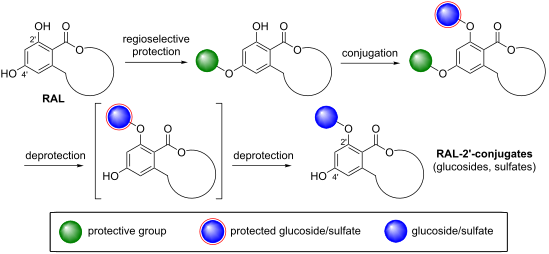
- dry DMF after optimization in terms of base and solvent type (Scheme 4A). Königs–Knorr glucosylation of the PMB-protected mimic 15 afforded 16, which was deprotected using 2,3-dichloro-5,6-dicyano-p-benzoquinone (DDQ) for oxidative PMB cleavage and subsequent ester saponification to yield the desired


Molecular architecture with carbohydrate functionalized β-peptides adopting 314-helical conformation
Beilstein J. Org. Chem. 2014, 10, 948–955, doi:10.3762/bjoc.10.93
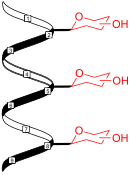
- nucleophile preferentially attacks from the re-face as shown in TS 1 (Figure 4) to give 10b [48][55]. In the next step, ester saponification of 10a using lithium hydroxide afforded D-glucose derived β-amino acid 11a in 84% yield. Finally, N-terminal fluorenylmethoxycarbonyl (Fmoc) protection of the β-amino


Synthesis of complex intermediates for the study of a dehydratase from borrelidin biosynthesis
Beilstein J. Org. Chem. 2014, 10, 634–640, doi:10.3762/bjoc.10.55
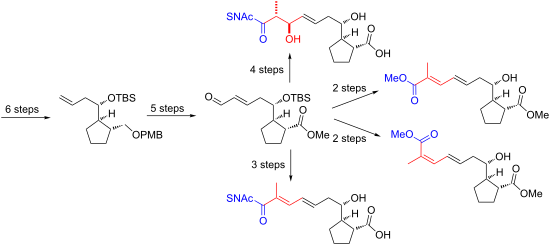
- conditions. As the presence of a methyl ester would prevent the selective introduction of one thioester into 5a by saponification–thioesterification, we planned transesterification from a suitably activated carboxylic acid derivative 8. Alternatively, direct introduction into 11 with appropriate SNAc
- assay mixture, the latter will be transformed into their corresponding methyl esters by saponification and following methylation with trimethylsilyldiazomethane. The fully protected E-isomer 10a was obtained in 18% yield by a Horner–Wadsworth–Emmons reaction with phosphonate 25 or, alternatively, in 64


Isocyanide-based multicomponent reactions towards cyclic constrained peptidomimetics
Beilstein J. Org. Chem. 2014, 10, 544–598, doi:10.3762/bjoc.10.50

- -cyclohexylglycine methyl ester pyrazinecarboxylic acid followed by a saponification afforded the carboxylic acid 62. Moreover, for the isocyanide component, the Dess–Martin oxidation of 60 and the subsequent Passerini reaction could be performed in one-pot, since the former reaction produces acetic acid as
- , thioacetic acid and 4-methoxy-phenylethylamine (also as chiral auxiliary) provided the corresponding Ugi product 138 in 60% yield (dr 1:1). Chiral separation and deprotection in TFA resulted in compound 139 in 70% yield, after which saponification followed by an amide coupling with tryptamine and CDI


Self-assembly of metallosupramolecular rhombi from chiral concave 9,9’-spirobifluorene-derived bis(pyridine) ligands
Beilstein J. Org. Chem. 2014, 10, 432–441, doi:10.3762/bjoc.10.40
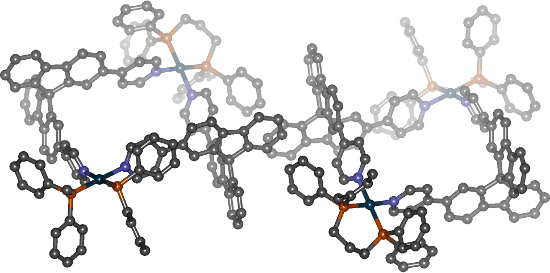
- subjected to an acid-mediated condensation to give the 9,9’-spirobifluorene. Friedel–Crafts acylation with acetyl chloride gave rise to the racemic 2,2’-diketone which was transformed to the racemic diester in a Baeyer–Villiger oxidation. Saponification of the ester functions then afforded (rac)-1. One part

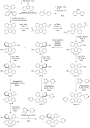


Concise, stereodivergent and highly stereoselective synthesis of cis- and trans-2-substituted 3-hydroxypiperidines – development of a phosphite-driven cyclodehydration
Beilstein J. Org. Chem. 2014, 10, 369–383, doi:10.3762/bjoc.10.35
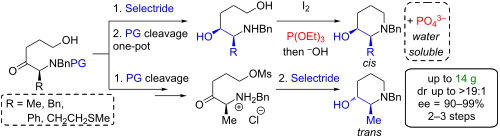
- of the NK-1 inhibitor L-733,060 in 8 steps. Additionally, a cyclodehydration-realizing simple triethylphosphite as a substitute for triphenylphosphine is developed. Here the stoichiometric oxidized P(V)-byproduct (triethylphosphate) is easily removed during the work up through saponification
- (of O=P(OiPr)3). In our case we were not able to remove stoichiometric amounts of OP(OEt)3 (which is more hydrophilic than OP(OiPr)3) through an aqueous work up (without saponification). Moreover, pentavalent P(OEt)5 prepared from P(OEt)3 with diethylperoxide and ethylbenzenesulfonate, respectively
- Schotten–Baumann conditions [62][63]. Thus, K2CO3 (→ pH = 10) as the base prevented saponification of the side chain methyl ester functions (as observed with hydroxide salts). Nevertheless, in the acylation of the glutamic acid derivative 8e the corresponding pyroglutamic acid derivative 2g resulting from


Convergent synthesis of a tetrasaccharide repeating unit of the O-specific polysaccharide from the cell wall lipopolysaccharide of Azospirillum brasilense strain Sp7
Beilstein J. Org. Chem. 2014, 10, 293–299, doi:10.3762/bjoc.10.26
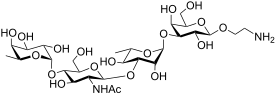
- transformed to the target compound 1 in an overall 69% yield following a sequence of reactions consisting of (a) the conversion of the N-phthaloyl group to an acetamido group [41], (b) the hydrogenolysis with hydrogen over Pearlman’s catalyst [42], and (c) the saponification with sodium methoxide. A NMR





