Search results
Search for "singlet oxygen" in Full Text gives 83 result(s) in Beilstein Journal of Organic Chemistry.
Synthesis and application of trifluoroethoxy-substituted phthalocyanines and subphthalocyanines
Beilstein J. Org. Chem. 2017, 13, 2273–2296, doi:10.3762/bjoc.13.224
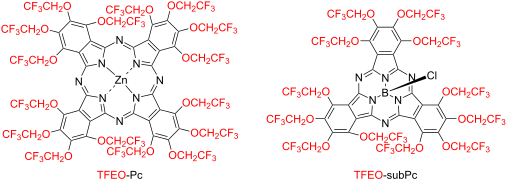
- laser only to the target tumor cells. The features of ideal PDT agents include, among others: i) strong absorption in the red wavelength region; ii) non-aggregation property; iii) high biocompatibility; iv) good selectivity to cancer cells; v) high quantum yield of singlet oxygen [96]. Since the PDT








Superstructures with cyclodextrins: Chemistry and applications IV
Beilstein J. Org. Chem. 2017, 13, 2157–2159, doi:10.3762/bjoc.13.215
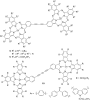
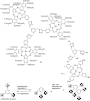
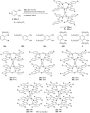
- , buckminsterfullerene C60 was covalently linked to two γ-CD rings [14]. This conjugate is highly soluble in water because it forms a sandwich-like self-complex, which makes it particularly useful as a sensitizer for singlet oxygen 1O2 generation [14]. Amphiphilic CD derivatives with oligoethylene oxide side chains form
Detection of therapeutic radiation in three-dimensions
Beilstein J. Org. Chem. 2017, 13, 1325–1331, doi:10.3762/bjoc.13.129
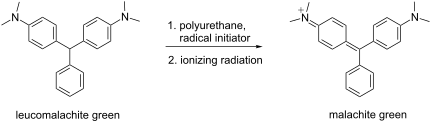
- the methine carbon provide the greatest color stability. In contrast the para-substituent DTBs have demonstrated the most facile color fading [39]. A combination of singlet oxygen and light is thought to be the cause of bleaching of DTBs [54] even though for these dosimeters the effect is minimal [55




Energy down converting organic fluorophore functionalized mesoporous silica hybrids for monolith-coated light emitting diodes
Beilstein J. Org. Chem. 2017, 13, 768–778, doi:10.3762/bjoc.13.76
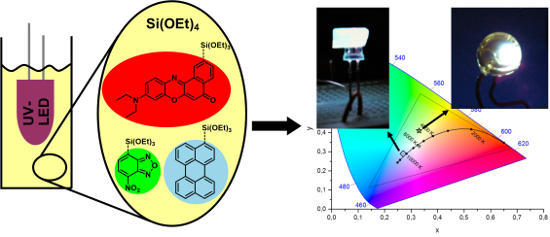
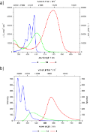
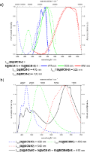
- aggregation induced self-quenching and singlet oxygen dependent dye degradation can be efficiently prevented [14][15]. By the rigid silica host framework bimolecular photochemical reactions are also suppressed [16]. Additionally, mesoporous materials possess the crucial advantage that they can be synthesized








Exploring endoperoxides as a new entry for the synthesis of branched azasugars
Beilstein J. Org. Chem. 2017, 13, 644–647, doi:10.3762/bjoc.13.63
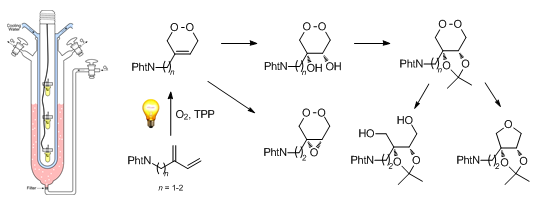
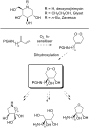
- + 2]-cycloaddition between a diene and singlet oxygen. The endoperoxides were dihydroxylated and protected to provide a series of endoperoxide building blocks for organic synthesis, with potential use as precursors for the synthesis of branched azasugars. Preliminary exploration of the chemistry of
- . Results and Discussion We set out to synthesise two diene substrates for a photochemical [4 + 2]-cycloaddition with singlet oxygen to provide two different endoperoxides (Scheme 1, n = 1–2). Based on literature precedent Boc-protection was utilised for the amino group (Scheme 2) [13][14]. Moreover, the
- sufficient material of dienes 14–16 was available to proceed to the critical cycloaddition and dihydroxylation steps and thus no further optimisation was performed. The cycloaddition reaction of dienes 14–16 with singlet oxygen was performed in a modified photochemical reactor that had been fitted with a gas



Novel β-cyclodextrin–eosin conjugates
Beilstein J. Org. Chem. 2017, 13, 543–551, doi:10.3762/bjoc.13.52
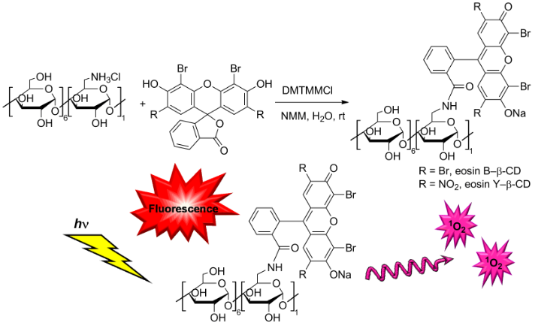
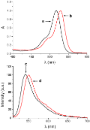
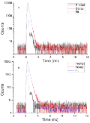
- -cyclodextrin–EoY conjugate retains both the fluorescence properties and the capability to photogenerate singlet oxygen of the unbound chromophore. In contrast, the corresponding β-cyclodextrin–EoB conjugate did not show either relevant emission or photosensitizing activity probably due to aggregation in
- aqueous medium, which precludes any response to light excitation. Keywords: β-cyclodextrins; fluorescence; photodynamic therapy; photosensitizers; singlet oxygen; xanthene; Introduction Cyclodextrins (CDs) are cyclic oligosaccharides able to form host–guest inclusion complexes with drugs and this
- being excited with visible light, the PS – while reverting to the ground state – transfers the energy of its lowest excited triplet state to nearby molecular oxygen. This leads to an in situ generation of singlet oxygen (1O2), which is the main responsible species for cytotoxic reactions in cells [6



A self-assembled cyclodextrin nanocarrier for photoreactive squaraine
Beilstein J. Org. Chem. 2016, 12, 2535–2542, doi:10.3762/bjoc.12.248
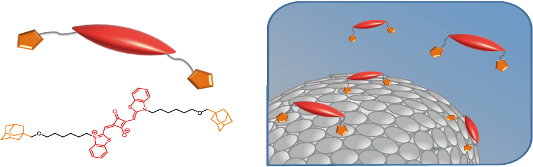
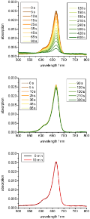
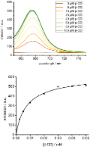
- interference of the PS with the triplet ground state of oxygen, leading to the production of singlet oxygen. In both mechanisms, the PS harvests the energy of incident light to form reactive oxygen species or singlet oxygen, which are highly cytotoxic [6][7]. Most clinically used PSs are based on porphyrins
- cytotoxicity. Santos et al. postulated the production of singlet oxygen as a result of interaction between the squaraines and the ground state of oxygen [19][20]. A few years later, Salice et al. showed that squaraines are not efficient singlet oxygen producing agents, but can be applied successfully as
- singlet oxygen quenchers [23]. The authors discussed that this behaviour is based on charge-transfer processes between stacked squaraines as well as oxygen squaraine complexes. Within the same year, Rapozzi et al. described the photooxidation process of benzothiazol squaraines [24]. They showed that the




A flow reactor setup for photochemistry of biphasic gas/liquid reactions
Beilstein J. Org. Chem. 2016, 12, 1798–1811, doi:10.3762/bjoc.12.170
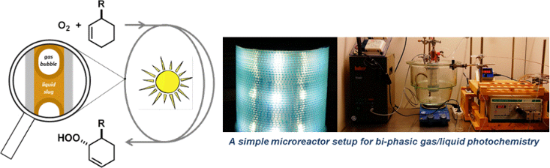
- to oxidation chemistry of utmost sustainability. Under irradiation in the presence of a sensitizer, singlet oxygen can easily be generated from the triplet ground state. Several applications of such photooxidations to chemical synthesis have been reported [71][72][73], in recent years most
- effectively under microflow conditions [41][42][50][51][74][75]. We applied the home-made photo-flow reactor (Figure 7) to the visible light mediated oxygenation of a cyclohexene derivative (i.e., Schenck ene reaction with singlet oxygen) [72][73] and evaluated the critical reaction and reactor parameters
- singlet oxygen. Photooxygenation of N-methyl-1,2,3,6-tetrahydrophthalimide and reductive work-up to alcohol 3a. Oxidation of N-methyl-1,2,3,6-tetrahydro-3-acetamidophthalimide and reductive work-up to alcohol 3b. Molar attenuation coefficients of common photosensitizersa (bpy = 2,2‘-bipyridine


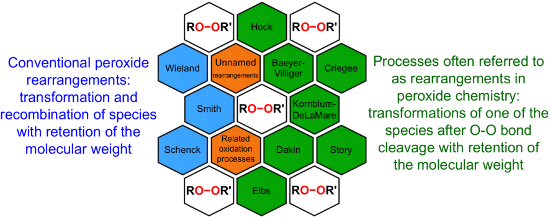
Rearrangements of organic peroxides and related processes
Beilstein J. Org. Chem. 2016, 12, 1647–1748, doi:10.3762/bjoc.12.162
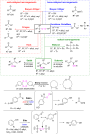
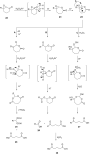
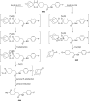
- model of the in vivo oxidation of cholesterol (219) by singlet oxygen produces cholesterol-5α-OOH 220, which is subjected to a Hock reaction to form the aldolization product 221 and keto aldehyde (atheronal A, 222) (Scheme 64) [67]. Keto aldehyde (atheronal A, 222) exhibits proatherogenic activity and
- of luciferin yields the peroxy compound 1,2-dioxetane. This four-membered peroxide cycle is unstable and spontaneously decays to carbon dioxide and excited ketones, which release excess energy through light emission (bioluminescence) [62][63][64][65]. The in vivo oxidation of cholesterol by singlet
- oxygen produces the hydroperoxide cholesterol-5α-OOH, which undergoes a Hock oxidation to form atheronal A. The latter possesses proatherogenic effects and triggers the development of cardiovascular diseases [66][67][68][69][70][71]. The development of the chemistry of organic peroxides is closely











Biradical vs singlet oxygen photogeneration in suprofen–cholesterol systems
Beilstein J. Org. Chem. 2016, 12, 1196–1202, doi:10.3762/bjoc.12.115
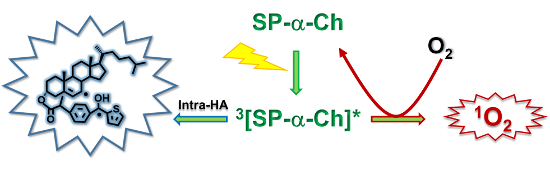
- i Politècnic La Fe, Avenida de Fernando Abril Martorell 106, 46026 Valencia, Spain 10.3762/bjoc.12.115 Abstract Cholesterol (Ch) is an important lipidic building block and a target for oxidative degradation, which can be induced via free radicals or singlet oxygen (1O2). Suprofen (SP) is a
- singlet oxygen was assessed by time-resolved near infrared emission studies in dichloromethane using perinaphthenone as standard. The quantum yields (ΦΔ) were 0.52 for 1 and 2 and 0.56 for 3. In conclusion, SP-α-Ch dyads are unique in the sense that they can be used to photogenerate both biradicals and
- singlet oxygen, thus being able to initiate Ch oxidation from their triplet excited states following either of the two competing mechanistic pathways. Keywords: aryl ketones; hydrogen abstraction; lipid peroxidation; photoproducts; triplet excited state; Introduction Among the constituents of cell


From steroids to aqueous supramolecular chemistry: an autobiographical career review
Beilstein J. Org. Chem. 2016, 12, 684–701, doi:10.3762/bjoc.12.69
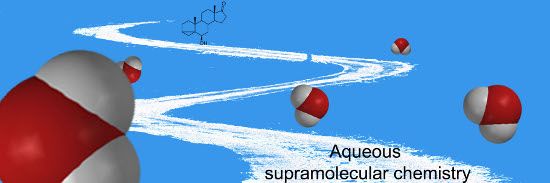
- [44].) The resulting singlet oxygen can escape the capsule, and if there is a second complex containing a substrate then the 1O2 can enter that cavity and react with the encapsulated substrate. In these experiments the substrate was a 1-methylcycloalkene, two copies of which bind to the capsule in
- specific, “methyl down” orientations. The first step of the reaction between singlet oxygen and the alkene is allylic hydrogen atom abstraction, and although there are three possible H-atoms for reaction, because of the specific guest-binding motif only an H-atom at the 3-position is removed. The result is





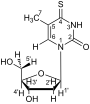
Interactions between 4-thiothymidine and water-soluble cyclodextrins: Evidence for supramolecular structures in aqueous solutions
Beilstein J. Org. Chem. 2016, 12, 549–563, doi:10.3762/bjoc.12.54
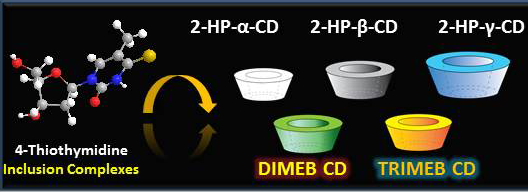
- , ROS (namely singlet oxygen, superoxide ions and hydrogen peroxide), generated via the excited state of the PS, destroy the PS itself. Because of this, the effort to preserve the PS is one of main issues. Regarding S4TdR, as a result of its photodynamic activity, the thiobase can be destroyed by a



A journey in bioinspired supramolecular chemistry: from molecular tweezers to small molecules that target myotonic dystrophy
Beilstein J. Org. Chem. 2016, 12, 125–138, doi:10.3762/bjoc.12.14
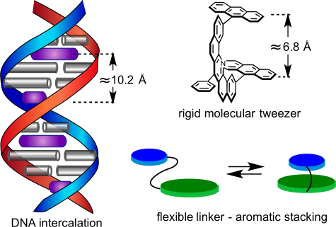
- mid to late 1970s. I was fortunate to do undergraduate research with Professor Hans J. Reich, investigating the mechanism of the singlet oxygen reaction with alkenes and studying the oxidation of selenide/sulfide mixtures using ozone and singlet oxygen [1]. In my senior year, I took three graduate


Smart molecules for imaging, sensing and health (SMITH)
Beilstein J. Org. Chem. 2015, 11, 2540–2548, doi:10.3762/bjoc.11.274
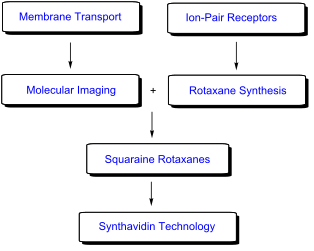
- producing reactive singlet oxygen [41][42][43]. The dyes enable new types of nanoscale heating technologies that release sensitive payload such as dyes, drugs, oligonucleotides, or proteins. The dyes can also be loaded into nanoparticles for anticancer photothermal therapy in preclinical animal models


2-Hetaryl-1,3-tropolones based on five-membered nitrogen heterocycles: synthesis, structure and properties
Beilstein J. Org. Chem. 2015, 11, 2179–2188, doi:10.3762/bjoc.11.236
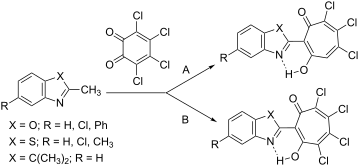
- [14][15]. An alternative method [16] involves the photooxygenation of cyclohepta-1,3,5-triene with singlet oxygen in carbon tetrachloride solution, methanolysis of the formed isomeric endoperoxides resulted in 1,2-dihydro-3-hydroxytropone and oxidation of the latter with chromium trioxide. A


![[Graphic 3]](/bjoc/content/inline/1860-5397-11-236-i8.png?max-width=637&scale=1.18182) N···H–O equilibrium in solutions of 2-hetaryl-5,6,7-trichloro- and 4,...
N···H–O equilibrium in solutions of 2-hetaryl-5,6,7-trichloro- and 4,...


The chemical behavior of terminally tert-butylated polyolefins
Beilstein J. Org. Chem. 2015, 11, 1246–1258, doi:10.3762/bjoc.11.139
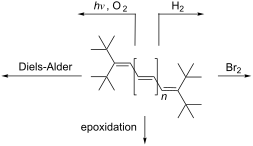
- has been investigated by many authors [18][19][20]. In most cases this photooxidation involves singlet oxygen that is generated from triplet oxygen by irradiation in the presence of a sensitizer such as chlorophyll. Since the above experiment was carried out in the absence of a sensitizer, the


The synthesis of active pharmaceutical ingredients (APIs) using continuous flow chemistry
Beilstein J. Org. Chem. 2015, 11, 1194–1219, doi:10.3762/bjoc.11.134
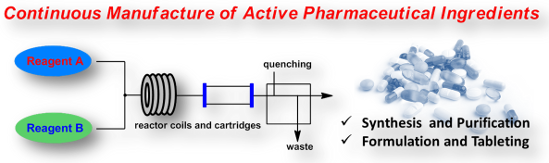
- singlet oxygen mediated ene-reaction, a Hock cleavage of the resulting hydroperoxide 58 followed by oxidation with triplet oxygen and a final peracetalisation (Scheme 9). Based on previous work by the Seeberger group and others [63][64][65] a simple flow photoreactor set-up comprising of a layer of FEP
- -polymer tubing wrapped around a cooled medium pressure mercury lamp was used to efficiently generate and react the singlet oxygen in the presence of tetraphenylporphyrin (TPP) as a photosensitizer. Upon exiting the photoreactor, the reaction stream was acidified by combining with a stream of TFA in order


Electrochemical oxidation of cholesterol
Beilstein J. Org. Chem. 2015, 11, 392–402, doi:10.3762/bjoc.11.45
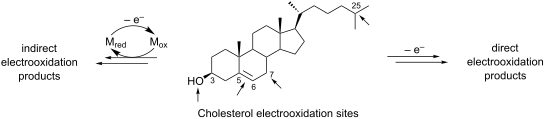
- ) when hydrogen peroxide was combined with superoxide solution in water matrix. The authors suggested that under these conditions the rate of the disproportionation reaction of superoxide radical anion is increased, and the formation of more reactive oxygen species such as hydroxyl radical or singlet
- oxygen is possible. A stereoselective electrochemical method of the chlorination of steroidal Δ5-olefins was described by Takayama et al. [38]. The oxidation of cholesterol was carried out in an undivided cell under constant current conditions in CH2Cl2/MeCN/H2O (2:2:1), the cathode and anode being


Oxidative phenylamination of 5-substituted 1-hydroxynaphthalenes to N-phenyl-1,4-naphthoquinone monoimines by air and light “on water”
Beilstein J. Org. Chem. 2014, 10, 2448–2452, doi:10.3762/bjoc.10.255
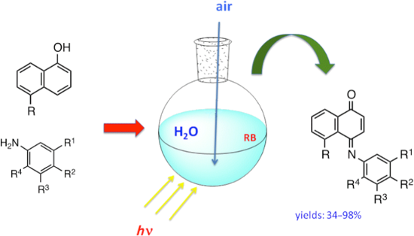
- by on-water oxidative phenylamination of 1,5-dihydroxynaphthalene (1) and 5-acetylamino-1-hydroxynaphthalene (5) with oxygen-substituted phenylamines under aerobic conditions and either solar or green LED radiation, in the presence of rose bengal as singlet oxygen sensitizer. As compared to the
- green route for the preparation of N-phenyl-1,4-naphthoquinone monoimines by on-water oxidative coupling reaction of 1-hydroxynaphthalene derivatives with oxygen-substituted phenylamines under solar light or green LEDs radiation, rose bengal as singlet oxygen sensitizer and aerobic conditions. Results
- then in the same flask, the arylamination of 2 to the respective aminoquinones was accomplished [14]. The on-water photooxygenation of 1,5-DHN (1) was carried out for 5 h in round-bottom flasks, under the presence of 1.6 mmol % of rose bengal (RB) as singlet oxygen sensitizer, by using sunlight




Photo, thermal and chemical degradation of riboflavin
Beilstein J. Org. Chem. 2014, 10, 1999–2012, doi:10.3762/bjoc.10.208
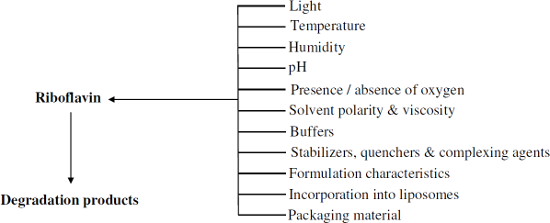
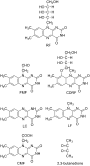
- different mechanisms [36][41][42][46][47][50][51][52][53][54][55][56][57]. RF also forms singlet oxygen from the ordinary triplet oxygen under light by the excited triplet RF and triplet oxygen annihilation mechanism which plays a part in photosensitized reactions [58][59]. FMF, LC and LF are formed by the
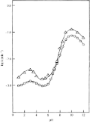
- identified as 2,3-butanedione and is produced from the side-chain of RF by the action of singlet oxygen. Its formation is greatly affected by the pH of the medium as the highest content of this compound was found at pH 6.5, followed by 4.5 and 8.5 [59]. RF is highly sensitive to pH and has pKa values of 1.7
- mechanisms. Ascorbic acid quenches both singlet oxygen and excited triplet states of RF whereas sodium azide quenches only the singlet oxygen in RF solution. Due to the dual activity, ascorbic acid is a comparatively better quencher than sodium azide. RF destructions were 94% and ~16% when photodegraded in




Cyclization–endoperoxidation cascade reactions of dienes mediated by a pyrylium photoredox catalyst
Beilstein J. Org. Chem. 2014, 10, 1272–1281, doi:10.3762/bjoc.10.128
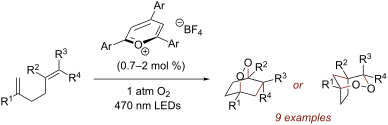
- challenges. Classical approaches to the introduction of cyclic peroxides typically rely on cycloadditions of alkenes and dienes with singlet oxygen. However, ene processes can often compete, leading to complex mixtures of hydroperoxide adducts [1][6][7][8]. More recently, cyclization reactions of
- single electron oxidants capable of this task, we elected to employ photooxidation catalysts. Additionally, we sought to select visible light-activated organic single electron oxidants that do not readily sensitize singlet oxygen [17][18][19]. For these reasons, we were attracted to the use of
- , to exclude the intervention of a singlet oxygen mechanism, we conducted the reaction in the presence of Rose Bengal. Under these conditions, we observed only 1O2 ene reactivity with the isoprenyl group (65% yield of hydroperoxide), underscoring the unique reactivity garnered by this catalyst system


From porphyrin benzylphosphoramidate conjugates to the catalytic hydrogenation of 5,10,15,20-tetrakis(pentafluorophenyl)porphyrin
Beilstein J. Org. Chem. 2014, 10, 628–633, doi:10.3762/bjoc.10.54
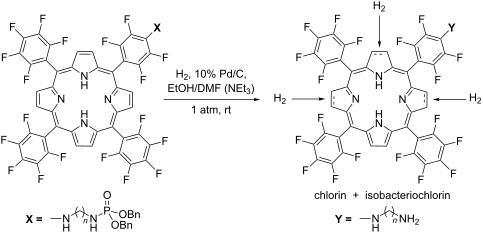
- recently synthesized porphyrin diisopropylphosphoramidate conjugates derived from 5,10,15,20-tetrakis(pentafluorophenyl)porphyrin (TPPF20). Such compounds showed a high photostability and a good capacity to generate singlet oxygen, but their solubility in water is moderate [4]. Additionally, we tried to


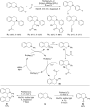
Synthesis of five- and six-membered cyclic organic peroxides: Key transformations into peroxide ring-retaining products
Beilstein J. Org. Chem. 2014, 10, 34–114, doi:10.3762/bjoc.10.6
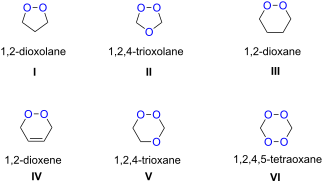
- peroxides are based on three key reagents: oxygen, ozone, and hydrogen peroxide. These reagents and their derivatives are used in the main methods for the introduction of the peroxide group, such as the singlet-oxygen ene reaction with alkenes, the [4 + 2]-cycloaddition of singlet oxygen to dienes, the
- peroxide moiety, the Isayama–Mukaiyama peroxysilylation, and reactions involving peroxycarbenium ions. Syntheses employing hydrogen peroxide and the intramolecular Kobayashi cyclization are less frequently used. 1.1. Use of oxygen for the peroxide ring formation The singlet-oxygen ene reaction with alkenes
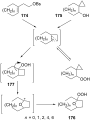
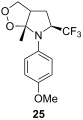
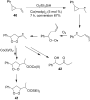
- the oxidation of cyclopropanes by oxygen in the presence of transition-metal salts as the catalysts. The reactions of bicycloalkanols 10a–e with singlet oxygen in the presence of catalytic amounts of Fe(III) acetylacetonate produce peroxides 12a–e, which can also be synthesized starting from silylated






Studies on the photodegradation of red, green and blue phosphorescent OLED emitters
Beilstein J. Org. Chem. 2013, 9, 2088–2096, doi:10.3762/bjoc.9.245
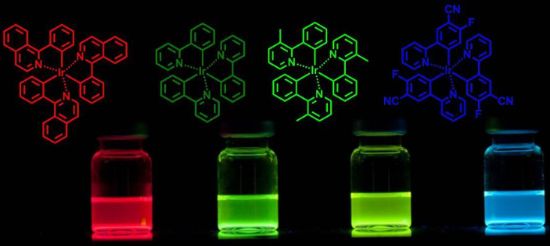
- the samples in different solvents and under atmospheric as well as inert conditions helped to identify several pathways that can contribute to the deterioration of these compounds. Degradation via singlet oxygen or the excited states of the emitters as well as the detrimental influence of halogenated
- , though only as a side product, while no indication of halogen abstraction was found for the other two complexes. The influence of dioxygen As cyclometalated Ir-complexes are very efficient singlet oxygen sensitizers we investigated the influence of oxygen on the photostability of the compounds. 1O2 is
- -thaw, then argon atmosphere). All compounds were irradiated in CH2Cl2 and toluene as mentioned above, but also in benzene and benzene-d6. Singlet oxygen has a significantly higher lifetime in deuterated solvents, resulting in an effective enhancement of the reaction rates of singlet oxygen. Processes


The chemistry of amine radical cations produced by visible light photoredox catalysis
Beilstein J. Org. Chem. 2013, 9, 1977–2001, doi:10.3762/bjoc.9.234
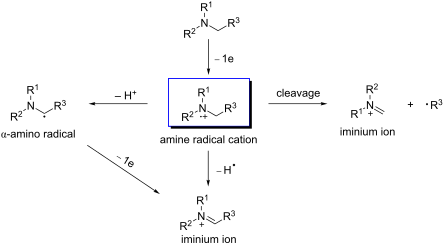
- the adduct of superoxide to DMPO. In contrast, an ESR study on the same solution but with DMPO being replaced by TEMP (2,3,6,6-tetramethylpiperidine) did not detect TEMPO, the oxidation product of TEMP by singlet oxygen. However, TEMPO was detected in the absence of N-phenyltetrahydroisoquinoline. The
- results from these ESR studies are consistent with the notion that singlet oxygen is not formed in the presence of N-phenyltetrahydroisoquinoline and the Eosin Y radical anion reduces oxygen to superoxide. Finally, the yield of the product 18 increased when the reaction mixture was kept stirring in the