


Search results
Search for "titanium" in Full Text gives 125 result(s) in Beilstein Journal of Organic Chemistry.
New bio-nanocomposites based on iron oxides and polysaccharides applied to oxidation and alkylation reactions
Beilstein J. Org. Chem. 2017, 13, 1982–1993, doi:10.3762/bjoc.13.194
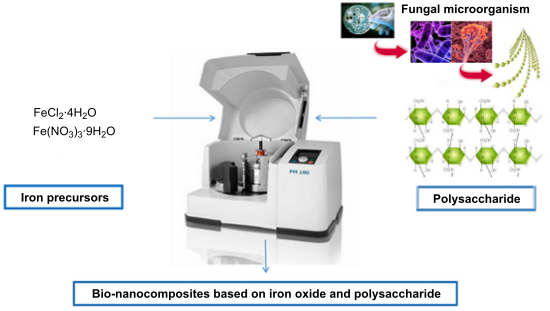
- with magnetic properties. Results and Discussion In the present study, we prepared and analyzed three different catalysts based on iron oxides and polysaccharides, in particular: iron oxide–polysaccharide 4 magnetic nanoparticles (Fe2O3-PS4-MNP), iron oxide–polysaccharide 4 (Fe2O3-PS4) and titanium
- ) were generally in good agreement, supporting the validity of our assumption on DMPY adsorbing selectively on Brønsted acid sites. Inductively coupled plasma–mass spectrometry (ICP–MS) The elemental composition of the TiO2-Fe2O3-PS4 material was determined by ICP–MS. The content of iron and titanium was
- 38 and 12 wt %, respectively (Table 3). These values corroborate the incorporation of titanium in the material and confirm the results obtained by XPS. Magnetic susceptibility The magnetic susceptibility of Fe2O3-PS4-MNP is consistent with the XRD data and confirms the magnetic characteristics of the


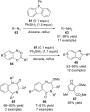
Pd(OAc)2/Ph3P-catalyzed dimerization of isoprene and synthesis of monoterpenic heterocycles
Beilstein J. Org. Chem. 2017, 13, 1807–1815, doi:10.3762/bjoc.13.175
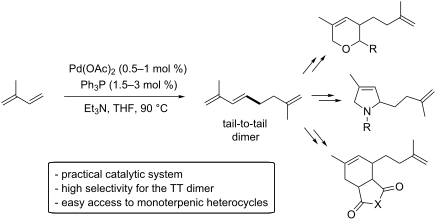
- , titanium-, zirconium-, iron-, cobalt-, vanadium- or aluminum-based Ziegler-type catalysts lead mostly to the linear tail-to-head 2-TH dimer 2,6-dimethyl-1,3,6-octatriene (alloocimene) [27], and the use of nickel catalysts allows the preparation of the tail-to-tail dimer 2-TT (2,7-dimethyl-1,3,7-octatriene


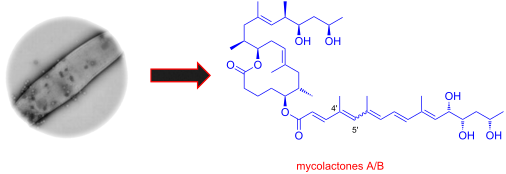
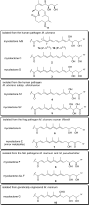
The chemistry and biology of mycolactones
Beilstein J. Org. Chem. 2017, 13, 1596–1660, doi:10.3762/bjoc.13.159









Chemical systems, chemical contiguity and the emergence of life
Beilstein J. Org. Chem. 2017, 13, 1551–1563, doi:10.3762/bjoc.13.155
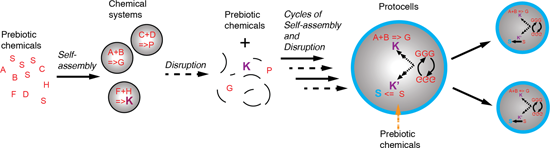
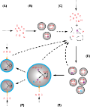
- during system preparation was still necessary and it speaks against a separate evolution of the system parts. In the case of fatty acid experiments [90], fatty acid vesicles were formed on/around titanium oxide particles and the irradiation of the photosensitizer powered the reduction of NAD+ to NADH


A new member of the fusaricidin family – structure elucidation and synthesis of fusaricidin E
Beilstein J. Org. Chem. 2017, 13, 1430–1438, doi:10.3762/bjoc.13.140
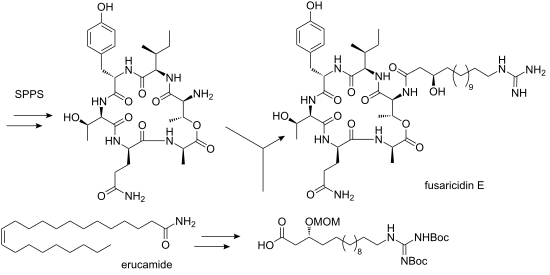
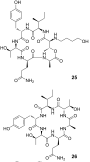
- hydride, followed by Fmoc-protection and ozonolysis furnished aldehyde 5 in 57% yield over three steps (Scheme 2). The homoallylic alcohol was prepared by an enantioselective Duthaler–Hafner allylation [13] with the titanium-complex 15 in high yield and 94% ee. Attempts to perform a catalytic Keck
- allylation with BINOL-titanium catalysts failed due to low conversion [14]; however, in spite of good experience with the Maruoka–Keck allylation in another total synthesis, the conversion was not satisfying in this case [15]. After protection and guanidinylation with triflylguanidine 14, the homoallylic



Mechanochemistry-assisted synthesis of hierarchical porous carbons applied as supercapacitors
Beilstein J. Org. Chem. 2017, 13, 1332–1341, doi:10.3762/bjoc.13.130
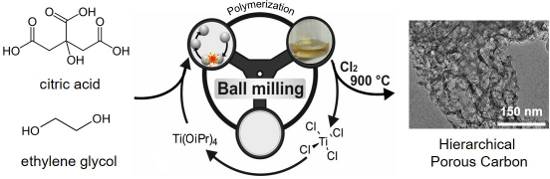
- mechanochemical ball-milling approach, we obtained titanium(IV) citrate-based polymers, which have been processed via high temperature chlorine treatment to hierarchical porous carbons with a high specific surface area of up to 1814 m2 g−1 and well-defined pore structures. The carbons are applied as electrode
- for the synthesis of uniform metal oxide nanoparticles to synthesize a titanium(IV) citrate-based polymer [44][45]. The Pechini method is applicable to synthesize templated mesoporous carbons [46][47][48][49], but has never been utilized for a solvent-free and rapid process based on mechanochemistry
- titanium isopropoxide (TIPP) were ground with a molar ratio of 3:1:1 in a ZrO2 milling cup for 5 min. A practical indicator for a successful mechanochemical reaction is a color change. The white and colorless educts turn to a yellow polymer with a honey-like texture. We first characterized the


Continuous-flow processes for the catalytic partial hydrogenation reaction of alkynes
Beilstein J. Org. Chem. 2017, 13, 734–754, doi:10.3762/bjoc.13.73
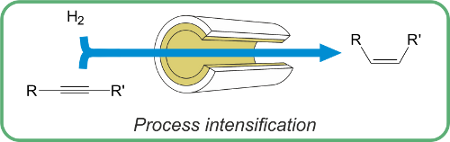
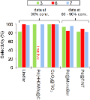
- -dimethylammonium dihydrogen phosphate (HHDMA), commercially available under the name NanoSelectTM [120]. Low-content, colloidal HHDMA-palladium catalysts onto on activated carbon (Table 1, entry 3) or titanium silicate (Table 1, entry 4) provided selectivities for 1a of 97% and 96% respectively. As expected, “bare








Fast and efficient synthesis of microporous polymer nanomembranes via light-induced click reaction
Beilstein J. Org. Chem. 2017, 13, 558–563, doi:10.3762/bjoc.13.54
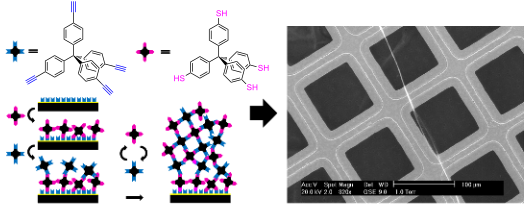
- ) wafer, coated with 5 nm titanium and 100 nm gold (Au/Ti/Si). The substrates were obtained from Georg-Albert-PVD, Germany and stored under an argon atmosphere prior to use. Infrared reflection absorption spectroscopy (IRRAS): The IRRA-spectra were recorded on a Bruker Vertex 80 purged with dried air. The


Adsorption of RNA on mineral surfaces and mineral precipitates
Beilstein J. Org. Chem. 2017, 13, 393–404, doi:10.3762/bjoc.13.42
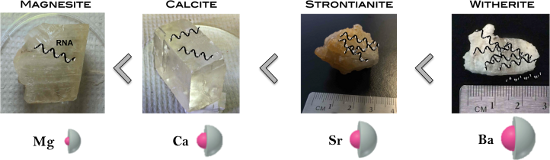
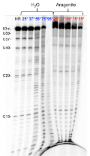
- osmium phosphate, neither of which has been reported in mineralogy. Likewise, horizontal comparisons across the Periodic Table are problematic, even within transition metals. For example, we found that RNA binds to natural titanium dioxide (rutile, 21% in our experiments) and iron(III) oxide (Fe2O3


3D printed fluidics with embedded analytic functionality for automated reaction optimisation
Beilstein J. Org. Chem. 2017, 13, 111–119, doi:10.3762/bjoc.13.14
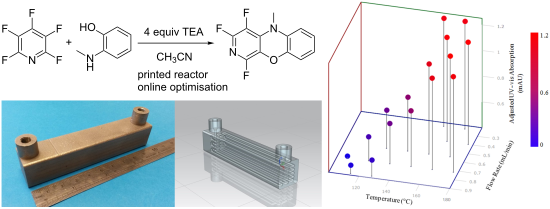
- -power energy source, typically a laser, to selectively melt a powder bed into a single solid body [17]. SLM can manufacture parts in a range of chemically inert and thermally stable metals such as stainless steel [18], aluminium and titanium [19][20], and is therefore an attractive technique for a
- continuous cylindrical channel running throughout (channel diameter = 2 mm, channel length = 3200 mm, theoretical reaction volume = 10 mL). The titanium alloy used to manufacture the part is thermally stable across a substantial temperature range, and chemically compatible with a wide range of organic




Stabilization of nanosized titanium dioxide by cyclodextrin polymers and its photocatalytic effect on the degradation of wastewater pollutants
Beilstein J. Org. Chem. 2016, 12, 2873–2882, doi:10.3762/bjoc.12.286
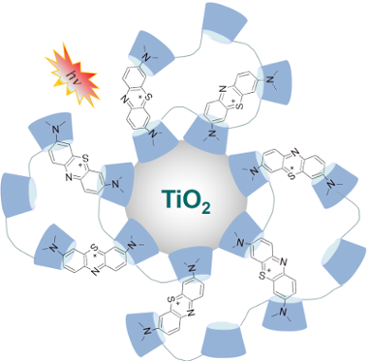
- nanosized titanium dioxide (nanoTiO2) applied in photodegradation-based procedures can be stabilized with cyclodextrins in order to obtain a new, more efficient photocatalyst for the purification of waters polluted by xenobiotics applying UV irradiation. During our work, on the one hand, we studied the
- decomposition [27][28]. Recently, various photocatalysts modified by CDs have been described. For instance, reduced graphene oxide/β-CD/titanium dioxide showed enhanced removal of phenol and Cr(VI) [29], graphene nanosheets with self-assembled nanolayer of TiO2 stabilized by β-CD resulted in improved
- photodegradation of methylene blue [24], and CD-functionalized Fe3O4/TiO2 was efficient catalyst in photodecomposition of endocrine disrupting compounds, such as bisphenol A and dibutyl phthalate [30]. Producing strong oxidizing radicals (hydroxyl and superoxide radical ions) titanium dioxide is a widely used



Catalytic Wittig and aza-Wittig reactions
Beilstein J. Org. Chem. 2016, 12, 2577–2587, doi:10.3762/bjoc.12.253
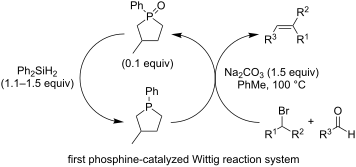
- via intermediate iminophosphoranes 70, using the combination of titanium tetraisopropoxide and tetramethyldisiloxane (TMDS) for the in situ reduction of byproduct 2 (Scheme 18) [36]. This group has more recently studied catalytic aza-Wittig reactions using carboxylic acid anhydrides as the starting




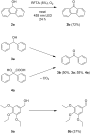
Solvent-free, visible-light photocatalytic alcohol oxidations applying an organic photocatalyst
Beilstein J. Org. Chem. 2016, 12, 2358–2363, doi:10.3762/bjoc.12.229
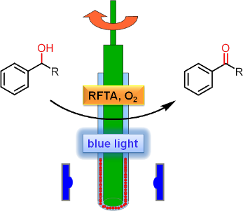
- solvent-free photocatalysis is the application of heterogeneous, semiconducting photocatalysts, often based on titanium dioxide and other metal oxides [6][7][8]. However, to the best of our knowledge, no solvent-free visible-light driven transformation of a solid substrate applying an organic




Useful access to enantiomerically pure protected inositols from carbohydrates: the aldohexos-5-uloses route
Beilstein J. Org. Chem. 2016, 12, 2343–2350, doi:10.3762/bjoc.12.227
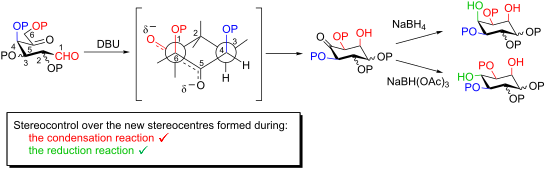
- ][20][21], by microbial oxidation; 3) carbocyclization involving organometallic intermediates (Ferrier II reaction [22] performed on 6-O-acyl-hex-5-enopyranosides followed by reduction [23][24]; trialkylaluminium [25][26] or titanium(IV)-assisted [27] conversion of hex-5-enopyranosides and SmI2


Cp2TiCl/D2O/Mn, a formidable reagent for the deuteration of organic compounds
Beilstein J. Org. Chem. 2016, 12, 1585–1589, doi:10.3762/bjoc.12.154
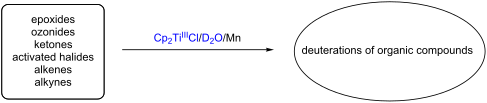
- donor. Cp2TiCl, consists of titanium, one of the most abundant transition metals in the Earth’s crust [16], that can be easily prepared from commercial Cp2TiCl2 by using reductants such as Mn, Zn or Al [17][18], generating in THF, in absence of water a green solution, or a blue one in the presence of
- -ordination of water to Cp2TiCl might weakens the strength of the O–H bond. In this way a single electron transfer from titanium to oxygen might facilitate the HAT from the titanocene aqua-complex to the free radicals. Theoretical calculations supported that the coordination of water to Cp2TiIIICl weakens the


3,6-Carbazole vs 2,7-carbazole: A comparative study of hole-transporting polymeric materials for inorganic–organic hybrid perovskite solar cells
Beilstein J. Org. Chem. 2016, 12, 1401–1409, doi:10.3762/bjoc.12.134
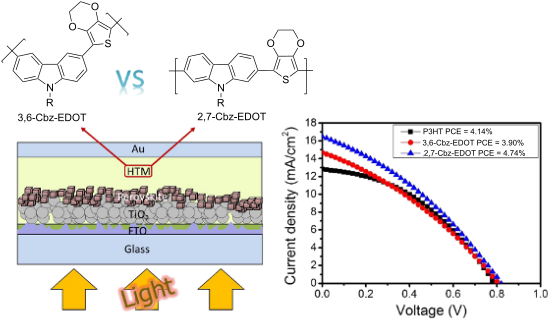
- a UV-O3 cleaner (Filgen, Model UV253E) for 20 min. The electron-accepting TiO2 compact layer was spin-coated (1500 rpm for 30 s) from a mildly acidic (after addition of 12 μM HCl) solution of titanium(IV) isopropoxide in anhydrous ethanol and sintered at 120 °C for 10 s. The mesoporous TiO2 layer


Selective bromochlorination of a homoallylic alcohol for the total synthesis of (−)-anverene
Beilstein J. Org. Chem. 2016, 12, 1361–1365, doi:10.3762/bjoc.12.129

- active bromochlorination catalyst is not yet known, we speculate that the procedural changes in entries 2–4 do not alter its structure, but rather change the distribution of titanium species responsible for off-cycle reactivity. Titanium alkoxides are known to undergo facile ligand exchange at −20 °C
- the trace formation of these highly reactive dichlorotitanium species early in the reaction, thereby preventing background bromochlorination. Lowering the concentration of the reaction may favour lower-order titanium aggregates over oligomeric species [12]. It has been our observation that high


Scope and mechanism of the highly stereoselective metal-mediated domino aldol reactions of enolates with aldehydes
Beilstein J. Org. Chem. 2016, 12, 813–824, doi:10.3762/bjoc.12.80
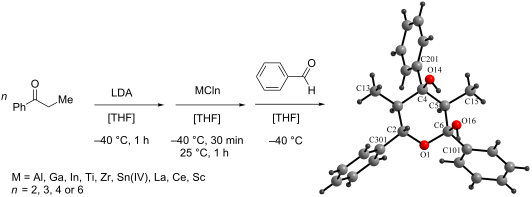
- with benzaldehyde (PhCHO) is followed by the exergonic first aldol addition showing a small activation barrier of 1.82 kcal mol−1 via a half−chair like transition state (TS-C-A1), which is in accord with the anti-selective aldol addition of titanium enolates [53][54]. TS-C-A1 leads to the formation of


Recent advances in N-heterocyclic carbene (NHC)-catalysed benzoin reactions
Beilstein J. Org. Chem. 2016, 12, 444–461, doi:10.3762/bjoc.12.47
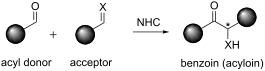
- in Cheng’s group revealed an intriguing divergent catalytic dimerisation of 2-formylcinnamates 72. Co-operative catalysis by NHC precatalyst 73 and a Lewis acid (titanium isopropoxide) afforded isochromenone derivatives 74 via a sequence of reactions initiated by a benzoin condensation. Treatment of



Synthesis of constrained analogues of tryptophan
Beilstein J. Org. Chem. 2015, 11, 1997–2006, doi:10.3762/bjoc.11.216
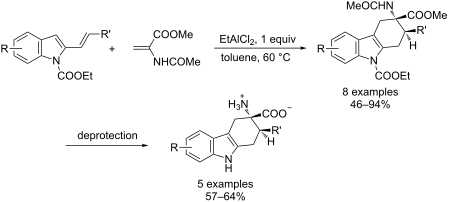
- -acetamidoacrylate (2) and its congeners with cyclic/acyclic dienes and azadienes occur under conventional heating or microwave irradiation [24]. Moreover, the use of titanium tetrachloride as Lewis acidic promoter has been reported [25]. Finally, simple functionalization reactions of indoles with 2 are reported in


Recent applications of ring-rearrangement metathesis in organic synthesis
Beilstein J. Org. Chem. 2015, 11, 1833–1864, doi:10.3762/bjoc.11.199

- -allylation sequence. The starting cycloadduct 321 was obtained by the double DA reaction between 1,3-cyclohexadiene and 1,4-benzoquinone. Further, treatment of 323 with catalyst 2 in the presence of titanium isopropoxide furnished the expected RRM product 324 in 92% yield (Scheme 70). Bicyclo[2.2.2]octene




Preparative semiconductor photoredox catalysis: An emerging theme in organic synthesis
Beilstein J. Org. Chem. 2015, 11, 1570–1582, doi:10.3762/bjoc.11.173
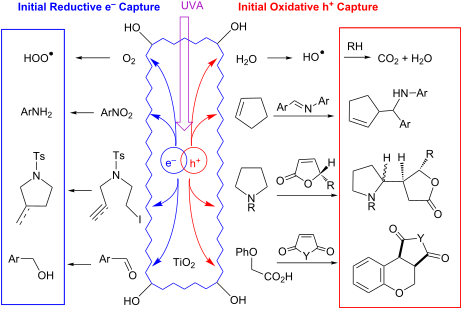
- choices. It is widely accepted that titanium dioxide (TiO2) in its various mineral forms is by far the most effective and reliable. This is down to its harmlessness, low cost, high activity and stability under irradiation. TiO2 has a large band gap which lies in the UVA region of the spectrum (anatase







A new method for the synthesis of α-aminoalkylidenebisphosphonates and their asymmetric phosphonyl-phosphinyl and phosphonyl-phosphinoyl analogues
Beilstein J. Org. Chem. 2015, 11, 1418–1424, doi:10.3762/bjoc.11.153
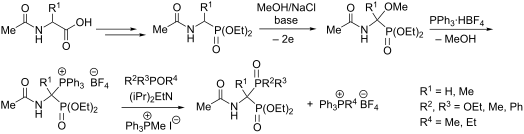
- mmol) were added to a glass beaker (25 mL) equipped with a cylindrical Pt mesh anode (20 cm2) and a rotating flat cathode (platinised titanium, 1.2 cm2). In the case of 1-(N-acetylamino)methylphosphonate (5a), NaCl (70 mg, 1.2 mmol) was placed in the beaker in its entirety at the beginning of oxidation
- titanium, 1.2 cm2). Electrolysis was carried out while stirring at 0.1 A until a 4.5–10 F/mol charge had passed (Table 2). After evaporation of MeOH under reduced pressure, the residue was extracted with CH2Cl2 followed by further evaporation of the solvent from the extracts in vacuo to obtain diethyl 1-(N


Selected synthetic strategies to cyclophanes
Beilstein J. Org. Chem. 2015, 11, 1274–1331, doi:10.3762/bjoc.11.142
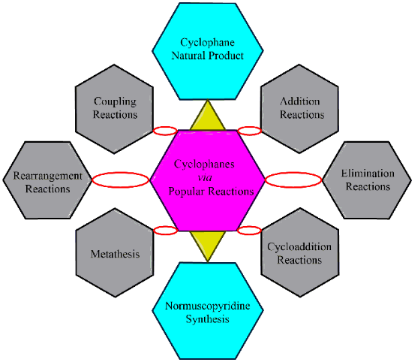
- stereochemistry of the newly generated C–C double bonds in 78 was confirmed as trans with the aid of the NMR vicinal coupling constant. Finally, intramolecular McMurry coupling of 78 using titanium trichloride and lithium aluminum hydride (LAH) heated under reflux in THF provided the cyclophane derivative 79 (20






Design and synthesis of fused polycycles via Diels–Alder reaction and ring-rearrangement metathesis as key steps
Beilstein J. Org. Chem. 2015, 11, 1259–1264, doi:10.3762/bjoc.11.140
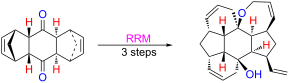
- + Na]+ calcd for C25H32NaO2, 359.1982; found, 359.1986. Synthesis of compound 11 Analogously as described in [2], to a stirred solution of compound 10 (20 mg, 0.05 mmol) in toluene (20 mL) degassed with nitrogen for 10 minutes, purged with ethylene gas for another 10 minutes and then added titanium





