Search results
Search for "N-terminal" in Full Text gives 124 result(s) in Beilstein Journal of Organic Chemistry.
Inhibition of peptide aggregation by means of enzymatic phosphorylation
Beilstein J. Org. Chem. 2016, 12, 2462–2470, doi:10.3762/bjoc.12.240
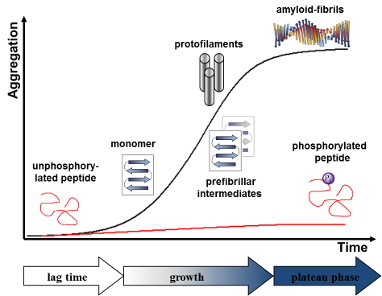
- spectra were averaged over three scans (λ = 195–240 nm; 0.5 nm intervals; 2 mm bandwidth; 4 s response time, 100 nm min−1 scanning speed). Ellipticity was normalized to concentration (c [mol L−1]), number of residues (n = 27, including the N-terminal Abz group) and path length (l [cm]) by using Equation 1


Economical and scalable synthesis of 6-amino-2-cyanobenzothiazole
Beilstein J. Org. Chem. 2016, 12, 2019–2025, doi:10.3762/bjoc.12.189

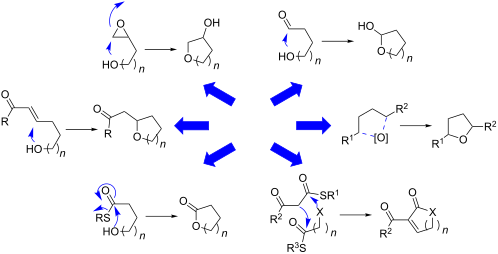
- bioorthogonal reaction (k ≈ 10 M−1s−1) [9] for site-specific labelling or immobilisation of proteins 4, either at an N-terminal cysteine residue or at a 1,2-aminothiol group incorporated into a non-natural amino acid (Scheme 1) [10][11]. In addition, CBT derivatives have been used for the synthesis of polymeric



Biosynthesis of oxygen and nitrogen-containing heterocycles in polyketides
Beilstein J. Org. Chem. 2016, 12, 1512–1550, doi:10.3762/bjoc.12.148




Application of Cu(I)-catalyzed azide–alkyne cycloaddition for the design and synthesis of sequence specific probes targeting double-stranded DNA
Beilstein J. Org. Chem. 2016, 12, 1348–1360, doi:10.3762/bjoc.12.128
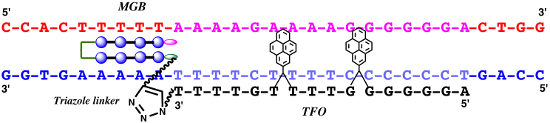
- ) bearing either alkyne or azide groups were obtained via acylation of their N-terminal amine by the activated esters method in DMF in the presence of Hünig's base (see Supporting Information File 1 for experimental details). We have pursued several goals: 1) to synthesize a variety of modified MGBs with
- differ in the length and nature of the 3'-linker were synthesized and used for further conjugations [17][30]. Synthesis of polyamide-TFO conjugates by CuAAC reaction To establish conditions for the synthesis of TFO-MGB conjugates we used 5'-alkyne modified parallel TFOs (15–17) in combination with the N
- -terminal azide-modified MGBs 12 and 14 (see Figure 12, Figure 2B for the synthesis and Supporting Information File 1 for experimental details). Three combinations of the components were tried: TFO 15 and MGB 14 resulting in conjugate 23, TFO 16 (bifunctional) + two MGBs 12 (conjugate 24) and TFO 17 + MGB


Cyclisation mechanisms in the biosynthesis of ribosomally synthesised and post-translationally modified peptides
Beilstein J. Org. Chem. 2016, 12, 1250–1268, doi:10.3762/bjoc.12.120
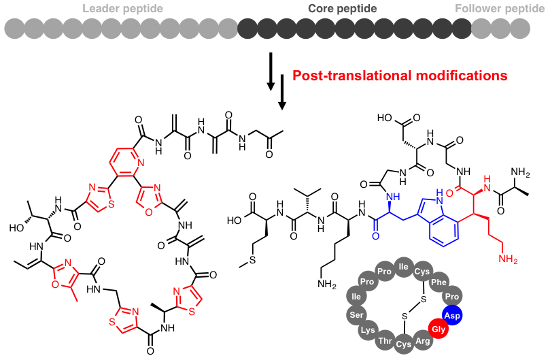
- RiPP pathways, which are often small and lacking in homology to one another [9]. There has therefore been a massive increase in the study of their biosynthesis in recent years. RiPPs usually originate from a larger precursor peptide that consists of an N-terminal leader sequence and a core peptide that
- contains the natural product precursor (Figure 1). The bottromycin precursor peptide represents a notable exception as it features an N-terminal core peptide and a C-terminal follower peptide [10][11][12][13]. The core peptide is post-translationally modified and cleaved from the leader peptide to yield a
- central kinase domain catalyses phosphorylation and an N-terminal lyase domain catalyses elimination [58]. Both class III and IV synthetases have C-terminal LanC-like cyclase domains, but class III enzymes lack the three conserved residues that bind zinc in the other classes [57], which is surprising





Assembly of synthetic Aβ miniamyloids on polyol templates
Beilstein J. Org. Chem. 2015, 11, 2646–2653, doi:10.3762/bjoc.11.284
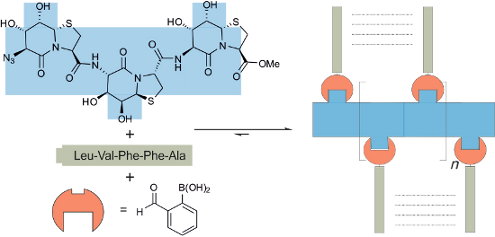
- boronic ester to the valerolactam ring of Hot. Template 9 (2.30 mg, 4.40 µmol, 1.0 equiv) and peptide boronic acid 1 (7.35 mg, 8.80 µmol, 2.0 equiv) were dissolved in 0.7 mL DMSO-d6 in a NMR tube. A ratio of 9/C-terminal monoester/N-terminal monoester/13 (0.04:0.24:0.08:0.60) was observed in the presence
- concept of tailoring the length of the peptide boronic acid and a polyol template is shown in Figure 2. Results and Discussion The shortest known functional expansion of the amyloidogenic Aβ-peptide is the β-amyloid (17–21) Leu-Val-Phe-Phe-Ala [20] which was investigated as both a C-terminal 1 and as an N
- -terminal boronic acid 2. Peptide boronic acids of type 1 were synthesized on polymer-bound diethanolamine (PS-DEAM resin), according to the protocol in Supporting Information File 1, Figure S1 [21]. The electron-poor boronic acid 2, which was expected to be more reactive in boronic ester formation, was


Peptide–polymer ligands for a tandem WW-domain, an adaptive multivalent protein–protein interaction: lessons on the thermodynamic fitness of flexible ligands
Beilstein J. Org. Chem. 2015, 11, 837–847, doi:10.3762/bjoc.11.93
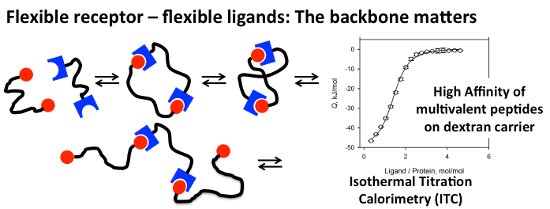
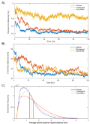
- and Figure 4 show these theoretical results averaged over time as well as the three runs per polymer. Structural properties and descriptors. Dividing the Euklidean distance between two successive peptide attachment points by the number of bonds in between (i.e., between the N-terminal nitrogen atoms





Orthogonal dual-modification of proteins for the engineering of multivalent protein scaffolds
Beilstein J. Org. Chem. 2015, 11, 784–791, doi:10.3762/bjoc.11.88
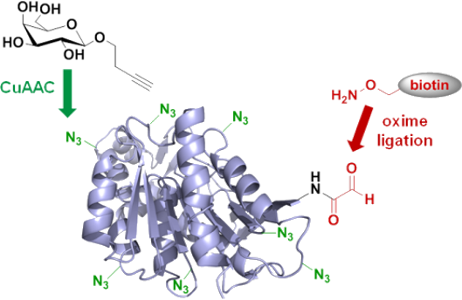
- . In the beginning of our studies, we expressed TTL recombinantly with an N-terminal His-tag and tobacco etch virus protease (TEV) cleavage site, leaving an N-terminal Ser after the cleavage. However, we were unable to cleave the tag. This is probably due to structural constraints at the TTL’s N
- -terminus leaving the TEV protease recognition site inaccessible for the protease (for more information on protein design see Supporting Information File 1). Therefore, the construct was altered to contain an unmodified N-terminus with Ser at position 2. The N-terminal Met is cleaved when followed by small
- amino acids like glycine, alanine or serine in the native process of N-terminal methionine excision (NME) [43]. This process exposes Ser2 at the N-terminus for subsequent N-terminal oxime ligation. It has to be noted that the incorporation of Aha, as known [42][44], can hamper NME and therefore delivers


Exploring monovalent and multivalent peptides for the inhibition of FBP21-tWW
Beilstein J. Org. Chem. 2015, 11, 701–706, doi:10.3762/bjoc.11.80
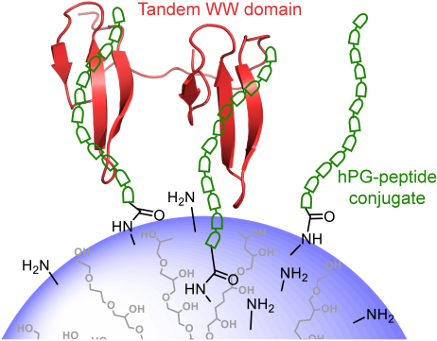
- aromatic residue N-terminal to the polyproline stretch could also be observed. To define an optimized single monovalent binder, we analyzed the affinities for a selected set of ligands from this panel of sequences with regard to FBP21’s WW domains by ITC under the same conditions as were used for the phage


Potential of acylated peptides to target the influenza A virus
Beilstein J. Org. Chem. 2015, 11, 589–595, doi:10.3762/bjoc.11.65
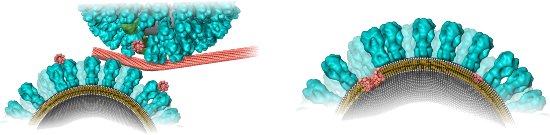
- . Results and Discussion Peptide synthesis and characterization Peptide synthesis was performed using a rink amide resin on an automatic synthesizer by the Fmoc/tert-butyl strategy [17][18]. The N-terminus of the N-terminal free resin bound peptide was acylated with stearic acid using O-(benzotriazol-1-yl


Gold(I)-catalysed synthesis of a furan analogue of thiamine pyrophosphate
Beilstein J. Org. Chem. 2014, 10, 2580–2585, doi:10.3762/bjoc.10.270
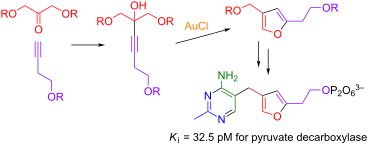
- , involving gold(I)-catalysed cyclisation of an alkynyl alcohol to form the furan ring. The furan analogue of thiamine diphosphate (ThDP) was also made and tested for binding to and inhibition of pyruvate decarboxylase (PDC) from Zymomonas mobilis (overexpressed in E. coli with a N-terminal His-tag). It is a
- in Escherichia coli has been used in such studies but, in order to simplify the purification, in this study the gene was cloned into a pET28a vector, to give the enzyme an N-terminal His6-tag. This form of the protein was overexpressed in high yield in E. coli, and was easily purified on a Ni2+-NTA


Synthesis of novel conjugates of a saccharide, amino acids, nucleobase and the evaluation of their cell compatibility
Beilstein J. Org. Chem. 2014, 10, 2406–2413, doi:10.3762/bjoc.10.250
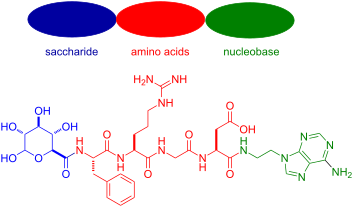
- article reports the synthesis of novel conjugates containing three fundamental biological build blocks (saccharide, amino acids, and nucleobase) and their cell compatibility. The attachment of the saccharide to the N-terminal of the peptide or the nucleobase to the C-terminal of the peptide apparently


Synthesis and optical properties of pyrrolidinyl peptide nucleic acid carrying a clicked Nile red label
Beilstein J. Org. Chem. 2014, 10, 2166–2174, doi:10.3762/bjoc.10.224
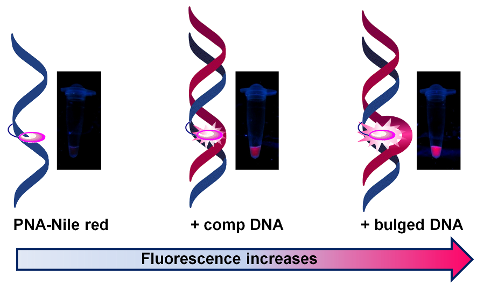
- completion of the synthesis, the N-terminal Fmoc group was removed and the free amino group was capped by acetylation. The acpcPNA on the solid support was spilt to 0.5 µmol portions for a further labeling experiment and treated with 1:1 dioxane/aqueous NH3 at 60 °C overnight to remove the nucleobase- and


Multivalent scaffolds induce galectin-3 aggregation into nanoparticles
Beilstein J. Org. Chem. 2014, 10, 1570–1577, doi:10.3762/bjoc.10.162
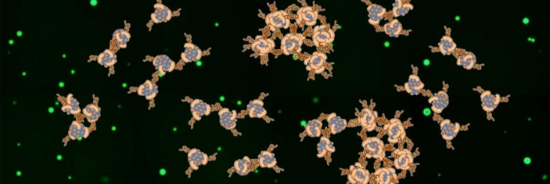
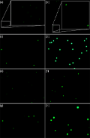
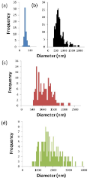
- domain without the N-terminal domain, did not result in aggregate formation (see Table S3, Supporting Information File 1). No aggregates were observed for dendrimers 2–5 in solution without addition of galectin-3, and no aggregates were observed for galectin-3 when glycodendrimers were absent from the
- solution. Taken together, these data support aggregate initiation as a response to specific carbohydrate binding interactions between lectin and glycodendrimer. They also reveal the significance of the N-terminal domain in formation of higher order aggregates. The presence of these aggregates was confirmed
- ). The measured diameter of the CRD domain from the crystal structure of galectin-3 is roughly 3 nm [34]. The N-terminal domain consists of slightly fewer amino acids but is unstructured. Assuming the unstructured portion contributes about the same size or slightly more to the diameter of the protein as


Pyrene-modified PNAs: Stacking interactions and selective excimer emission in PNA2DNA triplexes
Beilstein J. Org. Chem. 2014, 10, 1495–1503, doi:10.3762/bjoc.10.154
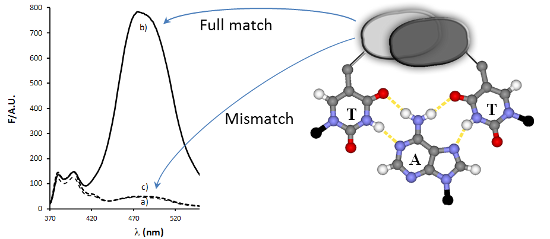
- increased compared to the unmodified PNA7 (20 °C vs 10 °C). The presence of a second pyrene unit at N-terminal position is more stabilizing than that at C-term (compare PNA5 and PNA2, 4). PNA4 is characterized by a broad melting curve, whereas for PNA6 a continuous drift was observed already for the PNA
- result in destabilization of the overall structure (see Tm of PNA1 in Table 1). However, for PNA2, the combined effect of two pyrene pairs properly positioned allows to increase both stability and selectivity of PNA compared to unmodified one. The N-terminal pyrene unit, in addition to the central one


Design, automated synthesis and immunological evaluation of NOD2-ligand–antigen conjugates
Beilstein J. Org. Chem. 2014, 10, 1445–1453, doi:10.3762/bjoc.10.148
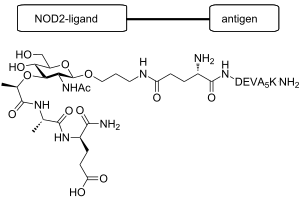
- were selected as target molecules (Figure 1). In conjugate 2 the carboxylic acid function of the isoglutamine of the MDP is linked to the N-terminal amine of the antigenic peptide. In conjugate 3 the same acid function of the MDP connects to the C-terminal lysine of the antigenic peptide. The 3
- the peptide (4 vs 5) does not seem to affect the NOD2 stimulating activity significantly, although the N-terminal conjugate appears slightly more active than the C-terminal conjugated MDP. The ability of conjugates 2–5 to induce DC maturation was evaluated by measuring interleukin 12 (IL-12p40
- ineffective as compared to the NOD2 transfected HEK cells. Conclusion We have described the assembly of two MDP building blocks, suitable for automated solid-phase peptide synthesis, and their application in the construction of a set of four MDP-peptide conjugates. These conjugates comprised a C- or N


Carbohydrate PEGylation, an approach to improve pharmacological potency
Beilstein J. Org. Chem. 2014, 10, 1433–1444, doi:10.3762/bjoc.10.147
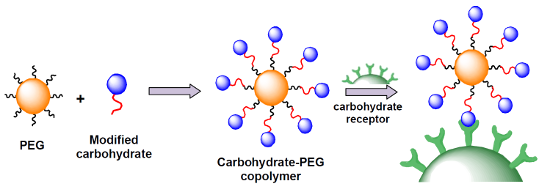
- interaction with the target site. GlycoPEGylation of proteins PEGylation of proteins is usually performed on the ε-amine group of lysine or on the unprotected α-amino of the N-terminal amino acid using N-hydroxysuccinimidyl (NHS) activated PEGs or aldehyde PEGs. This conjugation leads to heterogeneous







Design and synthesis of multivalent neoglycoconjugates by click conjugations
Beilstein J. Org. Chem. 2014, 10, 1325–1332, doi:10.3762/bjoc.10.134
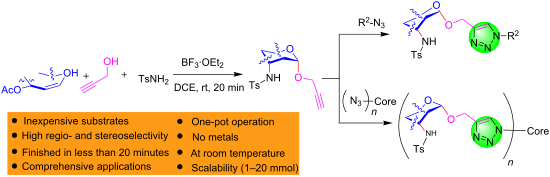
- ][27][28][29][30][31]. The α-GalNAc-linked glycopeptides, α-N-glycosidically linked to the polypeptide chain through the amido nitrogen of an asparagine residue at the N-terminal [32], were found to be the most important semi-synthetic glycoconjugates, usually modified from their naturally occurring


Automated solid-phase peptide synthesis to obtain therapeutic peptides
Beilstein J. Org. Chem. 2014, 10, 1197–1212, doi:10.3762/bjoc.10.118
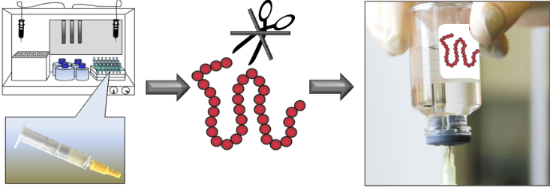
- ]. The principle of peptide synthesis in homogenous solution is based on the reversible blocking of the carboxylic acid function of the C-terminal amino acid and the amino group of the N-terminal amino acid. In addition, activation of the free carboxy group of the N-terminal amino acid is necessary to
- coupling step, whereas the side-chain protecting groups and the resin ensure a permanent protection against unwanted side reactions [20]. Moreover, the relatively inert carboxy group has to be activated by a special auxiliary to increase the electrophilicity [23]. After loading of the resin, the N-terminal
- protecting group of the first amino acid can be removed and the next activated building block can be coupled. These alternating steps of Nα-deprotection, activation and coupling are repeated until the desired peptide chain is obtained. Following, the Nα-protecting group of the N-terminal amino acid has to be


Amino acid motifs in natural products: synthesis of O-acylated derivatives of (2S,3S)-3-hydroxyleucine
Beilstein J. Org. Chem. 2014, 10, 1135–1142, doi:10.3762/bjoc.10.113
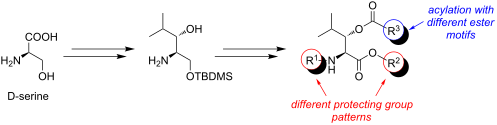
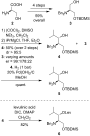
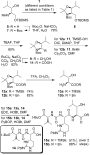
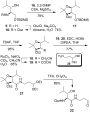
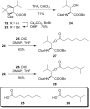
- . Within the context of our work regarding the total synthesis of muraymycin nucleoside antibiotics, we have developed a synthetic approach towards (2S,3S)-3-hydroxyleucine building blocks. Application of different protecting group patterns led to building blocks suitable for C- or N-terminal




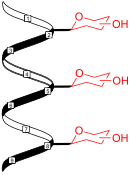
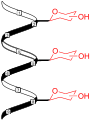
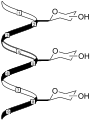
Molecular architecture with carbohydrate functionalized β-peptides adopting 314-helical conformation
Beilstein J. Org. Chem. 2014, 10, 948–955, doi:10.3762/bjoc.10.93
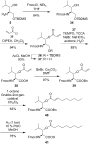
- nucleophile preferentially attacks from the re-face as shown in TS 1 (Figure 4) to give 10b [48][55]. In the next step, ester saponification of 10a using lithium hydroxide afforded D-glucose derived β-amino acid 11a in 84% yield. Finally, N-terminal fluorenylmethoxycarbonyl (Fmoc) protection of the β-amino


Polyglycerol-functionalized nanodiamond as a platform for gene delivery: Derivatization, characterization, and hybridization with DNA
Beilstein J. Org. Chem. 2014, 10, 707–713, doi:10.3762/bjoc.10.64
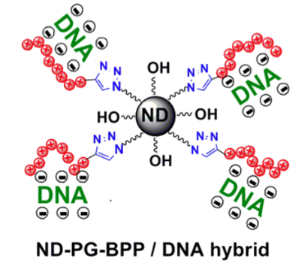
- Diamond Co., Ltd. (Lot. No. 66093). Glycidol was purchased from Kanto Chemical Co., Ltd. p-Toluenesulfonyl chloride and sodium azide were purchased from Nacalai Tesque, Co. Basic polypeptides binding propargyl glycine (G*) at an N terminal (G*BPP) were obtained from two sources; G*Lys8 and G*His8 were


Synthesis of (2S,3R)-3-amino-2-hydroxydecanoic acid and its enantiomer: a non-proteinogenic amino acid segment of the linear pentapeptide microginin
Beilstein J. Org. Chem. 2014, 10, 667–671, doi:10.3762/bjoc.10.59
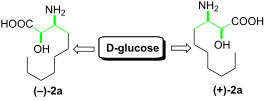
- -hydroxy-β-aminodecanoic acid (AHDA, 2a) and its enantiomer 2b. The enantiomer of 2a is the N-terminal part of the natural linear pentapeptide microginin, which is used as an antihypertensive agent. Keywords: AHDA; carbohydrate; chiron approach; enantioselective; natural products; non-proteinogenic amino
- activity against angiotensin converting enzyme, which is responsible for the vasoconstriction of blood vessels [2][3][4]. Amongst different amino acids present in microginin, (2S,3R)-AHDA (2a) is a non-proteinogenic natural amino acid attached at the N-terminal part of the peptide chain. The α-hydroxy-β


Conformation of dehydropentapeptides containing four achiral amino acid residues – controlling the role of L-valine
Beilstein J. Org. Chem. 2014, 10, 660–666, doi:10.3762/bjoc.10.58
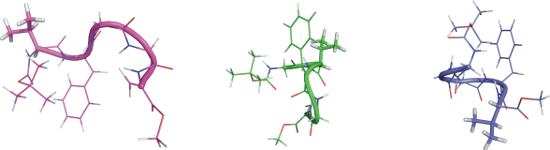
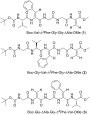
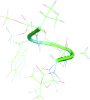
- type II, which is localized on the N-terminal part of the peptide. The values of the dihedral angles indicate that peptide 1 could display two types of a bent conformation in DMSO solution with an opposite orientation of turns (see Figure 2). As in the case of the peptide 1, our analysis of the
- torsion angles of the main chain of the obtained conformational cluster indicates that peptide 3 exhibits a right-handed helix [28]. Only such a bent structure with a flexible N-terminal part could explain the strong NOE signals between the methyl residue of the Boc group and the side chain of both the
- increase in solvent polarity promotes more ordered conformations of hexapeptides containing two dehydrophenylalanine residues [38]. On the other hand, Inai and co-workers showed that in the case of dehydropeptides containing only one chiral L-residue in the N-terminal position of the peptide a left-handed



Total synthesis and cytotoxicity of the marine natural product malevamide D and a photoreactive analog
Beilstein J. Org. Chem. 2014, 10, 316–322, doi:10.3762/bjoc.10.29
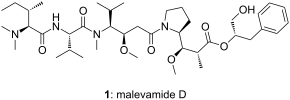
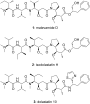
- an identical ester section composed of dolaproine and (2S)-3-phenylpropan-1,2-diol. On the N-terminal side, the isopropyl and two sec-butyl side chains of isodolastatin H (2) are replaced by one sec-butyl and two isopropyl side chains, respectively, in the case of malevamide D (1). The total
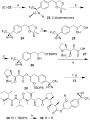
- possible. The occurrence of conformers has been mentioned by Scheuer and co-workers and is also known for dolastatin 10 [12] and symplostatin 1 [13]. As an alternative route to the N-terminal tripeptide 11, we also investigated the coupling of the N-terminal dipeptide 15 with MMMAH tert-butyl ester (16