Search results
Search for "UV–vis" in Full Text gives 651 result(s) in Beilstein Journal of Organic Chemistry. Showing first 200.
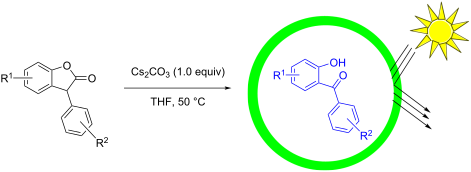
Transition-metal-free decarbonylation–oxidation of 3-arylbenzofuran-2(3H)-ones: access to 2-hydroxybenzophenones
Beilstein J. Org. Chem. 2024, 20, 2655–2667, doi:10.3762/bjoc.20.223
- -absorption studies UV–vis absorbance spectra of the 5-substituted-2-hydroxybenzophenones 4aa–ka were recorded in triplicates at room temperature (298 K) in ethanol at a concentration of 40 µM, in the range of 225–500 nm at 1 nm intervals [11]. The obtained data were corrected using calibration methods with
- ethanol as a blank. The critical wavelength (λc) and UVA/UVB ratio were calculated using Equation 1 and Equation 2, respectively, as shown below. Determination of SPF (sun protection factor) An ethanolic solution of the compounds 4aa–ka was prepared at a concentration of 200 μg/mL. The UV–vis absorption
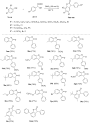
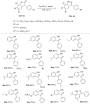
- compounds 4ja, 4fb, and 4ma. Partial 1H NMR spectra of the aliquots (taken at different time intervals) from the reaction mixture. Plausible mechanism for the transition-metal-free decarbonylation–oxidation. UV–vis absorption spectra of selected synthesized compounds 4aa, 4cb, 4eb, and 4fb from 225–500 nm




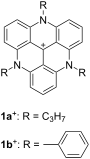
Anion-dependent ion-pairing assemblies of triazatriangulenium cation that interferes with stacking structures
Beilstein J. Org. Chem. 2024, 20, 2567–2576, doi:10.3762/bjoc.20.215
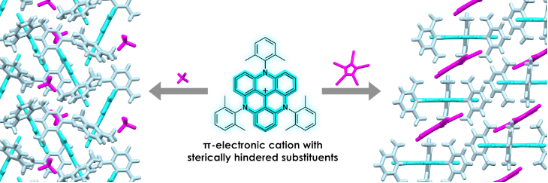
- desorption ionization time-of-flight mass spectrometry (MALDI–TOF MS). The synthesized ion pairs showed similar electronic properties in solution state. In CH3CN, 2+-BF4− exhibited UV–vis absorptions at 273, 350, and 524 nm and fluorescence emission at 607 nm upon excitation at 524 nm. The absorption band at
- ) 142.15, 140.66, 138.90, 136.12, 134.80, 130.88, 130.80, 110.29, 106.31, 17.63; 19F NMR (564 MHz, CDCl3, 20 °C) δ (ppm) −157.91 (s, 10BF4−), −157.96 (s, 11BF4−); UV–vis (CH3CN) λmax, nm (ε, 105 M−1 cm−1): 272 (1.28), 337 (0.06), 349 (0.09), 524 (0.21); MALDI–TOF MS (m/z) (% intensity): (positive) 594.3
- , TATA-H), 2.11 (s, 18H, CH3); 13C NMR (151 MHz, CDCl3, 20 °C) δ (ppm) 142.40, 140.77, 138.59, 136.46, 135.03, 130.73, 130.69, 110.66, 106.15, 17.61; 19F NMR (564 MHz, CDCl3, 20 °C) δ (ppm) −77.26 (d, J = 712 Hz, 6F); UV–vis (CH3CN), λmax, nm (ε, 105 M−1 cm−1): 272 (1.30), 337 (0.07), 349 (0.09), 523



Synthesis and reactivity of the di(9-anthryl)methyl radical
Beilstein J. Org. Chem. 2024, 20, 2254–2260, doi:10.3762/bjoc.20.193
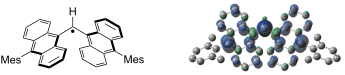
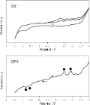
- O–O bond cleavage to give compounds 1 and 5 (Scheme 2). Owing to the high reactivity of the DAntM radical, cyclic voltammogram (CV) was measured by using the stable DAntM cation, prepared from compound 3 oxidized by antimony(V) chloride, which can be characterized by 1H, 13C NMR, and UV–vis
- and cathodic sides became smaller, resulting in a reversible redox wave (Figure 5b). This indicates that the generated DAntM radical rapidly decomposes during the CV measurement, leading to the irreversible redox wave at slow scan rate. The UV–vis spectra of the DAntM radical and cation were shown in
- spectrum shape (Supporting Information File 1, Figure S10). On the other hand, the UV–vis spectrum of the DAntM cation, generated from 3 in TFA solution, showed an intense absorption band at 890 nm, which is the opposite trend compared to the DAntM radical. Conclusion The synthesis and characterization of


Metal-free double azide addition to strained alkynes of an octadehydrodibenzo[12]annulene derivative with electron-withdrawing substituents
Beilstein J. Org. Chem. 2024, 20, 2234–2241, doi:10.3762/bjoc.20.191
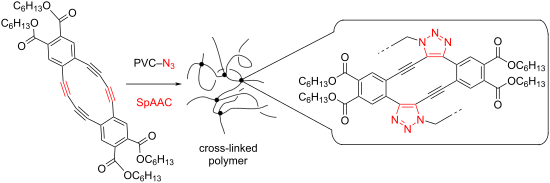
- containing 1 g L−1 of a sample, 10 g L−1 of dithranol, and 1 g L−1 of sodium trifluoroacetate were mixed at a ratio of 1:1:1, and then 1 μL aliquot of this mixture was deposited onto a sample target plate. UV–vis absorption spectra were recorded on a JASCO V-670 spectrophotometer. Fluorescence spectra were




Novel truxene-based dipyrromethanes (DPMs): synthesis, spectroscopic characterization and photophysical properties
Beilstein J. Org. Chem. 2024, 20, 2163–2170, doi:10.3762/bjoc.20.186
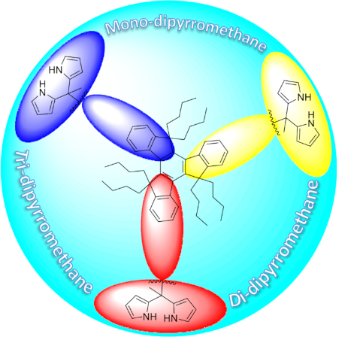
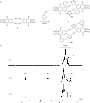
- derivatives were successfully characterized and their structures were established by means of the 1H and 13C NMR spectroscopy, besides further confirmation by mass spectrometry (see Supporting Information File 1). The UV–vis absorption, emission and time-resolved fluorescence spectra Emission and absorption
- spectra of thus synthesized truxenes (12, 14, 15, 16, 17, and 18) were analyzed in CHCl3 (Figure 2). The UV–vis spectrum of mono-acetyltruxene 12 displayed a broad band centered at 335.21 nm, an intense peak near 309.75 nm having a shoulder at 297.70 nm, and a less intense, broader band around 280.29 nm
- like 1H NMR, 13C NMR, and mass spectral data. The preliminary UV–vis absorption as well as fluorescence emission spectral data for thus prepared truxene-based compounds were recorded in chloroform and compared as well. Additionally, time-resolved fluorescence lifetime decays were also measured for thus


Understanding X-ray-induced isomerisation in photoswitchable surfactant assemblies
Beilstein J. Org. Chem. 2024, 20, 2005–2015, doi:10.3762/bjoc.20.176
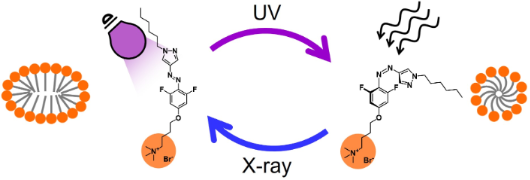
- that Z–E isomerisation cannot be easily induced using gentle heating or visible light, as shown by the stability of the UV–vis absorbance spectra and SAXS patterns under these conditions (Figures S1 and S3, Supporting Information File 1). In contrast, irradiation with X-rays leads to significant
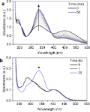
- stability of the Z isomer, AAP photoswitches are also susceptible to Z–E isomerisation on X-ray irradiation due to the presence of catalysing ionic and radical species from radiolysis of the surrounding water. This can be seen by a partial return of the UV–vis absorbance spectrum of AAPTAB from the Z to the
- effect, but also as the medium for structural rearrangements. Effect of acidification The effect of acidification on isomerisation was further investigated using UV–vis absorbance spectroscopy, where excess hydrobromic acid (HBr) was added to AzoTAB and AAPTAB samples (25 μM) that had been preirradiated



Radical reactivity of antiaromatic Ni(II) norcorroles with azo radical initiators
Beilstein J. Org. Chem. 2024, 20, 1967–1972, doi:10.3762/bjoc.20.172
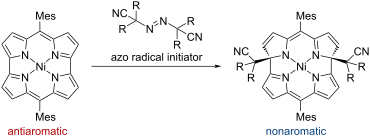
- governed the regioselectivity. Reactivities of norcorroles with various reagents. Top and side views of the X-ray structures of a) 2a and b) 1 [2]. Mesityl groups and hydrogen atoms were omitted for clarity. Thermal ellipsoids are drawn at 50% probability. UV–vis–NIR absorption spectra of 1 and 2a in


A new platform for the synthesis of diketopyrrolopyrrole derivatives via nucleophilic aromatic substitution reactions
Beilstein J. Org. Chem. 2024, 20, 1933–1939, doi:10.3762/bjoc.20.169
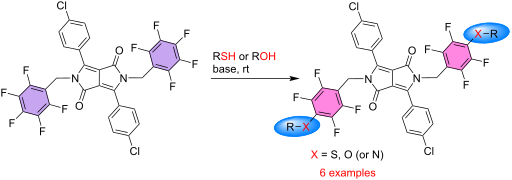
- consistently displayed the protonated molecular ion [M + H]+ as the base peak. The UV–vis and fluorescence spectra of DPP derivatives 3a–f, 4a, 4d and 4f in DMF are presented in Figure 1, and their photophysical properties are summarized in Table 1. These compounds are highly fluorescent, and their UV–vis
- parts per million (ppm) and the coupling constants (J) in hertz (Hz). UV–vis spectra were recorded on a Shimadzu UV-2501PC spectrophotometer using DMF as the solvent. The emission spectra were recorded with a Jasco FP-8300 spectrofluorometer using DMF as the solvent. Mass spectra were recorded using a
- . Synthesis of new diketopyrrolopyrroles via nucleophilic aromatic substitution. Spectroscopic data for the new compounds (between 1 × 10⁻⁶ M and 4 × 10⁻⁵ M in DMF). Supporting Information Supporting Information File 18: 1H NMR, 13C NMR and 19F NMR spectra; MS, UV–vis and emission spectra. Funding Thanks


A facile three-component route to powerful 5-aryldeazaalloxazine photocatalysts
Beilstein J. Org. Chem. 2024, 20, 1831–1838, doi:10.3762/bjoc.20.161
- assigned using MestreNova. High-resolution mass spectra were obtained on Q-Tof Micro (Waters), equipped with a quadrupole and time-of-flight (TOF) analyser and a multichannel plate (MCP) detector. The melting points were measured on a Boetilus melting point apparatus and are not corrected. UV–vis spectra
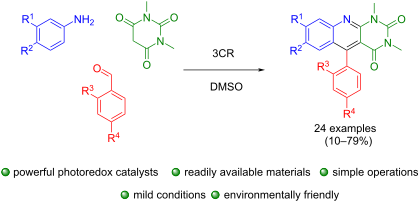
- -aryldeazaalloxazine (2). (C) This work, which describes an efficient three-component method for the synthesis of 2. UV–vis absorption spectra of 5-arydeazaalloxazines 2f, 2j and 2n in DMF (l = 1 cm, c = 2.50 × 10⁻⁵ mol·L−1). Three-component condensation of anilines, aldehydes and N,N-dimethylbarbituric acid




Synthesis of polycyclic aromatic quinones by continuous flow electrochemical oxidation: anodic methoxylation of polycyclic aromatic phenols (PAPs)
Beilstein J. Org. Chem. 2024, 20, 1746–1757, doi:10.3762/bjoc.20.153
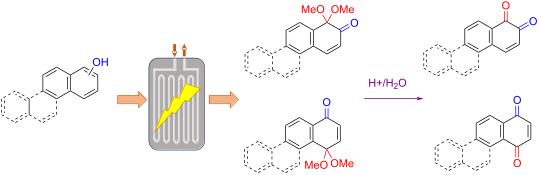
- indicated, are given in Supporting Information File 1. The optical properties of the PAPs were investigated by UV–vis absorption spectroscopy in 10−5 M solutions in CH2Cl2, as depicted in Figure 1. The UV–vis spectra of these compounds exhibited strong absorption in the region of 250–370 nm. These
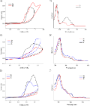
- 0.1 V/s in 0.1 M [NBu4] [PF6] in MeCN and UV–vis spectra of PAPs in DCM (≈10−5 M). A, B: naphthols 1a,b. C, D: chrysenols 3a–c. E, F: phenanthrols 6a–c. Resonance structures of the phenoxonium cation formed from 2-chrysenol (3a). Formation of phenoxonium cation in the anodic oxidation of phenol




A fiber-optic spectroscopic setup for isomerization quantum yield determination
Beilstein J. Org. Chem. 2024, 20, 1684–1692, doi:10.3762/bjoc.20.150

- setup for isomerization quantum yield determination is reported. The setup combines fiber-coupled LEDs, a commercially calibrated thermopile detector for measurement of the photon flux, and a fiber-coupled UV–vis spectrometer. By solving the rate equations numerically, isomerization quantum yields can
- be obtained from the UV–vis absorption spectra. We show that our results for the prototypical photoswitch azobenzene are in excellent agreement with the literature. The analysis of the errors showed that the quantum yields determined using this method are in the same order of magnitude as when using
- actinometry, thus demonstrating the reliability of our setup. Keywords: isomerization; molecular photoswitches; photochemistry; photon flux; UV–vis spectroscopy; Introduction Photoswitches are molecules that can undergo a light-driven structural rearrangement to populate a metastable state of the initial


Supramolecular assemblies of amphiphilic donor–acceptor Stenhouse adducts as macroscopic soft scaffolds
Beilstein J. Org. Chem. 2024, 20, 1590–1603, doi:10.3762/bjoc.20.142
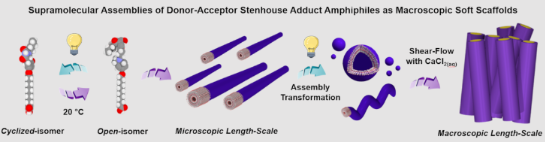
- moiety. The excellent photoswitchability in organic medium and the photoresponsiveness in aqueous medium, driven by visible light, were investigated by UV–vis absorption spectroscopy. The assembled supramolecular nanostructures were confirmed by electron microscopy, while the supramolecular packing was
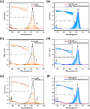
- , Figures S13–S33. Photochemical properties of DAn in organic medium The photochemical properties of DAn were first studied in organic solvent by UV–vis absorption spectroscopy. The synthesized DA11 in THF solution (20 µM) showed a strong absorption band at 470–685 nm in the UV–vis absorption spectrum
- reversibility of the other compounds, DAn with shorter alkyl linkers were also examined in THF solvent by UV–vis absorption spectroscopy, where they showed photochemical properties similar to those of DA11 (Figure 1a and Figure 1b). THF solutions of DA7 and DA6 showed a strong absorption band at 470–685 nm




Photoswitchable glycoligands targeting Pseudomonas aeruginosa LecA
Beilstein J. Org. Chem. 2024, 20, 1486–1496, doi:10.3762/bjoc.20.132
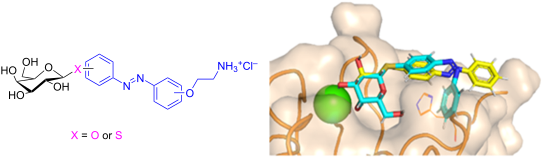
- undergo reversible photoisomerization under UV–vis irradiation in aqueous solution. The O-galactosyl azobenzene 1 shows reversible photoisomerization under UV (370 nm) and visible (485 nm) irradiations in water, with a high fatigue resistance as no degradation has been observed after more than 10 UV–vis
- reaction was followed by a combination of 1H NMR and UV–vis absorption spectra, realized by successive irradiations at 370 nm (438 or 485 nm). The E/Z ratios were determined by integration of the azobenzene proton signals of each isomer. A quartz cell of 10 mm path length has been used for solution
- measurement. The photoconversion yields were measured from a solution of the compounds in deuterated solvent and monitored by 1H NMR and UV–vis absorption, after successive irradiations at 370 nm (438 nm or 485 nm) in the case of the PSS. The E/Z ratios were determined by integration of characteristic of each


Diameter-selective extraction of single-walled carbon nanotubes by interlocking with Cu-tethered square nanobrackets
Beilstein J. Org. Chem. 2024, 20, 1298–1307, doi:10.3762/bjoc.20.113
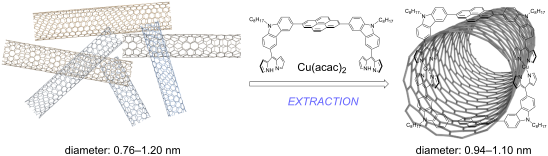
- measurements and analyzed with mMass [29] software. 1H and 13C NMR spectra were recorded on JNM-ECS 400 spectrometer using the sample solutions in chloroform-d (CDCl3). Raman spectra were recorded on LabRam HR800 (Horiba Ltd.) and take the average of more than ten different spots for the final curve. UV–Vis
- obtained by centrifugation at 50400g for 16 h and subjected to UV−vis−NIR measurements (Figure 3a). After concentrating the extract obtained above, the residue (e-SWNTs) was suspended in dichloromethane by sonication and filtered through a PTFE membrane (pore size 0.1 μm). This washing process was repeated
- three times, until no absorption bands from the host molecules were observed in the UV−vis spectra of washings. The resulting i-SWNTs were analyzed with Raman spectroscopy at 488 nm. The i-SWNTs were bath-sonicated with dithiothreitol (50 mg) in dichloromethane for 30 min followed by filtration with a




Synthesis of indano[60]fullerene thioketone and its application in organic solar cells
Beilstein J. Org. Chem. 2024, 20, 1270–1277, doi:10.3762/bjoc.20.109
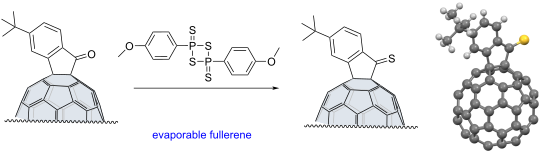
- around 1000 cm−1 for t-Bu-FIDS. Ultraviolet–visible (UV–vis) spectroscopy of t-Bu-FIDS in o-DCB exhibited two prominent UV absorption bands with peaks at 257 nm and 320 nm (Figure 1b). The absorption at 257 nm indicated the integrity of the fullerene cage chromophore. The absorption peak at 320 nm was
- future. Characterization data. (a) FTIR spectra of t-Bu-FIDO and t-Bu-FIDS. (b) UV–vis spectra of fullerene derivatives normalized at 270 nm. (c) Vacuum TGA curves of t-Bu-FIDO (black), t-Bu-FIDS (red), and C60 (blue). The measurements were conducted under 0.1 Pa. (d) HPLC analyses before deposition of t


Synthesis and optical properties of bis- and tris-alkynyl-2-trifluoromethylquinolines
Beilstein J. Org. Chem. 2024, 20, 1246–1255, doi:10.3762/bjoc.20.107
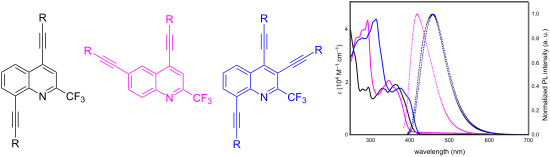
- on the quinoline scaffold and on the arylalkyne moiety permits the fine tuning of the optical properties. Natural and synthetic compounds containing a quinoline or quinolone core-structure. ORTEP of 6b (CCDC 2322985). ORTEP of 9f (CCDC 2322983). ORTEP of 12d (CCDC 2322984). UV–vis and emission




Competing electrophilic substitution and oxidative polymerization of arylamines with selenium dioxide
Beilstein J. Org. Chem. 2024, 20, 1221–1235, doi:10.3762/bjoc.20.105
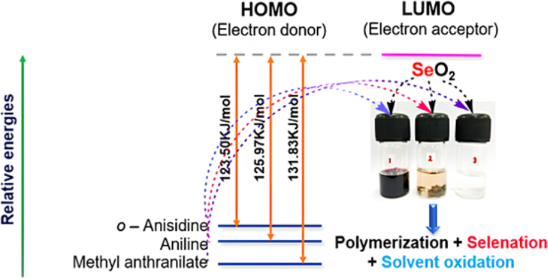
- polymer 1. The polymer was isolated from the reaction after 3 h, and the supernatant was analyzed for other soluble products. The UV–vis spectrum of polymer 1 dispersed in methanol showed two major peaks at ≈271 and ≈561 nm (Figure S1, Supporting Information File 1), corresponding to the π→π* and
- relative to NH2. Scheme 3 shows the reaction of o-anisidine with SeO2. Similar to aniline, a large quantity of o-anisidine was transformed into polymer, labelled polymer 2. The UV–vis and FTIR spectra of polymer 2 are shown in Figures S1 and S2, Supporting Information File 1, respectively. The spectral
- –vis spectra of all polymers were recorded on a PerkinElmer Lambda 365 UV–vis spectrophotometer. FTIR spectra were recorded on an Agilent Cary 630 KBr module. Reaction of aniline with SeO2 To a reaction vessel, 10 mL of acetonitrile were introduced along with aniline (10 mmol, ≈0.91 mL) and selenium


Introduction of peripheral nitrogen atoms to cyclo-meta-phenylenes
Beilstein J. Org. Chem. 2024, 20, 1207–1212, doi:10.3762/bjoc.20.103
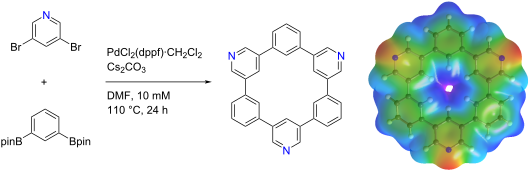
- achieved with one-pot Suzuki–Miyaura coupling to arrange phenylene rings and pyridinylene rings in an alternating fashion. Analyses with UV–vis spectroscopy showed changes in the photophysical properties with nitrogen doping, and X-ray crystallographic analyses experimentally revealed the presence of
- biased charges on the peripheral nitrogen atoms. Keywords: cross coupling; macrocycles; nitrogen doping; UV–vis spectroscopy; X-ray charge density analysis; Introduction Graphitic carbonaceous sheets of graphene continue to attract considerable attention, which lead us to explore structural defects
- nitrogen-doped [n]CMPs (3) containing outward-radiating nitrogen dopants. The properties and structures were investigated with UV–vis spectroscopy and X-ray crystallography, which revealed the fundamental properties of the nitrogen dopants in the macrocyclic structures. Results and Discussion Nitrogen



Two-fold addition reaction of silylene to C60: structural and electronic properties of a bis-adduct
Beilstein J. Org. Chem. 2024, 20, 1179–1188, doi:10.3762/bjoc.20.100
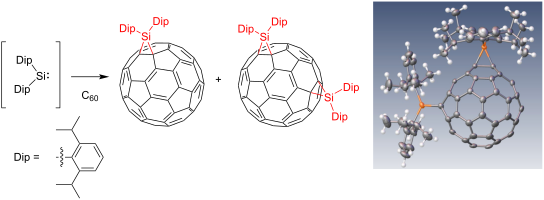
- /CH2Cl2 5:1 as solvent mixture. Although several other fractions containing C60 derivatives were obtained, their structures are still under investigation because of the difficulty in isolating and purifying those fractions. To clarify the addition site of 3, we measured the ultraviolet–visible (UV–vis
- (s, 1C), 37.59 (d, 2C), 37.35 (d, 2C), 37.24 (d, 2C), 37.11 (d, 2C), 28.55 (q, 2C), 27.86 (q, 2C), 27.57 (q, 2C), 27.44 (q, 2C), 25.61 (q, 2C), 25.25 (q, 2C), 25.10 (q, 2C), 24.11 (q, 2C); UV–vis (CH2Cl2) λmax 515 nm. X-ray crystallography of 3: Black plate crystals suitable for X-ray diffraction


Kinetically stabilized 1,3-diarylisobenzofurans and the possibility of preparing large, persistent isoacenofurans with unusually small HOMO–LUMO gaps
Beilstein J. Org. Chem. 2024, 20, 1099–1110, doi:10.3762/bjoc.20.97
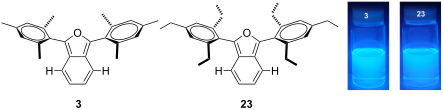
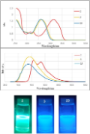
- isobenzofurans 2, 3 and 23 were studied by UV–vis and fluorescence spectroscopies (Figure 5). Compound 2 is devoid of ortho groups on its 1,3-diphenyl substituents and shows the longest wavelengths of absorption (λmax = 415 nm) and emission (emission λmax = 484 nm) in this series, consistent with a more highly
- ’-triisopropylphenyl and 2’,4’,6’-tri-tert-butylphenyl substituents are quite similar to each other. Each shows little or no HOMO or LUMO orbital densities on their respective 1,3-diaryl groups indicating greater out-of-plane rotation compared to 3 and modestly larger HOMO–LUMO gaps. The calculated UV–vis spectra for
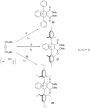
- conditions by utilizing a 7000-fold excess of dimethyl acetylenedicarboxylate (DMAD) at room temperature. The reactions were monitored by UV–vis spectroscopy. Compound 2 undergoes rapid reaction with DMAD under these conditions and is more than 90% consumed after 2.5 hours (Figure 8, top). Conversely






Structure–property relationships in dicyanopyrazinoquinoxalines and their hydrogen-bonding-capable dihydropyrazinoquinoxalinedione derivatives
Beilstein J. Org. Chem. 2024, 20, 1037–1052, doi:10.3762/bjoc.20.92
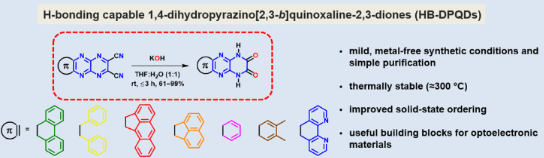
- -bonding dicyanopyrazinoquinoxaline (DCPQ) suspensions with excess potassium hydroxide, resulting in moderate to good yields. Both families of compounds were analyzed by UV–vis and NMR spectroscopy, where the consequences of hydrogen bonding capability could be assessed through the structure–property
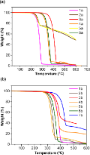
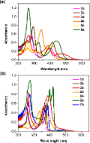
- and its high thermal stability. Optical properties The electronic properties of the DCPQs 1a–6a and DPQDs 1b–7b were explored by UV–vis absorption spectroscopy in dimethyl sulfoxide (DMSO) at 25 °C (Figure 3). The electronic absorption spectra of DCPQs exhibited structureless bands with λmax values




A Diels–Alder probe for discovery of natural products containing furan moieties
Beilstein J. Org. Chem. 2024, 20, 1001–1010, doi:10.3762/bjoc.20.88
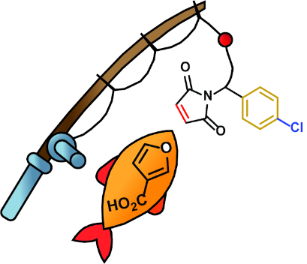
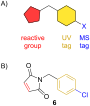
- supernatant. There are two main types of molecular probes based on their detection methods: imaging and UV–vis (Figure 2A). An imaging probe contains a mass spectrometry (MS) tag, oftentimes a halogen with a distinct isotopic ratio such as chlorine or bromine. A UV–vis probe contains a UV-tag, such as an
- aromatic ring, to make the compound UV-active. Previously developed probes containing both MS and UV–vis tags have proven to be successful in cell supernatant in identifying a number of functional groups including epoxides, enones, citrulline, conjugated alkenes, and others [8][9][10][11][12][13][14][15




Synthesis and properties of 6-alkynyl-5-aryluracils
Beilstein J. Org. Chem. 2024, 20, 898–911, doi:10.3762/bjoc.20.80
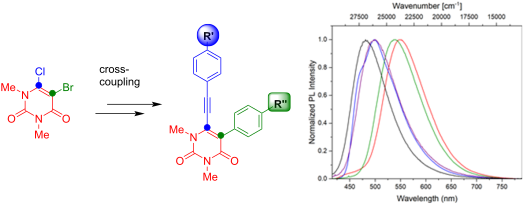
- of different functional groups was tested. The influence of different functional groups on the physical properties was studied by ultraviolet–visible (UV–vis) and fluorescence spectroscopy, providing new insights into the potential applications of uracil-based structures. Keywords: catalysis; cross
- coupling constants J. Infrared spectra (IR) were measured as attenuated total reflection (ATR) experiments using a Nicolet 380 FT-IR spectrometer. The signals were characterized by their wavenumbers and corresponding absorption as very strong (vs), strong (s), medium (m), weak (w) or very weak (vw). UV–vis
- spectra were recorded on a Cary 60 UV–vis spectrophotometer and emission spectra were recorded on an Agilent Cary Eclipse fluorescence spectrophotometer. Basic and high-resolution mass spectra (MS/HRMS) were measured on instruments coupled to a preceding gas chromatograph (GC) or liquid chromatograph (LC




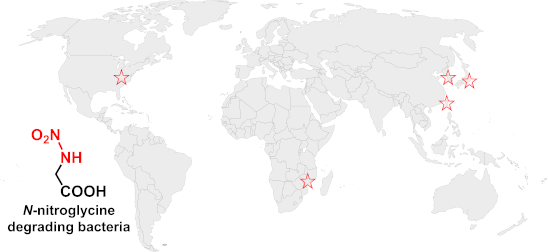
Activity assays of NnlA homologs suggest the natural product N-nitroglycine is degraded by diverse bacteria
Beilstein J. Org. Chem. 2024, 20, 830–840, doi:10.3762/bjoc.20.75
- these homologs exist mostly as dimers in solution. Next, the heme incorporation of the isolated homologs was measured. UV–vis absorption spectra showed that each NnlA homolog exhibited characteristic Soret absorption features consistent with heme binding to the protein (Figure 3). In addition, the A412
- purchased from Fisher Scientific or VWR. Stock dithionite concentrations were determined by UV–vis absorbance at 318 nm (ε318 = 8000 M−1cm−1). Water used for all solutions was of 18.2 MΩ·cm resistivity from a Barnstead Nanopure (Thermo Fisher Scientific). Solvents for LC–MS experiments were of at least HPLC
- buffer is 100 mM tricine 100 mM NaCl buffer at pH 7.5. Dashed grey lines represent elution volumes of molecular mass standards. Theoretical molecular weights are as follows Vs NnlA: 21,869 Da; Mr NnlA: 20638 Da; Pd NnlA: 18,473 Da; Ms NnlA : 18,239 Da; and Ps NnlA: 19,042 Da. UV–vis absorption spectra of


Synthesis and characterization of water-soluble C60–peptide conjugates
Beilstein J. Org. Chem. 2024, 20, 777–786, doi:10.3762/bjoc.20.71
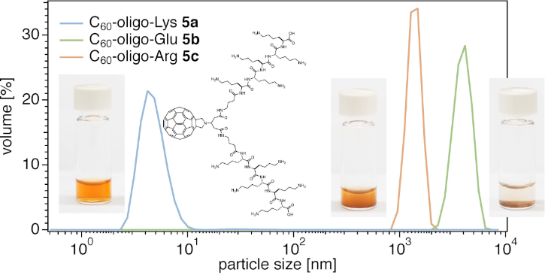
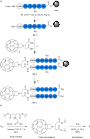
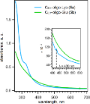
- , PDI): 5a: 4.8 (0.757), 5b: 3974 (0.906), 5c (crude): 1382 (0.115) in Milli-Q® water and 5b: 11.8 (1.000) in pH 9.0 TRIS buffer. Milli-Q® water was pH 7.0. UV–vis spectra of C60–peptide conjugates 5a and 5b (20 μM in Milli-Q® water for 5a and in pH 9.0 TRIS buffer for 5b). 1H NMR spectrum of C60