Search results
Search for "UV–vis spectroscopy" in Full Text gives 152 result(s) in Beilstein Journal of Organic Chemistry.
Fabrication of supramolecular cyclodextrin–fullerene nonwovens by electrospinning
Beilstein J. Org. Chem. 2019, 15, 89–95, doi:10.3762/bjoc.15.10
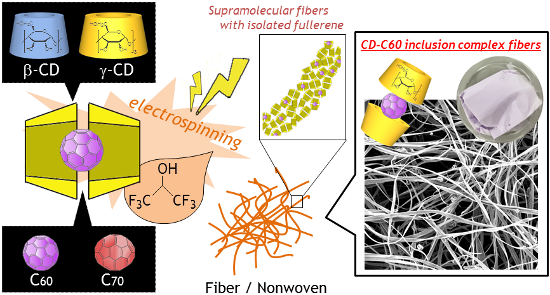
- solution was purified with a syringe filter (0.45 μm) to remove the remaining fullerene solids. The gelatin/γ-CD–C60 solution was prepared by mixing gelatin/HFIP (9.4 w/v %) with γ-CD–C60/HFIP ([γ-CD] = 15 w/v %, [C60] = 1.5 × 10⁻² M) at a ratio of 10:1 w/v %. The resulting solution was evaluated by UV–vis
- spectroscopy (V-730, JASCO, Japan), ESI mass spectroscopy (Autoflex III, Bruker), and small sample viscometry (m-VROCTM, RheoSense, USA). γ-CD/HFIP (15 w/v %; 500 μL) and C60/toluene (0, 0.14, 0.29, 0.43, 0.58, 0.72 mM; 25 μL) were mixed and measured by UV–vis spectrometry. The calibration curve was prepared


Tetrathiafulvalene – a redox-switchable building block to control motion in mechanically interlocked molecules
Beilstein J. Org. Chem. 2018, 14, 2163–2185, doi:10.3762/bjoc.14.190
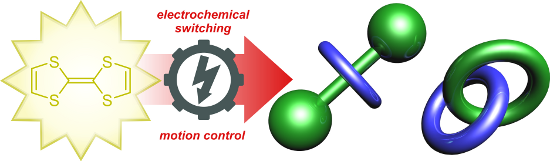
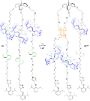
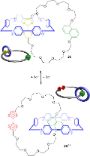
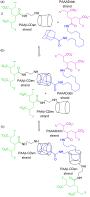
- wheel moves to one of the dihydroxybenzene residues as indicated by 1H NMR and UV–vis spectroscopy. Since the axle molecule is symmetric, the wheel moves back and forward between the two dihydroxybenzene stations (green) and the rotaxane can be considered as a degenerate shuttle. Subsequently, the
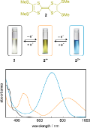
- , DFT calculations, and UV–vis spectroscopy confirmed five different redox states (TTF/NDI, TTF●+/NDI, TTF2+/NDI, TTF/NDI●−, TTF/NDI2−) and shows interesting optical properties in each of these redox states making this type of mechanically constrained donor–acceptor complex very interesting for
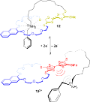
- encircles the TTF unit instead of the dihydroxynaphthalene station in the unswitched state. As shown by 1H NMR and UV–vis spectroscopy as well as cyclic voltammetry, chemical oxidation to the TTF2+ dication triggers an expulsion of the former station and the wheel moves to the alternative











Efficient catenane synthesis by cucurbit[6]uril-mediated azide–alkyne cycloaddition
Beilstein J. Org. Chem. 2018, 14, 1846–1853, doi:10.3762/bjoc.14.158
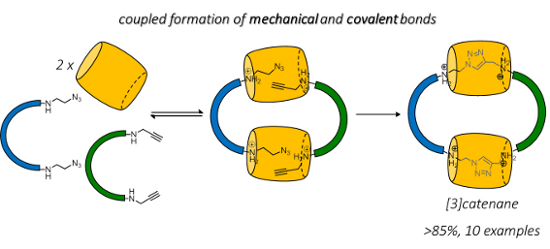
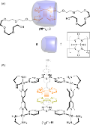
- various types of building blocks. Because of the high yields of these [3]catenanes, their isolations were all straightforward. Cat-2–Cat-10 were isolated either by precipitation as the PF6− salts or by preparative HPLC, and were fully characterized by MS, NMR and UV–vis spectroscopy. Similar to Cat-1, the



London dispersion as important factor for the stabilization of (Z)-azobenzenes in the presence of hydrogen bonding
Beilstein J. Org. Chem. 2018, 14, 1238–1243, doi:10.3762/bjoc.14.106
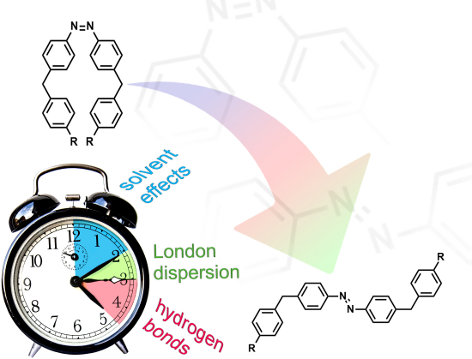
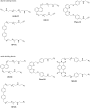
- Discussion To further investigate the prior observations, the thermal Z→E isomerization rates of azobenzenes 4–7 were determined by UV–vis spectroscopy in several solvents at 25 °C and 35 °C, respectively. The lowest thermal isomerization rates were found for the crowded 4,4’-bis[4-(3,5,5


Polysubstituted ferrocenes as tunable redox mediators
Beilstein J. Org. Chem. 2018, 14, 1004–1015, doi:10.3762/bjoc.14.86
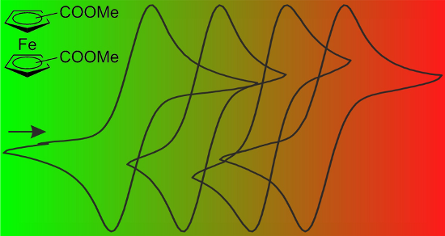
- [86]. Nevertheless, the LMCT character of the prominent band I is confirmed by the calculations. The intensity of band I scales with the amount of the corresponding ferrocenium ion present and consequently the actual potential in solution can be estimated by UV–vis spectroscopy. NMR spectroscopy of


Nanoreactors for green catalysis
Beilstein J. Org. Chem. 2018, 14, 716–733, doi:10.3762/bjoc.14.61
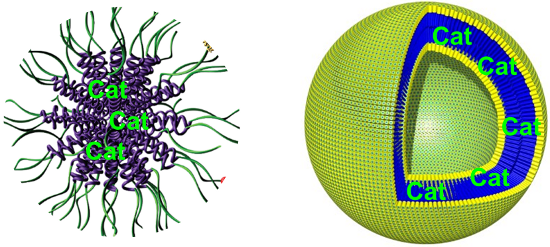
- individually incorporated into the polymersomes and mixed together in solution; in both of the cases the final product formation was monitored by UV–vis spectroscopy. The control over the pH allowed the regulation of the enzymatic cascade (no product was observed at pH 8 in both of the reactive systems), as


Biocatalytic synthesis of the Green Note trans-2-hexenal in a continuous-flow microreactor
Beilstein J. Org. Chem. 2018, 14, 697–703, doi:10.3762/bjoc.14.58
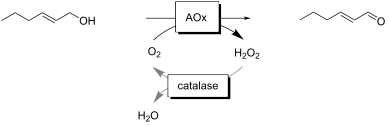
- columns (GE Healthcare) and 10 mM sodium phosphate buffer, pH 5.5. The PeAAOx concentration was calculated based on the absorbance using the molar extinction coefficient of ε463 11,050 M−1 cm−1. Activity assay The activity of PeAAOx was determined by UV–vis spectroscopy, using an Agilent Cary 60 UV–vis


Heterogeneous Pd catalysts as emulsifiers in Pickering emulsions for integrated multistep synthesis in flow chemistry
Beilstein J. Org. Chem. 2018, 14, 648–658, doi:10.3762/bjoc.14.52
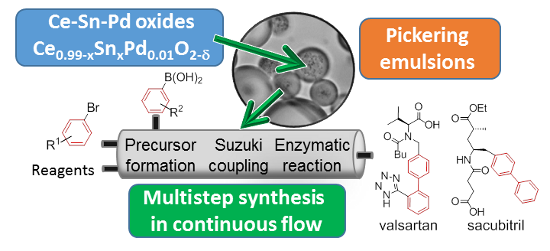
- investigated using phenylboronic acid (3) in combination with different ortho- and para-substituted bromoarenes in aqueous ethanolic mixtures employing K2CO3 as base [38]. Monitoring of the reaction progress via inline UV–vis spectroscopy as well as offline HPLC analysis [38] led to the result that after an





An air-stable bisboron complex: a practical bidentate Lewis acid catalyst
Beilstein J. Org. Chem. 2018, 14, 618–625, doi:10.3762/bjoc.14.48
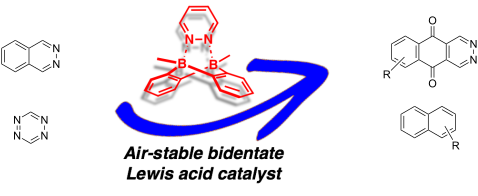
- spectrum of complex B showed one resonance at 2.4 ppm which also demonstrated the tetra-coordination of boron [20]. UV–vis spectroscopy analysis The absorption properties of the air-stable complex B was investigated by UV–vis spectroscopy. As shown in Figure 3, there were three absorption bands at 241 nm
- greatly enhance its practicality. X-ray crystal structure analysis and UV–vis spectroscopy analysis were conducted. The tetra-coordination of the boron atoms and the highly symmetric molecular framework help to stabilize the adduct complex with respect to oxidation or hydrolysis. In addition comparative


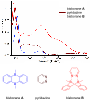
Fluorescent nucleobase analogues for base–base FRET in nucleic acids: synthesis, photophysics and applications
Beilstein J. Org. Chem. 2018, 14, 114–129, doi:10.3762/bjoc.14.7
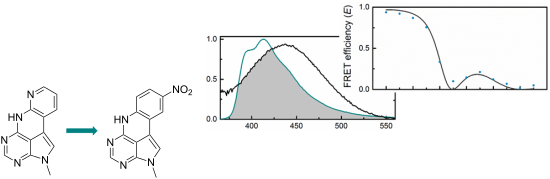
- match tC and/or tCO. To this end we developed the nitro-version of tC, 7-nitro-1,3-diaza-2-oxophenothiazine (tCnitro) (Scheme 3) [14][38][45]. From UV–vis spectroscopy we showed that it, as do tC and tCO, forms stable, B-form duplexes and stacks firmly inside the DNA. It is a non-emissive chromophore






Polarization spectroscopy methods in the determination of interactions of small molecules with nucleic acids – tutorial
Beilstein J. Org. Chem. 2018, 14, 84–105, doi:10.3762/bjoc.14.5
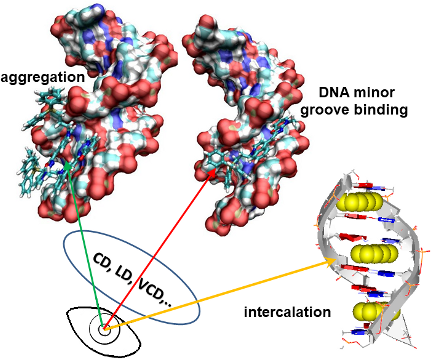
- a set of common methods (UV–vis spectroscopy or fluorimetric titrations processed by non-linear fitting procedures [9][24], thermal denaturation experiments [25]). According to these results, a set of several ECD spectra is designed particularly for the target of interest. For instance, a







Asymmetric synthesis of propargylamines as amino acid surrogates in peptidomimetics
Beilstein J. Org. Chem. 2017, 13, 2428–2441, doi:10.3762/bjoc.13.240
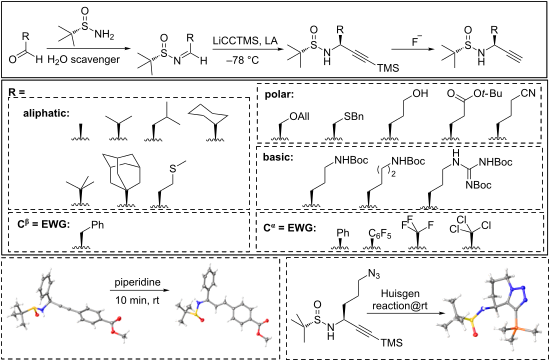
- structure analysis. Due to the extended π-system of the α,β-unsaturated imines 12i and 12k, the progress of the propargylamide–allenylamide rearrangement that eventually leads to the formation of the α,β-unsaturated imines by tautomerism could be easily monitored by UV–vis spectroscopy. The reaction mixture


Solid-state studies and antioxidant properties of the γ-cyclodextrin·fisetin inclusion compound
Beilstein J. Org. Chem. 2017, 13, 2138–2145, doi:10.3762/bjoc.13.212
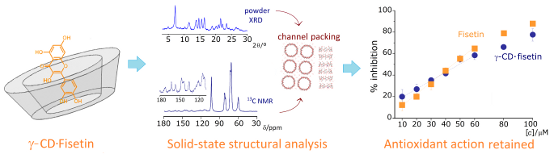
- corresponding hydrazine (pale yellow in color), a reaction which can be monitored by UV–vis spectroscopy. As the kinetics of the reaction varies from sample to sample, the stabilization time for a complete reduction of the DPPH· free radical was determined. For all samples studied, the steady-state




β-Cyclodextrin- and adamantyl-substituted poly(acrylate) self-assembling aqueous networks designed for controlled complexation and release of small molecules
Beilstein J. Org. Chem. 2017, 13, 1879–1892, doi:10.3762/bjoc.13.183
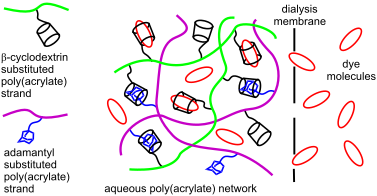
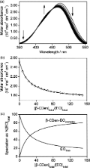
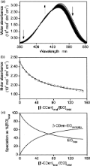
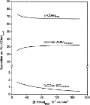
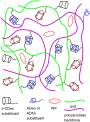
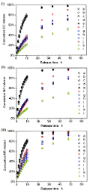
- viscosity of the network as shown by ITC, 1H NMR and UV–vis spectroscopy, and rheological studies. Such networks potentially form a basis for the design of controlled drug release systems. Keywords: controlled release; cyclodextrin; network; poly(acrylate); self-assembly; Introduction The formation of
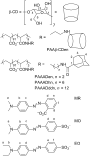
- cross-peaks arising from dipolar interactions between the β-CDen substituent annular H3,5,6 protons and the MR Ha–g protons indicate the occurrence of complexation. Rheological studies At higher solution concentrations than those studied by UV–vis spectroscopy, the networks formed by the three
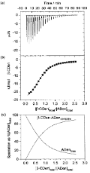
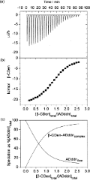
- heats of dilution were subtracted from the total heats evolved to give the heats of host–guest complexation from which the complexation constant, K, and the corresponding ΔH, TΔS and N were calculated using the Origin 7.0 MicroCal protocol [53] as described in the Results and Discussion section. UV–vis




Synthesis and metal binding properties of N-alkylcarboxyspiropyrans
Beilstein J. Org. Chem. 2017, 13, 1542–1550, doi:10.3762/bjoc.13.154
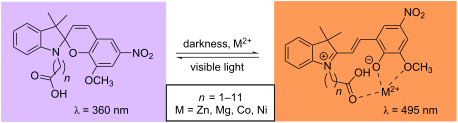
- squares regression analysis [32] as adjuncts to UV–vis spectroscopy in the analysis of merocyanine binding across ranges of transition metal cations. We prepared solutions of C2SP–C12SP in CD3CN to which were added aqueous solutions of either Zn(NO3)2·6H2O or Mg(NO3)2·6H2O. These samples were allowed to
- equilibrate in darkness at room temperature overnight and were then analysed by 1H NMR spectroscopy. Following this, the samples were diluted, allowed to re-equilibrate in darkness, and then analysed by UV–vis spectroscopy. Similar Zn2+ and Mg2+ samples were prepared with N-methyl spiropyran 9 (Figure 2
- use UV–vis spectroscopy to rapidly assess the impact of binding various metal cations upon compounds C2SP–C12SP and 9 by applying the NMR-derived ε values (average of ε for MC–Zn2+ and MC–Mg2+ for each compound) to calculate approximate [merocyanine] from merocyanine absorbance intensity (Figure 5




Sugar-based micro/mesoporous hypercross-linked polymers with in situ embedded silver nanoparticles for catalytic reduction
Beilstein J. Org. Chem. 2017, 13, 1212–1221, doi:10.3762/bjoc.13.120
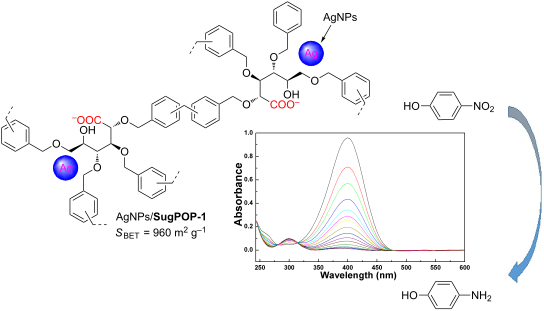
- an excess amount of NaBH4 as the reducing reagent [45]. In our study, the process of the catalytic reaction was readily followed as the color of the solution turned from yellow to colorless. Both the reactants and products are easily monitored by UV–vis spectroscopy without any formation of
- aqueous NaBH4 solution (6.87 mM, 2.80 mL) were added in the quartz cuvette. Then, the AgNPs/SugPOP-1 composite (1.0 mg/mL, 0.10 mL) suspended in deionized water was subsequently added to the above solution and the reaction progress monitored by UV–vis spectroscopy. The absorption spectra were measured at




Glyco-gold nanoparticles: synthesis and applications
Beilstein J. Org. Chem. 2017, 13, 1008–1021, doi:10.3762/bjoc.13.100
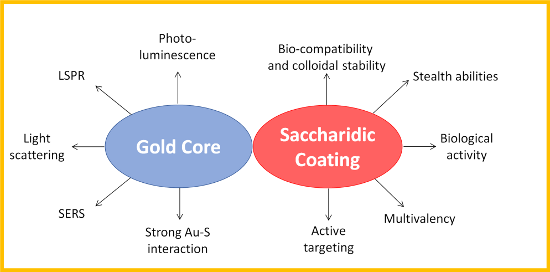
- thio-amphiphilic linker to impart improved solubility and flexibility to the glycosyl-ligand. UV–vis spectroscopy and dynamic light scattering measurements have been exploited to detect at low picomolar concentrations lactose-AuNP, mannose-AuNP and GlcNAc-AuNP interactions with their cognate lectins
- glycoprobe interact with a microplate displaying AFP-L3, LcA strongly bind to AFP-L3 releasing from the supramolecular glycoprobe GAuNPs in a concentration which can be measured via UV–vis spectroscopy. Chiodo et al. [84] gave their contribution in the development of early stage cancer or pathogen diagnosis
- indicative of the successful binding [85]. In this field, a naturally occurring sialylglycopeptide extracted from egg yolks was converted into a thiol-terminated molecule and grafted on AuNPs, to develop a gold-based sensor for influenza virus detection, using both UV–vis spectroscopy and dynamic light


Interactions between shape-persistent macromolecules as probed by AFM
Beilstein J. Org. Chem. 2017, 13, 938–951, doi:10.3762/bjoc.13.95
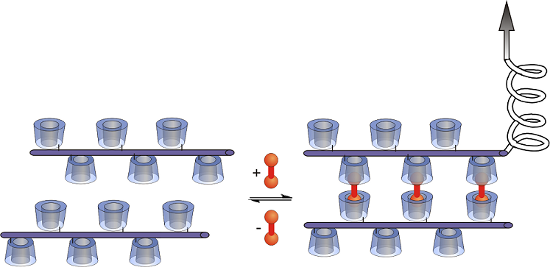
- the host polymer 8 as a function of the concentration of both guests 9 and 10 (Scheme 2) was determined by UV−vis spectroscopy using the extinction coefficient ε of 8 (14,800 M−1 cm−1) at 425 nm. A more detailed description of the solubility measurements is presented in Supporting Information File 1




Molecular-level architectural design using benzothiadiazole-based polymers for photovoltaic applications
Beilstein J. Org. Chem. 2017, 13, 863–873, doi:10.3762/bjoc.13.87
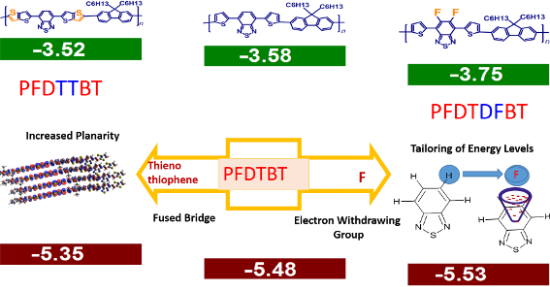
- experimental values obtained by UV–vis spectroscopy. Here it is observed that both the HOMO–LUMO values and the electronic transition wavelengths of the polymers showed promising results for OPV applications. The HOMO–LUMO energy levels of the polymers were determined by cyclic voltammetry, using non-aqueous
- studied by UV–vis spectroscopy. The absorption spectra were obtained in chlorobenzene solution (Figure 4). All polymers showed a broad absorption in the lower energy region (450–650 nm) due to the intramolecular charge transfer (ICT) through the backbone of polymers and another broad peak in the higher

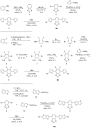


Spectral and DFT studies of anion bound organic receptors: Time dependent studies and logic gate applications
Beilstein J. Org. Chem. 2017, 13, 222–238, doi:10.3762/bjoc.13.25

- melting point apparatus in open capillaries. Infrared spectra were recorded on a Bruker alpha FTIR spectrometer. UV–vis spectroscopy was performed with an Analytik Jena Specord S600 spectrometer in a standard 3.0 mL quartz cell with 1 cm path length. The 1H NMR spectra were recorded on Bruker Ascend (400


Efficient access to β-vinylporphyrin derivatives via palladium cross coupling of β-bromoporphyrins with N-tosylhydrazones
Beilstein J. Org. Chem. 2017, 13, 195–202, doi:10.3762/bjoc.13.22
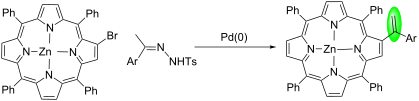
- , confirming the molecular formula of these derivatives. All the new porphyrins 3a–c were also characterized by UV–vis spectroscopy, showing the typical profile of the Zn(II) complex of meso-tetraarylporphyrins, with a Soret band at ca. 420 nm and two Q bands between 549 and 586 nm (See Supporting Information


3D printed fluidics with embedded analytic functionality for automated reaction optimisation
Beilstein J. Org. Chem. 2017, 13, 111–119, doi:10.3762/bjoc.13.14
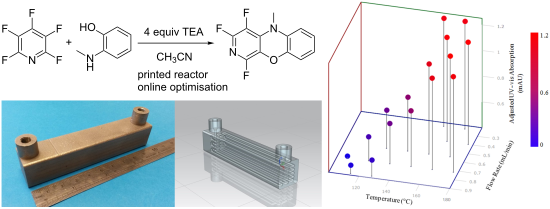
- place on the chip heater of a FlowSyn system by a metal clip. The system was allowed to reach temperature with solvent pumping throughout the system, before switching to a reagent flow. The product from each optimisation point was collected and analysed via UV–vis spectroscopy at a wavelength of 330 nm


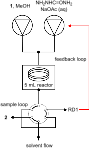


High performance p-type molecular electron donors for OPV applications via alkylthiophene catenation chromophore extension
Beilstein J. Org. Chem. 2016, 12, 2298–2314, doi:10.3762/bjoc.12.223
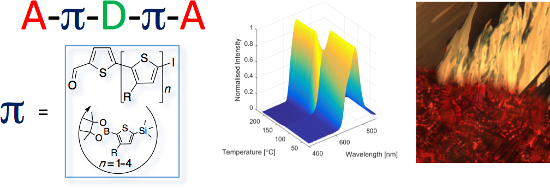
- rich and more complicated phase space than indicated by simple thermal analysis. For BQR, variable temperature UV–vis spectroscopy mapped the transmitted light variations that accompany the phase change noted in the POM studies of BQR. We are currently studying the structural changes occurring in thin




Practical synthetic strategies towards lipophilic 6-iodotetrahydroquinolines and -dihydroquinolines
Beilstein J. Org. Chem. 2016, 12, 1851–1862, doi:10.3762/bjoc.12.174
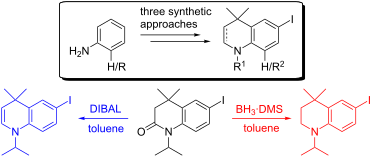
- recorded using a Perkin Elmer FTIR spectrometer. Melting points were obtained using a Gallenkamp melting point apparatus and are uncorrected. Elemental analysis was conducted by the Durham University departmental service using an Exeter Analytical CE-440 analyser. UV–vis spectroscopy was conducted using a


Amidofluorene-appended lower rim 1,3-diconjugate of calix[4]arene: synthesis, characterization and highly selective sensor for Cu2+
Beilstein J. Org. Chem. 2016, 12, 1749–1757, doi:10.3762/bjoc.12.163
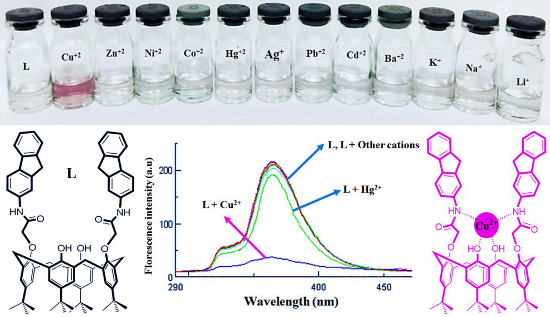
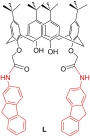
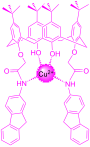
- , Figures S1–S11). General procedure for UV–vis experiments The evaluation of cation-ligand interaction was performed with UV–vis spectroscopy. The UV–vis measurement of receptor L in CH3CN exhibited three absorption peaks at 282, 290, and 314 nm. Furthermore, the variation of UV–vis spectra was monitored
- color change from colorless to purple, which could be observed by the naked eye. The selectivity of receptor L towards Cu2+ was precisely assessed by UV–vis spectroscopy during titration with different concentrations of Cu2+ from 0 to 100 equivalents in CH3CN. In the absence of Cu2+ ions, the ligand L