


Search results
Search for "aryl iodide" in Full Text gives 83 result(s) in Beilstein Journal of Organic Chemistry.
Nano copper oxide catalyzed synthesis of symmetrical diaryl sulfides under ligand free conditions
Beilstein J. Org. Chem. 2011, 7, 886–891, doi:10.3762/bjoc.7.101
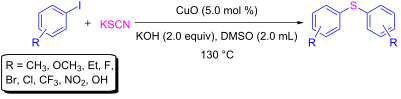
- , functions under ligand free conditions and is recyclable for up to four cycles without loss of catalytic activity [20][39][40][41] (Table 4). Experimental General procedure for the synthesis of diaryl sulfides: A mixture of aryl iodide (2.0 mmol), potassium thiocyanate (1.5 mmol), nano CuO (5.0 mol %), and


Unusual behavior in the reactivity of 5-substituted-1H-tetrazoles in a resistively heated microreactor
Beilstein J. Org. Chem. 2011, 7, 503–517, doi:10.3762/bjoc.7.59
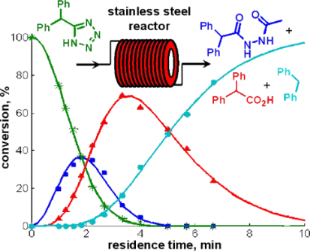
- demonstrated full conversion to cinnamic ester 14 in the initial product fractions exiting the flow reactor. To establish for how long this “palladated” steel coil could be used without additional amounts of catalyst being added, 15 mL of reaction mixture containing 1.125 g of aryl iodide 12 (8.45 mmol) were
- active species. Presumably, the heterogeneous “Pd-on-steel” pre-catalyst is initially solubilized by oxidative addition of the aryl iodide and enters the catalytic cycle in the form of a soluble Pd species. Therefore, significant levels of Pd leaching are observed for the reaction mixture, not for pure


The preparation of 3-substituted-1,5-dibromopentanes as precursors to heteracyclohexanes
Beilstein J. Org. Chem. 2011, 7, 386–393, doi:10.3762/bjoc.7.49
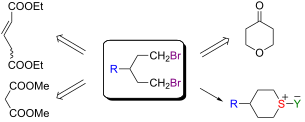
- % [17][38]. The downside to Method 1C is that an excess of Grignard reagent (3–4 equiv) is required; therefore, it is not economical with respect to the alkyl halide. Method 1D also uses glutaconate diester, which is reacted with an aryl iodide in the presence of Pd(0) under Heck conditions. The


Donor-acceptor substituted phenylethynyltriphenylenes – excited state intramolecular charge transfer, solvatochromic absorption and fluorescence emission
Beilstein J. Org. Chem. 2010, 6, 992–1001, doi:10.3762/bjoc.6.112
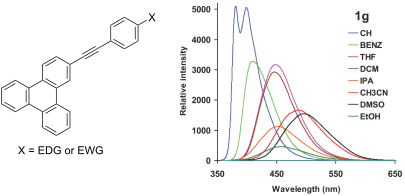
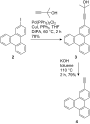
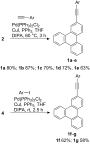
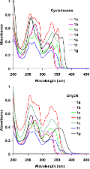
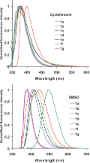
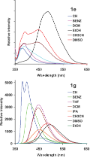
- , 127.8, 127.7, 127.5, 127.1, 123.6, 123.5, 123.4, 121.4, 93.0, 89.5 ppm; ESI Q-TOF MS m/z 433 [M + H]+; HRMS calcd for C33H21O [M + H]+ 433.1592; found, 433.1593. General procedure for the synthesis of 1f–g. A Schlenk flask was charged with the corresponding aryl iodide (0.6 mmol), Pd(PPh3)2Cl2 (0.011 g




Polar tagging in the synthesis of monodisperse oligo(p-phenyleneethynylene)s and an update on the synthesis of oligoPPEs
Beilstein J. Org. Chem. 2010, 6, No. 57, doi:10.3762/bjoc.6.57
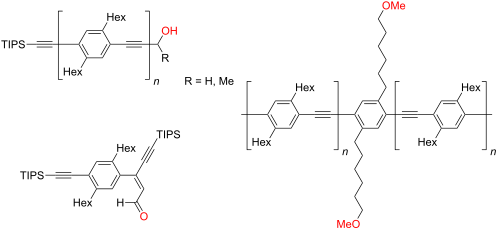
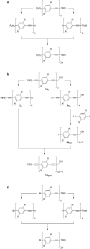
- derived by the removal of either the HOM or the TIPS group. The HOM protected 1,4-diethynylbenzene 3a1 is coupled with 1,4-diiodobenzene to obtain aryl iodide 4a2. This is coupled with the TIPS protected 1,4-diethynylbenzene 21 in the convergent step. It has been shown that HOM can be exchanged for 1




A convenient method for preparing rigid-core ionic liquid crystals
Beilstein J. Org. Chem. 2009, 5, No. 51, doi:10.3762/bjoc.5.51
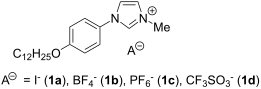
- -methyl-1H-imidazol-3-ium mesogenic salts. Synthesis of the imidazole A. Reaction conditions: (i) aryl iodide (1.37 mmol), imidazole (1.69 mmol), K2CO3 (1.51 mmol), Cu(II)NaY (148 mg), 72 h at 180 °C in a sealed tube. Synthesis of methyl imidazolium 1a. Reaction conditions: (i) MeI in sealed tube, 54 h at




Reduction of arenediazonium salts by tetrakis(dimethylamino)ethylene (TDAE): Efficient formation of products derived from aryl radicals
Beilstein J. Org. Chem. 2009, 5, No. 1, doi:10.3762/bjoc.5.1
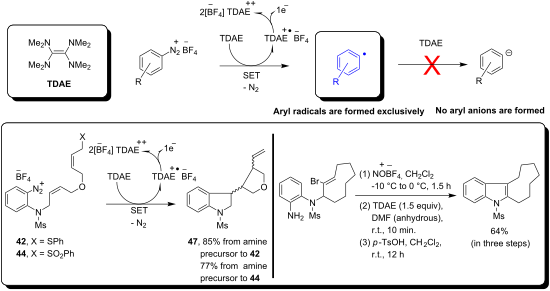
- arenediazonium cation) to the phenyl anion (+0.05 V vs SCE). Thus, it had long been noted that cyclic voltammetry of aryl halides, particularly iodides, can give rise to a single two-electron wave in the reductive part of the cycle. The first electron converts the aryl iodide to the corresponding aryl radical


m-Iodosylbenzoic acid – a convenient recyclable reagent for highly efficient aromatic iodinations
Beilstein J. Org. Chem. 2007, 3, No. 19, doi:10.1186/1860-5397-3-19
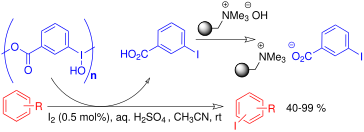
- . Separation of pure products is conveniently achieved by scavenging any aryl iodide by ion exchange with IRA-900 (hydroxide form). The reduced form of the reagent, m-iodobenzoic acid, can be easily recovered from the ion exchange resin or from the basic aqueous solution by simple acidification with HCl


Other Beilstein-Institut Open Science Activities



