


Search results
Search for "derivatives" in Full Text gives 2840 result(s) in Beilstein Journal of Organic Chemistry. Showing first 200.
Visible-light-driven NHC and organophotoredox dual catalysis for the synthesis of carbonyl compounds
Beilstein J. Org. Chem. 2025, 21, 2584–2603, doi:10.3762/bjoc.21.200
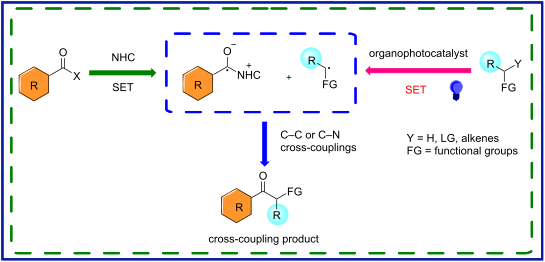
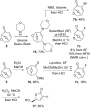
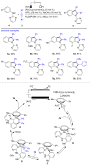
- –C, C–HA bond-forming reactions [36][37]. These chiral NHC catalysts, used to access enantiopure alcohol/amine derivatives, particularly 2° and 3° alcohols/amines, are significant structural motifs in numerous drugs and natural products and have found widespread synthetic applications in medicinal
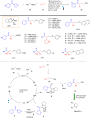
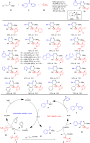
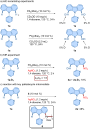
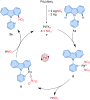
- , and advanced optical and energy materials. Review Visible-light-driven NHC/4CzIPN-catalyzed reactions Recently, Shu and co-workers developed a direct and innovative preparation of highly functionalized aryl amide derivatives 3 from aryl aldehydes 1 and substituted imines 2 under mild conditions in the
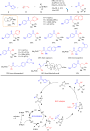
- arylcyclopropanes 5 by applying NHC/ photoredox cooperative organocatalysis under visible-light irradiation. This method allows sequential C–O and C–C bond formation, leading to access to various γ-aroyloxy keto-ester derivatives 6 in good yield up to 81% and excellent functional group tolerance, including electron





Total syntheses of highly oxidative Ryania diterpenoids facilitated by innovations in synthetic strategies
Beilstein J. Org. Chem. 2025, 21, 2553–2570, doi:10.3762/bjoc.21.198
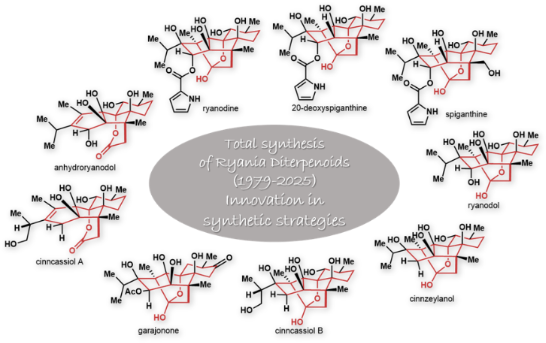
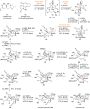
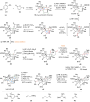
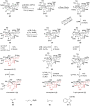
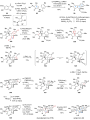
- member ryanodine has a specific regulatory effect on myocardial calcium ion channels (PyR). Since only a limited number of compounds have been reported to act by modifying this receptor, ryanodine and its derivatives are potential therapeutic agents for treating cardiovascular diseases. This article
- polyhydroxylated molecular framework has posed a significant synthetic challenge, impeding the preparation of derivatives for SAR exploration. In 2017, the Reisman group addressed this issue by drawing upon an analysis of Deslongchamps’s prior synthetic work [45] (Scheme 8). They hypothesized that utilizing an
- ryanodine skeleton via an established single-electron reductive cyclization to complete the total synthesis. This strategic inversion of the synthetic sequence enabled direct acylation of anhydroryanodol derivatives, facilitating the introduction of the key pyrrole-2-carboxylate unit. This method







Rapid access to the core of malayamycin A by intramolecular dipolar cycloaddition
Beilstein J. Org. Chem. 2025, 21, 2542–2547, doi:10.3762/bjoc.21.196
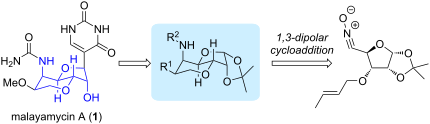
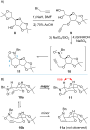
- functionality strategy employing oxazoline to unmask the 1,2-hydroxyamine moiety proves feasible, eliminating the need for alkene functionalization required in previous endeavours. This current strategy provides a reliable platform for accessing diverse uracil nucleosides and their derivatives, facilitating the
- target-oriented synthesis toward malayamycins remains to be complished and several steps need to be improved, the current strategy provides a reliable platform to access various uracil nucleosides and derivatives for developing potent fungicides. Selected natural uracil-containing nucleosides (the key




Synthesis and characterization of a isothiouronium-calix[4]arene derivative: self-assembly and anticancer activity
Beilstein J. Org. Chem. 2025, 21, 2535–2541, doi:10.3762/bjoc.21.195
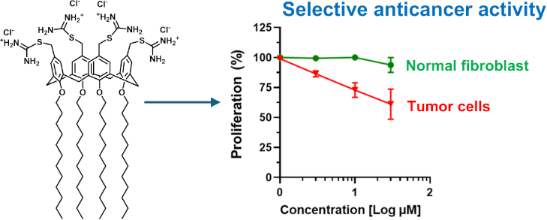
- , and low toxicity make calixarene derivatives valuable drug candidates against cancer. The aim of the present study was the synthesis and characterization of a calix[4]arene derivative in which known anticancer isothiouronium groups were clustered on a calix[4]arene scaffold bearing long C12 alkyl
- chemotherapy and achieving targeted treatments [18][19][20]. In the era of nanotechnology, a promising strategy for developing more effective treatments against cancer [21][22], calixarene derivatives are also emerging as valid building blocks for the development of nanoscale multivalent constructs [23]. Due
- into the calixarene skeleton to develop anticancer derivatives, including proline [34], carbonyl amide [35], glycoureido [36], ureido [37], picolylamine [38], 5-bromopentyltrimethylammonium bromide and 3-bromopropyltriphenylphosphonium bromide [39], among others. Isothiouronium salts represent another


Pentacyclic aromatic heterocycles from Pd-catalyzed annulation of 1,5-diaryl-1,2,3-triazoles
Beilstein J. Org. Chem. 2025, 21, 2524–2534, doi:10.3762/bjoc.21.194
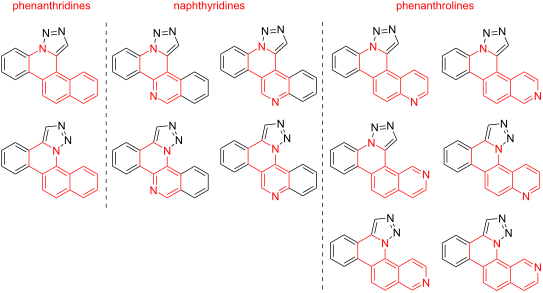
- -diaryl-1,2,3-triazoles 7–12 into target pentacyclic aromatic heterocycles 13–18. Yields of annulation reactions for naphthalene-containing analog 13 (90%) was appreciably higher than for quinoline and isoquinoline derivatives 14–18 (31–72%). Due to triazole subunit connectivity to the napththalene
- thermal heating conditions [46] was successful for preparing these compounds. Yields of annulation reactions for the naphthalene-containing analog 31 (65%) was once again appreciably higher than that of the quinoline and isoquinoline derivatives 32–36 (31–51%), but there appeared to be no significant
- measurably bioactive, including those serving as controls for the five bioactive derivatives, highlighting the additional importance of structural rigidity on bioactivity within this series. Elucidation of the mechanism of action for these bioactive pentacyclic compounds will be the focus of future


Isoorotamide-based peptide nucleic acid nucleobases with extended linkers aimed at distal base recognition of adenosine in double helical RNA
Beilstein J. Org. Chem. 2025, 21, 2513–2523, doi:10.3762/bjoc.21.193
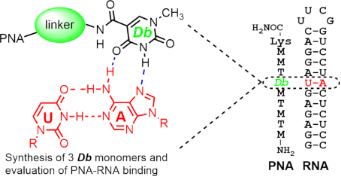
- pyrimidine recognition problem with a threefold strategy (Figure 3). First, we aimed to focus primarily on U–A recognition due to the poor selectivity of E [30], the promiscuous behavior of S [31], and the synthetic advantages imparted by commercially available uracil derivatives that could be readily
- nucleobases that showed enhanced triplex stability through cooperative effects compared to the control thymine base. In a follow up study, the pendant amide was removed from the Io core to determine the importance of the third hydrogen bond. To our surprise, these second-generation Io derivatives retained


Assembly strategy for thieno[3,2-b]thiophenes via a disulfide intermediate derived from 3-nitrothiophene-2,5-dicarboxylate
Beilstein J. Org. Chem. 2025, 21, 2489–2497, doi:10.3762/bjoc.21.191
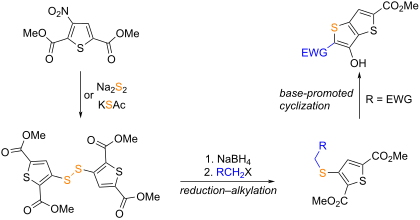
- . Nucleophilic substitution of the nitro group with sulfur nucleophiles, including thioacetate or disulfide anions as well as thioacetamide, yielded bis(thiophen-3-yl)disulfide and sulfide derivatives. The disulfide served as a suitable precursor for the preparation of 3-alkylthio-substituted thiophene-2,5
- -dicarboxylates by its one-pot reduction–alkylation using NaBH4 in DMF followed by an alkylating agent. Base-promoted cyclization of electron-deficient 3-alkylthio derivatives furnished 2-aryl-, 2-aroyl-, and 2-cyano-substituted thieno[3,2-b]thiophenes, bearing a 3-hydroxy group. This protocol broadens access to
- ) derivatives are a valuable class of fused heteroaromatic compounds characterized by rigid planar π-conjugated backbones that provide narrow band gaps, high charge carrier mobility, and intermolecular π–π stacking interactions, making them particularly attractive for the design of organic materials. Indeed



Palladium-catalyzed regioselective C1-selective nitration of carbazoles
Beilstein J. Org. Chem. 2025, 21, 2479–2488, doi:10.3762/bjoc.21.190
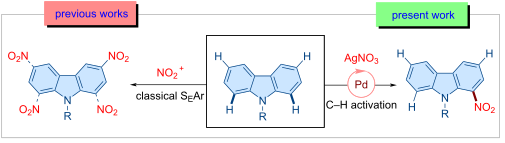
- are ubiquitous and privileged heterocyclic scaffolds in various functional organic materials and naturally occurring products. Although extensive efforts have focused on developing synthetic strategies toward carbazole derivatives, direct regioselective functionalization of the carbazole core remains
- attention has been devoted to the chemical synthesis of carbazole and its derivatives [9][10][11][12][13][14]. To access substituted carbazole cores for pharmacophores and functional materials, two main synthetic routes are: i) sequential multistep syntheses of selectively substituted carbazoles and ii
- ) functionalization of the carbazole core. Traditional approaches for constructing diversified carbazoles and derivatives are Fischer–Borsche synthesis [15][16], Graebe–Ullmann synthesis [17][18], cyclization of biaryl nitrenes–Cadogan synthesis [19], electrocyclic reactions [20][21], and others [22][23][24]. These


The intramolecular stabilizing effects of O-benzoyl substituents as a driving force of the acid-promoted pyranoside-into-furanoside rearrangement
Beilstein J. Org. Chem. 2025, 21, 2456–2464, doi:10.3762/bjoc.21.187
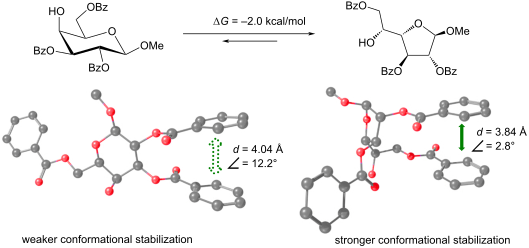
- .21.187 Abstract Furanoside derivatives are broadly present in the antigenic structures of pathogenic microorganisms and play a key role in their recognition by the host immune system. Despite the high demand for vaccine and diagnostic development, their chemical synthesis remains challenging. During the
- ] and vaccines [15][16][17][18]. That is why new efficient and stereoselective methods for the synthesis of both Galf-containing mono- and oligosaccharide derivatives are highly demanded. It is a well-known fact that galactofuranose form constitutes only 5% in water solution of unprotected ᴅ-galactose
- ° or +60°. The rotation around C5–C6 linkage was described by ω angle O5–C5–C6–O6 (the same as in the pyranoside derivatives). It appeared that the rotation around C5–C6 linkage played a crucial role for determining relative prevalence of either the furanoside or the pyranoside form in case of



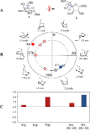

Catalytic enantioselective synthesis of selenium-containing atropisomers via C–Se bond formations
Beilstein J. Org. Chem. 2025, 21, 2447–2455, doi:10.3762/bjoc.21.186
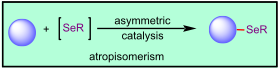
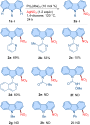
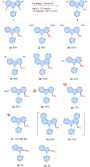
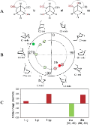
- was employed as an additive and mesitylene served as the solvent. The reaction was conducted at 60 °C under an argon atmosphere. When 1-(naphthalen-1-yl)benzo[h]isoquinoline derivatives bearing various substituents were used as substrates, the reaction proceeded efficiently, yielding the products with
- excellent conversion rates (up to 95% yield) and high enantioselectivity (up to 96% ee). Notably, isoquinoline derivatives containing polycyclic naphthalene moieties or ortho-substituted phenyl groups also demonstrated good reactivity and compatibility. DFT calculations indicated that the C–Se bond
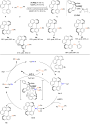
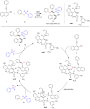
- phenyl-substituted benzoisoquinoline derivatives. Two plausible reaction mechanisms were proposed in the study: one involving oxidative addition of Int 4, a five-membered rhodium cyclic intermediate, followed by reductive elimination and the other proceeding via a bimolecular nucleophilic substitution




Transformation of the cyclohexane ring to the cyclopentane fragment of biologically active compounds
Beilstein J. Org. Chem. 2025, 21, 2416–2446, doi:10.3762/bjoc.21.185
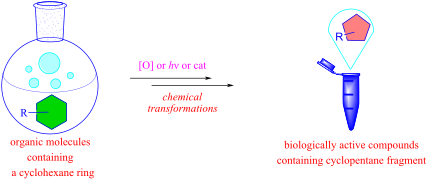
- , terpenoids, alkaloids, steroids and carbanucleosides. The spectrum of biological activities of the listed classes is wide and unique in efficacy. Natural prostaglandins are polyoxygenated derivatives of a hypothetical twenty-atom prostanoic acid, the C8–C12 atoms of which are contained in a cyclopentane ring
- [7]. Syntheses of cyclopentanoids usually are based on cyclopentaannelation reactions: transformations accompanied by cyclization [8]; transformation of compounds containing a cyclopentane ring [9]; contraction of large cycles to cyclopentane derivatives. Ring contraction reactions are among the most
- of LG and 1,3-butadiene (Scheme 3). The ratio of the resulting regioisomers was 5:3 in favor of the 5-methoxycarbonyl derivative 17a. The synthesized cyclopentane derivatives 17a,b, 18, and 19 may be useful for the preparation of iridoids and other biologically active cyclopentanoids. An alternative


The high potential of methyl laurate as a recyclable competitor to conventional toxic solvents in [3 + 2] cycloaddition reactions
Beilstein J. Org. Chem. 2025, 21, 2389–2415, doi:10.3762/bjoc.21.184
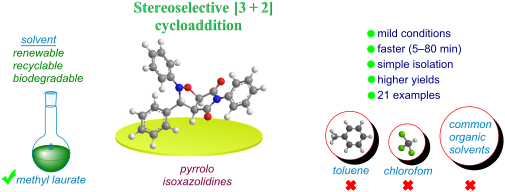
- , toxicity, pesticide similarity, and biodegradability of methyl laurate in comparison with a series of conventional organic solvents, water, some fatty acids and their derivatives. The findings of this investigation revealed that methyl laurate exhibited better green solvent properties when evaluated
- cycloaddition reactions of nitrones with N-arylmaleimides to synthesize a series of pyrrolo-isoxazolidines. In this context, an investigation was conducted into the potential of vegetable oils and certain derivatives to serve as biocompatible solvents in cycloaddition reaction contexts. This investigation
- involved a comparative analysis of these vegetable oils and derivatives with water and a range of commonly employed organic solvents in organic transformations. Results and Discussion The requisite starting compounds, nitrones 1a–f and a selection of N-substituted maleimide derivatives 2b–d were







An Fe(II)-catalyzed synthesis of spiro[indoline-3,2'-pyrrolidine] derivatives
Beilstein J. Org. Chem. 2025, 21, 2383–2388, doi:10.3762/bjoc.21.183
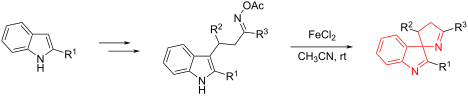
- , The Ural Branch of Russian Academy of Sciences, Goleva St. 13, 614081 Perm, Russian Federation 10.3762/bjoc.21.183 Abstract A synthetic strategy for the preparation of spiro[indoline-3,2'-pyrrolidine] derivatives has been developed, featuring a two-step sequence consisting of the reaction of 2
- -unsaturated ketone; dearomatization; indole; spirocyclization; spiro[indoline-3,2'-pyrrolidine]; Introduction Spiro[indoline-3,2'-pyrrolidine] derivatives represent an important class of organic compounds found in both natural products (e.g., coerulescine [1], horsfiline [2], and elacomine [3]) and synthetic
- -one derivatives bearing an indolyl moiety. For this purpose, the reaction of 2-arylindoles 1 with α,β-unsaturated ketones 2 was employed, affording the corresponding indolylalkanones 3 (Scheme 2) [19][20][21]. A combination of trimethylsilyl chloride and acetonitrile served as a mild promoter for the




Synthetic study toward vibralactone
Beilstein J. Org. Chem. 2025, 21, 2376–2382, doi:10.3762/bjoc.21.182

- ; Introduction β-Lactones have attracted continuous interest and have been widely utilized as key intermediates in the synthesis of natural products and polymers due to their innate ring strain [1][2][3][4][5][6]. Moreover, several natural products and their derivatives containing β-lactone as key structural
- derivatives with β-lactone moiety. Previous syntheses of vibralactone (6). Retrosynthetic analysis of vibralactone (6). Synthetic study toward vibralactone (6) in the present of β-lactone. C–H insertion utilizing linear precursor 19. Construction the bicyclic skeleton of vibralactone (6) through C–H insertion


Rotaxanes with integrated photoswitches: design principles, functional behavior, and emerging applications
Beilstein J. Org. Chem. 2025, 21, 2345–2366, doi:10.3762/bjoc.21.179

- capable of modulating reaction stereoselectivity. Hydrazone Hydrazones undergo trans–cis isomerization at the C=N bond when exposed to light, and in some instances, they can also undergo thermal isomerization (Figure 2) [69]. Although there are early reports of hydrazone derivatives in rotaxanes [70], the
- ). However, the cis isomer may undergo a 6π-electrocyclization, forming dihydrophenanthrene intermediates that further oxidize into phenanthrene derivatives, thereby irreversibly deactivating the photoswitch [75]. The first stilbene-based rotaxane was reported by Anderson and co-workers in 2001, featuring a


Comparative analysis of complanadine A total syntheses
Beilstein J. Org. Chem. 2025, 21, 2334–2344, doi:10.3762/bjoc.21.178
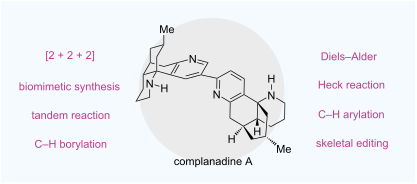
- -oxidized analog and complanadines D and E are partially reduced analogs. In addition, natural analogs such as lycoplatyrine A (6), isolated as a mixture of diastereomers, were discovered as derivatives of lycodine and an amino acid [11]. Biosynthetically, lysine was proposed to be the starting point of



Halogenated butyrolactones from the biomass-derived synthon levoglucosenone
Beilstein J. Org. Chem. 2025, 21, 2297–2301, doi:10.3762/bjoc.21.175
- infections. The preparation of 2-halo-2-deoxy-ᴅ-ribose derivatives can be achieved via the modification of the parent sugar [9][10] or chain-elongation strategies from lower homologues. For example, Castro and co-workers have demonstrated the synthesis of a dichlorinated 2-deoxypentose via the addition of
- bromodifluoroacetate under Reformatsky conditions [12]. While this reaction is still used in recent patents concerning the synthesis of gemcitabine, the drug’s commercial success has driven interest in alternative procedures for its synthesis [13], as well as the extensive evaluation of other halogenated derivatives
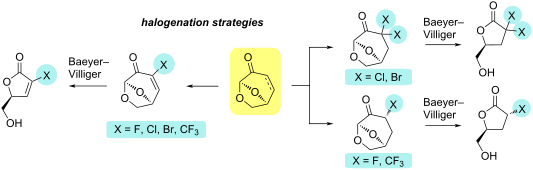
- [14][15]. In recent years, the chiral biomass derivatives levoglucosenone (LGO, 5) and its reduced form Cyrene® (6) have gained increased attention as platforms for drug discovery [16][17][18][19]. The bicyclic ketone 5 is the major product from the pyrolysis of acid-treated cellulose [20], while its



Pathway economy in cyclization of 1,n-enynes
Beilstein J. Org. Chem. 2025, 21, 2260–2282, doi:10.3762/bjoc.21.173
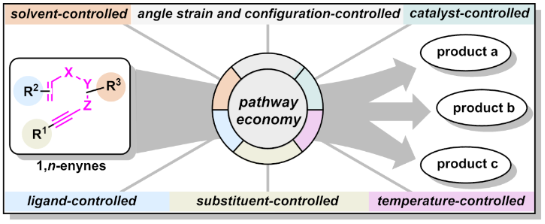
- regioselective syntheses of indene, indenone, and naphthalene derivatives from simple aromatic 1,5-enyne substrates. In 2020, a solvent-controlled strategy for Au(I)-catalyzed divergent syntheses of phenanthrene and dihydrophenanthrene derivatives was developed by the Rodríguez group (Scheme 3) [10]. In
- -catalyzed cyclization approach using aromatic enyne derivatives, where substituent control governed the stereoselective syntheses of naphthalene and indene cores (Scheme 7) [14]. When the alkyne terminus of the substrate 27 bore an alkyl or aryl substituent, the Ph3PAuCl/AgOTf-catalyzed 6-endo-dig
- derivatives 31 (Scheme 7, path b). This work provided a novel approach for constructing substituted naphthalene and indene frameworks via gold-catalyzed cycloisomerization of 1,5-enynes. In 2016, Liu et al. achieved the stereoselective syntheses of furofuran and furopyran scaffolds from propargyl vinyl ethers


Research towards selective inhibition of the CLK3 kinase
Beilstein J. Org. Chem. 2025, 21, 2250–2259, doi:10.3762/bjoc.21.172
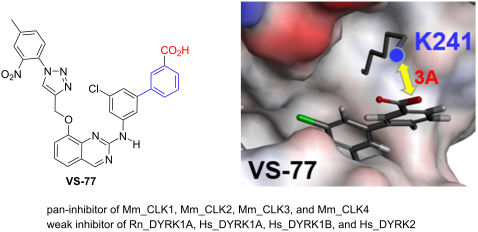
- . However, these derivatives remain still less potent on CLK3 than on the other CLKs. Therefore, they cannot be qualified as bona fide chemical probes for this CLK3 kinase. Structural and biochemical studies have been undertaken to find more selective CLKs inhibitors. Particularly, a detailed study has
- reagent the 3-(methoxycarbonyl)phenylboronic acid ester 11. All derivatives have spectral and analytical data in agreement with the proposed structures (see experimental section and Supporting Information File 1). Kinase inhibition studies Our molecules have been submitted first to a primary screening
- results are reported in Table 2 and in Supporting Information File 1. For comparison, we have also reported the values obtained earlier with our starting model compound DB18 [23][24]. Four points arose from these SAR data: i) The four acid derivatives maintain a significant inhibition of the CLK1, CLK2


A chiral LC–MS strategy for stereochemical assignment of natural products sharing a 3-methylpent-4-en-2-ol moiety in their terminal structures
Beilstein J. Org. Chem. 2025, 21, 2243–2249, doi:10.3762/bjoc.21.171
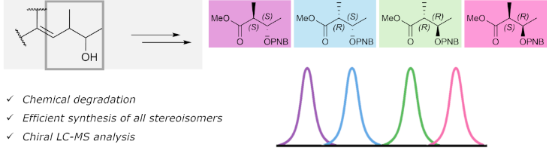
- the MPO moiety by LC–MS and demonstrate its application to the stereochemical assignment of capsulactone (1) at the microgram scale. The strategy involves the optical resolution of MPO derivatives, chemical degradation of 1, and the stereoselective synthesis of four diastereomers. Results and
- applicability of this method was validated through the successful determination of the absolute configuration of capsulactone (1) using only 100 μg of sample. This is the first report to establish the elution pattern of the four diastereomers of 3-hydroxy-2-methylbutanoic acid derivatives by LC–MS. Notably, the


Pd-catalyzed dehydrogenative arylation of arylhydrazines to access non-symmetric azobenzenes, including tetra-ortho derivatives
Beilstein J. Org. Chem. 2025, 21, 2234–2242, doi:10.3762/bjoc.21.170
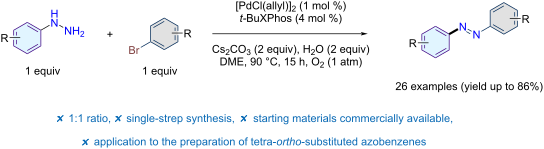
- Paris, France 10.3762/bjoc.21.170 Abstract Azobenzenes are photoresponsive compounds widely used in molecular switches, light-controlled materials, and sensors, but despite extensive studies on symmetric derivatives, efficient methods for synthesizing non-symmetric analogues remain scarce due to
- sterically tuned substrates promotes selective N-arylation at the terminal nitrogen. The protocol tolerates a wide range of functional groups and enables the synthesis of well-decorated azobenzenes, including tetra-ortho-substituted derivatives. Notably, the reaction proceeds under an O2 atmosphere and in
- , most synthetic methods have focused on the preparation of symmetric derivatives [12][13]. Traditional approaches, such as oxidative coupling of anilines [14][15][16][17][18][19], reductive coupling of nitroarenes [20][21][22][23], or cross-coupling between anilines and nitroarenes have proven


Thiadiazino-indole, thiadiazino-carbazole and benzothiadiazino-carbazole dioxides: synthesis, physicochemical and early ADME characterization of representatives of new tri-, tetra- and pentacyclic ring systems and their intermediates
Beilstein J. Org. Chem. 2025, 21, 2220–2233, doi:10.3762/bjoc.21.169
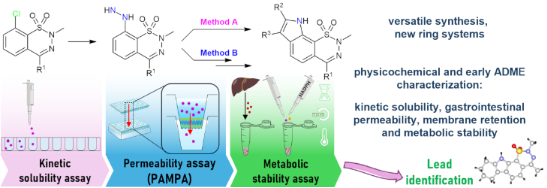
- -dioxides, we aimed at elaborating a synthetic procedure for the preparation of their pyrrole-fused counterparts, 2,9-dihydro[1,2,3]thiadiazino[5,6-g]indole 1,1-dioxide derivatives. The simple and versatile process led, via Fischer indole cyclization of the corresponding hydrazones, to a wide structural
- metabolic stability of the most promising derivatives was also determined using human liver microsomes. Keywords: early ADME characterization; Fischer indole cyclization; heterocycles; indoles; lead-likeness; new ring systems; physicochemical characterization; Introduction Considering the published
- -dioxides and their 3,4-dihydro derivatives 2 (R3 = Me) were found to have remarkable in vivo anxiolytic activity [12], we aimed to prepare further congeners exhibiting a higher potency in this field. It is well known that synthetic as well as naturally occurring compounds containing an indole moiety


A m-quaterphenyl probe for absolute configurational assignments of primary and secondary amines
Beilstein J. Org. Chem. 2025, 21, 2211–2219, doi:10.3762/bjoc.21.168
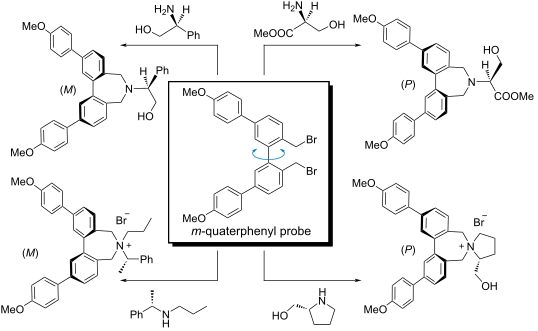
- amines. In this work, we report that the method was applied to chiral amino alcohols and amino acid esters. We also applied the method to chiral secondary amines, for which it is generally difficult to determine the absolute configuration due to the conformational complexity of their derivatives [33]. By
- ], Hanazaki [45], and Salvadori [46] have used chiral 1,1-binaphthyl derivatives to clarify the relationship between the direction of the twist of the two naphthyl chromophores and the sign of the exciton-coupled CD. In this case, the information on the dihedral angle between the two naphthyl chromophores is
- derivatives [41] the preferred conformation of (S)-2a can be proposed (Figure 2). In the case of the P conformer, a Newman projection along the C–N bond reveals that the bulkier substituent, the hydroxymethyl group (denoted as L), is close to a seven-membered ring, and is destabilized by steric repulsion with


Electrochemical cyclization of alkynes to construct five-membered nitrogen-heterocyclic rings
Beilstein J. Org. Chem. 2025, 21, 2173–2201, doi:10.3762/bjoc.21.166
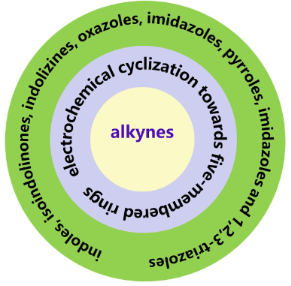
- ]. Besides, electrochemical cyclization of alkynes is also an important access towards indoles. In 2016, Xu reported the electrochemical intramolecular coupling of urea derivatives to form substituted indoles (Scheme 1) [162]. Using [Cp2Fe] (5 mol %) as the redox catalyst, the intramolecular coupling of
- afforded 12a and regenerated (DMSO)nCuI. Notably, this reaction, using KI as the only additive and performing under ambient conditions in a non-volatile aqueous solvent, was a simple, selective, efficient and sustainable electrosynthesis of indole derivatives. 3-Selenylindoles were also formed by
- . Indole skeletons were obtained successfully through electrochemical coupling of urea derivatives, dehydrogenative annulation of alkynes with anilines, annulation of o-arylalkynylanilines, cyclization of 2-ethynylanilines, selenocyclization of diselenides with 2-ethynylanilines, and enantioselective









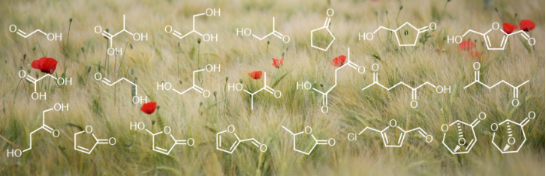
C2 to C6 biobased carbonyl platforms for fine chemistry
Beilstein J. Org. Chem. 2025, 21, 2103–2172, doi:10.3762/bjoc.21.165
- ) system can be recycled without significant loss of activity (Scheme 5) [33]. α-Bromoacetaldehyde derivatives (Scheme 6, structures a–d) and 2-phenylindoles were used to synthesize benzo[a]carbazoles. The reaction reported by the Gu research group was speeded up by bismuth trichloride (BiCl3). The Friedel
- -hydroxypropan-2-one with acylacetonitrile towards furan derivatives using a Sc(OTf)3 catalyst. C2-based bifunctional acetals, such as glycolaldehyde diethyl acetal, α-bromoacetaldehyde acetal, and 1,4-dithiane-2,5-diol also take part in the reaction as counterpart reagents. The well-known fungicide fenfuram was
- asymmetric hydrogenation process of α-hydroxy ketones opens up a new pathway for the production of chiral terminal 1,2-diols (Scheme 23) [98]. Kini and Mathews reported the synthesis of novel oxazole derivatives such as 6-(substituted benzylidene)-2-methylthiazolo[2,3-b]oxazol-5(6H)-one by reacting 1





