Search results
Search for "electrochemistry" in Full Text gives 132 result(s) in Beilstein Journal of Organic Chemistry.
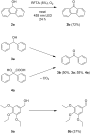
Electrochemical Corey–Winter reaction. Reduction of thiocarbonates in aqueous methanol media and application to the synthesis of a naturally occurring α-pyrone
Beilstein J. Org. Chem. 2018, 14, 547–552, doi:10.3762/bjoc.14.41
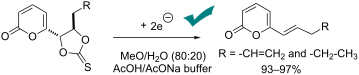
- aspects of the reaction that are currently under study to generate a robust and general olefination electrochemical method via the thiocarbonate reduction; nevertheless, this letter shows for the first time the potential use of electrochemistry with this functional group using green reduction conditions


Functionalization of N-arylglycine esters: electrocatalytic access to C–C bonds mediated by n-Bu4NI
Beilstein J. Org. Chem. 2018, 14, 499–505, doi:10.3762/bjoc.14.35

- the presence of excess amounts of oxidant. On the other hand, the toxicity of residual traces of transition metal (photo)catalyst in products is also highly concerned. Consequently, metal-free and environmentally friendly oxidative C–C bond formation is highly desired. Electrochemistry has proved to


Recent advances on organic blue thermally activated delayed fluorescence (TADF) emitters for organic light-emitting diodes (OLEDs)
Beilstein J. Org. Chem. 2018, 14, 282–308, doi:10.3762/bjoc.14.18
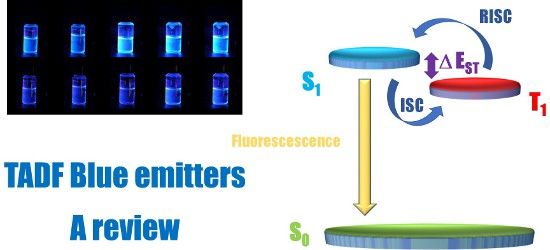
- dihedral angle of T21–T23 contributed to spatially separate the HOMO from the LUMO orbitals. By electrochemistry, an appreciable reduction of the oxidation potential was detected (+0.87 V) for T21 which is substituted at the 1,8-positions of the donor whereas T20, T22 and T23 exhibited the same oxidation




Structure–property relationships and third-order nonlinearities in diketopyrrolopyrrole based D–π–A–π–D molecules
Beilstein J. Org. Chem. 2017, 13, 2374–2384, doi:10.3762/bjoc.13.235
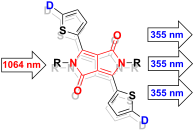
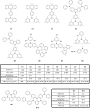
- of the peripheral substituents (donor) and enlargement of the π-system. Fundamental properties of target molecules were studied by differential scanning calorimetry, electrochemistry, and absorption and emission spectra. Nonlinear optical properties were studied by measuring the third harmonic
- generation. The experimental data were completed by quantum-chemical calculations and structure–property relationships were elucidated. Keywords: calculations; diketopyrrolopyrrole; electrochemistry; electronic spectra; push–pull; third-harmonic generation; Introduction Known for more than 40 years
- were further investigated by differential scanning calorimetry (DSC), electrochemistry, absorption and emission spectra, DFT calculations, and THG measurements. Results and Discussion Synthesis of DPP derivatives 1–5 According to the π-linker structure, two series of target chromophores a and b can be




Preactivation-based chemoselective glycosylations: A powerful strategy for oligosaccharide assembly
Beilstein J. Org. Chem. 2017, 13, 2094–2114, doi:10.3762/bjoc.13.207
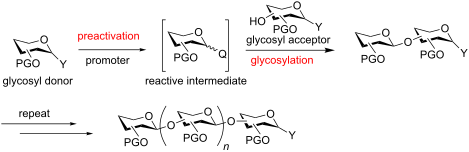
- , Yoshida and co-workers developed an alternative method taking advantage of electrochemistry for donor activation [59]. They have demonstrated that thioglycosides can be electrochemically oxidized in the presence of tetrabutylammonium triflate to yield a glycosyl triflate, which can be subsequently







Mechanochemical synthesis of small organic molecules
Beilstein J. Org. Chem. 2017, 13, 1907–1931, doi:10.3762/bjoc.13.186
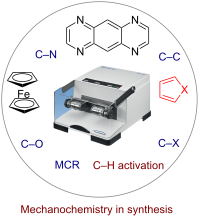
- received the Nobel Prize in 1909, mentioned the term “Mechanochemistry” as, like a branch of physical chemistry, i.e., thermochemistry, photochemistry and electrochemistry [13][14]. He defined the subject as “Mechanochemistry is a branch of chemistry which is concerned with chemical and physio-chemical


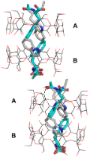
Molecular recognition of N-acetyltryptophan enantiomers by β-cyclodextrin
Beilstein J. Org. Chem. 2017, 13, 1572–1582, doi:10.3762/bjoc.13.157
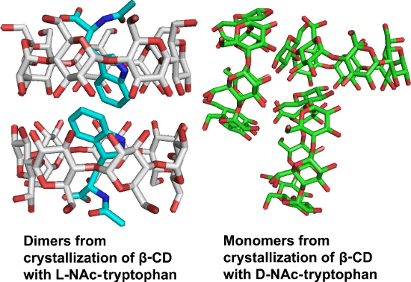
- expected to have restricted mobility and limited disorder. Indicative of the interest and possible applications of the CD use in chiral selectivity/discrimination of tryptophan are studies in aqueous solution [21], in electrochemistry for sensor development [17][22][23], as components of solid phases in




Fluorescent carbon dots from mono- and polysaccharides: synthesis, properties and applications
Beilstein J. Org. Chem. 2017, 13, 675–693, doi:10.3762/bjoc.13.67
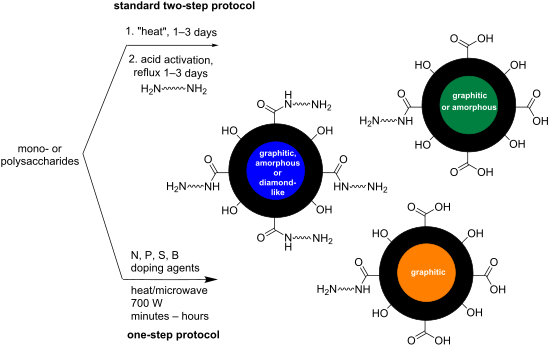
- : top-down or bottom-up syntheses. Top-down methods are characterised by using a bulk carbon substrate as the starting material; using conditions that remove nanoparticles from the bulk substrate such as electrochemistry, chemical oxidation, arc discharge or laser ablation, carbon-based nanoparticles


NMR reaction monitoring in flow synthesis
Beilstein J. Org. Chem. 2017, 13, 285–300, doi:10.3762/bjoc.13.31
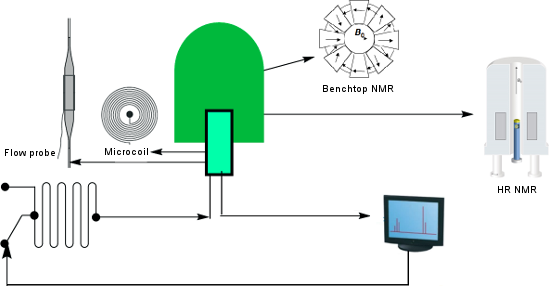
- (photochemistry, electrochemistry, microwave, ultrasound, etc.) [6][7][8][9]. In this regard, in a recent paper a compact reconfigurable flow system was described for the continuous flow production of pharmaceuticals. The system comprised different types of preparation, reaction and elaboration modules that could


A versatile route to polythiophenes with functional pendant groups using alkyne chemistry
Beilstein J. Org. Chem. 2016, 12, 2682–2688, doi:10.3762/bjoc.12.265
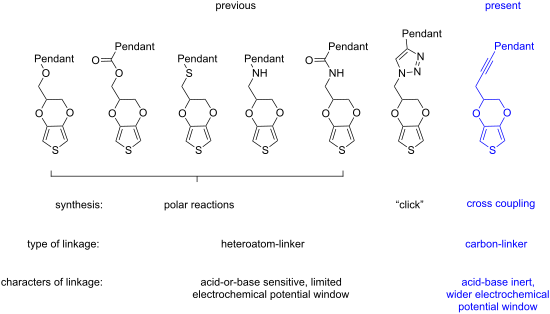
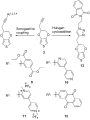
- group precursor via Huisgen cycloaddition. Supporting Information Supporting Information File 386: Experimental details, NMR spectra, IR spectra, and HRMS for all products and electrochemistry data. Acknowledgments The Swedish Research Council (VR), the Swedish Foundation for Strategic Research (SSF


Solvent-free, visible-light photocatalytic alcohol oxidations applying an organic photocatalyst
Beilstein J. Org. Chem. 2016, 12, 2358–2363, doi:10.3762/bjoc.12.229
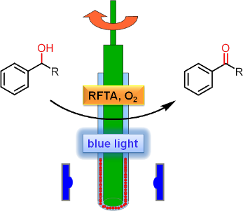
- and Nobel Prize laureate 1909, chemistry can be divided into the four sub-disciplines thermochemistry, electrochemistry, photochemistry, and mechanochemistry, depending on the kind of energy involved in a chemical process [1]. Among these, mechanochemistry is nowadays a well-established method for the




High performance p-type molecular electron donors for OPV applications via alkylthiophene catenation chromophore extension
Beilstein J. Org. Chem. 2016, 12, 2298–2314, doi:10.3762/bjoc.12.223
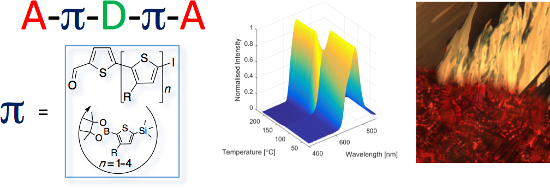
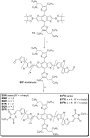
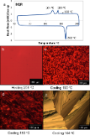
- fully characterized by NMR, IR, UV–vis, TGA, DSC, electrochemistry, photoelectron spectroscopy in air (PESA), and have satisfactory mass spectra and microanalysis results. Full experimental details are described in Supporting Information File 1. Thermal behaviour: TGA and DSC. The thermal behaviour of




Synthesis and characterization of fluorinated azadipyrromethene complexes as acceptors for organic photovoltaics
Beilstein J. Org. Chem. 2016, 12, 1925–1938, doi:10.3762/bjoc.12.182
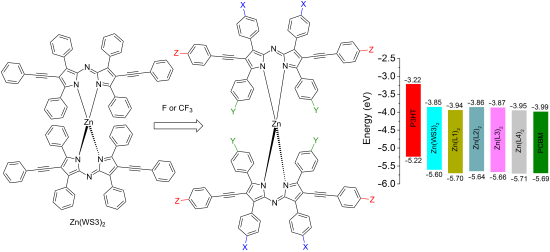
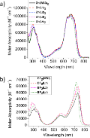
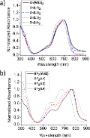
- are observed at 669 and 800 nm, respectively. Compared to λmax of BF2(WS3), BF2(L4) exhibits a large hypsochromic shift of 33 nm. Electrochemistry Cyclic voltammetry of the zinc(II) and BF2+ chelates was studied in dichloromethane solutions using ferrocene/ferricinium (Fc/Fc+) as an internal reference




Organic chemistry meets polymers, nanoscience, therapeutics and diagnostics
Beilstein J. Org. Chem. 2016, 12, 1638–1646, doi:10.3762/bjoc.12.161
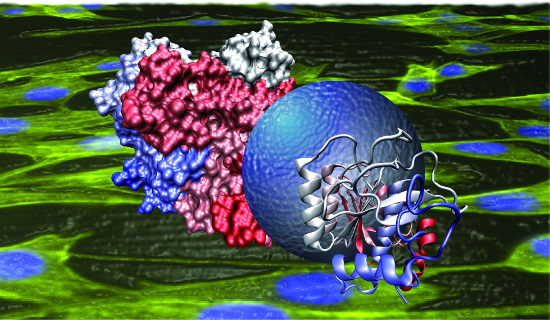
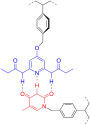
- went to it. I maintained my fullerenes project [8], and initiated a set of three other supramolecular projects. Of these projects, our work on flavoenzyme models was the one that really took off. Using electrochemistry, we were able to gain a real understanding of how forces such as hydrogen bonding [9




3,6-Carbazole vs 2,7-carbazole: A comparative study of hole-transporting polymeric materials for inorganic–organic hybrid perovskite solar cells
Beilstein J. Org. Chem. 2016, 12, 1401–1409, doi:10.3762/bjoc.12.134
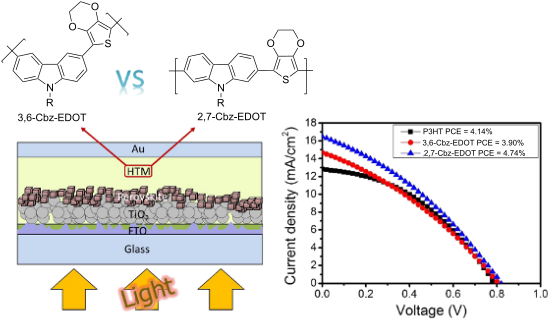
- . UV–vis absorption spectra were measured on a JASCO V-670 spectrophotometer. Polymer thin films were prepared on an ITO glass (about 0.8 × 2.5 cm2) by spray-coating of polymer solutions (5.0 g L−1 in CH2Cl2). Electrochemistry measurements were carried out on a BAS electrochemical analyzer model 612C


Self and directed assembly: people and molecules
Beilstein J. Org. Chem. 2016, 12, 391–405, doi:10.3762/bjoc.12.42

- electrochemistry [77]. The system has also been used with Eric Anslyn (University of Texas at Austin) to determine the ee of amines using circular dichroism (CD) spectroscopy [78]. The system was more recently used to measure the ee of amines using fluorescence [79]. The UK Office of Science and Innovation (OSI


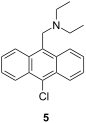


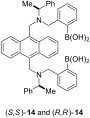


A journey in bioinspired supramolecular chemistry: from molecular tweezers to small molecules that target myotonic dystrophy
Beilstein J. Org. Chem. 2016, 12, 125–138, doi:10.3762/bjoc.12.14
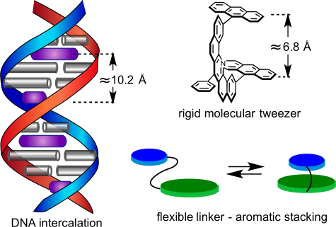
- of steroids, to determining hydrocarbon pKa values using electrochemistry. The lesson learned, and one I tried to put into practice in my independent career (see below), is that it is very much possible to run a research group focused in quite different areas of chemistry. With an NSF-NATO


Recent advances in metathesis-derived polymers containing transition metals in the side chain
Beilstein J. Org. Chem. 2015, 11, 2747–2762, doi:10.3762/bjoc.11.296
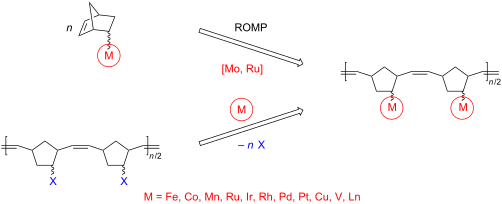
- electrochemistry, sensing, catalysis, nanomaterials, etc. [37][38][39][40]. Not surprisingly, therefore, attention of researchers has turned first on metallopolymers containing ferrocene [33][34][41][42][43]. Review Iron-containing polymers Following the first successful application of Mo–alkylidene catalysts by


Size-controlled and redox-responsive supramolecular nanoparticles
Beilstein J. Org. Chem. 2015, 11, 2388–2399, doi:10.3762/bjoc.11.260
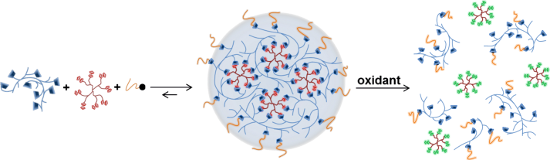
- electrochemistry [18] or by adding an oxidizing agent [19]. Different studies have employed this concept to form redox-responsive systems applied, for example, in self-healing materials [19], polymeric hydrogels [20][21], voltage-responsive vesicles [22], ultrasentive enzyme sensors [23], and as a plasma membrane


Polythiophene and oligothiophene systems modified by TTF electroactive units for organic electronics
Beilstein J. Org. Chem. 2015, 11, 1749–1766, doi:10.3762/bjoc.11.191
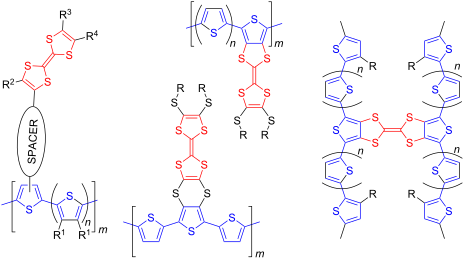
- (TTF and PT) inhibits any electrochemical activity from the polymer backbone and the electrochemistry of the material is dominated by the TTF unit. The inhibition of the polymer backbone’s electrochemical activity was confirmed by spectroelectrochemistry of 39, which indicated no change of the π–π
- state spectrum of the chemically synthesised sexithiophene 51; this is evidence of a strong π–π stacking interaction upon aggregation in the solid state. The electrochemistry of compound 51 is similar for both solution and solid state samples, with the main feature being the overlap between the second
- properties of 54 (n = 0–2) are shown in Table 4. The optical properties of 54 (n = 0–2) in solution (Table 4) follow a general trend of decreasing the absorption onset, while increasing the conjugation length. The electrochemistry of each H-shaped system 54 (n = 0–2) on the other hand is not so




Thiazole-induced rigidification in substituted dithieno-tetrathiafulvalene: the effect of planarisation on charge transport properties
Beilstein J. Org. Chem. 2015, 11, 1148–1154, doi:10.3762/bjoc.11.129
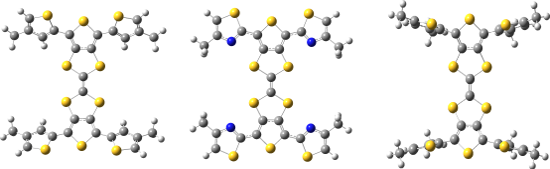
- the influence of favourable S–N interactions contributes to a more planar structure. The S and N atoms are separated by a distance of 3.01 Å, 0.34 Å shorter than the sum of the van der Waals radii of the two atoms (3.35 Å). In the electrochemistry section of this paper we discussed how the S–N



A hybrid electron donor comprising cyclopentadithiophene and dithiafulvenyl for dye-sensitized solar cells
Beilstein J. Org. Chem. 2015, 11, 1052–1059, doi:10.3762/bjoc.11.118
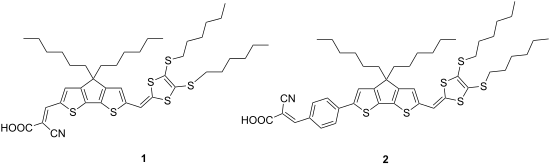
- unit. Keywords: donor–acceptor systems; dye-sensitized solar cells; electrochemistry; intramolecular charge transfer; Knoevenagel reaction; tetrathiafulvalene; Introduction Dye-sensitized solar cells (DSSCs) have been intensively investigated as an alternative to silicon-based solar cells [1][2][3][4


Glycoluril–tetrathiafulvalene molecular clips: on the influence of electronic and spatial properties for binding neutral accepting guests
Beilstein J. Org. Chem. 2015, 11, 1023–1036, doi:10.3762/bjoc.11.115
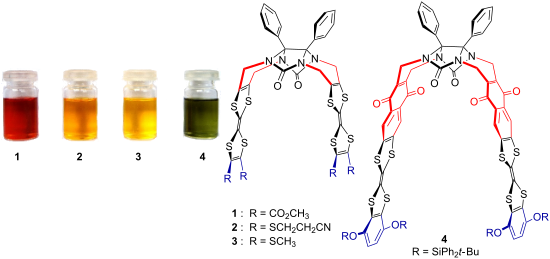
- Synthesis Molecular clips 1–3 [18] and 4 [19] were synthesized according to our previous reports. Electrochemical and spectroelectrochemical experiments Electrochemistry and time-resolved spectroelectrochemistry in solution were performed using the already described home self-made cell [44][45
- sensitivity of the spectroscopic measurement (<3 electrons at 100 kHz and <13 electrons at 2 MHz between 320 and 1080 nm; 400 electrons (high gain) and 5000 electrons (low gain) between 900 nm and 1700 nm) allows performing a spectroelectrochemistry experiment under the usual conditions of electrochemistry




Electrosynthesis and electrochemistry
Beilstein J. Org. Chem. 2015, 11, 949–950, doi:10.3762/bjoc.11.105

- Siegfried R. Waldvogel Institute for Organic Chemistry, Johannes Gutenberg University Mainz, Duesbergweg 10–14, 55128 Mainz, Germany 10.3762/bjoc.11.105 Keywords: chemical method; electrochemistry; electrosynthesis; sustainability; Since the pioneering work of Kolbe, electrochemistry and
- , electrochemistry is mostly taught by physical chemists, which seems to create a natural barrier to preparative organic applications. However, the systematic use of cationic species as intermediates to avoid over-oxidation establishes new ways for functionalization of substrates and paves the way to novel synthetic
Interactions between tetrathiafulvalene units in dimeric structures – the influence of cyclic cores
Beilstein J. Org. Chem. 2015, 11, 930–948, doi:10.3762/bjoc.11.104
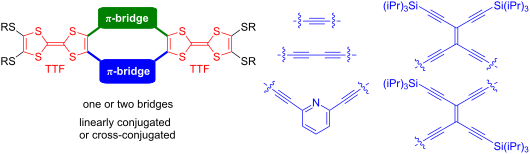
- absorptions of 1b and 6 signal the stronger acceptor strength of radiaannulene cores (lower-lying LUMOs) relative to an acyclic TEE unit. This effect was also confirmed by electrochemistry (vide infra). Interestingly, compound 7 containing a diethynylpyridine acceptor unit exhibits the most redshifted
- absorption of all the compounds at λmax 779 nm (ε 210 M−1cm−1), but of significantly lower intensity than the charge-transfer absorptions of the TEE compounds. Electrochemistry The redox properties of the TTF-bridge-TTF molecules were investigated by cyclic voltammetry and differential pulse voltammetry in
- CH2Cl2 (0.1 M Bu4NPF6). For clarity we have broken the discussion of the electrochemistry into two sections, the first being the oxidation of the TTFs and their electronic interactions in comparison to related examples in the literature. The other section deals with the reduction of the molecules