


Search results
Search for "molecular recognition" in Full Text gives 172 result(s) in Beilstein Journal of Organic Chemistry.
Diazirine-functionalized mannosides for photoaffinity labeling: trouble with FimH
Beilstein J. Org. Chem. 2018, 14, 1890–1900, doi:10.3762/bjoc.14.163
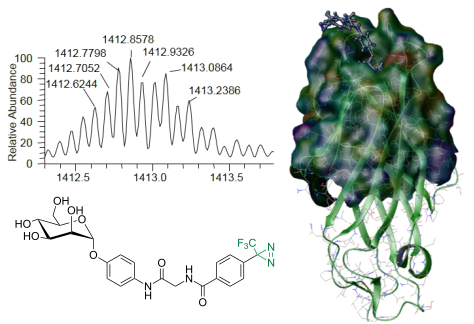
- X-ray crystallography, studies in solution add valuable information in molecular recognition studies as they take molecular dynamics as well as solvent effects into consideration. In the latter respect, photoaffinity labeling has evolved as a useful tool for studies under physiological conditions [1




Strong binding and fluorescence sensing of bisphosphonates by guanidinium-modified calix[5]arene
Beilstein J. Org. Chem. 2018, 14, 1840–1845, doi:10.3762/bjoc.14.157
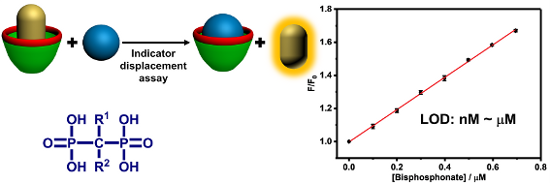
- to their facial modification, Prof. Böhmer demonstrated calixarenes as having “(almost) unlimited possibilities” [17]. We have focused on molecular recognition and self-assembly of water-soluble calixarene derivatives for a long time [18][19][20][21][22][23][24], directed by exploring biomedical


Host–guest complexes of conformationally flexible C-hexyl-2-bromoresorcinarene and aromatic N-oxides: solid-state, solution and computational studies
Beilstein J. Org. Chem. 2018, 14, 1723–1733, doi:10.3762/bjoc.14.146
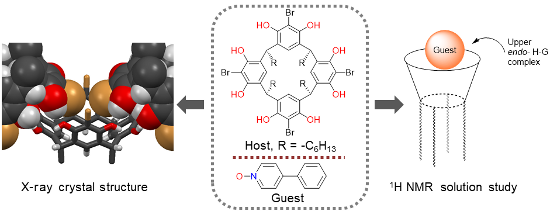
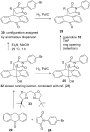
- properties by tuning the structure of the interacting partners. Over the past decade, the N-oxide family has attracted the attention of the H–G community in molecular recognition processes [33][34][35]. In order to tune the resorcinarene-PyNO H–G recognition events at the molecular level, a better


The phenyl vinyl ether–methanol complex: a model system for quantum chemistry benchmarking
Beilstein J. Org. Chem. 2018, 14, 1642–1654, doi:10.3762/bjoc.14.140
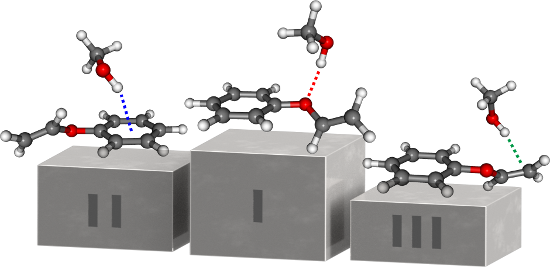
- hydrogen bonds; Introduction The balance of different noncovalent interactions is crucial for chemical and biochemical processes as it controls molecular recognition and aggregation [1][2][3][4][5][6]. In order to gain a deeper understanding of these processes, knowledge on exact structural arrangements


A conformationally adaptive macrocycle: conformational complexity and host–guest chemistry of zorb[4]arene
Beilstein J. Org. Chem. 2018, 14, 1570–1577, doi:10.3762/bjoc.14.134
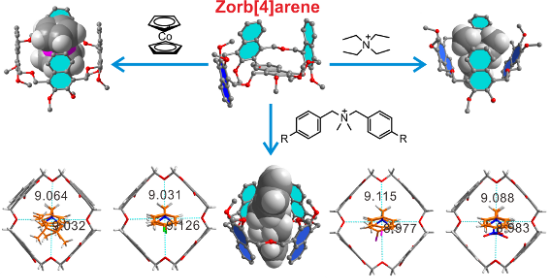
- [12] is crucial for minimizing the entropy cost in molecular recognition. In contrast, bioreceptors often possess flexible backbone structures and even undergo large amplitude conformational changes upon binding substrates [13][14]. This conformational adaptivity is the basis of the allosteric effects
- explained by invoking a solvent reorganization during the formation of 18+@ZB4 complex, which is common for reactions taking place in aqueous solution [41]. Conclusion In summary, we systematically studied the guest binding scope, electronic substituent effects and thermodynamic origin on the molecular
- recognition of ZB4 using NMR, ITC titration and X-ray crystallography. Similar to TA4, ZB4 is able to host a wide range of organic cations. However, in contrast to TA4, ZB4 shows no large amplitude of conformational response to the electronic nature of substituents on the guests, and its binding affinities


Recent applications of chiral calixarenes in asymmetric catalysis
Beilstein J. Org. Chem. 2018, 14, 1389–1412, doi:10.3762/bjoc.14.117
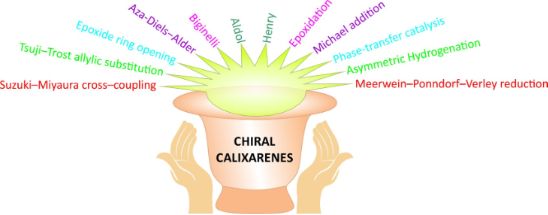
- upper and/or lower rims of the molecular skeleton, they have been widely used for construction of artificial host molecules and found applications in various fields like molecular recognition, sensing, self-assembly, catalysis, nanoscience, drug delivery and separation science [7][8][9][10][11][12][13


Oligonucleotide analogues with cationic backbone linkages
Beilstein J. Org. Chem. 2018, 14, 1293–1308, doi:10.3762/bjoc.14.111
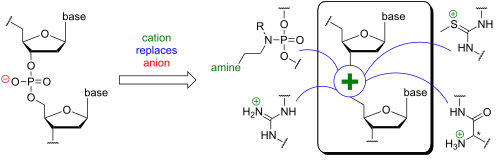
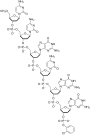
- biological mechanisms via sequence-specific molecular recognition makes them highly attractive candidates for drug development. However, their pharmacokinetic properties are problematic and represent a significant hurdle for their therapeutic application. First, the high polarity of ONs, mainly caused by





An overview of recent advances in duplex DNA recognition by small molecules
Beilstein J. Org. Chem. 2018, 14, 1051–1086, doi:10.3762/bjoc.14.93
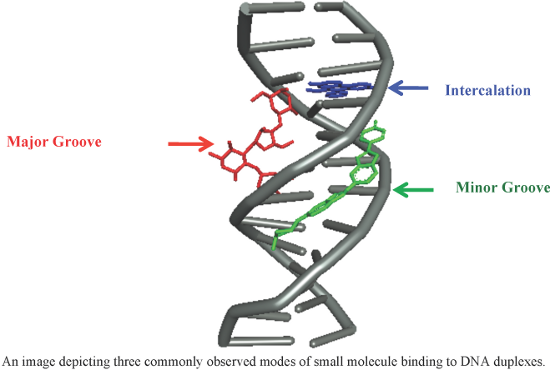
- study their solution-phase self-association characteristics and DNA molecular-recognition properties [17]. The authors showed a measurable difference in solution-phase self-assembly character with enhanced DNA association characteristics by replacing the formamide head group in thiazotropsin A with




Recent advances in synthetic approaches for medicinal chemistry of C-nucleosides
Beilstein J. Org. Chem. 2018, 14, 772–785, doi:10.3762/bjoc.14.65
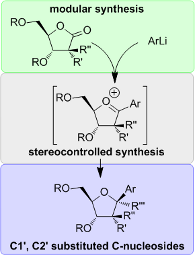
- stability, ii) altered hydrogen bonding motifs, and iii) altered molecular recognition properties [25][29][37][58]. Because of these changes, C-nucleosides have been useful in the study of RNA and DNA processing enzymes, as well as drug design efforts and novel supramolecular structures [12][29][59
- acids. Shown is the monomeric building block of nucleic acids. Changes to the nucleotide structure can affect molecular recognition, as well as structure and function. Formation of oxocarbenium ion during glycosidic bond cleavage in nucleosides [31]. The extent of leaving group stabilization and


An uracil-linked hydroxyflavone probe for the recognition of ATP
Beilstein J. Org. Chem. 2018, 14, 747–755, doi:10.3762/bjoc.14.63
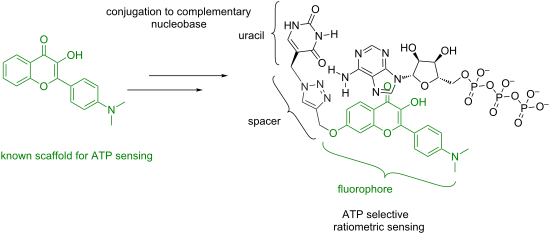
- -5’-triphosphate, GTP) and the strong solvation of the chemosensor and the analyte in aqueous media, reducing the association constant of their complex, and through that the sensitivity of the sensor [31][32]. The molecular recognition of nucleotides in most chemosensors is achieved by charged




Enzyme-free genetic copying of DNA and RNA sequences
Beilstein J. Org. Chem. 2018, 14, 603–617, doi:10.3762/bjoc.14.47
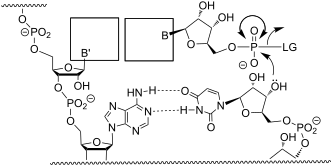
- enzymes and ribozymes, relying on solely on base pairing for molecular recognition and chemical reactivity to drive the formation of phosphodiester bonds in aqueous media. This is what is usually referred to as "enzyme-free copying" (Figure 1). Studies on enzyme-free copying of genetic polymers date back


Structural diversity in the host–guest complexes of the antifolate pemetrexed with native cyclodextrins: gas phase, solution and solid state studies
Beilstein J. Org. Chem. 2017, 13, 2252–2263, doi:10.3762/bjoc.13.222
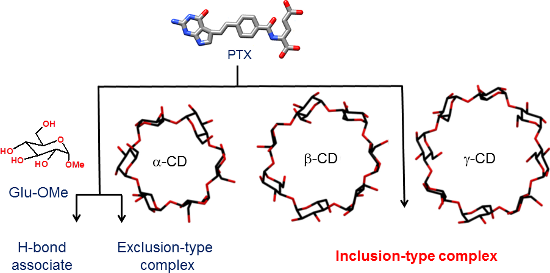
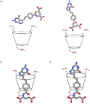
- techniques (NMR, CID-MS, FTIR–ATR and Raman spectroscopy) allows for a deeper and clearer understanding of the molecular recognition of native CDs. Experimental Materials FA (≥97%) was obtained from Sigma-Aldrich and used as disodium salt. PTX-Na2 (≥98%) was obtained from ChemScene (USA). α-, β-, and γ-CDs




Dialkyl dicyanofumarates and dicyanomaleates as versatile building blocks for synthetic organic chemistry and mechanistic studies
Beilstein J. Org. Chem. 2017, 13, 2235–2251, doi:10.3762/bjoc.13.221
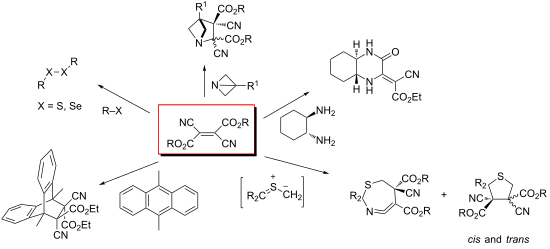
- observed by 1H NMR spectroscopy [8]. Similar systems were prepared on solid phase and used as a new molecular recognition system [44]. The [4 + 2]-cycloaddition reactions of E- and Z-1b with electron-rich 1,3-dienes have been studied extensively by Sustmann and collaborators. Thus, 1-methoxybuta-1,3-diene


Superstructures with cyclodextrins: Chemistry and applications IV
Beilstein J. Org. Chem. 2017, 13, 2157–2159, doi:10.3762/bjoc.13.215
- Beilstein Journal of Organic Chemistry also provides further insights into the synthesis and properties of CD superstructures, covering many aspects such as catalysis, molecular recognition, colloids, polyrotaxanes, drug delivery and more. Gerhard Wenz Saarbrücken, September 2017
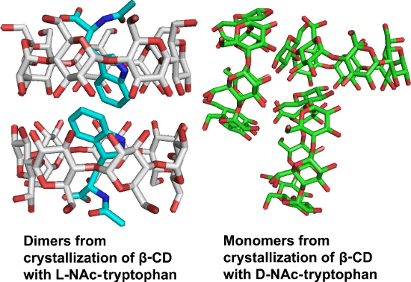
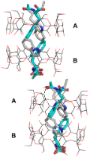
Molecular recognition of N-acetyltryptophan enantiomers by β-cyclodextrin
Beilstein J. Org. Chem. 2017, 13, 1572–1582, doi:10.3762/bjoc.13.157




Towards open-ended evolution in self-replicating molecular systems
Beilstein J. Org. Chem. 2017, 13, 1189–1203, doi:10.3762/bjoc.13.118
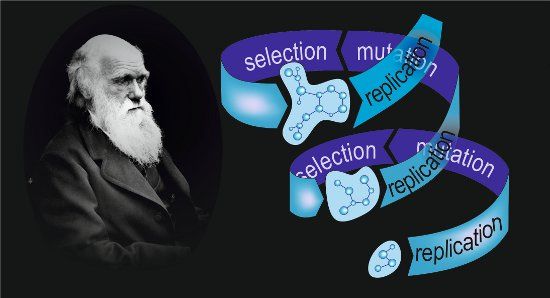
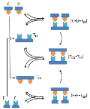
- means of molecular recognition. The peptide building blocks again are ligated, resulting in the formation of a template duplex with a coiled-coil motif. When separated from the original template, a copy of the template is obtained. Initially these replicating systems were reported to show only parabolic




Interactions between shape-persistent macromolecules as probed by AFM
Beilstein J. Org. Chem. 2017, 13, 938–951, doi:10.3762/bjoc.13.95
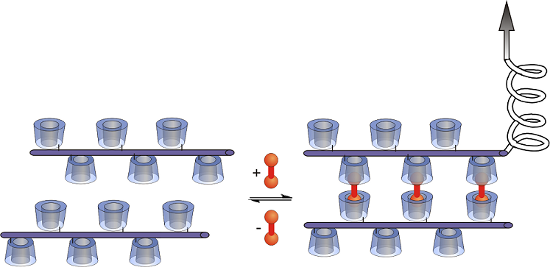
- configuration of the CD moieties. Depending on the geometrical configuration of attachment anisotropic adhesion characteristics of the polymer system can be distinguished between a peeling and a shearing mechanism. Keywords: AFM; cyclodextrin; inclusion complexes; molecular recognition; polyconjugated polymers




How and why kinetics, thermodynamics, and chemistry induce the logic of biological evolution
Beilstein J. Org. Chem. 2017, 13, 665–674, doi:10.3762/bjoc.13.66
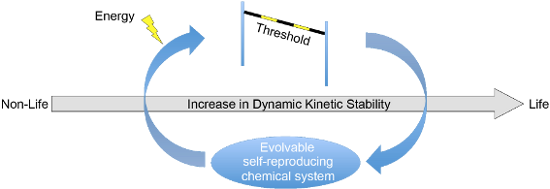
- required by the Second Law (Figure 1A). With regard to living organisms, the situation is more complex. On the one hand, association processes directly driven by the Second Law are common in living organisms (e.g., protein folding, the assembly of protein sub-units through molecular recognition, assembly



Radical polymerization by a supramolecular catalyst: cyclodextrin with a RAFT reagent
Beilstein J. Org. Chem. 2016, 12, 2495–2502, doi:10.3762/bjoc.12.244
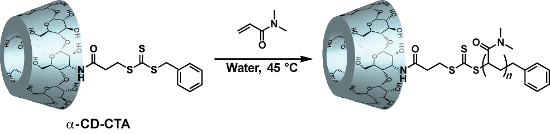
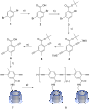
- β-CD cavity of β-CD-CTA was capped by the CTA unit, inhibiting the molecular recognition property. Crystal structure of the α-CD-DMA and β-CD-DMA complexes We chose N,N-dimethylacrylamide (DMA), acrylic acid (AA), and acrylamide (AAm) as water-soluble vinyl monomers for radical polymerization. Prior
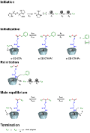
- result in a precipitate, indicating that the affinities of the CDs for AAm were low. Polymerization of vinyl monomers mediated by α-CD-CTA α-CD-CTA-mediated polymerizations of water-soluble vinyl monomers were performed in aqueous media, where the strong molecular recognition property of α-CD is expected
- inhibiting the molecular recognition of α-CD, the inclusion complexation ratio between the monomer and α-CD-CTA was decreased, which lead to lower yields and higher molecular weight of the resulting polymers due to preceding free radical polymerization. In the reaction of AAm monomer, which has a low


A chiral analog of the bicyclic guanidine TBD: synthesis, structure and Brønsted base catalysis
Beilstein J. Org. Chem. 2016, 12, 1870–1876, doi:10.3762/bjoc.12.176
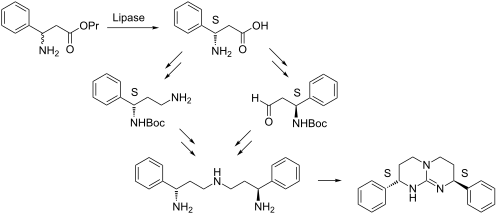
- in the field of molecular recognition, however, without being tested as catalysts [5][6][7][8][9][10]. A first example of enantioselective Michael addition has been reported for guanidine 3, albeit with low selectivity [11]. Compounds 4 and 5, inspired by the structure of ptilomycalin A and related


From supramolecular chemistry to the nucleosome: studies in biomolecular recognition
Beilstein J. Org. Chem. 2016, 12, 1863–1869, doi:10.3762/bjoc.12.175
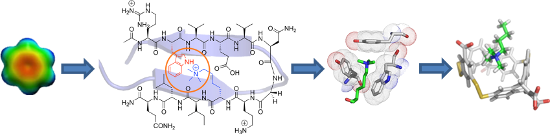
- -helices; aromatic interactions; β-hairpin peptides; cation–π interactions; dynamic combinatorial chemistry; histone; molecular recognition in water; nucleosome; π–π-stacking; post-translational modification; supramolecular chemistry; Review Childhood influences When thinking about how to start writing
- genetics, but at that point I found biology too vague for me; molecular level detail was what satisfied my curiosity. Indeed, it was only later once I felt I had a strong molecular understanding of molecular recognition principles that underpinned all of the cartoons of protein complexes that I turned back
- when I was an undergraduate. I took a graduate physical organic chemistry class from Jay Siegel, who was an assistant professor at the time. In his class, in addition to presenting the usual material, he covered recent published literature on molecular recognition that caught my attention, such as


Mutagenic activity of quaternary ammonium salt derivatives of carbohydrates
Beilstein J. Org. Chem. 2016, 12, 1434–1439, doi:10.3762/bjoc.12.138
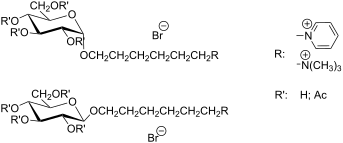
- RNA and DNA, respectively. The mechanisms of molecular recognition and cell interaction are mostly explained by the interaction of carbohydrates with proteins, called lectins, exposed at the cell surface. This process, on the one hand, allows bacteria to interact with other cells during infection, but


Supramolecular chemistry at the interface of biology, materials and medicine
Beilstein J. Org. Chem. 2016, 12, 1101–1102, doi:10.3762/bjoc.12.105
- ; molecular recognition; molecular sensors; What do art, auto-mechanics, a rural Australian and Chinese village, two civil wars, and house building have to do with supramolecular chemistry? Unless you are an avid cover-to-cover reader of the Thematic Series of the Beilstein Journal of Organic Chemistry and
Correction: Effective in silico prediction of new oxazolidinone antibiotics: force field simulations of the antibiotic–ribosome complex supervised by experiment and electronic structure methods
Beilstein J. Org. Chem. 2016, 12, 608–610, doi:10.3762/bjoc.12.59
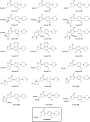
- ; computational chemistry; drug design; molecular recognition; relaxed force constants; Our original publication contains an erratic number of predicted antibiotic structures in Scheme 2. With this Erratum we provide the corrected Scheme 2. Scheme 2 in the original article: Predicted new linezolid-like
New synthetic strategies for xanthene-dye-appended cyclodextrins
Beilstein J. Org. Chem. 2016, 12, 537–548, doi:10.3762/bjoc.12.53
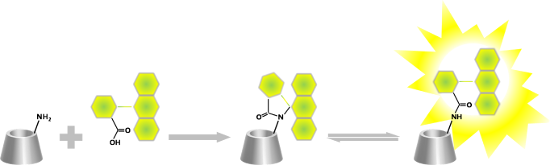
- spectroscopically inert molecules by guest-induced spectroscopic changes associated with the formation of inclusion complexes. These fluorescent CDs exhibit remarkable molecular recognition abilities, discriminating shape, bulkiness and polarity of the guests [1][2]. Furthermore, CDs can be directly modified with





