Search results
Search for "rate constant" in Full Text gives 115 result(s) in Beilstein Journal of Organic Chemistry.
Synthesis of nanodiamond derivatives carrying amino functions and quantification by a modified Kaiser test
Beilstein J. Org. Chem. 2014, 10, 2729–2737, doi:10.3762/bjoc.10.288
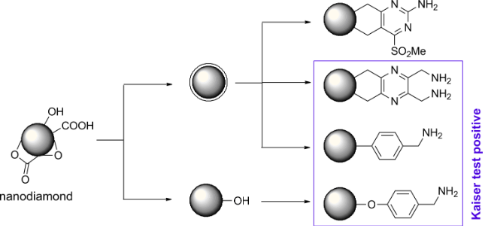
- , and the rate constant of the reaction depends on the hydrindantin concentration in a complex manner – emphasizing its role as an important intermediate [26][27]. Moore and coworkers reported that in the event of insufficient amounts of reducing agent the formation of the coloured species is too low


Gold(I)-catalysed synthesis of a furan analogue of thiamine pyrophosphate
Beilstein J. Org. Chem. 2014, 10, 2580–2585, doi:10.3762/bjoc.10.270
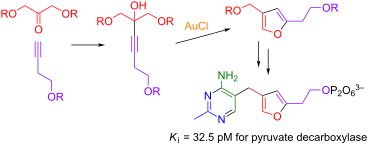
- of these two phases (k1) cannot be measured accurately from this data as it is almost all over within the first minute at all but the lowest concentrations of inhibitor. However, an estimated value of the second order rate constant kon for the initial binding of 17 is ca. 1 µM−1 min−1. The apparent
- equation with an apparent first order rate constant of 0.13 h−1. Using the ratio of recovered activity over unrecovered activity at equilibrium (8.5:91.5), the relative concentrations of ThDP and inhibitor (1000:1) and the previously reported KD value for ThDP (0.35 µM) [39], one can calculate that the Ki


Microsolvation and sp2-stereoinversion of monomeric α-(2,6-di-tert-butylphenyl)vinyllithium as measured by NMR
Beilstein J. Org. Chem. 2014, 10, 2521–2530, doi:10.3762/bjoc.10.263
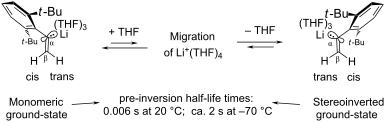
- THF, so that its pseudo-first-order rate constant kψ in Equation 2 is the product of a second-order rate constant k0 and the constant concentration of free THF. One might be tempted to call on Equation 2 for interpreting the twofold increase of kψ that was observed for 4 in a more concentrated (85% in




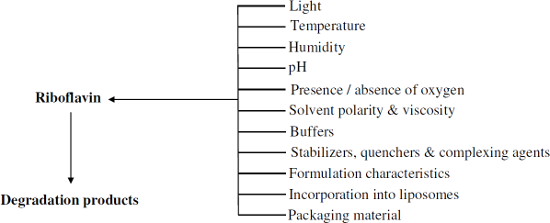
Photo, thermal and chemical degradation of riboflavin
Beilstein J. Org. Chem. 2014, 10, 1999–2012, doi:10.3762/bjoc.10.208
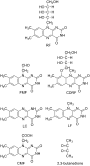
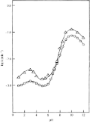
- formed have been identified [85]. An attempt has been made to correlate the rate constant of anaerobic photolysis of FMF with solvent viscosity. A linear relationship has been observed between the second-order rate constants and inverse of solvent viscosity [32]. The dependence of flavin triplet state




Tailoring of organic dyes with oxidoreductive compounds to obtain photocyclic radical generator systems exhibiting photocatalytic behavior
Beilstein J. Org. Chem. 2014, 10, 936–947, doi:10.3762/bjoc.10.92
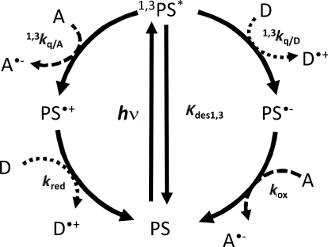
- and the electron acceptor must be chosen such that is negative enough to obtain a high electron transfer rate constant. The third electron transfer step is the unwanted back electron transfer BET within the contact ion pair (PS•+···A•−) which leads to initial reactants. This one is the more tricky to
- rate constants of singlet and triplet state deactivation to the ground state, respectively; kISC the rate constant of the intersystem crossing from 1PS to 3PS; 1kq/A, 3kq/A, (1kq/D, 3kq/D) the bimolecular electron transfer rate constant of the singlet and triplet excited state of the PS by the acceptor
- . Intersystem crossing rate constant kISC was obtained from the triplet state quantum yield and singlet state lifetime according to [59]: which leads to: and to At this RB concentration, and in the absence of quencher, the triplet state lifetime was measured around 80 µs, leading to kdes3= 1.25·104 M−1s−1


![[Graphic 1]](/bjoc/content/inline/1860-5397-10-92-i10.png?max-width=637&scale=1.18182) ), b) excited state...
), b) excited state...


Chromatographically separable rotamers of an unhindered amide
Beilstein J. Org. Chem. 2014, 10, 701–706, doi:10.3762/bjoc.10.63
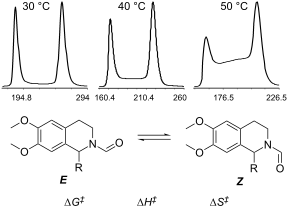
- slope of the linear regression equates the rate constant k1 for a first order interconversion and by using the Eyring equation (with R = gas constant, T = temperature, h = Planck constant, kB = Boltzmann constant) the rotational barrier was calculated to ΔG‡ (293 K) = 92.4 ± 0.1 kJ/mol (Z to E) and ΔG


![[Graphic 2]](/bjoc/content/inline/1860-5397-10-63-i3.png?max-width=637&scale=1.18182) ) in 4 (BP-D3/def2-SVP).
) in 4 (BP-D3/def2-SVP).

Continuous flow nitration in miniaturized devices
Beilstein J. Org. Chem. 2014, 10, 405–424, doi:10.3762/bjoc.10.38
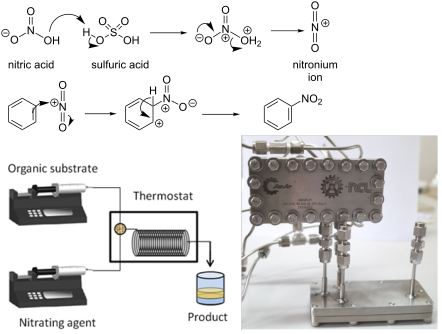
- thermostat maintained at 5 °C. The contact angles of the aqueous phase on the SS316 ensured that it remained in the continuous phase, while benzaldehyde was present in the form of discontinuous slugs. The authors observed that the rate constant of the reaction leading to the formation of the meta-isomer was


3-Pyridinols and 5-pyrimidinols: Tailor-made for use in synergistic radical-trapping co-antioxidant systems
Beilstein J. Org. Chem. 2013, 9, 2781–2792, doi:10.3762/bjoc.9.313
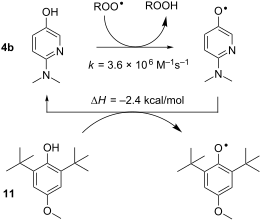
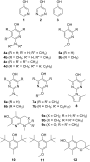
- , followed by the aminopyridinols 4 and aminopyrimidinols 6, and finally the alkoxypyridinols 5 and alkoxypyrimidinols 7. A previously unstudied compound – the 2,4-dimethylpyrrole-substituted pyrimidinol 8 – was the least reactive pyri(mi)dinol we studied, with a rate constant almost 200 fold lower than that
- bimolecular termination rate constant of styrylperoxyl or cumylperoxyl radicals (4.2 × 10⁷ and 4.6 ×10⁴ M−1s−1 respectively) [21][43] and n is the stoichiometric coefficient of the antioxidant. The n coefficient was determined experimentally from the length of the inhibited period (τ) by Equation 7. A similar




Gallium-containing polymer brush film as efficient supported Lewis acid catalyst in a glass microreactor
Beilstein J. Org. Chem. 2013, 9, 1698–1704, doi:10.3762/bjoc.9.194
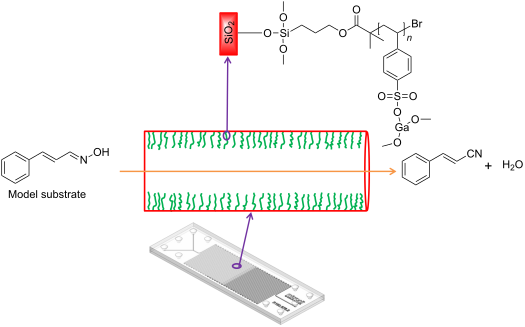
- concentrations of 1 (10–25 µM, Figure 1). The experimental data were fitted to a first-order rate equation, giving an observed rate constant, kobs, of (11 ± 2) × 10−3 s−1. The values of the rate constants at different oxime concentrations were the same, within experimental error. The activation energy of the


Computational study of the rate constants and free energies of intramolecular radical addition to substituted anilines
Beilstein J. Org. Chem. 2013, 9, 1620–1629, doi:10.3762/bjoc.9.185

- calculated values of the rate constant for the 5-exo cyclization of the hexenyl radical with the experimental values. The dispersion-corrected PW6B95-D3 functional provided very good results with deviations for the free activation barrier compared to the experimental values of only about 0.5 kcal mol−1 and
- to benzene with a rate constant of 3.8 × 10² M−1 s−1 at 79 °C. In this study it was also demonstrated that the rate constants for addition reactions to electron deficient (protonated) heteroarenes can be much higher due to polar effects. Despite these insightful investigations a more general picture
- the 5-exo cyclization has been studied very thoroughly and the rate constant has been determined by a number of approaches. The value currently accepted as ‘best’ for the rate constant is k = 2.2 × 10⁵ s−1 at 25 °C [53]. The Arrhenius equation for the 5-hexenyl cyclization has been determined to be


Organotellurium-mediated living radical polymerization under photoirradiation by a low-intensity light-emitting diode
Beilstein J. Org. Chem. 2013, 9, 1607–1612, doi:10.3762/bjoc.9.183
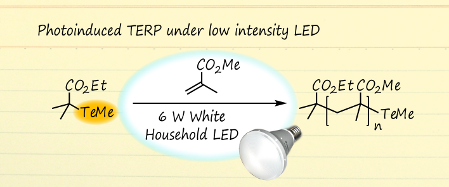
- = 166000, Mw/Mn = 1.15) were also prepared by changing the monomer/1 ratio under LED irradiation through a 50% transmittance ND filter (Table 2, runs 2 and 3). Next, the polymerization of styrene was examined at 90 °C, as the propagation rate constant of styrene is much lower than those of acrylates and


Electron self-exchange activation parameters of diethyl sulfide and tetrahydrothiophene
Beilstein J. Org. Chem. 2013, 9, 1448–1454, doi:10.3762/bjoc.9.164
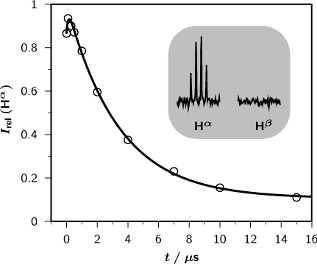
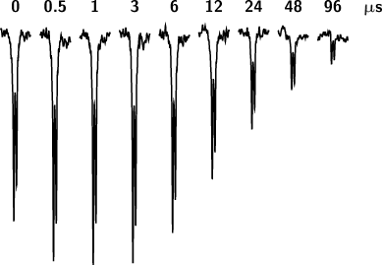
- ], The fast component k0 in Equation 4 is the decay rate of the excited state whereas the slow component κ, comprises the effects of self-exchange (rate constant, kex; donor concentration, D0) and nuclear spin relaxation in the free radicals (relaxation time, T1). The latter spoils a perfect cancelation
- (wavelength, 308 nm) and the NMR observation pulse (width, 1 μs; tip angle, 22.5°).The fit function is given by Equation 4, in conjunction with Equation 5 and Equation 6. Best-fit kinetic parameters: k0, 8.80 × 10⁶ s−1, corresponding to a quenching rate constant of 1.8 × 10⁹ M−1 s−1; kex, 5.37 × 10⁷ M−1 s−1


Homolytic substitution at phosphorus for C–P bond formation in organic synthesis
Beilstein J. Org. Chem. 2013, 9, 1269–1277, doi:10.3762/bjoc.9.143

- . The rate constant for phosphination of an aryl radical with Me3Sn–PPh2 is calculated to be ca. 9 × 10⁸ M−1s−1 by competition kinetics with Bu3SnH reduction [45]. This large rate constant allows for stereospecific trapping of axially chiral acyl radicals with Me3Sn–PPh2 (Scheme 18). Chemodivergent


C–C Bond formation catalyzed by natural gelatin and collagen proteins
Beilstein J. Org. Chem. 2013, 9, 1111–1118, doi:10.3762/bjoc.9.123
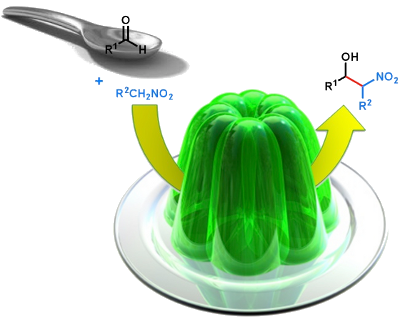
- other biocatalysts shows an increase of the first-order rate constant in the order chitosan < gelatin < bovine serum albumin (BSA) < collagen. The results of this study indicate that simple edible gelatin can promote C–C bond forming reactions under physiological conditions, which may have important
- study with other biocatalysts showed an increase of the first-order rate constant as follows: Chitosan < gelatin < BSA < collagen. Remarkably, the morphology and the physical state of the protein play an important role on the kinetics of the nitroaldol reaction. It should be emphasized that although


Interplay of ortho- with spiro-cyclisation during iminyl radical closures onto arenes and heteroarenes
Beilstein J. Org. Chem. 2013, 9, 1083–1092, doi:10.3762/bjoc.9.120
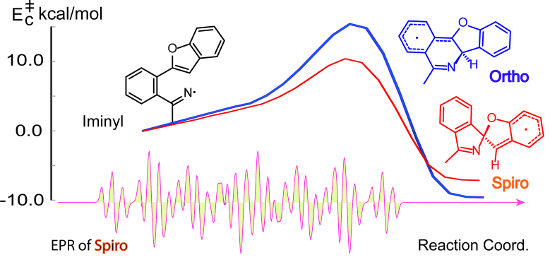
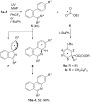
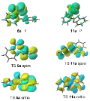
- mol−1 and ksc(300 K) > 5 × 10³ s−1 are obtained (see Supporting Information File 1). The rate constant for 5-exo-cyclisation of the phenylpentenyliminyl radical 15 was reported [34] to be kc(300 K) = 8.8 × 10³ s−1 with Ec = 8.3 kcal mol−1 and therefore, particularly in view of the large resonance
- at 270 K; well above the temperature at which 12a underwent spiro-cyclisation. It follows that kc(300 K) for 5b must be < kc for 12a and this information is included in Table 3. The rate constant for 5-exo-cyclisation the archetype iminyl 15 (Table 3, entry 2) is more than an order of magnitude
- smaller than the rate constant for hex-5-enyl (16, Table 3, entry 1) [49]. Our rates for ortho- (Table 3, entry 5) and spiro- (Table 3, entry 6) cyclisations of iminyls onto aromatics were also slower than for C-centred radicals (Table 3, entries 3 and 4) [50][51]. The pattern of slower cyclisations for




Use of 3-[18F]fluoropropanesulfonyl chloride as a prosthetic agent for the radiolabelling of amines: Investigation of precursor molecules, labelling conditions and enzymatic stability of the corresponding sulfonamides
Beilstein J. Org. Chem. 2013, 9, 1002–1011, doi:10.3762/bjoc.9.115
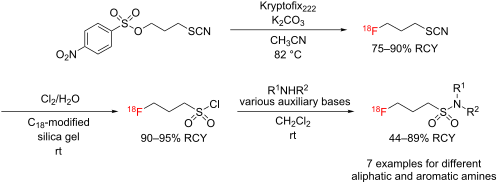
- -first-order rate constant of 0.012 min−1 corresponding to a half-life of 58 min at an enzyme concentration of 1.4 mg/mL. This result demonstrates that the degradation of aromatic fluoroacetamides in vivo can be mediated by carboxylesterase. However, other hydrolases such as arylacetamide deacetylase
- of 3-fluoropropansulfonamide 17 (red) and fluoroacetamide 19 (blue). The pseudo first-order rate constant for the decay of 19 was (0.012 ± 0.001) min−1 corresponding to a half-life of 57.8 min. Data points represent average values from two measurements originating from two independent experiments




Utilizing the σ-complex stability for quantifying reactivity in nucleophilic substitution of aromatic fluorides
Beilstein J. Org. Chem. 2013, 9, 791–799, doi:10.3762/bjoc.9.90
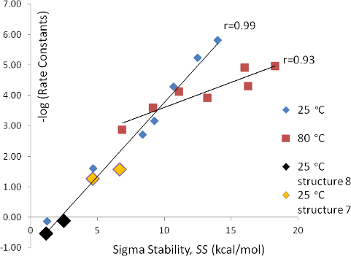
- the SS value for position 3 in reactant 1. This data is presented as entry 12 in Table 1 and it has, as might be expected, a very low predicted reaction rate constant. Experimental kinetic data were given at both 25 °C and 80 °C [28] for reactant 4 in Figure 1, and we tried to include this 80 °C data


Electron and hydrogen self-exchange of free radicals of sterically hindered tertiary aliphatic amines investigated by photo-CIDNP
Beilstein J. Org. Chem. 2013, 9, 437–446, doi:10.3762/bjoc.9.46
- radicals can escape either from the radical-ion pairs or from the pairs of neutral radicals. Each type of radical can undergo self-exchange with ground-state molecules DH (by electron transfer, with rate constant kET; by hydrogen transfer, with rate constant kHT), which does not affect the chemical
- molecule” DH to give an ”unpolarized radical” and a ”polarized substrate molecule” DHpolarized, the concentration of which is monitored. Additionally, the relayed deprotonation (rate constant kdep) transfers polarizations from the radical cation to the α-amino alkyl radical in the same way, but also
- becomes the observed rate constant; the second is that relayed deprotonation is slower than hydrogen self-exchange, in which case it limits the rate for the right-hand-side pathway from to DHpolarized, and the observed rate constant is given by kET + kdep. The absence of a residual polarization with AQ


Inclusion of the insecticide fenitrothion in dimethylated-β-cyclodextrin: unusual guest disorder in the solid state and efficient retardation of the hydrolysis rate of the complexed guest in alkaline solution
Beilstein J. Org. Chem. 2013, 9, 106–117, doi:10.3762/bjoc.9.14
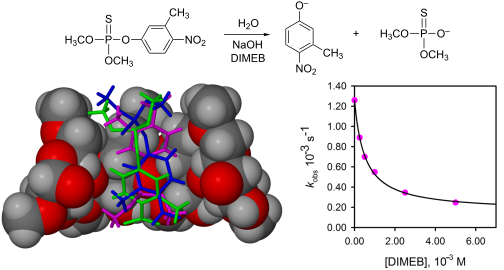
- (DIMEB–), respectively [25]. The observed rate constant for Scheme 2 is shown in Equation 1. The values of the rate and equilibrium constants were obtained by treating the kinetic data as previously published [6] and they are (1.20 ± 0.01) × 10–3 s–1, (0.24 ± 0.04) M–1 s–1 and (1.69 ± 0.09) × 103 M–1






Design and synthesis of a photoswitchable guanidine catalyst
Beilstein J. Org. Chem. 2012, 8, 1825–1830, doi:10.3762/bjoc.8.209
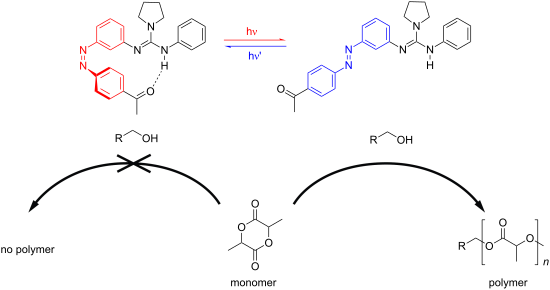
- rate law, the rate constant of the thermal Z→E isomerization at 40 °C was determined to be k(40 °C) = 6.3·10−5 s−1 corresponding to a half-life of τ1/2 = 3 h. The measurement at slightly elevated temperature (40 °C) was necessary since at 25 °C the thermal half-life increases significantly (Supporting
- Information File 1, Figure S-5), leading to distinct difficulties in its determination, e.g., the evaporation of the solvent and the resulting change in concentration. Therefore, the rate constant and thermal half-life at 25 °C could only be estimated by using data points from the first 36 h (Supporting


Molecular solubilization of fullerene C60 in water by γ-cyclodextrin thioethers
Beilstein J. Org. Chem. 2012, 8, 1644–1651, doi:10.3762/bjoc.8.188
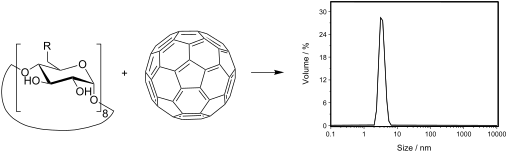
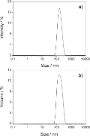
- increase of C60 concentration was monitored by the increase in absorption intensity at 335 nm. The observed first-order dissolution kinetics of C60 came nearly to an end after 7 d, as shown in Figure 3. The obtained rate constant, k = 0.021 h−1 was somewhat higher than the one already found for native γ-CD


A quantitative approach to nucleophilic organocatalysis
Beilstein J. Org. Chem. 2012, 8, 1458–1478, doi:10.3762/bjoc.8.166
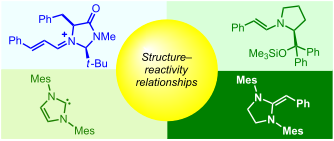
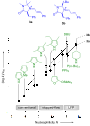
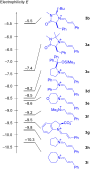
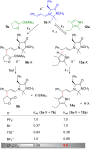
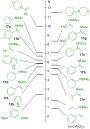
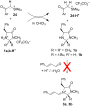
- general base assistance. By studying the kinetics of these reactions in the presence of variable concentrations of 2,6-lutidine, we were able to determine k2, the rate constant for the attack of the iminium ions 3 at the enamides 17. As shown in Figure 13, the rate constants thus determined, agree within
- generally accepted mechanism for enamine activated reactions [65][66][67][68][69][70][71]. A key-step, not necessarily the rate-determining step, is the attack of an electrophile 29 at the enamine 28, at the bottom of Figure 17 [72]. In order to calculate the rate constant for this step by Equation 1 one









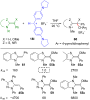
On the bromination of the dihydroazulene/vinylheptafulvene photo-/thermoswitch
Beilstein J. Org. Chem. 2012, 8, 958–966, doi:10.3762/bjoc.8.108
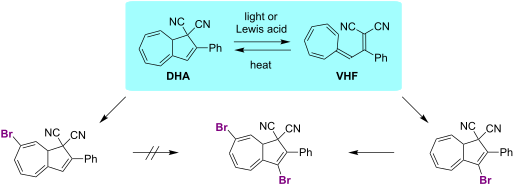
- than after the first conversion. Nevertheless, the decay of the VHF absorption could be fitted to an exponential decay (see Supporting Information File 1). From this fit, we obtained rough estimates of the rate constant and half-life of k = 5.1 × 10⁻⁴ s−1 and t1/2 = 27 min at 50 °C. For comparison, the


Enantioselective supramolecular devices in the gas phase. Resorcin[4]arene as a model system
Beilstein J. Org. Chem. 2012, 8, 539–550, doi:10.3762/bjoc.8.62
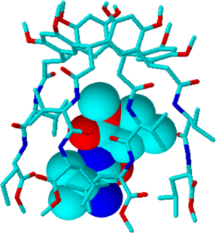
- thermalization, the complex was allowed to stay in the cell for a variable reaction delay and then made to collide with a chiral or achiral reagent B introduced into the cell at a fixed pressure (10−10 to 10−8 mbar, Equation 1). The extraction of the ligand-exchange rate constant is based on the decay of the
- isolated precursor ion [M∙H∙G]+ as a function of time t. If I is the intensity of the precursor [M∙H∙G]+ at the delay time t and I0 is the sum of the signals of [M∙H∙G]+ and [M∙H∙B]+, a monoexponential ln(I/I0) versus t plot is often obtained, whose slope provides the pseudo-first-order rate constant kexp
- for the reaction in Equation 1. The monoexponential decay of an isolated system indicates that either just one reacting species exists or that more than one structure exists but that they react with similar rate constants (different species with a rate-constant ratio of less than 10 are kinetically




Thermodynamic and kinetic stabilization of divanadate in the monovanadate/divanadate equilibrium using a Zn-cyclene derivative: Towards a simple ATP synthase model
Beilstein J. Org. Chem. 2012, 8, 81–89, doi:10.3762/bjoc.8.8
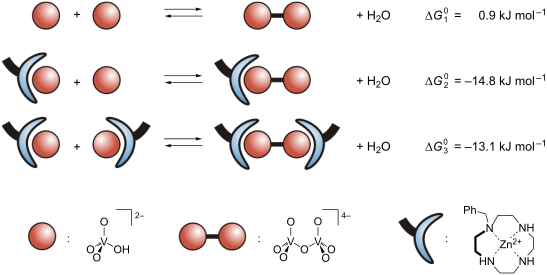
- . The mixing time was 1 ms (Figure 5). The data show a decrease for the pseudo first order rate constant of the condensation (k12 in Equation 14) as well as for the hydrolysis (k21 in Equation 15), while the influence on the rate constant of the hydrolysis is stronger. In the HEPES buffered solution (pH
- 7.6), the rate constant for the condensation decreased from 73 s−1 to 68 s−1 upon the addition of Zn-benzylcyclene (3 mM), while the rate constant for the hydrolysis decreased from 206 s−1 to 89 s−1. Compared to that, in the EPPS buffered solution (pH 8.0), the rate constant for condensation decreased
- from 23 s−1 to 14 s−1 upon the addition of Zn-benzylcyclene 1 (3 mM), while the rate constant for the hydrolysis decreased from 164 s−1 to 70 s−1. The fact that the condensation of monovanadate is slower in the presence of the ligand is probably due to steric reasons. The nucleophilic attack on the