


Search results
Search for "tert-butyl" in Full Text gives 711 result(s) in Beilstein Journal of Organic Chemistry. Showing first 200.
Efficacy of radical reactions of isocyanides with heteroatom radicals in organic synthesis
Beilstein J. Org. Chem. 2024, 20, 2114–2128, doi:10.3762/bjoc.20.182
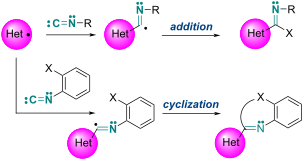
- )hydrazine ((Me3Si)2N–N(SiMe3)2, 10) undergoes ultraviolet light-induced homolysis of the N–N single bond of 10 to form bis(trimethylsilyl)aminyl radical ((Me3Si)2N•, 11). The aminyl radical 11 adds to tert-butyl isocyanide to form the corresponding imidoyl radical 2 (R = t-Bu, E = (Me3Si)2N), as confirmed
- yields. In the case of tert-butyl and benzyl isocyanides, the substituents on the nitrogen of imidoyl radical 2 (R = t-Bu or PhCH2, E = Et2P or Ph2P) were eliminated to give cyanophosphines (R’2P–CN, Scheme 7) [38]. On the other hand, we attempted a photoinduced addition of phosphorus–phosphorus


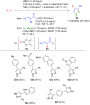
Multicomponent syntheses of pyrazoles via (3 + 2)-cyclocondensation and (3 + 2)-cycloaddition key steps
Beilstein J. Org. Chem. 2024, 20, 2024–2077, doi:10.3762/bjoc.20.178




Harnessing the versatility of hydrazones through electrosynthetic oxidative transformations
Beilstein J. Org. Chem. 2024, 20, 1988–2004, doi:10.3762/bjoc.20.175
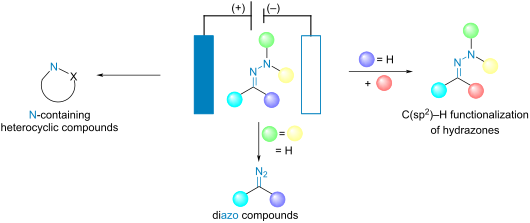
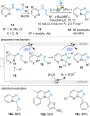
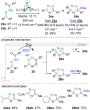
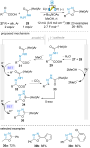
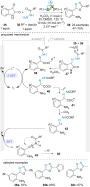
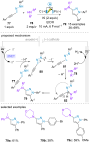
- solvent for ethyl glyoxylate phenylhydrazone 72a while methyl tert-butyl ether was preferred for aromatic and aliphatic aldehyde-derived hydrazones 72b. Styrenes, enamines as well as electron poor aliphatic alkenes were all suitable dipolarophiles. From a mechanistic point of view, the authors proposed
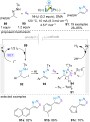
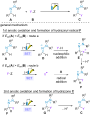
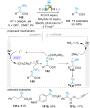
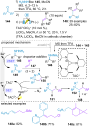
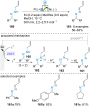
- photocatalyst TAC+. The electrolysis was carried out at a constant cell potential of 1.5 V under white light irradiation. The carbonyl compound 144 was initially treated with tert-butyl carbazate (145) in acetonitrile in the presence of molecular sieves, followed by the addition of trifluoroacetic acid (TFA) to









Novel oxidative routes to N-arylpyridoindazolium salts
Beilstein J. Org. Chem. 2024, 20, 1906–1913, doi:10.3762/bjoc.20.166
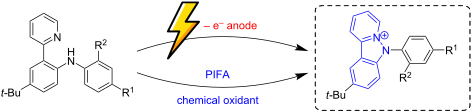
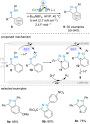
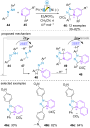
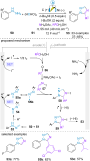
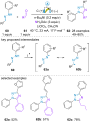
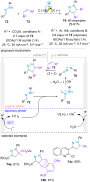
- yields an inseparable mixture [21]. In case of amine S2, the electron-donating tert-butyl group in the para-position compensates the electron-withdrawing influence of the ortho-acyl substituent. This prevents formation of the phenazine byproduct (the ortho-position is occupied) in favor of the targeted


The Groebke–Blackburn–Bienaymé reaction in its maturity: innovation and improvements since its 21st birthday (2019–2023)
Beilstein J. Org. Chem. 2024, 20, 1839–1879, doi:10.3762/bjoc.20.162
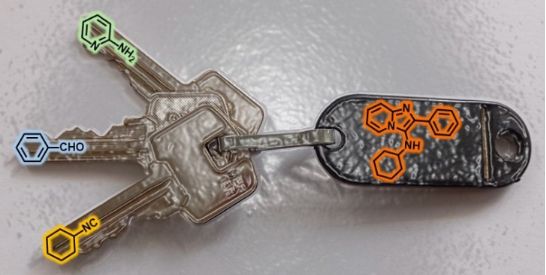
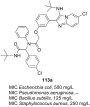
- earth (RE) triflates before the report by Longo et al. [5], who found La and Gd performing better than Eu and Yb, and similarly to Sc in a model reaction between 2-aminopyridine (1), benzaldehyde (2) and tert-butyl isocyanide to give 3 under microwave (MW) heating. However, when methyl isocyanoacetate
- replaced tert-butyl isocyanide, Gd(OTf)3 was superior to La(OTf)3, and again performed similarly to Sc(OTf)3 (Scheme 2). With these results in hand, Longo et al. evaluated the scope and limitations of this lanthanide, obtaining good to excellent results in the synthesis of 23 different GBB adducts, using
- the addition of tert-butyl isocyanide. On the other hand, the addition of tert-butyl isocyanide on the imine altered the orientation of adduct 19, suppressing the interaction with Ser105 (Scheme 8). Very recently, Tyagi et al. reported the double encapsulation of CALB and Pd(PPh3)4 within silica






Chiral bifunctional sulfide-catalyzed enantioselective bromolactonizations of α- and β-substituted 5-hexenoic acids
Beilstein J. Org. Chem. 2024, 20, 1794–1799, doi:10.3762/bjoc.20.158
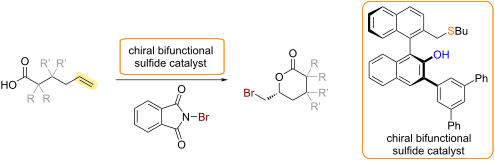
- , respectively). These findings led us to further optimize the hydroxy-type chiral sulfide catalysts of type (S)-1. Substituting an alkyl group on sulfur of catalyst (S)-1 with isobutyl and tert-butyl [(S)-1b and 1c, respectively] decreased enantioselectivity compared with the n-butyl group-substituted catalyst


Methyltransferases from RiPP pathways: shaping the landscape of natural product chemistry
Beilstein J. Org. Chem. 2024, 20, 1652–1670, doi:10.3762/bjoc.20.147
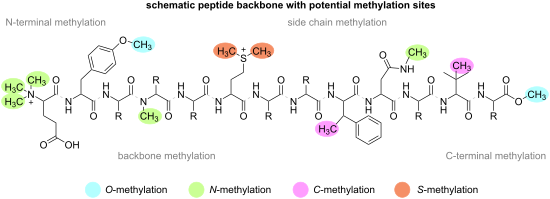
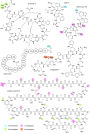
- efficiency. PoyB was proposed to produce the N-terminal tert-butyl group of the polytheonamide A (Figure 4), but later PoyC was demonstrated to be responsible for this modification [111][124]. This structural feature conveys hydrophobicity to the N-terminus and is in line with the decreasing hydrophobicity




Benzylic C(sp3)–H fluorination
Beilstein J. Org. Chem. 2024, 20, 1527–1547, doi:10.3762/bjoc.20.137

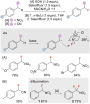
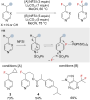
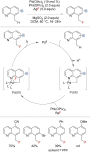
- , generated from reduction of tert-butyl benzoperoxoate (TBPB), selective benzylic HAT afforded the benzylic radical. Subsequent oxidation by Ir(IV) generated the benzylic cation that could be trapped by fluoride to afford the benzyl fluorides. An impressive scope with broad functional group tolerance







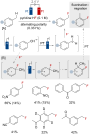

Tetrabutylammonium iodide-catalyzed oxidative α-azidation of β-ketocarbonyl compounds using sodium azide
Beilstein J. Org. Chem. 2024, 20, 1510–1517, doi:10.3762/bjoc.20.135
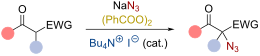
- of the tert-butyl-containing β-ketoester 1a (Table 1 gives an overview of the most significant results obtained hereby). First experiments testing different oxidants in combination with Bu4NI (30 mol %) in 1,2-dichloroethane (DCE), a solvent that we found to be well-suited for oxidative α


Towards an asymmetric β-selective addition of azlactones to allenoates
Beilstein J. Org. Chem. 2024, 20, 1504–1509, doi:10.3762/bjoc.20.134
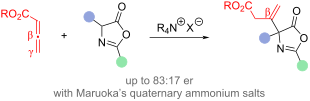
- investigated the generality of this protocol. As outlined in Scheme 2, differently substituted allenoates were reasonably well tolerated (see products 5a–d), albeit some erosion in enantioselectivity was observed when using a tert-butyl ester containing allenoate (product 5d). Various α-arylmethyl-substituted


Synthesis of 2-benzyl N-substituted anilines via imine condensation–isoaromatization of (E)-2-arylidene-3-cyclohexenones and primary amines
Beilstein J. Org. Chem. 2024, 20, 1468–1475, doi:10.3762/bjoc.20.130
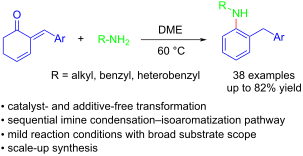
- study began with the preparation of the (E)-2-arylidene-3-cyclohexenones 2 via DMAP-catalyzed elimination reaction of 2-cyclohexenone-MBH alcohols 1 and di-tert-butyl dicarbonate [22] as depicted in Scheme 2. Starting materials 2 were prepared in moderate to high yields. Next, we chose (E)-2


Synthesis of 4-functionalized pyrazoles via oxidative thio- or selenocyanation mediated by PhICl2 and NH4SCN/KSeCN
Beilstein J. Org. Chem. 2024, 20, 1453–1461, doi:10.3762/bjoc.20.128
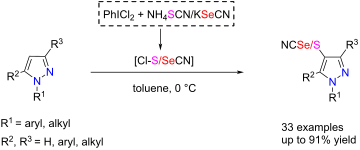
- substituents (R2 and R3), albeit the reaction afforded product 2n in a much lower yield, possibly caused by steric congestion. In addition, when the aryl substituent of R1 was replaced with a tert-butyl group, this method also worked well to give product 2o in moderate yield. Notably, when the C3 and C5


Rapid construction of tricyclic tetrahydrocyclopenta[4,5]pyrrolo[2,3-b]pyridine via isocyanide-based multicomponent reaction
Beilstein J. Org. Chem. 2024, 20, 1436–1443, doi:10.3762/bjoc.20.126
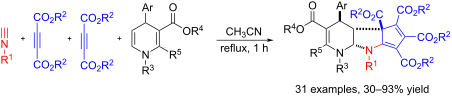
- . Under the optimized reaction conditions, the scope of the reaction was developed by using various substrates. The results are summarized in Table 2. At first, several alkyl isocyanides such as cyclohexyl, tert-butyl and benzyl isocyanide have been successfully employed in the reaction. Dimethyl but-2


Synthesis of cyclic β-1,6-oligosaccharides from glucosamine monomers by electrochemical polyglycosylation
Beilstein J. Org. Chem. 2024, 20, 1421–1427, doi:10.3762/bjoc.20.124

- the thioglycoside monomer 14 (Scheme 3) [17][18]. The electrochemical polyglycosylation of 14 was carried out in the presence of 2,6-di-tert-butyl-4-methylpyridine (DTBMP) to ensure the formation of a β-glycosidic bonds [19]. Although we could suppress formation of 1,6-anhydrosugar 15, cyclic


Generation of alkyl and acyl radicals by visible-light photoredox catalysis: direct activation of C–O bonds in organic transformations
Beilstein J. Org. Chem. 2024, 20, 1348–1375, doi:10.3762/bjoc.20.119
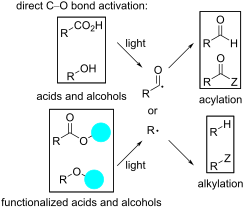
- components, such as various acrylates, α,β-unsaturated acids, enones, enals, acrylamides, vinyl phosphonates, and vinyl sulfones. Various cesium salts of oxalates also performed well using this protocol. Isopropyl and tert-butyl groups present in an adjacent position of oxalates do not disturb the reaction








Transition-metal-catalyst-free electroreductive alkene hydroarylation with aryl halides under visible-light irradiation
Beilstein J. Org. Chem. 2024, 20, 1327–1333, doi:10.3762/bjoc.20.116
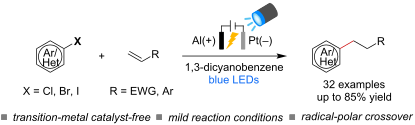
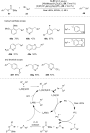
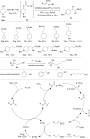
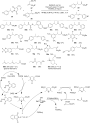
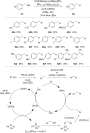
- found to be suitable coupling partners. Aryl chloride 1a reacted with tert-butyl acrylate (2b) without any difficulty, providing 3ab in a high yield. Methacrylamide (2c) and acrylonitrile (2d) were transformed into the corresponding products in high yields, but with slightly lower Faradaic efficiency


Synthesis of indano[60]fullerene thioketone and its application in organic solar cells
Beilstein J. Org. Chem. 2024, 20, 1270–1277, doi:10.3762/bjoc.20.109
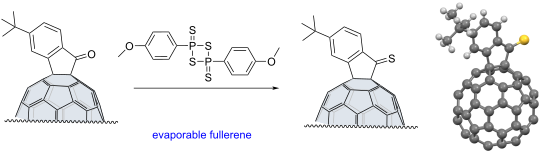
- para-substituents were used and the reaction from FIDO to FIDS was found to tolerate both electron-donating and -withdrawing functional groups as shown in Table 2. It is well known that functional groups with larger steric hindrance can reduce intermolecular forces. Consequently, a tert-butyl
- ) was determined by analyzing the onset of weight loss for these compounds. Tsub was lower for t-Bu-FIDO and t-Bu-FIDS, at 410 °C and 417 °C, respectively, than for C60, which began to sublimate at 460 °C (Table 3). The lower sublimation temperature was attributed to the steric hindrance of the tert
- -butyl groups, which disrupted the π–π stacking between the fullerene cages. The slight difference in sublimation temperature between t-Bu-FIDO and t-Bu-FIDS might be due to the slightly higher electron density of the sulfur atom compared with the oxygen atom. Additionally, data on the degradation


Bismuth(III) triflate: an economical and environmentally friendly catalyst for the Nazarov reaction
Beilstein J. Org. Chem. 2024, 20, 1167–1178, doi:10.3762/bjoc.20.99
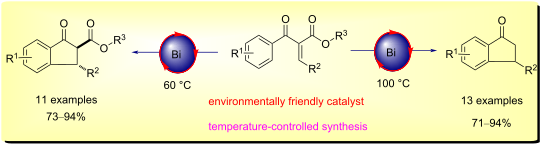
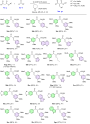
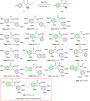
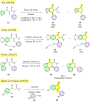
- decarboxylation directed by bismuth triflate at 100 °C. Synthesis of 3-aryl-1-indanones. aIsolated yield after purification using silica gel column chromatography. bReaction performed at 60 °C. cFrom tert-butyl Knoevenagel derivative. Basic protocol: The Knoevenagel product 9 (0.5 mmol), dry acetonitrile (2 mL




Manganese-catalyzed C–C and C–N bond formation with alcohols via borrowing hydrogen or hydrogen auto-transfer
Beilstein J. Org. Chem. 2024, 20, 1111–1166, doi:10.3762/bjoc.20.98
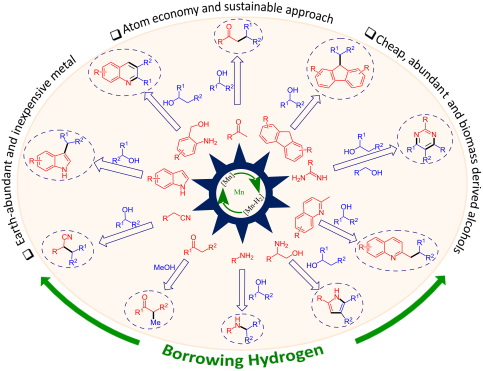
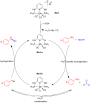
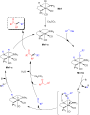
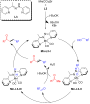
- way, alkylation of tert-butyl acetate with numerous alcohols was also tested using catalyst Mn18 (5 mol %), t-BuOK (2 equiv) in toluene at 100 °C for 4 h and gave moderate yields of 39 to 61%. Compared to the alkylation of amides, the alkylation of esters required higher catalyst and base loading
- . However, the reaction proceeded at a low temperature and less reaction time (Scheme 51). In addition, Balaraman and co-workers reported the C-alkylation of unactivated amides and tert-butyl acetate using primary alcohols as alkylating agents catalyzed by an aliphatic PNP-Mn pincer catalyst [79]. Various
- alcohols, including aliphatic alcohols, were coupled with N,N-dimethylacetamide using low catalyst loading (0.5 mol % Mn21) and t-BuOK as base (1.2 equiv) at 110 °C for 16 h and furnished the products in good yields (up to 88%). The alkylation of tert-butyl acetate with alcohols under the same reaction























Kinetically stabilized 1,3-diarylisobenzofurans and the possibility of preparing large, persistent isoacenofurans with unusually small HOMO–LUMO gaps
Beilstein J. Org. Chem. 2024, 20, 1099–1110, doi:10.3762/bjoc.20.97
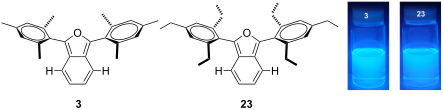
- substituents, respectively, were also attempted but without success. In these cases, the sterically congesting ortho isopropyl and tert-butyl groups stymie the Friedel–Crafts acylation step leading to diketone (Scheme 1). Experimental and computational studies of 1,3-diarylisoacenofurans Purified
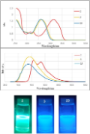
- isoacenofurans. Thus, unless there is a need for improved kinetic stabilization of the most reactive 1,3-carbons on the furan ring, there appears little benefit of utilizing highly hindered 2’,4’,6’-triisopropyl (compound 24) or 2’,4’,6’-tri-tert-butyl (compound 25) substituents, especially as these compounds






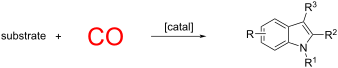
Carbonylative synthesis and functionalization of indoles
Beilstein J. Org. Chem. 2024, 20, 973–1000, doi:10.3762/bjoc.20.87
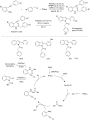
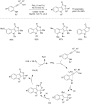
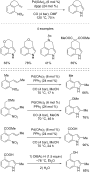
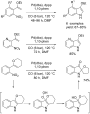
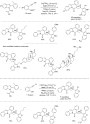
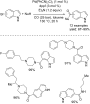
- the presence of Ni(dme)Cl2 (a nickel(II) chloride ethylene glycol dimethyl ether complex), dtbbpy (4,4-di-tert-butyl-2,2-dipyridyl), Zn(0) and ZnI2 in DMF at 120 °C [42] (Scheme 22). The nickel catalyst catalyzed the oxidative addition and CO insertion on aryl iodide compounds, while the Zn/ZnI2












Innovative synthesis of drug-like molecules using tetrazole as core building blocks
Beilstein J. Org. Chem. 2024, 20, 950–958, doi:10.3762/bjoc.20.85
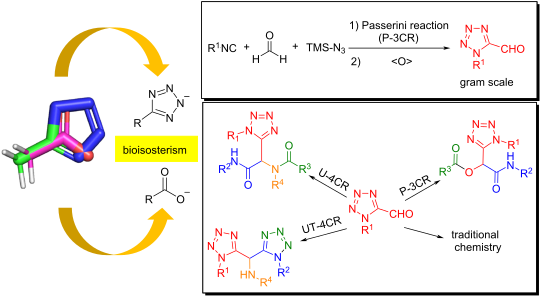
- isocyanide component (Scheme 1). Aliphatic isocyanides, such as tert-octyl and tert-butyl isocyanide (1b and 1c) were well-tolerated in the Passerini-tetrazole reaction, leading to the corresponding tetrazole products in moderate to good yields of 74% and 52%, respectively. β-Cyanoethyl isocyanide (1d) was
- also well tolerated providing a good yield (62%). The tolerability of different isocyanides, and the possibility to remove the cleavable isocyanides under different reaction conditions (acidic for the tert-octyl and tert-butyl isocyanide, basic for β-cyanoethyl isocyanide, or reductive for the benzyl
- smoothly and provided moderate to excellent yields of 58–83%. Among this, the tert-octyl-substituted aldehyde exhibited excellent product transformation with a yield of 83% of 3e. Various isocyanides such as benzyl, phenylethyl, tert-octyl and tert-butyl isocyanides participated in the reaction with




One-pot Ugi-azide and Heck reactions for the synthesis of heterocyclic systems containing tetrazole and 1,2,3,4-tetrahydroisoquinoline
Beilstein J. Org. Chem. 2024, 20, 912–920, doi:10.3762/bjoc.20.81
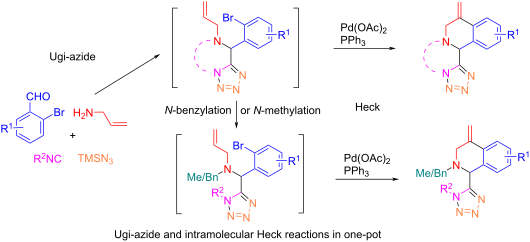
- the reported procedures [41], the Ugi-azide reaction of 2-bromobenzaldehyde (1a, 1 mmol), allylamine hydrochloride (2, 1 mmol), trimethylsilyl azide (3, 1 mmol) and tert-butyl isocyanide (4a, 1 mmol) in MeOH at 40 °C for 24 h afforded 1,5-DS-1H-T 5a in 92% yield after chromatography purification. Our
- mmol), trimethylsilyl azide (3, 1 mmol), and tert-butyl isocyanide (4a, 1 mmol) was stirred in MeOH at 40 °C for 24 h, and after the reaction was completed, the solvent was evaporated under vacuum to give crude Ugi adduct 5a which was used for the intramolecular Heck reaction without further
- . Experimental General procedure for the synthesis of Ugi-azide adduct 5a A solution of 2-bromobenzaldehyde 1 (1 mmol, 1 equiv), allylamine hydrochloride (2, 1 mmol, 1 equiv), trimethylsilyl azide (3, 1 mmol, 1 equiv) and tert-butyl isocyanide 4a (1 mmol, 1 equiv) in MeOH (5 mL) with Et3N (1.5 mmol) was heated


(Bio)isosteres of ortho- and meta-substituted benzenes
Beilstein J. Org. Chem. 2024, 20, 859–890, doi:10.3762/bjoc.20.78
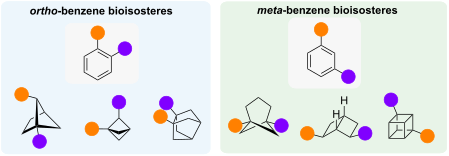
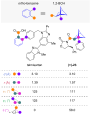
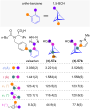
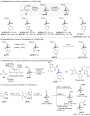
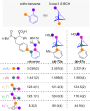
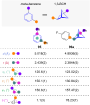
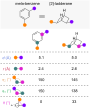
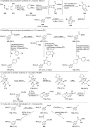
- -workers, and was accessed over 8 steps from diene 161 (Scheme 17A) [51]. Diels–Alder reaction of diene 161 and di-tert-butyl azodicarboxylate (160) followed by palladium-assisted elimination of acetic acid gave diene 162. A sequence of 4π-electrocyclisation and electrophilic transcarbamation (to 163














Ortho-ester-substituted diaryliodonium salts enabled regioselective arylocyclization of naphthols toward 3,4-benzocoumarins
Beilstein J. Org. Chem. 2024, 20, 841–851, doi:10.3762/bjoc.20.76
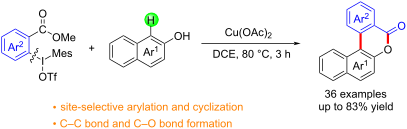
- 3au and 3av were produced in 34% and 39% yields, respectively, in which methoxy and tert-butyl groups were located in the para position to the hydroxy group (Table 2, entries 20 and 21). In the case of 3al, the mono-arylation of naphthol generated 3al’ in 20% isolated yield, which is the reason for





