


Search results
Search for "three-dimensional" in Full Text gives 182 result(s) in Beilstein Journal of Organic Chemistry.
Halide metathesis in overdrive: mechanochemical synthesis of a heterometallic group 1 allyl complex
Beilstein J. Org. Chem. 2019, 15, 1856–1863, doi:10.3762/bjoc.15.181
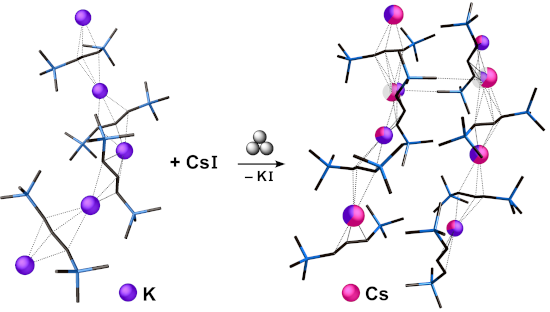
- -tri(tert-butyl)phenolate], for example, a Cs…CH3 contact of 3.596(5) Å contributes to its form as a 1D coordination polymer [33]. In the caesium salt of the gallium metallate [Cs(toluene)2{CN(GaMe3)2}], multiple Cs…CH3 interactions in the range from 3.54–3.64 Å help generate its three-dimensional


Synthesis and conformational preferences of short analogues of antifreeze glycopeptides (AFGP)
Beilstein J. Org. Chem. 2019, 15, 1581–1591, doi:10.3762/bjoc.15.162
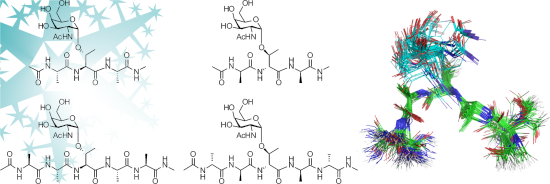
- antifreeze activity, as well as to clarify the influence of hydrogen bonds on the preferred conformation of the molecule. Model AFGP analogues were investigated by NMR in order to elucidate the stereochemical influence of the amino acid configuration on the three-dimensional structure of the glycopeptides. A
- synthesis, the best yields were achieved for incorporation of natural amino acids into the peptide chain, where 1.2 equiv of glycosylated threonine were applied. NMR measurements were performed in order to elucidate the stereochemical influence of the amino acid configuration on the three-dimensional


Cyclobutane dication, (CH2)42+: a model for a two-electron four-center (2e-4c) Woodward–Hoffmann frozen transition state
Beilstein J. Org. Chem. 2019, 15, 1475–1479, doi:10.3762/bjoc.15.148
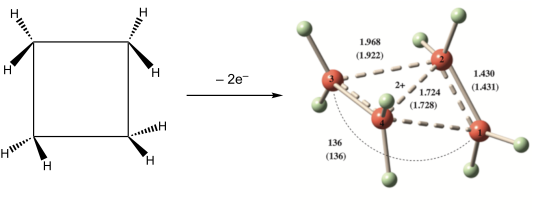
- . The various levels of calculations including MP2/6-31G* indicated that the structure vi was not a minimum [11]. The 1,3-dehydro-5,7-adamantanediyl dication (iii) [7] with 2e-4c bonding was generated and identified by 13C NMR spectroscopic and theoretical methods corresponding to a three dimensional


Photochemical generation of the 2,2,6,6-tetramethylpiperidine-1-oxyl (TEMPO) radical from caged nitroxides by near-infrared two-photon irradiation and its cytocidal effect on lung cancer cells
Beilstein J. Org. Chem. 2019, 15, 863–873, doi:10.3762/bjoc.15.84
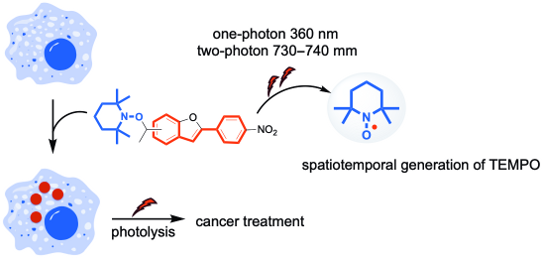
- issues can be solved by using the NIR-two-photon (TP) excitation technique [44], in which a molecule is electronically excited to the same state generated by one-photon (OP) excitation in the UV–vis region [45]. In addition to the advantages of TP excitation, three-dimensional control of the electronic




Application of olefin metathesis in the synthesis of functionalized polyhedral oligomeric silsesquioxanes (POSS) and POSS-containing polymeric materials
Beilstein J. Org. Chem. 2019, 15, 310–332, doi:10.3762/bjoc.15.28
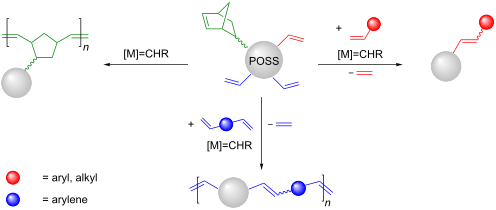
- edges, chemically bonded with eight different or similar organic substituents so that it represents a truly hybrid architecture. The cubic silsesquioxane unit is characterized by a three-dimensional nanoscopic size structure with approximate Si–Si distance equal to 0.5 nm and an approximate R–R distance


Adhesion, forces and the stability of interfaces
Beilstein J. Org. Chem. 2019, 15, 106–129, doi:10.3762/bjoc.15.12
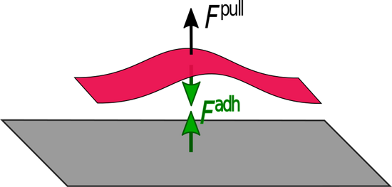
- metallic nanotubes with easily polarizable electron densities, and they are less frequently found in three-dimensional metals [35][37][38]. Delocalized density fluctuations allow for the induction of large dipoles or higher multipoles that enhance weak molecular interaction: It is characteristic of


Lectins of Mycobacterium tuberculosis – rarely studied proteins
Beilstein J. Org. Chem. 2019, 15, 1–15, doi:10.3762/bjoc.15.1
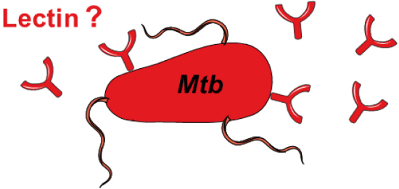
- Streptomyces olivaceoviridis) [77][78]. This secreted protein was crystallized in 2010 by Patra et al., however, a three-dimensional structure has yet to be resolved [79]. Recently Nogueira et al. detected high titers of IgG antibodies against sMTL-13 in sera from TB patients, a response found to be diminished


Ring-opening metathesis of some strained bicyclic systems; stereocontrolled access to diolefinated saturated heterocycles with multiple stereogenic centers
Beilstein J. Org. Chem. 2018, 14, 2698–2707, doi:10.3762/bjoc.14.247
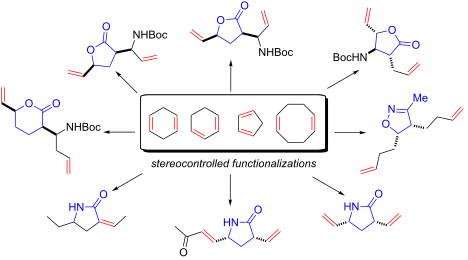
- of attention in synthetic organic chemistry, affording access to various highly functionalized, alkenylated molecular entities [1][2][3][4][5][6][7][8][9][10]. Highly functionalized three-dimensional organic scaffolds with multiple stereogenic centers as small molecular entities represent an
- multiple stereogenic centers thus synthesized can be considered interesting scaffolds for further transformations in view of the access of novel three-dimensional functionalized scaffolds through cross-metathesis (CM). An illustrative example is shown on Scheme 7. Divinylated γ-lactam (±)-19 selected as a
- stereogenic centers. The resulting diolefinated aminolactones, isoxazolines or lactam derivatives with multiple stereogenic centers might be considered to be interesting highly-functionalized three-dimensional compounds for further derivatizations. Extensions of the ROM of various bicyclic, conformationally


Impact of Pseudomonas aeruginosa quorum sensing signaling molecules on adhesion and inflammatory markers in endothelial cells
Beilstein J. Org. Chem. 2018, 14, 2580–2588, doi:10.3762/bjoc.14.235
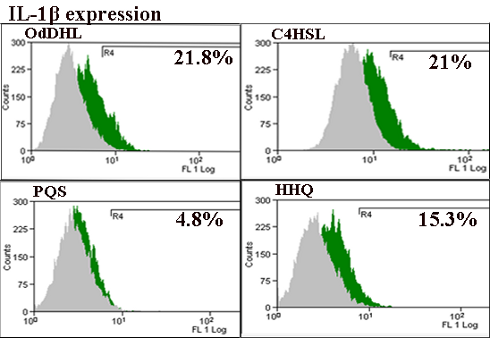
- deficient strains differ in size and stability of the structure, being more flexible due to the production of QS-regulated extracellular DNA [8], which acts as a stabilizer of three-dimensional biofilm structure [8]. In patients with cystic fibrosis, the growth of bacteria in biofilm determines aggravation


Calixazulenes: azulene-based calixarene analogues – an overview and recent supramolecular complexation studies
Beilstein J. Org. Chem. 2018, 14, 2488–2494, doi:10.3762/bjoc.14.225
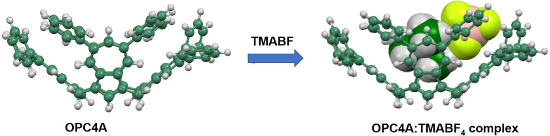
- relatively facile and reproducible syntheses of the classical calix[n]arenes 1 in which n = 4, 6 or 8, with phenolic groups linked or bridged via methylene groups to form defined three-dimensional basket-like cavities with “upper” or “lower” rims, were developed by Gutsche and co-workers [4][5][6]. As a


Nucleoside macrocycles formed by intramolecular click reaction: efficient cyclization of pyrimidine nucleosides decorated with 5'-azido residues and 5-octadiynyl side chains
Beilstein J. Org. Chem. 2018, 14, 2404–2410, doi:10.3762/bjoc.14.217
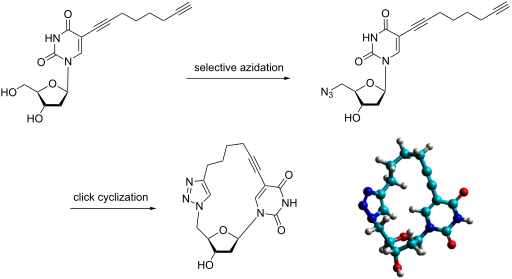
- = 173°) [48] adopt an anti-conformation [49]. The conformation of the 2’-deoxyribofuranosyl moiety of 8 shows an C3’-endo envelope pucker (4E, N-type) in the solid state with a pseudorotational phase angle P = 50.2(2)° and a maximum amplitude of τm = 38.7(1)°. The extended structure forms a three
- -dimensional network consisting of a linear unit connected by hydrogen bonds between N3–H and the triazole N3’’ of a second molecule (Figure 3, Supporting Information File 1, Figures S3 and S4). Additionally, the molecules are bridged by water molecules connecting O2 of the base moiety and N2’’ of the triazole


Synthesis and post-functionalization of alternate-linked-meta-para-[2n.1n]thiacyclophanes
Beilstein J. Org. Chem. 2018, 14, 2190–2197, doi:10.3762/bjoc.14.192
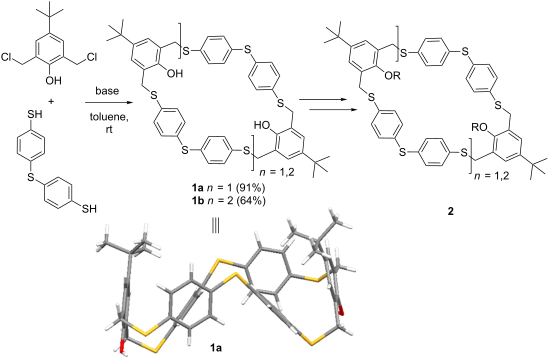
- ; Introduction The ability of cyclophanes to form three-dimensional cavities is interesting for various potential applications, e.g., as supramolecular hosts. Synthetic procedures towards novel cyclophanes have attracted much interest in the scientific community [1][2][3][4]. An interesting subclass of


Evaluation of dispersion type metal···π arene interaction in arylbismuth compounds – an experimental and theoretical study
Beilstein J. Org. Chem. 2018, 14, 2125–2145, doi:10.3762/bjoc.14.187
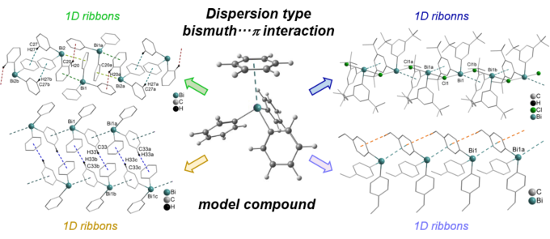
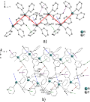
- of a neighboring molecule in a way that each bismuth atom interacts with three oxygen atoms of different neighbors. In the resulting three-dimensional structure, one molecule of 3 interacts with six other molecules (Figure 6b). Similar Bi···O interactions are also found in tris(2-methoxyphenyl)- and




A self-assembled photoresponsive gel consisting of chiral nanofibers
Beilstein J. Org. Chem. 2018, 14, 1994–2001, doi:10.3762/bjoc.14.174
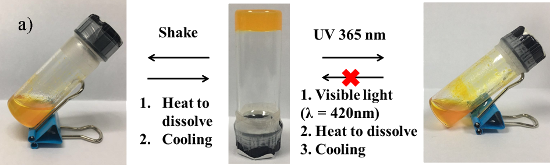
- by three-dimensional networks through self-assembly have drawn significant attention in the past decades. They are normally fabricated by means of noncovalent intermolecular interactions [3], such as π–π stacking, hydrogen bonding, van der Waals forces, hydrophobic, electrostatic, host–guest and


Recent applications of chiral calixarenes in asymmetric catalysis
Beilstein J. Org. Chem. 2018, 14, 1389–1412, doi:10.3762/bjoc.14.117
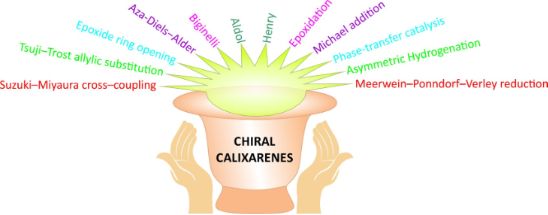
- Analysis Technological Application and Research Center (UBATAM), Usak University, Usak, Turkey Vocational School of Health Services, Usak University, 64200 Usak, Turkey 10.3762/bjoc.14.117 Abstract The use of calixarenes in asymmetric catalysis is receiving increasing attention due to their tunable three
- -dimensional molecular platforms along with their easy syntheses and versatile modification at the upper and lower rims. This review summarizes the recent progress of synthesis and use of chiral calixarenes in asymmetric syntheses which emerged later than 2010. Keywords: asymmetric catalysis; chiral


Nanoreactors for green catalysis
Beilstein J. Org. Chem. 2018, 14, 716–733, doi:10.3762/bjoc.14.61
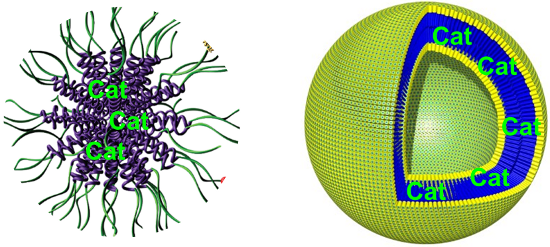
- tuned by varying their initial molecular components or the number of generations they possess [91][92]. They can assemble in a spherical shape, and within the three-dimensional structure, an interior void is present wherein to accommodate other molecules [93]. Catalysis in dendrimers: The controlled


Solvent-free copper-catalyzed click chemistry for the synthesis of N-heterocyclic hybrids based on quinoline and 1,2,3-triazole
Beilstein J. Org. Chem. 2017, 13, 2352–2363, doi:10.3762/bjoc.13.232
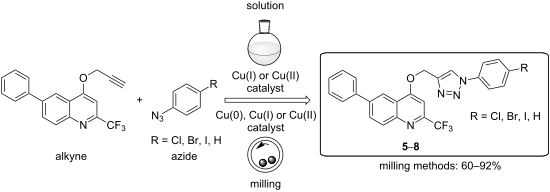
- notation as R22(18) [54]. Although the same motif formed by the analogous hydrogen bond is observed in other three structures (Table S3, Supporting Information File 1), the final supramolecular structures of 5–8 differ, from one-dimensional chains to three-dimensional network. It should be mentioned that



Synthesis and application of trifluoroethoxy-substituted phthalocyanines and subphthalocyanines
Beilstein J. Org. Chem. 2017, 13, 2273–2296, doi:10.3762/bjoc.13.224
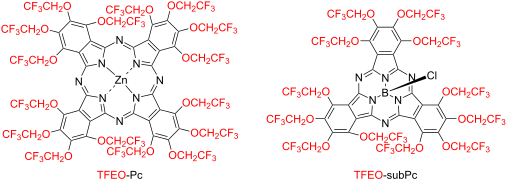
- composed of three isoindoline units. The only central element of subphthalocyanine is boron, and it has a ligand in the axial direction on the boron. Since subphthalocyanines have excellent spectroscopic properties and a unique three-dimensional structure, it is expected that they will be applied to
- various fields [126][127][128], alongside phthalocyanines. However, the solubility of subphthalocyanines is not very high despite of the non-aggregation phenomenon due to their three-dimensional structure. On the other hand, since trifluoroethoxy-substituted subphthalocyanines (TFEO-subPcs) have high








Conformational impact of structural modifications in 2-fluorocyclohexanone
Beilstein J. Org. Chem. 2017, 13, 1781–1787, doi:10.3762/bjoc.13.172

- , while organic fluorine plays a fundamental role in the design of performance organic molecules. Since these features are dependent on the three-dimensional chemical structure of a molecule, simple structural modifications can affect its conformational stability and, consequently, the corresponding


2-Methyl-2,4-pentanediol (MPD) boosts as detergent-substitute the performance of ß-barrel hybrid catalyst for phenylacetylene polymerization
Beilstein J. Org. Chem. 2017, 13, 1498–1506, doi:10.3762/bjoc.13.148
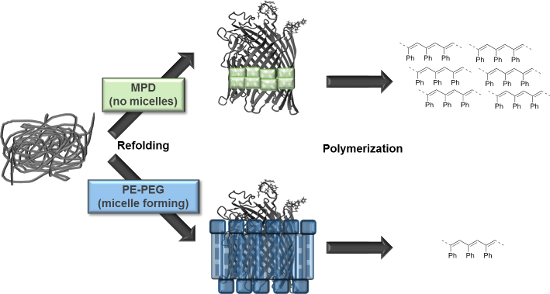
- can destroy the three dimensional structure and cause protein precipitation [19][20][21]. To avoid precipitation when using nonpolar substrates, the protein concentration usually is decreased leading to a loss in activity. As an example, the polymerization of phenylacetylene was achieved in water by


A speedy route to sterically encumbered, benzene-fused derivatives of privileged, naturally occurring hexahydropyrrolo[1,2-b]isoquinoline
Beilstein J. Org. Chem. 2017, 13, 1413–1424, doi:10.3762/bjoc.13.138
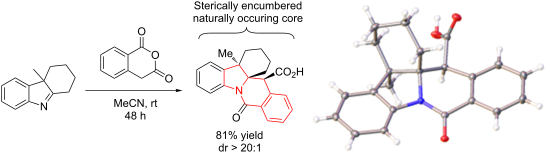
- hexahydropyrrolo[1,2-b]isoquinolone derivatives fused with benzene 10 that have pronounced three-dimensional features and potentially contain several quaternary carbon centers (Figure 2). The first aspect has been recently recognized [29] as a central principle in drug design ensuring effective interaction of


Detection of therapeutic radiation in three-dimensions
Beilstein J. Org. Chem. 2017, 13, 1325–1331, doi:10.3762/bjoc.13.129
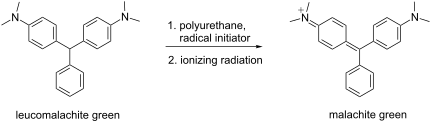
- John A. Adamovics Department of Chemistry, Biochemistry and Physics, Rider University, 2083 Lawrenceville Road, Lawrenceville, NJ 08648-3099, USA 10.3762/bjoc.13.129 Abstract For over the last twenty years there has been a multitude of sophisticated three-dimensional radiation delivery procedures
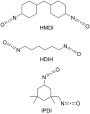
- developed which requires a corresponding verification of the impact on patients. This article reviews the state of the art in the development of chemical detectors used to characterize the three-dimensional shape of therapeutic radiation. These detectors are composed of polyurethane, radical initiator and a
- made in developing chemical-based three-dimensional radiation detection systems but as of this review these dosimeters are primarily used in clinical research settings. This is partially due to the lack of a viable commercially available OCT scanner and availability of alternative semi-3D radiation




Glycoscience@Synchrotron: Synchrotron radiation applied to structural glycoscience
Beilstein J. Org. Chem. 2017, 13, 1145–1167, doi:10.3762/bjoc.13.114
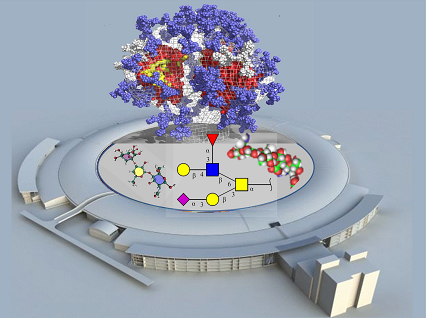
- the wavelength to reach the values that are optimum for a given experiment provides the most powerful way to determine the three-dimensional features of macromolecular structures. Diffraction performed at an energy close to a heavy element absorption edge produces a resonant effect for which scattered
- 1930, the first crystal structures of organic compounds to be investigated were carbohydrates of low molecular weight. Over the following years, only eight additional crystal structures were reported. The determination of the three dimensional structure of the dehydrated form of sucrose, in 1947, was
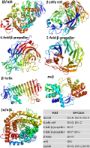
- technique’s high resolution, new possibilities exist, such as the investigations of the occurrence of phase transitions in large macromolecules as a function of temperature. Macromolecular structures X-ray diffraction with synchrotron radiation is the most powerful method for revealing the three-dimensional




From chemical metabolism to life: the origin of the genetic coding process
Beilstein J. Org. Chem. 2017, 13, 1119–1135, doi:10.3762/bjoc.13.111
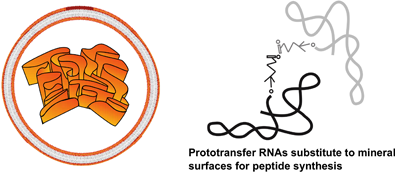
- atomic composition of matter: N for nitrogen, Fe, for iron, C for carbon). Thus a chemical molecule is information-rich. sn-Glycerol-3-phosphate can be described, including an outline of its three-dimensional configuration, by a limited alphabet of symbols (e.g., the Simplified Molecular Input Line Entry



Total syntheses of the archazolids: an emerging class of novel anticancer drugs
Beilstein J. Org. Chem. 2017, 13, 1085–1098, doi:10.3762/bjoc.13.108
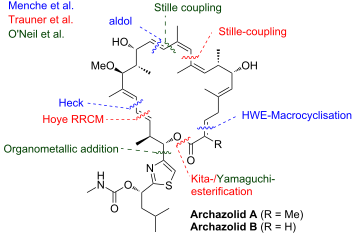
- three dimensional conformation of the archazolids by NMR methods, molecular modelling and chemical derivatizations [59][60]. During these studies, they became aware that C2–C5 diene of acyclic analogs would be very labile towards isomerization. However, such processes would be suppressed in the





