


Search results
Search for "C-" in Full Text gives 4067 result(s) in Beilstein Journal of Organic Chemistry. Showing first 200.
Rapid access to the core of malayamycin A by intramolecular dipolar cycloaddition
Beilstein J. Org. Chem. 2025, 21, 2542–2547, doi:10.3762/bjoc.21.196
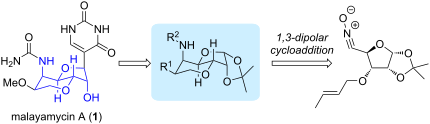
- as alternatives to existing fungicides as well as enhancing the control spectrum and persistence [3]. A group of scientists at Syngenta reported a bicyclic perhydrofuropyran C-nucleoside malayamycin A (1) from the soil bacterium Streptomyces malaysiensis [4] (Figure 1). This novel compound was found
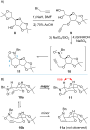
- from the INOC cycloaddition can be converted to a single stereoisomer of 20. With all required stereogenic centers embedded in the 6-5 trans-fused bicyclic skeleton, the remaining problem is converting C to O to install the secondary alcohol at C2 with retention of the β-configuration. The programmed




Synthesis and characterization of a isothiouronium-calix[4]arene derivative: self-assembly and anticancer activity
Beilstein J. Org. Chem. 2025, 21, 2535–2541, doi:10.3762/bjoc.21.195
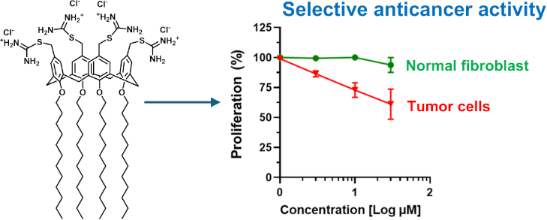
- class of interest in the search for new chemotherapeutic agents. They are known inhibitors of protein kinase C [40] and agonists of the GABA-type [41] and histamine-H3 receptors [42]. S-Allylic isothiouronium salts substituted with aliphatic groups have shown to combine high antitumor activity against
- and characterization of compound 3 For the synthesis of isothiouronium-calix[4]arene derivative 3 (Scheme 1), the chloromethylcalix[4]arene derivative 2 was prepared by adopting a procedure reported in the literature [44]. In brief, starting from the commercial p-H-calix[4]arene 1, four C-12 alkyl
- purchased from Sigma-Aldrich (Milan, Italy) and used without further purification. Human renal adenocarcinoma 786-O cells were obtained from the American Type Culture Collection (ATCC; Manassas, VA, USA). Cells (passages 2-10) were maintained at 37 °C (5% CO2) in RPMI 1640 medium, containing 10% FBS, 2 mM ʟ


Pentacyclic aromatic heterocycles from Pd-catalyzed annulation of 1,5-diaryl-1,2,3-triazoles
Beilstein J. Org. Chem. 2025, 21, 2524–2534, doi:10.3762/bjoc.21.194
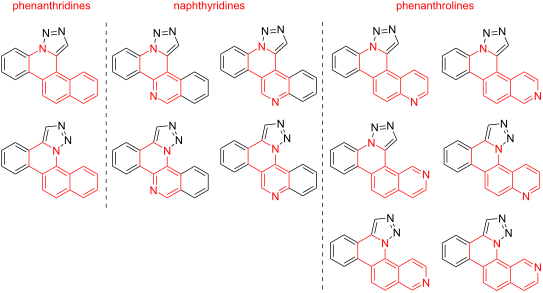
- isoquinoline subunits. Heterocycle subunit identity and triazole C/N connectivity influenced the annulation reaction efficiency. Aromatic π-system expansion resulting from annulation was characterized by NMR, absorption and emission spectroscopy. Five benzotriazolophenanthroline regioisomers sharing structural


Isoorotamide-based peptide nucleic acid nucleobases with extended linkers aimed at distal base recognition of adenosine in double helical RNA
Beilstein J. Org. Chem. 2025, 21, 2513–2523, doi:10.3762/bjoc.21.193
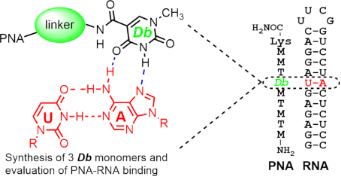
- distal binding monomers (Db) demonstrated slightly higher affinity for A–U base pairs while one demonstrated slightly higher affinity for the G–C base pair. These results provide insight into the nature of PNA monomer design particularly around linker design and rigidity. Keywords: Hoogsteen hydrogen
- possible base pairs (G–C, A–U, C–G, and U–A). Notably, each synthetic nucleobase takes advantage of favorable hydrogen bonding interactions to the proximal nucleobase in the Watson–Crick base pair. Strong binding has been reported for purine recognition given the propensity for two Hoogsteen hydrogen bonds
- , and Db3 were identified as targets (Figure 5). These monomers were informed by the linker design for V, which formed a stabilizing hydrogen bond between the linker NH and C=O of a linker connecting an adjacent M base to PNA backbone (vide infra) [33]. As a result, we sought to explore multiple N–H


Effect of a photoswitchable rotaxane on membrane permeabilization across lipid compositions
Beilstein J. Org. Chem. 2025, 21, 2498–2512, doi:10.3762/bjoc.21.192
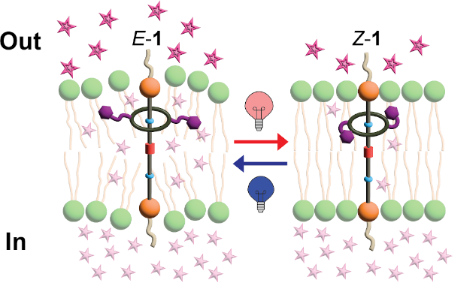
- rotaxane 1 [15]. We examined whether dye release in DPPC LUVs could be enhanced by increasing the temperature above the lipid’s phase transition temperature (Tm = 41 °C) (Supporting Information File 1, S2.4). Below Tm, DPPC is in the gel phase (Lβ), where the hydrocarbon chains are highly ordered, forming
- rigid bilayers that limit dye release. Above Tm, DPPC transitions to the liquid-crystalline phase (Lα), characterized by more disordered, fluid chains that form thinner and more flexible bilayers [18][19][20]. To test the effect of phase state on release, we first equilibrated DPPC LUVs at 25 °C (below
- Tm) and monitored sulforhodamine B leakage without light irradiation. After 10 minutes, release was minimal: 3% with rotaxane 1-Z, 2% with rotaxane 2, and 1% with axle 3 (Supporting Information File 1, Table S35 and Figure S22). When vesicles were heated to 45 °C (above Tm) for a total of 10 minutes




Assembly strategy for thieno[3,2-b]thiophenes via a disulfide intermediate derived from 3-nitrothiophene-2,5-dicarboxylate
Beilstein J. Org. Chem. 2025, 21, 2489–2497, doi:10.3762/bjoc.21.191
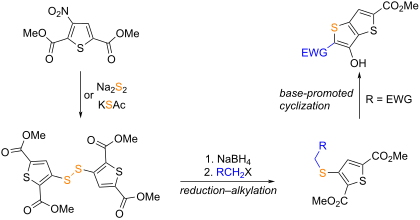
- . For compound 2, these signals appeared at 7.40, 3.91, and 3.89 ppm, whereas for compound 3, the signals were observed at 7.83, 3.97, and 3.87 ppm. These data strongly suggest the absence of a proton at the C-3 position of the thiophene ring and the presence of two methoxycarbonyl groups. Further
- isolation of compounds 2 and 3 in analytically pure form allowed their structure to be established thanks to elemental analysis and HRMS. It was found that compounds 2 and 3 are dimeric derivatives of the starting thiophene, linked by sulfur bridges located at the C-3 position instead of the nitro group
- . Compound 2 was identified as a bis(thiophen-3-yl)sulfide derivative and compound 3 as a bis(thiophen-3-yl)disulfide derivative, both with methoxycarbonyl groups at the C-2 and C-5 positions of each thiophene ring (Scheme 4). The formation of these unexpected products, sulfide 2 and disulfide 3



Palladium-catalyzed regioselective C1-selective nitration of carbazoles
Beilstein J. Org. Chem. 2025, 21, 2479–2488, doi:10.3762/bjoc.21.190
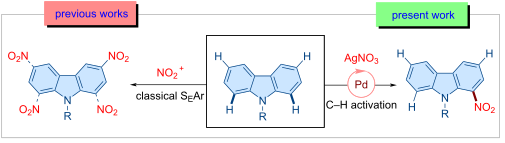
- valuable platform for the selective functionalization of carbazoles, offering potential applications in optoelectronics, functional organic materials, and related areas while contributing to the advancement of C–H activation methodologies. Keywords: C–H activation; carbazole; catalysis; nitration
- addition to cross-coupling reactions, transition metal-catalyzed cyclization involving C–H activation approaches have also been reported [29][30][31][32][33][34][35][36]. Despite the significant advances in carbazole core constructions, the established protocols significantly lack access to selectively C1
- -decorated carbazoles. Consequently, functionalizing carbazoles via transition metal-catalyzed directed C–H activation becomes more attractive to introduce the desired functionality in a regioselective fashion. The C–H activation strategy is elegant in many ways since it utilizes nonfunctionalized or lesser


Synthesis of the tetracyclic skeleton of Aspidosperma alkaloids via PET-initiated cationic radical-derived interrupted [2 + 2]/retro-Mannich reaction
Beilstein J. Org. Chem. 2025, 21, 2470–2478, doi:10.3762/bjoc.21.189
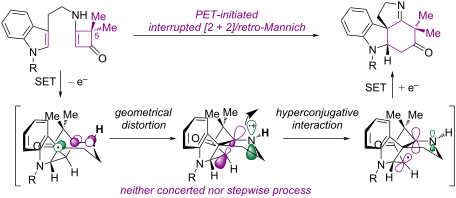
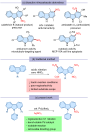
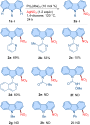
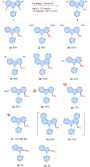
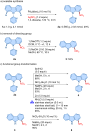
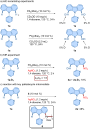
- involves a formal 1,3-C shift. Keywords: Aspidosperma alkaloids; [2 + 2]-cycloaddition/retro-Mannich reaction; DFT study; photoinduced electron transfer; Introduction Photochemical reactions, which enable the construction of topologically complex architectures from simple building blocks, have attracted
- photoredox catalysis) processes [8][9][10]. Cyclobutenone (A) is a versatile C4 synthon [11] – its [2 + 2] photocyclization yields B, featuring a strained bicyclo[2.2.0]hexane unit [12], which can fragment to form C (Figure 1a) [13][14]. However, competitive C1–C4 bond cleavage under irradiation or heating
- proceeds via an unusual 1,3-C shift to afford M, i.e. through an interrupted [2 + 2] cyclization/retro-Mannich reaction. Results and Discussion Conditions optimization Our study commenced with the evaluation of the proposed PET-based tandem [2 + 2] cyclization/retro-Mannich reaction. We selected compound


Ex-situ generation of gaseous nitriles in two-chamber glassware for facile haloacetimidate synthesis
Beilstein J. Org. Chem. 2025, 21, 2465–2469, doi:10.3762/bjoc.21.188
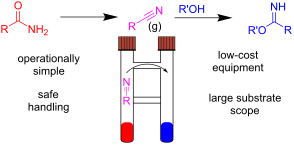
- point = −64 °C). To minimize the setup needed and handling we decided to utilize the two-chamber reaction vessels introduced by Skrydstrup and co-workers [19], which were originally designed for use with carbon monoxide reactions [20] and are now commercially available under the tradename COware (Figure


The intramolecular stabilizing effects of O-benzoyl substituents as a driving force of the acid-promoted pyranoside-into-furanoside rearrangement
Beilstein J. Org. Chem. 2025, 21, 2456–2464, doi:10.3762/bjoc.21.187
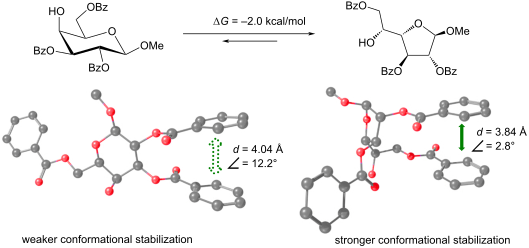
- energies of starting methyl β-galactopyranoside structure 1 were computed. The initial orientation of the methyl aglycon was chosen so that the torsional angle H1–C1–O1–C(Me) had the value of +40° for the β-structures and −40° for the α-isomers. The benzoate substituents at positions O-2 and O-3 were
- rings. The internal C–C–C angles in them differ leading to more freedom for the side substituents in furanosides. This, in our opinion, means that the π–π interactions between the phenyl rings must increase in this case. However, a repulsive interaction that occurs between O-1 and O-2 oxygen atoms in
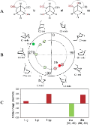
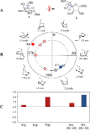
- correspond to obtained conformations. (C) Calculated Gibbs free energies for various conformers of monosaccharides 1 and 2. For conformers 2-a and 2-b, the optimal torsional angles ω1 and ω of the side chain are provided in parentheses (as labeled in Figure 3). Structures of conformers with minimum energy




Catalytic enantioselective synthesis of selenium-containing atropisomers via C–Se bond formations
Beilstein J. Org. Chem. 2025, 21, 2447–2455, doi:10.3762/bjoc.21.186
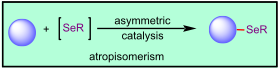
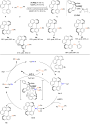
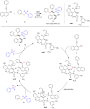
- synthetic approaches for constructing selenium-containing atropisomers have been reported, such as C–H selenylation of arenes, selenosulfonylation of vinylidene o-quinone methides (VQM), and hydroselenation of alkynes. Nevertheless, a comprehensive review that systematically summarizes these advances is
- currently lacking. This review aims to provide an overview of recent developments in the catalytic enantioselective synthesis of selenium-containing atropisomers via C–Se bond formation. We hope this review will serve as a valuable reference for researchers interested in further exploring this area
- . Keywords: asymmetric catalysis; atropisomer; chiral selenium-containing compound; C–Se bond formation; Introduction Selenium is an essential trace element for human body [1]. It plays an important role in metabolism. In 1817, the Swedish chemist Berzelius found that red residual mud was attached to the




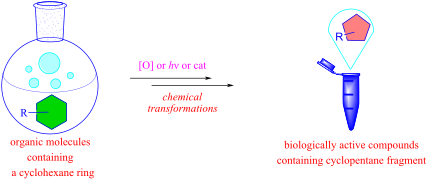
Transformation of the cyclohexane ring to the cyclopentane fragment of biologically active compounds
Beilstein J. Org. Chem. 2025, 21, 2416–2446, doi:10.3762/bjoc.21.185
- KMnO4 in EtOH at 0 °C afforded vicinal diol 20 with a yield of 58%. The periodate cleavage of the latter under the action of NaIO4 led to the formation of a labile dialdehyde, which was treated with t-BuOK in THF without isolation. As a result of intramolecular aldol condensation, accompanied by the
- with MeONa or t-BuOK as base led to the formation of diol 29 with a yield of 40%, which is interesting for the synthesis of angeloside (31) [23]. An alternative preparation of diol 29 involved ozonolysis of the double bond in dioxolane 26 at −78 °C in methanol, followed by reduction of the ozonide with
- , particularly iridoids. One of the promising methods for ring contraction in the absence of multiple bonds in the six-membered ring of terpenoids was proposed by Grishko et al. [26] (Scheme 6). The key step of 2,3-fragmentation was the cleavage of an enolized C–C bond at a keto group, followed by an


The high potential of methyl laurate as a recyclable competitor to conventional toxic solvents in [3 + 2] cycloaddition reactions
Beilstein J. Org. Chem. 2025, 21, 2389–2415, doi:10.3762/bjoc.21.184
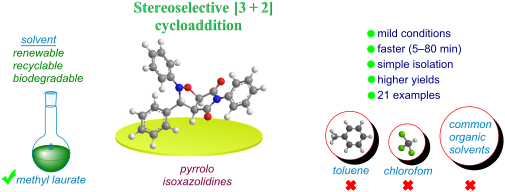
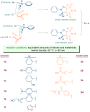
- successfully synthesized in accordance with procedures previously documented in the literature (Scheme 1) [28][78][79][80][81][82][83][84][85]. In this study, the reaction between simple starting compounds C,N-diphenylnitrone and N-phenylmaleimide was selected as the model cycloaddition reaction. A series of
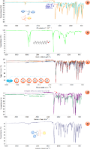
- potential hazard associated with their utilization as a solvent in the aforementioned reactions. For the solute component C,N-diphenylnitrone, the dispersion, polarity, and hydrogen bonding values for nitrone were determined as δD = 16.6, δP = 7.6 and δH = 8.7. Figure 8b clearly shows the position of the
- solute in the Hansen space. The “Green Solvent Selection Tool“ was utilized to ascertain these three parameters [95]. For the purpose of this study, a series of solvents in which C,N-diphenylnitrone dissolves was determined through experimental means (at 22 °C) in our laboratory (Figure 8c). An







An Fe(II)-catalyzed synthesis of spiro[indoline-3,2'-pyrrolidine] derivatives
Beilstein J. Org. Chem. 2025, 21, 2383–2388, doi:10.3762/bjoc.21.183
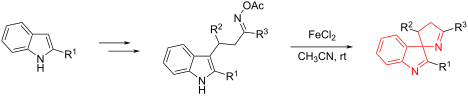
- in high yields (Scheme 1, path c) [10]. Further expanding the scope of enantioselective approaches, a Michael/cyclization cascade reaction between 3-aminooxindoles and 2-enoylpyridines, catalyzed by a cinchonidine-based thiourea organocatalyst, was developed. Subsequent treatment with HCl in methanol
- microorganisms was determined, including two fungal strains: Candida albicans ATCC 10231, C. albicans C1 – clinical strain, Gram-positive bacteria such as Staphylococcus aureus ATCC 25923, S. aureus ATCC 43300 (MRSA), Mycobacterium smegmatis ATCC 70084, and Gram-negative bacteria including Escherichia coli ATCC


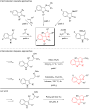


Synthetic study toward vibralactone
Beilstein J. Org. Chem. 2025, 21, 2376–2382, doi:10.3762/bjoc.21.182

- vibralactone, a potent inhibitor of pancreatic lipase, is reported. The synthesis of the challenging all-carbon quaternary center within the cyclopentene ring was achieved through intramolecular alkylidene carbene C–H insertion. Keywords: alkylidene carbene; C–H insertion; total synthesis; vibralactone
- lactone 13 through allylic oxidation and cross metathesis. For the construction of the cyclopentene ring, an alkylidene carbene-mediated C–H insertion would be applied [35]. The synthetic route could be traced back to β-lactone 14, which contains two continuous stereogenic centers with trans configuration
- deprotection followed by C–H insertion. However, when attempting to remove the ketal protecting group, only decomposition of the starting material was observed. A plausible explanation for this outcome is that the β-lactone ring, located at the β-position of the methyl ketone, may undergo facile β-elimination


Conformational effects on iodide binding: a comparative study of flexible and rigid carbazole macrocyclic analogs
Beilstein J. Org. Chem. 2025, 21, 2369–2375, doi:10.3762/bjoc.21.181
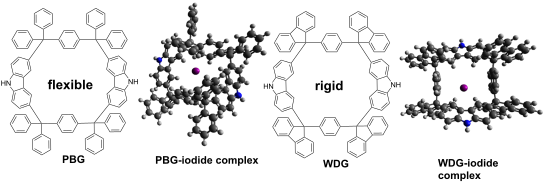
- groups inside the macrocycle and thus causes the NH peak to be shifted downfield. At the same time, after the addition of TBAI to the PBG solution, both proton signals c/d and e/f were shifted downfield, while protons a/b moved slightly to higher field, confirming the interaction between the anion and
- a/b and c/d both moved slightly to higher field. This indicates that there is a slight difference in the interaction between NH protons and iodine ions of the two structural analogs. Structural analysis showed that since the two single bonds are rotationally restricted, all its accessible
- , which provides a foundation for developing next-generation smart sensors with programmable anion selectivity. (a) partial 1H NMR spectrum of PBG in CDCl3 (400 MHz, CDCl3, 25 °C), (b) Partial 1H NMR spectrum of WDG in CDCl3 (400 MHz, CDCl3, 25 °C). (a) Partial 1H NMR spectra of PBG and TBAI at different



Rotaxanes with integrated photoswitches: design principles, functional behavior, and emerging applications
Beilstein J. Org. Chem. 2025, 21, 2345–2366, doi:10.3762/bjoc.21.179

- capable of modulating reaction stereoselectivity. Hydrazone Hydrazones undergo trans–cis isomerization at the C=N bond when exposed to light, and in some instances, they can also undergo thermal isomerization (Figure 2) [69]. Although there are early reports of hydrazone derivatives in rotaxanes [70], the
- of the C–O bond “opens” the molecule, generating the corresponding merocyanine (Figure 2). The reverse photocyclization can occur upon exposure to visible light. Remarkably, the two isomers differ in their chemical and physical properties such as polarity, molecular volume, dipole moment
- Michael addition taking place at the active site (C=C−C=N+) in the merocyanine unit in the presence of sulfite ions, resulting in color changes from red to green. This work represents a substantial advancement in the development of rotaxane-based fluorescent probes, providing highly sensitive and


Comparative analysis of complanadine A total syntheses
Beilstein J. Org. Chem. 2025, 21, 2334–2344, doi:10.3762/bjoc.21.178
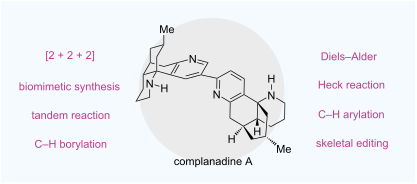
- strategies and creative tactics, reflecting how emerging synthetic capabilities and concepts can positively impact natural product total synthesis. Keywords: biomimetic synthesis; C–H functionalization; complanadine; lycopodium alkaloid; skeletal editing; total synthesis; transition metal catalysis
- reaction to rapidly establish the tetracyclic skeleton of complanadine A and an iridium-catalyzed site-selective pyridine C–H borylation followed by a Suzuki–Miyaura cross coupling to forge the C2–C3’ linkage. Their synthesis achieves a high degree of synergy between classic transformations and modern
- with an Ir-catalyzed regioselective C–H borylation developed simultaneously by Ishiyama, Miyaura, Hartwig, and co-workers and Smith and co-workers [26][27]. First, the triflate group of 33 was removed by a Pd-catalyzed reduction with ammonium formate as the reducing reagent. The resulting Boc-protected



Recent advances in Norrish–Yang cyclization and dicarbonyl photoredox reactions for natural product synthesis
Beilstein J. Org. Chem. 2025, 21, 2315–2333, doi:10.3762/bjoc.21.177
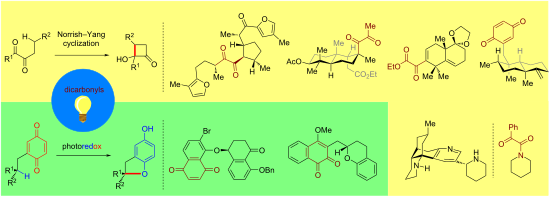
- singlet state, which undergoes intersystem crossing (ISC) to form the excited triplet state B. An intramolecular 1,5-hydrogen atom transfer (HAT) then ensues, producing the 1,4-diradical C, which can be converted into diverse products such as alkenes and enols (Scheme 1a). Notably, the 1,4-diradical
- -hydroxy-β-lactams or 2-hydroxycyclobutanones can function either as inherent structural motifs in target natural products or as strained reactive intermediates, facilitating C–H functionalization via four-membered ring opening [6][7][8][9][10][11]. Quinones display distinct photochemical reactivities
- ]. In contrast to the direct radical coupling in Norrish–Yang cyclization, the distal biradical F, formed from quinone E through a pathway analogous to that of C in the photoredox process, subsequently undergoes intramolecular SET to generate a zwitterion G. This intermediate is then trapped by the




Insoluble methylene-bridged glycoluril dimers as sequestrants for dyes
Beilstein J. Org. Chem. 2025, 21, 2302–2314, doi:10.3762/bjoc.21.176
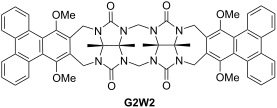
- accord with the depicted C2v-symmetric structures. Figure 3 shows the 1H NMR spectra recorded for G2W1–G2W4 in DMSO-d6 at 400 MHz. As expected, all four hosts display two singlets for the equatorial CH3 groups (a, b), two pairs of doublets for the diastereotopic CH2 groups (c,c’ and d,d’) in the expected
- . Before use, samples of H2, G2W1–G2W4 were repeatedly washed with water to remove TFA (monitored by 19F NMR) and activated by grinding and heating overnight at 90 °C under high vacuum. Experimentally, we incubated equimolar amounts (7.2 μmol) of each host with aqueous solutions of each dye (240 μM, 1 mL
- ) for 1 hour using a ThermoMixer™ (T = 25 °C, 800–1000 rpm). For the experiments with acridine orange (100 μM, 2.4 mL) and methylene violet (38 μM, 6.4 mL) lower concentrations were used due to solubility issues. Following incubation, the samples were centrifuged (11,000 rpm, 10 min for methylene blue




Halogenated butyrolactones from the biomass-derived synthon levoglucosenone
Beilstein J. Org. Chem. 2025, 21, 2297–2301, doi:10.3762/bjoc.21.175
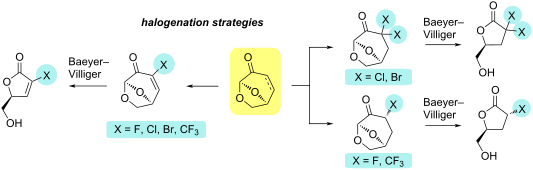
- influenza [7], while chlorinated analogues such as 3 have demonstrated activity against hepatitis C (Figure 1) [8]. Stereoselective methods to access halogenated γ-butyrolactones are therefore valuable, as they enable access to nucleoside analogues which have applications in treating cancer and certain



Enantioselective radical chemistry: a bright future ahead
Beilstein J. Org. Chem. 2025, 21, 2283–2296, doi:10.3762/bjoc.21.174
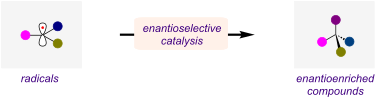
- Anna C. Renner Sagar S. Thorat Hariharaputhiran Subramanian Mukund P. Sibi Department of Chemistry and Biochemistry, North Dakota State University, Fargo, North Dakota, 58105-5516, USA 10.3762/bjoc.21.174 Abstract This perspective is focused on enantioselective free radical reactions. It
- obviating the need for both enantiomers of the ligand. Although chiral Lewis acid-mediated radical reactions were groundbreaking, they suffered from major disadvantages: (a) high catalyst loadings (stoichiometric or sub-stoichiometric), (b) large amounts of the radical initiator, (c) the need for a large
- demonstrated to forge C(sp2)–C(sp2) as well as aliphatic C(sp3)–C(sp3) bonds. The Fu group reported a nickel-catalyzed α-alkylation of racemic secondary α-bromoamides 18 using organozinc reagents 19 (Scheme 4A) [32]. A chiral nickel complex, obtained from the mixture of chiral pyridinebisoxazoline ligand L2


Pathway economy in cyclization of 1,n-enynes
Beilstein J. Org. Chem. 2025, 21, 2260–2282, doi:10.3762/bjoc.21.173
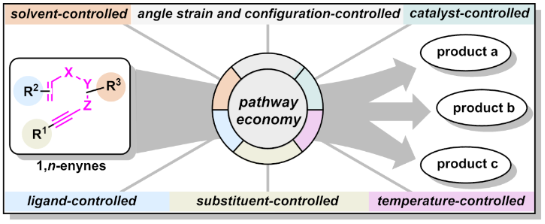
- synthetic value of this method. In 2017, the Liu group established a precise control over cyclization sequences of 1,2-diphenylacetylenes by modulating the nitrogen-substitution patterns, enabling divergent syntheses of benzo[a]carbazole and indeno[1,2-c]quinoline derivatives (Scheme 9) [16]. When the
- intermediate 40 when using substrates with unsubstituted nitrogen. Concurrent oxygen-involved cyclization then furnished indeno[1,2-c]quinoline 41 (Scheme 9, path b). This work established a pathway-controlled strategy for efficient access to benzo[a]carbazole and indeno[1,2-c]quinoline derivatives. In 2019
- )-catalyzed transformation to afford tetracyclic products 99 (Scheme 20, path c). This allenylation reaction provided efficient access to functionalized indole derivatives by regulating catalyst systems and substituent patterns. In 2010, the Iwasawa group established a stereoselective synthetic strategy


Research towards selective inhibition of the CLK3 kinase
Beilstein J. Org. Chem. 2025, 21, 2250–2259, doi:10.3762/bjoc.21.172
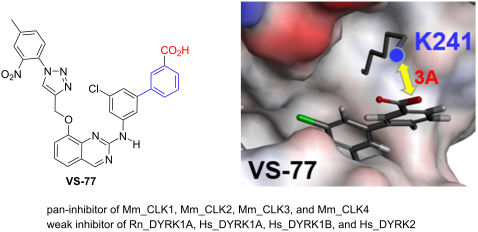
- positioned on the opposite lobe of the protein, as compared to lysine 241 of CLK3 (N-lobe for DYRK1A vs C-lobe for CLK3), but the docking experiment showed that a 180° rotation of the benzoic acid allowed the inhibitor to interact with lysine 175. In addition to molecular simulations, this salt bridge is


A chiral LC–MS strategy for stereochemical assignment of natural products sharing a 3-methylpent-4-en-2-ol moiety in their terminal structures
Beilstein J. Org. Chem. 2025, 21, 2243–2249, doi:10.3762/bjoc.21.171
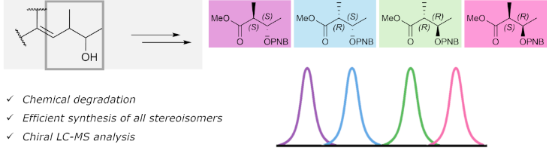
- absolute configuration of scarce natural products, including heptavalinamide A [11] and poecillastrin C [12][13] by a combination of chemical degradation, chemical synthesis, and liquid chromatography–mass spectrometry (LC–MS) analysis. The 3-methylpent-4-en-2-ol (MPO) moiety is commonly found at the
- chiral HPLC columns and with various elution profiles, the four stereoisomers of 6 were successfully separated on a CHIRALPAK ID-3 column at 40 °C with aqueous MeOH gradient elution (Figure S3, Supporting Information File 1). The developed method for absolute configuration assignment of MPO was applied
- natural 1, showed a retention time identical to that of (2R,3S)-11 (Figure 2b), thus assigning the absolute configuration of the MPO moiety in 1 as (10R,11R) [29]. This assignment was consistent with prior reports, and the observed specific rotation of 1, measured as [α]D26 +12 (c 0.1, MeOH) closely





