


Search results
Search for "bifunctional" in Full Text gives 250 result(s) in Beilstein Journal of Organic Chemistry. Showing first 200.
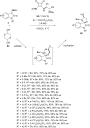
Synthesis of 4-amino-5-fluoropyrimidines and 5-amino-4-fluoropyrazoles from a β-fluoroenolate salt
Beilstein J. Org. Chem. 2020, 16, 445–450, doi:10.3762/bjoc.16.41
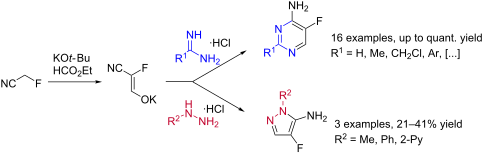
- arginine, where the desired pyrimidine 10q was also only observed in trace amounts while the majority of the starting material remained unchanged. Synthesis of fluorinated aminopyrazoles As in the cyclocondensation with amidines, the reaction of 8 with other bifunctional nucleophiles could also result in


Chemical tuning of photoswitchable azobenzenes: a photopharmacological case study using nicotinic transmission
Beilstein J. Org. Chem. 2019, 15, 2812–2821, doi:10.3762/bjoc.15.274
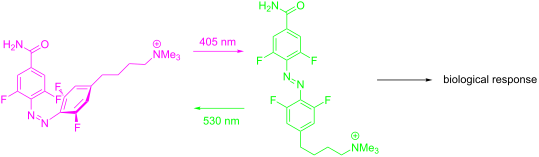
- % overall yield. Installation of the cationic head was performed in two steps: first bromination of 11 via Appel reaction, followed by treatment with trimethylamine to give 2 in 35% overall yield. Photoswitch 2 is the first example of a bifunctional, asymmetrically substituted 4FAB chromophore that actually




Chiral terpene auxiliaries V: Synthesis of new chiral γ-hydroxyphosphine oxides derived from α-pinene
Beilstein J. Org. Chem. 2019, 15, 2493–2499, doi:10.3762/bjoc.15.242

- ], conjugated additions to enones [7], and allylic alkylations [8][9]. Another direction of research is the use of phosphines in organocatalysis [10][11] and bifunctional catalysis [12]. Several methods were developed to introduce the phosphine functionality to organic molecules. The reaction of organometallics


1,2,3-Triazolium macrocycles in supramolecular chemistry
Beilstein J. Org. Chem. 2019, 15, 2142–2155, doi:10.3762/bjoc.15.211
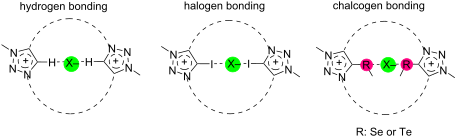
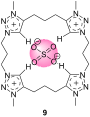
- kinetic resolution of epoxides with CO2 remains a big challenge. Recently, Ema and co-workers described a chiral binaphthyl strapped Zn(II) porphyrin with triazolium halide units as a bifunctional catalyst for the kinetic resolution of epoxides with CO2 [63]. The condensation of click-reaction-derived
- reaction with the highest enantioselectivity. The importance of the bifunctional system for the catalytic activity and enantioselectivity was demonstrated by performing a series of reactions with lower activity and selectivity, utilizing free-base porphyrin 16h with triazolium moieties and the two




Isolation and characterisation of irinans, androstane-type withanolides from Physalis peruviana L.
Beilstein J. Org. Chem. 2019, 15, 2003–2012, doi:10.3762/bjoc.15.196
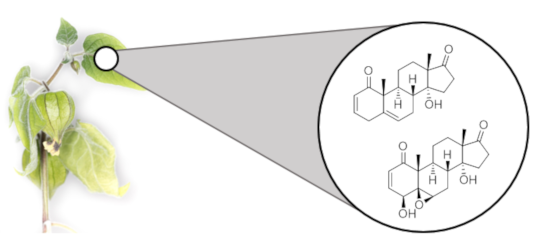
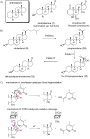
- [27]. Then, the bifunctional P450c17 acts as a 17α-hydroxylase and 17,20-lyase to give rise to androstanes [27]. Related enzymes have not been reported from plants. We searched transcriptome data of P. peruviana for putative homologues of these enzymes [28]. The best hits only had amino acid sequence



Steroid diversification by multicomponent reactions
Beilstein J. Org. Chem. 2019, 15, 1236–1256, doi:10.3762/bjoc.15.121
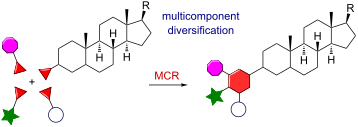
- has been demonstrated by Alonso et. al. [26] with the development of a multicomponent approach to obtain 4-azasteroids using an intramolecular Ugi-4CR between a bifunctional steroidal ketoacid and different amines and isocyanides. Because of the poor reactivity of the steroidal ketone, the Ugi-4CR had
- line. A very recent example of a highly diastereoselective Ugi-type MCR was reported by Rivera, Paixão and co-workers using a steroidal isocyanide [31]. As shown in Scheme 9, the procedure comprised the organocatalytic asymmetric synthesis of the chiral bifunctional substrate 30 bearing an masked
- organocatalytic multicomponent approaches [32] not only the chiral steroidal isocyanide but also the bifunctional component 30, used in enantiomerically enriched form, plays a crucial role in the high stereoselection. The mechanistic insights of this class of MCR were disclosed in the original publication [31


Diaminoterephthalate–α-lipoic acid conjugates with fluorinated residues
Beilstein J. Org. Chem. 2019, 15, 981–991, doi:10.3762/bjoc.15.96
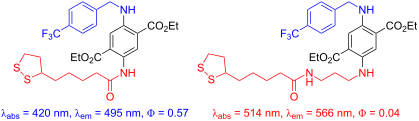
- Leon Buschbeck Aleksandra Markovic Gunther Wittstock Jens Christoffers Institut für Chemie, Universität Oldenburg, Carl von Ossietzky-Str. 9–11, D-26129 Oldenburg, Germany 10.3762/bjoc.15.96 Abstract Two bifunctional diaminoterephthalate (DAT) fluorescence dyes were prepared in a three-step
- suitability for molecular surface labeling. Conclusion Two bifunctional diaminoterephthalate (DAT) fluorescence dyes have been prepared. One functional unit is α-lipoic acid (ALA) for binding the dye to gold surfaces. The other carries a trifluoromethyl group for facile detection of the surface-bound material
- . Bifunctional DAT as a cross-linker for proteins. The compound is a turn-on-probe, i.e., the fluorescence quantum yield Φ = 2% increased upon reaction with the target to Φ = 41%. High-resolution XPS of SAM 3. High-resolution XPS of SAM 7. Preparation of DAT–ALA conjugate 3 with fluorinated benzyl residue


Synthesis of (macro)heterocycles by consecutive/repetitive isocyanide-based multicomponent reactions
Beilstein J. Org. Chem. 2019, 15, 906–930, doi:10.3762/bjoc.15.88
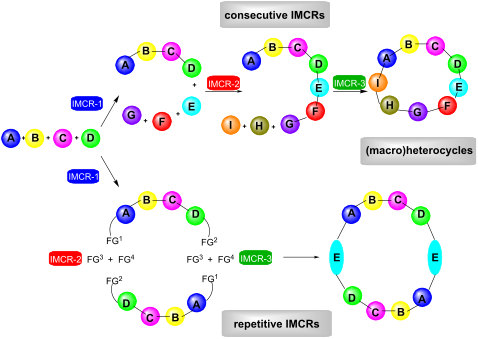
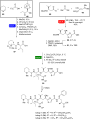
- bifunctional compounds 74 at the end, allowing the obtention of the 16- to 20-membered tetrazolic macrocycles 75 in only five steps (Scheme 14). A similar approach was used shortly afterwards by the same research group in the synthesis of macrocyclic depsipeptides containing a tetrazole nucleus [31]. The
- intramolecular Passerini reaction was performed using bifunctional isocyanocarboxylate (Scheme 15a). Scheme 15b shows three of the 21 depsipeptides macrocycles synthesized by the authors in this study. Ethyl isocyanoacetate (13b) has also been successfully used as starting material to allow consecutive Ugi
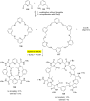
- step was attributed to difficulties during the purification step along with to some oligomerization that might have occurred. Repetitive IMCRs – multicomponent macrocyclizations through bifunctional building blocks A strategy that has been widely used for the synthesis of macroheterocycles is the







Synthesis of a novel category of pseudo-peptides using an Ugi three-component reaction of levulinic acid as bifunctional substrate, amines, and amino acid-based isocyanides
Beilstein J. Org. Chem. 2019, 15, 852–857, doi:10.3762/bjoc.15.82
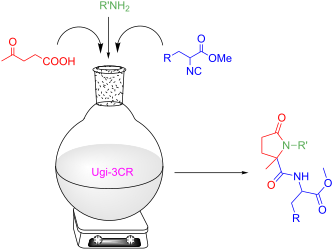
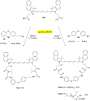
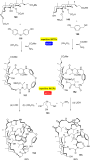
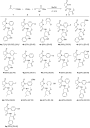
- synthesis of a novel category of pseudo-peptides via intramolecular Ugi reaction of levulinic acid (4-oxopentanoic acid), aromatic and aliphatic amines, and amino acid-based isocyanides is reported. Levulinic acid was applied as a bifunctional substrate containing both carbonyl and acid moieties suitable
- peptidomimetics with potential pharmaceutical applications. Therefore, the development of innovative Ugi reactions is crucial for the synthesis of novel chemical libraries for various purposes [12]. In recent years, one of the modifications for Ugi reactions is the introduction of bifunctional substrates into the
- by acid catalysis from renewable resources, such as sugars, lignocellulosic biomass and waste materials [18]. It can be used as a bifunctional precursor for the synthesis of pharmaceuticals, plasticizers, and different additives [19]. Furthermore, it is recognized as an excellent starting material




Olefin metathesis in multiblock copolymer synthesis
Beilstein J. Org. Chem. 2019, 15, 218–235, doi:10.3762/bjoc.15.21

- polymerization of another monomer [53][54][55]. Synthesis from end-functionalized blocks Another strategy to multiblock copolymer preparation is to assemble them by using pre-synthesized telechelic polymers with α,ω-bifunctional end groups, which can be coupled in different ways. The classical technique for


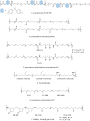


Silanediol versus chlorosilanol: hydrolyses and hydrogen-bonding catalyses with fenchole-based silanes
Beilstein J. Org. Chem. 2019, 15, 167–186, doi:10.3762/bjoc.15.17
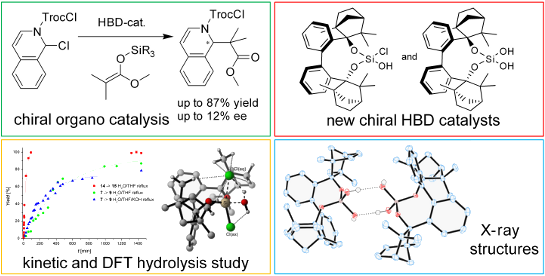
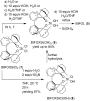
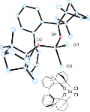
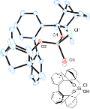
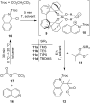
- used for the C–C coupling in the N-acyl Mannich reaction with activated isochinolin 10, 1-chloroisochroman (18) and chromone 21 with different silyl ketene acetals. Due to more efficient bifunctional Si(OH)2-hydrogen bonding, silandiol 9 tops chlorosilanol 8, also on catalytic application








Copolymerization of epoxides with cyclic anhydrides catalyzed by dinuclear cobalt complexes
Beilstein J. Org. Chem. 2018, 14, 2779–2788, doi:10.3762/bjoc.14.255
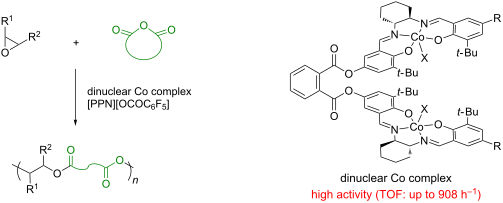
- peak molecular weight of the higher molecular weight portion was twice as large as that of the lower molecular weight portion. Accordingly, trace amounts of diacid in PA and/or water contaminants would work as bifunctional chain-transfer agents and gave twice the molecular weight of the copolymer
- initiated by monofunctional pentafluorobenzoate from (R,R,S,S)-1 and [PPN][OCOC6F5] [19]. The formation of the alternating copolymers initiated by monofunctional pentafluorobenzoate and the bifunctional chain-transfer agents was confirmed by matrix-assisted laser desorption/ionization time-of-flight mass


Dispersion-mediated steering of organic adsorbates on a precovered silicon surface
Beilstein J. Org. Chem. 2018, 14, 2715–2721, doi:10.3762/bjoc.14.249
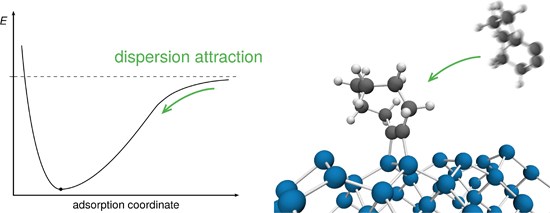
- theory; dispersion; organic/inorganic interfaces; Introduction The creation of organic/inorganic interfaces is one of the main endeavours in enhancing the application range of modern electronic devices for silicon-based technology [1][2]. One way to achieve this is covalent attachment of bifunctional
- of the parent system 1 thus gives crucial insight that is expected to be transferable to the bifunctional derivatives. The adsorption of a molecule on a surface can proceed either via a direct pathway or via an intermediate species that is crucial for selectivity and the description of adsorption


Transition metal-free oxidative and deoxygenative C–H/C–Li cross-couplings of 2H-imidazole 1-oxides with carboranyl lithium as an efficient synthetic approach to azaheterocyclic carboranes
Beilstein J. Org. Chem. 2018, 14, 2618–2626, doi:10.3762/bjoc.14.240

- the first examples of the SNH methodology for the synthesis of new heterocyclic carboranes by means of direct C–H/C–Li coupling of non-aromatic 2H-imidazole 1-oxides with carboranyllithium. A growing interest in bifunctional compounds, bearing both the pharmacoactive imidazole motif and a polyhedral
- organoelement bifunctional ensembles, bearing heterocyclic and carborane moieties, which are of particular interest in the design of advanced materials, have been obtained in good yields. The 1H NMR spectra of 1-(5-(4-bromophenyl)-2-ethyl-2-methyl-2H-imidazol-4-yl)-1,2-dicarba-closo-dodecaborane (4d) and 1-(4


Pathoblockers or antivirulence drugs as a new option for the treatment of bacterial infections
Beilstein J. Org. Chem. 2018, 14, 2607–2617, doi:10.3762/bjoc.14.239
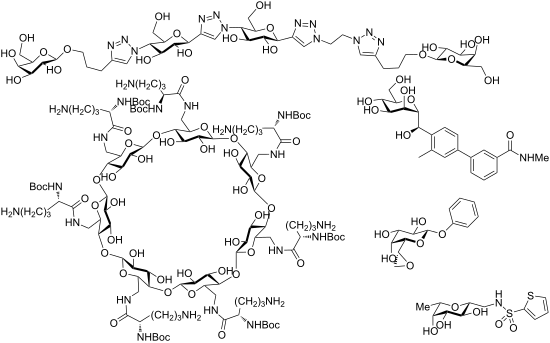
- a suitable target to prevent toxin secretion. The anti-PcrV antibody KB001 [68] and the bifunctional antibody MEDI3902 [69], which targets PcrV and the biofilm-associated exopolysaccharide psl, are both currently in phase II clinical trials. 6. Bacterial communication Quorum sensing (QS) is employed




Microwave-assisted synthesis of biologically relevant steroidal 17-exo-pyrazol-5'-ones from a norpregnene precursor by a side-chain elongation/heterocyclization sequence
Beilstein J. Org. Chem. 2018, 14, 2589–2596, doi:10.3762/bjoc.14.236
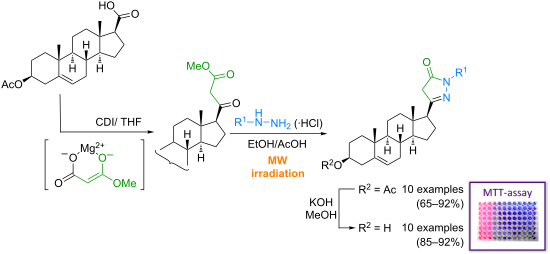
- -activated acylimidazole derivative was then converted to a β-ketoester containing a two carbon atom-elongated side chain than that of the starting material. A Knorr cyclization of the bifunctional 1,3-dicarbonyl compound with hydrazine and its monosubstituted derivatives in AcOH under microwave heating
- magnesium enolate of malonic acid half ester, prepared in situ from potassium methyl malonate, MgCl2 and triethylamine in acetonitrile, was added [24][25]. The acylation of magnesium methyl malonate by the preformed imidazole 3 led to the desired bifunctional starting material 4 in good yield (79


Nucleoside macrocycles formed by intramolecular click reaction: efficient cyclization of pyrimidine nucleosides decorated with 5'-azido residues and 5-octadiynyl side chains
Beilstein J. Org. Chem. 2018, 14, 2404–2410, doi:10.3762/bjoc.14.217
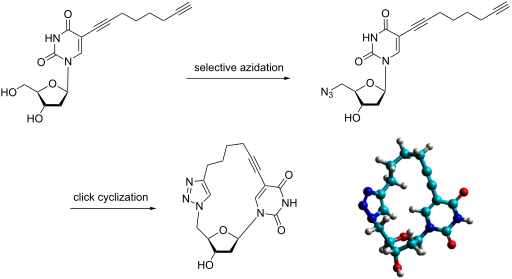
- . Conclusion The synthesis of a macrocycle is often described as an intramolecular cyclization of a bifunctional precursor molecule. However, in many cases competition exists with dimerization and polymerization. Therefore, we were delighted to see that the intramolecular cyclization, utilizing dU and dC


Asymmetric Michael addition reactions catalyzed by calix[4]thiourea cyclohexanediamine derivatives
Beilstein J. Org. Chem. 2018, 14, 1901–1907, doi:10.3762/bjoc.14.164
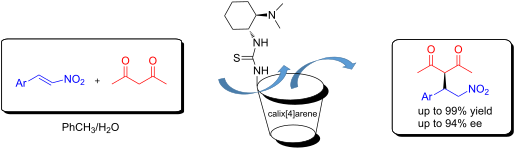
- ]. In 2016, Hernández-Rodríguez and co-workers reported the preparation of bifunctional thioureas that contained either a methyl or trifluoromethyl group [14]. They discovered that the employment of chiral moieties with an α-trifluoromethyl group in thioureas show a positive effect on the selectivity
- of ortho- or para-halogenated substrates. Mechanism study There are two possibilities for the bifunctional thiourea-catalyzed asymmetric Michael addition reaction mechanism as has been summarized by Wang and co-worker [41]. In case of 1,3-dicarbonyl compounds or nitroolefins as substrates in the



Drug targeting to decrease cardiotoxicity – determination of the cytotoxic effect of GnRH-based conjugates containing doxorubicin, daunorubicin and methotrexate on human cardiomyocytes and endothelial cells
Beilstein J. Org. Chem. 2018, 14, 1583–1594, doi:10.3762/bjoc.14.136
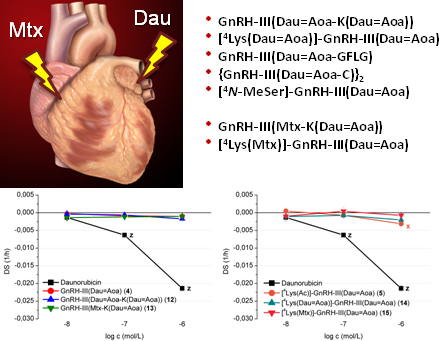
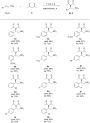
- Supporting Information File 1. Chemical structures of the GnRH-drug conjugates synthesized and investigated in the present work. Abbreviations: Aoa: aminooxyacetyl; Dox: doxorubicin; Dau: daunorubicin; Mtx: methotrexate; Glp: pyroglutamic acid; gult: glutaric acid. Chemical structures of the bifunctional
- bifunctional daunorubicin-GnRH-III conjugates without spacer and modified in position 4 with Lys; (e) {GnRH-III(Dau=Aoa-C)}2 dimer and conjugates modified in position 4 with N-MeSer; (f) GFLG or YRRL spacer containing monomer and dimer conjugates (g) GnRH-III conjugates containing methotrexate and daunorubicin
- conjugates containing doxorubicin without spacer sequence; (c) with spacer sequence GFLG; (d) oxime bond-linked, mono- and bifunctional daunorubicin-GnRH-III conjugates without spacer and modified in position 4 with Lys; (e) {GnRH-III(Dau=Aoa-C)}2 dimer and conjugates modified in position 4 with N-MeSer; (f




Cobalt–metalloid alloys for electrochemical oxidation of 5-hydroxymethylfurfural as an alternative anode reaction in lieu of oxygen evolution during water splitting
Beilstein J. Org. Chem. 2018, 14, 1436–1445, doi:10.3762/bjoc.14.121
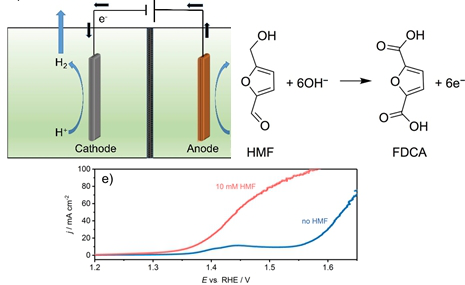
- [4]. The elaborate separation of TEMPO from FDCA appeared to be an additional disadvantage [24]. Recently, Sun and co-workers reported the electrochemical oxidation of HMF using various non-precious cobalt and nickel based bifunctional HER/OER water splitting electrocatalysts, namely CoP on copper
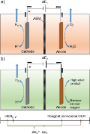
- foam, Ni2P and Ni3S2 on nickel foam, in a one compartment batch type electrochemical reactor [5][28][29]. We recently reported on the synthesis and application of alloys of cobalt with boron and phosphorus as exceptionally active bifunctional HER/OER catalysts for water splitting. Inspired by these



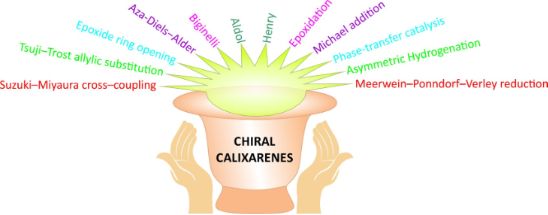
Recent applications of chiral calixarenes in asymmetric catalysis
Beilstein J. Org. Chem. 2018, 14, 1389–1412, doi:10.3762/bjoc.14.117
- asymmetric synthesis. In 2013, we described a novel class of calix[4]arene-based chiral primary amine–thiourea catalysts 47a and 47b derived from p-tert-butylcalix[4]arene (Figure 7) [49]. To evaluate the catalytic efficiency, bifunctional catalysts were applied to promote the Michael addition of aldehydes
- -diaminocyclohexane moiety from (1R,2R) to (1S,2S) without loss of activity or selectivity. Bifunctional organic molecules combining the thiourea moiety with a tertiary amine functionality are remarkably useful catalysts capable of simultaneous activation of both electrophiles and nucleophiles [51]. Therefore, a
- series of calixarene-based chiral bifunctional tertiary amine–thiourea organocatalysts 54–56 have been synthesized by us and Genc et al. (Scheme 15) [52][53]. Among them, 54a,b were applied to the asymmetric Michael addition of 1,3-dicarbonyl compounds 34 and 57 to a variety of nitroolefins. Although


Synthesis of chiral 3-substituted 3-amino-2-oxindoles through enantioselective catalytic nucleophilic additions to isatin imines
Beilstein J. Org. Chem. 2018, 14, 1349–1369, doi:10.3762/bjoc.14.114

- -isatin imines 3 with naphthols performed in the presence of cinchona alkaloid-derived thiourea 40 [66]. As shown in Scheme 15, the reaction of 1-naphthols 42 promoted by 2 mol % of this bifunctional catalyst in toluene at room temperature led to the corresponding chiral 3-substituted 3-amino-2-oxindoles
- either chiral organocatalysts or chiral metal complexes. Among the organocatalysts, chiral bifunctional guanidine 50 was applied by Feng et al. in 2015 to promote the reaction of nitromethane 51 with N-Boc-isatin imines 3 (Scheme 18) [71]. The reaction performed at −30 °C using 10 mol % of this catalyst
- reactions performed with bifunctional guanidines. In addition, excellent results (97% ee) were reported in unprecedented domino reactions promoted by squaramides recently. Miscellaneous transformations, including additions of methanol, hydroperoxides and arylboronic acids, were also developed with high











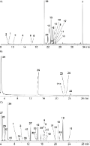
Volatiles from three genome sequenced fungi from the genus Aspergillus
Beilstein J. Org. Chem. 2018, 14, 900–910, doi:10.3762/bjoc.14.77
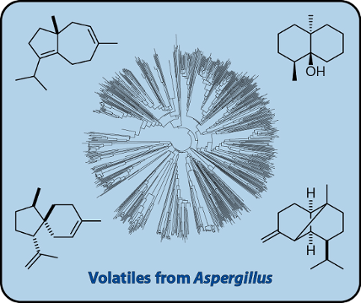
- ). A phylogenetic analysis of 878 fungal terpene synthase homologs (Figure S1 in Supporting Information File 1) demonstrates that this enzyme is closely related to the bifunctional ent-copalyl diphosphate synthase/ent-kaurene synthase from Fusarium fujikuroi [33]. The N-terminal domain shows the DXDD
- TS homologs (accession numbers GAA83682, GAA88217 and GAA91251, locus tags AKAW_01797, AKAW_06331 and AKAW_09365). The first enzyme GAA83682 shows close homology to the bifunctional ent-kaurene synthases from Fusarium and is likely involved in diterpene biosynthesis. The fact that no corresponding
- enzyme XP_001276070 (ACLA_076850), likely a bifunctional diterpene synthase (DTS), seems to be not expressed in laboratory culture, but another function cannot be excluded for this enzyme. Esters were the predominant class of compounds emitted by A. clavatus. The observed pattern of volatiles was very


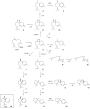


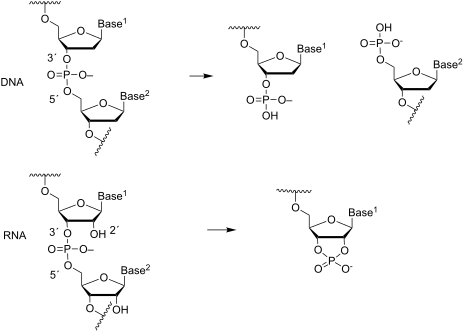
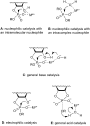
Phosphodiester models for cleavage of nucleic acids
Beilstein J. Org. Chem. 2018, 14, 803–837, doi:10.3762/bjoc.14.68



Mannich base-connected syntheses mediated by ortho-quinone methides
Beilstein J. Org. Chem. 2018, 14, 560–575, doi:10.3762/bjoc.14.43
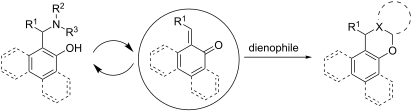
- -2-naphthols [81]. These bifunctional compounds were reacted with various cyclic imines such as 4,5-dihydrobenzo[c]azepine or 6,7-dihydrothieno[3,2-c]pyridine to have new naphthoxazinobenzazepine 44 and -thienopyridine 45 derivatives [82]. Transformations at 80 °C in 1,4-dioxane as solvent were
- indication that the application of this highly-reactive intermediate has made the modified Mannich reaction to be a hot topic again in organic chemistry. This review presents a wide range of applications including cycloadditions and the synthesis of bifunctional amino- or amidonaphthols that can later be





