Search results
Search for "derivatives" in Full Text gives 2840 result(s) in Beilstein Journal of Organic Chemistry. Showing first 200.
Discovery of cytotoxic indolo[1,2-c]quinazoline derivatives through scaffold-based design
Beilstein J. Org. Chem. 2025, 21, 2062–2071, doi:10.3762/bjoc.21.161
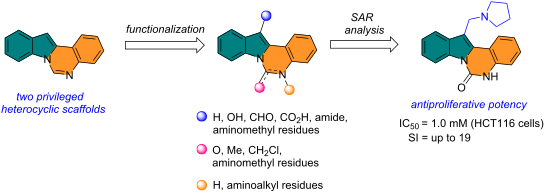
- Street, Moscow 11991, Russia 10.3762/bjoc.21.161 Abstract Indolo[1,2-c]quinazoline derivatives have emerged as promising chemotype in drug discovery due to their versatile biological activities, including antimicrobial and antiviral properties. In this study, we report the design, synthesis, and
- biological evaluation of novel indolo[1,2-c]quinazoline derivatives, with a particular focus on their antiproliferative potential against human cancer cells. We introduced structural modifications at positions 5, 6, and 12 of the indolo[1,2-c]quinazoline core to explore the structure–activity relationships
- and enhance cytotoxicity. Our results highlight that 12-aminomethyl derivatives exhibited notable cytotoxicity against tumor cell lines, with the highest activity observed for compound 9c, which showed significant selectivity toward tumor cells. In contrast, while the compounds demonstrated planar


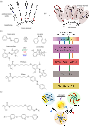
Solar thermal fuels: azobenzene as a cyclic photon–heat transduction platform
Beilstein J. Org. Chem. 2025, 21, 2036–2047, doi:10.3762/bjoc.21.159
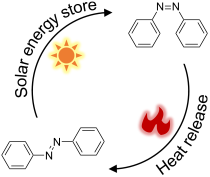
- [8]. Significant progress has been made in developing molecular photochromic systems for solar thermal energy storage, with representative examples including anthracene derivatives [9][10][11], diphenylethylene [12][13], fulvalene-based tetracarbonyldiruthenium (FvRu2(CO)4) [14][15][16
- ], norbornadiene–quadricyclane (NBD–QC) complexes [17][18][19][20][21][22][23], dihydroazulene–vinylheptadiene (DHA-VHF) systems [24][25][26][27][28][29][30], and azobenzene derivatives [31][32][33][34] (Figure 2). In addition, other reversible photoisomers exhibit potential for development as solar thermal fuels
- far, azobenzene-based solar thermal fuels mainly include: nanocarbon-based azobenzene polymers, conjugated azobenzene polymers, linear azobenzene polymers, and azobenzene small molecule derivatives. From this perspective, we review various azobenzene-based solar thermal fuels and their potential




Switchable pathways of multicomponent heterocyclizations of 5-amino-1,2,4-triazoles with salicylaldehydes and pyruvic acid
Beilstein J. Org. Chem. 2025, 21, 2030–2035, doi:10.3762/bjoc.21.158
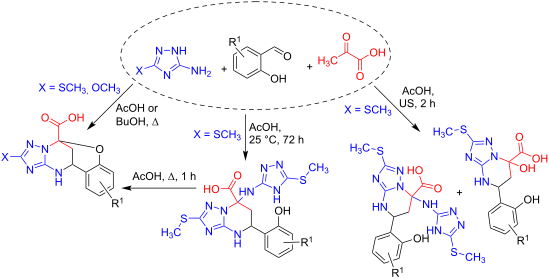
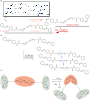
- multicomponent reaction of the same starting materials led to the formation of only tetrahydrotriazolopyrimidine derivatives. Keywords: 5-amino-1,2,4-triazole; heterocyclization; multicomponent reaction; salicylaldehyde; ultrasonication; Introduction Multicomponent reactions (MCRs) are a powerful tool for the
- depending on the conditions, can either be limited to a Biginelli condensation with the formation of hydroxytetrahydropyrimidines or proceed with further post-cyclization to form oxygen-bridged triazolobenzoxadiazocine derivatives. Furthermore, a multicomponent synthesis of oxygen-bridged pyrimidine systems
- devoted to the study of the reactions of aminoazoles, pyruvic acid and its derivatives with salicylaldehydes and it was found that depending on the conditions (reaction time, temperature, and method of process activation, in particular ultrasound and microwave irradiation), different types of heterocycles


α-Ketoglutaric acid in Ugi reactions and Ugi/aza-Wittig tandem reactions
Beilstein J. Org. Chem. 2025, 21, 2021–2029, doi:10.3762/bjoc.21.157
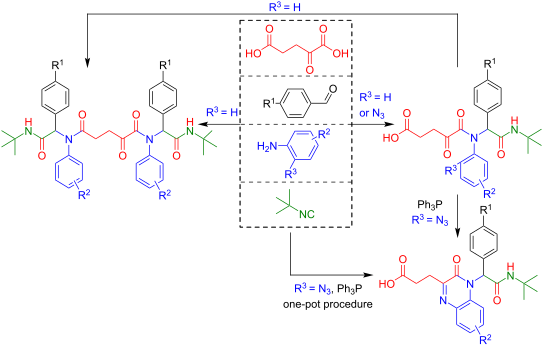
- for the preparation of benzodiazepinone derivatives, which showed promising psychotropic effects [20][21][22][23][24], using a tandem combination of Ugi/azide–alkyne cycloaddition reactions. From this point of view, azido amines are promising reagents for use in the Ugi reaction, opening up the
- nitrogen-containing heterocyclic compounds using various modifications of this sequence [32][33][34][35][36]. Among others, Yan et al. [31] described a facile way to quinoxalinone derivatives using an Ugi/Staudinger/aza-Wittig tandem combination with pyruvic acid or phenylglyoxylic acid. Quinoxalinones are
- [40] activities. Furthermore, a quinoxaline-containing commercial drug, caroverine, has been proven effective in the treatment of tinnitus [41]. In addition, in vivo studies in mice and rats with various quinoxalinone derivatives have shown favorable analgesic and anti-inflammatory properties as well


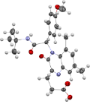
Understanding the origin of stereoselectivity in the photochemical denitrogenation of 2,3-diazabicyclo[2.2.1]heptene and its derivatives with non-adiabatic molecular dynamics
Beilstein J. Org. Chem. 2025, 21, 2007–2020, doi:10.3762/bjoc.21.156
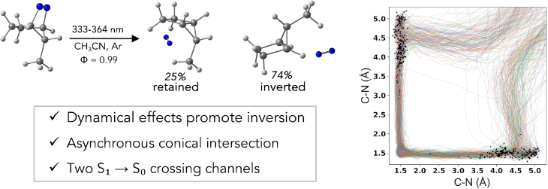
- ). Housane derivatives were also used in an atom-economical synthesis of the antibiotic [42][43][44] and potentially anti-obesity drug [45][46][47][48][49], (±)-vibralactone [42] (Scheme 1d). The thermolysis [50][51][52][53][54][55][56][57][58][59][60] and photolysis [57][58][60][61][62][63][64][65][66][67
- ]. The experimental studies on the thermal denitrogenation of diazabicyclo[2.1.1]hep-2-ene (DBH, 1) indicate that both the parent compound and its derivatives undergo a concerted elimination of N2 and the inverted product (exo-2) is preferentially formed [55][56]. Deuterium labeling of DBH was employed
- fluorescence decay, suggesting that the N2 is not released at S1 state [80]. Roth and co-workers discovered a preference to form the inverted product exo-2 from deuterated diazabicyclo[2.1.1]hex-2-ene (1) (Scheme 2) [71]. Adam and co-workers performed photochemical reactions with derivatives of 1, including 3


Aryl iodane-induced cascade arylation–1,2-silyl shift–heterocyclization of propargylsilanes under copper catalysis
Beilstein J. Org. Chem. 2025, 21, 1984–1994, doi:10.3762/bjoc.21.154
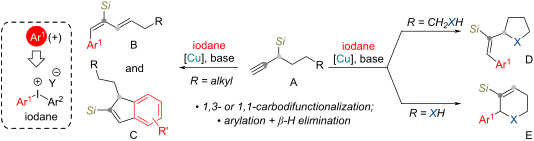
- ), more interesting reaction patterns can be observed. For example, branched aliphatic chain-containing alkynes are arylated and carbocyclized into cyclopentene derivatives [12][13]. The triflate moiety of the diaryl-λ3-iodane may act as an external nucleophile, resulting in 1,2-carbotriflation products
- on intermediate allyl cation (Scheme 1C). The obtained tetrahydrofuran and pyrrolidine derivatives with highly substituted vinyl side-chains are regarded as privileged structures in medical chemistry [23][24]. Moreover, the resulting styryl functionality (Ph-C=C-) is often found in drug molecules as
- -containing propargylsilanes subsequent heterocyclization was observed, and, depending on the chain length, giving either 1,3- or 1,1-carbofunctionalization products: tetrahydrofuran 8a–o and pyrrolidine 8v derivatives, containing a functionalized styryl group in the side chain, and 1,2,3,6-tetrahydropyridine


Photochemical reduction of acylimidazolium salts
Beilstein J. Org. Chem. 2025, 21, 1973–1983, doi:10.3762/bjoc.21.153
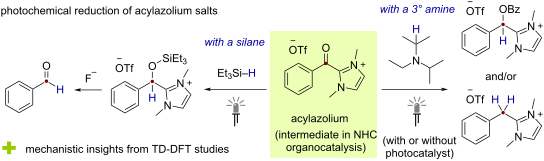
- offer many synthetic advantages while the wide availability of chiral NHCs can also allow for high levels of enantioselectivity. As effective enamine and active ester derivatives, Breslow and acylazolium intermediates A and B typically react via classical two-electron polar mechanisms, however, recent
- manifold with carboxylic acid derivatives, numerous coupling processes affording ketone products have been developed. Since the initial report from Scheidt and co-workers using 4-alkyl-substituted Hantzsch esters as coupling partners [31][32][33][34][35][36], several alkyl radical sources have been
- employed including carboxylic acids [37], xanthates [38], electron-rich toluene or heteroatom-substituted species [39][40][41][42], organoboron compounds [43][44] and organosilanes [43][45]. Moreover, three-component radical relay processes employing styrene derivatives have also been widely studied. In


Asymmetric total synthesis of tricyclic prostaglandin D2 metabolite methyl ester via oxidative radical cyclization
Beilstein J. Org. Chem. 2025, 21, 1964–1972, doi:10.3762/bjoc.21.152
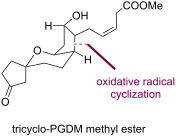
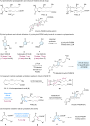
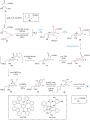
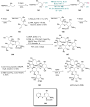
- allylation to install the side chain at C8, and a diastereoselective spirolactonization to generate the spiroketal moiety in 26. This total synthesis is promising for divergent total syntheses of other PGs and structurally related pharmaceutical derivatives. Representative prostaglandins and general



Enantioselective desymmetrization strategy of prochiral 1,3-diols in natural product synthesis
Beilstein J. Org. Chem. 2025, 21, 1932–1963, doi:10.3762/bjoc.21.151
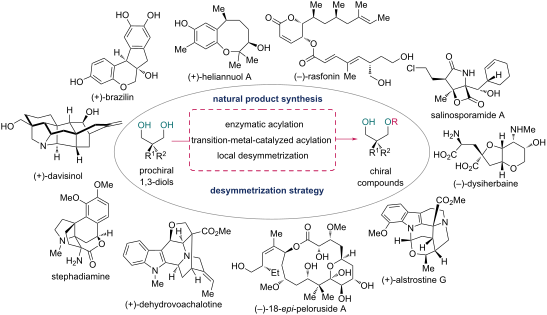
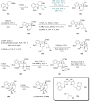
- enantioselective acylation of glycerol derivatives [53]. Since then, desymmetrization strategies for prochiral 1,3-diols involving transition-metal-catalyzed acylation have been developed. Trost and co-workers then developed a Zn-based catalyst for asymmetric aldol reactions [54][55], later adapting it to the
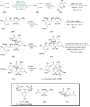
- desymmetrization strategy for serinol derivatives using a bisoxazoline (BOX)–CuCl2 complex as catalyst in 2008 [62]. They further applied this method in 2013 to the synthesis of (−)-kaitocephalin, a glutamate receptor antagonist from Eupenicillium shearii (Scheme 22) [63]. Diol 158, which was accessed in two steps
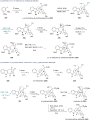
- indole derivatives mediated by 2,3-dichloro-5,6-dicyano-1,4-benzoquinone (DDQ) is an efficient strategy that the Cook group utilized in the total synthesis of several indole alkaloids [75][76][77]. In 2005, they reported the synthesis of vincamajine-related indole alkaloids, among which










Synthesis of N-doped chiral macrocycles by regioselective palladium-catalyzed arylation
Beilstein J. Org. Chem. 2025, 21, 1917–1923, doi:10.3762/bjoc.21.149
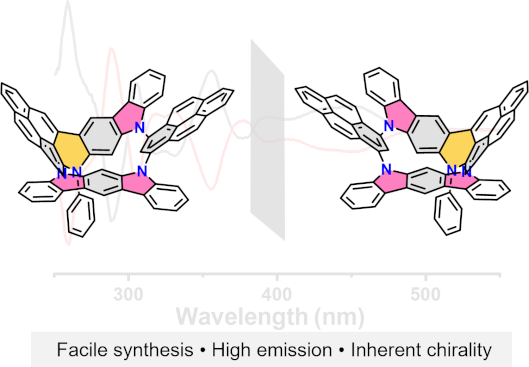
- , including molecular bowls [11][12][13] and medium-sized macrocycles containing a saddle-shaped eight-membered ring [14][15]. In the past decades, despite rapid progress in chiral macrocycles, inherent chirality is largely limited to calix[n]arene derivatives. This underscores a critical opportunity to
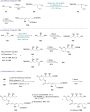
- palladium (Pd)-catalyzed arylation of aza[14]metacyclophane derivatives. By modulating the substitutions on the N atoms, two isomeric macrocycles, a C1-symmetric one as the minor fraction (MC1) and a C2v-symmetric one as the major product (MC2), were successfully obtained when 4-tert-butylphenyl groups were
- could be viewed as the aza[14]metacyclophane derivatives, in which two benzene rings are replaced by two pyrenes. The Pd-catalyzed arylation of 3a with Pd(OAc)2, PMe(t-Bu)2·HBF4 and DBU under microwave conditions gave two isomeric macrocycles MC1 and MC2 with four newly formed C–C bonds in yields of 5





Synthesis, biological and electrochemical evaluation of glycidyl esters of phosphorus acids as potential anticancer drugs
Beilstein J. Org. Chem. 2025, 21, 1909–1916, doi:10.3762/bjoc.21.148
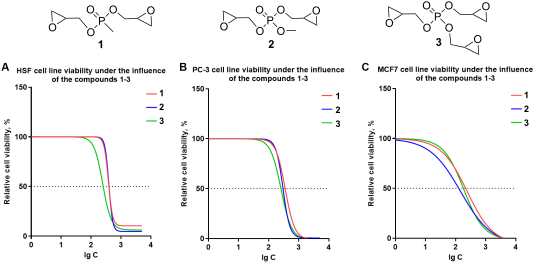
- compounds is a dynamic field of research, with numerous synthetic methodologies being explored to create novel phosphorus derivatives [19][20][21]. Recent studies have highlighted the increasing relevance of three-membered strained cycles containing phosphorus in various domains such as agrochemicals


Stereoselective electrochemical intramolecular imino-pinacol reaction: a straightforward entry to enantiopure piperazines
Beilstein J. Org. Chem. 2025, 21, 1897–1908, doi:10.3762/bjoc.21.147
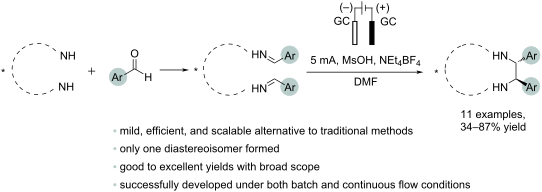
- products, agrochemicals, and pharmacologically active compounds. Enantiomerically pure 1,2-diamines and their derivatives are also increasingly used in stereoselective synthesis, particularly as chiral auxiliaries or as ligands for metal complexes in asymmetric catalysis [1]. Metal-based reductants
- development of technology-driven sustainable strategies to alfa and beta amination of carbonyls and carboxylic acids derivatives- TECHNO”, financed by EU - Next Generation EU, Mission 4 Component 1 CUP G53D23003280006. M. Gazzotti thanks Università degli Studi di Milano for a PhD fellowship.





Preparation of spirocyclic oxindoles by cyclisation of an oxime to a nitrone and dipolar cycloaddition
Beilstein J. Org. Chem. 2025, 21, 1890–1896, doi:10.3762/bjoc.21.146
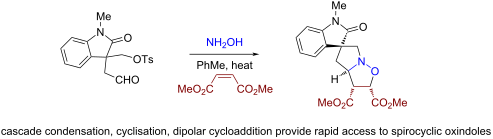
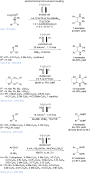
- an important class of compounds with significant biological activities. Spirocyclic derivatives are present in a variety of natural products. We describe here the formation of spirooxindoles using an intermolecular nitrone cycloaddition reaction. The nitrone dipole was prepared in situ by cyclisation


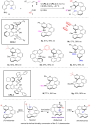
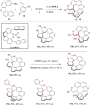
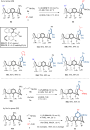
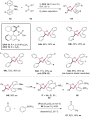
Chiral phosphoric acid-catalyzed asymmetric synthesis of helically chiral, planarly chiral and inherently chiral molecules
Beilstein J. Org. Chem. 2025, 21, 1864–1889, doi:10.3762/bjoc.21.145
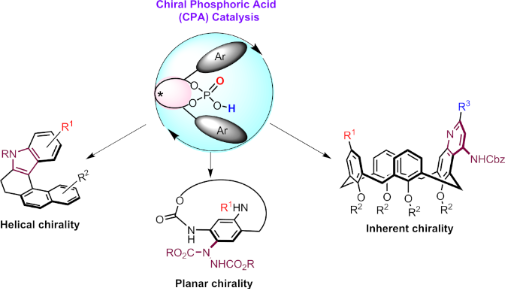
- derivatizations. Based on experimental and computational studies, the origin of helical chirality in this method was elucidated. We proposed that the asymmetric Povarov reaction would generate a pair of diastereomeric tetrahydroquinoline derivatives displaying helical conformation, with a modest energetic barrier
- catalytic kinetic resolution of racemic helical polycyclic phenols through an organocatalyzed enantioselective dearomative amination reaction [30]. The racemic polycyclic phenol derivatives 25, which exist as single diastereomers featuring both central chirality and helical chirality, were readily prepared
- asymmetric transfer hydrogenation employing Hantzsch ester HEH-1 as the reductant afforded both helically chiral tetrahydroquinoline derivatives (M)-30 and the recovered aza[6]helicene starting material (P)-29 with good to high enantioselectivity, achieving an s-factor of up to 121 (Scheme 8). Moreover, by










Systematic pore lipophilization to enhance the efficiency of an amine-based MOF catalyst in the solvent-free Knoevenagel reaction
Beilstein J. Org. Chem. 2025, 21, 1854–1863, doi:10.3762/bjoc.21.144
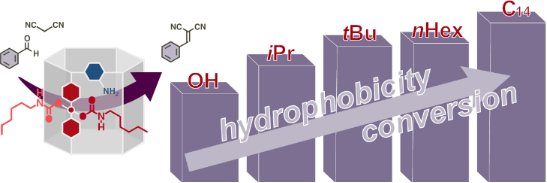
- capability. What is surprising, however, is that the conversions for Me2BDC-NH2 are much lower than those observed for all our KSU-1 derivatives despite the presumably lower basicity of the MOF-immobilized amino groups due to the dicarboxylates coordinating to Zn2+ clusters. This unexpected result indicates


Photoswitches beyond azobenzene: a beginner’s guide
Beilstein J. Org. Chem. 2025, 21, 1808–1853, doi:10.3762/bjoc.21.143
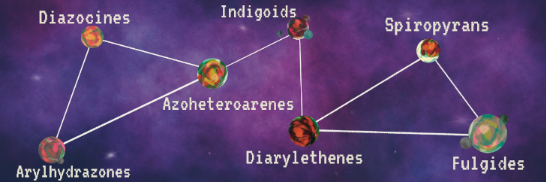
- heterocyclic imines [36][37][38]. The Z-isomers of the unsubstituted derivatives adapt different conformations: T-shaped for the N-phenyl and twisted for the N-pyrazoles. The half-lives follow the same trends already discussed beforehand. In contrast with the azopyrazoles, mono- and di-ortho-amination of the
- aryl ring of 11a and 11b yield iminopyrazoles with longer half-lives and negative photochromism (Figure 7, top). This unusual behaviour can be explained by the absence of adjacent non-bonding lone pairs in the imine bond [37]. Conversely, in the case of N-phenyl derivatives 11c and 11d (Figure 7
- 14, box) and repulsion between the aryl and the carbonyl group in the E-isomer. Some studies on N-acylindigo derivatives reported, besides the expected spectral blue-shift, also a decrease in the fatigue resistance due to photochemical rearrangements [68][69]. Dube and co-workers reported a series of




Fe-catalyzed efficient synthesis of 2,4- and 4-substituted quinolines via C(sp2)–C(sp2) bond scission of styrenes
Beilstein J. Org. Chem. 2025, 21, 1799–1807, doi:10.3762/bjoc.21.142
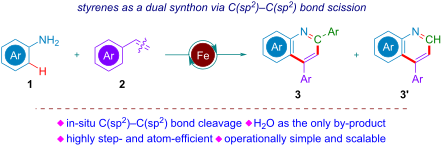
- -disubstituted and 4-substituted quinoline molecules. The developed strategy involves an earth-abundant Fe-catalyzed C(sp2)–C(sp2) bond cleavage of styrene, followed by the hydroamination of the cleaved synthons with arylamines and subsequent C–H annulation to yield two valuable quinoline derivatives. Key
- activation; C–H annulation; iron metal catalysis; quinolines; styrene; Introduction Quinolines are one of the essential heteroaromatic motifs that play a crucial role across diverse scientific fields due to their wide range of applications. In contemporary medicine, quinoline derivatives frequently appear
- , antibacterial, and anti-inflammatory activities [10][11][12][13]. In the field of optoelectronics, especially with 2,4-diarylquinoline derivatives, extensive studies have highlighted their applicability in organic light-emitting diode (OLED) systems as functional materials [14][15] and cutting-edge fluorescent




[3 + 2] Cycloaddition of thioformylium methylide with various arylidene-azolones in the synthesis of 7-thia-3-azaspiro[4.4]nonan-4-ones
Beilstein J. Org. Chem. 2025, 21, 1791–1798, doi:10.3762/bjoc.21.141
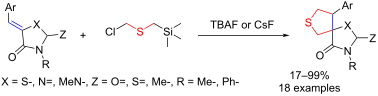
- fluoride, is used for the synthesis of spirocyclic derivatives from arylidene-azolones. Four types of the corresponding heterocycles have been studied. A series of 7-thia-3-azaspiro[4.4]nonan-4-ones was obtained with yields varying from 17 to 99%. The stereochemical study revealed selective formation of
- single either cis or trans stereoisomers, dependent on the heterocycle core used. Keywords: arylidene-azolones; cycloaddition; nitrogen heterocycles; sulfur heterocycles; thioformylium methylide; Introduction Spirocyclic derivatives of heterocycles occupy an important place in modern organic and
- bioorganic chemistry [1]. Such substances are actively investigated in drug design, since their rigid 3D structure allows them to bind more selectively and effectively to biological targets in comparison to classical planar heterocycles [1][2][3][4][5]. Spirocyclic derivatives containing at least one five



Research progress on calixarene/pillararene-based controlled drug release systems
Beilstein J. Org. Chem. 2025, 21, 1757–1785, doi:10.3762/bjoc.21.139
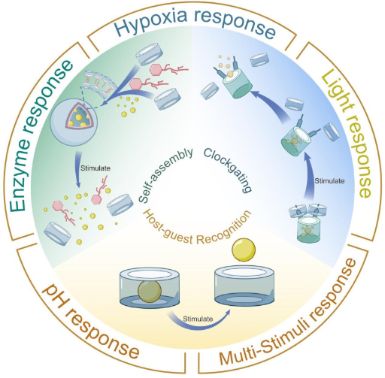
- solubility, this can be improved through derivatization. Water-soluble calixarene derivatives can be obtained through functional modifications, including the introduction of sulfonic acid, amine, and carboxylic acid groups [57][58][59]. These water soluble macrocycle derivatives can be used to increase the
- dual modifications [69]. These derivatives have emerged as a research hotspot due to their unique combination of water solubility, biocompatibility, and host–guest encapsulation capability [47][52][70]. The aggregation behavior of amphiphilic CAs is closely related to the size of the macrocycle, the
- characteristics, CAs hold potential for applications in drug delivery systems. 1.2 PAs: structure and properties Since Ogoshi et al. first introduced pillar[n]arenes in 2008, these macrocycles have become essential to the synthetic macrocyclic receptor field [74]. Research on PAs and their derivatives has become






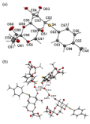
Unique halogen–π association detected in single crystals of C–N atropisomeric N-(2-halophenyl)quinolin-2-one derivatives and the thione analogue
Beilstein J. Org. Chem. 2025, 21, 1748–1756, doi:10.3762/bjoc.21.138
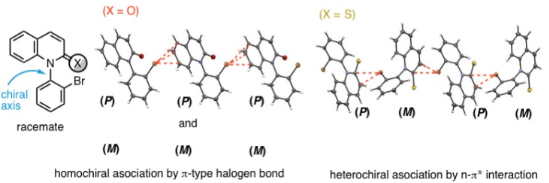
- unstable and standing for a long period in the solution state resulted in several decomposed products). Conclusion We found that crystallization of racemic and optically pure C–N atropisomeric N-(halophenyl)quinolin-2-one derivatives led to the formation of homochiral layered polymer chains, which consist
- were formed through an n–π* interaction between a lone electron pair on the halogen atom and a π*orbital of the quinolinone ring. Thus, chirality (racemic/optically pure)-dependent halogen bonding was observed in single crystals of not only 3-(2-halophenyl)quinazolin-4-one derivatives but also N-(2
- -halophenyl)quinolin-2-one derivatives. Furthermore, it was revealed that the intermolecular association of C–N atropisomeric quinoline-2-thione significantly differs from that of quinolinones. That is, in contrast to the homochiral layered polymer found in quinolinone derivatives, in the single crystal of


3,3'-Linked BINOL macrocycles: optimized synthesis of crown ethers featuring one or two BINOL units
Beilstein J. Org. Chem. 2025, 21, 1719–1729, doi:10.3762/bjoc.21.134
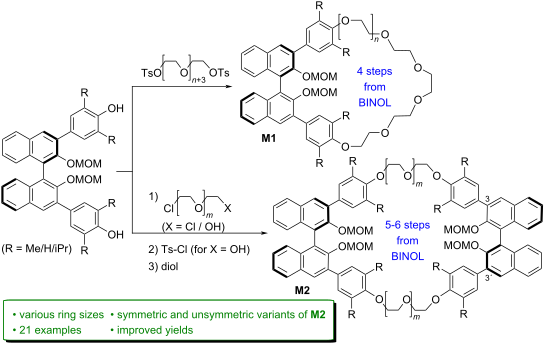
- ) [41][42][43] have been used for attaching the crown ether macrocycle, although this strategy has the advantage that the 2,2'-hydroxy groups remain intact and can be used for further binding or functionalization. Our group recently became interested in synthesizing BINOL derivatives featuring
- multiple steps towards the desired macrocycles. The route towards the bis-BINOL macrocycles additionally requires the synthesis of the unsymmetric monoiodide 12. In our previous work, the route starting from 12 had been designed to give access to macrocyclic and singly linked bis-BINOL derivatives from a
- single precursor, but this is unnecessary if only macrocyclic bis-BINOL derivatives are desired. For this reason, we sought to find optimized syntheses for such BINOL-based macrocycles (see Figure 2). After investigating different synthetic routes (vide infra), we found that Williamson-type ether


Approaches to stereoselective 1,1'-glycosylation
Beilstein J. Org. Chem. 2025, 21, 1700–1718, doi:10.3762/bjoc.21.133
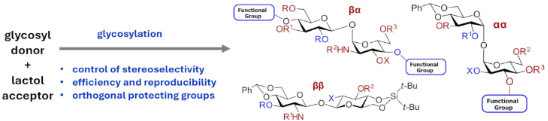
- anomeric configuration of the lactol acceptor is particularly challenging when the desired form is not thermodynamically favored, as is the case with β-mannose derivatives. A refined strategy employing cyclic stannanes to lock the anomeric hydroxy group of a mannose-derived lactol in the equatorial
- sucrose derivatives in plants [79][80][81]. In this case, the carboxymethyl group in the 2-thioethyl fructofuranoside was locked by an intramolecular bridge formed by the TIPDS group to the C4–OH [1,4-O-(1,1,3,3-tetraisopropyldisiloxane-1,3-diyl) bridge], resulting in a β-directing fructofuranosyl donor
- its derivatives include the use of β-ᴅ-psicofuranosyl donors [84][85] and the intracellular aglycon delivery (IAD) strategy [86]. Electron-withdrawing groups, often used for the temporary protection of hydroxy functions in pyranoses, can significantly reduce the nucleophilicity of both glycosyl donors


Continuous-flow-enabled intensification in nitration processes: a review of technological developments and practical applications over the past decade
Beilstein J. Org. Chem. 2025, 21, 1678–1699, doi:10.3762/bjoc.21.132
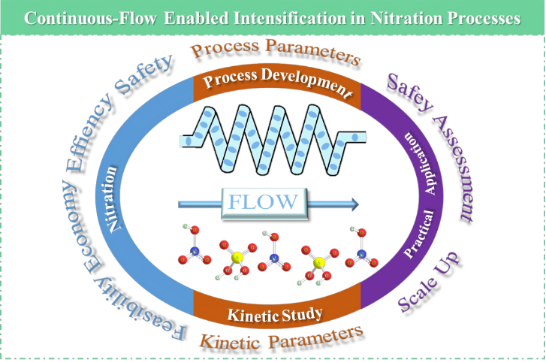
- -flow configurations demonstrate superior safety and efficiency. While the synthetic significance of nitration is underscored by the broad utility of nitro derivatives, persistent technical challenges including regioselectivity control, over-nitration phenomena, and substrate oxidation side reactions
- conversion efficiency, selectivity drift toward undesirable polynitrated derivatives, and by-product formation kinetics that are particularly critical in nitration processes. The integration of long-term stability evaluations and stress testing significantly mitigates scale-up failure risks by identifying
- (e.g., dinitro/trinitro derivatives). These hazardous by-products arise from the tendency of electron-rich substrates to undergo overnitration, drastically increasing detonation potential. Consequently, rigorous safety assessments are critically important for processes involving nitration reactions




Structural analysis of stereoselective galactose pyruvylation toward the synthesis of bacterial capsular polysaccharides
Beilstein J. Org. Chem. 2025, 21, 1671–1677, doi:10.3762/bjoc.21.131

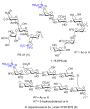
- derivatives, enabling the exploration of the practical applications of PSA1 while simultaneously enhancing our understanding of synthetic chemistry. To simplify the synthetic process, glycosylation was facilitated by employing preactivation and the differences in acceptor reactivity. Using the p
- for O4-linked synthesis in preparing various PS A1 derivatives. In our research, we carried out the synthesis of the PSA1 molecule as part of a broader effort to validate chemical synthesis methodologies. This work involved verifying our experimental techniques and understanding the underlying


Influence of the cation in hypophosphite-mediated catalyst-free reductive amination
Beilstein J. Org. Chem. 2025, 21, 1661–1670, doi:10.3762/bjoc.21.130
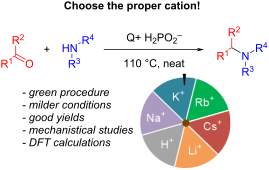
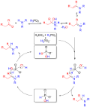
- cation and not its reduction. H2PO3− generated as a result of the first step could reduce a new portion of iminium ions in a similar way forming another molecule of the target amine and ortho-phosphoric acid derivatives. Based on the obtained data we can highlight two main reasons why the developed