


Search results
Search for "fatty acid" in Full Text gives 124 result(s) in Beilstein Journal of Organic Chemistry.
Recent applications of the divinylcyclopropane–cycloheptadiene rearrangement in organic synthesis
Beilstein J. Org. Chem. 2014, 10, 163–193, doi:10.3762/bjoc.10.14
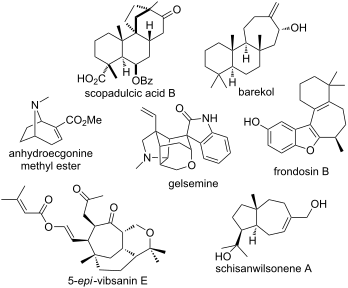
- cyclohepta[cd]oxindole core 32 proved the synthetic versatility of a [3,3]-sigmatropic rearrangement for direct C–C-bond formation at the C4 position of the indole nucleus, and thus provides experimental evidence for the biosynthetic proposal. Applications to natural product synthesis Fatty acid metabolites
- divinylcyclopropane–cycloheptadiene rearrangement has been developed as a versatile method for the construction of seven-membered rings. The utilization in the total synthesis of both sesqui- and diterpenoid natural products as well as in the total synthesis of alkaloids and fatty acid-derived metabolites underlines




The myxocoumarins A and B from Stigmatella aurantiaca strain MYX-030
Beilstein J. Org. Chem. 2013, 9, 2579–2585, doi:10.3762/bjoc.9.293

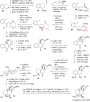
- intermediate, putatively phloroglucinol (12) [36]. Nitrophenol 13 likely constitutes a direct biosynthetic precursor of the myxocoumarins. Upon O-acetylation of 13 with the long-chain β-keto acid building block 14, putatively recruited from fatty-acid biosynthesis, the intermediate ester 15 could undergo C–C


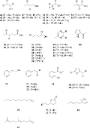
A practical synthesis of long-chain iso-fatty acids (iso-C12–C19) and related natural products
Beilstein J. Org. Chem. 2013, 9, 1807–1812, doi:10.3762/bjoc.9.210
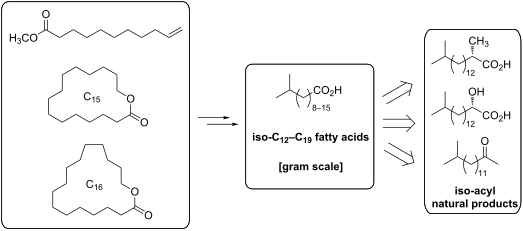
- by fatty acid synthases to the final iso-fatty acids (even numbered for isobutyryl-CoA; odd-numbered for isovaleryl-CoA) through extension with malonyl-CoA [21][22]. Long-chain iso-fatty acids are important analytical reference compounds owing to the presence of these materials in tobacco [23], wool
- ), from readily available starting materials. To illustrate the opportunities that our approach provides, we demonstrate the elaboration of the C17-iso-fatty acid 6 and an intermediate, 22, to several terminal-branched natural products that have not previously been synthesized. Results and Discussion Our


Quantification of N-acetylcysteamine activated methylmalonate incorporation into polyketide biosynthesis
Beilstein J. Org. Chem. 2013, 9, 664–674, doi:10.3762/bjoc.9.75
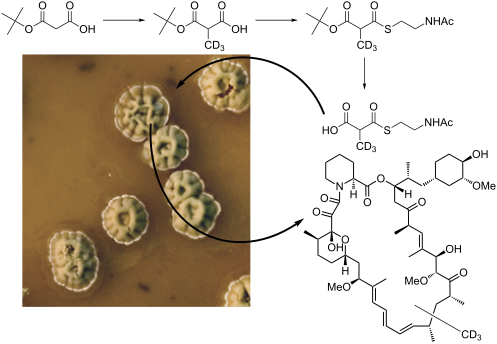
- widespread application in current medicine and agriculture. Polyketide synthases (PKS), giant multienzyme complexes, play a pivotal role in their biosynthesis. PKS generate molecular complexity and diversity through a number of stepwise condensations in analogy to fatty acid synthases but with optional and



A peptidic hydrogel that may behave as a “Trojan Horse”
Beilstein J. Org. Chem. 2013, 9, 417–424, doi:10.3762/bjoc.9.44
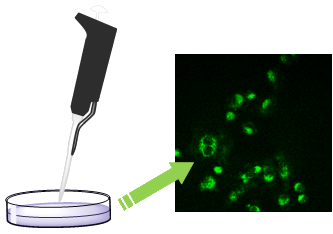
- the xerogel, making a complex network. The gelator is derived from α-amino acids (Thr, Phe) and a fatty acid (azelaic acid) and is biocompatible: it was dosed to IGROV-1 cells, which internalized it, without significantly affecting the cell proliferation. To check the internalization process by
- carry drug molecules into the cell. For this purpose, we used the gelator A (Figure 1), derived from natural proteinogenic amino acids (Thr, Phe) and a fatty acid (azelaic acid). Compound A was prepared from Boc-L-Phe-D-Oxd-OBn and azelaic acid, as previously reported [23]. To check the cellular uptake


Chemical modification allows phallotoxins and amatoxins to be used as tools in cell biology
Beilstein J. Org. Chem. 2012, 8, 2072–2084, doi:10.3762/bjoc.8.233
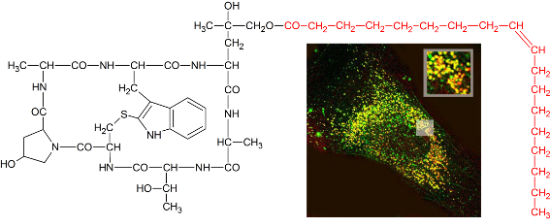
- studying the kinetics of phalloidin-induced disturbances in the actin system of a cell in correlation with, for example, the development of apoptosis in the cell. Experimental Fatty acid esters of phalloidin Ten micromoles of phalloidin was dissolved in 0.1 mL dry pyridine and reacted with 0.3 µmol of
- . After evaporation in vacuo at 60 °C, the aminophalloidin was purified on a Sephadex-LH20 column with methanol as eluant. Yield of aminophalloidin was 80%, purity 89% by HPLC. Fatty acid amides of phalloidin Aminophalloidin and the fatty acid chlorides were reacted as described for the synthesis of




Identification and isolation of insecticidal oxazoles from Pseudomonas spp.
Beilstein J. Org. Chem. 2012, 8, 749–752, doi:10.3762/bjoc.8.85
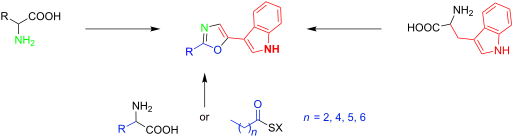
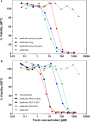
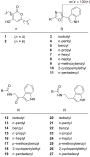
- side chains was concluded from a fatty-acid analysis of the producing strain, which showed only straight-chain fatty acids (data not shown). In order to confirm the structure of all oxazole derivatives, to compare their retention times, and to provide enough material for bioactivity tests, oxazoles 3–6



Synthesis and antifungal properties of papulacandin derivatives
Beilstein J. Org. Chem. 2012, 8, 732–737, doi:10.3762/bjoc.8.82
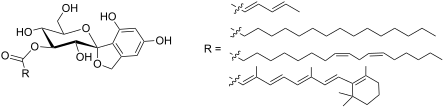
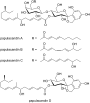
- -1042 [25], corynecandin [26][27] and the F-10748 series [28]. These structures vary mostly with respect to the two partially unsaturated acyl chains on the sugars. Small changes in these fatty acid tails have only small effects on the activity. However, more drastic changes in these tails or the lack
- hydroxy groups were reprotected with MOM groups by using MOM-Cl to give 36. Then the glucose O(3) needed to be selectively deprotected for the incorporation of the fatty acid tail. Unfortunately, this was not possible from 36 because of the use of the more stable TIPS group in this synthesis. Therefore



The volatiles of pathogenic and nonpathogenic mycobacteria and related bacteria
Beilstein J. Org. Chem. 2012, 8, 290–299, doi:10.3762/bjoc.8.31
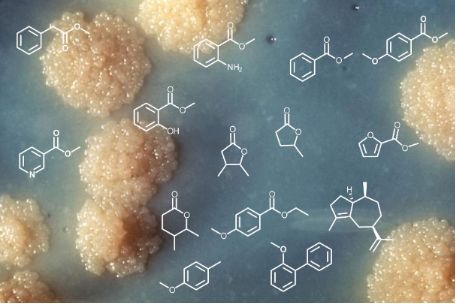
- fatty-acid derivatives were released by pathogenic/nonpathogenic mycobacteria, while the two Nocardia spp. (N. asteroides and N. africana) emitted the sesquiterpene aciphyllene. Pathogenic Mycobacterium tuberculosis strains grown on agar plates produced a distinct bouquet with different volatiles, while
- compounds are listed in Table 1. In addition to previously reported compounds 1–4 [9], several new volatiles were identified, predominantly aromatic compounds, such as 4-methylanisole (5), methyl salicylate (6), methyl 2-aminobenzoate (7), and methyl and ethyl benzoate (8 and 9), as well as fatty-acid
- previously observed volatiles 1, 5, 7, and 8, as well as the fatty acid derivative 10, were present in the headspace extracts. Frequently, mycobacteria are observed to grow faster in liquid medium than on solid medium [31][32]. Consistent with this, M. tuberculosis strain 5 produced the most volatiles after


Conserved and species-specific oxylipin pathways in the wound-activated chemical defense of the noninvasive red alga Gracilaria chilensis and the invasive Gracilaria vermiculophylla
Beilstein J. Org. Chem. 2012, 8, 283–289, doi:10.3762/bjoc.8.30
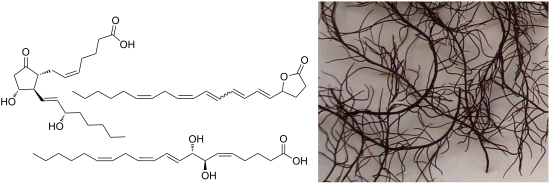
- chemical defense against epiphytism has been demonstrated. This alga has two major lines of defense, including a rapid wound-activated production of oxylipins and a slower induced defense involving the up regulation of phospholipases and lipoxygenases and subsequent fatty-acid transformation [3][5]. Among
- demonstrate that the structurally diverse oxylipins detected in Gracilaria spp. play individual roles in the chemical defense against different herbivores. The dihydroxylated fatty acid 7,8-di-HETE is generally active against co-evolved herbivores, while prostaglandins support an invasive success of the algae
- same procedure was followed in the absence of the labeled fatty acid. Quantitative analysis. The extracted or commercially available compounds were used to create three calibration standards for each analyte, covering the concentration range detected in the extract from wounded algae. A calibration


Novel fatty acid methyl esters from the actinomycete Micromonospora aurantiaca
Beilstein J. Org. Chem. 2011, 7, 1697–1712, doi:10.3762/bjoc.7.200
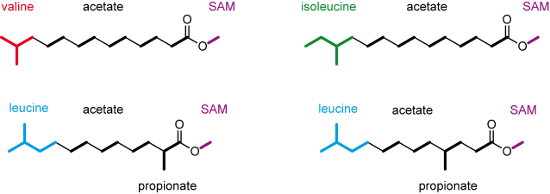
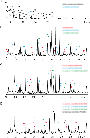
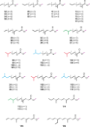
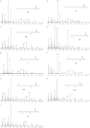
- (CLSA) and analysed by GC–MS. The headspace extracts contained more than 90 compounds from different classes. Fatty acid methyl esters (FAMEs) comprised the major compound class including saturated unbranched, monomethyl and dimethyl branched FAMEs in diverse structural variants: Unbranched, α-branched
- with isotopically labelled [2H10]leucine, [2H10]isoleucine, [2H8]valine, [2H5]sodium propionate, and [methyl-2H3]methionine demonstrated that the responsible fatty acid synthase (FAS) can use different branched and unbranched starter units and is able to incorporate methylmalonyl-CoA elongation units
- for internal methyl branches in various chain positions, while the methyl ester function is derived from S-adenosyl methionine (SAM). Keywords: actinomycetes; FAMEs; fatty acid biosynthesis; GC–MS; volatiles; Introduction Lipids in general, and particularly fatty acids (FAs), belong to the most




Marilones A–C, phthalides from the sponge-derived fungus Stachylidium sp.
Beilstein J. Org. Chem. 2011, 7, 1636–1642, doi:10.3762/bjoc.7.192
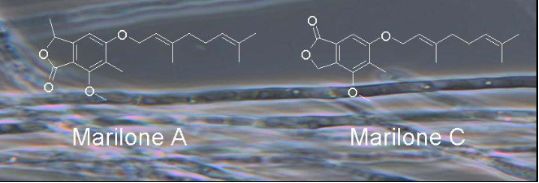
- from VLC fraction 1. VLC fraction 1 was again fractionated using petroleum ether/acetone 90:1 and 10:1 in order to eliminate fatty acid content of the sample. The VLC fraction 10:1 was subjected to NP-HPLC fractionation using petroleum ether/acetone 30:1 to yield a mixture of both compounds


Natural product biosyntheses in cyanobacteria: A treasure trove of unique enzymes
Beilstein J. Org. Chem. 2011, 7, 1622–1635, doi:10.3762/bjoc.7.191
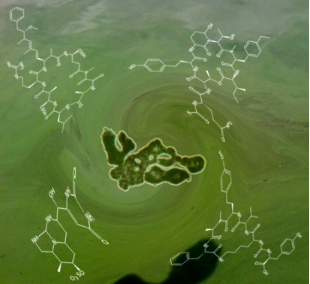
- , assembled and optionally modified. The maximal set of domains of an individual PKS module is identical to animal fatty acid synthase (FAS) [13] and consists of ketosynthase (KS), acyltransferase (AT), ketoreductase (KR), dehydratase (DH), enoyl reductase (ER) and acyl carrier protein (ACP) domains [14


Biosynthesis and function of secondary metabolites
Beilstein J. Org. Chem. 2011, 7, 1620–1621, doi:10.3762/bjoc.7.190
- polyketide and nonribosomal peptide biosynthetic machineries, which is strongly correlated with the logic of fatty acid biosynthesis as part of the primary metabolism. Insights into the mechanisms of modular polyketide and nonribosomal peptide assembly lines open up the possibility for direct modifications
A new phenylethyl alkyl amide from the Ambrostoma quadriimpressum Motschulsky
Beilstein J. Org. Chem. 2011, 7, 1342–1346, doi:10.3762/bjoc.7.158
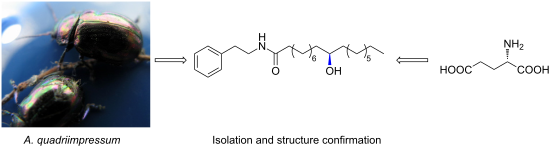
- chain was accomplished by the selective protection of the hydroxy groups and two-time implementation of the Wittig olefination reaction. Keywords: asymmetric synthesis; beetle; fatty acid amide; isolation; Introduction The leaf beetle Ambrostoma quadriimpressum Motschulsky (Coleoptera: Chrysomelidae
- , many research efforts have concentrated on chemical communication among beetles [3][4][5][6]. Only a limited number of semiochemicals [7][8][9][10][11][12][13] are known in leaf beetles. To the best of our knowledge, fatty acid amides from terrestrial insects have not been reported so far. In addition
- to be assigned (R). Conclusion In summary, a new natural product, (10R)-10-hydroxy-N-phenethyloctadecanamide (1) from Ambrostoma quadriimpressum Motschulsky was identified and synthesized. Further studies on the biological roles of fatty acid amides are currently being performed by our group


Ene–yne cross-metathesis with ruthenium carbene catalysts
Beilstein J. Org. Chem. 2011, 7, 156–166, doi:10.3762/bjoc.7.22
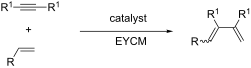
- , are reviewed in this article. In addition, the use of bio-resourced olefinic substrates is presented. Keywords: catalysis; cross-metathesis; enyne; fatty acid esters; ruthenium; Introduction The interaction of alkyne triple bonds with metal carbenes or metal vinylidene species was already known
- . Examples involve ethylene, terminal olefins, cyclic olefins, diene metathesis with alkynes and finally applications in unsaturated fatty acid ester transformations. Review General considerations on EYCM The EYCM is an attractive bimolecular transformation as it is an atom economical reaction which results
- )prop-1-ene, 3-n-butoxyprop-1-ene and allyl acetate. Applications in fatty acid ester derivative transformations The direct transformation of unsaturated fatty acid esters by EYCM has never been performed. This is not surprising as no catalyst has been able to perform the cross-metathesis of alkynes


Application of the diastereoselective photodeconjugation of α,β-unsaturated esters to the synthesis of gymnastatin H
Beilstein J. Org. Chem. 2011, 7, 151–155, doi:10.3762/bjoc.7.21
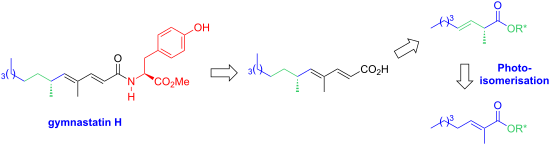
- , gymnastatins 10 constitute a family of compounds isolated from Gymnascella dankaliensis which grows in symbiosis with the marine sponge Halichondria japonica [10] (Figure 2). Gymnastatins 10 possess a common unsaturated fatty acid residue connected to a tyrosine subunit. These compounds have been reported to
- ]. In this context, we have considered an alternative synthetic route to the fatty acid common to all gymnastatins according to a photoisomerisation–diastereoselective protonation sequence involving catalytic amounts of an achiral organocatalyst (e.g., amino alcohol 4b). Our goal was to describe the
- modified geometry of the two double bonds. Furthermore, the biological activities of these novel structures are going to be studied. Natural products prepared by photodeconjugation. Natural amides possessing the same (6R)-fatty acid side chain. Principle of the photodeconjugation process. Enantio- and


The cross-metathesis of methyl oleate with cis-2-butene-1,4-diyl diacetate and the influence of protecting groups
Beilstein J. Org. Chem. 2011, 7, 1–8, doi:10.3762/bjoc.7.1
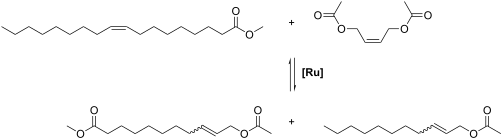
- to alkenes bearing a wide range of functional groups [8][9][10][11]. Especially, the olefin cross-metathesis with oleochemicals offers a versatile synthetic approach to prepare value-added substrates starting from renewable raw materials. Due to the cross-metathesis reactions of fatty acid
- desirable to avoid the use of protecting groups. Thus, the optimised reaction conditions for the cross-metathesis of methyl oleate (1) with cis-2-butene-1,4-diyl diacetate (2) were applied to the cross-metathesis reaction of the corresponding fatty acid 7 with the diol 8. The oleic acid (7) was reacted with


Novel tetracyclic structures from the synthesis of thiolactone-isatin hybrids
Beilstein J. Org. Chem. 2010, 6, No. 78, doi:10.3762/bjoc.6.78
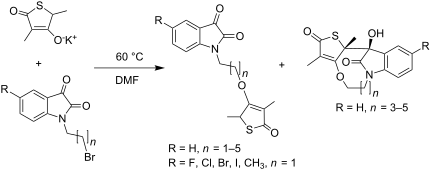
- against the condensing enzymes of type II fatty acid synthesis which operate in a number of pathogenic organisms [6][7][8]. Synthetic methodologies for 1 and a series of racemic and enantiopure thiolactomycin-based analogues have been reported [9][10][11][12][13][14][15][16]. Of particular interest to


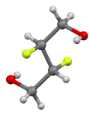
Synthesis and crystallographic analysis of meso-2,3-difluoro-1,4-butanediol and meso-1,4-dibenzyloxy-2,3-difluorobutane
Beilstein J. Org. Chem. 2010, 6, No. 62, doi:10.3762/bjoc.6.62

- than the corresponding anti conformation [7][8][9]. O’Hagan has demonstrated that vicinal difluoride substitution along a hydrocarbon chain of a fatty acid leads to conformational rigidity or disorder depending on the relative stereochemistry of the fluorine atoms, which originates from the enforcing



N-acylation of ethanolamine using lipase: a chemoselective catalyst
Beilstein J. Org. Chem. 2009, 5, No. 10, doi:10.3762/bjoc.5.10
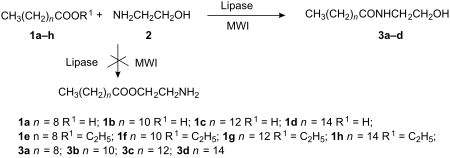
- ) the high reactivity of primary amine, (ii) the fact that use of excess fatty acid or ester 1a–h is not required to convert virtually all the amine to its ion-pair form and (iii) in aminoalkanols NH2(CH2)nOH, where n < 3, there is migration of acyl groups from O→N spontaneously when excess of fatty
- terms of solubility of reactants (partially soluble at room temperature and completely soluble at 50 °C) and yield of products. Effect of mole ratio of reactants The effect of mole ratio of fatty acid [lauric acid (1b)] and ethanolamine was studied by using 1,4 dioxane with Novozym® 435. In this set of
- experiments, molar ratios of lauric acid (fatty acid 1b) to ethanolamine were varied from 1:1/3 to 1:3, where the amount of ethanolamine was kept constant at 2.5 mmol. It was experimentally concluded that the rate of reaction as well as the overall conversion is best in the case of equimolar ratio. An


Recent progress on the total synthesis of acetogenins from Annonaceae
Beilstein J. Org. Chem. 2008, 4, No. 48, doi:10.3762/bjoc.4.48
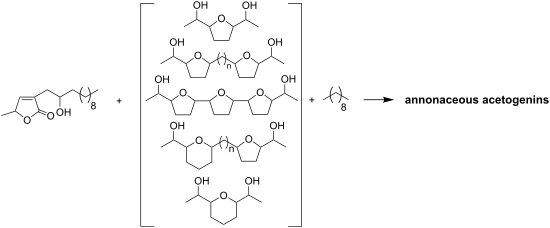
- identified from the roots of Uvaria acuminata, more than 400 members of this family of compounds have been isolated from 51 different species [7]. The common skeleton is most often characterised by an unbranched C32 or C34 fatty acid ending in a γ-lactone. Several oxygenated functions, such as hydroxyls


Stereoselective synthesis of (2S,3S,4Z)-4-fluoro- 1,3-dihydroxy- 2-(octadecanoylamino)octadec- 4-ene, [(Z)-4-fluoroceramide], and its phase behavior at the air/water interface
Beilstein J. Org. Chem. 2008, 4, No. 12, doi:10.3762/bjoc.4.12

- fatty acid amide functions. Results In a short synthetic route (2S,3S)-4-fluorosphingosine and 4-fluoroceramide, the fluorinated analogues of the natural products, D-erythro-sphingosine and ceramide, have been prepared. The key step of the synthetic sequence is an asymmetric aldol reaction of (Z)-2
- water permeability barrier consisting of a highly organized multilaminar lipid matrix of free fatty acids, cholesterol and ceramides containing additional hydroxyl groups in the sphingosin part and longer fatty acid amide functions [23]. The function of the additional free OH group seems to be the


Synthesis of novel (1-alkanoyloxy- 4-alkanoylaminobutylidene)-1,1-bisphosphonic acid derivatives
Beilstein J. Org. Chem. 2006, 2, No. 2, doi:10.1186/1860-5397-2-2

- have also recently described the method for the preparation of (1-alkoxycarbonyloxyethylidene)-1,1-bisphosphonic acid derivatives [20] and novel fatty acid derivatives of etidronate [21] which may represent prodrugs of etidronate. In the case of etidronic acid, we have shown that simple phosphonate





