


Search results
Search for "labeling" in Full Text gives 189 result(s) in Beilstein Journal of Organic Chemistry.
α-Acetoxyarone synthesis via iodine-catalyzed and tert-butyl hydroperoxide-mediateded self-intermolecular oxidative coupling of aryl ketones
Beilstein J. Org. Chem. 2017, 13, 1079–1084, doi:10.3762/bjoc.13.107

- radical pathways. Multiple radical intermediates were generated in situ and the overall process involved several different reactions, which proceeded self-sequentially in a single reactor. A labeling experiment using 18O-labeled H2O confirmed that the oxygen in the product was derived from TBHP, not from




Glyco-gold nanoparticles: synthesis and applications
Beilstein J. Org. Chem. 2017, 13, 1008–1021, doi:10.3762/bjoc.13.100
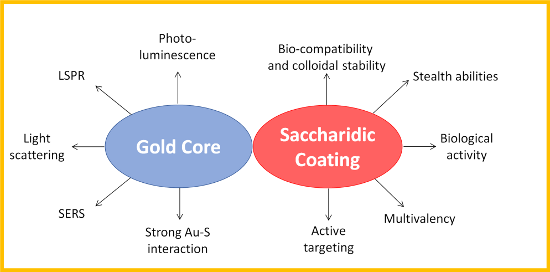
- embedded on PEGylated-gold nanoparticles and the sugar moiety displayed on the outer shell of the nanosystem is available for interaction with lectin. In 2016, Sakurai and co-workers [81] combined the multiple display of the carbohydrate moiety on AuNPs with the photoaffinity labeling (PAL), to concentrate
- coating. When galactoside-coated AuNPs interact with lectin, AuNPs aggregates, inducing a plasmonic band shift. Reprinted with permission from [25]. Copyright 2015 American Chemical Society. A photoaffinity labeling (PAL) approach based on glyco-gold nanoparticles is able to recognize and isolate only the


Membrane properties of hydroxycholesterols related to the brain cholesterol metabolism
Beilstein J. Org. Chem. 2017, 13, 720–727, doi:10.3762/bjoc.13.71
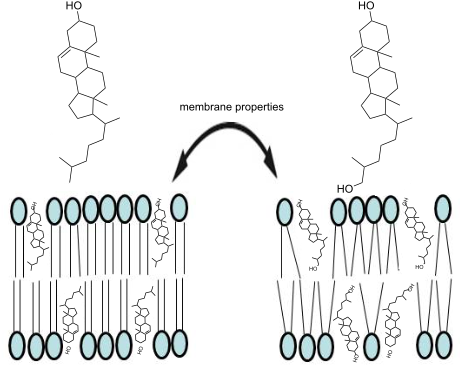
- known for the formation and coexistence of lateral disordered (ld) and ordered (lo) domains. The domain structure was visualized by labeling the membrane with the ld marker 1,2-dioleoyl-sn-glycero-3-phosphoethanolamine-N-(lissamine rhodamine B sulfonyl) (ammonium salt) (N-Rh-DOPE) and recording z-stacks


Novel β-cyclodextrin–eosin conjugates
Beilstein J. Org. Chem. 2017, 13, 543–551, doi:10.3762/bjoc.13.52
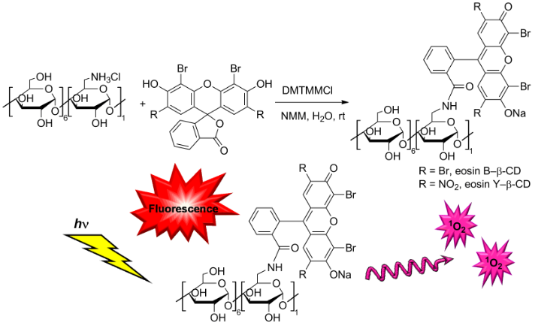
- mechanism of their action and their fate inside living cells. The fluorescent labeling of CDs enables their tracking and visualization in biological media and provides useful information about their cell-membrane-penetration ability [2][3]. Besides, fluorophore-appended CDs have been extensively studied and



Biosynthetic origin of butyrolactol A, an antifungal polyketide produced by a marine-derived Streptomyces
Beilstein J. Org. Chem. 2017, 13, 441–450, doi:10.3762/bjoc.13.47
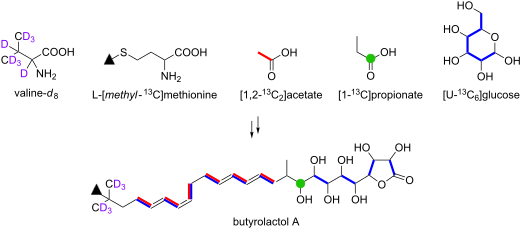
- structurally related natural products to date. In this study, inspired by our previous genomic analysis, incorporation of 13C- and 2H-labeled precursors into butyrolactol A was investigated. Based on the labeling pattern and sequencing analytical data, we confirmed that the tert-butyl group is derived from
- -labeling result, this labeling pattern suggested that the carbons from C-1 to C-8 are derived from hydroxymalonyl-ACP. This conclusion is supported by the sequencing analysis of the gene cluster for butyrolactol biosynthesis (Figure 5, Table 2). Four genes coding homologues of enzymes involved in
- experiments of isotope-labeled precursors in combination with the bioinformatics analysis of its biosynthetic genes. The overall result of labeling experiments is summarized in Figure 8. The tert-butyl group was shown to be derived from the C-methylated isopropyl group of valine. This is the first study that



Solid-phase enrichment and analysis of electrophilic natural products
Beilstein J. Org. Chem. 2017, 13, 405–409, doi:10.3762/bjoc.13.43
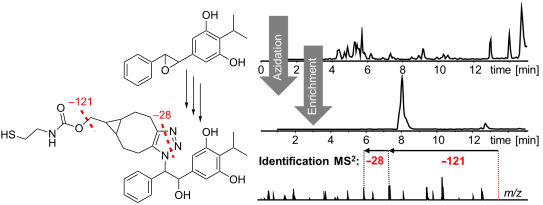
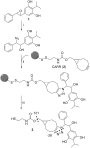
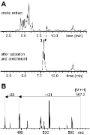
- combination with labeling experiments even the nature of the parent natural product could be revealed. Moreover, a possible scale-up of this procedure should enable the preparative purification of yet unidentified compounds as well as the structural confirmation of the identified structures. This approach can


Polyketide stereocontrol: a study in chemical biology
Beilstein J. Org. Chem. 2017, 13, 348–371, doi:10.3762/bjoc.13.39
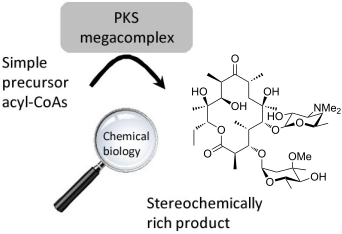
- limited to, the synthesis of isotopically-labeled precursors and the analysis of the resulting labeling patterns, characterization by assays in vitro of wild type and mutant recombinant enzymes in the presence of synthetic substrates, and genetic engineering of model systems coupled with analysis of
- labeling at C-2, C-4, and C-10 of the macrolide ring. This result was consistent with incorporation of (2S)-methylmalonyl-CoA during the second, fifth, and sixth chain extension cycles, with inversion of configuration at the C-2 center as found for fatty acid biosynthesis (vide infra) [24]. However
- the stereochemistry of the less common extender units, labeling studies indicate that the (2S) isomer of ethylmalonyl-CoA is also used [39], which correlates with it originating predominantly from the reductive carboxylation of crotonyl-CoA [40]. Several extender units including aminomalonyl-ACP [41




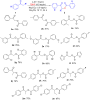
Correction: Synthesis, dynamic NMR characterization and XRD studies of novel N,N’-substituted piperazines for bioorthogonal labeling
Beilstein J. Org. Chem. 2017, 13, 301–302, doi:10.3762/bjoc.13.32
- : building blocks; coalescence; dynamic NMR; labeling; Staudinger ligation; In the original article an incorrect caption for Figure 1 was given. The assignment of the solvents to the capital letters was not correct. The correct caption of Figure 1 is: 1H NMR spectra of compound 3a measured in five different

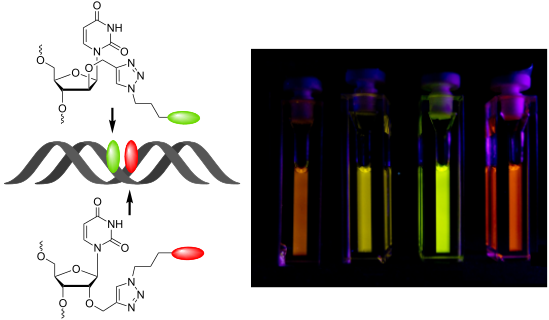
A postsynthetically 2’-“clickable” uridine with arabino configuration and its application for fluorescent labeling and imaging of DNA
Beilstein J. Org. Chem. 2017, 13, 127–137, doi:10.3762/bjoc.13.16




Versatile synthesis of end-reactive polyrotaxanes applicable to fabrication of supramolecular biomaterials
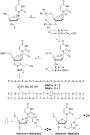
Beilstein J. Org. Chem. 2016, 12, 2883–2892, doi:10.3762/bjoc.12.287

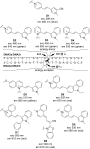
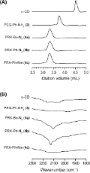
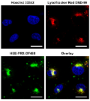
- -catalyzed click reactions are performed. Additionally, fluorescence labeling of the PRX and intracellular fluorescence imaging were performed as an example application. Results and Discussion Synthesis of azide-terminated PRXs using bis(2-amino-3-phenylpropyl) poly(ethylene glycol) and 4-substituted benzoic




Chemical probes for competitive profiling of the quorum sensing signal synthase PqsD of Pseudomonas aeruginosa
Beilstein J. Org. Chem. 2016, 12, 2784–2792, doi:10.3762/bjoc.12.277
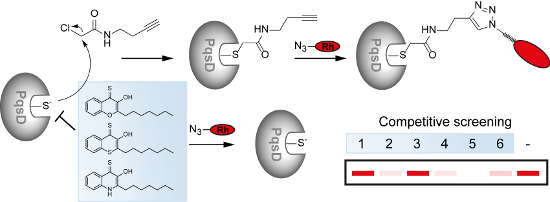
- amide probes UA1–3 and the α,β-unsaturated ketone UK1 only resulted in very weak or no labeling, all three α-chloroacetamide probes CA1–3 gave a strong fluorescent signal in the gel (Figure 3A). In order to investigate the selectivity of the probes, we constructed a PqsD C112A mutant, where the active
- site cysteine was replaced by alanine. The purified mutant PqsD C112A exhibited only low background labeling for some probes but not comparable to labelling of the wild type protein by CA1–3, indicating that the probes were selectively targeting the active site (Figure 3A). Concentration series with a
- , variations in the probe structure had little impact on labeling intensity and specificity. Although each α-chloroacetamide probe had one closely related α,β-unsaturated acetamide counterpart, only the reactive group but not the structure of the probe or its side groups determined active-site labeling. These


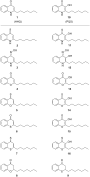

Benzothiadiazole oligoene fatty acids: fluorescent dyes with large Stokes shifts
Beilstein J. Org. Chem. 2016, 12, 2739–2747, doi:10.3762/bjoc.12.270
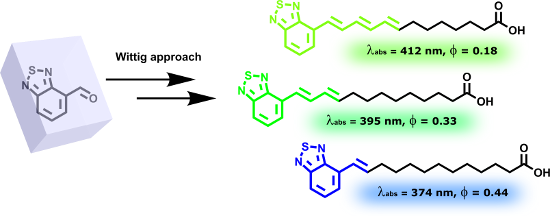
- , but spectroscopically different fluorescent probes we believe that these fatty acids might find interest as useful candidates to study the sensitive hydrophobic area of membranes in terms of domain formation or as labeling agents in general. Experimental General. All solvents for column chromatography


Synthesis, dynamic NMR characterization and XRD studies of novel N,N’-substituted piperazines for bioorthogonal labeling
Beilstein J. Org. Chem. 2016, 12, 2478–2489, doi:10.3762/bjoc.12.242
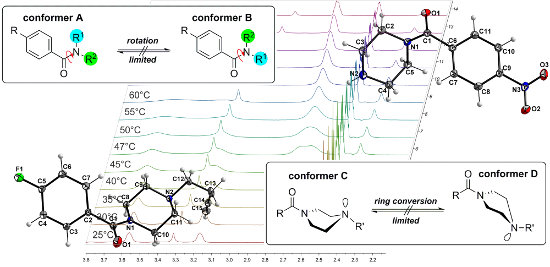
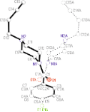
- (1)°, V = 1325.74(4) Å3, Z = 4, Dobs = 1.304 g/cm3) were obtained from a saturated ethyl acetate solution. The rotational conformation of these compounds was also verified by XRD. As proof of concept for future labeling purposes, both nitropiperazines were reacted with [18F]F–. To test the
- applicability of these compounds as possible 18F-building blocks, two biomolecules were modified and chosen for conjugation either using the Huisgen-click reaction or the traceless Staudinger ligation. Keywords: building blocks; coalescence; dynamic NMR; labeling; Staudinger ligation; Introduction The
- development of new building blocks for specific and bioorthogonal labeling of biologically active compounds is of high importance. Depending on their size and composition, building blocks can influence (bio-)chemical parameters such as the lipophilicity (log P) affecting the solubility and the biological




Enantioconvergent catalysis
Beilstein J. Org. Chem. 2016, 12, 2038–2045, doi:10.3762/bjoc.12.192
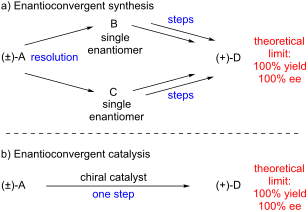
- . Deuterium labeling experiments have shown that the hydrogenation reaction occurs only on the chiral keto tautomer, and therefore the catalyst selects one enantiomer of the substrate when the reduction takes place. Enantioconvergent methods are not limited to carbon stereocenters. An exceptional example of
- ]. The observed product arises from hydrolysis of each enantiomer of epoxide at the S-configured carbon atom. Isotopic labeling studies with 18OH2 not only confirmed this mechanistic hypothesis, but also facilitated kinetic studies to determine relative rate constants for each of the four reaction


Synthesis and characterization of fluorinated azadipyrromethene complexes as acceptors for organic photovoltaics
Beilstein J. Org. Chem. 2016, 12, 1925–1938, doi:10.3762/bjoc.12.182
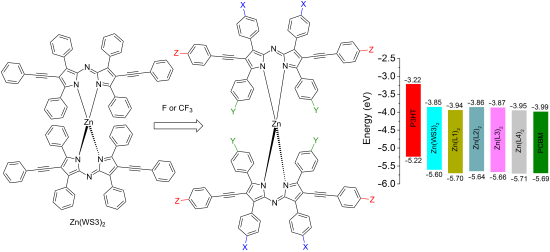
- materials. Only Zn(L2)2 produced crystals suitable for analysis. Figure 9 shows the ORTEP drawing of Zn(L2)2 with 50% ellipsoids and a partial labeling scheme for clarity. The crystal structure confirms the identity of the complex and gives an idea of the interactions in the complex. Like Zn(ADP)2, the
- evaporator. The devices were characterized using a Oriel Sol2A solar simulator and a Keithley 2400 SourceMeter. The active area of each solar cell is 0.20 cm2. a) Azadipyrromethene ligand labeling positioning; b and c) chelates; d) estimated HOMO/LUMO energy levels [9]. Chemical structures of the fluorinated
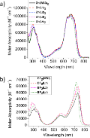
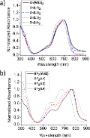
- level and a partial labeling scheme. The hydrogen atoms, and dichloromethane solvate were omitted for clarity. ORTEP drawing of Zn(L2)2 with ellipsoids drawn at the 50% probability level and a partial labeling scheme. The hydrogen atoms, and dichloromethane solvate were omitted for clarity. a) Shows the




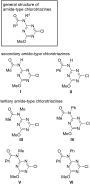
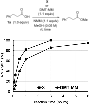
Potent triazine-based dehydrocondensing reagents substituted by an amido group
Beilstein J. Org. Chem. 2016, 12, 1897–1903, doi:10.3762/bjoc.12.179
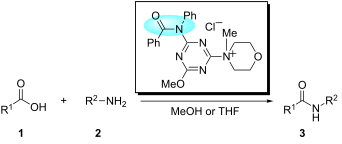
- ], a crown-ether-based cyclotransferase [8], membrane fusion of small unilamellar vesicles to form giant unilamellar vesicles [9], modular methods for the affinity labeling of targeting proteins [10][11][12], and reaction acceleration on micelle interfaces [13][14]. Thus, various types of molecular




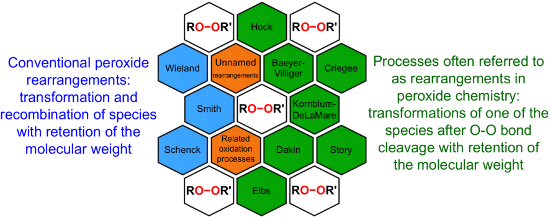
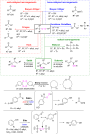
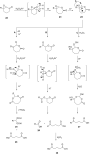
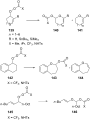
Rearrangements of organic peroxides and related processes
Beilstein J. Org. Chem. 2016, 12, 1647–1748, doi:10.3762/bjoc.12.162











Experimental and theoretical insights in the alkene–arene intramolecular π-stacking interaction
Beilstein J. Org. Chem. 2016, 12, 1616–1623, doi:10.3762/bjoc.12.158
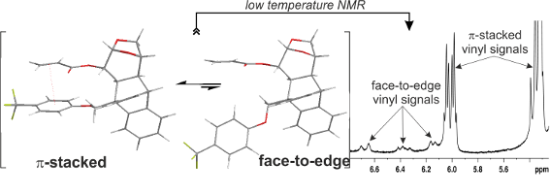
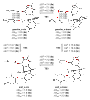
- (in kcal/mol) computed for 6d and 6b (in grey). X-ray thermal ellipsoid plot of 6a (50% probability level) showing the labeling scheme (hydrogen and carbon labels have been omitted for clarity). Synthesis of acrylates 6a,b. Complexes between methyl acrylate (7) and representative anisole derivatives




Dinuclear thiazolylidene copper complex as highly active catalyst for azid–alkyne cycloadditions
Beilstein J. Org. Chem. 2016, 12, 1566–1572, doi:10.3762/bjoc.12.151
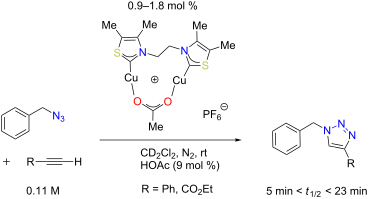
- of the mandatory role of dinuclear copper complexes as catalyst intermediates has vastly improved (Scheme 1) [33][34][35][36][37]. In 2013, the Fokin group provided evidence for the dicopper pathway of CuAAC reactions by a series of kinetic and isotopic labeling studies [34]. In 2015, the Bertrand


Application of Cu(I)-catalyzed azide–alkyne cycloaddition for the design and synthesis of sequence specific probes targeting double-stranded DNA
Beilstein J. Org. Chem. 2016, 12, 1348–1360, doi:10.3762/bjoc.12.128
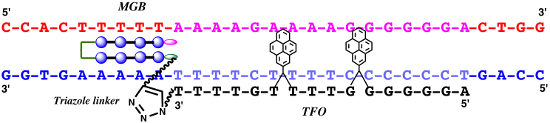
- –imidazole polyamides; sequence specificity: DNA; triplex-forming oligonucleotides; Introduction The recognition and detection of specific sequences in native genomic double-stranded DNA (dsDNA) is of significant importance for the development of efficient gene therapies and in vivo gene labeling [1][2][3
- . demonstrated the fluorescent labeling of proteins directly in living cells by copper-free "click chemistry" [29]. Alkyne or azide groups can be inserted into both TFO and MGB using enzymatic or chemical methods during matrix or solid-phase synthesis [2][30][31] or post-synthetically using described conjugation
- fluorescent probes via their labeling by commercial and "home-made" fluorescent dyes bearing azide groups. It was noted that yields of alkyne-modified MGBs were higher (50–83%) compared to those of azide modified MGBs (≈40%). The other variant for insertion of terminal azide or alkyne groups into the


Conjugate addition–enantioselective protonation reactions
Beilstein J. Org. Chem. 2016, 12, 1203–1228, doi:10.3762/bjoc.12.116
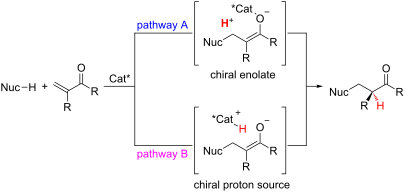
- mechanism of their reaction through a combination of DFT calculations, deuterium labeling studies, and control experiments (Scheme 13) [34]. The authors proposed that after migratory insertion of the rhodium–aryl bond across the acrylate, 58 undergoes β-hydride elimination of the enamide proton to generate
- rhodium catalyst binding to the benzoxazole nitrogen 68. Deuterium labeling studies were performed on the system and based on their results a mechanism was proposed in which the stereodetermining step is a rhodium-hydride transfer instead of protonation of an oxo-π-allylrhodium species (Scheme 17


Synthesis of a deuterated probe for the confocal Raman microscopy imaging of squalenoyl nanomedicines
Beilstein J. Org. Chem. 2016, 12, 1127–1135, doi:10.3762/bjoc.12.109
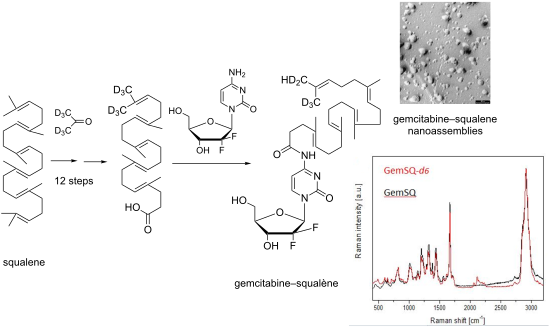
- fulfill this task, radioactive labeling or fluorescent probes have been thoroughly used. For example, the subcellular localization of the 3H-radiolabeled GemSQ conjugate has been evaluated by micro-autoradiography coupled to confocal imaging of fluorescently labeled cellular structures [21]. A dual
- radioactive labeling 3H,14C has been taken into profit to study the pharmacokinetics, the biodistribution and the metabolism of squalenoyl adenosine nanoparticles [22]. Nevertheless, the synthesis of labeled compounds is chemically challenging, expensive and submitted to drastic regulation rules. In addition


Strecker degradation of amino acids promoted by a camphor-derived sulfonamide
Beilstein J. Org. Chem. 2016, 12, 732–744, doi:10.3762/bjoc.12.73
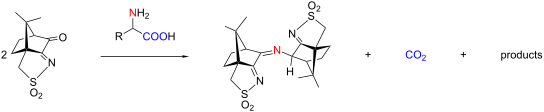
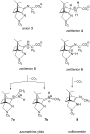
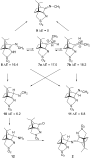
- spectrum of 2 (see Supporting Information File 1, Figure S1), shows that the reaction occurs at position 3 of the camphor skeleton (Scheme 1, for labeling). In addition, the observation of partially overlapping IR bands (νCN, 1676, 1641 cm−1) indicate distinct imine groups in agreement with the signals
- Molden [42]. Camphor and some camphor derivatives. ESI mass spectrum of 2 (positive ion mode). 1H NMR spectrum of 2 in CD3CN at T = −20 °C. 13C NMR spectrum of 2 in CD3CN at T = −20 °C. Optimized structure of 2 ((S)-3A isomer) with labeling scheme. NOESY spectrum (detail) showing the cross peak between





Biosynthesis of α-pyrones
Beilstein J. Org. Chem. 2016, 12, 571–588, doi:10.3762/bjoc.12.56
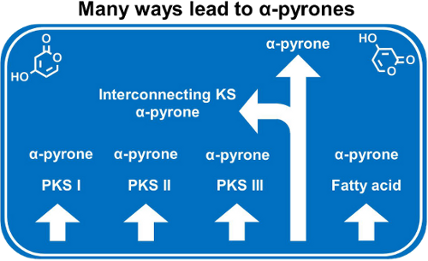
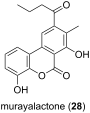
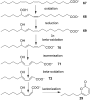
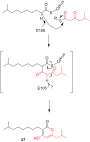
- antibiotically active compounds 36 [83] and 34 [84]. The resulting labeling pattern clearly showed that the central α-pyrone ring of the molecule was not the result of a usual intramolecular reaction. Rather, an interconnection of two independent chains should form the central ring structure. In addition further






New synthetic strategies for xanthene-dye-appended cyclodextrins
Beilstein J. Org. Chem. 2016, 12, 537–548, doi:10.3762/bjoc.12.53
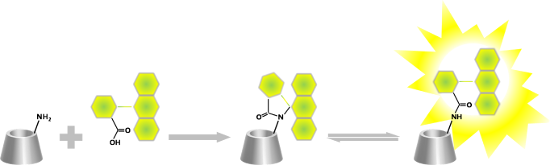
- fluorophores for labeling in order to assess if these versatile molecules cross biological barriers (e.g., cell membrane, blood–brain barrier) and to follow their distribution in living matter [3]. Among the fluorescent dyes, the group of fluorophores based on xanthene scaffolds is one of the most popular. Two
- of this evergreen class of dyes is still an ongoing process [5][6]. Fluorescein is the most widely used fluorescent probe in biological applications and in particular for covalently labeling proteins. Rhodamine derivatives are robust dyes that find application as fluorophores for microscopy, in cell
- derivatives. This method can not only be applied to CDs, but may represent a new general approach for the modification of xanthene dye in water, thus affording amide or ester derivatives. When a fluorophore is used for the labeling of a single-isomer CD, the resulting molecule is rarely the fully substituted





