Search results
Search for "terminal" in Full Text gives 1001 result(s) in Beilstein Journal of Organic Chemistry. Showing first 200.
2-Heteroarylethylamines in medicinal chemistry: a review of 2-phenethylamine satellite chemical space
Beilstein J. Org. Chem. 2024, 20, 1880–1893, doi:10.3762/bjoc.20.163
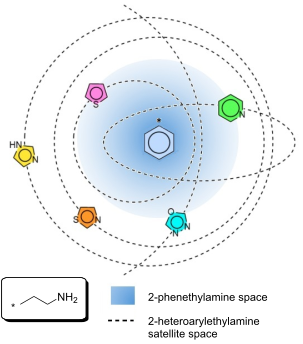
- antihypertensive activity was demonstrated for a series of flexible secondary amines incorporating terminal aromatic rings by Bagli et al. [26]. A blood pressure lowering effect was observed for 2-hydroxy-2-thienylethylamines 24–26 (Scheme 5), which was related to typical antihypertensive pathways like adrenergic
- , Menghin and co-workers [61] explored flexible chain incorporations at the terminal nitrogen of histaprodifen generating hits 79–86 (Scheme 11). Finally, the N,N-bis(2-imidazolyl)ethyl)-substituted amine superhistaprodifen 87 cluster was exhaustively synthesized and tested for their agonist activity




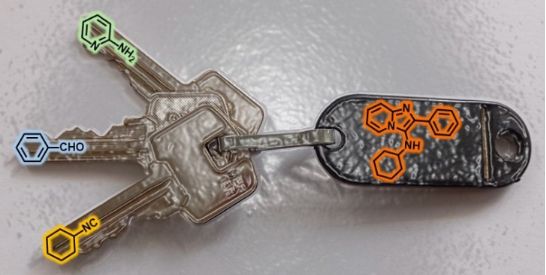
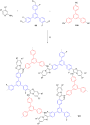
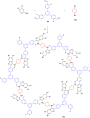
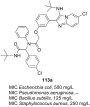
The Groebke–Blackburn–Bienaymé reaction in its maturity: innovation and improvements since its 21st birthday (2019–2023)
Beilstein J. Org. Chem. 2024, 20, 1839–1879, doi:10.3762/bjoc.20.162






Discovery of antimicrobial peptides clostrisin and cellulosin from Clostridium: insights into their structures, co-localized biosynthetic gene clusters, and antibiotic activity
Beilstein J. Org. Chem. 2024, 20, 1800–1816, doi:10.3762/bjoc.20.159

- was co-expressed with the corresponding precursor peptide in the same E. coli strain (expected size 150 kDa). The precursor peptides and the peptidase domain of CloPt1 were fused with a 6xHis tag at their N-terminal end for purification purposes (Figure S7 in Supporting Information File 1). After
- analysis of the CloA1 and CloA2 precursor peptides Clostrisin and cellulosin were purified through non-native means using a Ni2+ column due to a 6xHis tag at the N-terminal end, followed by elution via imidazole gradient (refer to Figures S7A and S7B in Supporting Information File 1 for SDS-PAGE analysis
- seconds off, for a total of 10 minutes at 4.0 potency). Finally, the sample was centrifuged for 30 min at 4 °C at 10,000 rpm. Supernatants were stored at −80 °C until purification. The C39 peptidase domain, and the clostrisin and cellulosin lanthipeptides were linked with a 6xHis N-terminal tag to perform




Syntheses and medicinal chemistry of spiro heterocyclic steroids
Beilstein J. Org. Chem. 2024, 20, 1713–1745, doi:10.3762/bjoc.20.152
- yields (82–85%) (Scheme 28). The authors proposed a free radical mechanism facilitated by hydrogen peroxide, generating a primary radical at the terminal nitrogen atom -CO-HN• which then adds to the carbon atom of the imino group. The reaction mechanism was substantiated by theoretical calculations


Chemo-enzymatic total synthesis: current approaches toward the integration of chemical and enzymatic transformations
Beilstein J. Org. Chem. 2024, 20, 1693–1712, doi:10.3762/bjoc.20.151
- prenyltransferase (PT) domain located at the C-terminus of BscA (Scheme 2A). Subsequently, the terpene cyclase (TC) domain at the N-terminal of BscA generates fusicocca-2,10(14)-diene (6), which bears the common 5/8/5 fused tricyclic scaffold common to this natural products family. Sequential oxidative conversions




Oxidation of benzylic alcohols to carbonyls using N-heterocyclic stabilized λ3-iodanes
Beilstein J. Org. Chem. 2024, 20, 1677–1683, doi:10.3762/bjoc.20.149
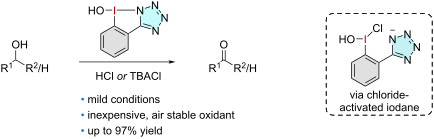
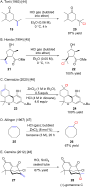
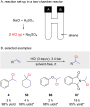
- easily overoxidized to carboxylic acids. Over the past decades a variety of methods have been developed, utilizing toxic heavy metals such as pyridinium dichromate (PDC) [3][4][5] or manganese dioxide (Figure 1) [6][7]. Molecular oxygen [8] and peroxides [9][10] can also be used as inexpensive terminal
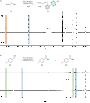
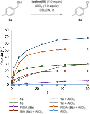
- was investigated, potentially leading to the formation of a hydroxy(chloro)iodane intermediate. This intermediate either liberates hypochlorous acid as the terminal oxidant or undergoes a direct ligand exchange with the alcohol, followed by oxidative elimination to form the aldehyde. Thus, these




Methyltransferases from RiPP pathways: shaping the landscape of natural product chemistry
Beilstein J. Org. Chem. 2024, 20, 1652–1670, doi:10.3762/bjoc.20.147
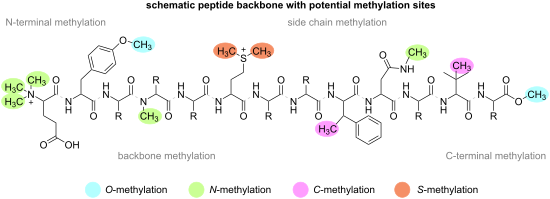
- ]. Further O-MTs can be classified based on a common acceptor group of modification, namely C-terminal carboxy-MTs and peptide/protein ʟ-aspartyl O-MTs (PAMTs). C-terminal carboxymethyltransferases Carboxy-MTs catalyse the formation of a methyl ester by methylating the oxygen atom within the hydroxy group of
- peptides at the C-terminal carboxy group of different amino acids, namely methionine, isoleucine, and valine. This demonstrates its tolerance to various substrates. LahSB does not require the leader peptide or other modifying enzymes to carry out its function [72], making it a promising tool for
- proposed to methylate lassomycin [77]. PAMTs – peptide/protein ʟ-aspartyl O-methyltransferases PAMTs share a conserved C-terminal domain, substantial sequence homology, and a common enzymatic activity. They catalyse the conversion between aspartate and isoaspartate with aspartyl-O-methyl ester and




Polymer degrading marine Microbulbifer bacteria: an un(der)utilized source of chemical and biocatalytic novelty
Beilstein J. Org. Chem. 2024, 20, 1635–1651, doi:10.3762/bjoc.20.146
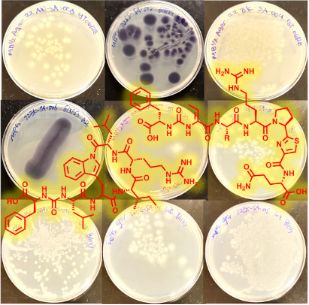
- NRPS-derived macrolactam ureidopeptide, bulbiferamide (27, Figure 10), was isolated and characterized from a coral-derived Microbulbifer sp. C10-1 by Igarashi and co-workers [7]. The ureido linkage did not allow for the peptide main chain in 27 to possess a terminal primary amine and none of the side
- chains possessed a nucleophilic primary amine. Curiously, the macrocyclizing amide bond was found to exist between a Trp side chain indole nitrogen and the C-terminal carboxylate. To the best of our knowledge, this was the first example of the involvement of a Trp indole in macrolactam formation in




Mining raw plant transcriptomic data for new cyclopeptide alkaloids
Beilstein J. Org. Chem. 2024, 20, 1548–1559, doi:10.3762/bjoc.20.138

- -translational modifications by specific tailoring enzymes [5][6]. This precursor peptide substrate can be subdivided into multiple segments including 1) an N-terminal leader or recognition sequence used for binding by the tailoring enzymes and 2) a core peptide that is targeted for modification by the
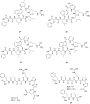
- cyclopeptide alkaloids due to the invariant C-terminal Tyr residue (Figure 3). Rubiaceae family Our previous results revealed Coffea arabica (Arabica coffee plant), to be a cyclopeptide alkaloid producer [7]. In contrast to those from the Rhamnaceae family, these cyclopeptide alkaloids were only cyclized and
- -terminal Phe residue. Additional 663.3192 and 581.3345 m/z features were also present in the GNPS network, but MS/MS fragmentation could not definitively support a specific structure. For a better understanding of the biosynthesis of burpitides in G. jasminoides, we explored the genomic context by using





Bioinformatic prediction of the stereoselectivity of modular polyketide synthase: an update of the sequence motifs in ketoreductase domain
Beilstein J. Org. Chem. 2024, 20, 1476–1485, doi:10.3762/bjoc.20.131
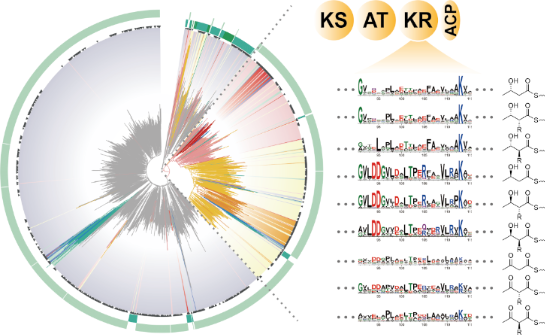
- KRC, the N-terminal helix αB and the lid region αFG located at the C-terminal of KRC (Figure 2d). Indeed, this lid region exhibits a direct interaction with the DH and DH-KR linker (Figure 2c). However, such interaction was not observed between the N-terminal helix αB and DH in the crystal structure


Challenge N- versus O-six-membered annulation: FeCl3-catalyzed synthesis of heterocyclic N,O-aminals
Beilstein J. Org. Chem. 2024, 20, 1412–1420, doi:10.3762/bjoc.20.123
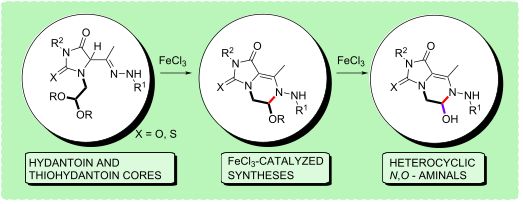
- ), whose sequential acylation process by iso(thio)cyanates 3a–h gives rise to the asymmetric (thio)urea derivatives (intermediate II). The spontaneous nucleophilic attack of the (thio)amide nitrogen on the terminal methyl ester function at C-4 of the starting azo-ene system provides a regioselective


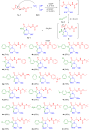


Generation of alkyl and acyl radicals by visible-light photoredox catalysis: direct activation of C–O bonds in organic transformations
Beilstein J. Org. Chem. 2024, 20, 1348–1375, doi:10.3762/bjoc.20.119
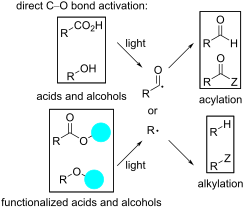
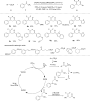
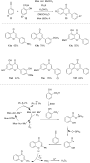
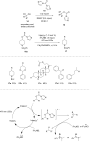
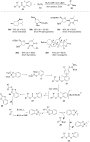
- organic dye Mes–Acr–MeClO4 as photocatalyst (Scheme 5). They demonstrated intermolecular radical cyclization of o-hydroxybenzoic acid derivatives with terminal alkynes to afford flavone derivatives. Here, functionally diverse flavonoids were synthesized in moderate to excellent yield by reacting various
- and provide the desired products with good yield. Cyclopentanol-derived oxalates, some heterocyclic oxalates, and natural-product-derived oxalates were also compatible with this method. In 2018, Chu and co-workers [47] devised an elegant protocol for achieving syn-alkylarylation of terminal alkynes
- terminal arylalkynes bearing electron-donating and electron-withdrawing substituents were well compatible with this method. The procedure is limited to electron-withdrawing and electron-neutral aryl halides. The presence of a conjugated substituent in the p-position of an aryl halide is crucial for

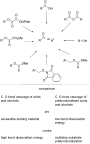


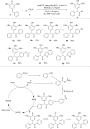





Domino reactions of chromones with activated carbonyl compounds
Beilstein J. Org. Chem. 2024, 20, 1256–1269, doi:10.3762/bjoc.20.108
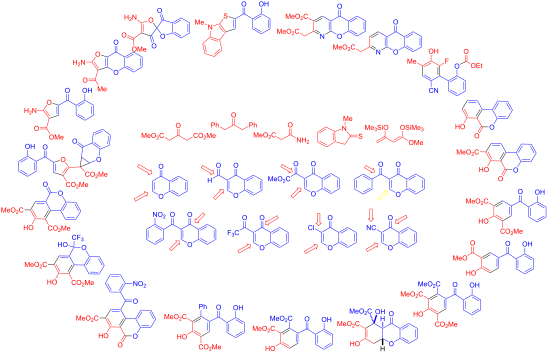
- ][11][12]. For example, 2 can be transformed to its dianion 7 by action of two equivalents of LDA or by sequential addition of sodium hydride and n-butyllithium (Scheme 1). In contrast to 2, dianion 7 reacts with electrophiles at its terminal carbon atom. 1,3-Bis(silyloxy)-1,3-butadienes, containing
- trimethylchlorosilane. A direct preparation of 6a by reaction of dianion 7 with trimethylchlorosilane is not possible, because the silylation occurs at the terminal carbon atom of the dianion. (2,4-Dioxobutylidene)phosphorane 8 also represents a synthetic equivalent of dianion 7 [23]. However, reactions of such
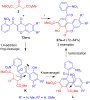
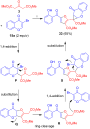
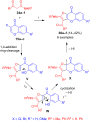
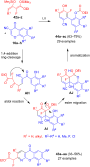
- (Scheme 9) [39]. The formation of the products can be explained by 1,4-addition of the terminal carbon of the diene to the chromone to give intermediate J and subsequent attack of the central carbon atom of the 1,3-dicarbonyl unit (aldol reaction). No aromatization and extrusion of the hydroxy group was









Cofactor-independent C–C bond cleavage reactions catalyzed by the AlpJ family of oxygenases in atypical angucycline biosynthesis
Beilstein J. Org. Chem. 2024, 20, 1198–1206, doi:10.3762/bjoc.20.102
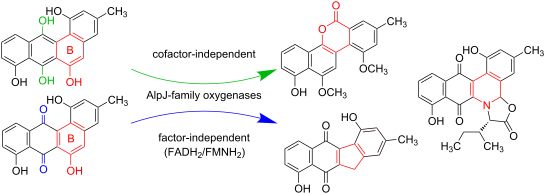
- analysis of the alp gene cluster from Streptomyces ambofaciens revealed AlpG as the homolog of JadH. The N-terminal His6-tagged construct of AlpG was expressed and purified to homogeneity in E. coli (Figure S2, Supporting Information File 1). The purified AlpG displayed a light yellow color, and the
- -terminal His6-tagged Flu17 was expressed and purified to homogeneity in E. coli BL21 (Figure S2, Supporting Information File 1). Significantly, Flu17 alone demonstrated the ability to convert 8 into products 4, 5, and 10 (Figure 1, trace g). Furthermore, incubating 8 with JadG and ʟ-isoleucine yielded 6
- NdeI and HindIII, and cloned into pET28a to construct the expression plasmid of N-terminal His6-tagged AlpG. The codon-optimized flu17 gene was synthesized by Synbio Technologies, digested with NdeI and HindIII, and cloned into pET28a to afford the expression plasmid of N-terminal His6-tagged Flu17




Kinetically stabilized 1,3-diarylisobenzofurans and the possibility of preparing large, persistent isoacenofurans with unusually small HOMO–LUMO gaps
Beilstein J. Org. Chem. 2024, 20, 1099–1110, doi:10.3762/bjoc.20.97
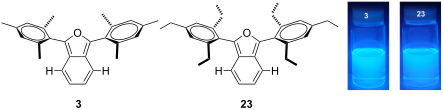
- neutral, closed-shell resonance forms (Figure 1) in which any one of the five 6-membered rings possess an aromatic sextet. If the aromatic sextet is located in a terminal ring of the molecule, as in resonance forms P1 and P5 of Figure 1, then the remaining π-electrons are delocalized over four rings




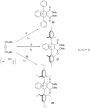


Synthesis of 1,4-azaphosphinine nucleosides and evaluation as inhibitors of human cytidine deaminase and APOBEC3A
Beilstein J. Org. Chem. 2024, 20, 1088–1098, doi:10.3762/bjoc.20.96
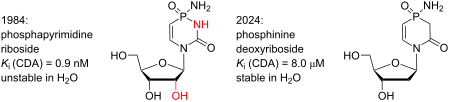
- partially localised in the nucleus of cells and, in cancer cells, become genotoxic [24]. A3A and A3H are single-domain enzymes, whereas A3B is a double-domain enzyme, in which only the C-terminal domain (CTD) has catalytic activity, and the N-terminal domain (NTD) is responsible for binding of DNA and for


A Diels–Alder probe for discovery of natural products containing furan moieties
Beilstein J. Org. Chem. 2024, 20, 1001–1010, doi:10.3762/bjoc.20.88
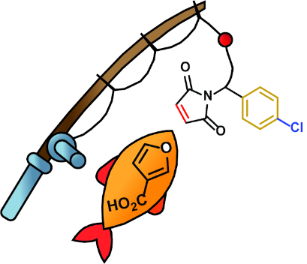
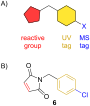
- ][16]. One probe has been developed capable of undergoing a Diels–Alder reaction with a peptide containing a terminal furan [17]. However, to date, no one has developed probes that have been demonstrated to work well with natural products containing furans. Therefore, we have developed a probe that can




Carbonylative synthesis and functionalization of indoles
Beilstein J. Org. Chem. 2024, 20, 973–1000, doi:10.3762/bjoc.20.87
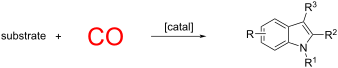
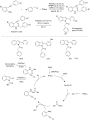
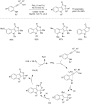
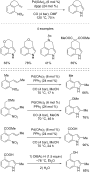
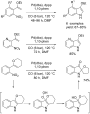
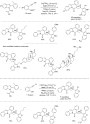
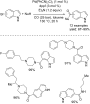
- bearing a secondary amino group and an internal triple bond [16]. In the same research group, it has been demonstrated that with a terminal alkynyl group, the reactivity is completely different leading to the formation of dihydroindol-2-one derivatives [17]. The process was versatile and efficient towards












Enhancing structural diversity of terpenoids by multisubstrate terpene synthases
Beilstein J. Org. Chem. 2024, 20, 959–972, doi:10.3762/bjoc.20.86
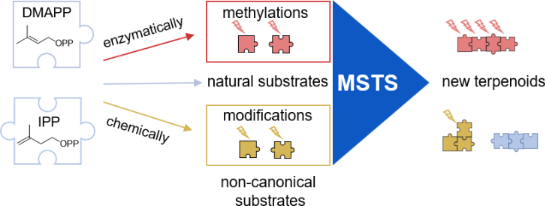
- depyrophosphorylation, whereas class II TSs utilize a general acid (a key Asp residue) to protonate the terminal C=C bond or epoxide group to yield a tertiary carbocation. The highly reactive carbocation is then converted to different carbocation intermediates, facilitated by the hydrophobic pocket of the TSs, which
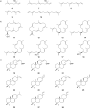
- TSs and three PTs to generate 4, 5 or geranylfarnesyl diphosphate (GFPP, 29, Figure 1), representative products 30–33 are shown in Figure 3a [28]. Notably, FgMS is a chimeric enzyme (PTTS) consisting of an N-terminal class I TS domain and a C-terminal GFPP synthase domain. Therefore, to block the






Three-component N-alkenylation of azoles with alkynes and iodine(III) electrophile: synthesis of multisubstituted N-vinylazoles
Beilstein J. Org. Chem. 2024, 20, 891–897, doi:10.3762/bjoc.20.79
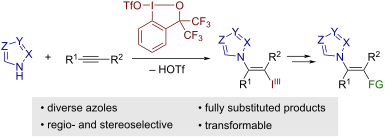
- catalysis encompassed various azoles such as pyrazole, indazole, and (benzo)triazole, exhibiting high Z-selectivity. In addition, Cao et al. reported a gold-catalyzed addition of 5-substituted tetrazoles to terminal alkynes [11]. Analogous hydroazolation reactions of alkynes have also been achieved under
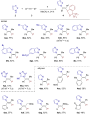
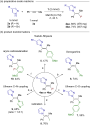
- difunctionalization reaction to afford the product 4ag in 62% yield. While sluggish, trimethylsilylacetylene was selectively azolated at the terminal position (see 4ah), which could be rationalized by the better stabilization of a partial positive charge at this position by the β-silyl substituent. Finally, an
- oxazolidinone-substituted ynamide also proved to undergo iodo(III)azolation in a regio- and stereoselective fashion to give the product 4ai in a moderate yield. Note that terminal alkynes such as phenylacetylene also took part in the reaction, albeit in a much-diminished yield (7% by 1H NMR; data not shown



Advancements in hydrochlorination of alkenes
Beilstein J. Org. Chem. 2024, 20, 787–814, doi:10.3762/bjoc.20.72
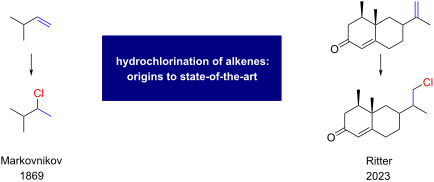
- provide a better overall understanding. The hydrochlorination of alkenes can be categorized into three main classes (Scheme 1; only a terminal alkene is shown as a substrate, although polysubstituted and conjugated alkenes can also serve as substrates). 1) Polar reactions: These involve the protonation of
- , 3.0 M in methanol, 3.0 M in 1-butanol, 2.0 M in diethyl ether, 3.0 M in cylopentyl methyl ether, 1.0 M in acetic acid. Terminal aliphatic alkenes, such as prop-1-ene (7) do not react with HCl gas at rt and pressures of 1 atm or less (Figure 3A) [37]. In contrast, higher pressures and temperatures
- broad generality and tolerates various sensitive functional groups, including aldehyde 45 and nitrile 46. However, electron-poor styrene, resulting in chloride 40, or terminal and 1,2-disubstituted alkenes forming chlorides 41–46 and cyclooctyl chloride (26) necessitated harsher reaction conditions. As






Synthesis and characterization of water-soluble C60–peptide conjugates
Beilstein J. Org. Chem. 2024, 20, 777–786, doi:10.3762/bjoc.20.71
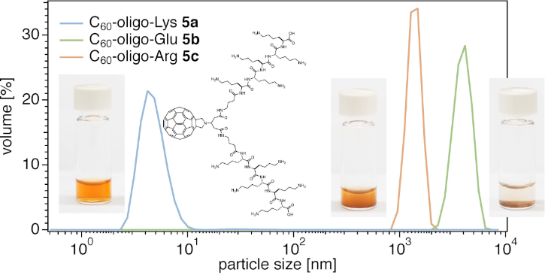
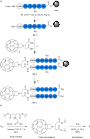
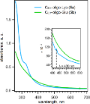
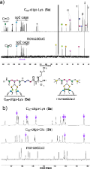
- of hydrophilic oligopeptide anchors (oligo-Lys, oligo-Glu, and oligo-Arg) were synthesized. A previously reported Prato reaction adduct of a biscarboxylic acid-substituted C60 derivative was subjected to a solid phase synthesis for amide formation with N-terminal amines of peptides on resin to




Synthesis of new representatives of A3B-type carboranylporphyrins based on meso-tetra(pentafluorophenyl)porphyrin transformations
Beilstein J. Org. Chem. 2024, 20, 767–776, doi:10.3762/bjoc.20.70
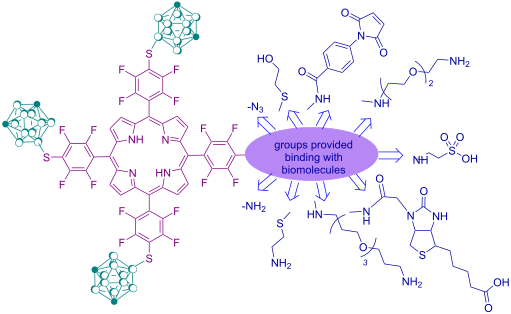
- -dioxaoctane (21) and 1,13-diamino-4,7,10-trioxatridecane (22) in DMSO at 70 °C for 30 min to form amino-conjugates 23 and 24 in 71 and 84% yield, respectively, containing ethylene glycol linkers with terminal primary amino groups (Scheme 6). The presence of ethylene glycol residues in bioactive molecules is


Methodology for awakening the potential secondary metabolic capacity in actinomycetes
Beilstein J. Org. Chem. 2024, 20, 753–766, doi:10.3762/bjoc.20.69
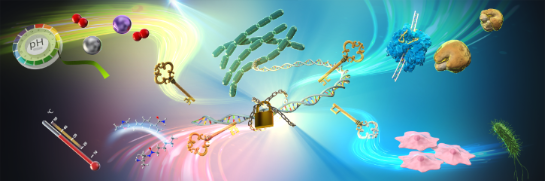
- carbonate and terminal olefin functionalities [50]. Thus, artificial methods of genetic engineering and chemistry also play an important role in the identification of novel secondary metabolites. Culture conditions Medium composition, pH, oxygen supply, light Simply modifying the culture conditions is an


Research progress on the pharmacological activity, biosynthetic pathways, and biosynthesis of crocins
Beilstein J. Org. Chem. 2024, 20, 741–752, doi:10.3762/bjoc.20.68
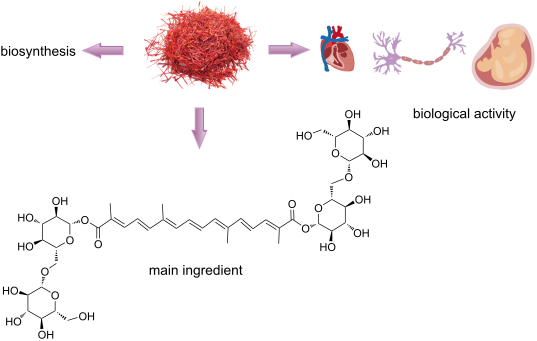
- moieties are attached to the terminal carboxyl groups of 1 sequentially or simultaneously. Besides GjUGTs, a few UGTs from C. sativus were also characterized. In addition to 1, 9 is also glycosylated to form picrocrocin (10), which is further transformed into safranal (12) by β-glucosidase [87]. Key