


Search results
Search for "toluene" in Full Text gives 1213 result(s) in Beilstein Journal of Organic Chemistry. Showing first 200.
Photoredox-catalyzed intramolecular nucleophilic amidation of alkenes with β-lactams
Beilstein J. Org. Chem. 2024, 20, 2461–2468, doi:10.3762/bjoc.20.210
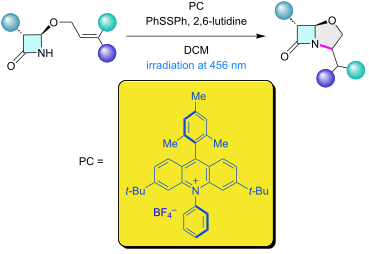
- ]. Through tailored molecular design, it is possible to enhance the oxidation capability of these catalysts, enabling the utilization of less reactive alkenes and even aromatic molecules such as toluene [32]. Until now, heterocyclic amides such as β-lactam compounds have not been employed in alkene
- starting from succinimide (Scheme 3). Through a simple reaction in toluene at 80 °C in the presence of Zn(OAc)2, the hemiaminal derivative 13 underwent substitution with cinnamyl alcohol, resulting in the isolation of 14 with a satisfactory yield. Under optimized reaction conditions, the photocatalytic




Asymmetric organocatalytic synthesis of chiral homoallylic amines
Beilstein J. Org. Chem. 2024, 20, 2349–2377, doi:10.3762/bjoc.20.201
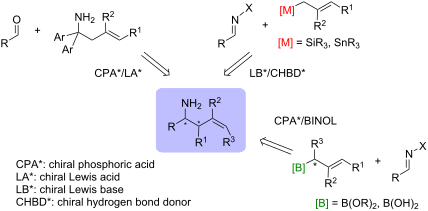
- -diaminonaphthalene derivatives 42, which after hydrolysis and extraction into toluene, were reacted with indole, 3-methylindole, 3,4-dihydroisoquinoline, and benzoyl hydrazone ethyl glyoxylate ester to afford terminal (E)-trifluoromethyl homoallylic amines 44 with up to 3 adjacent stereocentres with high to
- equiv of isatin with a 50% excess of the α-CF3-substituted imine in toluene at room temperature in the presence of 10 mol % of organocatalyst 138 for times between 1 and 80 h. The reaction exhibited a broad scope in the isatin carbonate derivatives with high to excellent enantioselectivities (89–99
- catalyses the methylene group transfer, resulting in azonia-[3,3]-sigmatropic rearrangement, followed by regeneration of methylene imine by an elimination step [47]. The reaction proceeded in toluene at 80 °C with 20 mol % of the CPA catalyst 151 over 20 hours resulting in low to moderate






Stereoselective mechanochemical synthesis of thiomalonate Michael adducts via iminium catalysis by chiral primary amines
Beilstein J. Org. Chem. 2024, 20, 2313–2322, doi:10.3762/bjoc.20.198
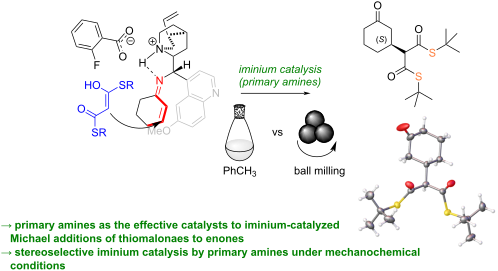
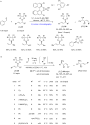
- nucleophilic catalyst. Test reactions between cyclohexenone and thiomalonate 1 conducted in toluene at room temperature indicated the formation of the product with high conversions and efficiencies (Scheme 2). Application of epi-aminoquinine (AQ-1) in combination with 2-fluorobenzoic acid (system A) led to the
- isolated product. However, the decrease in the enantioselectivity was noted in comparison to the reaction under standard conditions in toluene (93% vs 85% in ball mill). Surprisingly, the essential loss of enantioselectivity was noted when system B was applied in analogous transformation. Although an
- products with 61% and 63% yield in the solution and mixer mill, respectively. However, the drop of stereoselectivity was noted in comparison to the reaction in toluene (94% ee vs 86% ee in mixer mill, ∆ee = 8). It should be noted that the dibenzyl malonate remained inactive for subjecting to reaction under


Synthesis and reactivity of the di(9-anthryl)methyl radical
Beilstein J. Org. Chem. 2024, 20, 2254–2260, doi:10.3762/bjoc.20.193
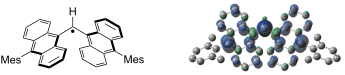
- ESR tube, evaporating it, and then dissolving it in degassed toluene. The ESR spectrum of the DAntM radical displayed two broad signals with g = 2.0028 (Figure 3a). The simulated spectrum indicated that the unpaired electron mainly locates at the central sp2 carbon but is slightly delocalized over the
- rate dependency (0.1, 0.5, 1.0, 2.0, and 3.0 V s−1) of the redox wave. Measurement conditions: 100 mM n-Bu4NPF6 and 1 mM DAntM cation in CH2Cl2. Red arrows indicate the sweep direction. UV–vis–NIR spectra of (a) DAntM radical in toluene, (b) DAntM cation in TFA. Synthetic route to the DAntM radical


Cage-like microstructures via sequential Ugi reactions in aqueous emulsions
Beilstein J. Org. Chem. 2024, 20, 2078–2083, doi:10.3762/bjoc.20.179
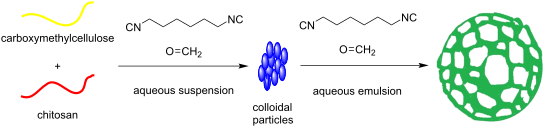
- . At the first stage, submicron colloidal particles based on carboxymethylcellulose and chitosan with a domain structure were obtained in an aqueous suspension. In the second stage, the Ugi reaction was carried out on the surface of the Pickering emulsions with toluene. Removal of toluene and
- ) [17]. As before, depending on the CMC concentration, we obtained submicron particles with an average diameter from 200–600 nm, which were visible under an optical microscope in the form of luminous points. Next, Pickering emulsions were obtained by emulsifying toluene in an aqueous suspension of
- particles with a concentration of 0.3 g/L and a water/toluene ratio of 3:1. However, it was not possible to distinguish any details on the surface of the droplets using conventional and confocal microscopy (Figure 1). To do this, it was necessary to remove the solvent that interfered with obtaining a


Multicomponent syntheses of pyrazoles via (3 + 2)-cyclocondensation and (3 + 2)-cycloaddition key steps
Beilstein J. Org. Chem. 2024, 20, 2024–2077, doi:10.3762/bjoc.20.178

- toluene [173]. N-Vinylimidazole, an alkene with a leaving group, was used to synthesize the 3-substituted pyrazoles 169 because, unlike acetylene, it is not gaseous and, therefore, easier to handle. Instead of vinylimidazole, vinyl azides 170 can also be used as alkyne surrogates. After the 1,3-dipolar




Diastereoselective synthesis of highly substituted cyclohexanones and tetrahydrochromene-4-ones via conjugate addition of curcumins to arylidenemalonates
Beilstein J. Org. Chem. 2024, 20, 2016–2023, doi:10.3762/bjoc.20.177
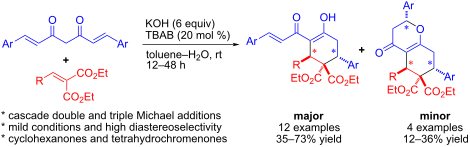
- base (KOH) and a phase-transfer catalyst (PTC) in a biphasic medium (toluene–H2O) at room temperature, leading to highly functionalized cyclohexanones and tetrahydrochromenones as major and minor products, respectively, in moderate to high yield and excellent diastereoselectivity. Results and
- Discussion Initially, the reaction of 1a with 2a was carried out with 3.0 equiv of aq KOH as base and toluene as a solvent in the presence of 20 mol % tetrabutylammonium bromide (TBAB) as a phase-transfer catalyst at room temperature for 24 h (Table 1, entry 1). To our delight, the formation of double
- Michael addition product 3a was observed in 31% yield. The reaction with 6.0 equiv of KOH resulted in an increase in the yield of 3a (72%) and also the formation of 4a in low yield (13%, Table 1, entry 2). Next, the THF–toluene solvent system was employed in the absence and presence of TBAB, affording 3a


Radical reactivity of antiaromatic Ni(II) norcorroles with azo radical initiators
Beilstein J. Org. Chem. 2024, 20, 1967–1972, doi:10.3762/bjoc.20.172
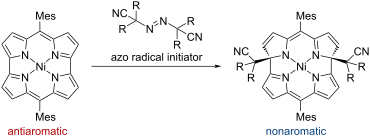
- toluene (Scheme 1). The reaction smoothly proceeded to afford dialkylated macrocycle 2a in 92% yield. In addition to 2a, monoalkylated product 3a and dipyrrin dimer 4a were obtained as minor products in 4% and 3% yield, respectively. The structure of 2a was unambiguously confirmed by single-crystal X-ray


The Groebke–Blackburn–Bienaymé reaction in its maturity: innovation and improvements since its 21st birthday (2019–2023)
Beilstein J. Org. Chem. 2024, 20, 1839–1879, doi:10.3762/bjoc.20.162
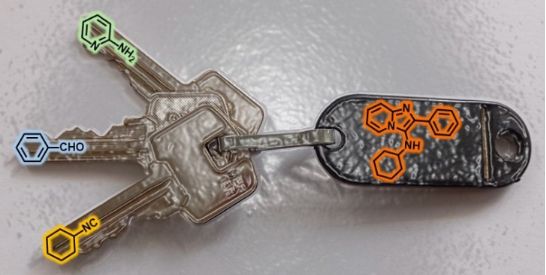
- that time, along with some 30 solvents. The most widely used conditions, however, remained those originally discovered by Groebke, Blackburn and Bienaymé, namely the use of Sc(OTf)3, perchloric acid or p-toluenesulfonic acid as catalysts, and methanol, ethanol or toluene as solvents, or under solvent
- composite compared to the individual constituents tested separately. Solvent-free conditions afforded better yields than traditional solvents (water, toluene, DCM, EtOH, MeOH) and 12 adducts were synthetized in 84–96% yield. Finally, the catalyst was recycled six times with a slight decrease in efficiency






Chiral bifunctional sulfide-catalyzed enantioselective bromolactonizations of α- and β-substituted 5-hexenoic acids
Beilstein J. Org. Chem. 2024, 20, 1794–1799, doi:10.3762/bjoc.20.158
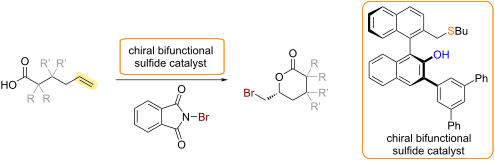
- studies of chiral bifunctional sulfide-catalyzed bromolactonizations [26][27][28][29][30][31], mixed solvent systems were investigated. Among the examined solvent systems, a dichloromethane/toluene mixed solvent (3:1 ration) showed the best enantioselectivity (89:11 er). With the optimal catalyst (S)-1g


Oxidative fluorination with Selectfluor: A convenient procedure for preparing hypervalent iodine(V) fluorides
Beilstein J. Org. Chem. 2024, 20, 1785–1793, doi:10.3762/bjoc.20.157
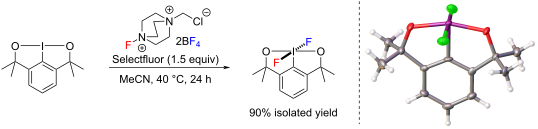
- fluorinate PhMgBr as reported with iodine(V) fluoride 3 by Amey and Martin [21]. Difluoroiodane 6 was first reacted with phenylmagnesium chloride in dry toluene at 0 °C, but fluorobenzene was not formed under these reaction conditions. The reaction was then repeated using phenylmagnesium bromide, but
- afford iodoalcohol 14 in 93% yield. In the final step iodoalcohol 14 underwent an oxidative fluorination with Selectfluor at room temperature to deliver methyl(trifluoromethyl)fluoroiodane 15 in a good 68% yield after recrystallisation from toluene. Although bis(trifluoromethyl)fluoroiodane 19 has been


Synthesis of polycyclic aromatic quinones by continuous flow electrochemical oxidation: anodic methoxylation of polycyclic aromatic phenols (PAPs)
Beilstein J. Org. Chem. 2024, 20, 1746–1757, doi:10.3762/bjoc.20.153
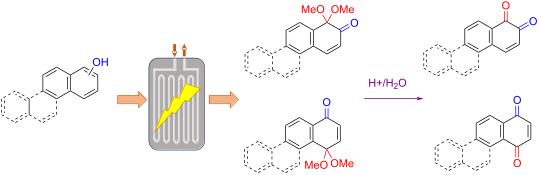
- short distance between the electrodes, and easily reproduceable conditions. The electrochemical oxidation of phenols has been performed with platinum anodes [37][41], and carbon/platinum worked well for the oxidation of toluene dissolved in methanol with tetraethylammonium tosylate (Et4NOTs) as a




Syntheses and medicinal chemistry of spiro heterocyclic steroids
Beilstein J. Org. Chem. 2024, 20, 1713–1745, doi:10.3762/bjoc.20.152
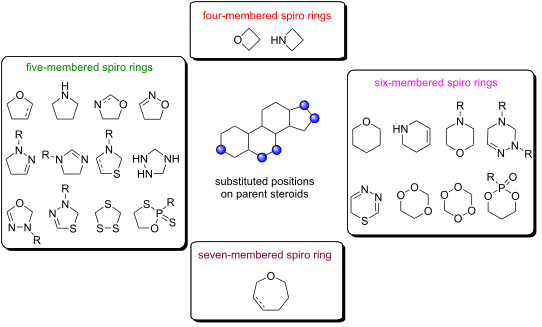
- -oxathiaphospholane steroids In 2012, Krstić et al. reported the synthesis of spiro-1,3,2-oxathiaphospholane steroids using Lawesson’s reagent (LR) as a thionating and phosphorylating agent in the reaction with 17α-hydroxyprogesterone (107) [58]. The reaction was conducted in toluene, dichloromethane, or carbon
- -1,3,2-oxathiaphospholane (109) was obtained under all conditions. However, when the reaction time was increased to 5 h in toluene, no 108 was detected, but a higher yield of 109 was produced. The best yield (46%) for 109 was achieved after 7 hours of refluxing dichloromethane. Both compounds were


Methyltransferases from RiPP pathways: shaping the landscape of natural product chemistry
Beilstein J. Org. Chem. 2024, 20, 1652–1670, doi:10.3762/bjoc.20.147
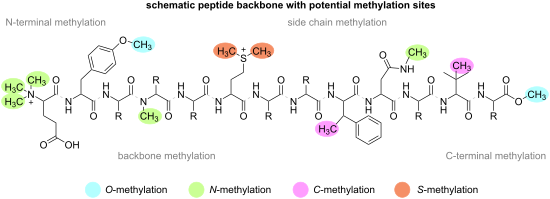
- intermediate is then reduced with H2 [37]. When synthesising via a reductive ring opening, typically, an N-Fmoc-protected amino acid is condensed with formaldehyde in the presence of p-toluic acid in refluxing toluene to yield the 5-oxazolidinone. Reductive ring opening can be achieved by using an excess of


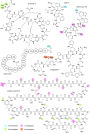


Polymer degrading marine Microbulbifer bacteria: an un(der)utilized source of chemical and biocatalytic novelty
Beilstein J. Org. Chem. 2024, 20, 1635–1651, doi:10.3762/bjoc.20.146
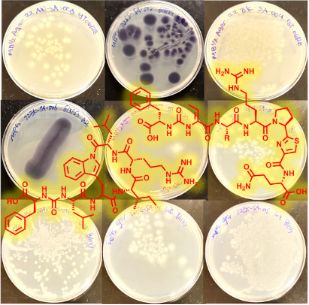
- alcohol, isopropyl alcohol, and toluene) increased the reactivity of MtCh509 relative to the aqueous system, representing the first solvent‑tolerant chitinase from Microbulbifer species and its potential applications in industrial processes [50]. rChi1602 exhibited maximal activity at 60 °C and over a


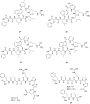


New triazinephosphonate dopants for Nafion proton exchange membranes (PEM)
Beilstein J. Org. Chem. 2024, 20, 1623–1634, doi:10.3762/bjoc.20.145

- phosphonation of the aldehyde group. To implement this strategy, a reaction between 4-hydroxybenzaldehyde (12) and cyanuric chloride (1) was performed, in toluene with Na2CO3 as base, to obtain compound 19 [58] in very good yield (87%) (Scheme 7). Compound 19 was subjected to similar reaction conditions that


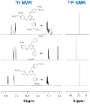


Benzylic C(sp3)–H fluorination
Beilstein J. Org. Chem. 2024, 20, 1527–1547, doi:10.3762/bjoc.20.137

- preliminary electrochemical examples [93][101]. Middleton and co-workers described an alternating polarity approach for the fluorination of simple toluene derivatives in neat pyridine·HF (Figure 42) [102][103]. Poor conductivity necessitated the use of this waveform type. The benzylic fluorination was
- toluene derivatives. Ring fluorination–migration product yields in parentheses. Electrochemical primary benzylic C(sp3)–H fluorination utilizing pulsed current electrolysis. Acknowledgements We would like to acknowledge Dr Joseph Tate (Syngenta) for discussions. Funding We would like to thank the Royal








Primary amine-catalyzed enantioselective 1,4-Michael addition reaction of pyrazolin-5-ones to α,β-unsaturated ketones
Beilstein J. Org. Chem. 2024, 20, 1518–1526, doi:10.3762/bjoc.20.136
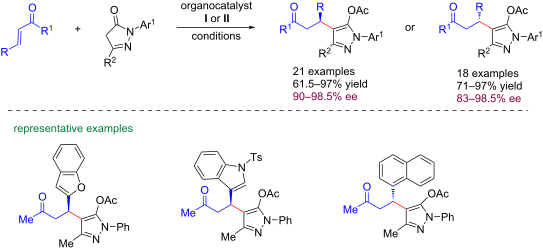
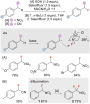
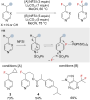
- primary amine catalysts (see Table S1 in Supporting Information File 1) in toluene at room temperature (30–32 °C). When the test reaction was conducted in the presence of 15 mol % of 9-amino-9-deoxy-epicinchonidine (I) as catalyst [30] for 12 h and treated with Ac2O followed by DABCO, the reaction gave




Tetrabutylammonium iodide-catalyzed oxidative α-azidation of β-ketocarbonyl compounds using sodium azide
Beilstein J. Org. Chem. 2024, 20, 1510–1517, doi:10.3762/bjoc.20.135
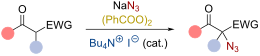
- , entry 14). Tests using other solvents under these optimized conditions were also carried out (details not given in Table 1, which showed that CH2Cl2 (95% NMR yield), toluene (95% NMR yield), acetonitrile (90% NMR yield), and THF (85% NMR yield) are also very well-tolerated. Having identified high


Towards an asymmetric β-selective addition of azlactones to allenoates
Beilstein J. Org. Chem. 2024, 20, 1504–1509, doi:10.3762/bjoc.20.134
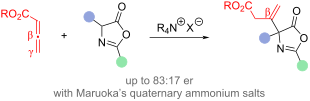
- promising (Table 1, entries 5–8). Testing the bis-CF3-substitued B1 first allowed for 75:25 er, but with moderate yield only when carrying out the reaction in toluene in the presence of 3 equiv of K2CO3 (Table 1, entry 5). Lower amounts of base (Table 1, entry 6) or other solvents, as exemplified for CH2Cl2
- (Table 1, entry 7, similar non-selective results were obtained when using THF), were found to be less-suited however. Testing the 3,4,5-trifluorobenzene-decorated catalyst B2 with K2CO3 in toluene next (Table 1, entry 8) allowed for a slightly higher selectivity but still gave only a relatively low yield
- the use of 3 equiv Cs2CO3 in toluene (0.05 M) at room temperature as the best-suited conditions (Table 1, entry 13), allowing for the synthesis of 5a in moderate yield (61%) and enantioselectivity (81:19 er). With optimized conditions for the synthesis of enantioenriched (−)-5a at hand, we next


Synthesis of 2-benzyl N-substituted anilines via imine condensation–isoaromatization of (E)-2-arylidene-3-cyclohexenones and primary amines
Beilstein J. Org. Chem. 2024, 20, 1468–1475, doi:10.3762/bjoc.20.130
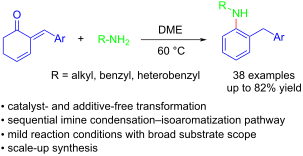
- -benzylidenecyclohex-3-en-1-one (2a) and 4-methoxybenzylamine (3a) as starting materials to investigate the feasibility and efficiency of the reaction (Table 1). Initially, the reaction was conducted in the presence of 2.0 equiv of 3a in toluene at 60 °C without any addition of catalysts or additives. To our delight


Synthesis of 4-functionalized pyrazoles via oxidative thio- or selenocyanation mediated by PhICl2 and NH4SCN/KSeCN
Beilstein J. Org. Chem. 2024, 20, 1453–1461, doi:10.3762/bjoc.20.128
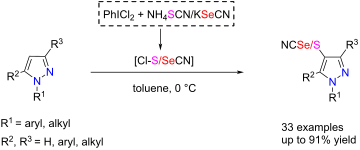
- , solvent screening showed that toluene was the most appropriate solvent, while the reaction led to a much lower yield when DMF, MeOH, MeCN, or DCM were used as solvents (Table 1, entries 13–17). On the basis of the above experimental results, the optimized conditions for the thiocyanation of the model
- substrate were concluded to be: 2.0 equivalents of PhICl2 and NH4SCN in toluene at 0 °C, under N2 atmosphere (Table 1, entry 17). With the optimized reaction conditions in hand, the substrate scope of this thiocyanation approach was next investigated (Scheme 2). The results showed that the newly established
- -mediated thiocyanation of pyrazoles. Reaction conditions: under N2 atmosphere, a mixture of PhICl2 (2.00 mmol) and NH4SCN (2.00 mmol) in toluene (5 mL) was stirred at 0 °C for 0.5 h, then 1a (1.00 mmol) was added and stirring continued at 0 °C for 8 h. Isolated yields are given. PhICl2/KSeCN-mediated


Rapid construction of tricyclic tetrahydrocyclopenta[4,5]pyrrolo[2,3-b]pyridine via isocyanide-based multicomponent reaction
Beilstein J. Org. Chem. 2024, 20, 1436–1443, doi:10.3762/bjoc.20.126
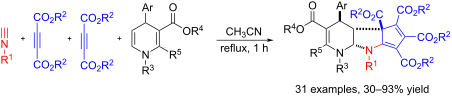
- ). The reaction in toluene, methylene dichloride or acetonitrile at room temperature afforded an unexpected tricyclic compound 4a in 12–18% yields (Table 1, entries 4–6). 1H NMR spectra clearly indicated that two molecules of dimethyl but-2-ynedioates took part in the reaction. The yields of the product
- 4a slightly increased to 29–45% yields when the reaction was carried out at elevated temperature in toluene, methylene dichloride or acetonitrile (Table 1, entries 7–10). When the reaction was carried out in refluxing acetonitrile, the tricyclic compound 4a can be obtained in 47% yield (Table 1


Computation-guided scaffold exploration of 2E,6E-1,10-trans/cis-eunicellanes
Beilstein J. Org. Chem. 2024, 20, 1320–1326, doi:10.3762/bjoc.20.115

- anticipated that 1 would similarly undergo Cope rearrangement. However, when we heated 1 up to 200 °C for 5 h, we did not observe any Cope rearrangement products and we were able to recover >90% of 1. DFT calculations [mPW1PW91/6–31+G(d/p)/SMD(toluene)] on the Cope rearrangement of 2 revealed a free energy
- activation energy may allow for oxy-Cope rearrangement at 28 °C. DFT calculations (in toluene) of 5-hydroxyalbireticulene for both the pseudo-axial and pseudo-equatorial conformations of the C5 hydroxy moiety suggest that there is not a significant difference in the free energy barriers for the oxy-Cope


Sustainable tandem acylation/Diels–Alder reaction toward versatile tricyclic epoxyisoindole-7-carboxylic acids in renewable green solvents
Beilstein J. Org. Chem. 2024, 20, 1308–1319, doi:10.3762/bjoc.20.114
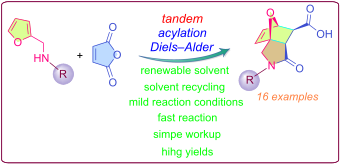
- second step of this reaction, regio- and stereochemically controlled intramolecular cyclization leads to the formation of versatile nitrogen-containing tricyclic systems. However, these useful organic transformations are usually carried out in highly toxic organic solvents such as benzene, toluene
- yields and the desired stereoselectivity [59][60][61]. The viscous nature of the aminofuranes usually requires the use of toxic solvents such as toluene, and in some studies, solvents such as DMSO, which are difficult to remove from the reaction medium [62][63][64]. Although solvent effects are of little
- reaction medium increases, the size of these lamellar units decreases, increasing the ability to dissolve Diels–Alder components and intermediates. It should be noted that the hydrophobicity of triglycerides is much higher than that of aromatic solvents such as benzene and toluene. For comparison with





